

Philadelphia Criminal Defense Blog

PA Superior Court: Guilty Plea Invalid Where Defendant Not Warned of Obligation to Pay Restitution
The Pennsylvania Superior Court has just decided the case of Commonwealth v. Rotola, holding that the trial court may not order restitution at sentencing in a plea bargained case unless the defendant agreed to restitution as part of the plea bargain.
Commonwealth v. Rotola
The Pennsylvania Superior Court has just decided the case of Commonwealth v. Rotola, holding that the trial court may not order restitution at sentencing in a plea bargained case unless the defendant agreed to restitution as part of the plea bargain.
Theft of Property Lost, Mislaid or Delivered by Mistake and Restitution
In Rotola, the defendant pleaded guilty to theft of property lost, mislaid or delivered by mistake as a misdemeanor of the first degree. The court ordered Rotola to serve 9-24 months, less one day, of incarceration and pay restitution in the amount of $25,000, jointly and severally with his co-defendant. Initially, the court found Rotola solely responsible for the theft of $25,000 in jewelry. However, after Rotola filed a post-sentence motion to reconsider, the trial court made Rotola jointly and severally liable with his co-defendant.
Given the extremely high restitution figure, Rotola appealed. On appeal, Rotola argued that the restitution amount was both not supported by the record and not the direct result of his conduct. Rotola pleaded guilty to theft as a misdemeanor of the first degree, and theft as an M1 indicates that the property stolen was worth less than $2,000. Thus, Rotola argued that it was excessive to impose a restitution amount so far exceeding $2,000 when he pleaded guilty to an offense which suggested the restitution should only be $2,000. He also argued that he was not as culpable as his co-defendant who had actually stolen the property as his role in the crime was to sell only a portion of the stolen goods to a pawn shop.
The Pennsylvania Restitution Statute
The statute governing restitution in criminal cases makes restitution mandatory regardless of ability to pay. It provides:
§ 1106. Restitution for injuries to person or property
(a) GENERAL RULE.-- Upon conviction for any crime wherein property has been stolen, converted or otherwise unlawfully obtained, or its value substantially decreased as a direct result of the crime, or wherein the victim suffered personal injury directly resulting from the crime, the offender shall be sentenced to make restitution in addition to the punishment prescribed therefor.
(c) MANDATORY RESTITUTION.--
(1) The court shall order full restitution: (i) Regardless of the current financial resources of the defendant, so as to provide the victim with the fullest compensation for the loss.
(2) At the time of sentencing the court shall specify the amount and method of restitution. In determining the amount and method of restitution, the court:
(i) Shall consider the extent of injury suffered by the victim, the victim’s request for restitution . . . and such other matters as it deems appropriate.
(ii) May order restitution in a lump sum, by monthly installments or according to such other schedule as it deems just.
(4) (i) It shall be the responsibility of the district attorneys of the respective counties to make a recommendation to the court at or prior to the time of sentencing as to the amount of restitution to be ordered. This recommendation shall be based upon information solicited by the district attorney and received from the victim.
(ii) Where the district attorney has solicited information from the victims as provided in subparagraph (i) and has received no response, the district attorney shall, based on other available information, make a recommendation to the court for restitution.
Restitution in Theft Cases
After Rotola appealed, the Superior Court rejected his second argument, finding that because the defendants acted together criminally to cause a single harm to the victim, both defendants were responsible for the full restitution despite Rotola being somewhat less involved.
The Court, however, agreed with the first argument. It found that there was no agreement as to restitution and no suggestion in the record that Rotola would be responsible for restitution. The plea paperwork did not suggest that he would be responsible for restitution, and the oral colloquy conducted by the sentencing judge did not inform Rotola that he would be responsible for restitution. Given the complete absence of any mention of restitution on the record, the Superior Court agreed with Rotola that the guilty plea to theft could not have been knowing, intentional, and voluntary. Therefore, the Court reversed the conviction and ordered that the plea be withdrawn.
Although the restitution statute makes restitution mandatory, a defendant must be advised of the possibility of having to pay restitution in order for a plea to be valid. The Court specifically required that the defendant be warned on the record of the possibility of having to pay restitution, and the Court also required that the sentencing court follow the procedures specified by the statute, meaning a court is required to hold a hearing and determine the amount of restitution at the time of sentencing. Because Rotola was never informed that he would have to pay restitution, his plea was withdrawn and the court remanded the case for trial.
Philadelphia Criminal Defense Lawyers

Philadelphia Criminal Defense Attorneys
If you are facing criminal charges, we can help. Our Philadelphia criminal defense lawyers have successfully defended thousands of clients at the trial level on appeal. We offer a complimentary 15-minute criminal defense strategy session to anyone who is under investigation or facing criminal charges. Call 267-225-2545 to speak with an experienced and understanding defense attorney today.

PA Superior Court Finds Sexually Violent Predator Classification Unconstitutional
In Commonwealth v. Butler, the PA Superior Court found that the procedure used for classifying a defendant as a Sexually Violent Predator is unconstitutional.
More Changes for Pennsylvania's Unconstitutional Megan's Law Statute
The Pennsylvania Superior Court has just decided the case of Commonwealth v. Butler, finding that Pennsylvania's system of classifying certain sex offenders as Sexually Violent Predators is unconstitutional. The Court held that that 42 Pa C.S.A. § 9799.24(e)(3), the section of the Sexual Offender Registration and Notification Act (“SORNA) that deals with designating an individual as a Sexually Violent Predators (“SVP”), is unconstitutional. This decision could impact thousands of individuals throughout Pennsylvania. Further, this is yet another case where an appellate court has found a section of the SORNA statute unconstitutional. If you are charged with a SORNA offense, it is imperative that you contact an attorney who is familiar with this rapidly evolving area of law.
Commonwealth v. Butler
In Butler, the defendant was a 21-year-old man who repeatedly engaged in sexual intercourse with a 15-year-old girl. In September of 2014, Butler was charged with statutory sexual assault, criminal use of a communication facility, manufacturing child pornography, and corruption of minors. In July of 2016, he pleaded guilty to statutory sexual assault and corruption of minors. As a result of pleading guilty to corruption of minors, Pennsylvania law required that he undergo an assessment by the Sexual Offender Assessment Board (“SOAB”) to determine whether or not he fit the classification as an SVP. § 9799.24(a) of SORNA requires that every defendant who is convicted of a sex offense undergo the SOAB evaluation before sentencing for a SORNA offense. The SOAB concluded that Butler was a Sexually Violent Predator, leading to a hearing before the trial judge on the issue. After the SVP hearing, the trial judge found that the Commonwealth met its burden, and the judge classified Butler as a Sexually Violent Predator. Butler also received a sentence of 12 to 30 months of incarceration and 90 months of probation. He appealed.
How Does Someone Get Labeled AN SVP?
As stated above, after a conviction for a SORNA offense an individual must be assessed the SOAB to determine whether they meet the classification as an SVP. According to § 9799.12 of the SORNA, an individual who is an SVP is a person with “a mental abnormality or personality disorder that makes the individual likely to engage in predatory sexually violent offenses.” In making its assessment, the SOAB will look at 15 factors to determine whether someone meets the classification as an SVP. § 9799.24 lists factors that the SOAB will consider including: the specific facts of the underlying case, the age of the defendant, the age of the complainant, the prior criminal record of the defendant, drug use, whether the defendant has any mental health illnesses.
If the SOAB makes its determination that an individual meets the requirements for SVP classification, the District Attorney must then file a praecipe to have a hearing before a judge to determine whether or not the defendant should be labeled an SVP. Notably, the Commonwealth must meet this burden by clear and convincing evidence. This is a lesser standard than the beyond a reasonable doubt standard which is required to convict someone of a criminal offense. Further, a defendant does not have the right to have a jury determine whether the defendant is an SVP.
At the SVP hearing, the Commonwealth will present its case as to why the court should find the defendant an SVP. Typically, this involves testimony from the SOAB evaluator who assessed the defendant. The defendant would have the opportunity to cross-examine any witnesses the Commonwealth presents, and the defendant may also present evidence as to why he or she does not meet the characteristics of an SVP. For example, a defendant may call an expert witness to testify that based on an independent assessment of the relevant facts, it is their expert opinion that the defendant is not an SVP. After all the evidence is presented, the statute permits the judge to make a determination, using the clear and convincing evidence standard, as to whether or not the Commonwealth proved that the defendant is a Sexually Violent Predator.
It is important to note that the SVP procedure can result in even defendants who were convicted of relatively minor sex offenses like misdemeanor Indecent Assault being labeled as SVPs. In most cases, Indecent Assault results in a defendant being required to register as a Tier I Sex Offender. Tier I Sex Offenders face the fewest restrictions in terms of registration requirements and only have to register for fifteen years. However, the SVP procedure can result in someone who would normally be a Tier I Sex Offender being required to register for life subject to the most severe restrictions as a Sexually Violent Predator.
What Are the Consequences of Being Labeled an SVP?
If a court finds that an individual is an SVP, there are several consequences. First, the defendant must register for life. Further, the victim of the underlying offense must be notified of where the defendant lives and works; the community also receives notification about where the individual lives, works, eats, attends school, spends his or her leisurely time; and the person is subjected to lifetime counseling. As such, this designation carries serious collateral consequences beyond just a period of incarceration or probation.
For a considerable period of time, Pennsylvania courts held that these registration requirements were civil, rather than punitive in nature. However, this all changed with the Pennsylvania Supreme Court’s landmark decision in Commonwealth v. Muniz, 164 A.3d 1189 (Pa. 2017).
The Pennsylvania Superior Court Finds § 9799.24 Unconstitutional
In Muniz, the Pennsylvania Supreme Court held that the SORNA registration requirements were punitive and not civil. This is significant because the United States Supreme Court in Alleyne v. United States held that any fact that increases the mandatory minimum for a sentence must be proven beyond a reasonable doubt. In other words, the state must prove every element of the offense (including facts that increase a sentence) beyond a reasonable doubt.
In Butler, had there been no SVP hearing, appellant would have had to register for 15 years. However, because he was classified as an SVP, he had to register for life. Thus, the Butler Court held that this punishment was illegal because the court did not make its determination based on the beyond a reasonable doubt standard and because the statute allows the judge to make the determination instead of giving the defendant the right to a jury.
The Pennsylvania Superior Court did not limit its ruling to Butler's specific case. Instead, it halted all future SVP hearings. The Court reasoned that because § 9799.24 is inherently flawed, trial courts are no longer allowed to hold SVP hearings until the General Assembly revises the statute to make it compliant with both the Pennsylvania and United States Constitutions.
Award-Winning Philadelphia Criminal Defense Lawyers for Sex Crimes and SORNA Offenses

Philadelphia Criminal Defense Lawyers
SORNA cases can be very complicated, and there is no question that the consequences are dramatic. If you are charged with a SORNA offense, you need an attorney who has the knowledge and expertise to defend your case. Likewise, if you are improperly classified under the SORNA statute, you need an attorney who can help you fix your registration tier. It is not clear whether the Commonwealth will appeal the decision in Butler or whether defendants who have already been classified as SVPs will be required to file a PCRA Petition within sixty days of the decision. Thus, it is important to act quickly in order to avoid waiving any rights to re-classification. Our award-winning Philadelphia criminal defense lawyers have successfully fought countless cases at trial and on appeal. We offer a free 15-minute criminal defense strategy session to any potential client who is under investigation or facing active criminal charges, and we offer a $100 Megan's Law/SORNA consultation on whether we may be able to help you change your registration tier. Call 267-225-2545 to discuss your case with an experienced and understanding criminal defense attorney today.

Recent Case Results - Motion to Suppress and Speedy Trial Motions Granted
Award-Winning Philadelphia Criminal Defense Lawyers
The Philadelphia criminal defense attorneys of Goldstein Mehta LLC continue to obtain outstanding results both in and out of the court room. Our defense lawyers have fought for successful outcomes in cases involving a wide variety of charges including robbery, burglary, assault, probation violations and probation detainers, and gun charges. Some of our recent success stories include:
Commonwealth v. G. – Motion to Suppress Confession for Lack of Miranda Warnings Granted in Shooting Case

Criminal Defense Lawyer Zak T. Goldstein, Esq.
In Commonwealth v. G., Attorney Goldstein successfully moved for the suppression of an incriminating statement in a case in which the defendant was charged with gun charges including Violations of the Uniform Firearms Act (“VUFA”) Sections 6108, 6106, and 6105 as well as conspiracy, tampering with evidence, and recklessly endangering another person. The Commonwealth alleged that G. accompanied his co-defendants to a location where a shooting broke out. After the complainants returned fire and shot one of the co-defendants, G. allegedly took the gun and hid it. When G. went to visit his friend at the hospital, police arrested him and began interrogating him, resulting in a confession which implicated G. in hiding the gun.
Attorney Goldstein moved to suppress the statement and the firearm due to violations of the Miranda rule. Pennsylvania and federal law both require the police to read suspects their Miranda warnings prior to interrogating them. Prior to asking any questions which could lead to incriminating answers, police must advise a suspect who has been arrested and taken into custody that the suspect has:
The right to remain silent,
The right to an attorney and that the attorney will be paid for by the government if the suspect cannot afford an attorney, and
That anything the suspect says can be used against them in court.
Shortly before trial, prosecutors admitted that detectives had actually interrogated G. twice. First, they interrogated him immediately upon his arrival at the police station when they had not yet provided him with Miranda warnings at that time. After obtaining a confession, police quickly provided G. with Miranda warnings, questioned him again, and obtained a signed statement.
Attorney Goldstein successfully moved to have both statements suppressed due to detective’s failure to provide Miranda warnings prior to the first interrogation. Under federal law, police may not intentionally fail to provide Miranda warnings in order to obtain a confession, then provide warnings, and quickly re-interrogate the defendant after providing the warnings. Instead, federal courts have applied a sort of “good faith exception” when evaluating whether prosecutors may use a second, Mirandized statement which is substantially similar to a prior un-Mirandized statement. Where police make a mistake in failing to provide Miranda warnings or where the circumstances change enough so that the second statement is not directly related to the first, the statement may become admissible. The Commonwealth attempted to justify the failure to warn by arguing that it had been inadvertent and that there was a break in the chain between the first and second interrogations due to the passage of time.
Here, Attorney Goldstein successfully argued that the police intentionally failed to provide Miranda warnings during the first statement. Additionally, there was no break in the chain between the two interrogations. The second interrogation happened almost immediately, took place in the same location, and involved the same police detective. The trial court agreed and granted the Motion to Suppress, ruling that both statements could not be used at trial. Once the statements were excluded, the Commonwealth agreed that it would not appeal the court’s ruling if G. accepted a plea deal for a misdemeanor charge and probation. The successful Motion to Suppress helped G. avoid a felony gun conviction and years in state prison.
Commonwealth v. A. – Robbery, Burglary, and Assault Charges Dismissed for Speedy Trial Violation.
In Commonwealth v. A., Attorney Goldstein successfully moved to have all charges against the client dismissed due to the prosecution’s violation of Pennsylvania Speedy Trial Rules, specifiically Pennsylvania Rule of Criminal Procedure 600(A). A. and a co-defendant were charged with dressing up as police officers and forcing their way into a massage parlor. Once inside, the defendants allegedly demanded money from the employees. The employees called the police, and the defendants were arrested inside the massage parlor. The Commonwealth immediately brought charges for robbery, burglary, assault, and other related charges.
Unfortunately for the prosecution, the Commonwealth brought the charges without completing its investigation. At the first trial listing, the Commonwealth was not prepared to proceed because it had improperly failed to turn over critical witness statements and evidence in advance of trial. The trial court marked the continuance as a Commonwealth continuance request, and by the time the second jury trial listing arrived, the defendant had been awaiting trial for two years.

Philadelphia Criminal Lawyer Zak T. Goldstein, Esq.
Pennsylvania Rule of Criminal Procedure 600(A) requires that all criminal defendants be brought to trial within 365 days of the filing of the criminal Complaint. There are exceptions for things like court continuances and circumstances outside of the prosecution’s control, but in order to qualify for an exception, the Commonwealth must show that its prosecutors acted with due diligence in prosecuting the case. In this case, Attorney Goldstein successfully argued that the judge at the first trial listing had already found that the prosecution acted without due diligence in failing to provide witness statements and other discovery materials in advance of the first trial date. Because the Commonwealth never asked the first judge to reconsider the ruling in writing, Rule 600 barred the Commonwealth from asking the new trial judge to reconsider the first judge’s ruling without some showing of obvious error on the part of the first judge. The court agreed and dismissed all of the charges in this extremely serious case.
Commonwealth v. M. – Car Theft Charges Dismissed at Preliminary Hearing
In Commonwealth v. M., the client was charged with multiple counts of Receiving Stolen Property, Theft by Unlawful Taking, Unauthorized Use of an Automobile, and Theft from a Motor Vehicle. Prosecutors alleged that in one case, M. stole the complainant’s car and drove it around for a night before leaving it abandoned on a nearby street. Further, numerous valuable items were missing from the car, leading to additional allegations that M. had stolen the items.
In a second case which had been joined for the preliminary hearing, prosecutors alleged that M. broke into a parked car, stole valuable items, and transported those items to his house. When prosecutors executed a search warrant on M.'s house, they found M. and another gentleman in the living room along with the stolen items. Neither man was closer to the items, said anything incriminating, or attempted to flee, and the other man's hospital ID had actually been found by police in the stolen car in the first case.
In both cases, the prosecution attempted to rely entirely on hearsay at the preliminary hearing under the Superior Court's opinion in Commonwealth v. Ricker. The prosecution sought to have a police detective, who had no personal knowledge of who took the car or took items from the other car, testify that a witness who failed to appear for court saw M. driving the car on the night in question.
Attorney Goldstein’s repeated objections to this hearsay testimony led to it being excluded from evidence at the preliminary hearing, and without the hearsay, the evidence was completely insufficient for the preliminary hearing judge to hold M. for court. This was particularly true in light of the fact that the other gentleman's hospital wristband was found by police in the stolen car. Accordingly, the court dismissed all charges against M. This case shows that even with the trend of judges permitting more and more hearsay at preliminary hearings, there are still limits. This is especially true in Philadelphia where judges tend to require that witnesses have some level of personal knowledge before they will hold a case for court.
Probation Detainers Lifted – In the last six weeks, our Philadelphia criminal defense attorneys have successfully moved to have probation detainers lifted for three separate clients who were on probation and subsequently arrested on new charges. This includes the lifting of a probation detainer for a client who was on probation for a gun charge and who was arrested on a new case of Possession with the Intent to Deliver.
State v. D. – Prosecution Agrees to Dismiss All Charges in New Jersey Prison Contraband Case
In State v. D., the client was charged with third degree indictable offenses in New Jersey for allegedly smuggling drugs into the prison during a visit with a friend. The prosecution obtained both video of the incident and phone calls which it claimed implicated D. in the offense. After convincing the Assistant Prosecutor that even if real, the phone calls would not be admissible against D. due to violations of New Jersey wiretap and recording laws, the prosecution agreed to dismiss all charges. D. will avoid a felony conviction and jail time.
Commonwealth v. K. – All Charges Dismissed in Third Strike Carjacking (Robbery of a Motor Vehicle) Case.
K. was charged with stealing his ex-girlfriend’s car by snatching the keys out of her hand and driving off in the car. Although this allegation would only have been Robbery as a felony of the second degree, the case became a third strike and a carjacking because of the fact that K. allegedly took a car. Carjacking (Robbery of a Motor Vehicle) is considered a crime of violence under Pennsylvania law for purposes of the three strikes rule. Due to prior convictions, K. would have faced a mandatory 25-50 years in prison if convicted of Robbery of a Motor Vehicle because carjacking is a “strike” case. Fortunately, our criminal defense attorneys were able to have all charges dismissed at the preliminary hearing level.
Commonwealth v. J. – Our criminal defense lawyers were able to successfully negotiate a misdemeanor offer of probation for a client who was initially charged with F1 Strangulation, Robbery, and Aggravated Assault. First, we were able to have the strangulation charge dismissed at the preliminary hearing and the other felonies graded as felonies of the second degree. Once the felonies were no longer F1 strike offenses, the Commonwealth’s offer substantially improved, and we were eventually able to negotiate a misdemeanor probationary offer for the client, thereby avoiding jail time and a felony conviction.

Criminal Defense Attorney Demetra P. Mehta, Esq.
Commonwealth v. A. – All charges against A. were dismissed after our defense lawyers negotiated for A. to participate in the domestic violence diversionary program. After A. completed community service, counseling, and paid a small fine, the Commonwealth withdrew Simple Assault, Terroristic Threats, and Recklessly Endangering Another Person charges against A.
Commonwealth v. R. - The client was arrested and charged with Robbery, Assault, and related charges while on probation for a serious offense. Because there was clear video of the incident occurring, the client was hoping to obtain a plea deal for the shortest possible sentence. The client's previous attorney had been unable to negotiate for anything less than a 1-2 year state prison sentence. After retaining Goldstein Mehta LLC, our defense lawyers were able to negotiate a sentence of 11.5 - 23 months with work release eligibility and no additional jail time on the direct probation violation.
Charged with a crime? Speak with a Philadelphia Criminal Defense Lawyer Today
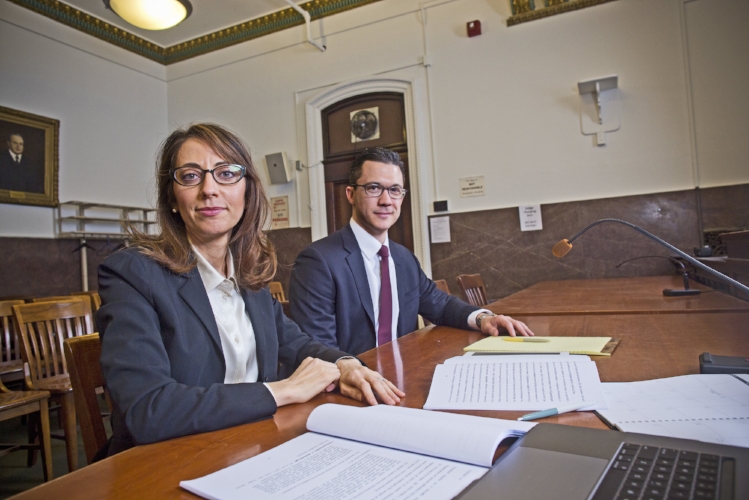
Goldstein Mehta LLC Philadelphia Criminal Defense Lawyers
If you are facing criminal charges or are interested in appealing a conviction, we can help. Our award-winning Philadelphia criminal defense lawyers have successfully resolved countless cases at trial and on appeal. We offer a 15-minute criminal defense strategy session to any potential client. Call 267-225-2545 to discuss your case with an experienced and understanding criminal defense attorney today.




Doctor May Not Provide Opinion That Child Was Sexually Assaulted Without Physical Evidence of Abuse
Expert Opinions in Sexual Assault Cases
In Commonwealth v. Maconeghy, the Pennsylvania Supreme Court has just held that a child sexual abuse evaluator may not testify to his opinion that a child was sexually assaulted where the opinion is based solely on the evaluator’s apparent acceptance of the child’s reporting and description of the abuse.
In Maconeghy, the defendant’s sixteen year old stepdaughter reported that she had been raped and otherwise sexually abused on multiple occasions by the defendant when she was eleven years old. Based on her statement, the defendant was arrested and charged with various sex offenses, including rape by forcible compulsion and rape of a child. At trial, the Commonwealth presented the testimony of both the complainant and a pediatrician who evaluated the complainant to determine whether she suffered from sexual abuse.
The Testimony at Trial
After the complainant testified to the abuse, the Commonwealth called the pediatrician to testify to the results of his interview and examination of the complainant. He testified that he had conducted a physical exam of the complainant, and that the physical exam did not reveal any evidence of abuse. In his opinion, however, a physical examination was unlikely to detect evidence of the abuse outside of the first seventy-two hours following an occurrence of a sexual assault.
On cross-examination, the defense attorney repeatedly asked the doctor to concede that there was no physical or medical evidence of abuse. The doctor refused to concede this point, replying that based on the history provided by the complainant, it was clear that she had been sexually abused. Further, on questioning from the prosecution, the doctor testified that he strongly believed that the child had been victimized.
The Appeal
Based on this testimony, the defendant was convicted. Shortly thereafter, the defendant appealed. The Pennsylvania Superior Court reversed the sexual assault convictions, finding that although the defense had opened the door to some of the doctor’s personal opinion by questioning him on cross-examination, the prosecution had pushed it too far on re-direct examination.
The Pennsylvania Supreme Court has now upheld the Superior Court’s decision to reverse the conviction. The Court held that an expert witness may not express an opinion that a particular complainant was the victim of a sexual assault based upon witness accounts couched as history, at least in the absence of evidence of physical abuse. The Court recognized that such opinion testimony from an expert witness usurps the function of the jury. In other words, it is the jury’s job to determine whether or not the crime was committed. The doctor cannot testify that the crime was committed without intruding on that key function of the jury.
Instead, the doctor may testify only to the medical findings of the examination – that is, whether there was evidence of physical abuse and whether evidence of physical abuse would always be present following an allegation of sexual assault. The Court held that it is extremely important to limit the purported medical testimony because of the potential power and persuasiveness of testimony “by those clothed with the mantle of professional expertise,” meaning it will be very difficult for a jury to disregard the testimony of a respected medical doctor.
Accordingly, the Court upheld the decision of the Superior Court, and the defendant will receive a new trial. The Court declined to rule on whether a doctor would be permitted to testify to this type of opinion in a case with actual physical evidence of abuse. Thus, that remains an open question.
The Impact of the Court's Decision in Child Rape and Sexual Assault Cases
The Court’s decision in Maconeghy is extremely important because it is very common for the prosecution to call these types of expert witnesses in rape and sexual assault cases. This is particularly true in cases involving allegations of child abuse and sexual assault on children. In many cases, complainants wait years after the alleged incident to make any reports to the authorities, and therefore, the case will often come down to the word of the complainant versus the word of the defendant.
By calling respected medical doctors to testify to their opinion that the complainant is telling the truth, the Commonwealth is often able to improperly shroud the testimony of the complainant in a shield of authority and credibility because of the impressive credentials and respectability of the medical doctor. The real question in these cases is whether the jury should believe the complainant’s testimony, but permitting doctors to testify that they believe the complainant makes it much harder for the jury to keep an open mind and reject false testimony. Therefore, this opinion will make it possible for many defendants to have a fair trial by limiting the improper influence of a medical doctor who has no specialized training in determining whether or not a complainant is lying.
Award-Winning Philadelphia Criminal Defense Lawyers

If you are facing criminal charges or allegations of sexual assault, we can help. Our award-winning Philadelphia criminal defense lawyers have successfully represented thousands of clients. We offer a free criminal defense strategy session to any potential client who is facing criminal charges or who may be under investigation for a crime. We are experienced and understanding professionals who are well versed in recent case law and who will fight to use the law to your benefit. Call 267-225-2545 to speak with one of our defense attorneys today.
Read the Opinion:
http://www.pacourts.us/assets/opinions/Supreme/out/25655768.pdf?cb=1