

Philadelphia Criminal Defense Blog

Recent Case Results - Motion to Suppress and Speedy Trial Motions Granted
Award-Winning Philadelphia Criminal Defense Lawyers
The Philadelphia criminal defense attorneys of Goldstein Mehta LLC continue to obtain outstanding results both in and out of the court room. Our defense lawyers have fought for successful outcomes in cases involving a wide variety of charges including robbery, burglary, assault, probation violations and probation detainers, and gun charges. Some of our recent success stories include:
Commonwealth v. G. – Motion to Suppress Confession for Lack of Miranda Warnings Granted in Shooting Case

Criminal Defense Lawyer Zak T. Goldstein, Esq.
In Commonwealth v. G., Attorney Goldstein successfully moved for the suppression of an incriminating statement in a case in which the defendant was charged with gun charges including Violations of the Uniform Firearms Act (“VUFA”) Sections 6108, 6106, and 6105 as well as conspiracy, tampering with evidence, and recklessly endangering another person. The Commonwealth alleged that G. accompanied his co-defendants to a location where a shooting broke out. After the complainants returned fire and shot one of the co-defendants, G. allegedly took the gun and hid it. When G. went to visit his friend at the hospital, police arrested him and began interrogating him, resulting in a confession which implicated G. in hiding the gun.
Attorney Goldstein moved to suppress the statement and the firearm due to violations of the Miranda rule. Pennsylvania and federal law both require the police to read suspects their Miranda warnings prior to interrogating them. Prior to asking any questions which could lead to incriminating answers, police must advise a suspect who has been arrested and taken into custody that the suspect has:
The right to remain silent,
The right to an attorney and that the attorney will be paid for by the government if the suspect cannot afford an attorney, and
That anything the suspect says can be used against them in court.
Shortly before trial, prosecutors admitted that detectives had actually interrogated G. twice. First, they interrogated him immediately upon his arrival at the police station when they had not yet provided him with Miranda warnings at that time. After obtaining a confession, police quickly provided G. with Miranda warnings, questioned him again, and obtained a signed statement.
Attorney Goldstein successfully moved to have both statements suppressed due to detective’s failure to provide Miranda warnings prior to the first interrogation. Under federal law, police may not intentionally fail to provide Miranda warnings in order to obtain a confession, then provide warnings, and quickly re-interrogate the defendant after providing the warnings. Instead, federal courts have applied a sort of “good faith exception” when evaluating whether prosecutors may use a second, Mirandized statement which is substantially similar to a prior un-Mirandized statement. Where police make a mistake in failing to provide Miranda warnings or where the circumstances change enough so that the second statement is not directly related to the first, the statement may become admissible. The Commonwealth attempted to justify the failure to warn by arguing that it had been inadvertent and that there was a break in the chain between the first and second interrogations due to the passage of time.
Here, Attorney Goldstein successfully argued that the police intentionally failed to provide Miranda warnings during the first statement. Additionally, there was no break in the chain between the two interrogations. The second interrogation happened almost immediately, took place in the same location, and involved the same police detective. The trial court agreed and granted the Motion to Suppress, ruling that both statements could not be used at trial. Once the statements were excluded, the Commonwealth agreed that it would not appeal the court’s ruling if G. accepted a plea deal for a misdemeanor charge and probation. The successful Motion to Suppress helped G. avoid a felony gun conviction and years in state prison.
Commonwealth v. A. – Robbery, Burglary, and Assault Charges Dismissed for Speedy Trial Violation.
In Commonwealth v. A., Attorney Goldstein successfully moved to have all charges against the client dismissed due to the prosecution’s violation of Pennsylvania Speedy Trial Rules, specifiically Pennsylvania Rule of Criminal Procedure 600(A). A. and a co-defendant were charged with dressing up as police officers and forcing their way into a massage parlor. Once inside, the defendants allegedly demanded money from the employees. The employees called the police, and the defendants were arrested inside the massage parlor. The Commonwealth immediately brought charges for robbery, burglary, assault, and other related charges.
Unfortunately for the prosecution, the Commonwealth brought the charges without completing its investigation. At the first trial listing, the Commonwealth was not prepared to proceed because it had improperly failed to turn over critical witness statements and evidence in advance of trial. The trial court marked the continuance as a Commonwealth continuance request, and by the time the second jury trial listing arrived, the defendant had been awaiting trial for two years.

Philadelphia Criminal Lawyer Zak T. Goldstein, Esq.
Pennsylvania Rule of Criminal Procedure 600(A) requires that all criminal defendants be brought to trial within 365 days of the filing of the criminal Complaint. There are exceptions for things like court continuances and circumstances outside of the prosecution’s control, but in order to qualify for an exception, the Commonwealth must show that its prosecutors acted with due diligence in prosecuting the case. In this case, Attorney Goldstein successfully argued that the judge at the first trial listing had already found that the prosecution acted without due diligence in failing to provide witness statements and other discovery materials in advance of the first trial date. Because the Commonwealth never asked the first judge to reconsider the ruling in writing, Rule 600 barred the Commonwealth from asking the new trial judge to reconsider the first judge’s ruling without some showing of obvious error on the part of the first judge. The court agreed and dismissed all of the charges in this extremely serious case.
Commonwealth v. M. – Car Theft Charges Dismissed at Preliminary Hearing
In Commonwealth v. M., the client was charged with multiple counts of Receiving Stolen Property, Theft by Unlawful Taking, Unauthorized Use of an Automobile, and Theft from a Motor Vehicle. Prosecutors alleged that in one case, M. stole the complainant’s car and drove it around for a night before leaving it abandoned on a nearby street. Further, numerous valuable items were missing from the car, leading to additional allegations that M. had stolen the items.
In a second case which had been joined for the preliminary hearing, prosecutors alleged that M. broke into a parked car, stole valuable items, and transported those items to his house. When prosecutors executed a search warrant on M.'s house, they found M. and another gentleman in the living room along with the stolen items. Neither man was closer to the items, said anything incriminating, or attempted to flee, and the other man's hospital ID had actually been found by police in the stolen car in the first case.
In both cases, the prosecution attempted to rely entirely on hearsay at the preliminary hearing under the Superior Court's opinion in Commonwealth v. Ricker. The prosecution sought to have a police detective, who had no personal knowledge of who took the car or took items from the other car, testify that a witness who failed to appear for court saw M. driving the car on the night in question.
Attorney Goldstein’s repeated objections to this hearsay testimony led to it being excluded from evidence at the preliminary hearing, and without the hearsay, the evidence was completely insufficient for the preliminary hearing judge to hold M. for court. This was particularly true in light of the fact that the other gentleman's hospital wristband was found by police in the stolen car. Accordingly, the court dismissed all charges against M. This case shows that even with the trend of judges permitting more and more hearsay at preliminary hearings, there are still limits. This is especially true in Philadelphia where judges tend to require that witnesses have some level of personal knowledge before they will hold a case for court.
Probation Detainers Lifted – In the last six weeks, our Philadelphia criminal defense attorneys have successfully moved to have probation detainers lifted for three separate clients who were on probation and subsequently arrested on new charges. This includes the lifting of a probation detainer for a client who was on probation for a gun charge and who was arrested on a new case of Possession with the Intent to Deliver.
State v. D. – Prosecution Agrees to Dismiss All Charges in New Jersey Prison Contraband Case
In State v. D., the client was charged with third degree indictable offenses in New Jersey for allegedly smuggling drugs into the prison during a visit with a friend. The prosecution obtained both video of the incident and phone calls which it claimed implicated D. in the offense. After convincing the Assistant Prosecutor that even if real, the phone calls would not be admissible against D. due to violations of New Jersey wiretap and recording laws, the prosecution agreed to dismiss all charges. D. will avoid a felony conviction and jail time.
Commonwealth v. K. – All Charges Dismissed in Third Strike Carjacking (Robbery of a Motor Vehicle) Case.
K. was charged with stealing his ex-girlfriend’s car by snatching the keys out of her hand and driving off in the car. Although this allegation would only have been Robbery as a felony of the second degree, the case became a third strike and a carjacking because of the fact that K. allegedly took a car. Carjacking (Robbery of a Motor Vehicle) is considered a crime of violence under Pennsylvania law for purposes of the three strikes rule. Due to prior convictions, K. would have faced a mandatory 25-50 years in prison if convicted of Robbery of a Motor Vehicle because carjacking is a “strike” case. Fortunately, our criminal defense attorneys were able to have all charges dismissed at the preliminary hearing level.
Commonwealth v. J. – Our criminal defense lawyers were able to successfully negotiate a misdemeanor offer of probation for a client who was initially charged with F1 Strangulation, Robbery, and Aggravated Assault. First, we were able to have the strangulation charge dismissed at the preliminary hearing and the other felonies graded as felonies of the second degree. Once the felonies were no longer F1 strike offenses, the Commonwealth’s offer substantially improved, and we were eventually able to negotiate a misdemeanor probationary offer for the client, thereby avoiding jail time and a felony conviction.

Criminal Defense Attorney Demetra P. Mehta, Esq.
Commonwealth v. A. – All charges against A. were dismissed after our defense lawyers negotiated for A. to participate in the domestic violence diversionary program. After A. completed community service, counseling, and paid a small fine, the Commonwealth withdrew Simple Assault, Terroristic Threats, and Recklessly Endangering Another Person charges against A.
Commonwealth v. R. - The client was arrested and charged with Robbery, Assault, and related charges while on probation for a serious offense. Because there was clear video of the incident occurring, the client was hoping to obtain a plea deal for the shortest possible sentence. The client's previous attorney had been unable to negotiate for anything less than a 1-2 year state prison sentence. After retaining Goldstein Mehta LLC, our defense lawyers were able to negotiate a sentence of 11.5 - 23 months with work release eligibility and no additional jail time on the direct probation violation.
Charged with a crime? Speak with a Philadelphia Criminal Defense Lawyer Today
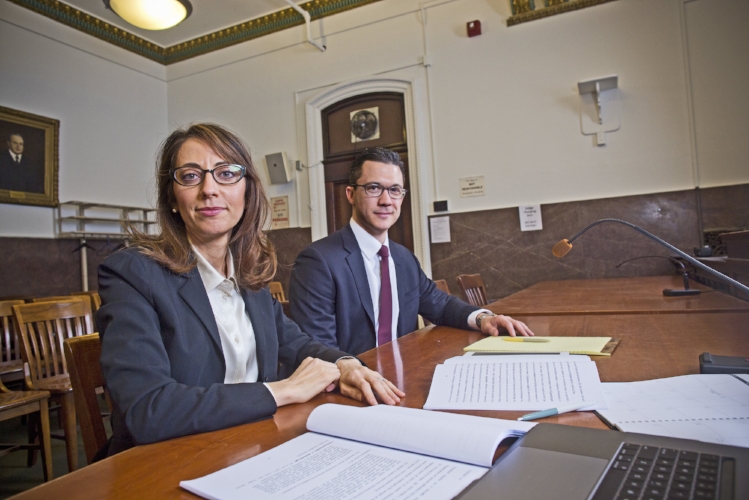
Goldstein Mehta LLC Philadelphia Criminal Defense Lawyers
If you are facing criminal charges or are interested in appealing a conviction, we can help. Our award-winning Philadelphia criminal defense lawyers have successfully resolved countless cases at trial and on appeal. We offer a 15-minute criminal defense strategy session to any potential client. Call 267-225-2545 to discuss your case with an experienced and understanding criminal defense attorney today.




NOT GUILTY: Attorney Zak Goldstein Obtains Full Acquittal in Gunpoint Robbery Jury Trial
Philadelphia criminal defense attorneys Zak T. Goldstein, Esq. and Demetra Mehta, Esq. continue to obtain successful outcomes in the court room. This week, in the case of Commonwealth v. D.R., criminal defense lawyer Zak T. Goldstein obtained a full acquittal for D.R. in a case involving first degree felony gunpoint Robbery charges. After deliberating for approximately one hour, the twelve-person Philadelphia jury came back with a complete Not Guilty verdict for D.R.

Criminal Defense Lawyer Zak T. Goldstein, Esquire
D.R. was arrested and charged with the gunpoint robbery of a carwash in Philadelphia. Prosecutors alleged that D.R. previously worked at the car wash and had transferred to another location. On the day in question, D.R. allegedly attempted to steal approximately $200 from the tip jar and walk away. When one of the carwash employees grabbed D.R. by the jacket in an attempt to get the money back, D.R. pulled a gun on the employee. The employee let go, and D.R. fled the scene.
The employees called the manager of the carwash and provided police with D.R.’s name and contact information. D.R. was arrested shortly thereafter and charged with gunpoint robbery. The manager claimed that shortly before trial, D.R. approached him on the street and apologized for messing up. Believing that they had a strong case, prosecutors made a final plea offer of nearly a decade in prison in exchange for a guilty plea.
Fortunately, D.R. retained Attorney Zak Goldstein and decided to fight the case from the beginning. Through cross examination of the complaining witnesses at the preliminary hearing, Attorney Goldstein developed significant inconsistencies between the testimony of the complainants at the preliminary hearing and the statements which they had given to the police. For example, the main complainant gave conflicting descriptions as to the color of the gun, and the second complainant eventually admitted that although he had been able to see the whole incident, he was not sure if he had actually seen a gun. Further, the complainants admitted that they had only seen D.R.’s hands come out of the tip box, so they were unable to tell for certain if he had put any money in the box with which to make change.
Everyone involved admitted to knowing each other from working for the same company, so a misidentification defense was not viable. Instead, because police searched D.R. and his house and never found a gun, and the complainants contradicted themselves and each other at the preliminary hearing, Attorney Goldstein successfully argued to the jury that the complainants had fabricated the robbery. Instead, D.R. had simply been making change out of the tip jar, leading to a serious misunderstanding. Believing that they had been stolen from and disrespected, the complainants used the magic words to get someone locked up in Philadelphia – gun. When the stories of the witnesses changed even further at trial, Attorney Goldstein was able to show the jury that the witnesses simply could not be believed in such a serious case.
After the prosecution rested, the defense moved for a judgment of acquittal on the gun charges. A motion for judgment of acquittal asks the trial judge to rule that the prosecution has submitted insufficient evidence for a charge or case to even go to the jury for a verdict. It allows the trial judge to find the defendant not guilty of all or some charges before the jury is asked to come back with a verdict. In this case, the defense argued that because the complainant could not consistently describe the gun or provide any real details about what it looked like, the prosecution failed to provide any evidence that the defendant ever possessed an operable firearm. Operability is an element of many Pennsylvania firearms statutes.
The trial judge agreed, finding the defendant not guilty of VUFA Sec. 6108 (possessing a gun on the streets of Philadelphia) and VUFA Sec. 6106 (possessing a concealed gun without a license to carry). With the gun charges disposed of, the defendant remained charged only with Robbery (F1). After closing arguments, the jury deliberated for approximately one hour before finding D.R. Not Guilty of Robbery.

Criminal Lawyer Demetra Mehta, Esq.
Commonwealth v. J.W. – Attorney Demetra Mehta obtained a full acquittal following a bench trial on charges of Forgery, Access Device Fraud, and related misdemeanors. In this case, the prosecution alleged that J.W. had used a stolen credit card to book a hotel room in Center City. The hotel received a phone call from a complaining witness in Florida who claimed that she had just noticed her card had been used without her permission. The hotel determined that the card had been used to rent a room in J.W.’s name and called the police. When police arrived, they went to the hotel room and arrested J.W. Despite searching the room, police were unable to find the credit card which had allegedly been used. Attorney Mehta successfully persuaded the judge to find that reasonable doubt existed because police never found the credit card in J.W.’s possession and because the prosecution could not locate the clerk who actually provided the hotel room. Thus, there was no testimony in the record that J.W. had personally signed for the room or used a credit card at any time. Instead, the evidence showed only that the room had been put in his name, and anyone could have put the room in his name. The trial judge found J.W. Not Guilty of all charges.
Commonwealth v. C.R. – C.R. was charged with robbery, assault, and conspiracy for allegedly taking a complainant’s purse while the complainant was engaged in a fight with other people on the block. Bail was set at $125,000. Fortunately, Attorney Goldstein was able to obtain video from social media which showed that C.R. had nothing to do with the incident. Instead, he had at most been merely present on the block while the complainant fought with other people. Although some other person did in fact appear to take her purse, the video clearly showed that the complainant received her purse back and did not have anything stolen with her. After Attorney Goldstein showed the video to the assigned prosecutor, the prosecution immediately agreed to reduce the bail to Sign On Bond (meaning C.R. would not have to post bail to be released) while they investigated the complainant’s story. At the next listing, the prosecution withdrew all charges.
Commonwealth v. A.G. – Our defense attorneys convinced the prosecution to withdraw Possession with the Intent to Deliver charges at the preliminary hearing in a case where police arrested the defendant and found approximately thirty grams of marijuana, a scale, and packaging in the car. Our defense lawyers successfully convinced the prosecutor that he would be unable to prove that the marijuana was not for personal use, thereby resulting in the dismissal of all of the felony charges.
Commonwealth v. M.H. – Obtained entry into the ARD program for defendant charged with possession of marijuana and endangering the welfare of a child. After a short period of probation, all charges will be dismissed and eligible for expungement.
Commonwealth v. M.S. – Obtained entry into the ARD program for a defendant charged with a first-offense DUI. Our defense attorneys also advised M.S. through the process of dealing with the relevant State Professional Licensing Agency, resulting in a decision by the Agency to bring no disciplinary actions against M.S.’ professional license. All charges will be eligible for dismissal and expungement after a short period of probation.
Commonwealth v. B.M. – Successfully negotiated a short house arrest sentence and period of probation for defendant charged with Possession with the Intent to Deliver. Although the defendant was initially charged with selling both marijuana and PCP, Attorney Goldstein convinced the Municipal Court judge to dismiss the PCP distribution charge at the preliminary hearing, resulting in a much lower potential sentence under the sentencing guidelines and the ability to negotiate for house arrest.
Commonwealth v. K.J. – All charges dismissed in Burglary and Firearms case at the preliminary hearing.

Commonwealth v. N.D. – N.D. was charged with Aggravated Assault as a felony of the first degree. Our criminal defense lawyers were successfully able to negotiate a plea deal of probation on a misdemeanor Simple Assault charge, meaning that N.D. will avoid a felony conviction and any jail time. The prosecution had previously offered only years in state prison on the felony charge, but because our attorneys were prepared to take the case to trial in front of a jury, we were able to obtain the significantly better outcome for our client.
Commonwealth v. B.L. – Negotiated for client charged with domestic assault to be admitted to the Domestic Violence diversionary program. Charges were withdrawn after B.L. completed counseling sessions, community service, and paid a small fine. The charges are eligible to be expunged.
Charged With A Crime? Speak With A Philadelphia Criminal Defense Lawyer Today

Goldstein Mehta LLC: Philadelphia Criminal Defense Lawyers
If you are facing criminal charges or are interested in appealing a conviction, we can help. Our award-winning Philadelphia criminal defense lawyers have successfully resolved countless cases at trial and on appeal. We offer a 15-minute criminal defense strategy session to any potential client. Call 267-225-2545 to discuss your case with an experienced and understanding criminal defense attorney today.

Recent Case Results - Successful Outcomes in Robbery, Burglary, Probation, Possession, and Sex Crimes Cases
Our Philadelphia criminal defense lawyers have continued to obtain successful results on behalf of our clients in cases involving sex crimes, robbery, burglary, and Possession with the Intent to Deliver. These successful outcomes have included bail reductions, the dismissal of all charges, favorable results in pre-trial Motions to Suppress, and probationary and house arrest sentences. In the past two months alone, we have achieved a number of wins, including:
Commonwealth v. S.A. - S.A. was charged with rape, involuntary deviate sexual intercourse, sexual assault, and related charges. The magistrate initially set bail at an extremely high amount due to the seriousness of the charges, and SA was unable to make bail. Within 24 hours of being retained, Attorney Goldstein obtained a significant bail reduction, and the defendant was able to make bail. After the defendant made bail, Attorney Goldstein was also able to have all charges dismissed at the preliminary hearing.
Commonwealth v. H.S. - Our criminal defense lawyers were able to obtain a full dismissal of all charges in a burglary case against HS at the preliminary hearing.
Commonwealth v. S.V. - Our attorneys were able to obtain a sentence of house arrest and drug treatment for a defendant who was convicted of drug charges. After the defendant was convicted of Possession with the Intent to Deliver, our defense attorneys arranged for the defendant's other open matters, including a case for which the defendant was on probation, to be brought in before the sentencing judge so that the defendant could be sentenced on all of the cases at the same time and only have one back judge. This procedure is called a 701 consolidation, and it can be very helpful in terms of avoiding multiple probation judges and consecutive sentences for a defendant who has violated probation.
Although the sentencing guidelines called for a state prison sentence and the defendant had been on probation at the time of the new arrest, our defense attorneys were able to convince the sentencing judge to give the defendant a chance to serve a house arrest sentence and obtain drug treatment. By investigating the client's background, our lawyers learned that despite being on probation for a similar offense, the defendant had never been ordered to undergo any kind of addiction treatment. Now, instead of serving time in state prison, the client will have the chance to receive treatment in the community, and the Court will also assist the client with obtaining educational and job training.
Commonwealth v S.A. - Attorney Goldstein obtained a full dismissal of all charges in a Robbery case at the preliminary hearing. In this case, the complainant alleged that the defendant had been part of a group that assaulted him and stole his tablet. After the complainant testified that he had been under the influence of prescription medication at the time of the incident and was no longer sure if the defendant had been present, Attorney Goldstein was able to convince the preliminary hearing judge to dismiss all charges. Prior to the preliminary hearing, Attorney Goldstein obtained a significant bail reduction which allowed the client to fight the case from out of custody.
Cmmonwealth v. D.S. - Our attorneys successfully moved for a bail reduction in a felony gun possession case. After the judge at the preliminary hearing refused to reduce bail, Attorney Goldstein immediately moved for a bail reduction in the Court of Common Pleas, and the Common Pleas judge reduced bail from $35,000 to $15,000.
In Re: J.W.: We negotiated an admission to Criminal Trespass in a juvenile delinquency case where the client was originally charged with felony burglary for breaking and entering into a school after hours. After hearing the defense's mitigation evidence and recommendation at disposition (sentencing), the Family Court judge found that the client was not in need of supervision and dismissed all of the charges. The defendant will not even have to be on probation, and the entire record of the case can be expunged.
Commonwealth v. E.G. - All charges dismissed prior to trial in domestic violence case involving Simple Assault and Recklessly Endangering Another Person charges.
Commonwealth v. M.M. - Client was arrested on a potential technical probation violation. Attorney Goldstein filed a motion to lift the detainer and had a hearing scheduled within a week. At the hearing, our defense attorneys convinced the judge to find that the client had not violated the terms of his probation. The client was immediately released the same day.
Commonwealth v. W.L. - The defendant was arrested on a bench warrant due to a failure to show up for court for a preliminary hearing. Our attorneys were able to have the bench warrant lifted without a finding of contempt of court and obtain Sign on Bond bail, meaning the defendant was released without an increase in bail.
Commonwealth v B.M. - We were able to successfully have Possession with the Intent to Deliver PCP and Conspiracy charges dismissed, leaving only charges related to marijuana sales for trial.
Commonwealth v. J.W. - Our defense attorneys obtained the dismissal of charges of selling crack cocaine and conspiracy at a preliminary hearing. The defendant will now face much less serious charges related only to marijuana in a trial in the Municipal Court. A conviction for Possession with the Intent to Deliver of crack cocaine may often involve jail time, whereas even a conviction for PWID of marijuana in the Municipal Court is more likely to result in probation.
Commonwealth v. M.G. - Successfully negotiated Section 17 disposition on drug possession charges. The Section 17 program requires the defendant to plead no contest and be placed on a period of probation. If the defendant successfully completes the probation, then the charges will be dismissed and can be expunged.
Commonwealth v. A.C. - Successfully negotiated for client who was facing assault charges to obtain entry into a Domestic Violence diversion program. If the client pays a small fine, completes a number of counseling sessions, and stays out of trouble for approximately four months, the entire case will be dismissed and can be expunged. Pursuant to the terms of the program, the client was not required to enter into any kind of plea or admission of guilt.
Commonwealth v. J.H. - Successfully negotiated for client's entry into drug treatment court for client facing two cases of Possession with the Intent to Deliver. If client completes the program, the charges will be dismissed and can be expunged, and client will not have a felony record.

Recent Case Results
Recent Case Results
The Philadelphia criminal defense lawyers of Goldstein Mehta LLC have had several recent successes in the courtroom. These outcomes have included acquittals, successful motions to suppress, and the dismissal of charges before trial. Recent case results include:
Commonwealth v. K. F. – Motion to Suppress granted.
The defendant was arrested and charged with drug charges including Possession with the Intent to Deliver, Conspiracy, and Simple Possession based on a narcotics officer’s allegation that the defendant engaged in four drug transactions. Prosecutors alleged that when arrested, the defendant possessed three bundles of crack cocaine and hundreds of dollars. Attorney Goldstein moved to suppress the drugs and money and argued that the police had not seen the defendant engaged in drug sales. Instead, police had arrested and searched him without probable cause immediately after he exited his house. Despite the officer’s testimony that he personally observed the defendant engage in the four drug sales, Attorney Goldstein successfully cross examined the officer on his credibility and introduced alibi testimony that showed the defendant could not have engaged in narcotics transactions. Immediately following the testimony, the trial judge granted the motion to suppress and threw out the crack cocaine and United States currency.
Commonwealth v. J. B. – Not Guilty Attempted Murder and Burglary.
The defendant was charged with Attempted Murder for allegedly storming into the complainant’s house and shooting him in front of a number of witnesses. After numerous pre-trial motions and a week-long jury trial, Attorney Mehta successfully obtained an acquittal on the most serious charges of Attempted Murder and Burglary for J. B. despite the testimony that the defendant had intentionally shot the complainant. The defendant was convicted only of lesser charges and faces substantially less time at sentencing.
Commonwealth v. C. P. – Possession with the Intent to Deliver charges dismissed prior to trial in the Philadelphia Municipal Court.
Commonwealth v. B. L. – Successful negotiation for misdemeanor probationary sentence for defendant charged with felony.
B.L was charged with felony Possession with the Intent to Deliver of crack cocaine. When the prosecution realized that Attorney Goldstein was fully prepared to take the case to trial, the prosecution dropped the felony delivery charge, and Attorney Goldstein negotiated a probationary sentence on a misdemeanor simple possession charge for B. L.
Commonwealth v. E. H. – Gun, conspiracy, and heroin distribution charges were dismissed at the preliminary hearing following Attorney Goldstein’s cross examination of the arresting officer.
Commonwealth v. D.S. – Simple possession charges dismissed prior to trial.
Our attorneys also obtained substantial bail reductions for many other clients who will now be able to fight their cases from home instead of custody. Of course, every case is different, and past successful results should not be read as a guarantee of similar results in other cases. If you or a loved one are facing criminal charges in Pennsylvania or New Jersey, contact the Philadelphia criminal defense lawyers of Goldstein Mehta LLC at 267-225-2545 for a free case evaluation.