

Philadelphia Criminal Defense Blog

U.S. Supreme Court: Obtaining a Person’s Google Location History Is a Fourth Amendment Search

Criminal Defense Lawyer Zak T. Goldstein, Esquire
The United States Supreme Court has decided Chatrie v. United States, No. 25-112, 609 U.S. ___ (2026), holding that police conduct a Fourth Amendment search when they obtain a person’s cell-phone location data from Google. The decision extends the Court’s landmark ruling in Carpenter v. United States, 585 U.S. 296 (2018), to the geofence warrants that law enforcement has increasingly used to identify suspects by sweeping up the location data of every phone near a crime scene. Writing for the Court, Justice Kagan held that the police conducted a search “because an individual has a legitimate expectation of privacy in his cell-phone location data,” and that they intrude on that interest even when they take it “for only a limited time, and from a third-party tech company.”
The decision is a significant win for digital privacy and for the defense, but it does not end the case. The Court decided only that a search occurred. It left for the lower court whether this particular warrant was valid, and it did not disturb the separate ruling that has allowed the evidence into Mr. Chatrie’s prosecution so far.
The Facts of Chatrie
On May 20, 2019, a man robbed a credit union in Midlothian, Virginia. He handed the teller a note demanding $100,000, threatened to hurt her and her family, and claimed he had lookouts outside. When she said she could not access that much money, he brandished a firearm, ordered everyone to the floor, and forced the manager to put $195,000 into a bag before leaving on foot. Witnesses and surveillance footage showed that the robber had approached from a corner of an adjacent church while appearing to talk on a cell phone, but the investigation stalled and he remained at large.
Weeks later, the police applied to a Virginia magistrate for a geofence warrant directed to Google. A geofence warrant does not name a suspect. It draws a virtual perimeter around a location and compels a company to turn over data about the cell phones that were inside it around the time of a crime. The goal, as the Court put it, “is to find out who was there and so who might have done it.” The warrant here used a 150-meter circle around the credit union and followed a three-step process Google had developed with law enforcement: first, Google would produce anonymized location data for every phone in the geofence during the hour surrounding the robbery; second, the police would narrow the list and Google would provide more data, now reaching outside the geofence over a two-hour window; and third, Google would hand over names and other identifying information for a final, narrowed set of users.
The data came from a Google service called Location History, which more than 500 million users worldwide had turned on. Location History logs a phone’s location roughly every two minutes, drawing on Wi-Fi, Bluetooth, cell sites, GPS, and IP address information to fix the phone’s position within about twenty meters. It can even estimate elevation, which can reveal what floor of a building a phone is on. The district court described it as “the most sweeping, granular, and comprehensive tool” available for collecting and storing location data.
Running the warrant’s process, Google produced anonymized data for 19 phones at step one, the officers narrowed the list to 9 at step two, and the final list at step three contained 3 users. One was Okello Chatrie. His Location History showed that he entered the geofenced area about ten minutes before the robbery and headed toward a residential area immediately after leaving the bank. A federal grand jury charged him with robbery and related firearms offenses, and he moved to suppress the location evidence.
The lower courts splintered. The district court found that the warrant “plainly violates the rights enshrined in [the Fourth] Amendment” but admitted the evidence anyway under the good-faith exception to the exclusionary rule. A divided panel of the Fourth Circuit affirmed on the different ground that no search had occurred at all, reasoning that Chatrie had no reasonable expectation of privacy in “two hours’ worth of Location History data voluntarily exposed to Google.” Sitting en banc, the Fourth Circuit split evenly, 7 to 7, on whether a search had taken place and affirmed in a one-sentence order. The Supreme Court agreed to decide that single question: whether obtaining the location data was a search.
What the Supreme Court Decided
The Court held that it was. The analysis tracked Carpenter, which held that obtaining historical cell-site location information from a wireless carrier is a search because people have “a reasonable expectation of privacy in the whole of their physical movements.” Everything that drove Carpenter, the Court explained, “applies as well or better” to Location History. The data is more precise, fixing a phone within about twenty meters rather than within a sector of one-eighth to four square miles. It is more frequent, averaging 720 location points a day against roughly 101 for the cell-site data in Carpenter. And it is more personal: users treat Location History as a record of their own movements, much like the “emails, documents, photographs, or calendars” that a person “reasonably views as his own” even when a company stores them.
The Court rejected the government’s argument that two hours of data is too brief to matter. Quoting Justice Sotomayor’s concurrence in United States v. Jones, 565 U.S. 400 (2012), it noted that “even short-term monitoring” can reveal “a wealth of detail about [his] familial, political, professional, religious, and sexual associations.” The Fourth Amendment, it added, has never been understood to apply only once an intrusion “goes too far”; it applies regardless of “the quality or quantity of information” obtained. The concern is that the government can reach “all of a cell-phone user’s movements,” giving it “a virtual panopticon with which to scrutinize its citizens’ activities,” and the ability to pick out a short window from that database after the fact is “more a practical benefit to the government than a limit on its intrusive powers.”
The Court also refused to apply the third-party doctrine, which ordinarily strips Fourth Amendment protection from information a person hands over to a business. As in Carpenter, location data is “qualitatively different” from the bank records and dialed phone numbers in the Court’s older cases, and it is “not truly shared” in any ordinary sense. The government argued that Location History is different because users must switch it on, but the Court was unpersuaded. Google “repeatedly prompts users” to enable the service, sometimes warning that a device will not “work correctly” otherwise, while saying nothing about how often it records location, how precise that location is, or that the data may end up with the government. Treating each app and feature as a separate, voluntary surrender of privacy, the Court said, “misapprehends the very nature of modern cell-phone use,” where almost everything requires some affirmative opt-in.
The holding is direct: “It does not matter if the time period scrutinized was only two hours. Nor does it matter that the materials obtained were handed over by a third-party tech company.” Accessing Location History is a search.
Where the Court stopped is just as important. A search is not automatically unconstitutional; the Fourth Amendment bars only unreasonable ones, and a search conducted under a valid warrant is generally reasonable. The Court called this an “uncommon, multi-step” warrant and declined to decide whether it satisfied the requirements of probable cause and particularity at each step. Describing itself as “a court of review, not of first view,” it sent that question back to the Fourth Circuit. It also left untouched the good-faith ruling that allowed the evidence in to begin with.
The Court divided 6 to 3. Justice Kagan wrote for five members. Justice Gorsuch agreed that a search occurred but would have reached that result by treating the Location History as Chatrie’s property rather than through the “reasonable expectation of privacy” test. Justice Jackson, joined by Justice Sotomayor, wrote separately to say she would have gone further and held the warrant invalid at steps two and three, where it gave officers what an earlier case called a “roving commission” to gather more data without returning to a magistrate. Justice Alito, joined in part by Justices Thomas and Barrett, dissented, arguing among other things that the third-party doctrine should control and that the opinion was effectively advisory because it would not change the outcome of Chatrie’s case. Justice Barrett also dissented separately.
The Takeaway
Chatrie matters on two levels. Doctrinally, it confirms that Carpenter was not confined to its facts. The government had hoped to read Carpenter narrowly, as a rule about long-term tracking of a single suspect that left short, location-specific requests like geofences untouched. The Court rejected that reading and made clear that the warrant requirement turns on the nature of the surveillance, not the number of hours of data the police choose to take. Justice Alito’s dissent warns that the majority’s reasoning will not stay limited to location data, and points to Amazon purchase histories, Google search histories, and payment apps as the next disputes. Whatever one makes of that concern, it cuts in the defense’s favor: the logic of Chatrie gives defendants a serious argument that other revealing digital records held by third parties are protected as well.
On the practical level, the decision matters for any case built on digital location evidence. The government can no longer defend a geofence or similar location search by claiming that no search occurred and no warrant was needed. That forces the fight onto the warrant itself, which is where the defense has the better arguments. As Justice Jackson’s concurrence and the district court’s own findings show, these multi-step warrants often let officers decide for themselves which users to pursue, with little guidance from the magistrate, and the data reached movements to and from homes, a school, and a hospital. Those are the particularity and probable-cause defects that suppression motions should target on remand and in future cases.
Two cautions are worth stating plainly. First, Chatrie himself has not won. The Court decided only that a search occurred and remanded everything else, including the good-faith question that has kept the evidence in his case from the start. A favorable ruling on the constitutional question does not guarantee suppression when a court is willing to excuse the violation as reasonable reliance on a warrant. Second, this particular technique is already fading. Google has represented that, as of July 2025, it stores Location History on users’ own devices and can no longer respond to geofence warrants for that data. The lasting significance of Chatrie lies less in the specific procedure it addressed than in the principle it confirms: new tools do not shrink old protections, and the government generally needs a warrant before it can turn a person’s phone into a record of everywhere they have been.
Finally, the real takeaway from Chatrie is that the Court has drastically limited the third-party doctrine for electronic data. In this case, it applied to the location data stored by Google. But ultimately, the Court seems inclined to recognize a reasonable expectation of privacy in other types of electronic data where even though the generation of that data is arguably optional, the reality is that people have no choice if they want to exist in the modern world. The Court has now applied it to cell phone location data and Google location data, and it could expand into other areas. The Pennsylvania Constitution has already recognized this and has a much more limited version of the doctrine.
Facing Criminal Charges or Appealing a Criminal Case in Pennsylvania? We Can Help.

Goldstein Mehta LLC Criminal Defense
If you are facing criminal charges or under investigation by the police, we can help. We have successfully defended thousands of clients against criminal charges in courts throughout Pennsylvania and New Jersey. We have successfully obtained full acquittals and dismissals in cases involving charges such as Conspiracy, Aggravated Assault, Rape, Violations of the Uniform Firearms Act, and First-Degree Murder. We have also won criminal appeals and PCRAs in state and federal court, including the successful direct appeal of a first-degree murder conviction and the exoneration of a client who spent 33 years in prison for a murder he did not commit. Our award-winning Philadelphia criminal defense lawyers offer a free criminal defense strategy session to any potential client. Call 267-225-2545 to speak with an experienced and understanding defense attorney today.

U.S. Supreme Court: Second Amendment Bars Prosecuting a Marijuana User for Keeping a Gun at Home Under § 922(g)(3)

Criminal Defense Lawyer Zak T. Goldstein, Esquire
The United States Supreme Court has decided United States v. Hemani, 608 U.S. ___ (2026), holding that the government’s prosecution of a marijuana user for possessing a firearm in his own home under 18 U.S.C. § 922(g)(3) violated the Second Amendment. Section 922(g)(3) makes it a federal crime, punishable by up to fifteen years in prison, for anyone who is an “unlawful user of” or “addicted to” a controlled substance to possess a gun. Writing for a seven-Justice majority, Justice Gorsuch held that the government could not square that prosecution with the Nation’s historical tradition of firearm regulation. The Court affirmed the dismissal of the indictment against Ali Hemani, a Texas man who told federal agents he used marijuana about every other day.
The decision is an important one for anyone facing a federal gun charge tied to drug use. It confirms that the government cannot automatically strip a person of the right to keep a firearm at home based on nothing more than regular drug use, at least without showing something more. At the same time, the Court was careful to describe its holding as narrow, and it left several related questions open for another day.
The Facts of the Case
Ali Hemani is a dual citizen of the United States and Pakistan who was born in Texas and has lived most of his life in the Dallas area with his parents while working a stable job. In 2022, suspecting Mr. Hemani and his family of terrorism-related activities, the government searched the family home. Mr. Hemani cooperated throughout. He surrendered a gun he kept in the house, pointed agents to marijuana on the property, and agreed to an interview, during which he told agents that he used marijuana “about every other day.” After agents found cocaine in his parents’ closet, he claimed ownership of it as well, though he said his mother had hidden it from him and that he had not used any recently.
More than six months after the search, the government brought a single-count indictment. The charge had nothing to do with terrorism, which was the reason for the search, and nothing to do with the cocaine or any drug trafficking. Relying solely on Mr. Hemani’s admitted use of marijuana, the government charged him with knowingly possessing a gun in his home while being an “unlawful user” of a controlled substance. The government did not allege that he was a drug addict, did not contend that his drug use had ever made him a danger to himself or others, and did not claim he had done anything with the gun other than keep it in his home.
Motion to Dismiss and the Fifth Circuit Appeal
Mr. Hemani moved to dismiss the indictment, arguing that enforcing § 922(g)(3) against him violated the Second Amendment. The district court agreed and dismissed the charge. The Court of Appeals for the Fifth Circuit affirmed that dismissal, and the government asked the Supreme Court to review the case. The Court agreed to hear it and ultimately affirmed.
The Supreme Court’s Decision
The Court began with the framework it set out in New York State Rifle & Pistol Assn., Inc. v. Bruen, 597 U.S. 1 (2022), and refined in United States v. Rahimi, 602 U.S. 680 (2024). The Second Amendment protects the right of “all Americans” to keep and bear arms for self-defense. Once a law burdens conduct the Amendment’s text covers, the government bears the burden of showing that the law is “consistent with the Nation’s historical tradition of firearm regulation.” The government need not produce a “historical twin,” but it must identify historical laws that are “relevantly similar” to the modern regulation, looking in particular at two things the Court called the “why” and the “how” of the laws being compared.
The government conceded that § 922(g)(3) burdens protected conduct, so it had to carry that historical burden. To do so, it relied on what it called “habitual drunkard” laws from the founding era and the nineteenth century. These fell into three groups: vagrancy laws that allowed habitual drunkards to be confined in a workhouse or jailed; civil-commitment statutes that allowed courts to appoint guardians for habitual drunkards or commit them to asylums; and surety laws that let officials require a habitual drunkard to post a bond for his good behavior. The government argued that those laws were close enough to § 922(g)(3) to justify disarming any regular drug user.
The Court rejected the analogy on every measure the government asked it to consider. As Justice Gorsuch put it, the historical laws “targeted different kinds of people, did so for different reasons, and operated in different ways.”
Different People
The Court first found that the historical laws targeted a very different group. Around the founding, a “habitual drunkard” was not simply a regular drinker but someone who, as one court put it, “for any considerable part of his time [was] intoxicated to such a degree as to deprive him of his ordinary reasoning faculties.” Statutes commonly defined the term to require that a person drink to such excess that he was “incapable of conducting [his] own affairs” or had “lost the power of self-control.” The Court noted the “culture of copious drinking” in early America, observing that figures like John Adams, James Madison, George Washington, and Thomas Jefferson all drank regularly without being considered habitual drunkards. Those laws, the Court explained, reached people whose drinking left them “practically incapacitated and incapable of managing their affairs.”
Section 922(g)(3), by contrast, sweeps in anyone who regularly uses any amount of any controlled substance for anything other than its “prescribed purpose,” without any showing that the person is incapacitated or unable to manage his affairs. The Court observed that the government’s theory would reach not only Mr. Hemani but “a husband who regularly takes his wife’s prescription Ambien to sleep and a college student who routinely uses a friend’s Adderall to cram for exams.” The drug, the amount, and the effect all made no difference under the government’s reading. “To state the analogy,” the Court wrote, “is to expose its deficiency.”
Different Purposes
The Court next held that the historical laws served different ends than the public-safety purpose the government attributed to § 922(g)(3). Vagrancy laws generally targeted those who “did not meet the societal expectation of work” and sought to promote productivity and suppress vice, not to protect the public from a category of dangerous people. Civil-commitment laws were designed largely to protect habitual drunkards from themselves and to protect their families from financial ruin. And the surety-of-good-behavior laws the government invoked did not require any showing that a person posed a threat of violence; they sought to protect the community from “scandals” against “good morals.” The Court pointed out that the government had not relied on the surety-of-the-peace laws that had supported the domestic-violence statute upheld in Rahimi, because being a habitual drunkard alone was not usually enough to trigger those laws.
Different Operation
The Court also found a mismatch in how the laws worked. The historical laws generally provided some process before a person lost any liberty: a vagrant could ordinarily be confined only upon a conviction, a habitual drunkard could be given a guardian or committed only after proceedings before a probate court or similar body, and surety statutes required a proceeding before a justice of the peace before a bond could be ordered. Section 922(g)(3), on the government’s account, automatically strips a person of his right to keep a firearm the moment he becomes an unlawful user, with no pre-deprivation process at all. The Court acknowledged that a defendant gets a full criminal trial before he can be imprisoned, but explained that the disarmament itself happens automatically and without any prior hearing.
Doubts About the Statute’s Stated Purpose
Finally, the Court questioned whether § 922(g)(3) even serves the purpose the government claimed, that of disarming categorically dangerous people. Because the statute defines “controlled substance” by reference to the Controlled Substances Act, a law adopted to protect “the health and general welfare of the American people,” drugs can land on its schedules for reasons that have little to do with violence. The Court also pointed to the government’s own conduct: the Department of Justice has directed prosecutors to curtail enforcement against marijuana users, most states have legalized marijuana to some degree, and the government recently moved some marijuana products from Schedule I to Schedule III. Quoting then-Judge Barrett’s dissent in Kanter v. Barr, 919 F.3d 437 (7th Cir. 2019), the Court warned that giving the government “broad power to designate any group as dangerous and thereby disqualify its members from having a gun” would risk allowing it to “quickly swallow” the Second Amendment. The Court affirmed the judgment of the Fifth Circuit.
What the Court Did Not Decide
The majority stressed that its decision is narrow. It did not address whether the government may disarm drug addicts or people who are presently intoxicated. It did not address other laws Congress might pass after finding that users of a particular drug pose a special risk of misusing firearms. It did not touch § 922(g)(1), which disarms people convicted of felonies. And it did not decide whether the government could prosecute someone under § 922(g)(3) with individualized proof that the person’s drug use makes him a danger to himself or others, or proof that a particular drug always renders its users dangerous.
Notably, under Pennsylvania law, individuals can be prosecuted for trying to buy a firearm when they have a medical marijuana card. That may now be unconstitutional. Those questions remain open.
The Concurring Opinions
Justice Thomas joined the majority in full and wrote separately to raise a different problem. In his view, § 922(g) likely exceeds Congress’s power under the Commerce Clause, because it criminalizes mere possession of a firearm based only on the fact that the gun once crossed state lines. He argued that lower courts have misread Scarborough v. United States and have given too much weight to the statute’s “jurisdictional hook,” and he urged the Court to revisit the issue in an appropriate case.
Justice Jackson, joined by Justice Sotomayor, also joined the majority but wrote to renew her criticism of the Bruen framework. She called the history-and-tradition test “unworkable” and argued that courts should return to means-end scrutiny, the approach that weighed the strength of the government’s interest against the burden on Second Amendment rights. She noted that she addressed only the mechanics of that test, not what result it would produce here.
Justice Alito, joined by Justice Kagan, concurred only in the judgment. He agreed that the government’s analogues were not “relevantly similar” to § 922(g)(3) as applied to Mr. Hemani, but he would have affirmed on that narrower as-applied ground alone rather than on the majority’s broader reasoning. He observed that “marijuana use today is like alcohol use at the founding,” widespread and increasingly tolerated, and that the government had not shown that an occasional user like Mr. Hemani is incapacitated in the way the historical drunkard laws required.
The Takeaway
Hemani is a significant win for the defense in federal gun cases. It rejects the government’s position that regular drug use, standing alone, is enough to disarm a person and expose him to a fifteen-year sentence for keeping a firearm. After this decision, the government should not be able to win a § 922(g)(3) prosecution simply by proving that a defendant uses marijuana or another controlled substance on a regular basis.
The limits of the decision matter just as much as the holding. The Court left open whether the government can still prosecute under § 922(g)(3) when it offers individualized proof that a defendant’s drug use makes him dangerous, and it did not disturb the felon-in-possession ban or the provision covering those who have been committed or adjudicated mentally ill. Defendants who are addicts, who were intoxicated while handling a gun, or who used drugs shown to cause dangerousness may still face real exposure. The practical lesson is that the facts of each case will drive the result, and counsel should press the government to prove not just drug use but the kind of dangerousness the Court found missing here. Justice Thomas’s separate opinion also signals that the broader constitutionality of § 922(g) under the Commerce Clause may draw renewed attention in future cases.
Facing Gun or Drug Charges in Federal or State Court? We Can Help.

Goldstein Mehta LLC Criminal Defense
If you or a loved one are facing criminal charges, under investigation, serving a state or federal sentence, or considering a direct appeal, post-conviction petition, or federal habeas petition, we can help. We have successfully defended thousands of clients against criminal charges in courts throughout Pennsylvania and New Jersey, and we have won criminal appeals and PCRAs in state and federal court, including the successful direct appeal of a first-degree murder conviction and the exoneration of a client who spent 33 years in prison for a murder he did not commit. Our award-winning Philadelphia criminal defense lawyers offer a free criminal defense strategy session to any potential client. Call 267-225-2545 to speak with an experienced and understanding defense attorney today.

PA Superior Court: The Commonwealth Cannot Appeal a Pretrial Ruling That Lets the Defense Present Evidence

Criminal Defense Lawyer Zak T. Goldstein, Esquire
The Pennsylvania Superior Court has decided Commonwealth v. Broomes, 2026 PA Super 103, ruling that prosecutors could not appeal a trial judge’s decision to let the defense cross-examine the complaining witness in a domestic violence case. The trial court had allowed the defendant to question the alleged victim about her own dropped charges for stealing from him. The prosecution tried to appeal that decision before the trial even started. The Superior Court dismissed the appeal, holding that prosecutors do not get to appeal a pretrial ruling simply because the judge decided the defense could present its evidence.
The decision matters because it limits how much prosecutors can delay a trial. They are allowed to appeal before trial when a judge throws out their evidence. They are not allowed to appeal just because a judge lets the defense ask its questions or present its case. When that happens, the prosecution has to go to trial and raise its objections in front of the jury instead of putting the case on hold with an appeal.
The Facts
The defendant was charged in Monroe County with attempted homicide, aggravated assault, and related offenses. Prosecutors alleged that he struck the complainant in the head with a large rock and then drove his car, with her inside, over an embankment, causing a crash.
Before the case reached trial, the complainant had herself been arrested for theft and identity theft. The allegation was that she had taken money from the defendant’s bank and credit accounts while he was in jail. A prosecutor who handled the case decided to drop those charges, later explaining that the police investigation was weak and that no deal had been made with her in exchange. The charges were dropped before any hearing, so no judge ever found there was enough evidence to support them.
The defense wanted the jury to hear about this. Its theory was that the complainant had made up part of her story in order to take the defendant’s money, which gave her a reason to lie. To build that argument, the defense planned to cross-examine her about the dropped theft charges.
What Happened in Court
On the morning of trial, prosecutors asked the judge to block that line of questioning, arguing that a person’s arrest is not a fair basis for attacking her credibility. The judge disagreed and ruled that the defense could ask about it. Rather than go forward, the prosecution announced that it would appeal, and the trial was called off before the jury was even sworn.
The Superior Court’s Decision
The Superior Court declined to hear the appeal. Pennsylvania gives prosecutors a limited right to appeal certain rulings before trial, but that right is meant for situations where a judge keeps out the prosecution’s own evidence. This was the opposite situation. The judge had not kept out any of the prosecution’s evidence. He had only allowed the defense to present its case. Because the ruling was about the defense’s evidence, the court held that the prosecution had no right to appeal it and dismissed the appeal.
Why It Matters
Broomes is a good result for the defense. It confirms that prosecutors cannot stop a trial and run to the appeals court every time a judge lets the defense ask a question or present evidence. That keeps cases moving, which is especially important for a defendant who is in custody. Here, the attempt to appeal pushed the trial back by roughly a year all over a ruling the prosecution could have challenged with an objection at trial.
It is worth being clear about what the decision did not do. The court decided only that the prosecution could not appeal yet. It did not decide whether the defense’s questions about the dropped charges are ultimately proper. That issue still has to be worked out when the case returns for trial. For now, the trial judge’s ruling stands and the case can move forward.
Facing Criminal Charges? We Can Help.

Goldstein Mehta LLC Criminal Defense
If you or a loved one are facing criminal charges, serving a state or federal sentence, or considering a direct appeal, post-conviction petition, or federal habeas petition, we can help. We have successfully defended thousands of clients against criminal charges in courts throughout Pennsylvania and New Jersey, and we have won criminal appeals and PCRAs in state and federal court, including the successful direct appeal of a first-degree murder conviction and the exoneration of a client who spent 33 years in prison for a murder he did not commit. Our award-winning Philadelphia criminal defense lawyers offer a free criminal defense strategy session to any potential client. Call 267-225-2545 to speak with an experienced and understanding defense attorney today.
PA Superior Court: A Brief Public Restraint Supports Felony False Imprisonment of a Minor, and a Holdout Juror Can Be Removed for “Refusing to Deliberate”

Criminal Defense Lawyer Zak T. Goldstein, Esquire
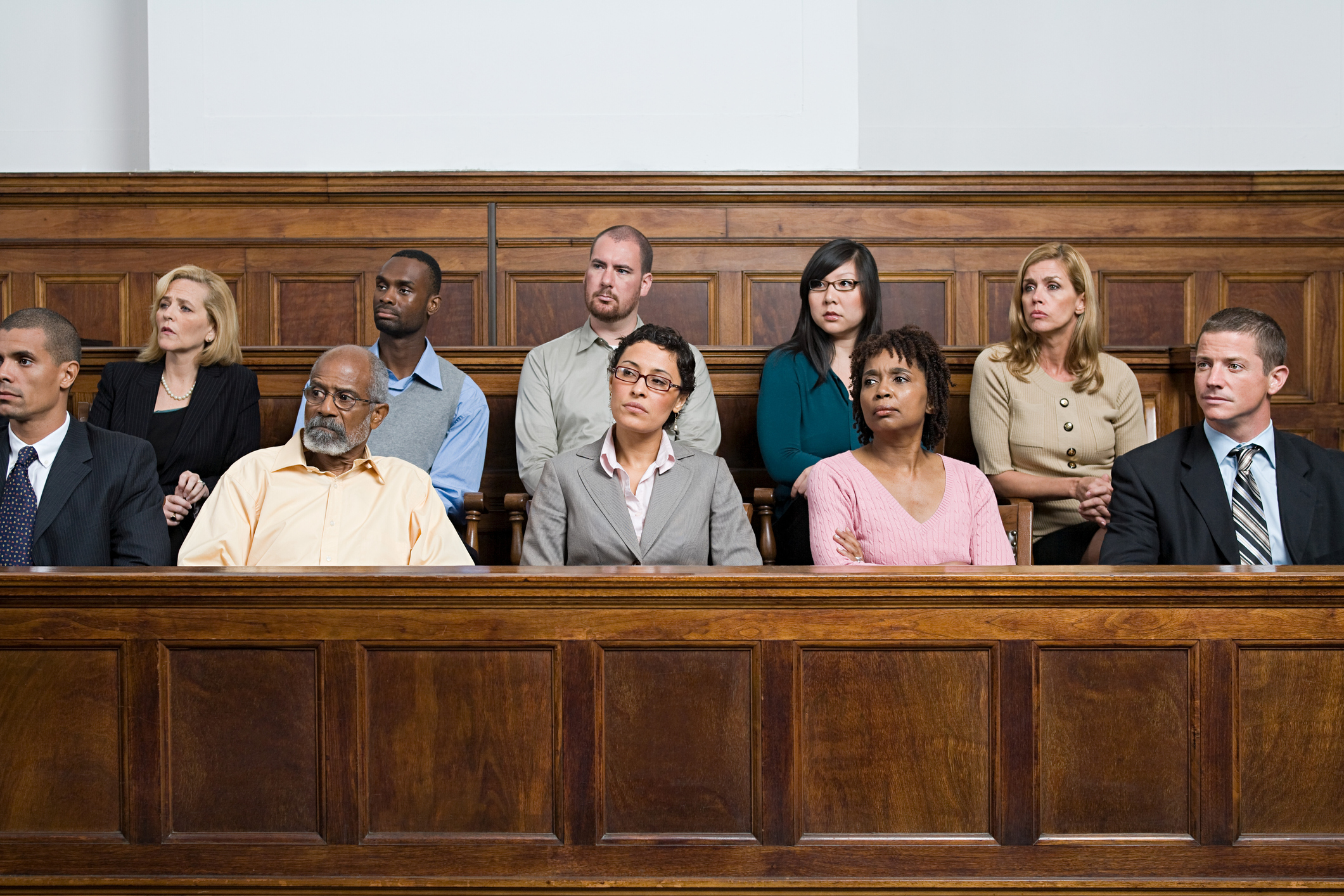
The Pennsylvania Superior Court has decided the case of Commonwealth v. Evans, 2026 PA Super 96, affirming a conviction for false imprisonment of a minor despite alarmingly little evidence. A jury in Montgomery County found that a 45-year-old man approached a 14-year-old girl at the Willow Grove Mall, took hold of her arm, and walked her against her will for about 36 seconds before she pulled free and ran. The Court held that the evidence was sufficient even though the restraint was short, happened in a crowded mall, and did not involve the girl screaming or struggling. The Court also upheld the trial court’s decision, after the jury deadlocked, to remove a juror who said she would no longer discuss the case and to replace her with an alternate. The new jury convicted. Judge Kunselman dissented.
The case establishes that a short detention of just a few seconds can potentially support a felony false imprisonment conviction (and Megan’s Law registration requirement) even when the complainant does resist in any way, and it gives a trial court room to remove a deadlocked juror who refuses to keep deliberating. Because the panel divided, this is the kind of published decision that will hopefully draw a successful request for reargument or a petition for allowance of appeal.
The Facts of the Case
On the evening of July 12, 2023, the 14-year-old complainant was shopping with three friends at the Willow Grove Mall in Montgomery County. She got upset with one of her friends, left the group, and rode a down escalator toward a first-floor jewelry store, listening to music and looking at her phone. At the bottom of the escalator, a 45-year-old man who had ridden down ahead of her waited for her, offered his arm, and told her to walk with him.
She testified that she did not go with him willingly. She said he grabbed her wrist, tucked it inside his arm, and “pressed down” so she could not pull away, and that he walked her away from the jewelry store she had wanted to visit. Asked why she did not just turn toward the store, she answered, “because I couldn’t get away from him, and that’s where he was walking.” He told her his name was Alex and that he was 25. She told him she was 13, a year younger than her real age, to make clear she was a child. She was frightened, and she started secretly recording him on her phone through Snapchat.
She testified that his grip was tight enough that she could not free herself, and that each time she pulled away he took hold again. After he loosened his grip, she pulled free and told him she was 13. She said he then asked “if he was too old for [her]” and kept trying to get her to take his arm again. She stepped back, yelled, and walked away, then ran, as a passing woman asked whether she needed help. The whole thing lasted about 36 seconds and moved her toward a corner of the mall near an exit that, the Court noted, led to the man’s parked car. She reported the encounter to mall security and then to the Abington Police, who arrested the man and charged him with false imprisonment of a minor and two counts of harassment.
The Ex Parte Questioning and Removal of a Juror
The case was tried in April 2024. The jury deliberated, came back to rewatch the videos and photographs to fix when the man took the girl’s arm, and later asked the court to explain what it means to “interfere substantially” with someone’s liberty. Early in the afternoon, the jury reported that it could not reach a unanimous verdict.
The court gave a Spencer charge, also called a dynamite charge, which tells a deadlocked jury to keep trying to reach a verdict with an open mind but without surrendering firmly held convictions. The jury went back to deliberate and then sent a note: “We are unable to reach a verdict. One juror respectfully but forcefully no longer wishes to discuss the aspects of this case.”
The court’s first reaction was understandably to declare a mistrial. The prosecutor disagreed, arguing that a juror who was refusing to deliberate should be struck for cause and replaced, because “[i]f they’re not deliberating, they’re not doing their job.” Defense counsel asked for a mistrial, arguing that the juror’s refusal to keep talking reflected her conscientious view of the evidence.
The judge then interviewed the juror, Juror No. 8, in the robing room, on the record but without counsel or the defendant present. The exchange was brief. After the juror said she felt like she was “in the principal’s office,” the court confirmed that she was the juror described in the note and that she no longer wished to discuss the case. The court discharged her and replaced her with an alternate, explaining that she was not a juror who simply would not change her mind: “She’s not sticking to her position. She’s refusing to deliberate anymore.” The new jury watched the video again and returned a guilty verdict the same day. The court later sentenced the man to three and one-half to ten years in prison and ordered him to register as a Tier I sex offender for fifteen years.
Removing a Juror Who Refuses to Deliberate
On appeal, the defense argued that the trial court should not have removed Juror No. 8 because the short colloquy never established whether she was refusing to deliberate or had deliberated and reached a firm conclusion she would not give up. The Superior Court rejected the argument and affirmed.
The Court applied the rule that the decision to discharge a juror rests in the sound discretion of the trial judge, who may substitute an alternate when the facts show that a juror can no longer perform the role. The trial judge, the Court observed, was in a unique position to evaluate Juror No. 8 in person. The jury had the case for about four hours, the court had instructed the jurors more than once to keep an open mind and consult with one another, and on that record the Court concluded that the judge could treat the juror’s refusal to discuss the case as a refusal to deliberate rather than a genuine deadlock requiring a mistrial.
The Court drew a line between two situations. A juror who deliberates and then holds to a minority view cannot be removed for that. A juror who will not keep deliberating can be. The two can look the same from the outside, and the short interview here did not explore why Juror No. 8 would not continue, which is the question that separates them. The court had also been ready to declare a mistrial before it placed her on the removable side of the line. Judge Kunselman dissented.
The Ex Parte Interview Issue Was Not Preserved
The defense also argued that questioning Juror No. 8 without counsel present violated the right to have counsel at a critical stage of trial. The Court did not reach the merits. It held the claim waived because counsel had not objected on that ground in the trial court and had instead pressed for a mistrial. The point for trial lawyers is important. An objection has to be specific and on the record when the issue comes up no matter how significant the issue.
“Substantial” Interference With Liberty
On sufficiency, the defense argued that the evidence did not show a substantial interference with the girl’s liberty, pointing to video that, in its view, showed her walking calmly at the man’s side rather than a child in distress. Viewing the evidence in the light most favorable to the Commonwealth, the Superior Court disagreed.
Drawing on earlier decisions, the Court explained that false imprisonment of a minor reaches restraints less serious than those required for kidnapping or unlawful restraint, and that the word “substantially” has its ordinary meaning, covering interference with liberty in an ample or considerable manner. The Court held that the girl’s passive reaction did not defeat the charge. It relied on her testimony that she was in “shock,” wrote that the jury could read her demeanor on the video as bewilderment rather than calm, and found nothing in the statute that excludes victims who “silently retreat inward in response to adults’ commandeering and restraints instead of lashing out in defiance.” The Court also held that the short length of the restraint did not take it out of the reach of the statute, citing decisions that found a substantial interference in a one-minute confinement of a child and in a brief grab of a 13-year-old, and distinguishing the kind of short, good-faith detention, such as a store owner questioning a suspected shoplifter, that may belong in civil court.
The Court rejected a related challenge to the jury instruction that defined “substantially.” It held that the charge tracked an earlier Superior Court decision and that, read as a whole, it created no real risk of confusion or prejudice even though it referred in passing to kidnapping and unlawful restraint without defining those crimes.
The Takeaway
The practical point is a serious one for anyone charged with this offense. A restraint that lasts only seconds, in a public place, can possibly support a felony conviction when the complainant is a child, and the complainant’s own account of her state of mind can carry the “substantial interference” element even where the video looks ambiguous. A conviction also requires fifteen years of sex-offender registration even though false imprisonment is not itself a sex crime and the Commonwealth does not have to prove a sexual motive. Reading “substantially” this broadly makes the line between the crime and a brief, lawful encounter harder to draw, and the registration consequence is severe.
The juror ruling may be an even bigger problem. After Evans, a trial court faced with a deadlock can potentially question a reported holdout and, if it finds she has stopped deliberating, replace her with an alternate instead of declaring a mistrial. That is a significant power, and the panel did not agree on it. Trial counsel unquestionably should have objected to the court doing that without counsel there. Until the Supreme Court takes up the question, counsel should make a complete record any time a court considers removing a juror during deliberations and should be ready to ask for a mistrial on the record rather than a substitution.
Facing criminal charges or appealing a criminal case in Pennsylvania?

Philadelphia Criminal Lawyer Zak Goldstein
If you are facing criminal charges or under investigation by the police, we can help. We have successfully defended thousands of clients against criminal charges in courts throughout Pennsylvania and New Jersey. We have successfully obtained full acquittals and dismissals in cases involving charges such as Conspiracy, Aggravated Assault, Rape, Violations of the Uniform Firearms Act, and First-Degree Murder. We have also won criminal appeals and PCRAs in state and federal court, including the successful direct appeal of a first-degree murder conviction and the exoneration of a client who spent 33 years in prison for a murder he did not commit. Our award-winning Philadelphia criminal defense lawyers offer a free criminal defense strategy session to any potential client. Call 267-225-2545 to speak with an experienced and understanding defense attorney today.