

Philadelphia Criminal Defense Blog

PA Superior Court: Defense Counsel Ineffective for Failing to Call Impeachment Witness in Rape Case

Criminal Defense Lawyer Zak Goldstein - Philadelphia, PA
The Pennsylvania Superior Court has decided the case of Commonwealth v. Orner, holding that trial counsel was ineffective for failing to call a witness in a rape case. The defense witness would have testified that the complainant admitted to the witness that she fabricated the claims against the defendant and that the sexual acts between them were consensual. This case really is not surprising given the crucial nature of this type of testimony, but it is a reminder that defense attorneys need to be diligent in investigating their cases and presenting witnesses that are helpful to their defense at trial.
Commonwealth v. Orner
The complainant was celebrating New Years with her boyfriend and their neighbor, the defendant. All three were drinking heavily at the complainant’s house. At approximately 9:00 PM, the complainant reported going to bed while the defendant and her boyfriend left the complainant’s residence to continue drinking at the VFW. The defendant was unable to enter the VFW and parted ways with the boyfriend.
The defendant then returned to the complainant’s residence. The defendant was subsequently questioned by the police where he denied any sexual contact had occurred between him and the complainant. He did eventually concede that he touched the complainant’s vagina when he was confronted with a search warrant for a DNA test. The defendant denied raping the complainant and would later testify that he and the complainant had been engaged in a flirtatious affair and had been “messing around” for about a year. Upon reaching the residence, the defendant claimed that he performed oral sex on the complainant for two minutes, but stopped when she asked him to and left. The defendant asserted that all sexual contact between him and the complainant was consensual.
At trial, the complainant denied that she and the defendant were engaged in a romantic affair. She testified that she had been awoken to the defendant performing oral sex on her. She also testified that the defendant penetrated her with his penis and that the defendant fled the scene after she woke up. After the defendant left, the complainant called her boyfriend, and then she called 911. Officers responded about ten minutes later, and her boyfriend was still present at the house. The boyfriend testified that he was in an insane rage after hearing the allegations, but he did concede that he had previously sent a text message claiming that the defendant and the complainant had been engaged in affair two years prior to the allegations.
The defendant was eventually arrested and charged with numerous crimes including rape, involuntary deviate sexual intercourse, sexual assault, and indecent assault. His first two trials ended in mistrials. During the third trial, defense counsel announced that he had failed to serve subpoenas on a married couple who would have been able to corroborate the defendant’s claims about his relationship with the complainant. A deputy sheriff was able to locate the husband, but the deputy could not locate the wife. The husband testified at trial and stated that the complainant had publicly expressed a desire to have sex with the defendant and had told his wife about her relationship with the defendant on the same day as he had supposedly raped the complainant. At the end of the trial, the defendant was found guilty of the aforementioned charges. The trial court sentenced the defendant to six to fourteen years’ incarceration. The defendant then filed a timely appeal. However, he withdrew his appeal.
The defendant filed a Post-Conviction Relief Act (“PCRA”) petition alleging that the trial counsel was ineffective for failing to call the wife to testify at his trial. The Court held an evidentiary hearing where both the trial attorney and the wife were called to testify. At this hearing, the wife testified that the defendant and the complainant had intended to rendezvous at the complainant’s residence while her boyfriend was drinking at the VFW. According to the wife, the defendant and the complainant were engaged in consensual sex, but they were interrupted when the boyfriend returned home. The defendant then fled the scene when the boyfriend arrived. The wife also testified that the complainant had given the defendant a key to her home and that she had confessed to her that she lied about the defendant raping her. Finally, the wife testified that had she been subpoenaed by the trial attorney she would have testified at the defendant’s trial.
The PCRA court granted the defendant’s petition and awarded him a new trial on the basis that trial counsel was ineffective for failing to call the wife at trial. Specifically, the PCRA court concluded that the wife’s testimony was “crucial because it would have greatly supported [the defendant’s] defense” that the complainant consented to the sexual acts in question that night and had a motive to fabricate the rape charges. The Commonwealth then filed a timely appeal.
The Pennsylvania Superior Court’s Decision
The Pennsylvania Superior Court affirmed the PCRA court’s decision. The Superior Court noted that the Commonwealth’s case against the defendant depended entirely upon the credibility of the complainant. If the wife had testified at trial, her testimony would have directly undermined the complainant’s credibility. The Superior Court ruled that the wife’s testimony was “unquestionably beneficial” to the defendant’s trial defense. Consequently, trial counsel’s failure to subpoena the wife deprived the defendant of crucial support for his proffered defense. Therefore, the defendant’s conviction is vacated, and he will get a new trial.
Facing Criminal Charges? We Can Help.

Philadelphia Criminal Defense Lawyers
If you are facing criminal charges or under investigation by the police, we can help. We have successfully defended thousands of clients against criminal charges in courts throughout Pennsylvania and New Jersey. We have successfully obtained full acquittals in cases involving charges such as Conspiracy, Aggravated Assault, Rape, and Murder. Our award-winning Philadelphia criminal defense lawyers offer a free criminal defense strategy session to any potential client. Call 267-225-2545 to speak with an experienced and understanding defense attorney today.

NOT GUILTY: Attorney Goldstein Wins Rape Trial
Philadelphia Criminal Defense Lawyer Zak Goldstein
Philadelphia criminal defense lawyer Zak T. Goldstein recently won a full acquittal for his client in the case of Commonwealth v. LJ. In this difficult case, prosecutors alleged that LJ had sexually assaulted his girlfriend’s 9-year-old daughter while the girlfriend was sleeping. Based on the statements of the complainant and the complainant’s mother, who claimed to have seen some suspicious behavior but had not gone to police, prosecutors arrested LJ and charged him with rape, involuntary deviate sexual intercourse, indecent assault, and related charges.
LJ rejected an offer to plead to time served and misdemeanor charges despite knowing that a conviction could result in a life sentence. Attorney Goldstein represented LJ during one of Philadelphia’s first jury trials since resuming trials during the COVID pandemic and successfully challenged the complainant’s credibility on the stand. By highlighting major inconsistencies in her testimony and presenting forensic evidence which made it unlikely that LJ had assaulted her on the day in question, Attorney Goldstein was able to obtain a full acquittal for LJ. LJ will now be released and will not have to register as a sex offender or spend time in prison.
These cases are very serious and often difficult to win, but the Philadelphia criminal defense lawyers of Goldstein Mehta LLC are not afraid to take challenging cases to trial.
Need a criminal defense lawyer in Philadelphia? We can help.

Goldstein Mehta LLC Criminal Lawyers
If you are facing criminal charges or under investigation by the police, we can help. We have successfully defended thousands of clients against criminal charges in courts throughout Pennsylvania and New Jersey. We have successfully obtained full acquittals in cases involving charges such as Conspiracy, Aggravated Assault, Rape, and Murder. Our award-winning Philadelphia criminal defense lawyers offer a free criminal defense strategy session to any potential client. Call 267-225-2545 to speak with an experienced and understanding defense attorney today.

Third Circuit Court of Appeals Rejects Entrapment Defense in United States v. Davis

Philadelphia Criminal Defense Lawyer Zak Goldstein
The Third Circuit Court of Appeals has decided the case of United States v. Davis, holding that a defendant failed to prove that he had been entrapped when he willingly engaged with an agent, posing as a child, to meet and engage in sexual activity. Further, the Third Circuit held that an agent can be tenacious in their conversations with a defendant without entrapping them. Although this defendant did not win on appeal, the case does explain the basics of the entrapment defense in federal court. It also highlights the fact that entrapment can be a very difficult defense to prove in cases involving sex crimes.
United States v. Davis
The defendant answered an ad in the “w4m” section of Craiglist.com. This section is for women who are supposedly looking for casual sex with men. The ad was titled “Wild child” which was run, unbeknownst to the defendant, by an agent with the Pennsylvania Attorney General’s Office. The ad stated that the poster was an eighteen-year-old woman and requested that interested men respond “if you are looking for fun.” The defendant responded to the post. The agent identified himself as “Marissa” and stated that she was actually fourteen years old, to which the defendant stated “that’s ok, I know how to be respectful, do you wanna meet today?”
The defendant and “Marissa” eventually began text messaging one another. During the eight days that they texted, the defendant told “Marissa” that he was gay and lied about his age. Additionally, he avoided engaging in lewd conversation and expressed a fear of getting caught. He must have sensed that “Marissa” might not have genuine intentions because he asked if she was “affiliated with any type of law enforcement.” However, despite this concern, the defendant still engaged in grooming behavior with “Marissa.” He specifically asked her about her virginity, asked when she as not being supervised, and repeatedly offered to buy her gifts, including an iPad.
Eventually, the defendant and “Marissa” agreed that she would skip school and meet him at a McDonalds near her house in Pennsylvania. Once they came up with a plan to meet, their conversation became sexual. “Marissa” explained that she was concerned about getting pregnant to which the defendant assured her that he would “bring protection.” On the day they were supposed to meet, the defendant traveled from New York to the McDonalds where they were supposed to meet. He was subsequently arrested by the agent posing as “Marissa.”
During questioning, the defendant admitted that he knew “Marissa” was fourteen and that he had brought condoms for his visit with her. The defendant further admitted that he became attracted to young girls after visiting a water park and that he specifically liked 14-year-old girls because he believed prostitutes were unclean. The defendant would later testify at trial that he never made those statements to the agent.
The defendant was subsequently arrested and charged in federal court with one count of use of an interstate facility to attempt to knowingly persuade, induce, entice, and coerce a minor to engage in sexual activity and one count of travel in interstate commerce with intent to engage in illicit sexual conduct with a minor. The defendant elected to proceed by jury trial. At trial, he argued that he was entrapped to commit the crime and that he did not knowingly entice a minor because he believed “Marissa” was an adult who was role-playing as a fourteen-year-old. The jury was not swayed and convicted the defendant of the aforementioned charges. The defendant was subsequently sentenced to 127 months imprisonment and five years of supervised released. He was also required to register as a sex offender. The defendant then filed a timely appeal. For purposes of this blog, only the issue of entrapment will be discussed.
What is Entrapment?
Entrapment is an affirmative defense to a crime. It occurs when a defendant, who was not predisposed to commit a crime, does so as a result of the government’s inducement. To be successful in raising an entrapment defense, a defendant must establish two things: that there was government inducement of the crime and a lack of predisposition on the part of the defendant to engage in the criminal conduct. If a defendant makes this prima facie showing of these two elements, the burden then shifts to the government to disprove the entire defense by disproving one of the elements beyond a reasonable doubt.
Usually, the government will try to show that the defendant had a predisposition to commit the crime. The government can prove predisposition by showing one of the following: an existing course of criminal conduct similar to the crime for which the defendant is charged, an already formed design on the part of the accused to commit the crime for which he is charged, or a willingness to commit the crime for which he is charged as evidenced by the accused’s ready response to the inducement.
The Third Circuit’s Opinion
The Third Circuit affirmed the defendant’s conviction and sentence The defendant argued that he had been entrapped to commit these crimes because he lacked a predisposition to commit them. Specifically, he argued that that because he attempted to avoid sexual conversation with “Marissa,” his lack of criminal history, and the agent’s tenacity in the sting operation, the government induced him to break the law. The Third Circuit saw things differently. In its opinion, the Third Circuit found that the defendant did in fact have a willingness to commit these crimes. Specifically, the Third Circuit found compelling the defendant’s statements that he was attracted to young girls despite his denial of them at trial. Further, the Third Circuit also found that the defendant immediately asked “Marissa” to meet after she told him she was fourteen was significant to show that that he intended to commit these crimes. The Third Circuit rejected all of his other arguments on appeal. His convictions will stand, and he will not get a new trial.
Facing Criminal Charges? We Can Help.
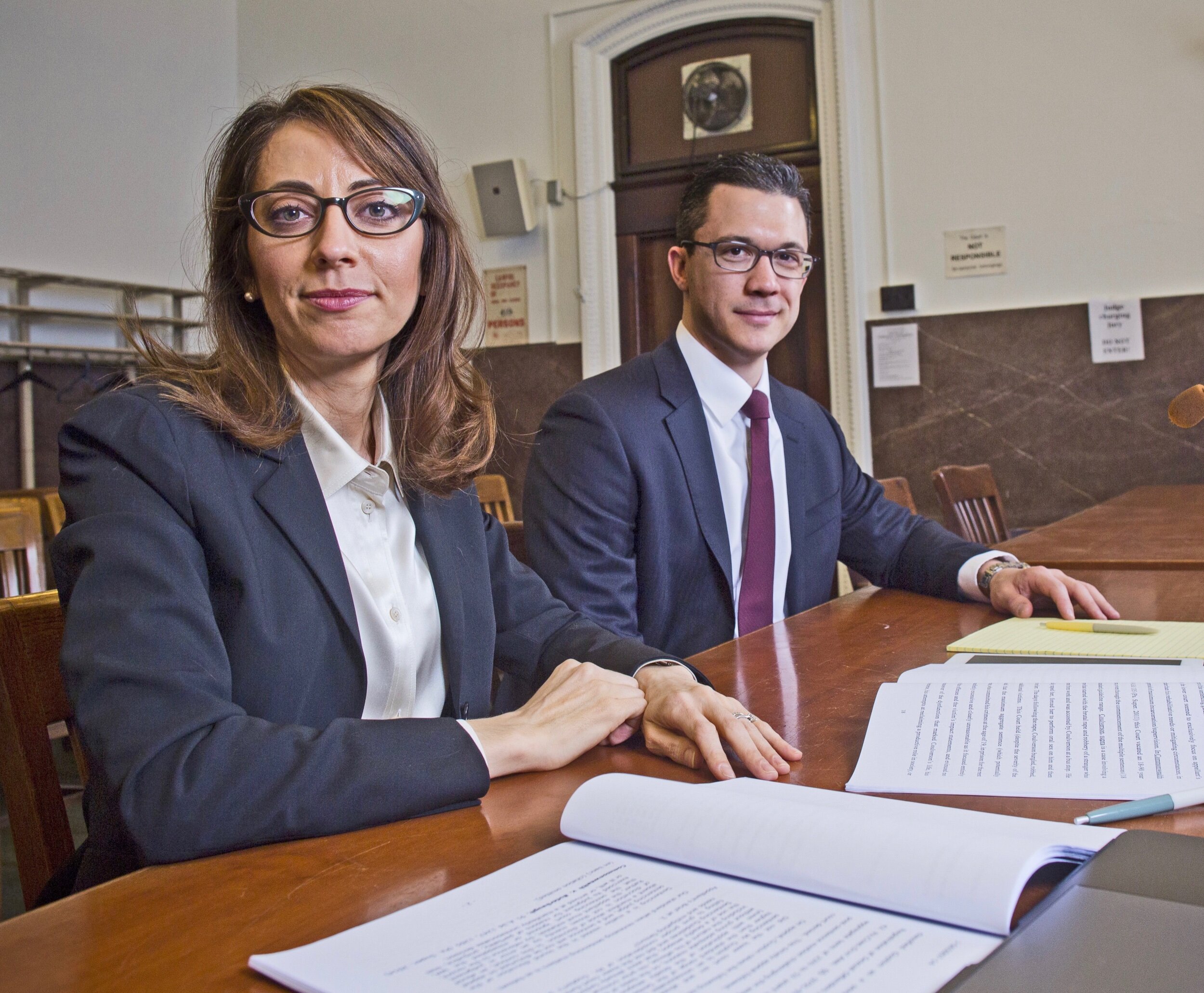
Criminal Defense Lawyers Zak Goldstein and Demetra Mehta
If you are facing criminal charges or under investigation by the police, we can help. We have successfully defended thousands of clients against criminal charges in courts throughout Pennsylvania and New Jersey. We have successfully obtained full acquittals in cases involving charges such as Conspiracy, Aggravated Assault, Rape, and Murder. Our award-winning Philadelphia criminal defense lawyers offer a free criminal defense strategy session to any potential client. Call 267-225-2545 to speak with an experienced and understanding defense attorney today.

PA Supreme Court: Police Officer Cannot Testify About "Normal" Response to Sexual Assault Unless Qualified as Expert
Philadelphia Criminal Lawyer Zak Goldstein
The Pennsylvania Supreme Court has decided the case of Commonwealth v. Jones, holding that a police officer cannot testify about child sexual abuse victims’ responses and behaviors unless they are properly qualified as an expert. This decision is significant because prosecutors frequently like to use police officers to bolster their complainants’ testimony by having police officers testify as to why they are offering inconsistent testimony, especially in sexual assault cases. Commonwealth v. Jones now holds that although a police officer may testify about typical victim behavior under some circumstances, which the Court did not define, the officer must first at least be properly qualified as an expert before they can offer such testimony.
Commonwealth v. Jones
The defendant was charged with rape, involuntary deviate sexual intercourse with a person under sixteen years of age, unlawful contact with a minor, aggravated indecent assault, sexual assault, statutory sexual assault, and other offenses following allegations by his stepdaughter that he repeatedly sexually abused her over a period of several years. According to the complainant, the first instance of abuse occurred when she was thirteen years old. The defendant told her that no one would believe her if she came forward. However, when the complainant turned 17, she told her mother about the alleged abuse.
The defendant was subsequently arrested and tried by a jury. Throughout the trial, defense counsel focused on discrepancies in the complainant’s version of events in an attempt to undermine her credibility. These discrepancies and inconsistencies related to the timing and the location of these assaults. In an attempt to bolster the complainant’s credibility, the Commonwealth called a detective who had interviewed the complainant during the course of his investigation.
During his direct examination, the detective testified that children can have difficulty remembering all the times they were sexually abused. Defense counsel objected to this and argued that this amounted to expert testimony and the detective had not been qualified as an expert. The trial court overruled the objection and allowed the testimony to come in. At the conclusion of the trial, the defendant was subsequently convicted of the aforementioned charges and was sentenced to twenty-seven to sixty years’ imprisonment. The defendant then filed a post-sentence motion which was denied. He then filed a timely appeal to the Superior Court.
The Superior Court’s Decision
On appeal, the defendant argued that the trial court abused its discretion by allowing the detective to testify that child sexual assault victims are often unable to recall specific details and dates of sexual assaults. He further argued that this evidence was actually expert testimony because it was not within the scope of knowledge possessed by the average layperson. Finally, because the detective had not been qualified as an expert witness, the trial court should have not allowed this testimony to be presented at his trial.
In a 2-1 decision, the Superior Court affirmed the defendant’s conviction. The majority explained that challenges to the admissibility of evidence typically rest within the sound discretion of the trial court and will not be reversed absent an abuse of discretion. The Superior Court found that the detective’s testimony “constituted permissible lay opinion testimony because it was based on information within the detective’s personal knowledge and experience.” Consequently, the Commonwealth did not need to qualify the detective as an expert in order for him to testify. However, the dissenting opinion argued that 42 Pa. C.S. § 5920 was the dispositive statute for this question. According to the dissent, this statute overrules the previous decision in Commonwealth v. Dunkle which held that opinions regarding responses by child sexual assault victims fall within the knowledge of laypersons and thus a witness did not have to qualify as an expert to testify about the behaviors of these victims. Undeterred, the defendant then filed a petition for allowance of appeal which the Pennsylvania Supreme Court granted.
What is 42 Pa. C.S. § 5920?
42 Pa. C.S. § 5920 is titled “Expert testimony in certain criminal proceedings.” It provides:
(a) Scope.--This section applies to all of the following:
(1) A criminal proceeding for an offense for which registration is required under Subchapter H of Chapter 97 (relating to registration of sexual offenders).1
(2) A criminal proceeding for an offense under 18 Pa.C.S. Ch. 31 (relating to sexual offenses).
(b) Qualifications and use of experts.--
(1) In a criminal proceeding subject to this section, a witness may be qualified by the court as an expert if the witness has specialized knowledge beyond that possessed by the average layperson based on the witness's experience with, or specialized training or education in, criminal justice, behavioral sciences or victim services issues, related to sexual violence, that will assist the trier of fact in understanding the dynamics of sexual violence, victim responses to sexual violence and the impact of sexual violence on victims during and after being assaulted.
(2) If qualified as an expert, the witness may testify to facts and opinions regarding specific types of victim responses and victim behaviors.
(3) The witness's opinion regarding the credibility of any other witness, including the victim, shall not be admissible.
(4) A witness qualified by the court as an expert under this section may be called by the attorney for the Commonwealth or the defendant to provide the expert testimony.
It should be noted that 42 Pa. C.S. § 5920 was passed after Commonwealth v. Dunkle was decided. Dunkle was a Supreme Court decision which barred expert testimony on typical victim behaviors. As one can see by reading the statute, subsection (2) states “[i]f qualified as an expert, the witness may testify to facts and opinions regarding specific types of victim responses and victim behaviors” which strongly suggests that one must be an expert in order to testify about such things. Therefore, the dissent argued that this statute superseded it and was the controlling authority. The Pennsylvania Supreme Court was then tasked with deciding whether this position was correct and whether the trial court improperly admitted the detective’s testimony.
The Pennsylvania Supreme Court’s Decision
The Pennsylvania Supreme Court reversed the lower courts’ decisions and granted the defendant a new trial. First, the Court held that 42 Pa. C.S. § 5920 at least partially overruled Commonwealth v. Dunkle. Next, the Court reviewed the facts of the instant case and the applicable law. It held that “testimony from a law enforcement officer concerning child victims’ typical behaviors and responses to sexual abuse, when based on that officer’s training and experience, falls within the realm of expert testimony.” Further, the Court continued that the average juror is not privy to the complex psychological dynamics surrounding sexual abuse and thus testimony about such issues cannot be qualified as lay testimony.
The Court found that, in the instant case, the detective provided insights gained through specialized occupational training and experience which was not within the average layperson’s knowledge. As such, the trial court committed an error when it permitted this testimony to be introduced at the defendant’s trial. The next step in the Court’s analysis was to determine whether the inclusion of this testimony amounted to harmless error.
In this case, the Court found that permitting the detective to testify about the stepdaughter’s ability to recall specific details did not qualify as harmless error. Specifically, the Court held that because the Commonwealth emphasized the detective’s training and experience, the jury may have given the detective’s testimony undue weight. Further, because the stepdaughter’s credibility was central to the case, allowing the detective to bolster her credibility by offering his testimony on the behaviors of sexual assault victims wrongfully prejudiced the defendant. Therefore, because the defendant was unfairly prejudiced by this testimony, the Court vacated his conviction, and he will receive a new trial.
Facing Criminal Charges? We Can Help.
Philadelphia Criminal Defense Lawyers
If you are facing criminal charges or under investigation by the police, we can help. We have successfully defended thousands of clients against criminal charges in courts throughout Pennsylvania and New Jersey. We have successfully obtained full acquittals in cases involving charges such as Conspiracy, Aggravated Assault, Rape, and Murder. We can also help you with an appeal. Our award-winning Philadelphia criminal defense lawyers offer a free criminal defense strategy session to any potential client. Call 267-225-2545 to speak with an experienced and understanding defense attorney today.