

Philadelphia Criminal Defense Blog

PA Superior Court: Improper Exclusion of Defendant's Family Members from Jury Selection Requires New Trial

Philadelphia Criminal Defense Lawyer Zak Goldstein
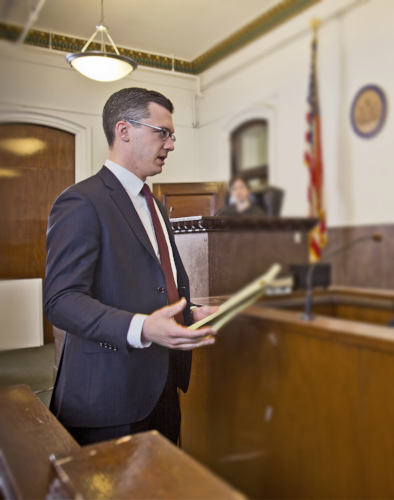
The Pennsylvania Superior Court has decided the case of Commonwealth v. Jordan, holding that the trial court erred in refusing to permit the defendant’s family members to be present in the courtroom during selection. Because the trial court did not have sufficient reason to believe that the defendant’s family members were involved in any witness intimidation, the trial court violated the defendant’s right to a public trial by barring the family members from the courtroom. Therefore, the defendant will receive a new trial.
The Facts of Commonwealth v. Jordan
In Jordan, the defendant was arrested and charged with Conspiracy, Attempted Murder, and other related charges for an incident which took place in Philadelphia. The defendant chose to proceed by way of jury trial, and he was eventually convicted by the jury and sentenced to 37.5 - 100 years’ incarceration. Although the defendant appealed on the sufficiency of the evidence, the Superior Court rejected this portion of the appeal.
More interestingly, however, the defendant also appealed the trial court’s order barring his family members from remaining in the courtroom during voir dire (jury selection). During jury selection, the defense attorney specifically objected to the defendant’s family being excluded from jury selection. He argued on the record that they did not cause any problems the previous day and that jury selection is part of the trial, and the law requires that criminal trials be public.
After the defense lawyer objected, the judge stated that on the previous day, a large group of people barreled into the courtroom in an intimidating manner. The judge did not know who they were, but she somehow knew that they were there on behalf of the defendants. The judge further stated that witnesses voiced their concerns about their safety. In previous cases, the judge had had problems with jurors feeling intimidated, and so the judge decided to bar everyone, including the defendant’s family, from watching jury selection.
In response, defense counsel argued that the defendant’s mother was in her mid-50’s and his step-father was in his mid-60’s and that they had not been a part of whatever problem had occurred the day before. Therefore, he requested that they be allowed to stay in the courtroom. The court denied the request and prohibited the defendant’s mother and step-father from remaining in the courtroom during jury selection.
The Right to a Public Trial
Following his conviction, the defendant appealed. In addition to arguing that the evidence was insufficient to support the conviction, he also argued that the judge violated his Sixth Amendment right by barring his family members from the courtroom during jury selection. Under the Sixth Amendment, a defendant has a right to a public trial. The right is for the benefit of the accused and ensures “that the public may see he is fairly dealt with and not unjustly condemned, and that the presence of interested spectators may keep his triers keenly alive to a sense of their responsibility and to the importance of their functions.” In previous cases, the United States Supreme Court has held that the right to a public trial includes the right to have the public attend voir dire and view the jury selection.
Can the Judge Close the Courtroom to the Public in a Criminal Case?
Although the general rule is that a criminal trial should be public, the trial judge may close the courtroom under limited circumstances. In order to close a courtroom, the judge must properly find that:
1) there is an overriding interest that is likely to be prejudiced,
2) the closure is no broader than necessary to protect that interest,
3) there are no reasonable alternatives to closure, and
4) the court can make findings adequate to support the closure.
If these four requirements are not met, then the judge may not close the courtroom and must allow members of the public to view all portions of a criminal trial, including jury selection.
Nonetheless, the Pennsylvania Supreme Court has held that “where trial courts perceive a threat to the orderly administration of justice in their courtrooms by an unmanageable public, they may always place reasonable restrictions on access to the courtroom, so long as the basic guarantees of fairness are preserved.” This means that a trial judge may be able to close a courtroom in response to legitimate security or intimidation concerns. However, even when overriding interests warrant closure, if the parties or the press petition the court to admit a limited number of specified individuals, the court must consider the request and place on the record the reasons for denying the request. This enables the appellate court to examine whether exclusion was justified.
In this case, the Superior Court rejected the trial court’s reasoning and found that the court failed to follow the above rules. Although the court may have been justified in barring large groups from the courtroom during jury selection due to intimidation concerns, the court failed to give any real consideration to whether allowing just the defendant’s parents to remain in the room would alleviate the intimidation concerns.
An exclusion of the general public does not necessarily warrant the same treatment as the exclusion of the defendant’s close family members or the press. Therefore, if the mother and father had participated in the previous day’s disturbance, the trial court may have been justified in excluding them. However, the judge did not make any findings as to whether the defendant’s mother and stepfather had done anything. Instead, the court unreasonably failed to consider whether permitting just them to remain would be a reasonable alternative to barring everyone from the room.
Improper Denial of the Right to a Public Trial Requires a New Trial
In most cases, a defendant who appeals a legal error made by the trial judge will not receive a new trial unless the defendant suffered some kind of prejudice as a result of the legal error. This means that the Commonwealth usually has the right to argue harmless error, which is the idea that a conviction may be upheld if the Commonwealth can show beyond a reasonable doubt that even without the mistake, the defendant would have still been convicted.
However, there are certain types of errors that automatically require a new trial without a consideration of prejudice. This type of error is called a “structural error” or “structural defect.” The violation of the right to a public trial constitutes a structural error that will always invalidate the conviction. In this case, the defendant’s family members were excluded from the courtroom in violation of his right to a public trial without any real consideration of whether that was absolutely necessary to avoid witness intimidation. Therefore, the court committed a structural error, and the defendant will receive a new trial.
Facing criminal charges? We can help.

Criminal Defense Lawyers Demetra Mehta and Zak Goldstein
If you are facing criminal charges or are under investigation by the police, we can help. We have successfully defended thousands of clients against criminal charges in courts throughout Pennsylvania and New Jersey. We have won cases involving charges such as Conspiracy, DUI, Aggravated Assault, Rape, Possession with the Intent to Deliver, and Homicide. Our award-winning Philadelphia criminal defense lawyers offer a free criminal defense strategy session to any potential client. Call 267-225-2545 to speak with an experienced and understanding defense attorney today.

PA Superior Court: DUI Defendant May Call Expert Witness to Attack Validity of Field Sobriety Tests
Philadelphia Criminal Defense Lawyer Zak Goldstein
The Pennsylvania Superior Court has decided the case of Commonwealth v. Taylor. In Taylor, the Superior Court reversed the defendant’s conviction for DUI because the trial court improperly prohibited the defendant’s expert witness from testifying that field sobriety tests have not been scientifically validated for use in detecting impairment due to drugs. This is an important decision for defendants who are facing DUI charges and who may not have submitted to a blood test because it may allow the defendant to use expert testimony to attack the validity of field sobriety tests.
Commonwealth v. Taylor
The defendant was driving her car in York County, Pennsylvania with her 18-month-old child secured in the back seat.. She was driving twenty miles above the speed limit, and when a traffic light in front of her turned red, the defendant abruptly braked and nearly rear-ended a stopped vehicle in front of her. A few seconds after the light turned green, the defendant rapidly accelerated her car over a nearby curb and crashed into a utility pole located about 100 feet from the road.
A motorist who saw the accident pulled over next to the defendant’s car and offered to help her. The defendant got out of her car and told the motorist that she was not injured. Thankfully, her child was also unharmed. While speaking with the motorist, the defendant attempted to shut her car door, but the motorist stopped it from shutting because it could have hit the child’s outstretched arm.
A local police officer arrived at the scene of the accident a few minutes later. He observed the defendant having blood shot eyes and slurred speech, but he did not smell alcohol on her. Per the officer, the defendant also appeared to be confused and very tired. The officer then had the defendant perform two standard field sobriety tests. He had her walk in a straight line and and then do a test involving walking and turning 180 degrees. According to the officer, the defendant performed poorly on the tests. She allegedly had trouble balancing herself and following directions. The defendant’s body swayed during the tests, and she used her arms to keep steady. She also started the tests before being told to do so.
The officer arrested the defendant on suspicion of DUI and Endangering the Welfare of a Child (“EWOC”). While in custody, she admitted to taking Adderall and Xanax, but she could not provide the amounts taken or how long before the accident she had taken the medications. She denied having any injuries or medical conditions that could have affected her ability to operate a motor vehicle. At trial, the Commonwealth did not allege that the defendant was impaired by alcohol. Further, the Commonwealth did not introduce the results of any blood testing into evidence. Instead, the Commonwealth relied primarily on the arresting officer’s testimony regarding the defendant’s car accident and how she performed on the field sobriety tests. The officer testified at length regarding his expertise in administering those tests. Other than describing the scene of the accident, almost all of the officer’s testimony was focused on how poorly the defendant performed on the tests. He further testified that the defendant’s performance indicated impairment due to drug use.
The defense attributed the defendant’s performance to a possible head injury from the accident. Additionally, the defendant attempted to rebut the officer’s testimony with the opinion of its own expert witness, a medical toxicologist and physician. The doctor planned to testify that there was no scientific basis to rely on field sobriety tests to detect drug impairment because they have only been validated to reveal intoxication from alcohol. The trial court qualified the doctor as an expert in toxicology and on the scientific basis for field sobriety tests.
The doctor testified that he reviewed the defendant’s medical history and confirmed that she had been prescribed Xanax and Adderall. He also testified that after using the medication for 30 days, the medications should have little to no side effects. The defendant had been prescribed the medication for over 30 days prior to the accident, but there was no evidence regarding what dosages she took. However, when the doctor attempted to testify about field sobriety tests, the Commonwealth objected and the court sustained the objection. As such, the doctor could not testify about the utility of field sobriety’s tests in detecting drug impairment. At the conclusion of the trial, the jury found the defendant guilty of DUI and EWOC. The defendant then filed post-sentence motions which were denied. The defendant then filed a timely appeal.
What is Expert Testimony?
Rule 702 of the Pennsylvania Rules of Evidence governs expert testimony. Expert testimony is not relevant in every case. In other words, you cannot call an expert to claim that a witness is lying. It is only admissible when an expert has an opinion on a subject which requires knowledge, information, or skill beyond what is possessed by the ordinary juror. In criminal cases, expert witnesses are most often used in cases that involve some form of medicine or science. They are common in DUI cases and many motor vehicle cases.
In determining whether to qualify someone as an expert, courts are supposed to employ a liberal standard when determining if a witness qualifies as an expert in a particular field of study. The witness does not need to possess all of the knowledge in a given field, but the witness must possess more knowledge than is otherwise within the ordinary range of training, knowledge, intelligence or experience. Further, a witness does not need formal education to qualify as an expert, although it certainly helps. This case focused on whether a witness can testify as an expert witness without having practical, hands-on experience in the field. In this case, the trial court prohibited the doctor from testifying that the tests had not been validated for detecting drug usage because the doctor was not a police officer and had never performed the tests on someone himself.
The Superior Court’s Decision
The Superior Court held that it was reversible error for the trial court to preclude the doctor’s testimony concerning field sobriety tests. As a preliminary matter, the Superior Court held that the doctor was qualified as an expert in this particular field and that the Commonwealth did not dispute any of these qualifications. Additionally, the Superior Court found that the testimony would have gone to the heart of the issues in the defendant’s trial.
The Commonwealth was trying to prove that the defendant was impaired due to drug use, and prosecutors did not have any blood test results. They sought to prove intoxication by using the testimony of the officer and his observations of the defendant. They specifically sought to base a potential conviction on his observations of the defendant when she performed the field sobriety tests. If the doctor’s testimony had been admitted, it could have rebutted the officer’s conclusion that the defendant was impaired by drugs. As a result of the judge’s preclusion of the doctor’s testimony, the officer’s opinion on the defendant’s drug impairment went unchallenged. Therefore, this error in excluding the expert testimony resulted in significant prejudice to the defendant, and she will receive a new trial.
Facing criminal charges? We can help.

Philadelphia Criminal Defense Lawyers Demetra Mehta and Zak Goldstein
If you are facing criminal charges or are under investigation by the police, we can help. We have successfully defended thousands of clients against criminal charges in courts throughout Pennsylvania and New Jersey. We have won cases involving charges such as Conspiracy, DUI, Aggravated Assault, Rape, Possession with the Intent to Deliver, and Homicide. Our award-winning Philadelphia criminal defense lawyers offer a free criminal defense strategy session to any potential client. Call 267-225-2545 to speak with an experienced and understanding defense attorney today.
PA Superior Court: Odor of Marijuana in Car Does Not Automatically Justify Search of Trunk

Criminal Defense Lawyer Zak Goldstein
Can the police search the trunk if they smell marijuana coming from a car?
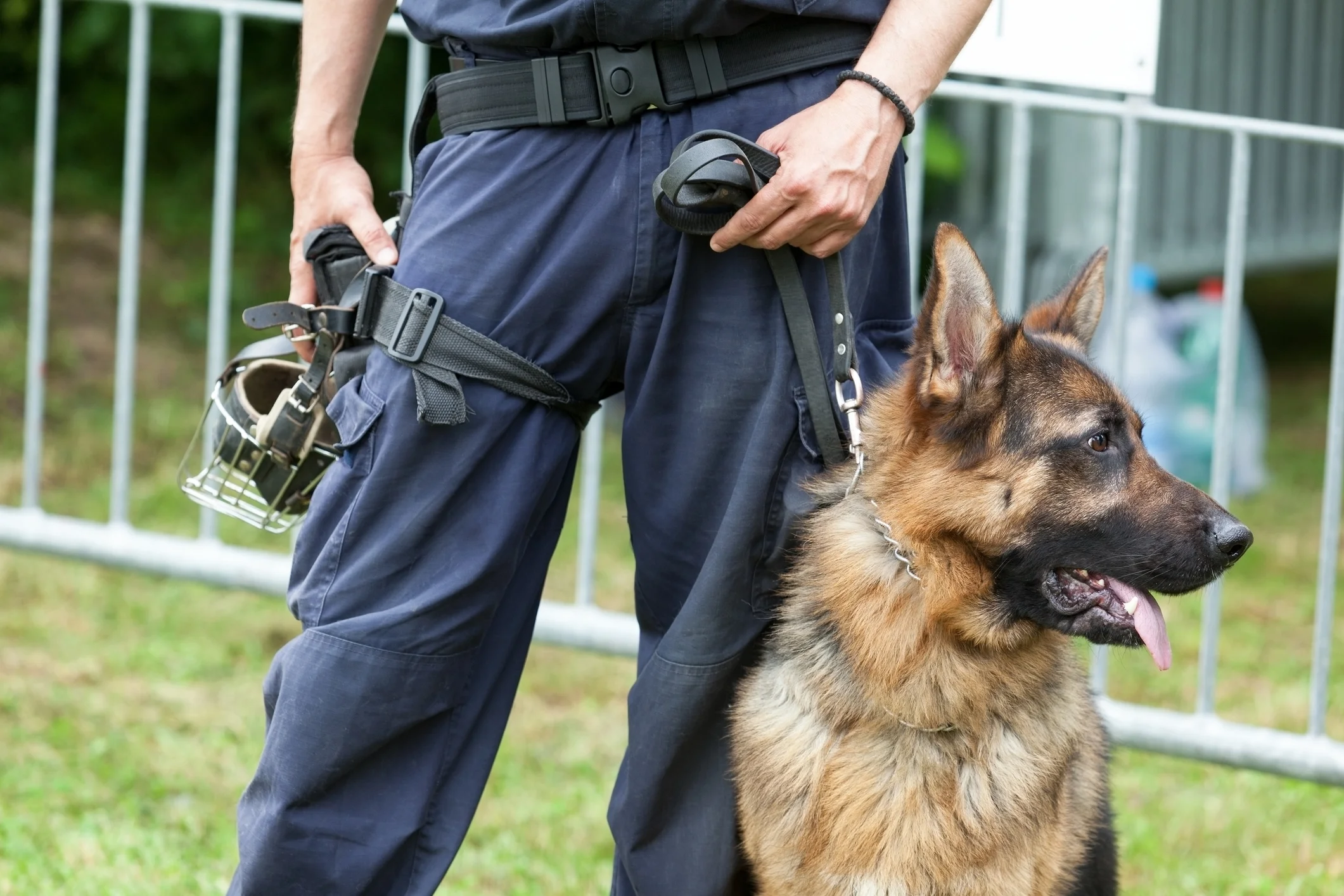
Maybe not. Just recently, the Pennsylvania Superior Court decided the case of Commonwealth v. Scott. The court held that Philadelphia Police Officers did not have probable cause to search the car’s trunk despite the fact that the car smelled like marijuana, police could see marijuana smoke come from the car when they opened the door, and they found a still-burning marijuana blunt in the car. Because the police had found the obvious source of the odor, they did not have probable cause to believe that they would find additional contraband in the trunk. This is an important opinion which provides at least some limitation on the automobile exception, which is the rule that allows police to search a car without a search warrant so long as they have probable cause to do so.
Commonwealth v. Scott
On February 1, 2017, at approximately 10:00 PM Officers Tamamoto and Kerr of the Philadelphia Police were traveling in a marked police car in the vicinity of 5800 North 16th Street in Philadelphia. Per Officer Kerr, this is a high crime area where numerous shootings and robberies have occurred.
On this night, the officers noticed a 2000 Nissan Altima traveling north on North 16th Street with a malfunctioning center brake light. The officers initiated a traffic stop of the car. When the officers stopped the car, the defendant was the only person in it. According to the police, there was a strong odor of burnt marijuana emanating from the vehicle. The officers also stated that there was still marijuana smoke coming from the vehicle. After he was stopped, the defendant allegedly attempted to place a blunt in the center console. The officers claimed to have seen this and ordered the defendant to exit the vehicle. They then performed a Terry frisk of the defendant, but they did not find anything illegal on him. They then put the defendant in the back of their police car without handcuffing him.
The officers then searched the passenger compartment of the defendant’s car. They did not ask for his permission to search the car. In the center console, the officers recovered the blunt that they allegedly saw the defendant place there. In the driver’s side door, the officers found a jar with an orange lid that contained marijuana. The officers also found a black ski mask in the back seat of the car. After searching the passenger compartment, the officers then searched the trunk of the car. Upon searching the trunk, the officers found a loaded .38 caliber revolver wrapped up in clothes. At no point during their investigation did the officers request a drug-sniffing dog to search the defendant’s vehicle.
The defendant was subsequently arrested. He was charged with carrying a firearm without a license, carrying a firearm on the public streets in Philadelphia, possession of a small amount of marijuana, and DUI. The defendant then litigated a motion to suppress the firearm recovered from the trunk of his vehicle. The defendant argued that the officers conducted an illegal, warrantless search of the trunk. The defendant did not contest the recovery of the marijuana.
The trial court granted the motion to suppress. The court determined that the police “failed to articulate any facts that could have given them probable cause to use the key to open the trunk, search the trunk, and then the clothing which contained the firearm at issue in this case.” Thus, the trial court granted the defendant’s motion.
The Commonwealth appealed. The trial court filed a responsive opinion that stated that there was “no credible testimony or other evidence to suggest that it was reasonable for the officers to continue searching the vehicle for drugs after they recovered both the blunt and the jar of marijuana” from the vehicle. The Commonwealth argued on appeal that the automobile exception to the warrant requirement allowed the officers to search the defendant’s entire vehicle and thus the trial court’s decision to grant the defendant’s motion to dismiss was incorrect.
What is the Automobile Exception to the Warrant Requirement?
Both the Fourth Amendment of the United States Constitution and Article I, Section 8 of the Pennsylvania Constitution prohibits the government from engaging in unreasonable searches and seizures in areas where individuals have a reasonable expectation of privacy. If the police wish to search a place where a person has a reasonable expectation of privacy, then the police must obtain a warrant. However, in Commonwealth v. Gary, a plurality of the Pennsylvania Supreme Court adopted the federal automobile exception to the warrant requirement. This exception provides that the police do not need a search warrant to search a defendant’s automobile. Courts have approved of this exception because of the inherent mobility of automobiles and on the basis that individuals have a reduced expectation of privacy in automobiles. Therefore, if the police find contraband or have probable cause to believe that contraband is in the vehicle, then they may search any part of the vehicle that may contain that contraband.
The problem this poses for defendants is that it is really easy for the police to claim that they smelled marijuana coming from a person or a car, and that accusation is difficult to rebut. Thus, police can stop a car, claim they smelled marijuana, and then typically justify a search of the entire car. Even if they do not find marijuana during the ensuing search, courts will often approve of the search anyway, finding that the odor must have come from smoking in the car at some earlier point in time.
The Superior Court’s Decision
The three-judge panel of the Superior Court affirmed the trial court’s decision in granting the defendant’s motion to suppress. The majority opinion gave great weight to the trial court’s analysis of the officer’s testimony. Specifically, the majority focused on how the officer described that the blunt “was just smoked.” Additionally, per the majority opinion, the record did not provide any other facts that could have supported a belief that additional contraband was located in the trunk. There was no testimony that the driver could access the trunk from the passenger compartment of the vehicle. The officer also did not indicate that he had received any sort of special training to support his belief that additional contraband was located in the trunk. Finally, and most importantly, the majority opinion found that the odor of burnt marijuana and the small amount of contraband recovered from the defendant’s vehicle “did not create a fair probability that the officer could recover additional contraband in the trunk.” Therefore, the trial court’s ruling will stand. It is likely that the Commonwealth will appeal this decision.
Facing Criminal Charges? We Can Help.

Philadelphia Criminal Defense Lawyers Zak Goldstein and Demetra Mehta
If you are facing criminal charges or may be under investigation by the police, we can help. We have successfully defended thousands of clients against criminal charges in courts throughout Pennsylvania and New Jersey. We have successfully obtained full acquittals, dismissals, and other favorable outcomes in cases involving charges such as Conspiracy, Aggravated Assault, Possession with the Intent to Deliver, Theft, Rape, and Murder. Our award-winning Philadelphia criminal defense lawyers offer a free criminal defense strategy session to any potential client. Call 267-225-2545 to speak with an experienced and understanding defense attorney today.

PA Superior Court: Relevant, Exculpatory DNA Evidence Requires New Homicide Degree of Guilt Hearing

Criminal Defense Lawyer Zak Goldstein
The Pennsylvania Superior Court has decided the case of Commonwealth v. Payne. The Superior Court held that the trial court erred in denying the defendant a new degree of guilt hearing where recently-obtained DNA evidence showed that the defendant did not rape the victim in a case in which the prosecution obtained a conviction for first degree murder by relying primarily on the fact that the defendant had allegedly raped the victim prior to killing her. This case involved a Post-Conviction Relief Act (“PCRA”) challenge based on after-discovered evidence to the defendant’s conviction for first degree murder at a degree of guilt hearing in which the defendant pleaded guilty to homicide generally but argued that he should only be convicted of third degree murder. The degree of guilt matters tremendously in a homicide case because first degree murder requires a sentence of life without parole and third degree murder does not.
Commonwealth v. Payne
In 1977, the defendant pled guilty to murder generally, and three judges were empaneled to decide his degree of guilt. At this hearing, the Commonwealth presented evidence to support its position that the defendant committed a first degree murder. Specifically, the Commonwealth argued that the defendant murdered the victim while he was raping her.
As part of its case-in-chief, the Commonwealth presented the testimony of a Mr. Evans who was incarcerated with the defendant in Erie County prison. Mr. Evans testified that the defendant admitted to him that he strangled the victim in the woods after he raped her and that her death “was a culmination of a sexual fantasy that he had been living with for a long time; that he likes to tie women up and do crazy things to ‘em.” The Commonwealth also called a chemist employed with the Pennsylvania State Police to corroborate Mr. Evans’s testimony that the victim died while “protesting a sexual attack upon her.” The Commonwealth also presented a statement made by the defendant to the police.
Per the Superior Court’s decision, this statement was similar to Mr. Evans’s testimony. At the conclusion of the hearing, the defendant argued that this was a third degree murder. The Panel rejected his argument and convicted the defendant of first degree Murder. In its decision, the Panel placed significant weight on the conclusion that the defendant raped the victim when making its determination that it was a first degree murder and not third degree. Although other evidence was presented, the Panel relied exclusively of the testimony of Mr. Evans and the chemist in its opinion. The defendant was therefore automatically sentenced to life imprisonment without parole. The defendant then filed the first of several appeals and PCRA petitions.
After several unsuccessful attempts at post-conviction relief, on January 8, 1997, the defendant filed a PCRA petition requesting DNA testing on the seminal fluid that was recovered from the victim’s body. The PCRA court denied his petition. The Pennsylvania Superior Court affirmed the trial court’s decision and the Pennsylvania Supreme Court denied his petition for allowance of appeal. On February 6, 2003, the defendant filed a Motion for DNA testing pursuant to the then-newly passed provision of the PCRA permitting DNA testing under certain circumstances. The PCRA court again denied his motion, and he appealed to the Pennsylvania Superior Court. The Pennsylvania Superior Court affirmed the trial court decision and the Pennsylvania Supreme Court denied his petition for allowance of appeal.
Undeterred, the defendant then filed a complaint in the United States District Court for the Western District of Pennsylvania against the Erie County District Attorney’s Office alleging violations of 42 U.S.C. § 1983 for its refusal to permit the DNA testing. While his case was being litigated in federal court, the defendant filed a second motion for DNA testing. On October 4, 2011, the PCRA court again denied relief and both the Pennsylvania Superior Court and Supreme Court also denied him relief. However, on December 16, 2014, the United States District Court signed a stipulated order permitting the post-conviction DNA testing. The DNA test results established conclusively that the defendant was excluded as a contributor to the seminal fluid found on the victim’s body.
Based on this new evidence, the Defendant filed another PCRA petition asserting that he is entitled to a new trial or degree of guilt hearing based on this after-discovered evidence. Again, the PCRA court denied him relief and the defendant filed another appeal to the Pennsylvania Superior Court.
What is a Degree of Guilt Hearing?
A degree of guilt hearing is required when a defendant pleads generally to murder in a case in which the defendant could receive the death penalty. If a defendant pleads guilty or no-contest, then the degree of guilt shall be determined by a jury, unless the Commonwealth elects to have a judge make a determination as to what degree of murder the defendant is guilty of and consequentially what his sentence will be. These hearings are quasi-trials where the Commonwealth and the defense can present evidence and argue that the defendant should be found guilty of first or third degree murder.
What is after-discovered evidence under the PCRA?
42 Pa. C.S. § 9543 (a)(2)(vi) is the statute that governs the after-discovered evidence prong of the PCRA. In order to obtain relief under this subsection, which could include a new trial and/or sentencing, a defendant must show that 1) the evidence has been discovered after trial and it could not have been obtained at or prior to trial through reasonable diligence; 2) the evidence is not cumulative; 3) it is not being used solely to impeach credibility; and 4) it would likely compel a different verdict. The test is conjunctive, meaning that each element must be satisfied. Further, the defendant must satisfy each element by the preponderance of the evidence standard in order to be successful.
In making this determination, the court will consider several factors in making its decision including: the nature of the new evidence; whether, and to what extent, the new evidence is consistent or inconsistent with the other trial testimony; whether, and to what extent, the new evidence is consistent or inconsistent with documentary evidence; the prosecution’s theory at the original trial, and the difficulty of making this argument in light of the new evidence; the prosecutor’s closing remarks, which may demonstrate the importance of the new evidence; and other relevant factors. However, one must remember that this “after-discovered evidence” does not require that the new evidence prove a defendant’s innocence beyond a reasonable doubt. In other words, the defendant does not have to prove his innocence in order to be successful in his petition, he is only required to show that it would have likely compelled a different outcome.
The Superior Court’s Decision
The Pennsylvania Superior Court held that the defendant was entitled to a new degree of guilt hearing. According to the Superior Court’s decision, the only issue was whether the defendant had established by a preponderance of the evidence that the DNA evidence would have changed the outcome of the trial if it had been introduced. In the instant case, the Superior Court held that this evidence would have changed the outcome of the hearing.
The reason is because the Commonwealth’s theory of the case was that the defendant killed the victim while sexually assaulting her. The prosecution repeatedly emphasized the evidence of seminal fluid during the closing argument to the Panel arguing that “at least it was a rape” and that the presence of seminal fluid was proof of the intent required for a first-degree murder conviction. As such, because the DNA evidence was uncontroverted in that the defendant was not the source, the Panel erred in placing such significant weight on it when making its decision. Further, this evidence discredits Mr. Evans’s testimony, a key witness against the defendant. Therefore, the defendant satisfied the after-discovered evidence requirements and the defendant is entitled to a new degree of guilt hearing.
Facing Criminal Charges? We Can Help.

Criminal Defense Attorneys
If you are facing criminal charges or under investigation by the police, we can help. We have successfully defended thousands of clients against criminal charges in courts throughout Pennsylvania and New Jersey. We have obtained full acquittals, dismissals, and other successful results in cases involving charges such as Conspiracy, Aggravated Assault, Theft, Rape, and Murder. Our award-winning Philadelphia criminal defense lawyers offer a free criminal defense strategy session to any potential client. Call 267-225-2545 to speak with an experienced and understanding defense attorney today.