

Philadelphia Criminal Defense Blog

PA Supreme Court: Philly Prosecutors Can't Try You Separately For DUI and Related Traffic Violations

Philadelphia DUI Defense Attorney Zak Goldstein
The Pennsylvania Supreme Court has decided the case of Commonwealth v. Perfetto, holding that Philadelphia prosecutors may not file more serious misdemeanor or felony charges against a defendant who has already been tried in traffic court for summary offenses arising from the same incident. This means that if you were arrested by the police, charged with DUI, and also received traffic tickets like a ticket for reckless driving and the traffic case has been resolved, you cannot be prosecuted for the DUI. This happens frequently in Philadelphia because traffic court cases go to trial much more quickly than criminal trials. Although this may seem like a loophole to some, it is actually a question of fundamental fairness as prosecutors simply should not be allowed to charge a defendant in multiple different courts for the same conduct. Doing so requires the defendant to take off multiple days from work, pay more in attorney’s fees, and potentially receive separate sentences for the same incident. This is an extremely significant decision because it could result in the dismissal of numerous cases.
The facts of Commonwealth v. Perfetto
On July 3, 2014, the defendant was operating a motor vehicle in Philadelphia. The police stopped him and issued him a citation because he was driving without his lights on as required by 75 Pa. C.S.A. § 4302. The officer then determined that the defendant was also driving under the influence of a controlled substance. In addition to issuing the traffic tickets, they subsequently arrested him and charged him with DUI. In Philadelphia, when someone is issued a traffic citation and charged with a more serious criminal offense at the same time, the cases are not usually joined together. Instead, defendants have traditionally had to resolve the traffic citations in traffic court and the criminal case in the Philadelphia Municipal Court.
Prior to the resolution of the criminal charges, the defendant was found guilty, in absentia, on the summary traffic offense in the traffic court. The traffic court is a division of the Philadelphia Municipal Court. After his conviction, the defendant had a preliminary hearing for his DUI charges and he was held for court on all charges. In Philadelphia, if a defendant is charged with a felony, he will have a preliminary hearing in Municipal Court. If the court determines there is enough evidence for a case to go to trial, then the defendant will be held for court, and the case will be transferred to the Court of Common Pleas.
Motion to Dismiss Under Rule 110
At his trial, the defendant filed a motion to dismiss the DUI charge against him because he had already been found guilty of the traffic offense. His defense attorney argued that 18 Pa. C.S.A. § 110 ( “Rule 110”) prohibits subsequent prosecutions that arise from the same criminal episode when the defendant has previously been convicted in the same court. Thus, he argued that because the defendant was found guilty in Municipal Court - Traffic Division for his traffic offense, and his traffic offense was part of the same incident as his alleged DUI, the Municipal Court - Criminal Division should dismiss the DUI case.
The trial court heard oral arguments on the defendant’s motion. The Commonwealth argued that Rule 110 should not apply because summary traffic offenses must be tried in the traffic division of the Philadelphia Municipal Court. Further, because the traffic division lacked the jurisdiction to hear the DUI charge, the two charges could not be tried at the same time. In other words, the Commonwealth argued that for all intents and purposes, the traffic division is a separate court and thus Rule 110 did not apply to the defendant’s case and his motion should be denied. At the conclusion of the arguments, the trial court agreed with the defendant and dismissed the DUI charges against him.
The Commonwealth’s Appeal to the Superior Court
The Commonwealth filed a notice of appeal to the Pennsylvania Superior Court. On appeal, a divided en banc panel of the Pennsylvania Superior Court reversed the trial court’s decision. The Superior Court engaged in a complex and convoluted jurisdictional analysis of Philadelphia’s Municipal Court and held that defendants who are charged with a traffic offense in Philadelphia must have the traffic offenses tried in the traffic division of the Municipal Court, regardless of whether the defendant is also charged with non-traffic offenses. Thus, according to the Superior Court, Rule 110 did not apply when a defendant was previously convicted or acquitted of a traffic offense. The defendant filed a petition for allowance of appeal to the Pennsylvania Supreme Court, and the Pennsylvania Supreme Court accepted the appeal.
What is Rule 110?
Rule 110 is the codified version of the Pennsylvania Supreme Court’s decision in Commonwealth v. Campana. The Campana Court held that the Double Jeopardy clause requires the Commonwealth to bring all known charges arising from a single criminal episode against a defendant in one proceeding. The Pennsylvania legislature wrote this into law in Rule 110.
How do you win a Rule 110 motion?
In order to win a Rule 110 motion and obtain the dismissal of charges based on the existence of a prior prosecution, the defendant must be able to show four things. The defense must show:
First, the former prosecution resulted in an acquittal or a conviction.
Second, the current prosecution was based on the same criminal conduct or arose from the same criminal episode as the former prosecution.
Third, the prosecution was aware of all the charges when the former prosecution commenced.
Finally, all of the charges were within the same jurisdictional district.
If all of these requirements are met then the Commonwealth is prohibited from prosecuting the defendant.
The Commonwealth Cannot Prosecute You Twice If You’ve Already Been Convicted of Summary Offenses From The Same incident
In a divided opinion, the Pennsylvania Supreme Court overturned the Superior Court’s decision. The majority opinion found that this was a straightforward case of statutory interpretation and that the language of Rule 110 is clear and unambiguous. The Court found that all four elements of Rule 110 were met. Specifically, the defendant was found guilty for driving without lights, his DUI case arose out of the same episode as his driving without lights conviction, the prosecutor was aware of this conviction, and finally, his traffic conviction occurred in the same judicial district as his DUI case. Because all of the elements of Rule 110 were met, the Commonwealth was barred from prosecuting the defendant’s DUI case due to the prior traffic case.
Additionally, the majority opinion found that there was no rule that prohibited the Commonwealth from prosecuting the defendant’s traffic offense with his DUI charge. The Commonwealth’s argument that traffic cases must be prosecuted in the traffic division of Municipal Court was not accurate because the Commonwealth had the option of trying the defendant for the summary traffic citations in the criminal case. The majority opinion also reiterated that a summary offense can trigger Double Jeopardy protections, even though the consequences are usually less severe than those of a misdemeanor or a felony. Finally, the majority opinion acknowledged that this will cause problems for the Philadelphia District Attorney’s Office, but nonetheless the Commonwealth is still precluded from prosecuting the defendant’s case due to Rule 110 and the Double Jeopardy Clause of the Pennsylvania Constitution. .
Facing criminal charges? We can help.

Criminal Defense Lawyers Zak Goldstein and Demetra Mehta
If you are facing criminal charges or under investigation by the police, we can help. We have successfully defended thousands of clients against criminal charges in courts throughout Pennsylvania and New Jersey. We have successfully obtained full acquittals and other successful results in cases involving charges such as Conspiracy, Aggravated Assault, Rape, DUI, and Murder. Our award-winning Philadelphia criminal defense lawyers offer a free criminal defense strategy session to any potential client. Call 267-225-2545 to speak with an experienced and understanding defense attorney today.

PA Superior Court: Police Justified in Stopping Car That Left Travel Lane Four Times

The Pennsylvania Superior Court has decided the case of Commonwealth v. Cephus. The court held that the Montgomery County Court of Common Pleas properly denied the defendant’s motion to suppress because state troopers had probable cause to stop the defendant for motor vehicle code violations after they observed the defendant’s car crossing into another lane of travel three or four times.
Can Police Stop You For Briefly Crossing Into Another Lane of Travel?
In short, the law is not totally clear in Pennsylvania. It depends on all of the circumstances and how many times you cross the line, and courts have reached conflicting opinions when confronted with different sets of facts.
In Cephus, Pennsylvania State Troopers were traveling westbound on Route 422 in Montgomery County, PA when they saw a silver Cadillac cross the center dotted line dividing the two westbound lanes of travel. After seeing this happen at least once, they activated the dash cam on their police car. The dash cam showed that the Cadillac traveled approximately a couple hundred yards and crossed over the center line three times during that period. The officer could not remember exactly how many times he had seen the Cadillac cross the line in total. Due to the failure of the Cadillac to maintain its lane, the troopers activated their lights and sirens and pulled the car over.
After approaching the vehicle, the troopers smelled the odor of marijuana coming from the car and observed numerous air fresheners. They also claimed that the defendant, who was in the driver’s seat, was sweating and seemed nervous. Therefore, they ordered him out of the car. They then asked if they could search the car, and the defendant told them that they could. One of the troopers found a gun in the center console as well as other drug paraphernalia in the vehicle. The defendant passed out.
Gun Charges
The troopers charged the defendant with various firearms and drug offenses, including Persons Not to Possess a Firearm (VUFA 6105), Firearms not to be Carried Without a License (VUFA 6106), Drug Paraphernalia, and Roadways Laned for Traffic.
The defendant filed a motion to suppress, arguing that the police officers did not have probable cause to stop him and therefore the search was the fruit of the poisonous tree from the unlawful stop. The trial court denied the motion to suppress, finding that police had probable cause to stop the defendant for a potential violation of 75 Pa.C.S. Sec. 3309(1) of the Motor Vehicle Code.
That section provides that “A vehicle shall be driven as nearly as practicable entirely within a single lane of travel and shall not be moved from the lane until the driver has first ascertained that the movement can be made safely.”
Because a violation of this section requires no further investigation, police must have probable cause to make a stop instead of mere reasonable suspicion. The trial court, however, held that the officers had probable cause because the vehicle had crossed the line at least four times in a relatively short period of time without any obvious explanation such as objects in the road or other hazards.
The Superior Court Appeal
After denying the motion to suppress, the court found the defendant guilty and sentenced him to 5-10 years’ incarceration. The defendant appealed to the Pennsylvania Superior Court, and the Superior Court affirmed the conviction. The court recognized that there have been inconsistent rulings on how police officers should interpret the statute relating to remaining in one lane of travel. For example, in Commonwealth v. Gleason, the Pennsylvania Supreme Court held that police did not have probable cause for a stop after seeing a motorist’s tire cross the line two times on only two occasions over a distance of approximately one quarter mile. At the same time, in Commonwealth v. Anderson, the Superior Court upheld the denial of a motion to suppress where the defendant’s vehicle straddled a double yellow line for two blocks and then stopped for an inordinate and inexplicable amount of time without being prompted to do so by traffic signs.
Despite this case seeming to be more like Commonwealth v. Gleason, the Superior Court concluded that crossing the line on at least four occasions over a short period of time provided the officers with probable cause and justified the stop. Therefore, the court upheld the denial of the motion to suppress and the defendant’s conviction. At the same time, it urged the legislature to clarify the statute so that police have additional guidance on what exactly the somewhat-vague statute requires prior to a stop. Even after this case, it likely remains the law in Pennsylvania that briefly crossing into the adjoining lane for a moment or two on one or two occasions will not support a stop, but more than that could provide police with probable cause. This statute, unfortunately, is ripe for abuse because it is very easy for a police officer to claim that a defendant left the lane of travel a couple of times, and it is almost impossible for a defendant to prove otherwise. Fortunately, many officers are now wearing body cameras or have vehicles equipped with dash cams, and this makes it more difficult for officers to fabricate the reasons for a stop.
Facing criminal charges? We can help.

Criminal Defense Attorneys
If you are facing criminal charges or under investigation by the police, we can help. We have successfully defended thousands of clients against criminal charges in courts throughout Pennsylvania and New Jersey. We have successfully obtained full acquittals and successful outcomes in cases involving charges such as Possession with the Intent to Deliver, Violations of the Uniform Firearms Act, Aggravated Assault, Rape, and Murder. Our award-winning Philadelphia criminal defense lawyers offer a free criminal defense strategy session to any potential client. Call 267-225-2545 to speak with an experienced and understanding defense attorney today.
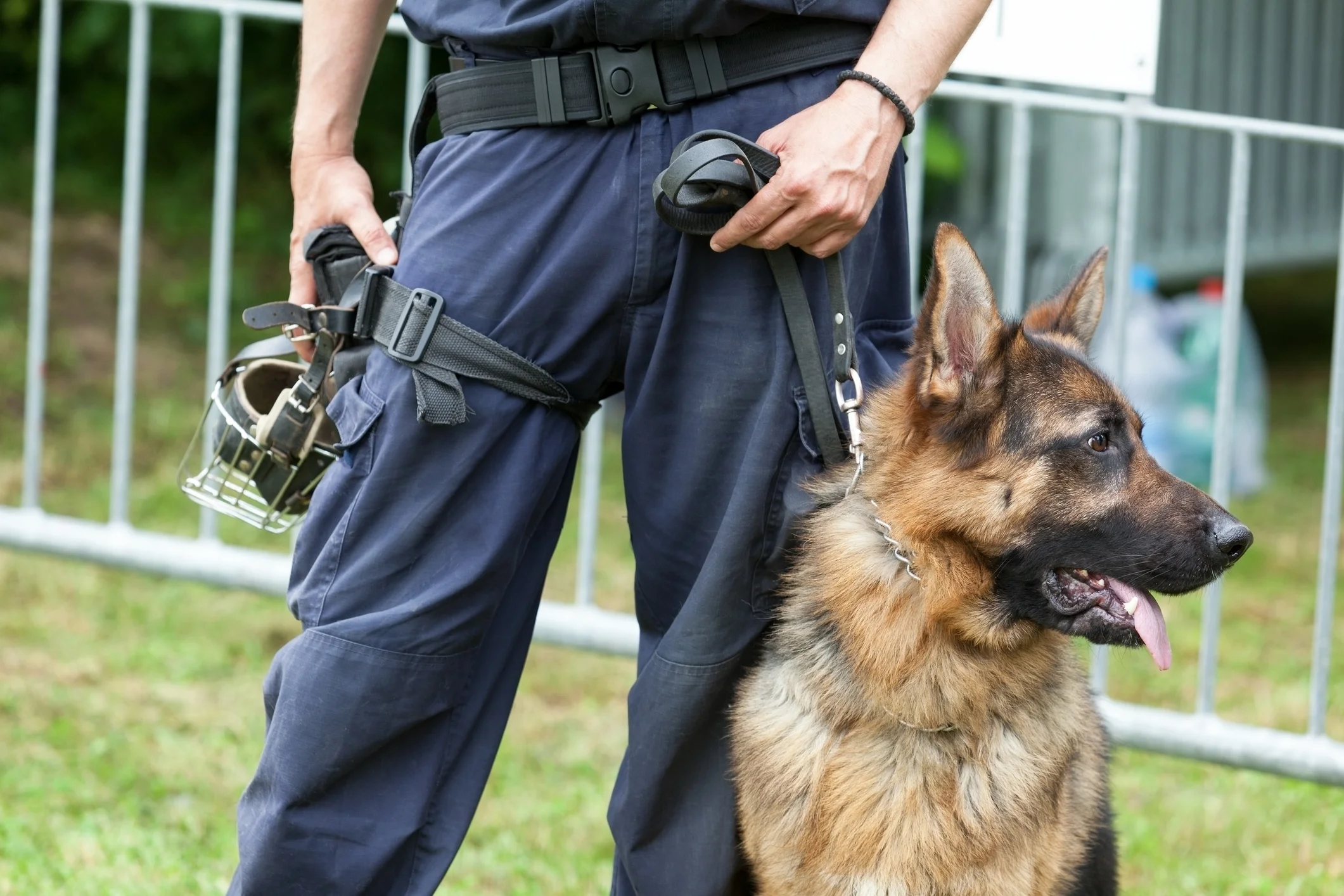
Police Need More Than Vague Concerns About Officer Safety to Search a Home Without a Warrant
The Pennsylvania Superior Court has decided the case of Commonwealth v. Duke, holding that Pennsylvania State Troopers illegally searched the defendant’s house by walking into his open garage after he told them to leave his property. The Superior Court specifically rejected the idea that police could create exigent circumstances, claim that a person could have been retrieving a weapon without any basis for believing that, and then use those two factors to search someone’s property without a warrant.

Philadelphia Drug Charges Defense Lawyer Zak Goldstein
The Pennsylvania Superior Court has decided the case of Commonwealth v. Duke, holding that Pennsylvania State Troopers illegally searched the defendant’s house by walking into his open garage after he told them to leave his property. The Superior Court specifically rejected the idea that police could create exigent circumstances, claim that a person could have been retrieving a weapon without any basis for believing that, and then use those two factors to search someone’s property without a warrant.
The Facts of Duke
In Duke, Pennsylvania State Police Troopers went to the defendant’s house in York County, PA looking for his son. When the troopers arrived, the defendant was standing at the end of his driveway holding a small dog. The defendant told the troopers that his son was in jail in Lancaster County Prison and therefore not home. The troopers asked the defendant for permission to look around the house to confirm that the son was not there. The defendant told the troopers that they could not. The defendant, holding his dog, then walked up the driveway toward his garage.
The Illegal Search of the Garage
Although the defendant told the troopers they could not conduct a search and did not give them consent to be on the property, they followed him up to the garage. The troopers then saw inside the garage and observed a bow and arrow, a crossbow, and a long gun or rifle. They also smelled marijuana. Then they entered the garage, without consent, and found marijuana plants in the garage. They arrested the defendant, obtained a search warrant, and found additional marijuana plants in the home. They charged the defendant with Possession with the Intent to Deliver.
Motion to Suppress the Drugs
The defendant filed a motion to suppress the marijuana in the trial court, arguing that police only obtained the search warrant for the marijuana as a result of their illegal entry into his property and ultimately garage. Therefore, the marijuana that they found should be considered the fruit of the poisonous tree despite the fact that they subsequently obtained a search warrant. The defendant also moved to suppress any statements that he made due to the police failing to provide Miranda warnings.
The trial court held a hearing on the motion to suppress. The troopers testified, without basis, that they believed that the defendant was lying about the location of his son. They followed him up the driveway because they were unsure what he was planning to do and believed that he could be going for a weapon. They also testified that the defendant had said that there was no way that the troopers were getting into the house, and one of the troopers admitted that the defendant may have asked them to leave the property, although he was not sure.
The defendant then testified and also called one of the troopers to testify, but unsurprisingly, the court found that the troopers that most helped the Commonwealth’s case were more credible than the defendant or the other trooper who testified and accepted their version of events. The court, therefore, found that the troopers were acting solely in the basis of ensuring officer safety and therefore were justified in going into the defendant’s home without a warrant. The court denied the motion to suppress and found the defendant guilty of felony Possession with Intent to Deliver following a waiver trial. The court sentenced him to three years’ probation.
The Superior Court Appeal
The defendant appealed to the Pennsylvania Superior Court. The Superior Court initially denied the appeal, but following a helpful ruling from the Pennsylvania Supreme Court, the Pennsylvania Superior Court was required to reconsider the case. This time, the Superior Court ruled in favor of the defendant. The court noted that warrantless searches of a suspect’s house are per se unconstitutional unless a specifically established and well-delineated exception to the warrant requirements applies. One exception to the warrant requirement is when probable cause and exigent circumstances are present. In determining whether exigent circumstances exist, a court should look at:
1) The gravity of the offense,
2) Whether the suspect is reasonably believed to be armed,
3) Whether there is above and beyond a clear showing of probable cause,
4) Whether there is a strong reason to believe that the suspect is within the premises being entered,
5) Whether there is a likelihood that the suspect will escape if not swiftly apprehended,
6) Whether the entry was peaceable, and
7) The time of the entry.
Because an exigent circumstances analysis requires the Commonwealth to justify a warrantless search of a home, the Commonwealth must prove an urgent need to act and that police action without a warrant was imperative. Therefore, the Commonwealth must prove by clear and convincing evidence that the circumstances surrounding the opportunity to search were truly exigent. Further, police may not rely upon exigent circumstances to justify a warrantless entry when the exigency derives from their own actions.
Here, the trial court erred in determining that police properly conducted a warrantless search of the defendant’s property. The court noted that the analysis should have begun with an acknowledgement that once the defendant denied the troopers his consent to search the property, the troopers were violating his Fourth Amendment rights. Because the troopers did not have a search warrant, they could remain on the property only if there were exigent circumstances. The court recognized that it was simply unreasonable to conclude that the defendant had some plan to grab a weapon and injure the troopers. Instead, the defendant was holding a small dog and simply began to walk back towards his house. There was no basis from the defendant’s demeanor or actions that he was planning on grabbing a weapon. Therefore, at the time that the troopers refused to leave the property and began following the defendant, they had already begun violating his rights, and any observations of the marijuana plants in the garage were therefore fruit of the poisonous tree.
Although courts have carved out innumerable exceptions to allow the police to search people who are walking down the street or are in motor vehicles, courts remain extremely reluctant to allow the police to enter a suspect’s home without a warrant. This case reaffirms that police must truly be acting in response to an emergency in order to do so. Therefore, while courts are often eager to credit an officer’s testimony that he or she was acting out of concerns of officer safety, the courts typically apply more scrutiny when the search involves a home.
Can the Police Search a Garage Without a Warrant?
Finally, it is important to note that there is no difference between the search of a suspect’s garage and his or her home. The police need a search warrant for either one. In Pennsylvania and under federal law, the police do not need a warrant to search an automobile when the automobile is parked somewhere other than a suspect’s driveway. Instead, they need only probable cause because an automobile can be easily moved. Unlike a car, however, police cannot search a home or a garage based solely on probable cause. In the absence of exigent circumstances or the presence of some other exception, they must also obtain a search warrant prior to searching a garage or a house even if they have probable cause.
Facing criminal charges? We can help.

Criminal Defense Attorneys Zak Goldstein and Demetra Mehta
If you are facing criminal charges or under investigation by the police, we can help. We have successfully defended thousands of clients against criminal charges in courts throughout Pennsylvania and New Jersey. We have successfully obtained full acquittals and successful outcomes in cases involving charges such as Possession with the Intent to Deliver, Violations of the Uniform Firearms Act, Aggravated Assault, Rape, and Murder. Our award-winning Philadelphia criminal defense lawyers offer a free criminal defense strategy session to any potential client. Call 267-225-2545 to speak with an experienced and understanding defense attorney today.

PA Supreme Court: Defendant Has Right To Introduce Evidence That Someone Else Did It
The Pennsylvania Supreme Court has decided the case of Commonwealth v. Gill, holding that the Superior Court erred when it reversed the trial court’s ruling that permitted the defendant to introduce evidence of other burglaries in an attempt to show that someone else had committed the burglary in this case.

Philadelphia Criminal Defense Lawyer Zak T. Goldstein, Esquire
The Pennsylvania Supreme Court has decided the case of Commonwealth v. Gill, holding that the Superior Court erred when it reversed the trial court’s ruling that permitted the defendant to introduce evidence of other burglaries in an attempt to show that someone else had committed the burglary in this case. This is an important decision both because it re-affirms that a defendant has the right to try to prove that someone else could have committed the crime charged and because it limits the Superior Court’s ability to reverse an evidentiary decision of the trial court permitting a defendant to introduce that evidence.
The Facts of Gill
In 2013, a Pennsylvania State Police Trooper was assigned to investigate an alleged burglary that had recently occurred at a residence owned by the complainant in French Creek Township, Pennsylvania. The complainant reported to the trooper that someone had stolen $40,000 in $100 bills from a bag inside of a lockbox in his basement. He also stated that the money was still in the lockbox on July 26, 2013, when he placed his monthly deposit into the bag.
The complainant stated that he did not observe any signs of a forced entry into the home and that he suspected that the person who had stolen the money entered his home by way of the keypad on his garage door. According to the complainant, there were only two people who knew the code and where he kept his money: the defendant and his neighbor. He did not suspect the neighbor because he had known her for over 25 years and trusted her. He stated that he suspected the defendant because he had only known him for a few years and that the defendant was having financial problems, including a recent bankruptcy.
The trooper subsequently interviewed the defendant. The defendant confirmed that he knew about the complainant’s money, where the money was kept, and where the complainant stored the key to his lockbox. The trooper also learned that the defendant recently bought a truck and paid for the truck in $100 bills. The trooper then filed a criminal complainant charging the defendant with burglary, theft by unlawful taking, receiving stolen property and criminal trespass.
The defendant subsequently filed a document entitled “Motion for Release of Investigatory Files/Omnibus Pretrial Motion.” In the motion, the defendant averred that he became aware that the complainant accused another unknown person of burglarizing his home, on two separate occasions, and stealing money from a safe located in his home between May 1, 2016 and June 23, 2016. The trial court granted the defendant’s motion to allow him access the State Police’s investigatory file concerning the 2016 incident. Based on this review, the defendant subsequently filed a Motion in Limine asking the trial court to allow the admission of this evidence at trial to show that someone else could have committed the burglary.
According to the defendant’s motion, the allegations against him and the subsequent allegations made by the complainant were almost identical. Specifically, both allegations alleged that approximately $40,000 was stolen, the money was stolen from a lockbox, one of the incidents did not show signs of forced entry, and the perpetrator had knowledge about the safe/lockbox. The defendant argued that he should be allowed to introduce this evidence at his trial. Additionally, he filed another Motion in Limine to introduce the testimony of the complainant’s daughter. Per the defendant, she would testify that the complainant previously accused her of breaking into his home and stealing $30,000. Additionally, she would testify that the complainant previously accused two other individuals of breaking into his home and stealing tools. The defendant wanted to introduce this testimony to show that the complainant has a penchant for accusing people of burglary and that someone else may have committed this crime.
The trial court held a hearing on the motions. At the conclusion of the hearing, the court granted his motion in part and denied it in part. The court permitted the defendant from presenting evidence of the subsequent 2016 burglaries but denied his motion to allow the complainant’s daughter to testify. In the same order, the court directed the Commonwealth to provide all reports, statements, and investigatory files regarding the 2016 incident. The Commonwealth then filed an interlocutory appeal to the Superior Court.
In a published opinion, the Superior Court granted the Commonwealth’s appeal and issued an order barring the defendant from introducing the evidence of the other burglaries at trial. In its appeal, the Pennsylvania Superior Court held that the 2013 and 2016 burglaries were not “so similar, distinctive, or unusual as to suggest that they are the handiwork of one individual.” The Superior Court stated that “the fact the burglaries involved the same residence, and the victim reported to have similar amounts stolen in the 2013 and…2016[] burglaries” were insufficient factors to conclude that both burglaries were done by the same individual. The defendant then appealed to the Pennsylvania Supreme Court.
Can I present evidence that someone else did the crime?
Maybe. Attorneys are always permitted to try to present evidence at trial, but the evidence must be admissible under the rules of evidence. The rules of evidence can be very restrictive, but usually these rules are to the defendant’s advantage. Why? Because it is the Commonwealth’s burden to provide enough evidence to convict a defendant beyond a reasonable doubt, so it is usually the Commonwealth that is presenting the majority of the evidence and struggling to get that evidence admitted. The defense often does not present any evidence at all.
One well-known example of a rule of evidence that often benefits the defense is the rule against hearsay. The rules of evidence prohibit the use of hearsay in a criminal trial, and this is usually to the defendant’s advantage because it forces the Commonwealth to bring the actual witnesses of an alleged crime to court rather than relying on a police officer who would merely testify to what these witnesses told him. However, as shown in Gill, the defense can also be hamstrung by the rules of evidence. In Gill, the defense attorney was prohibited by the Superior Court from calling the complainant’s daughter to testify because of an evidentiary ruling made by the trial court.

Nonetheless, the defendant’s attorney was successful in convincing the trial court to permit him to introduce evidence from the other burglary. This allowed him to show not only that someone other than the defendant may have committed these crimes, but also that there are issues with the complainant’s credibility and memory (the complainant appeared to have quite the bad luck by getting burglarized and having $40,000 repeatedly stolen from him). More importantly, however, the defendant was now able to show that other people have burglarized his home using the keypad. Thus, because the complainant’s home continued to be burglarized in this highly specific way (when presumably the defendant could show that he did not commit these subsequent burglaries) then this would be evidence that the defendant did not commit the 2013 burglary.
It may go without saying, but the facts in Gill are unique. Nonetheless, there are other ways to introduce evidence that someone else committed a crime. For example, let’s assume that you are stopped in a car and the police then search the car and find drugs. Let’s also assume that you are not the only occupant of the vehicle and one of the people in the car has a prior conviction for possessing a controlled substance. If you are charged with possessing those drugs, you can file what is called a Thompson motion. This motion would allow you to bring the passenger’s prior convictions for possession and would give you additional support that those drugs did not belong to you. If you are arrested and charged with any type of crime, you need an experienced attorney who knows the rules of evidence so that you can be properly defend your case.
Ultimately, all evidence must be relevant in order to be admissible. If evidence is not relevant, then a trial court may properly exclude the admission of the evidence. In this case, the issue was simply whether the defendant’s proffered evidence of the subsequent burglaries would be relevant to show whether or not he had committed the crime. In making that determination, the court had to look at how similar the burglaries were in order to determine whether they would be exculpatory for the defendant. The trial court concluded that they were sufficiently similar to suggest that the defendant may not have committed the first burglary. The Superior Court, however, disagreed.
The PA Supreme Court’s Decision
The Pennsylvania Supreme Court found that the Superior Court erred when it overturned the trial court’s decision to allow the defendant to introduce evidence from the subsequent burglary. The Supreme Court found that the Superior Court improperly conducted its own review of whether it thought that the evidence would be relevant instead of applying the correct “abuse of discretion” standard and evaluating whether the trial judge’s reasoning was properly based in law. What this standard means is that the Superior Court should not make its own ruling. Instead, if the trial court’s decision is arguably correct, then the Court should affirm the decision even if different judges could reasonably degree. The Supreme Court noted that it is “improper for an appellate court to step into the shoes of the trial judge and review the evidence de novo.” The Supreme Court also criticized the Superior Court for its evaluation of the evidence. The Supreme Court found that the Superior Court substituted its judgment for that of the trial court which is not permissible. Finally, the Supreme Court found that the trial court did not abuse its discretion when it granted the defendant’s motion and thus the trial court’s ruling will stand.
Facing Criminal Charges? We Can Help.

If you are facing criminal charges or under investigation by the police, we can help. We have successfully defended thousands of clients against criminal charges in courts throughout Pennsylvania and New Jersey. We have successfully obtained full acquittals and successful outcomes in cases involving charges such as Possession with the Intent to Deliver, Violations of the Uniform Firearms Act, Aggravated Assault, Rape, and Murder. Our award-winning Philadelphia criminal defense lawyers offer a free criminal defense strategy session to any potential client. Call 267-225-2545 to speak with an experienced and understanding defense attorney today.