

Philadelphia Criminal Defense Blog

PA Supreme Court Finds Autopsy Reports Testimonial under Confrontation Clause

Philadelphia Criminal Defense Attorney Zak Goldstein
The Pennsylvania Supreme Court has decided the case of Commonwealth v. Brown, holding that autopsy reports are testimonial and therefore may not be introduced at trial unless the witness who prepared the report testifies. In this case, however, the court found that the improper admission of the autopsy report was harmless error, so the defendant did not receive a new trial.
The Facts of Commonwealth v. Brown
In Brown, the defendant attended a party on Stanley Street in Philadelphia. Before arriving at the party, he hid a gun in the wheel well of a nearby parked car. The defendant argued with someone during the party, and his co-defendant then retrieved the gun from the car and gave it to the defendant. The defendant shot the person with whom he was arguing four times, killing him. A doctor with the Philadelphia Medical Examiner’s Office performed an autopsy and prepared a report of the findings. The report found that the decedent had been shot four times, the shots struck the ribs, heart, lungs, and shoulder of the victim, and three of the bullets entered the front of the victim’s body while one entered his back. The report also described the trajectory of the bullets in the victim’s body and noted that there was no soot, stippling, or muzzle imprints around any of the gunshot wounds. The report noted that the cause of death was multiple gunshot wounds and the manner of death was homicide.
At the time of trial, the doctor who performed the report no longer worked for the city. The Commonwealth did not call him to testify at the trial. Instead, the Commonwealth admitted the report into evidence by calling a different doctor who had reviewed the report to testify to the other doctor’s report. The defendants objected, arguing that the admission of the report without the testimony of the doctor who prepared it violated the Confrontation Clause of the Sixth Amendment of the United States. Based on the other doctor’s report, the testifying doctor told the jury that the wounds were consistent with a scenario in which someone shot the victim from a distance of six to eight feet away while facing him, and then shot the victim in the back after the victim turned away. He further testified that the victim could have walked a few feet before collapsing.
The jury convicted the defendant of third-degree murder and related offenses, and the court sentenced him to 25 – 50 years in prison. The defendant appealed, and the Superior Court affirmed his conviction. The court first ruled that the report should not have been admitted, but it found harmless error because there was no real dispute about the cause of death.
The Criminal Appeal
The defendants again appealed to the Pennsylvania Supreme Court, and the Supreme Court agreed to review the case. On appeal, the Commonwealth argued that autopsy reports are not testimonial because they are not necessarily created for trial in the same way that a BAC report or drug test report is prepared specifically for trial. Instead, state law requires coroners to prepare autopsy reports regardless of whether there is an ongoing criminal activity. The defendant argued that although some autopsy reports are prepared regardless of whether there is a suspicion of criminal activity, the law requires the coroner to prepare a report in response to any suspicious death and cooperate with the prosecutor. Further, the report in this case was prepared for the prosecution of homicide charges.
What is the Confrontation Clause?
The Pennsylvania Supreme Court agreed with the Superior Court that the report was testimonial and therefore should not have been admitted without the testimony of the doctor who prepared it. The Confrontation Clause, which is part of the Sixth Amendment, provides criminal defendants with the right to confront the witnesses against them. This means that they have the right to cross-examine witnesses under oath at trial.
The Pennsylvania Supreme Court noted that in Crawford v. Washington, the United States Supreme Court created the modern analysis of the Confrontation Clause. The Court barred the admission of testimonial statements of a witness who did not appear at trial unless the witness is unavailable and the defendant has had a prior opportunity to cross-examine the witness. Thus, the key question for whether a statement violates the Confrontation Clause is whether the statement is testimonial. In general, statements are testimonial when their primary purpose is to establish or prove past events for purposes of proof at a criminal trial. This means that statements made to police officers who are investigating cases are typically going to be testimonial. Likewise, lab reports prepared to prosecute a criminal defendant at trial will also generally be found to be testimonial. On the other hand, statements which are not made for the purposes of criminal prosecution – such as a phone call to 911 in order to obtain emergency assistance – will often be found non-testimonial.
The Court's Decision
Ultimately, the Court concluded that the autopsy report was testimonial. Pennsylvania law requires the preparation of autopsy reports in all cases of sudden, violent, and suspicious deaths, or deaths by other than natural causes, and in such cases, the autopsy and subsequent report are designed to determine whether the death occurred as the result of a criminal act. The law also requires the coroner to advise and cooperate with the District Attorney. Therefore, the primary purpose of an autopsy report is to establish or prove past events potentially relevant to a later criminal prosecution. Any person creating the report would reasonably believe it would be available for use at a later criminal trial. Therefore, an autopsy report is testimonial.
What is Harmless Error?
At the same time, the Supreme Court concluded that the defendant was not entitled to a new trial because the admission of the report amounted to harmless error. Even where the trial court has made a mistake in an evidentiary ruling, an appellate court may find harmless error where 1) the error did not prejudice the defendant or the prejudice was de minimis, 2) the erroneously admitted evidence was merely cumulative of other untainted evidence which was substantially similar to the erroneously admitted evidence, or 3) the property admitted and un-contradicted evidence of guilt was so overwhelming and the prejudicial effect of the error was so insignificant by comparison that the error could not have contributed to the verdict.
Here, the Court found that the error was harmless error because the report was merely cumulative to the properly admitted testimony of the testifying doctor relating to the cause of death. Specifically, it was harmless error because the doctor had reached his own independent opinion regarding the cause of death which did not rely entirely on the inadmissible autopsy report. Further, an expert witness generally may rely on inadmissible evidence if it is the type of evidence that an expert in the field would normally rely on in reaching a determination. Thus, the report itself should not have been admitted, but the doctor was properly permitted to rely on it in reaching his own conclusions. Therefore, the defendant was not entitled to a new trial.
Facing Criminal Charges? We Can Help.

Philadelphia Criminal Defense Attorneys
If you are facing criminal charges or may be under investigation by law enforcement, we can help. Our Philadelphia criminal defense attorneys have successfully defended thousands of clients in Pennsylvania and New Jersey. We offer a free 15-criminal defense strategy session to each potential client, and we can help you build a defense to pending criminal charges or evaluate the merits of filing a PCRA or direct appeal. Call 267-225-2545 to speak with an experienced and understanding criminal defense lawyer today.

US Supreme Court: Police Need Warrant to Search Car Parked in Driveway
The United States Supreme Court has decided the case of Collins v. Virginia, holding that police must obtain a search warrant prior to searching a car or other automobile that is parked in a person’s driveway.

Philadelphia Criminal Defense Attorney Zak Goldstein
The United States Supreme Court has decided the case of Collins v. Virginia, holding that police need a search warrant to search a person’s automobile when it is parked in the driveway or other “curtilage” of a person’s home. This is an important decision that limits the ability of police to search your house and the surrounding areas without a search warrant pursuant to the “Automobile Exception” to the Fourth Amendment.
The Facts of Collins v. Virginia
On an unspecified date, an Albemarle County, VA Police Officer observed the driver of an orange and black motorcycle with an extended frame committing a traffic infraction. This driver eluded the officer’s attempt to stop him. A few weeks later, a different officer within the same department encountered an individual operating a similar motorcycle traveling above the speed limit. This officer was also not able to stop this individual.
The officers subsequently compared notes and concluded that it was the same individual who got away on each date. Additionally, the officers were able to determine that the motorcycle was stolen and in the possession of the defendant. The police then searched the defendant’s Facebook account and saw pictures of the motorcycle parked in the driveway of a house. Through additional investigation, the officers were able to determine the address of the house and that the house belonged to the defendant’s girlfriend.
One of the officers then went to this house and saw what appeared to be a motorcycle under a white tarp. The officer did not have a search warrant, but he exited his car and went to the house. From there, he then went onto the driveway, lifted the tarp, and saw what appeared to be the motorcycle that had escaped police on the two previous occasions. The officer ran the license plate and VIN for the motorcycle and found that it had been reported stolen. The officer took a photograph of the motorcycle and then put the tarp back on the motorcycle. The officer then left the property and returned to his car to wait for the defendant. The defendant returned home shortly thereafter. The officer then walked up to the house and knocked on the door. The defendant answered the door and agreed to speak with the officer. The defendant promptly admitted that the motorcycle belonged to him and that he had purchased it without a title. The officer arrested him.
State prosecutors charged the defendant with receiving stolen property. The defendant filed a pre-trial motion to suppress to suppress the evidence that the officer obtained as a result of the warrantless search of the motorcycle. The defendant argued that the officer had trespassed on the curtilage of his property in violation of his Fourth Amendment rights. The trial court denied his motion to suppress. The defendant then appealed. Both the Court of Appeals of Virginia and the Virginia Supreme Court affirmed the lower court’s order denying the defendant’s motion to suppress. The Virginia Supreme Court affirmed the lower court’s decision on the Automobile Exception to the warrant requirement of the Fourth Amendment. The defendant then petitioned the United States Supreme Court to hear the case which the Court granted certiorari.
What is the Automobile Exception to the Warrant Requirement of the Fourth Amendment?
The Automobile Exception to the Fourth Amendment has existed for nearly a hundred years. In essence, the Automobile Exception is judge-made law that allows police to search an automobile without a search warrant, so long as there was probable cause to justify the search. This exception was first articulated in Carroll v. United States, a 1925 Supreme Court decision that upheld a warrantless search and seizure of an automobile.
In Carroll, the Supreme Court reasoned that law enforcement should not be required to obtain a search warrant in order to search a car because a car is mobile and could leave the scene by the time an officer obtained a warrant. In subsequent years, the Supreme Court solidified the Automobile Exception, but it also adopted additional rationales to justify these warrantless searches. Specifically, the Court has also held that because automobiles are so highly regulated, a warrant is not needed. This was the Court’s justification for approving of the police acting without a warrant in cases such as California v. Carney and South Dakota v. Opperman. For a long time, Pennsylvania did not permit the Automobile Exception. However, this changed in 2014, when a plurality of the Pennsylvania Supreme Court decided the case of Commonwealth v. Gary. Gary eliminated the requirement that police obtain a search warrant before searching an automobile in order for evidence obtained from the vehicle to be admissible in state court criminal proceedings.
The Supreme Court’s Decision
In a 7-2 decision, the Court held that the Automobile Exception does not apply when the automobile is on the curtilage of one’s property. Curtilage is the property connected to one’s home, i.e. a driveway. The United States Supreme Court has defined it as “an area adjacent to the home and to which the activity of home life extends.” Therefore, the Court stated that “[w]hen a law enforcement officer physically intrudes on the curtilage to gather evidence, a search within the meaning of the Fourth Amendment has occurred…[s]uch conduct thus is presumptively unreasonable absent a warrant.”
As such, the Court found that the officer invaded the defendant’s Fourth Amendment interest in his home. The home is one of the most protected interests in Fourth Amendment law and there is nothing in Automobile Exception jurisprudence that allows the police search one’s home. The Court further expressed a concern that police, under the guise of the Automobile Exception, would search individual’s homes. The Court put it very simply “[i]t is, after all, an exception for automobiles” and held that the police needed a warrant to search the defendant’s motorcycle in his driveway.
Facing criminal charges? We can help.

Goldstein Mehta LLC Criminal Lawyers
If you are facing criminal charges or under investigation, we can help. Our award-winning Philadelphia criminal defense lawyers have successfully defended thousands of clients in state and federal courts throughout Pennsylvania and New Jersey. We are experienced and understanding defense attorenys who will fight for you. We offer a free 15-minute criminal defense strategy session to each potential client. Call or text 267-225-2545 to speak with an attorney today.
PA Superior Court Continues to Undermine US Supreme Court's Birchfield Ruling

Criminal Defense Lawyer Zak Goldstein
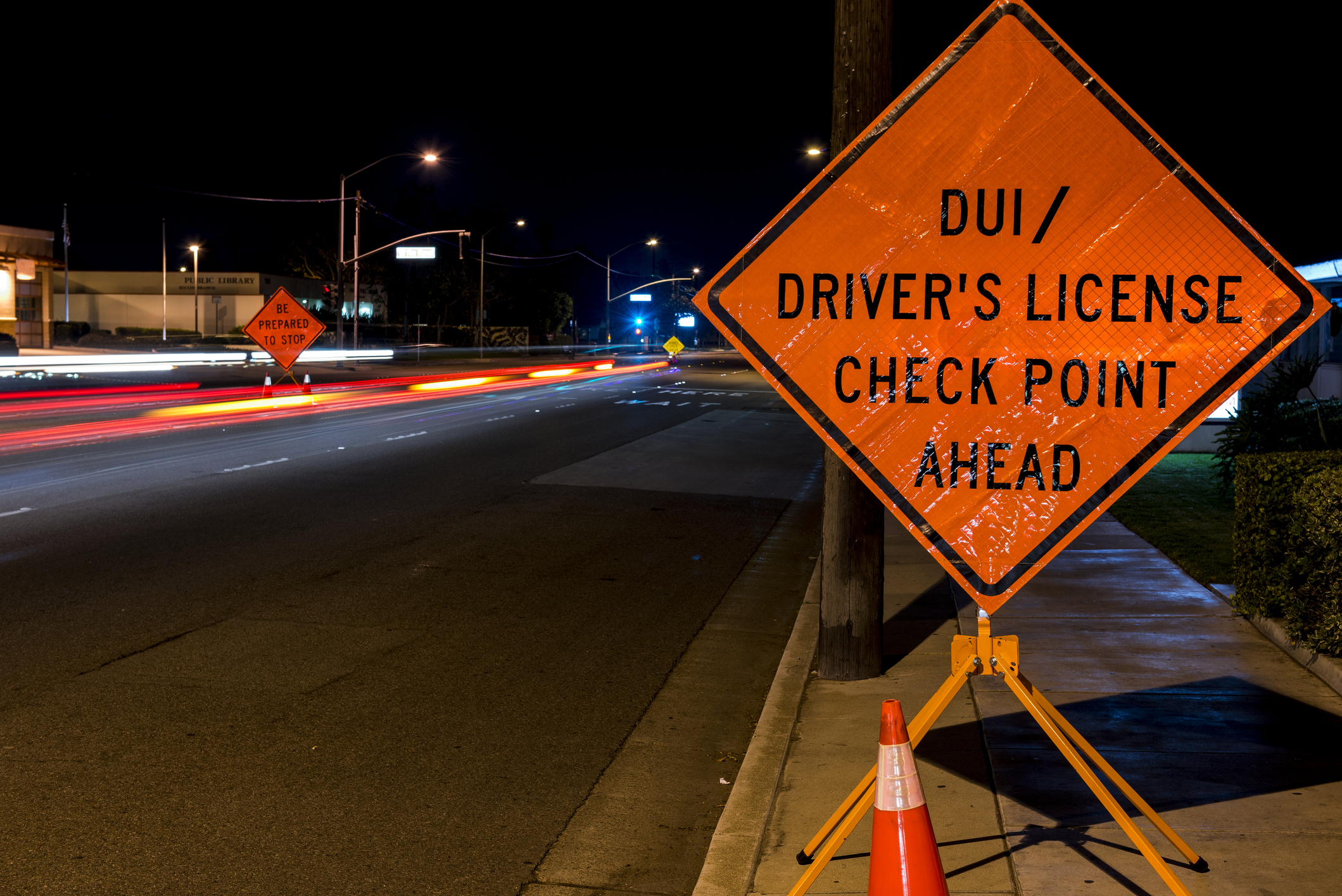
The Pennsylvania Superior Court has decided the case of Commonwealth v. Moser. In Moser, the Superior Court concluded that police lawfully obtained the defendant’s blood sample without a search warrant because the defendant consented to the blood draw before police read him defective and coercive O’Connell warnings. Accordingly, the court reversed the trial court’s order suppressing the results of the blood test.
The Facts of Commonwealth v. Moser
Moser was charged with Homicide by vehicle while under the influence of alcohol or controlled substance (Homicide by DUI), three counts of DUI, homicide by vehicle, and related traffic offenses. Moser filed a motion to suppress, arguing that police coerced him into submitting to warrantless blood testing by reading him defective O’Connell warnings which informed him that if he refused the blood testing, he would be subjected to stricter criminal penalties. The United States Supreme Court has previously held in Birchfield v. North Dakota that a state cannot impose criminal penalties on a defendant who refuses to submit to a warrantless blood draw, and Pennsylvania courts have suppressed blood testing in which defendants were told they would face criminal penalties if they refused prior to the testing.
The trial court granted the motion to suppress. It found that the behavior of the police was unlawfully coercive and violated Moser’s rights because the police told him that he would face criminal penalties if he refused the testing. By granting the motion to suppress, the court ordered that the prosecution could not use the results of the blood testing at the homicide trial.
The Commonwealth appealed to the Superior Court. On appeal, the Commonwealth argued that Moser had actually agreed to the blood testing while in the back of the police car on the way to the hospital. The police who were investigating the case did not read him the defective warnings until he arrived at the hospital. Therefore, the prosecution argued that he had already agreed to the blood draw prior to hearing anything coercive. Because the warnings were not provided until later, they could not have coerced him into giving up his right to insist on a search warrant prior to a blood test.
The Superior Court agreed. It found that although the warnings were improper and could have been coercive, the warnings did not coerce the defendant in this case because they were not given until after he had already consented to the blood draw in the back of the police car. Therefore, the court reversed the decision of the trial court and ordered that the blood test results may be introduced at trial going forward.
This case continues a recent trend in the Sueprior Court of rejecting these Birchfield challenges and allowing the Commonwealth to use evidence even where the police gave improper warnings. A number of Birchfield cases are still on appeal, and the Pennsylvania Supreme Court has granted review in at least one of them. Therefore, although this is a significant set back for the defendant in this case, it is possible that the rules surrounding blood testing in DUI cases will continue to change and that the Superior Court could be overturned. For the time being, the Superior Court continues to regularly undermine the basic holding of Birchfield that states may not impose criminal penalties on a defendant for refusing blood testing when police have not obtained a search warrant. Obviously, the constitution requires search warrants, but the appellate courts continue to allow police to ignore this requirement and forgives their basic refusal to set up electronic or telephonic warrant application systems for DUI cases.
Facing criminal charges? We can help.

Philadelphia Criminal Lawyers
If you are facing criminal charges or may be under investigation, we can help. We are experienced and understanding Philadelphia criminal defense lawyers who will fight for you. We have successfully defended thousands of clients in trial courts throughout Pennsylvania and New Jersey as well as on appeal and in Post-Conviction Relief Act Petitions. We offer a complimentary 15-minute criminal defense strategy session to any potential client. Call 267-225-2545 to speak with an award-winning defense attorney today.


US Supreme Court: An Unauthorized Rental Car Driver Can Probably Litigate a Motion to Suppress

Philadelphia Criminal Lawyer Zak T. Goldstein, Esq.
The United States Supreme Court has decided the case of Byrd v. United States, holding that the defendant probably held a reasonable expectation of privacy in the rental car he was driving despite the fact that the car had been rented by his girlfriend and she had not listed him as an authorized driver in the rental agreement.
The Facts of Byrd
Byrd dealt with a traffic stop in Pennsylvania. Pennsylvania State Police pulled over a rental car driven by the defendant. The defendant was the only person in the car. During the course of the traffic stop, the troopers learned that the car was a rental and that the defendant was not listed on the rental agreement as an authorized driver. The troopers told the defendant that they were going to search the car and that they did not need his permission because he was not an authorized driver. They then searched the car, including the trunk. They found body armor and 49 bricks of heroin.
When Byrd’s girlfriend rented the car, she signed a rental agreement. The agreement specifically listed the limited number of people people who could drive the car. It also stated:
Permitting an unauthorized driver to operate the vehicle is a violation of the rental agreement. This may result in any and all coverage otherwise provided by the rental agreement being void and my being fully responsible for all loss or damage, including liability to third parties.
Byrd’s girlfriend did not list him as an authorized driver. Therefore, they both violated the rental agreement when he drove the car. Of course, there is a difference between technically violating a rental agreement and stealing a car.
The Federal Criminal Case Against Byrd
Due to the significant quantity of drugs recovered by police, federal prosecutors in the Middle District of Pennsylvania assumed the case and prosecuted Mr. Byrd for distribution and possession of heroin with the intent to distribute in violation of 21 U.S.C. Sec. 841(a)(1) as well as possession of body armor by a prohibited person in violation of 18 U.S.C. Sec. 931(a)(1). Byrd moved to suppress the evidence, arguing that police had no basis for searching the car and that because his girlfriend had rented the car and loaned it to him, he had a reasonable expectation of privacy in the car despite the fact that he was not part of the rental agreement. The trial court denied the Motion to Suppress, and the Third Circuit Court of Appeals affirmed. Both found that he could not challenge the search because he had no reasonable expectation of privacy in the car due to the fact that he was not on the rental agreement.
The Criminal Appeal
The United States Supreme Court granted certiorari to address the issue of whether a driver has a reasonable expectation of privacy in a rental car even when the driver is not authorized to drive the vehicle by the rental agreement. The Court held that, as a general rule, someone in otherwise lawful possession and control of a rental car has a reasonable expectation of privacy in it even if the rental agreement does not list that person as an authorized driver. The Court therefore remanded the case for the trial court to determine whether Byrd was in fact in otherwise lawful possession and control of the rental car and whether the police had probable cause to search the vehicle.
The Supreme Court's Analysis
The Court’s analysis focused on whether Byrd had a reasonable expectation of privacy in the car. In order to challenge a potentially unconstitutional search in federal court, the person challenging the search must have a reasonable expectation of privacy in the place that the police searched. For example, a person is going to have a reasonable expectation of privacy in their own home or the pockets of their pants and therefore would be able to challenge a search of those places. But a person generally does not have a reasonable expectation of privacy in a neighbor’s home. This means that if you store your drugs in your neighbor’s house, the police could use those drugs against you even if they found them by searching your neighbor’s house illegally without a search warrant. Thus, the case hinged on whether Byrd had the ability to challenge the search or whether he had no reasonable expectation of privacy because he was not authorized to drive the car. His girlfriend, as the person who rented the car, clearly would have had a reasonable expectation of privacy while driving the car if police sought to introduce evidence of a search against her.
The Court noted that one who owns and possesses a car, like one who owns and possesses a house, almost always has a reasonable expectation of privacy in it. Ownership of property, however, is not the only factor in determining whether someone has a reasonable expectation of privacy. Although ownership is not necessarily required, mere presence in the area that was searched also may not be enough to provide a reasonable expectation of privacy. Instead, there typically must be some kind of property right or right to exclude other people from the property. A car thief, for example, would not have any property rights in a car or right to exclude other people from the car. Therefore, a car thief would not be able to challenge the search of the car that he or she stole.
The Court concluded that there is a difference between violating an important provision in a car rental agreement and potentially increasing one’s exposure to civil liability in the event of an accident and actually stealing a car. A car thief has no reasonable expectation of privacy in a stolen car, but someone who is not on the authorized driver’s list does not automatically stand in the same position as a car thief.
Accordingly, the Court remanded the case for further fact-finding by the trial court. The Court ordered the trial court to consider whether Byrd had committed a criminal offense in having his girlfriend rent the car for him knowing that he could not rent it such that he was no better than a car thief. If so, then the trial court could be justified in finding no reasonable expectation of privacy because Byrd would essentially have stolen the car. The Court also permitted the trial court to determine whether State Police had probable cause to search the vehicle. If they did, then the question of whether Byrd had a reasonable expectation of privacy would be irrelevant because federal law permits police to search a vehicle without a search warrant as long as they have probable cause.
Byrd was a unanimous decision of the United States Supreme Court. It is an important decision because of its common-sense approach. It seems obvious that someone should not lose all of their rights to be free of an illegal search and seizure solely because they have not properly followed the requirements of a car rental agreement. Instead, courts should use common sense and look at whether the person who was subjected to the search would have reasonably expected to have privacy in the vehicle and whether society would view that expectation as reasonable. Here, unless Byrd was the equivalent of a car thief, he should not be subjected to an illegal search by the police regardless of the technicalities of a complicated car rental agreement which contained all sorts of other provisions.
Facing criminal charges? We can help.

Philadelphia Criminal Defense Attorneys
If you are facing criminal charges or considering an appeal, we can help. We are experienced and understanding Philadelphia criminal defense lawyers who have successfully defended thousands of cases. We have the experience, skill, and knowledge of the law to fight for the best possible outcome for you. We offer a free 15-minute criminal defense strategy session to each potential client. Call or text 267-225-2545 to speak with an award-winning criminal defense attorney today.