

Philadelphia Criminal Defense Blog

PA Superior Court Reverses Robbery Conviction Because Prosecutors Struck Jurors Due to Race
Prosecutors May Not Discriminate Against Jurors Based On Race

Philadelphia Criminal Defense Attorney Zak T. Goldstein, Esq.
The Pennsylvania Superior Court has just decided the case of Commonwealth v. Edwards. The Court reversed Edwards’ multiple convictions for gunpoint robbery after finding that the prosecution improperly struck jurors because they were African American. The Court concluded that the defendant successfully raised a challenge to the prosecution’s decisions during jury selection under the United States Supreme Court’s decision in Batson v. Kentucky.
Edwards was charged with multiple gunpoint robberies and related charges for allegedly robbing five men and shooting one of them. His co-defendant took a plea deal and testified against him in exchange for a reduced sentence, and the jury found Edwards guilty of all of the charges. After he was convicted, he was sentenced to 22 to 44 years of incarceration.
Edwards appealed, raising challenges to the sufficiency of the evidence as well as what is called a Batson challenge. The Superior Court rejected the challenges to the sufficiency of the evidence, but it found that the trial court should have granted the defendant’s motion to seat excluded African American jurors pursuant to Batson. A Batson challenge involves challenging the prosecution’s use of race as a factor in picking and striking jurors during jury selection. In Batson, the United States Supreme Court held that the prosecution violates the Equal Protection Clause of the United States Constitution by striking potential jurors solely on the basis of race.
Batson Challenges
In Pennsylvania, the analysis under Batson involves three stages. First, the defendant must make a prima facie showing that the circumstances give rise to an inference that the prosecutor struck one or more prospective jurors due to their race. Second, when the defense can make such a showing, the burden shifts to the prosecutor to provide race-neutral reasons for why the prosecutor struck the jurors at issue. Third, the trial court must then make the ultimate determination as to whether the defense has proven purposeful discrimination against jurors based on race.
Here, the defendant was able to show that the prosecution had discriminated against the jurors based on race for a number of reasons. First, the trial court used an incredibly suspect method of jury selection in which the list of jurors from which the parties made their peremptory challenges (strikes) included the race and gender of every juror. Second, in making its eight strikes, the prosecutor struck seven African Americans and an eigth non-caucasian potential juror, meaning that every single prosecution strike was of a minority. Third, the Superior Court found that the prosecution’s reasons for striking the jurors were not plausible. For example, the prosecutor stated that the Commonwealth struck jurors because they were joking with each other or because of they way they were sitting. Although those reasons would be facially race-neutral for purposes of the second part of the test, the Superior Court found that the reasons simply were not persuasive given the improper juror list and statistics involved.
Ultimately, during jury selection, the parties considered 30 potential jurors. Of those 30, 13 were African-American. The Commonwealth used seven of its eight strikes on African-Americans, and it used the eighth strike on a member of a different minority group. The Commonwealth did not strike a single white juror. Although statistics alone cannot prove a discriminatory intent on the part of the prosecutor, the Court was appalled by the fact that the prosecution used all eight strikes on minorities and then attempted to explain its decision to do so by stating that it did not like the way one of the potential African American jurors was leaning while sitting. This was particularly true in light of the fact that the trial court had actually instructed the jurors at the beginning of jury selection to sit back and relax because the process would take some time. Thus, the Court found that the Commonwealth’s reason was implausible. The Court reversed the defendant’s conviction and remanded the case for a new trial.
Pennsylvania and United States law prohibit the Government from excluding jurors based on race. In most cases, this rule is difficult to enforce because prosecutors will be able to protect themselves by striking some white jurors. It is also typically easy to come up with reasons for striking the jurors which are unrelated to race. However, where the Commonwealth seems to be engaging in a pattern of racial discrimination during jury selection, it is important to raise a Batson challenge in order to either have the jurors seated or preserve the issue for appeal. It is also important to remember that Pennsylvania law requires the party making a Batson challenge to include on the record the race of the stricken prospective jurors, the race of prospective jurors who were acceptable to the striking party but stricken by the party making the challenge, and the racial composition of the jury seated for trial.
Facing Criminal Charges? We Can Help

Philadelphia Criminal Defense Lawyers
Our Philadelphia Criminal Defense Lawyers represent individuals and organizations who are charged with crimes or under investigation in all types of state and federal criminal matters at the trial level. If you are facing charges, call or text 267-225-2545 for a free criminal defense strategy session. Our attorneys are licensed in Pennsylvania and New Jersey and routinely appear in the Philadelphia courts as well as in the surrounding counties of Delaware, Bucks, Montgomery, and Chester. We handle preliminary hearings, grand jury investigations, pre-trial motions such as motions to suppress, motions to quash, motions to dismiss, and speedy trial motions, as well as bench and jury trials. We have had success both in obtaining dismissals before trial and acquittals at trial in front of judges and juries. If you are facing criminal charges, we can help.

Secretly Recording People Is Illegal in PA

Philadelphia Criminal Defense Lawyer Zak T. Goldstein, Esq.
Can I Secretly Record Someone in Pennsylvania?
Pennsylvania law makes it illegal to make secret audio recordings without the consent of everyone involved. Recently, in Commonwealth v. Cline, the Pennsylvania Superior Court decided a case interpreting the statute. The Court rejected the defendant’s argument that he could not be convicted of violating Pennsylvania’s wiretapping statute where he did not know that it was illegal to make a secret audio recording. The Court upheld the defendant’s conviction for violating the Wiretap Act, 18 Pa.C.S. Sec. 5703, after the defendant was found guilty by the trial court and sentenced to 11.5 – 23 months in jail followed by a period of probation.
Commonwealth v. Cline - A Conviction Under Pennsylvania's Wiretap Act
In Cline, the defendant and his ex-wife were in the Lehigh County Courthouse for a custody conference. The conference was held in a custody master’s office. The master and a Sheriff’s Deputy were both present for the hearing along with the defendant and his ex-wife. After about half an hour of the conference, the defendant stood up and announced that he was recording the hearing with his cell phone. The Master told the defendant that he could not record in there and asked the deputy to take the defendant’s phone. The deputy tried to take the phone, but the defendant put the phone in his pocket and ran out of the room. He left the courthouse and posted the recording on Facebook.
Pennslyvania's Wiretap Statute
The defendant was arrested and charged with a violation of the Wiretap Act. Pennsylvania is a two-party consent state, meaning that both parties to an audio recording must consent to being recorded. Accordingly, the Wiretap Act makes it a felony of the third degree to make a recording of someone else without their knowledge. It states that a person is guilty of a felony of the third degree if the person:
Intentionally intercepts, endeavors to intercept, or procures any other person to intercept or endeavor to intercept any wire, electronic, or oral communication;
Intentionally discloses or endeavors to disclose to any other person the contents of any wire, electronic or oral communication, or evidence derived therefrom, knowing or having reason to know that the information was obtained through the interception of a wire, electronic or oral communication.
Thus, the statute makes it illegal both to make a secret recording and to knowingly use a recording that the defendant knows was made without the other person’s permission. In previous cases, even lawyers who used secret recordings made by their clients have been charged under the act.
The Criminal Trial
At trial, the ex-wife, Custody Master, and Sheriff’s Deputy all testified as to what the defendant did and that there were signs posted throughout the courthouse and conference room prohibiting the use of cell phones in the courthouse. The jury convicted the defendant, and the defendant was sentenced to 11.5 – 23 months in county custody and three years of probation. Following his conviction, the defendant appealed.
On appeal, the defendant argued that the evidence was insufficient to support his criminal conviction because he did not know that it was illegal to make a secret recording in Pennsylvania. Indeed, when the deputy tried to take his phone, he asked the deputy if he had done something illegal. He also testified at trial that he did not know he had broken the law.
Ignorance of the Law is Not a Defense
The Court promptly rejected the defendant’s argument. It is well-settled law in Pennsylvania that “ignorance of the law is no defense.” As a general rule, everyone is expected to know what the criminal law prohibits. Although there are some exceptions, in the vast majority of cases, not knowing that something was illegal will not be a defense for a defendant who has been charged with committing a crime.
It is important for Pennsylvania residents to know that making recordings without the consent and knowledge of all parties involved can result in a felony conviction and real jail time. There are states where only one person’s consent is needed to make a recording, but Pennsylvania is not one of them.
Experienced and Understanding Philadelphia Criminal Defense Attorneys

Philadelphia Criminal Defense Attorneys
If you are facing criminal charges, we can help. Our Philadelphia criminal defense lawyers have successfully defended thousands of clients at the trial level on appeal. We offer a complimentary 15-minute criminal defense strategy session to anyone who is under investigation or facing criminal charges. Call 267-225-2545 to speak with an experienced and understanding defense attorney today.
Anonymous Tip Cannot Provide Reasonable Suspicion for Police Stop
Can the the police stop someone based on an anonymous 911 call?

Criminal Defense Attorney Zak T. Goldstein, Esq.
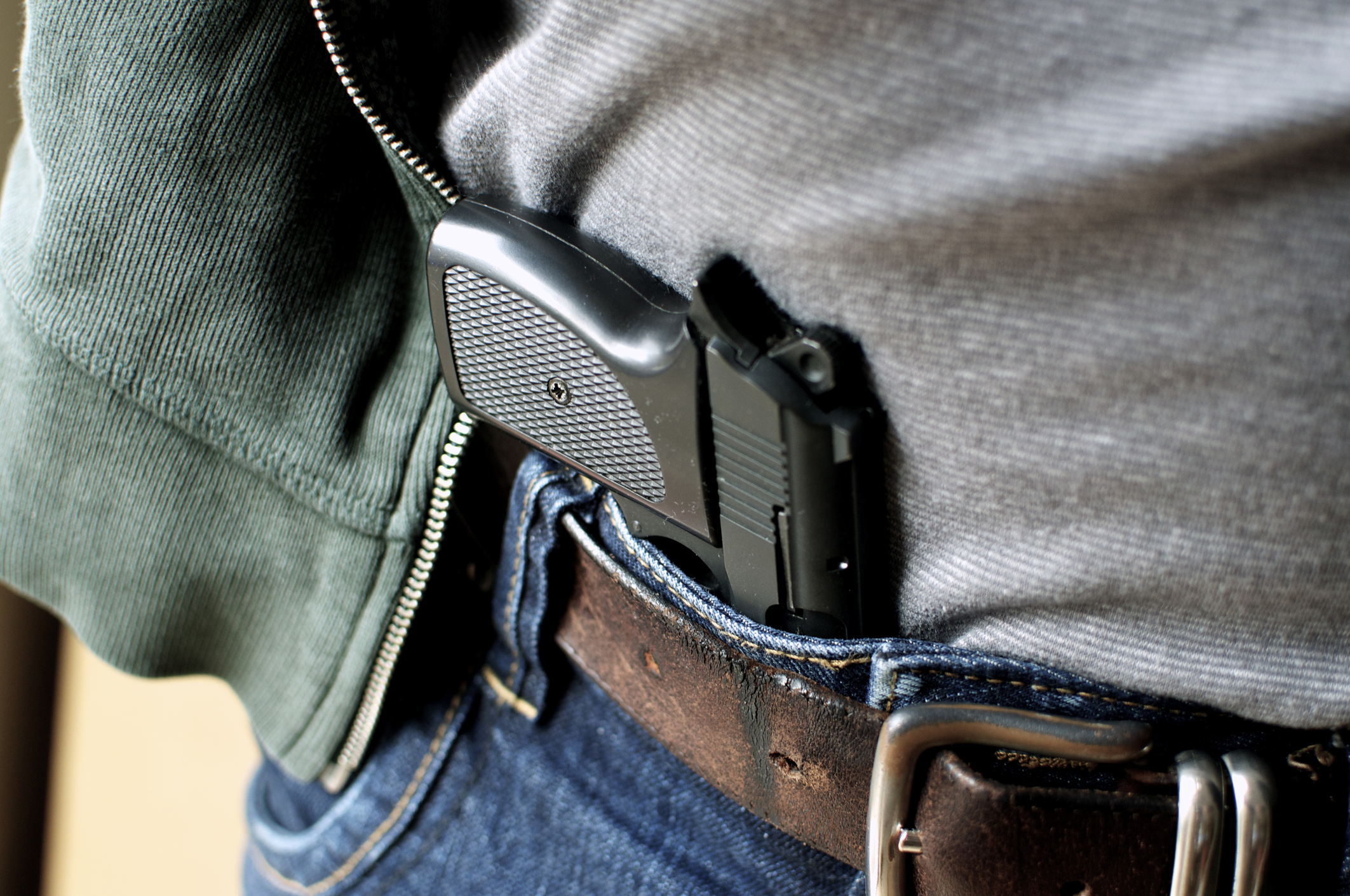
The Pennsylvania Superior Court has just decided the case of Commonwealth v. Mackey, once again holding that an anonymous tip of criminal activity, no matter how serious, does not provide police officers with the reasonable suspicion necessary to stop, arrest, or search a suspect. This is true even when the tip is for a person with a gun on a SEPTA bus. Although this has long been settled law, trial courts routinely attempt to disregard this rule in cases involving guns and drugs.
Commonwealth v. Mackey
In Mackey, Philadelphia Police Officers received an anonymous radio call for a person with a gun on a specific SEPTA bus. The radio call further described the person as “a black male wearing a white T-shirt and a flowered hat.” The officer who received the tip responded immediately, stopped the bus, and boarded the bus. Upon boarding the bus, which contained 50 to 60 passengers, the officer saw the defendant on the bus wearing a pink and green flowered hat and a shirt that was white on the back and black on the front. The officer testified that the hat was extremely distinctive in that it was a bucket hat patterned with pink and green flowers.
As soon as the officer saw the defendant and realized that the defendant matched the description from the anonymous radio call, the officer pulled his gun, pointed it at the defendant, and ordered him to raise his hands. The defendant sat up straight while the other passengers ducked for cover. The officer then handcuffed the defendant and removed him from the bus. He testified that as the defendant was being escorted from the bus, he waddled in a strange way, suggesting that he might have been walking that way to keep a gun from falling out of his loose-fitting pants. Once they were off the bus, the officer frisked the defendant and found a gun. He arrested the defendant and charged him with various gun charges.
Motion to Suppress the Firearm
The defendant filed a motion to suppress, arguing that under well-established case law, the police did not have the right to stop him and frisk him based on a totally anonymous radio call. At the evidentiary hearing for the motion to suppress, the officer was unable to provide any additional information about the radio call relating to who called it in. The officer also could not provide any specific reason for why he believed the call to be trustworthy prior to stopping and searching the defendant.
The trial court denied the motion to suppress. The Commonwealth and the court relied on the fact that the tip contained a great deal of detail and that the defendant waddled in a strange way while exiting the bus. The Commonwealth also stressed that the defendant sat up very straight while everyone else on the bus ducked for cover. The court denied the motion, found the defendant guilty following a bench trial, and sentenced him to 2 to 5 years in state prison followed by three years of probation.
Mackey's Appeal to the Pennsylvania Superior Court
The defendant immediately appealed, and on appeal, the Superior Court reversed the conviction and the denial of the motion to suppress. The Superior Court heavily emphasized the difficulty in these cases. On one hand, police are fully expected to respond to a 911 call for a person with a gun, and the failure to do so could have disastrous consequences. At the same time, an anonymous radio call simply provides the police with no way to determine whether the call is genuine and reliable. If such a call provides the police with the basis for stopping and searching a suspect, then there are few protections for anyone as the police would be able to stop a person based on a prank phone call or even where another police officer has anonymously called 911 in order to provide the basis for the stop.
The Superior Court recognized that a long line of cases, including Commonwealth v. Jackson and Commonwealth v. Hawkins, have repeatedly held that the police may not conduct a stop based on anonymous information. The Commonwealth has repeatedly asked the courts to find a public safety or firearms exception to the warrant requirement in these cases because of the risk created by firearms, and the courts have unanimously rejected such an exception as unconstitutional. This case was no different. Accordingly, the Superior Court found that the officer did not have reasonable suspicion to stop the defendant. Finally, the Court found that the defendant was immediately seized when the officer entered the bus and pointed a gun at him. Because the officer only found the gun and noticed the waddling after stopping the bus, boarding it, and pointing a gun at the defendant, the waddling and strange behavior could not be used to provide reasonable suspicion because it happened after the illegal seizure. Accordingly, the Court reversed the denial of the motion to suppress, vacated the firearms convictions, and remanded the case for a new trial without the suppressed guns.
Cases like Mackey are extremely important because they protect citizens from unconstitutional police searches even in cases involving charges as serious as illegal gun possession charges. They also prevent Pennsylvania citizens from being harassed and searched based on unreliable or even knowingly false information by requiring the police to show some evidence of reliability in the information before acting on it. At the same time, the officer’s hands were not totally tied. The officer likely would have been justified in getting on the bus and asking Mackey if he could ask him a few questions. If Mackey then acted nervously, walked strangely, or the officer observed a gun shaped bulge, the officer then may have been able to conduct the frisk lawfully. Instead, the officer immediately pointed a gun at the defendant without any basis for believing the tip, and this is particularly problematic given the fact that it is legal to carry a gun with a permit in Pennsylvania.
OUR PHILADELPHIA CRIMINAL DEFENSE LAWYERS CAN HELP YOU WITH WEAPONS AND FIREARMS OFFENSES

Philadelphia Criminal Defense Lawyers
If you are charged with the illegal possession of a gun or other weapons offense, you need an experienced criminal defense attorney to evaluate your case, investigate for potential defenses, and provide you with all of the options. We have won countless cases involving firearms and other weapons offenses at the prelminary hearing, motion to suppress, and trial court levels. Call 267-225-2545 now for a complimentary 15-minute criminal defense strategy session.

PA Superior Court: You Should Not Bring Your Computer In For Repair If It Has Child Porn On It

Philadelphia Criminal Defense Lawyer Zak T. Goldstein, Esq.
Can Computer Repair Technicians Search A Computer For Child Porn?
The Pennsylvania Superior Court has decided the case of Commonwealth v. Shaffer. The Court held that police did not violate the Fourth Amendment by searching the defendant’s computer for child pornography where the child pornography was initially discovered by computer repair technicians at a local store. The Court relied on the doctrine of abandonment, finding that the defendant abandoned his reasonable expectation of privacy in the contents of his computer when he gave store employees permission to repair the computer.
Commonwealth v. Shaffer
In Shaffer, the defendant was convicted of possession of child pornography (18 Pa.C.S. Sec. 6312(d)) and Criminal Use of a Community Facility (18 Pa.C.S. Sec. 7512). The defendant’s troubles arose when he brought his computer to a store called CompuGig for repair. The defendant told the store employees that the computer’s internet had stopped working, the computer was displaying a lot of pop-ups, and that he thought it had spyware or a virus on it. He left it there for repair, and technicians eventually concluded that the hard drive was failing. The technicians obtained permission to replace the hard drive, and the defendant also authorized them to copy the contents of the old hard drive to a new drive if possible. During the course of attempting to copy the old drive, the technicians found child pornography on the computer. The technicians then called the police and showed the police what they had found. The police took possession of the computer, obtained a search warrant, and arrested the defendant.
The defendant moved to suppress the contents of the computer, arguing that the police violated his right to privacy in his computer when they looked at the contents of the computer prior to obtaining the search warrant. The trial court denied the motion to suppress, and the defendant was eventually convicted of the charges. The defendant appealed to the Superior Court and asked the Superior Court to review the denial of the motion to suppress.
The Appeal
The Superior Court upheld the trial court’s denial of the motion to suppress and found that the police acted lawfully in viewing the material on the computer. The Superior Court relied heavily on its prior decision in Commonwealth v. Sodomsky and found that the defendant effectively abandoned the computer when he brought it to the store and authorized strangers to work on it. The Court noted that the Fourth Amendment protects people, not places, and what a person knowingly exposes to the public loses its Fourth Amendment protection. Accordingly, when the defendant gave the store employees permission to work on his computer and copy files to a new drive, he lost any expectation of privacy that he would have had in the contents of the computer because he exposed them to the public. The Court further rejected the defendant’s argument that the store employees went beyond the scope of the job, finding that he was specifically told that the employees needed to transfer the data. Thus, the Court concluded that abandonment occurs when a person grants a thirty-party access to his computer’s contents.
The Superior Court applied a very broad version of the abandonment doctrine in this case, finding that the technicians had the right to view all of the files on the computer because the defendant had given them permission to copy the hard drive. However, it is possible that the outcome could differ in a case in which the defendant had expressly limited the portions of a hard drive which the technicians could access. Nonetheless, it is not advisable to bring a computer in for repair if it has evidence of a crime on it.
Award-Winning Philadelphia Criminal Defense Lawyers
Criminal Defense Attorneys Demetra P. Mehta, Esq. and Zak T. Goldstein, Esq.
If you are facing criminal charges, we can help. Our Philadelphia criminal defense lawyers have successfully defended thousands of clients at the trial level on appeal. We offer a complimentary 15-minute criminal defense strategy session to anyone who is under investigation or facing criminal charges. Call 267-225-2545 to speak with an experienced and understanding defense attorney today.