

Philadelphia Criminal Defense Blog

PA Superior Court: Trial Attorney Probably Ineffective for Failing to Request Unmarked Police Car Jury Instruction in Fleeing Case

The Pennsylvania Superior Court has decided the case of Commonwealth v. King, holding that the trial court erred in dismissing the defendant’s Post-Conviction Relief Act Petition without an evidentiary hearing. In King, the defendant filed a PCRA challenging his conviction for felony Fleeing on the basis that his trial attorney failed to request a jury instruction related to the statutory defense that a person may not be guilty of fleeing if the pursuing police officer is driving an unmarked car and not in uniform. The Superior Court mostly agreed with the defense and remanded the case for an evidentiary hearing on whether the trial attorney had a reasonable, strategic basis for failing to request the instruction.
The Facts of King
In King, the defendant was charged in Allegheny County with Fleeing and Attempting to Elude Police. At trial, the Commonwealth introduced evidence showing that the defendant was pursued by plain-clothes officers in an unmarked car. The defense attorney never requested a jury instruction related to the statutory defense that fleeing from a plain-clothes officer in an unmarked car may not constitute the crime of Fleeing and Eluding. Accordingly, the defendant was found guilty and sentenced to a period of incarceration.
Following his conviction, the defendant filed a Post-Conviction Relief Act Petition arguing that his trial attorney was ineffective. The fleeing statute generally makes the following conduct a felony:
(a) Offense defined.--Any driver of a motor vehicle who willfully fails or refuses to bring his vehicle to a stop, or who otherwise flees or attempts to elude a pursuing police officer, when given a visual and audible signal to bring the vehicle to a stop, commits an offense as graded in subsection (a.2).
However, the statute also provides a defense to the charges:
(c) Defenses.--
(1) It is a defense to a prosecution under this section that the pursuing police officer’s vehicle was not clearly identifiable by its markings or, if unmarked, was not occupied by a police officer who was in uniform and displaying a badge or other sign of authority.
When a statute provides a defense of this nature and there is evidence in the record to suggest that the defense may apply, defense counsel generally needs to request that the trial judge read a jury instruction to the jury at the close of the trial so that the jury can evaluate whether the defense applies. The failure to request the right jury instructions can be the ineffective assistance of counsel. Here, the defendant’s trial lawyer failed to request an instruction for this defense. Thus, the defendant’s PCRA Petition alleged that his trial lawyer was ineffective in failing to request the appropriate jury instruction for this defense.
What is ineffective assistance of counsel?
There are two primary ways to challenge a conviction in Pennsylvania state court. The first method of challenging a conviction is to file a direct appeal to the Superior Court. A direct appeal focuses on whether the trial judge committed legal error – meaning did the judge overrule objections that should have been sustained or permit the Commonwealth to introduce evidence that was seized in an unconstitutional manner. In order to raise an issue on direct appeal, the defense attorney must have made the appropriate objection or request so that the trial judge could rule on the issue. Otherwise, the issue will be waived on appeal. Here, the defense never requested the jury instruction, so this issue could not be litigated in a direct appeal. If the defense had requested the instruction and the judge had refused to give it, then the issue would have been addressed in a direct appeal.
The second method for challenging a conviction, which typically places after a direct appeal has been denied, is to file a Post-Conviction Relief Act Petition. A PCRA Petition allows a defendant to receive a new trial if the defendant can show that the trial attorney provided the ineffective assistance of counsel.
In order to win a PCRA Petition based on a claim of ineffective assistance of counsel, a defendant must plead and prove three things:
The underlying claim has arguable merit;
No reasonable basis existed for counsel’s action or failure to act;
The petitioner suffered prejudice as a result of counsel’s error, with prejudice measured by whether there is a reasonable probability that the result of the proceeding would have been different.
The Superior Court’s Decision
Here, the defendant alleged that the defense attorney was ineffective at trial in failing to request the jury instruction. The trial court denied the petition, finding that the defense did not apply because the testimony showed that the police officers had lights and sirens on their car and had used the lights and sirens during the chase. The trial judge ruled that he would not have provided the jury instruction even if defense counsel had requested it because the cars were marked by the lights and sirens.
After the trial court denied the defendant’s Petition, the defendant appealed to the Superior Court. The Superior Court reversed the decision of the PCRA Court, finding that the defendant’s claim both had arguable merit and that the defendant had suffered prejudice. The court noted that the defense is available when a defendant can show two things: 1) that the police vehicle was “unmarked,” and 2) that it was not occupied by a police officer who was in uniform. The Superior Court further concluded that the lights and siren do not qualify as a marking for purposes of the statute. The statute itself does not define markings. However, the Pennsylvania Administrative Code contains a section governing the use of unmarked police vehicles. It defines a marked police vehicle and unmarked police vehicle as follows:
Marked police vehicle--A police vehicle that is equipped with at least one light-bar assembly anddisplays graphics, markings or decals identifying the agency or department on a minimum of three sides (front, rear, left or right).
Unmarked police vehicle--A police vehicle not equipped with a roof mounted light-bar assembly. The vehicle may display graphics, markings or decals, identifying the agency or department.
Given this definition, it is clear that a marked police vehicle must have both lights and decals that identify the agency or department on at least three sides. Therefore, the term markings as included in the statute’s defense requires more than just the lights and siren. Thus, defense counsel probably should have requested the jury instruction for the statutory defense because it would have applied.
Although the Superior Court agreed with the defendant, it did not immediately reverse his conviction. Instead, the court recognized that PCRA litigation also requires a consideration of whether defense counsel had some reasonably strategic basis for the decision made. The court remanded the case to the trial court for an evidentiary hearing on whether the defense attorney had some strategic reason for failing to request the instruction. If the defense attorney did not, then the trial court should vacate the conviction and order a new trial.
Facing criminal charges? We can help.
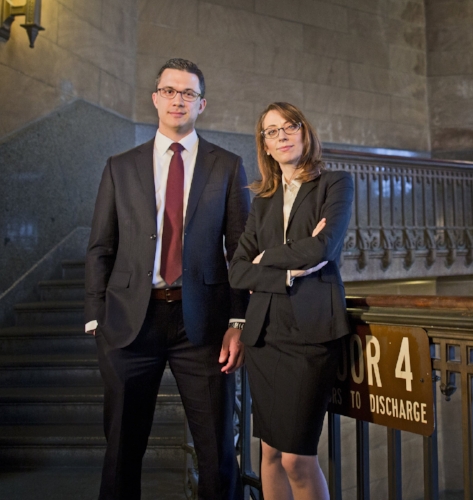
Goldstein Mehta LLC Criminal Defense Attorneys
If you are facing criminal charges, we can help. Our experienced and understanding Philadelphia criminal defense attorneys have successfully defended thousands of clients in state and federal courts throughout Pennsylvania and New Jersey. We have obtained successful results in trials, appeals, and post-conviction relief act litigation in cases involving charges of homicide, rape, possession with the intent to deliver, and other serious crimes. We offer a free criminal defense strategy session to each potential client. Call 267-225-2545 to speak with an award-winning criminal defense lawyer today.

PA Superior Court: If you travel from your house to sell drugs to a CI, the police can get a warrant for your house.

Criminal Defense Attorney Zak T. Goldstein, Esquire
The Pennsylvania Superior Court has decided the case of Commonwealth v. Kemp, finding that the police properly obtained a search warrant for the defendant’s house where police had twice seen the defendant travel from his house directly to a location where he engaged in drug transactions with a confidential informant. The court further held that police had the authority necessary to frisk the defendant when they executed the search warrant because when they arrived, he was nervous, made quick movements, dropped a bag, and backed away from them.
The Facts of Kemp
Kemp centered around whether the police properly obtained a search warrant for the defendant’s home. In their investigation, the police spoke with a confidential informant who they had previously used. The CI told them that he had purchased marijuana from the defendant multiple times over the past couple of years. The CI provided the officers with the defendant’s cell phone number and told them that he usually sells vehicle from a Jeep Cherokee or white Cadillac DTS. The CI also told police that the defendant was a SEPTA bus driver and that he had purchased marijuana from him within the past six months.
After receiving this information, the police investigated the cell phone number that the CI had provided and determined that it was registered to the defendant. Police also knew the defendant’s address from prior contacts. They also knew that he was in fact a SEPTA driver because a police report had been made on a previous occasion when the defendant had been involved in a car accident while driving a bus.
In March 2015, the police met up with the CI to engage in controlled buys of marijuana. The officer had the CI call the defendant and place an order for marijuana. The defendant agreed to sell the CI marijuana and set a location for the sale. At the same time, other officers monitored the defendant’s home. Officers observed the defendant leave his home, enter a white Cadillac DTS, and drive directly to the proposed location without making any stops. They then watched him meet with the CI and sell marijuana to the CI. The CI then returned to the officers and provided them with the marijuana. The CI confirmed that he had just purchased the marijuana from the defendant. 48 hours later, the police used the same procedures to have the CI make a second marijuana purchase. Again, the defendant traveled directly from his house to the sale location without making any stops.
The officers then obtained a search warrant for the defendant’s house. When they arrived to execute the warrant, they saw the defendant exiting the house while carrying a black plastic bag. One of the officers exited his vehicle, identified himself as a police officer, and told the defendant that he had a search warrant for the house. The defendant put the bag on the ground and began to back away. The police then handcuffed him, frisked him, and recovered a gun. At the suppression hearing, the officer testified that he knew that the defendant owned multiple guns and had a license to carry a concealed firearm. Accordingly, the frisk was for his own safety. After finding the gun, police told the defendant that they were going to search the house. They asked where the defendant’s dogs were, and the defendant then accompanied them into the house. While they were approaching the house, the defendant again began to pull away. Officers then conducted a second search of the defendant and found marijuana in his socks.
The Motion to Suppress the Drugs
The defendant moved to suppress the gun and the marijuana recovered from his socks. He argued that there was no probable cause for the police to search his house and therefore the search warrant was defective. The defendant’s argument focused on the fact that the CI never told the police that he had seen marijuana in the defendant’s house and that the police never saw any drug transactions in or near the house. The defendant also challenged the frisk that police conducted when they arrived at the house to execute the warrant, arguing that they did not have the authority to search him outside of his house. The trial court denied the motion to suppress. The defendant was convicted of Possession with the Intent to Deliver and sentenced to a county jail sentence. Although the defendant had no prior record and the guidelines should have called for probation, the trial court used a sentencing guideline enhancement for selling drugs in a school zone and therefore imposed a jail sentence.
The Superior Court Appeal
The defendant appealed to the Superior Court. On appeal, the defendant challenged the denial of the motion to suppress as well as the sentencing guidelines used in sentencing him. The Superior Court affirmed the decision of the trial court to deny the motion to suppress. It found that the police had properly established probable cause for the search of the defendant’s home because the defendant had traveled directly from the home to the location of the drug sales on two occasions without stopping anywhere along the way. Therefore, the police had sufficient reason to believe that the defendant was storing the marijuana in his house. Had he stopped somewhere before making the sales, there may not have been probable cause for the house. But because he traveled directly to the controlled buys, the warrant was not lacking in probable cause.
The Superior Court also upheld the frisk of the defendant. It recognized that when police are executing a valid search warrant, they have the authority to detain people on the promises as well as those who have recently exited and are outside the premises. Police may also engage in a frisk when they have reasonable suspicion that a person is armed and dangerous. Here, the police were justified in detaining the defendant because they had a search warrant and he had just exited the home. They were also permitted to frisk him because he appeared uneasy, dropped a bag, and backed away from the officers. The officers also knew that the defendant owned multiple guns and had a concealed carry permit. Therefore, they had reasonable suspicion that the defendant could be armed. They were also justified in the second, more intrusive search of the defendant's socks because the defendant had in fact been armed and because they had watched him sell drugs to a CI twice. Accordingly, the Superior Court affirmed the defendant’s conviction.
At the same time, the court vacated the defendant’s sentence and remanded for a new sentencing hearing. Based on the defendant’s prior record score of zero and the low offense gravity score for selling marijuana in the quantity involved, the sentencing guidelines recommended a sentence of Restorative Sanctions (probation) to nine months plus or minus three months. However, the Commonwealth had argued for but failed to sufficiently prove that the sales took place within a school zone. Had the Commonwealth proven that the sales took place in a school zone, it would have made the defendant’s sentencing guidelines 12 – 30 months. But because the Commonwealth failed to present sufficient evidence, the defendant was sentenced under the wrong guidelines and was entitled to a new sentencing hearing.
Facing criminal charges? We can help.

Goldstein Mehta LLC Criminal Defense Attorneys
If you are facing criminal charges or believe you may be under investigation by the police, we can help. Our experienced and understanding Philadelphia criminal defense attorneys have successfully defended thousands of clients. We are award-winning criminal lawyers who will fight for you in jurisdictions throughout Pennsylvania and New Jersey. We have won countless cases involving drug charges, gun charges, and other allegations of serious criminal wrongdoing. We offer a free criminal defense strategy session to each potential client. Call 267-225-2545 to speak with a defense attorney today.

PA Superior Court: Commonwealth May Not Show Photos of Now-Adult Sexual Assault Complainant as Child

Criminal Defense Lawyer Zak T. Goldstein, Esquire
The Superior Court has decided the case of Commonwealth v. Vucich, holding that the trial court erred when it permitted the Commonwealth to introduce photographs of the now-twenty-year-old complainant as a ten-year old child. In other words, the court found that there was no relevance to how the complainant would have appeared at the time of the alleged sexual assault.
The Facts of Vucich
In Vucich, the defendant was charged with rape of a child, involuntary deviate sexual intercourse, unlawful contact with a minor, corruption of minors, and indecent assault. The Commonwealth alleged that the defendant repeatedly molested his then ten-year-old step-son after he married the complainant’s mother and moved into the home. The complainant did not disclose the abuse until ten years later. He eventually told his therapist, and then subsequently told his mother. The defendant was found guilty of all charges except rape of a child and sentenced to 10-20 years of incarceration.
The Superior Court Appeal
Following his conviction, the defendant appealed to the Pennsylvania Superior Court. The defendant raised a number of issues. However, the most interesting issue that he raised was whether the trial court had improperly allowed the Commonwealth to introduce photos of what the complainant looked like when he was ten years old.
The defendant argued that the photographs were irrelevant and therefore inadmissible. Relevant evidence is evidence that logically tends to establish a material fact in the case, tends to make a fact at issue more or less probable, or supports a reasonable inference or presumption regarding a material fact. The defendant argued on appeal that the photos were not relevant because the complainant’s appearance at the time of the alleged abuse did not establish any material fact. What he looked like was not the question. Instead, the only issue was whether the abuse had occurred, and therefore showing the jury what the complainant looked like as a child served only to prejudice the jury against the defendant.
The trial court, however, concluded that the photographs were admissible to help the jury picture the complainant as a child so that the jury could better evaluate his testimony. Likewise, the Commonwealth advanced this argument again in defending the appeal.
The Superior Court, however, rejected the argument. It noted that in homicide cases, photographs of the decedent which were taken while the decedent was still alive are typically inadmissible unless there is something about the decedent’s appearance which makes the photograph relevant. Without some specific connection between the allegations and a decedent’s appearance in a photograph, the introduction of such a photograph may be reversible error because the only purpose of such evidence is to engender sympathy in the jury and prejudice the jury against a homicide defendant. Thus, in most cases, simply showing photographs of a victim or decent is prohibited and could lead to reversal.
Here, the Superior Court recognized that this was a novel issue; no Pennsylvania court had previously addressed the issue of whether a now-adult complainant’s photos as a child could be introduced in a sexual assault case. The Superior Court ultimately concluded that the rule should be the same in these types of cases as it is in homicide cases. The evidence is admissible because it is simply not probative of whether a defendant committed the crimes charged. Therefore, the court agreed with the defendant that the trial court should have sustained the defense attorney’s objections.
What is harmless error?
Nonetheless, the Court did not reverse the defendant’s conviction because it found that the admission of the photographs amounted to harmless error. Harmless error is the idea that an erroneous ruling by a trial court on an evidentiary issue does not necessarily require the reversal of a conviction where 1) the error did not prejudice the defendant or the prejudice was de minimis; 2) the erroneously admitted evidence was merely cumulative of other unrelated evidence which was substantially similar to the erroneously admitted evidence, or 3) the properly admitted and uncontradicted evidence of guilt was so overwhelming and the prejudicial effect of the error was so insignificant by comparison that the error could not have contributed to the verdict.
Here, the Court found that the prejudice was de minimis and that the error was harmless beyond a reasonable doubt. The Court concluded that the use of the photographs was brief and limited. Although they should not have been introduced, they did not contribute to the verdict. Therefore, the Court upheld the conviction.
Facing criminal charges? We can help.

Goldstein Mehta LLC Criminal Defense Attorneys
If you are facing criminal charges, we can help. Our experienced and understanding Philadelphia criminal defense attorneys have successfully defended thousands of clients in state and federal courts throughout Pennsylvania and New Jersey. We have obtained successful results in trials, appeals, and post-conviction relief act litigation in cases involving charges of homicide, rape, possession with the intent to deliver, and other serious crimes. We offer a free criminal defense strategy session to each potential client. Call 267-225-2545 to speak with an award-winning criminal defense lawyer today.

PA Supreme Court: Prosecutor May Call Defendant Dangerous, Cold-Blooded Killer During Closing Argument

Criminal Defense Lawyer - Zak T. Goldstein, Esq.
The Pennsylvania Supreme Court has decided the case of Commonwealth v. Clancy, clarifying what type of rhetoric prosecutors may use during closing arguments. This decision arguably provides prosecutors with more leeway to use prejudicial, inflammatory euphemisms and to categorize the defendant in a negative way during closing.
The Facts of Commonwealth v. Clancy
In Clancy, the defendant was charged with shooting and killing the decedent in Aliquippa, Pennsylvania following a physical altercation. After the physical altercation, the defendant allegedly pulled a gun and fired multiple shots at the decedent. The decedent was hit three times in the back and died. After the shooting, the defendant had a polite conversation with an individual in a convenience store who had nothing to do with the incident. The defendant then fled to Pittsburgh and evaded arrests for a few months. He eventually turned himself in.
Prosecutors charged the defendant with first degree murder and carrying a firearm without a license. At trial, the defense’s strategy was to argue that his actions did not amount to first-degree murder because he “had been moved by passion as a result of the fight with [complainant]." The defendant testified at his trial and stated that “[his] anger took over [him].” He further testified that he neither aimed the gun at the complainant or intended to shoot him. This type of argument, if believed by the jury, could have led to a conviction for third degree murder or some form of manslaughter. Although manslaughter and third degree murder still typically carry significant jail time, that can be a "win" in a murder case because a conviction for first degree murder requires to judge to impose a mandatory sentence of life without parole.
The Commonwealth presented several witnesses to the fight. Additionally, prosecutors showed a video that partially depicted some of the events at issue. Finally, during closing argument, the prosecutor referred to Defendant as “a dangerous man” and a “cold-blooded killer.” Defense counsel did not object to this characterization.
At the conclusion of the trial, the jury found the defendant guilty of all charges. The judge sentenced the defendant to life imprisonment without the possibility of parole as required for a conviction for first-degree murder. The defendant then filed several post-sentence motions, which were denied. He appealed to the Superior Court, and the Superior Court affirmed the conviction on direct appeal.
Following the conclusion of the direct appeal proceedings, the defendant then filed a Post-Conviction Relief Act “PCRA” petition. In his petition, he claimed that his trial counsel was ineffective in failing to object during closing arguments when the prosecutor referred to the defendant as a “dangerous man” and a “cold-blooded killer.” The petition further alleged that the prosecutor’s statements amounted to an impermissible expression of personal belief and that these statements inflamed the jury. Accordingly, the petition sought a new trial at which the Commonwealth would be barred from making such inflammatory arguments.
In response to the filing of the Petition, the PCRA court conducted an evidentiary hearing. At the hearing, the trial attorney was called to testify. He testified that he did not believe that the prosecutor’s arguments were objectionable and that he thought it was strategic not to object. The PCRA court denied the defendant’s PCRA Petition, and he filed an appeal of the PCRA court's ruling to the Superior Court.
What is Ineffective Assistance of Counsel?
Pennsylvania's Post-Conviction Relief Act allows for a defendant to obtain a new trial if his or her trial attorney was constitutionally ineffective. In order to succeed on an ineffective assistance of counsel claim, the defendant has to plead and prove, by a preponderance of the evidence, that the ineffectiveness of his or her trial lawyer “so undermined the truth-determining process that no reliable adjudication of guilt or innocence could have taken place.” More specifically, a defendant must show that 1) the underlying legal claim was of arguable merit; 2) counsel had no reasonable strategic basis for his action or inaction; and 3) the petitioner was prejudiced—that is, but for counsel’s deficient stewardship, there is a reasonable likelihood the outcome of the proceedings would have been different. If the defendant fails to prove any of these elements, then he or she will not be successful in PCRA litigation.
What May Prosecutors Say During Closing Argument?
A prosecutor has significant leeway in what he or she can say during closing argument, but there are limits. When a prosecutor goes beyond the limits, then a new trial may be granted by the trial court, on appeal, or in PCRA litigation. The most obvious restriction is that a prosecutor may not argue evidence that is not in the record. For example, assuming that a motion to suppress was granted because the police engaged in illegal conduct, the prosecutor could not make reference to the evidence that was suppressed.
However, more relevant for the instant case, a prosecutor is also limited in how they characterize the defendant and the evidence in the case. This is because appellate courts have recognized that the jury may attach special importance to the arguments of the prosecutor by virtue of the office the prosecutor holds. For example, a prosecutor may not state his or her personal belief in the guilt of the defendant. They also may not use many epithets. Here, the Pennsylvania Supreme Court emphasized that a prosecutor may not employ direct or indirect personal assertions of guilt.
What is the “Unavoidable Prejudice Test?”
However, the Court also acknowledged that judges must look at the entire circumstances of the trial before determining whether a prosecutor’s comment(s) should warrant a new trial. This is referred to as the “unavoidable prejudice test.” This test was articulated Commonwealth v. Stoltzfus. The test is:
Where the language of the district attorney is intemperate, uncalled for and improper, a new trial is not necessarily required. The language must be such that its unavoidable effect would be to prejudice the jury, forming in their minds fixed bias and hostility toward the defendant, so that they could not weigh the evidence and render a true verdict. The effect of such remarks depends upon the atmosphere of the trial, and the proper action to be taken is within the discretion of the trial court.
The Stoltzfus court held that there must be a consideration of what happened during the trial before determining whether a prosecutor’s comments are grounds for a new trial. In Stoltzfus, the Court reasoned that because defense counsel had attacked the credibility of the Commonwealth witnesses, it was not reversible error when the prosecutor attacked the credibility of the defendant and his testimony. By contrast, in Commonwealth v. M. Johnson, the Pennsylvania Supreme Court granted the defendant a new trial when the prosecutor, in his closing argument, stated that defendant was guilty by association, because of his relationship with some of the witnesses, even though the record did not support that assertion. Nonetheless, the Court recognized that prior holdings on this issue were not entirely clear and decided to clarify the rule governing what prosecutors may say during closing.
The Court's Ruling
In Clancy, the Pennsylvania Supreme Court clarified what constitutes permissible argument from a prosecutor. To determine whether the statement from the prosecutor is legally sound, the court must evaluate the substance of the challenged remark and its effect upon the jury. This is a two-prong analysis. The substance prong requires the court to examine the challenged remark in the context of the issues presented at trial. In other words, there must be some evidentiary support or an assertion by the defense that justifies the Commonwealth’s statement. If the statement does not have evidentiary support or was not made in response to the defense's arguments or questions, then the court must consider whether the intemperate statement had an impermissible effect on the jury.
Here, the Pennsylvania Supreme Court found that the prosecutor’s statements had a reasonable evidentiary foundation. The defendant shot at the complainant several times and struck him three times in the back. Further, immediately after the shooting he had a “polite” conversation with an unrelated individual and went to a convenience store. Further, because the defense argued that he had acted in the heat of the moment, the prosecutor was allowed to argue that the defendant was “dangerous” and that he acted in “cold-blood” to rebut the defense’s theory of the case. Because the Court held that there was evidentiary support for these statements, it did not consider the effect of these statements on the jury. Accordingly, because these statements were permissible, the trial attorney was not ineffective for failing to object to these statements during the prosecutor’s closing argument, thereby resulting in the denial of the PCRA Petition.
Facing criminal charges? We can help.

Zak Goldstein and Demetra Mehta - Philadelphia Criminal Lawyers
If you are facing criminal charges or under investigation by the police, we can help. We have successfully defended thousands of clients against criminal charges in courts throughout Pennsylvania and New Jersey. We have successfully obtained full acquittals in cases involving charges such as Conspiracy, Aggravated Assault, and Attempted Murder. We have also successfully represented clients in direct appeals to the Superior Court and in Post-Conviction Relief Act litigation. Our award-winning Philadelphia criminal defense lawyers offer a free criminal defense strategy session to any potential client. Call 267-225-2545 to speak with an experienced and understanding defense attorney today.