

Philadelphia Criminal Defense Blog

PA Supreme Court: Defendant May Appeal Adverse Ruling on Motion in Limine Even Where Defendant Preemptively Introduces Damaging Evidence

Philadelphia Criminal Defense Lawyer Zak T. Goldstein, Esquire
The Pennsylvania Supreme Court has decided the case of Commonwealth v. Raheem Stevenson, holding that a defendant may still appeal a trial court’s pre-trial ruling on the admissibility of a prior conviction even if the defendant preemptively introduces the harmful evidence during direct examination.
The Facts of Stevenson
The defendant and his co-defendant were arrested for an alleged armed robbery that took place in 2017. During trial, the Commonwealth moved in limine to introduce evidence that the defendant had a prior 2005 conviction for burglary. The defense objected, but the trial court found that the evidence was properly admissible.
The trial court issued its ruling prior to trial as part of a hearing on a motion in limine. A motion in limine allows the parties to get a ruling from the trial judge on the admissibility of certain evidence prior to the trial or prior to the testimony itself so that neither party has to be surprised by the eventual ruling when the issue comes up during the trial. This lets the parties know what evidence they may mention during opening statements and potentially avoid triggering a mistrial by introducing evidence that should not come in.
In order to mitigate against the potential impact of this prior conviction, the defense attorney asked the defendant about it when he testified on direct examination. When damaging evidence is going to come in no matter what, it is often strategic for the affected party to introduce it themselves and avoid looking like they were attempting to hide it. It may also give the party the opportunity to explain the circumstances or provide more detail where helpful. Here, the trial attorney objected to the admission of the evidence in advance. But when the trial court ruled that it would be admissible, the attorney decided it would be strategic to have his client testify about it rather than waiting for the Commonwealth to bring it up in cross-examination.
The Superior Court’s Ruling
The jury convicted the defendant, and the defendant appealed to the Pennsylvania Superior Court. On appeal, the defendant raised the issue of whether the trial court improperly allowed the prosecution to introduce evidence of the prior burglary conviction. The Superior Court affirmed, but it did so because it found that the defense had waived the issue for appeal by introducing the evidence on direct examination. The Superior Court concluded that the defendant could not complain about evidence that he had introduced himself. The Superior Court relied primarily on the United States Supreme Court case of Ohler v. United States. There, the United States Supreme Court ruled that a defendant who introduces evidence preemptively cannot later claim it was admitted in error. That is still the rule in federal court.
The Pennsylvania Supreme Court’s Ruling
The Pennsylvania Supreme Court reversed the Superior Court's decision, concluding that the rule in Ohler should not apply under Pennsylvania law. Under Pennsylvania law, the defendant may still raise the issue on appeal even if the defendant preemptively introduced the bad evidence where there was clearly a hearing on a motion in limine, the prosecution clearly made a request, the defendant clearly objected, and the trial court made an unequivocal ruling in favor of the prosecution prior to trial. Where the trial court’s ruling is unambiguous and the defense has definitely objected to the prosecution’s request, the defense may preemptively introduce the harmful evidence without waiving the issue for appeal.
In reaching this conclusion, the Court emphasized that under Pennsylvania Rule of Evidence 103, a defendant preserves the right to appeal a ruling on evidence admissibility by making a motion in limine. The rule does not require the defendant to renew the objection during the trial once the court has made a definitive ruling.
The Court recognized that defense attorneys sometimes need to preemptively disclose potentially damaging evidence to mitigate its impact. This strategy is a legitimate trial tactic. Forcing defendants to forgo this tactic to preserve their right to appeal would be unfair and contrary to the principles of a fair trial.
The Court noted that while federal courts take a different approach under the Ohler case, many state Supreme Courts have rejected Ohler and adopted the reasoning of the dissent in that case. The dissent in Ohler argued that a defendant should not lose the right to appeal a ruling simply because they chose to introduce the evidence themselves after an adverse in limine ruling. The Court noted that Pennsylvania civil cases have upheld the right to appeal adverse rulings after preemptive disclosure. Thus, in federal court, a defendant must choose between trying to disarm the damaging evidence following an adverse ruling and preserving the issue for appeal, but in Pennsylvania state court, the defendant may preemptively introduce the evidence so long as the objection was clearly made in advance.
Facing criminal charges or appealing a criminal case in Pennsylvania?

Goldstein Mehta LLC Criminal Defense Attorneys
If you are facing criminal charges or under investigation by the police, we can help. We have successfully defended thousands of clients against criminal charges in courts throughout Pennsylvania and New Jersey. We have successfully obtained full acquittals and dismissals in cases involving charges such as Conspiracy, Aggravated Assault, Rape, Violations of the Uniform Firearms Act, and First-Degree Murder. We have also won criminal appeals and PCRAs in state and federal court, including the successful direct appeal of a first-degree murder conviction and the exoneration of a client who spent 33 years in prison for a murder he did not commit. Our award-winning Philadelphia criminal defense lawyers offer a free criminal defense strategy session to any potential client. Call 267-225-2545 to speak with an experienced and understanding defense attorney today.

PA Superior Court: Defendant Making Hand into Shape of Gun and Pretending to Shoot Witness Is (Obviously) Direct Criminal Contempt

Criminal Defense Lawyer Zak T. Goldstein, Esquire
The Pennsylvania Superior Court has decided the case of Commonwealth v. Williams, holding that the Philadelphia Court of Common Pleas properly found the defendant guilty of direct criminal contempt for making his hand into the shape of a gun and pretending to shoot the witness against him during his preliminary hearing.
The Facts of Williams
The defendant was charged with burglary and related charges. When he was brought into courtroom for his preliminary hearing, he made his hand into the shape of a gun and made a shooting motion at the witness against him. The witness did not actually see it, but unfortunately for Williams, the judge did. The judge finished the hearing, held the charges against Williams for court, and then moved directly into a trial on a summary charge of direct criminal contempt for obstructing the proceedings.
The defendant agreed that his hand had been in that position, but he claimed that he had some sort of twitching disorder which caused it to happen involuntarily. He admitted he had not warned anyone that this could happen when he was brought into the courtroom, but he claimed that he did not realize he was going into a courtroom. Unsurprisingly, the trial court promptly rejected this testimony, found him guilty, and sentenced him to 30 – 60 days’ incarceration. The defendant had an extensive criminal record, which did not help his case or his claim that he did not know he was headed into the courtroom. The defendant appealed.
Direct criminal contempt includes misconduct in the court's presence that is committed with the intent to obstruct proceedings. The conduct may qualify as contemptuous even if it does not directly disrupt the court’s operation but only threatens the dignity and authority of the court. Here, the conduct arguably did both.
The Superior Court’s Ruling
The Superior Court quickly affirmed. It found substantial evidence supported the trial judge’s ruling and that the trial judge was best suited to determine whether or not the defendant’s somewhat silly explanation was credible. The trial judge had the right to reject that explanation, and it was not the Superior Court’s job to reweigh the evidence.
The Superior Court opined that misconduct need not cause a visible interruption to the proceedings or a delay in the proceedings in order to constitute an obstruction of justice. Of course, the mere act of threatening a witness may impede the fairness and integrity of the proceedings, and the trial judge properly rejected the defendant’s explanation. The Superior Court therefore upheld the conviction.
The Takeaway
This case is not particularly surprising. Threatening witnesses in court does not go over well with the judge and the DA, and it usually does not make the case better. It can lead to increases in bail, relatively minor contempt charges, jury instructions that the jury may hold the actions against the defendant in deciding guilt, and even serious felony witness intimidation charges. The system does not always seem fair to criminal defendants and other witnesses, and it often may not be. But threatening witnesses is usually not going to improve the situation, and the appellate courts are not likely to be sympathetic in these cases.
Facing criminal charges or appealing a criminal case in Pennsylvania?

Goldstein Mehta LLC Criminal Lawyers
If you are facing criminal charges or under investigation by the police, we can help. We have successfully defended thousands of clients against criminal charges in courts throughout Pennsylvania and New Jersey. We have successfully obtained full acquittals and dismissals in cases involving charges such as Conspiracy, Aggravated Assault, Rape, Violations of the Uniform Firearms Act, and First-Degree Murder. We have also won criminal appeals and PCRAs in state and federal court, including the successful direct appeal of a first-degree murder conviction and the exoneration of a client who spent 33 years in prison for a murder he did not commit. Our award-winning Philadelphia criminal defense lawyers offer a free criminal defense strategy session to any potential client. Call 267-225-2545 to speak with an experienced and understanding defense attorney today.

PA Superior Court: Police Do Not Need a Search Warrant to Get Parolee’s GPS Monitoring Data
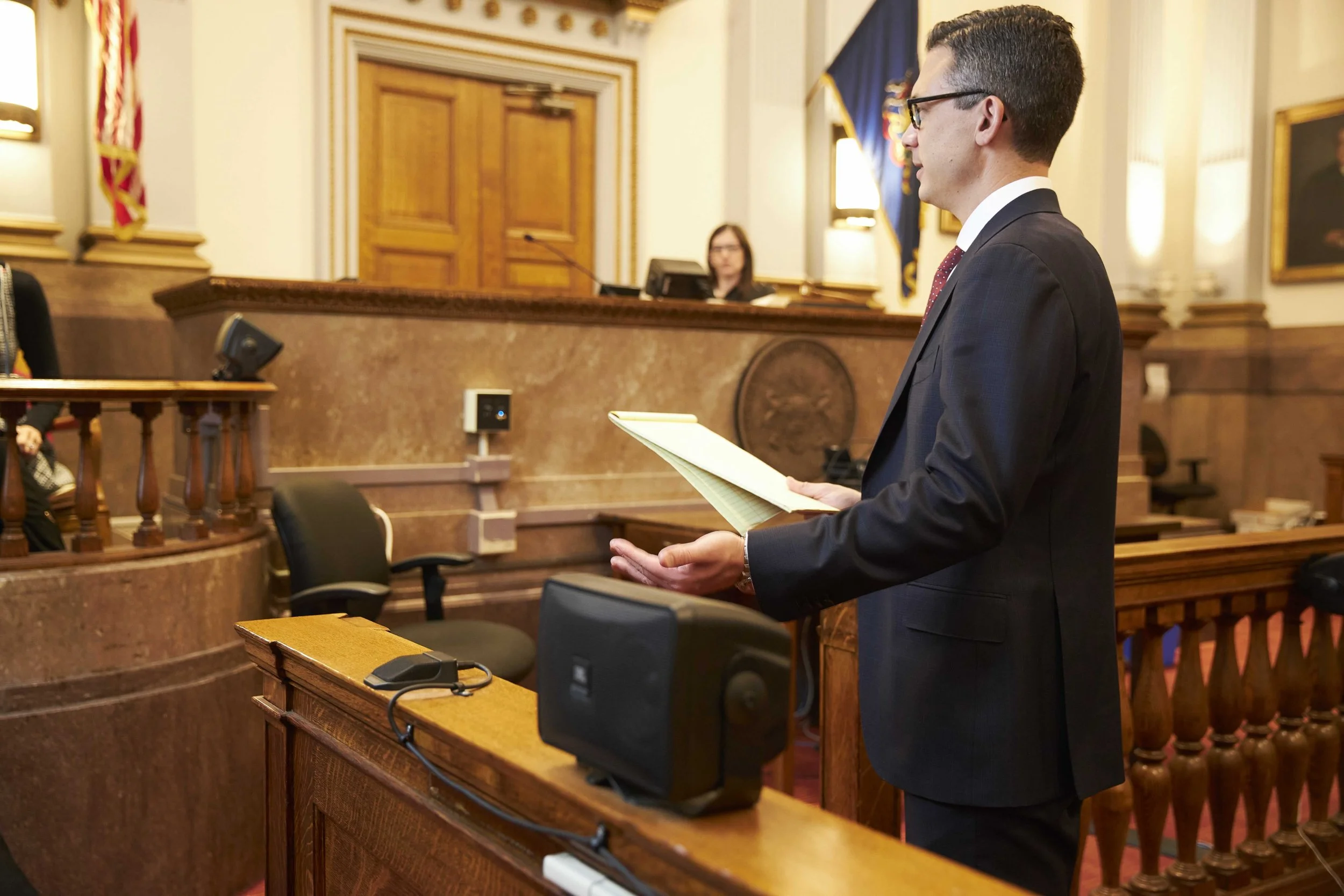
Philadelphia Criminal Defense Attorney Zak T. Goldstein, Esquire
The Pennsylvania Superior Court has decided the case of Commonwealth v. Rosendary, holding that the police do not need a search warrant to get a parolee’s GPS monitoring data from parole agents so long as the parolee was already on GPS monitoring for reasons unrelated to the investigation of the new crime. In this case, the defendant’s GPS monitor put him at the scene of the crime, but the police had obtained that data without getting a search warrant for it. The Superior Court, however, rejected Rosendary’s arguments that the evidence should be suppressed, finding that police do not need a search warrant to get this type of data from parole agents and that the police did not use the parole agents as “stalking horses” for the police investigation.
The Facts of Rosendary
The defendant was on parole for a robbery conviction. As part of his parole, he was eventually placed on GPS monitoring. He signed a consent form agreeing to the monitoring. He did not have much of a choice, though, as the alternative to GPS monitoring would have been incarceration. The police subsequently arrested him and charged him with another robbery. At his trial, the Commonwealth introduced evidence from his parole GPS ankle monitor which incriminated him by putting him at the crime scene.
Prior to trial, the defendant moved to suppress the GPS data. He argued that the police should have obtained a search warrant in order to get the GPS information from his parole agent and that alternatively, the parole agent had worked as a “stalking horse” for the police in order to evade the warrant requirement. The trial court denied the motion to suppress, and the defendant appealed.
The Superior Court’s Ruling
The Pennsylvania Superior Court denied the appeal. First, it rejected the defendant’s argument that the police violated the Fourth Amendment’s warrant requirement by getting the GPS data without a search warrant. Although the police ordinarily need a search warrant in order to get GPS location data for a suspect, the Court held that they did not need to get a search warrant in this case. Specifically, the defendant had a diminished expectation of privacy in his GPS data because he was on parole, he had agreed to wear the monitor in lieu of incarceration, and he knew that the data would be shared with his parole agent. Thus, he had no reasonable expectation that the data would be kept private, and he had agreed to wear the ankle monitor. Therefore, law enforcement did not need a search warrant to get the data. Further, the parole agent had not shared unlimited data with the police. Instead, the parole agent had shared only the location data for where the defendant was at the time of his suspected involvement in the robbery. The Court found that this was not a significant intrusion into his privacy because the data shared was limited in time and scope.
The Court also rejected the defendant’s stalking horse challenge. Under the stalking horse doctrine, the police may not take advantage of a suspect’s status as a probationer or parolee to avoid the warrant requirement. In other words, the police may not ask probation or parole to conduct a warrantless search for the purpose of finding evidence related to a police investigation. Instead, the police should get a warrant. For example, if a defendant could show that the police had asked a probation officer to conduct a search of the defendant’s house to look for evidence because the police suspected the defendant of a crime, then that search could potentially violate the stalking horse doctrine and require suppression of the evidence. Here, however, the defendant introduced no evidence that the police had directed the search or directed parole to put the defendant on GPS monitoring. He was already on GPS monitoring, and the police simply requested the data from his parole agent. As he did not have a reasonable expectation of privacy in the data, the parole agent was free to share this information with the police.
The Takeaway
This result is not particularly surprising. It is usually not possible to suppress evidence that was shared with the public as suppression requires a reasonable expectation of privacy. A probationer or parolee who is subject to GPS monitoring has no real reason to believe that the evidence would be kept private, so courts are generally not going to suppress it.
As a general rule, it’s best not to commit new crimes while wearing a probation or parole GPS tracking device. The evidence will likely be admissible in court, and the police will not be required to get a search warrant for the evidence. There is still the possibility of challenging the collection of this type of evidence should the defendant be able to show that probation or parole improperly conducted a search at the request of the police and that the police may not have otherwise had the authority to conduct such a search, but that type of violation is often difficult to prove.
Facing criminal charges or appealing a criminal case? We can help.

Criminal Defense Lawyer Zak T. Goldstein, Esquire
If you are facing criminal charges or under investigation by the police, we can help. We have successfully defended thousands of clients against criminal charges in courts throughout Pennsylvania and New Jersey. We have successfully obtained full acquittals and dismissals in cases involving charges such as Conspiracy, Aggravated Assault, Rape, Violations of the Uniform Firearms Act, and First-Degree Murder. We have also won criminal appeals and PCRAs in state and federal court, including the exoneration of a client who spent 33 years in prison for a murder he did not commit. Our award-winning Philadelphia criminal defense lawyers offer a free criminal defense strategy session to any potential client. Call 267-225-2545 to speak with an experienced and understanding defense attorney today.

PA Superior Court: Failure to Return Lost Cell Phone After Fight May Be Theft

Philadelphia Criminal Defense Lawyer Zak T. Goldstein, Esquire
The Pennsylvania Superior Court has decided the case of Commonwealth v. Griffith, affirming the defendant’s conviction for theft of property lost, mislaid, or delivered where the defendant found the complainant’s cell phone on the ground after a fight and then threw it back on the ground instead of returning it.
The Facts of Griffith
The defendant and the complainant attended a Halloween party in York County. The complainant had a physical altercation with one of the defendant’s friends. The defendant and another person joined in, and they all fought the complainant. The fight ended, but later that night, another fight took place involving the complainant and one of the defendant’s family members at a different location. That fight also involved the defendant. That fight ended when the police came and arrested everyone.
The complainant eventually realized she had lost her iPhone. She called the phone, and the defendant answered. She called the phone again later, and no one answered. She called the defendant the next day through a social media app, and the defendant told her she was not getting the phone back, “it’s gone,” and “to press charges.” She then hung up. The complainant asked again if she could return the phone, and the defendant said, “no, it’s gone.” The Commonwealth played a recording of these calls in court.
The defendant testified in her own defense. She said that after the arrests for the second fight, she and her cousin found the ringing phone on the ground. At first, she thought it was hers because she and the complainant had the same phone. She picked it up, talked to the complainant, realized it was not her own phone, and threw it back on the ground. She had not seen it since. She did not feel responsible for the phone, but she did not think she had stolen it because she did not take it, keep it, or cause it to be on the ground outside.
The trial court convicted her of theft. The court sentenced her to one year of probation and restitution of $1,000 for the phone. The defendant appealed.
The Superior Court Appeal
On appeal, the defendant argued that the Commonwealth failed to present sufficient evidence because she did not have an intent to deprive the complainant of the phone. She interacted with the phone when she heard it ringing and thought it might be her phone, but she had no duty to return the phone to the complainant and was permitted to put the phone back where she found it. She argued that leaving the phone where she found it was a reasonable measure to return the phone to its owner and she had no duty to help the complainant find her phone. She also did not do anything to conceal the phone or make it harder for the complainant to find it.
The Superior Court rejected this argument and affirmed the conviction. The theft statute provides:
A person who comes into control of property of another that he knows to have been lost, mislaid, or delivered under a mistake as to the nature or amount of the property or the identity of the recipient is guilty of theft if, with the intent to deprive the owner thereof, he fails to take reasonable measures to restore the property to a person entitled to have it.
18 Pa.C.S.A. § 3924.
The court concluded that the defendant acted with the intent to deprive by putting the phone back on the ground. The court found intent both from the circumstances of the fight, the mean things the defendant said, and the fact that the defendant told the complainant to press charges. Similarly, the defendant’s actions were not reasonable. Instead of putting the phone somewhere safe, the defendant threw it back on the ground. Accordingly, the Court affirmed the conviction. One of the judges dissented, however, making it more likely that the Superior Court or Supreme Court will entertain additional appeals.
This case is concerning because it allows for criminal liability for a defendant who did not actually steal any property. The complainant lost her phone during a fight, the defendant was not responsible for it, and the defendant should not really have had any obligation to help the complainant recover her phone. The complainant also had access to the Find my iPhone application and could have tried to find it herself. Nonetheless, the court found that because the defendant picked up the phone, she had an obligation to return it. This creates a duty to act even for someone who did not cause the property to be lost. Hopefully, the defendant will pursue additional appeals.
Facing criminal charges or appealing a criminal case in Pennsylvania? We can help.

Goldstein Mehta LLC Criminal Lawyers
If you are facing criminal charges or under investigation by the police, we can help. We have successfully defended thousands of clients against criminal charges in courts throughout Pennsylvania and New Jersey. We have successfully obtained full acquittals in cases involving charges such as Conspiracy, Aggravated Assault, Rape, and Murder. Our award-winning Philadelphia criminal defense lawyers offer a free criminal defense strategy session to any potential client. Call 267-225-2545 to speak with an experienced and understanding defense attorney today.