

Philadelphia Criminal Defense Blog

No Forced Abandonment: Superior Court Upholds Recovery of Gun Discarded During Police Chase

Criminal Defense Lawyer Zak T. Goldstein, Esquire
In a recent published opinion, the Pennsylvania Superior Court reversed a Philadelphia trial judge’s decision to suppress a firearm that the defendant discarded while fleeing from police. The case, Commonwealth v. Joyner, clarifies the line between a mere encounter and an investigatory detention, and it reinforces that evidence abandoned during flight is admissible where police had reasonable suspicion to pursue the defendant before they discarded some kind of contraband.
The Facts of Joyner
The defendant faced charges including prohibited possession of a firearm (VUFA § 6105), carrying without a license (VUFA § 6106), carrying on the streets of Philadelphia (VUFA § 6108), and possession of a controlled substance. Before trial, he moved to suppress the firearm, arguing that police lacked reasonable suspicion to stop him and that his abandonment of the gun was coerced.
At the suppression hearing, the arresting officer testified that while patrolling a high-crime area, he observed the defendant walking with his right arm stiffened against his side and a heavy, square-shaped object in his pocket that the officer believed was a firearm. When the defendant saw the marked police vehicle, he turned and walked in the opposite direction. The arresting officer pulled alongside him and asked whether he had a gun. The defendant twice said no even though the officer could see an object that looked like a gun and kept walking. As the officer opened his door to get out, the defendant ran. The police chased him, heard the sound of metal hitting the ground, and ultimately recovered a firearm and oxycodone pills.
The defense argued that the defendant had been forced to abandon the contraband by an illegal stop. The trial court agreed and granted the motion to suppress, concluding that the officer’s questioning escalated the interaction into an unlawful investigatory detention under Commonwealth v. Hicks. It also found that the officer’s conduct coerced the defendant into discarding the gun, requiring suppression under Commonwealth v. Barnett. The prosecution appealed.
The Superior Court’s Ruling
The Superior Court disagreed. It held that the interaction remained a mere encounter up until the moment the defendant fled. The court emphasized several factors:
The interaction occurred in daylight on a public street.
Police did not activate lights or sirens.
No officer exited the car or blocked the defendant’s path until after he ran.
Asking whether someone is carrying a gun does not by itself create a detention.
Because the defendant remained free to leave and in fact chose to leave, the questioning did not constitute a seizure requiring reasonable suspicion or probable cause. Once the defendant fled, however, the legal calculus changed. The court held that the arresting officer then had reasonable suspicion to pursue him based on the totality of the circumstances. Those circumstances included:
The officer’s observation of a heavy, square object consistent with a firearm.
The high-crime nature of the area.
The defendant’s evasive behavior when he saw police.
His immediate, unprovoked flight when approached by police.
Under well-established Pennsylvania law, unprovoked flight in a high-crime area can supply reasonable suspicion when combined with other factors. Because the officers had reasonable suspicion at the moment of pursuit, the defendant’s abandonment of the gun was not coerced. The firearm was therefore admissible, and the court reversed the grant of the motion to suppress.
The Superior Court distinguished Barnett, noting that in that case police lacked reasonable suspicion when they attempted to stop the defendant. Here, the officer had already developed reasonable suspicion before formal pursuit began.
The Takeaway
Commonwealth v. Joyner reinforces several key principles for suppression litigation in Pennsylvania:
Police may question a person about a firearm without necessarily creating a detention.
Hicks limits firearm-based seizures but does not apply to consensual encounters.
Flight, when combined with other factors, can create reasonable suspicion.
Evidence discarded during a legally justified pursuit is admissible, not forced abandonment.
The case now returns to the Philadelphia Court of Common Pleas for further proceedings, including potential litigation on an unresolved Miranda issue.

Goldstein Mehta LLC Criminal Defense
Facing criminal charges? We can help.
If you are facing criminal charges or under investigation by the police, we can help. We have successfully defended thousands of clients against criminal charges in courts throughout Pennsylvania and New Jersey. We have successfully obtained full acquittals in cases involving charges such as Conspiracy, Aggravated Assault, Rape, and Murder. We have also won criminal appeals and PCRAs in state and federal court. Our award-winning Philadelphia criminal defense lawyers offer a free criminal defense strategy session to any potential client. Call 267-225-2545 to speak with an experienced and understanding defense attorney today.

Pennsylvania Supreme Court Rejects Public Record Presumption and Orders Hearing on Juror Bias Claim in Commonwealth v. Blakeney
Criminal Defense Laweyr Zak T. Goldstein, Esquire
The Pennsylvania Supreme Court has issued an important decision in Commonwealth v. Blakeney, vacating the dismissal of a third Post-Conviction Relief Act (“PCRA”) petition and remanding the case for further proceedings. The Court held that the PCRA court improperly relied on the discredited “public records presumption” and applied an unreasonably high diligence standard when it dismissed the petitioner’s serial petition as untimely. The decision continues the Supreme Court’s recent trend of reinforcing the fact that petitioners must be given a fair opportunity to prove newly discovered facts under the PCRA.
The Facts of the Case
The defendant was convicted of first-degree murder and related offenses for the 2000 killing of his girlfriend’s two-year-old child in Dauphin County. During jury selection, one juror, identified as Juror #7, initially marked “yes” on her juror questionnaire in response to the question of whether she or a close family member had been charged with a crime, then crossed out “yes” and marked “no.” More than twenty years later, new post-conviction counsel investigating potential juror bias discovered an obituary listing Juror #7’s family members. Counsel determined that the juror’s nephew had been charged with attempted murder and related offenses involving his own infant child. The juror’s nephew’s own preliminary hearing occurred on the very day that the juror was being questioned during voir dire in the defendant’s trial.
The defendant, whose prior appeals and PCRAs has been denied, filed a third PCRA petition arguing that this information constituted newly discovered facts that could not have been found earlier through reasonable diligence. He contended that Juror #7 provided a misleading answer during voir dire and that he was therefore denied his constitutional right to a fair and impartial jury.
The PCRA Court’s Ruling
The PCRA court issued a notice of intent to dismiss under Rule 907 of the Rules of Criminal Procedure and ultimately denied the petition without a hearing. The PCRA court held that the claim was untimely because the nephew’s criminal case had been reported in a 2002 newspaper article, meaning that the information was publicly available and could have been discovered earlier. The court concluded that the defendant had not exercised due diligence and that his claim therefore failed to satisfy the PCRA’s timeliness exception for newly discovered facts under 42 Pa.C.S. § 9545(b)(1)(ii).
The Supreme Court’s Decision
The defendant appealed, and because he had received the death penalty at sentencing, the appeal went directly to the state Supreme Court. The Pennsylvania Supreme Court vacated the dismissal and remanded the case for an evidentiary hearing. The Court emphasized that the PCRA court erred by invoking the “public record presumption,” a doctrine that previously held defendants responsible for facts contained in public sources such as newspapers or court filings. The Supreme Court has repeatedly disapproved of that presumption in recent years, explaining that it is inconsistent with the plain language of the PCRA. The PCRA requires only reasonable diligence, not omniscience. It also recognizes that many petitioners are in custody and do not have normal access to public records.
In the defendant’s case, the Court found that the 2002 newspaper article did not specifically identify Juror #7 or establish any connection between her and her nephew’s case. The article merely reported the nephew’s charges and provided no reason for defense counsel in 2002 to link that case to a juror from the defendant’s trial. Accordingly, the Court concluded that the lower court erred in holding the information was discoverable simply because it existed in the public domain. The proper inquiry, the Supreme Court reiterated, is whether the petitioner could have discovered the fact earlier through reasonable diligence, not just whether the fact appeared somewhere in public records.
Because the defendant’s petition presented specific, potentially verifiable claims about juror bias and newly discovered evidence, the Supreme Court ordered a remand for further factual development. The PCRA court must now conduct a hearing to determine whether the information indeed qualifies as newly discovered and whether it entitles the defendant to relief.
The Takeaway
Commonwealth v. Blakeney reaffirms that Pennsylvania courts may not deny PCRA petitions by assuming defendants should have discovered facts merely because they were once published or theoretically accessible. The Supreme Court continues to reject the public record presumption and to clarify that reasonable diligence is a practical, case-specific standard. Petitioners are not required to scour every public source in existence, and when a claim of newly discovered evidence is plausible, a hearing is often necessary before dismissal.
Facing criminal charges or under investigation?

Goldstein Mehta LLC Criminal Defense Lawyers in Philadelphia, PA
If you are facing criminal charges or under investigation by the police, we can help. We have successfully defended thousands of clients against criminal charges in courts throughout Pennsylvania and New Jersey. We have successfully obtained full acquittals and dismissals in cases involving charges such as Conspiracy, Aggravated Assault, Rape, Violations of the Uniform Firearms Act, and First-Degree Murder. We have also won criminal appeals and PCRAs in state and federal court. Our award-winning Philadelphia criminal defense lawyers offer a free criminal defense strategy session to any potential client. Call 267-225-2545 to speak with an experienced and understanding defense attorney today.

PA Superior Court: Jurisdiction Exists for Out-of-State Access Device Fraud When Complainant Lives in Pennsylvania
Philadelphia, PA Criminal Defense Lawyer Zak T. Goldstein, Esquire
The Pennsylvania Superior Court has decided the case of Commonwealth v. Washington, holding that the Commonwealth could prosecute the defendant for allegedly committing fraud out of state when the complainant and the complainant’s financial accounts were based in Pennsylvania.
The Facts of the Case
In Commonwealth v. Washington, 2025 PA Super 183, the Pennsylvania Superior Court held that Pennsylvania courts have jurisdiction to prosecute access device fraud committed outside the Commonwealth when the complainant resides here and the affected financial account is maintained in Pennsylvania. The Court rejected the defendant’s jurisdictional challenge.
The defendant was charged in Montgomery County, PA with one count of Access Device Fraud under 18 Pa.C.S. § 4106(a)(1)(ii). While physically in New York, the defendant used an altered check and fake identification belonging to a Pennsylvania resident. Using the forged documents, he cashed a counterfeit $3,500 check and withdrew $5,000 from the complainant’s KeyBank account.
The complainant lived in Lower Salford Township in Montgomery County, and KeyBank operated branches there. After the transactions, a New York branch manager contacted the complainant, who confirmed that he had not authorized the withdrawals. Surveillance footage identified the defendant, who was arrested and extradited to Pennsylvania. He pleaded guilty and was sentenced to nine to twenty-three months in jail. On appeal, the defendant argued that Pennsylvania lacked subject-matter jurisdiction and venue because the fraudulent conduct occurred entirely in New York State.
The Superior Court’s Analysis
The Superior Court rejected that argument and affirmed the conviction. Under 18 Pa.C.S. § 102, Pennsylvania courts may exercise jurisdiction if either the conduct constituting an element of the offense or the result of that conduct takes place within the Commonwealth. Access Device Fraud under § 4106(a)(1)(ii) criminalizes using another person’s access device without authorization. The Court held that an essential element of the offense—the failure to obtain the owner’s consent—occurs where the victim resides. Because the complainant lived in Montgomery County, the defendant’s unauthorized use of the complainant’s financial information constituted conduct occurring within Pennsylvania even though the defendant was in New York.
The Court also concluded that venue was proper in Montgomery County under § 4106(e), which provides that such offenses may be deemed committed “at the place where the property or services were received or provided, or at the place where the lawful charges for said property or services are billed.” Because the complainant’s account and the relevant KeyBank branch were located in Montgomery County, that county was the proper venue.
Citing similar reasoning from courts in Massachusetts and Florida, the Superior Court confirmed that Pennsylvania may exercise jurisdiction over out-of-state access device or identity-theft offenses when the complainant resides in Pennsylvania and the loss is tied to a Pennsylvania account.
The Takeaway
Commonwealth v. Washington establishes that Pennsylvania courts can prosecute financial crimes committed elsewhere if the victim lives in Pennsylvania and the affected funds are drawn from a Pennsylvania account. Even remote, out-of-state conduct can support Pennsylvania charges when the harm and loss occur within the Commonwealth.
Facing criminal charges? We can help.

Goldstein Mehta LLC Criminal Defense Attorneys
If you are facing criminal charges or under investigation by the police, we can help. We have successfully defended thousands of clients against criminal charges in courts throughout Pennsylvania and New Jersey. We have successfully obtained full acquittals in cases involving charges such as Conspiracy, Aggravated Assault, Rape, and Murder. We have also won criminal appeals and PCRAs in state and federal court. Our award-winning Philadelphia criminal defense lawyers offer a free criminal defense strategy session to any potential client. Call 267-225-2545 to speak with an experienced and understanding defense attorney today.

PA Superior Court Rejects Request for Hearing on Juror Misconduct Allegations in Commonwealth v. Hall
Criminal Defense Lawyer Zak T. Goldstein, Esquire
In Commonwealth v. Wakeem Hall, No. 1399 EDA 2024 (Pa. Super. Sept. 15, 2025), the Pennsylvania Superior Court considered whether a defendant was entitled to an evidentiary hearing based on allegations that the jury foreperson, who was an attorney, may have told other jurors that the defendant’s failure to call character witnesses at trial must have meant he had a prior criminal record. The Court affirmed the trial court’s denial of relief and decision not to hold an evidentiary hearing on the defendant’s claim, holding that the defendant’s proffer was speculative and insufficient to overcome the rule prohibiting inquiry into jury deliberations.
The Facts of the Case
Following a jury trial, the defendant was convicted in the Philadelphia Court of Common Pleas of involuntary deviate sexual intercourse (IDSI) with a child, endangering the welfare of a child, corruption of a minor, and unlawful contact with a minor. The criminal charges stemmed from allegations that he repeatedly abused his biological daughter in 2015 when she was nine and ten years old. He was found guilty and sentenced to an aggregate term of 15 to 30 years in prison followed by 10 years of probation.
After trial, the defendant filed a motion for a new trial and an evidentiary hearing. He argued that the jury foreperson, who was a lawyer, may have told the rest of the jury that the defendant’s failure to call character witnesses indicated he had a prior record. This allegation arose from questions jurors asked defense counsel after the verdict had already been returned and the jurors discharged. The trial court denied the motion, finding the allegations supporting it to be speculative. Because of a court system error that prevented him from filing a timely appeal, the defendant’s appellate rights were later reinstated nunc pro tunc through PCRA proceedings, and he appealed to the Superior Court.
The Pennsylvania Superior Court’s Ruling
On appeal, the defendant argued that he should have been granted an evidentiary hearing to question jurors about whether they considered improper information during deliberations. The Superior Court rejected the claim and affirmed the trial court’s denial of the motion. The Court explained that trial courts should only grant such hearings when there is actual evidence that jurors received information from outside the trial — for example, when someone testifies that jurors asked friends or relatives for advice or looked up information on their own. Here, however, there was no solid evidence of that. At most, defense counsel speculated that the foreperson might have suggested something about character witnesses, and even that was not clearly established.
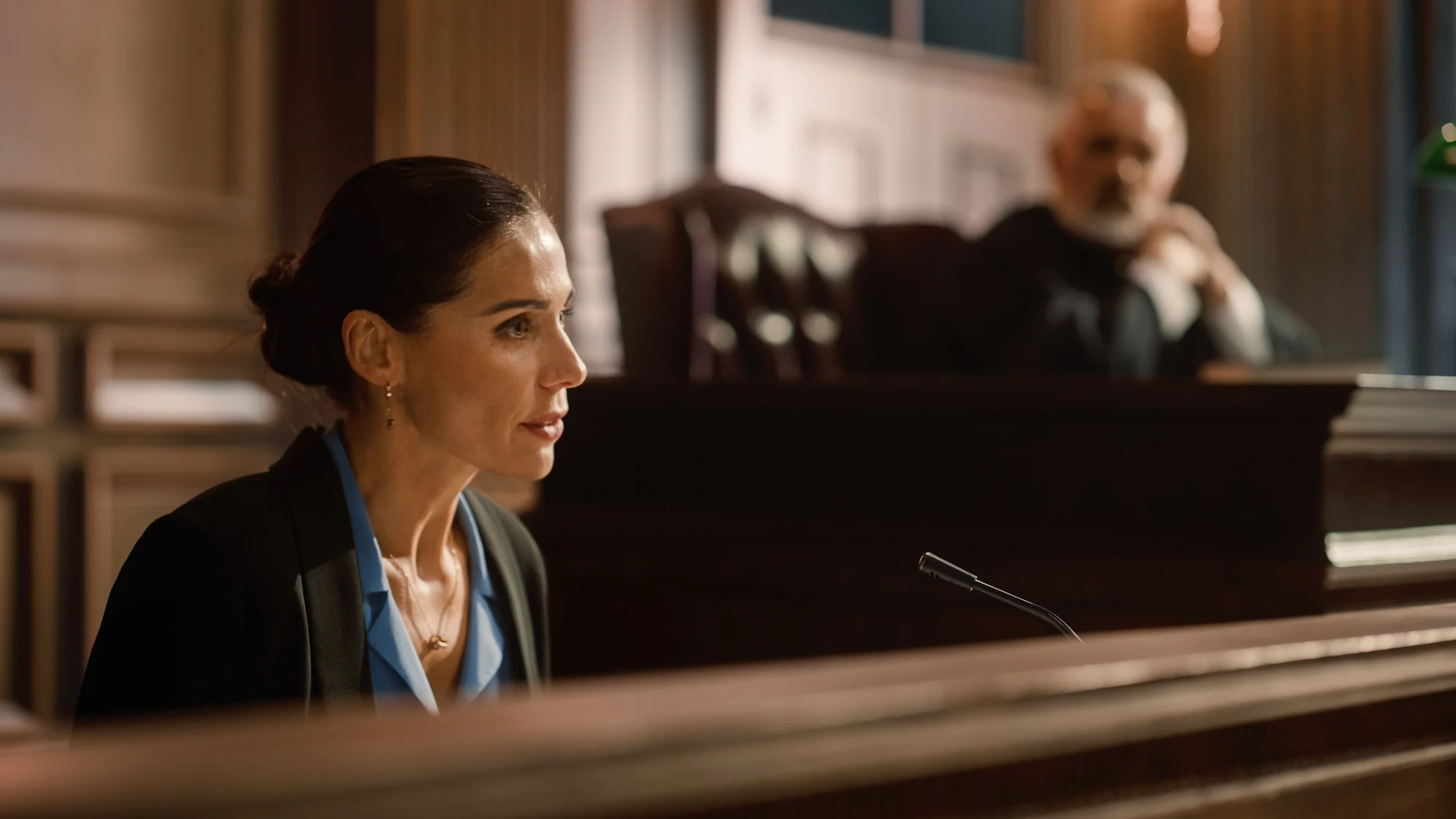
The Court emphasized that jurors are allowed to bring their own life experiences and common sense into deliberations. This is true even if the juror is a lawyer, and the defense or prosecution could have struck that juror using a peremptory strike or for cause if there was evidence that the juror could not be fair. It is not unusual for jurors to wonder why a defendant did not call certain witnesses, and the law does not permit attorneys to question jurors after the fact about such speculation. Because the defendant’s claim relied only on assumptions and not on actual evidence of outside influence, the trial court acted within its discretion in denying his request.
Pa.R.E. 606 governs a juror’s competency as a witness (or their availability to be called as a witness), and it generally holds that they cannot testify. There are limited exceptions, but the Court did not find that exceptions applied here. The rule provides:
Rule 606. Juror’s Competency as a Witness.
(a) At the Trial. A juror may not testify as a witness before the other jurors at the trial. If a juror is called to testify, the court must give a party an opportunity to object outside the jury’s presence.
(b) During an Inquiry into the Validity of a Verdict
(1) Prohibited Testimony or Other Evidence. During an inquiry into the validity of a verdict, a juror may not testify about any statement made or incident that occurred during the jury’s deliberations; the effect of anything on that juror’s or another juror’s vote; or any juror’s mental processes concerning the verdict. The court may not receive a juror’s affidavit or evidence of a juror’s statement on these matters.
(2) Exceptions. A juror may testify about whether:
(A) prejudicial information not of record and beyond common knowledge and experience was improperly brought to the jury’s attention; or
(B) an outside influence was improperly brought to bear on any juror.
Here, the Court found that none of the exceptions applied due to the speculative nature of the defendant’s allegations.
The Takeaway
This case shows how difficult it is to challenge a jury verdict based on what may have been said in the jury room. Pennsylvania law strictly limits any inquiry into jury deliberations, and courts require solid proof of outside influence or improper information before allowing a hearing. Mere speculation about what jurors may have thought or said is not enough to overturn a conviction or obtain a new trial or even an evidentiary hearing.
Criminal Defense Attorney Zak T. Goldstein, Esquire
Facing criminal charges? We can help.
If you are facing criminal charges or under investigation by the police, we can help. We have successfully defended thousands of clients against criminal charges in courts throughout Pennsylvania and New Jersey. We have successfully obtained full acquittals and dismissals in cases involving charges such as Conspiracy, Aggravated Assault, Rape, Violations of the Uniform Firearms Act, and First-Degree Murder. We have also won criminal appeals and PCRAs in state and federal court, including the successful direct appeal of a first-degree murder conviction and the exoneration of a client who spent 33 years in prison for a murder he did not commit. Our award-winning Philadelphia criminal defense lawyers offer a free criminal defense strategy session to any potential client. Call 267-225-2545 to speak with an experienced and understanding defense attorney today.