

Philadelphia Criminal Defense Blog

PA Superior Court: Speedy Trial Rule Requires Commonwealth to Make Reasonable Efforts to Extradite Defendant

Criminal Defense Lawyer - Zak Goldstein
The Superior Court has decided the case of Commonwealth v. Morgan, holding that PA’s speedy trial rule, Rule 600, applies to defendants who are incarcerated in other states and the Commonwealth must be diligent in extraditing them back to Pennsylvania to stand trial. The Commonwealth may not simply wait until a defendant finishes serving a lengthy sentence in a another state before proceeding on criminal charges in Pennsylvania. Morgan holds that the Commonwealth must take active steps to bring the defendant to trial even when he is incarcerated in a different state.
Commonwealth v. Morgan
In October 2008, while serving a sentence in Bucks County, the defendant absconded from a work release program. Shortly thereafter, the Bucks County Sherriff’s Office (“BCSO”) filed a written complaint charging the defendant with escape, and a magisterial district judge issued a warrant for his arrest. About a week later, the BCSO received notice that the defendant was being held on homicide and firearm charges in the state of Georgia.
A preliminary hearing was held in Bucks County, in absentia, and the defendant was declared a fugitive. The BCSO sent a fax to Georgia authorities requesting that a detainer be placed on the defendant and that extradition proceedings be commenced. An official in Richmond County, Georgia responded stating that the defendant waived extradition. However, the official advised the BCSO that if the defendant was convicted and sent to jail for his Georgia charges, they would need to secure a separate detainer with the Georgia Department of Corrections and then restart the extradition process.
In February 2010, the defendant was found guilty of involuntary manslaughter and possession of a firearm during the commission of a crime in Georgia. He was sentenced to a term of ten to twenty years’ incarceration in a Georgia prison. After his conviction, the Georgia authorities did not reach out to the BCSO or any Commonwealth employee. However, no BCSO or Commonwealth agent contacted the Georgia authorities for almost two years after his conviction.
In September 2012, the BCSO sent an email to the Richmond County’s Sherriff’s office requesting an update on the defendant’s case. The BCSO received a response that same day stating that he was now housed in a prison in Valdosta, Georgia and that in order to have a detainer lodged against him they would need to reach out to the Georgia Department of Corrections. The BCSO subsequently responded to this email and said that they would like a detainer lodged against him. However, the BCSO did not actually contact the Georgia Department of Corrections. Based on the record, the BCSO did not take any further action on the defendant’s case for six years.
In June 2018, the BCSO faxed a detainer request to the Georgia Department of Corrections. The Georgia Department of Corrections was able to confirm receipt of their email and then lodged a detainer against the defendant. By this point, the defendant had been incarcerated in Georgia for nearly a decade and had been scheduled to be released on October 15, 2018. The BCSO took him into custody on October 25, 2018.
Back in Pennsylvania, the defendant filed an omnibus motion arguing that his case should be dismissed pursuant to Rule 600(a)(2)(A). Specifically, he argued that the Commonwealth had failed to exercise due diligence in trying to bring him to trial. Following a hearing, the trial court denied his motion. In April 2019, the defendant then elected to have a bench trial where he was found guilty of escape. He was then sentenced three and a half years to seven years’ incarceration. The defendant then filed a timely appeal.
What is Rule 600?
Rule 600(A) states that a defendant must be brought to trial within 365 days of the filing of the criminal complaint and if he is not then the case should be dismissed. The purpose of Rule 600 is to protect a defendant’s speedy trial rights, while also protecting society’s right to effective prosecution of criminal cases. If a defendant is not tried within 365 days of the filing of the complaint, Rule 600 requires that the court determine whether the Commonwealth exercised due diligence and whether the circumstances that caused the delay of a defendant’s trial were beyond the Commonwealth’s control.
For the purposes of computing time under Rule 600, the court will determine whether or not the Commonwealth was duly diligent in litigating its case against the defendant. In other words, when the Commonwealth causes the delay (i.e. discovery is outstanding or they have not been able to contact a necessary witness) that time ordinarily goes against the Commonwealth. However, if the defense causes the delay, then that time is not factored in for purposes of 600. If the Commonwealth violates Rule 600, then the Court should dismiss the case with prejudice. Rule 600 is generally enforced more strictly in Philadelphia than in the surrounding counties, but it does apply throughout the state.
The Superior Court’s Decision
The Superior Court reversed the defendant’s conviction because they found that the Commonwealth was not duly diligent in bringing the defendant to trial. The Commonwealth filed its criminal complaint against the defendant in October 2018. As such, the Commonwealth was required to bring the defendant to trial within 365 days of that filing. However, the defendant was not brought to trial until April 2019, which was more than ten years after the expiration of the defendant’s mechanical run date under Rule 600.
The Superior Court found that it did not matter that the defendant was incarcerated in another state. It does not appear that Georgia would have extradited the defendant while his homicide charges were pending, and thus this time would not have counted against the Commonwealth. However, the Court found that there was no evidence that Georgia would not have cooperated and sent the defendant to Pennsylvania after he was convicted. Consequently, the Superior Court found that the Commonwealth did not act with due diligence because they waited more than eight years after he was convicted to reinitiate extradition proceedings against the defendant. Thus, the Commonwealth does not necessarily have to take steps to move for extradition while charge s are pending in another state, but once a defendant has been sentenced, the Commonwealth must try to extradite the defendant. Therefore, the defendant’s conviction is vacated and he will be released from prison.
Facing Criminal Charges? We Can Help.

Philadelphia Criminal Defense Lawyers
If you are facing criminal charges or under investigation by the police, we can help. We have successfully defended thousands of clients against criminal charges in courts throughout Pennsylvania and New Jersey. We have successfully obtained full acquittals in cases involving charges such as Conspiracy, Aggravated Assault, Rape, and Murder. Our award-winning Philadelphia criminal defense lawyers offer a free criminal defense strategy session to any potential client. Call 267-225-2545 to speak with an experienced and understanding defense attorney today.

PA Superior Court: You Can't Suppress an Assault Even If Police Entered Your House Illegally
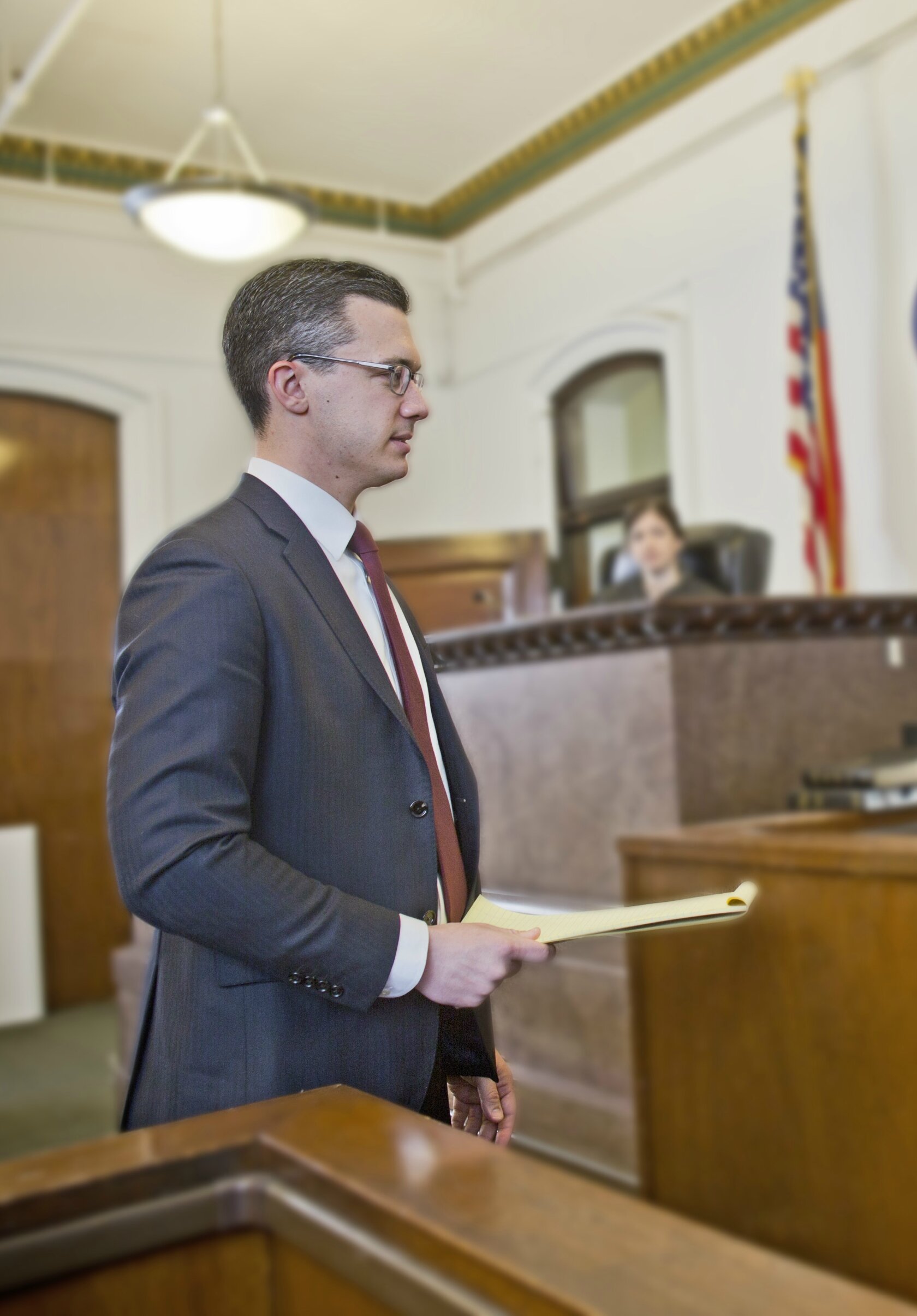
Philadelphia Criminal Defense Lawyer Zak Goldstein
The Superior Court has decided the case of Commonwealth v. Schneider, holding that a defendant cannot suppress testimony regarding his assault on officers even if he can prove that the police illegally entered his home prior to the assault taking place inside the home. Although the physical contraband that police found as a result of the illegal search should have been suppressed, the court ruled that the police could still testify regarding the defendant’s physical actions despite the illegal entry.
Commonwealth v. Schneider
A Crisis Unit worker spoke with a local police officer and expressed an interest in having the officer accompany him to conduct a mental welfare check on the defendant. The worker wanted the officer to accompany him for the check out of safety concerns. According to the Crisis Unit worker, the defendant said that he believed that he was Jesus Christ, Thor, and Jim Carrey. It is worth noting, that at the time of the request, there were no allegations that the defendant was armed; was in danger of harming himself or others; was malnourished or lacked utilities. The police officer and the Crisis Unit Officer arrived at the defendant’s home, and the police officer knocked on the defendant’s door. The defendant answered and at first, the interaction was fine. However, the defendant then told the officer to take off his “peashooter” because guns kill people. The defendant then tried to close his door, but the officer placed his foot in the doorway to prevent the defendant from closing it, and the officer then went into the defendant’s home.
The officer then had the defendant sit in a chair. The defendant began to chant incoherent things, and his eyes blinked rapidly. Then, unprovoked, the defendant struck the officer. Eventually, the officer and the defendant began to struggle. The officer called for backup, and the police tasered and pepper sprayed the defendant. After several minutes, the police put the defendant in handcuffs and then escorted him into a police vehicle. After the police arrested the defendant and removed him from his home, an officer re-entered the house and saw marijuana and a pipe in plain view. Prosecutors charged the defendant with aggravated assault, simple assault, resisting arrest, possession of a controlled substance, and possession of drug paraphernalia.
Prior to his trial, the defendant filed a motion to suppress the drugs, paraphernalia, and the officers’ testimony about his alleged actions when the police entered his home. The defendant argued that the police had illegally entered his house without a warrant, and therefore all of the evidence against him was the fruit of unconstitutional action by the police and should be suppressed. At the suppression hearing, the officers testified to the above assertions. Additionally, the officer testified that he believed the defendant was a threat to himself and others.
At the conclusion of the hearing, the trial court denied the defendant’s motion to suppress. The trial court stated that because the officer reasonably believed that the defendant needed mental health assistance, the warrantless entry of his home was justified under the Community Caretaking Doctrine. The defendant then proceeded to a jury trial where he was convicted of the above charges and sentenced to five years’ probation. The defendant then filed a timely appeal. The defendant raised several issues on appeal, but for purposes of this blog only the issue of whether his motion to suppress was wrongly decided will be addressed.
What is the Community Caretaking Doctrine?
The Community Caretaking Doctrine is an exception to the Fourth Amendment’s warrant requirement. This doctrine permits a warrantless entry into someone’s home if the purpose of the officer’s entry was to render aid or assistance, rather than the investigation of criminal activity. In order for a seizure to be justified under this exception, the officer must be able to point to specific, objective, and articulable facts which would reasonably suggest to an experience officer that assistance was needed. Additionally, the police action must be independent from the detection, investigation, and acquisition of criminal evidence. Finally, the action taken by police must be tailored to rendering assistance or mitigating the peril. Once assistance has been provided or the peril mitigated, then further police action will be evaluated under traditional Fourth Amendment jurisprudence.
The Superior Court’s Decision
The Superior Court reversed the trial court’s decision denying the defendant’s motion to suppress and ordered that he receive a new trial. The Superior Court found that prior to entering the defendant’s home, there was not sufficient evidence for the officer to reasonably believe that the defendant required immediate assistance. The defendant’s odd behavior was not enough to justify a warrantless entry into his home. Further, the Superior Court emphasized that none of the defendant’s actions were threatening, combative, or violent prior to the officer entering his home. Additionally, there was no evidence that the defendant had a weapon, was malnourished, and did not look like he was hurt or intended to hurt anyone. In other words, there was no evidence to suggest that the defendant needed any form of assistance.
The Superior Court opined that the officer entered the defendant’s home to conduct additional investigation of the defendant’s mental health. This is not constitutionally permissible. According to the Superior Court, an officer cannot enter an individual’s home without a warrant to investigate if that person needs assistance. At the same time, however, the Superior Court ruled that the assault could not be suppressed. In other words, the physical evidence and contraband was suppressed because the officers should not have been in the home. But the assault on the officers itself could not be suppressed regardless of the fact that the police entered the home illegally. Nonetheless, the testimony regarding the contraband could have contributed to the jury convicting the defendant of the assault-related charges, and so the defendant will receive a new trial on all of the charges without the suppressed evidence.
This opinion is good and bad for privacy rights; it is good in that the court continued to enforce limits on the ability of police to enter a private home without a warrant, but it is bad in that the court still allowed prosecutors to proceed on resisting arrest and assault charges that stemmed from the officers’ decision to illegally invade the defendant’s home without a search warrant or arrest warrant.
Facing Criminal Charges? We Can Help.
Philadelphia Criminal Defense Lawyers
If you are facing criminal charges or under investigation by the police, we can help. We have successfully defended thousands of clients against criminal charges in courts throughout Pennsylvania and New Jersey. We have successfully obtained full acquittals in cases involving charges such as Conspiracy, Aggravated Assault, Rape, and Murder. Our award-winning Philadelphia criminal defense lawyers offer a free criminal defense strategy session to any potential client. Call 267-225-2545 to speak with an experienced and understanding defense attorney today.

PA Superior Court: Consent to Search Defeats Motion to Suppress Even if Suspect Doesn't Speak English
Criminal Defense Lawyer Zak Goldstein
The Superior Court has decided the case of Commonwealth v. Carmenates. This decision is significant because it holds that a defendant does not need to completely understand a trooper’s directives in order to make a knowing, intelligent, and voluntary decision to allow the police to search his property. This decision is especially troubling given the fact that there are so many people in the United States who either do not speak English or have a limited proficiency with the English language. As such, this decision could cause significant problems for non-English speaking individuals who are stopped by the police.
Commonwealth v. Carmenates
A Pennsylvania State Trooper stopped the defendant during a routine traffic stop because the defendant supposedly was not traveling a safe distance behind the truck in front of him. After he stopped the defendant, the trooper noticed that the defendant had a suitcase and several large duffle bags covered by a blanket in the backseat. Additionally, the trooper noticed a large teddy bear, fast food, air fresheners and religious paraphernalia in the car. According to the trooper, the fast food showed that the defendant had engaged in “longer” and “harder” travel. Further, the trooper claimed that the religious paraphernalia was common among drug traffickers because it was used to bring them good luck during their travels.
The defendant did not really speak English. Therefore, the trooper used Google Translate on his phone to communicate with the defendant even though he would later admit that it is not always accurate. The trooper asked the defendant for his license, registration, and proof of insurance, but the defendant was supposedly trembling when looking for that information. The trooper then asked the defendant to step out of his car while he ran his information. The trooper also acknowledged that because it was December it was chilly outside.
After reviewing his information, the trooper concluded that there were no issues with the defendant’s information. The Trooper then told the defendant he was going to be issued a digital warning. The trooper then asked if he could see the defendant’s luggage, and the defendant supposedly consented to the search. Upon searching the luggage, the trooper discovered that the duffle bags contained marijuana. The defendant was subsequently arrested and charged with Possession with the Intent to Deliver (“PWID”) and possession of paraphernalia.
The defendant then filed a motion to suppress. At the suppression hearing, the above facts were placed on the record. Additionally, the defendant testified that he felt that he had to follow the trooper’s orders. He said the reason he opened the bag was because the officer pointed at it and that he did not realize that he could decline to consent to the search. At the conclusion of the hearing, the defendant argued that he did not knowingly, intelligently, or voluntarily consent to the search. The suppression court agreed and suppressed the drugs and paraphernalia that were found in the defendant’s car. The Commonwealth, then filed a timely appeal.
Do you have to let the police search your stuff?
No, you do not. In general, you do not have to let the police search your belongings whether those belongings are in your house or in your car. If the police have a search warrant, then they can gain access to your house to search your things. With respect to the search of a car, the police typically do not need a search warrant, but they do no need probable cause. However, the probable cause requirement disappears if you tell the police that they have permission to search your things. Therefore, if you have a car full of marijuana, guns, dead bodies, or other contraband, it is usually a bad idea to give the police permission to search the car. Instead, it is usually advisable to tell them that they do not have your consent to conduct a search. If they have probable cause or believe that they have probable cause, they may search the car anyway, but you will have a better case for challenging the legality of the search in court. If you tell them they can search the car, then you will have a very hard time challenging the legality of the search. This advice generally applies even if you do not think you have anything illegal in the car as someone else who uses your car could have left some evidence of a crime in the car without your knowledge.
The Fourth Amendment protects against unreasonable searches and seizures. A warrantless search is unreasonable unless an exception applies. A consent to search is a valid exception. In determining whether a consent to search is valid, there must be a finding that the defendant’s consent to search was knowing, voluntary, and intelligent. In making its decision, the suppression court is supposed to look at a variety of factors in its decision. This is a very fact intensive inquiry and therefore the courts will consider any or all of the following: how many officers are present; whether there was physical contact, the officers’ demeanor; whether the defendant was informed that he did not have to consent to the search; whether the police directed the defendant’s movements; the defendant’s maturity, intelligence and education; and any other relevant factors.
The Superior Court’s Decision
The Superior Court reversed the suppression court’s decision. In its decision, the Superior Court found that the defendant’s consent was knowing, intelligent, and voluntary. Specifically, the Superior Court found that the defendant was legally stopped because he was following the truck too closely. Additionally, the Superior Court found that the trooper was not aggressive, did not draw his weapon, and that this was an “even tempered interaction.” Further, the Court found that it was of no significance that the defendant “felt” that he needed to open the baggage.
What is troubling about the Court’s decision is that it appeared to only focus on the lack of coercion by the trooper. The Court barely focused on whether the defendant made a knowing and intelligent decision to consent to searching his property. The Court found that it was not significant that the defendant and the trooper had a language gap and that Google Translation was not always accurate. Therefore, the Commonwealth will now be able to use the drugs and paraphernalia against the defendant at his trial. This is particularly alarming because the trial court, as the finder of fact which was able to actually view the testimony of the witnesses, had concluded that the consent was not really voluntarily given. The Superior Court appears to have substituted its own judgment for that of the trial court without having had the opportunity to observe the witnesses.
Facing Criminal Charges? We Can Help.
Philadelphia Criminal Defense Lawyers
If you are facing criminal charges or under investigation by the police, we can help. We have successfully defended thousands of clients against criminal charges in courts throughout Pennsylvania and New Jersey. We have successfully obtained full acquittals in cases involving charges such as Conspiracy, Aggravated Assault, Rape, and Murder. Our award-winning Philadelphia criminal defense lawyers offer a free criminal defense strategy session to any potential client. Call 267-225-2545 to speak with an experienced and understanding defense attorney today.

PA Superior Court: Police Emergency Lights Mean Stop Under 4th Amendment
Goldstein Mehta LLC Criminal Defense Lawyers
The Pennsylvania Superior Court has decided the case of Commonwealth v. Wilson, holding that a defendant is stopped for purposes of the Fourth Amendment if the police activate their overhead lights. This decision is significant because it recognizes the common-sense principle that most people would not feel free to leave/continue driving once an officer activates his or her lights. Therefore, the police must have probable cause or at least reasonable suspicion before they activate lights and sirens in an attempt to stop a person.
Commonwealth v. Wilson
A Pennsylvania State Trooper was driving on I-83 when he noticed a white Ford pickup truck with a Maryland registration in front of him. The truck, which was being operated by the defendant, was going less than 60 miles per hour, but above the posted speed limit of 55 miles per hour. The defendant was in the left lane. The trooper then positioned himself behind the defendant. The defendant was “barely” passing traffic, but he was still traveling faster than the vehicles in the right lane.
The Trooper then “chirped” his siren to indicate his desire for the defendant to go to the right lane because he felt that the defendant was not driving fast enough. The defendant did not pick up on this cue, and he continued to drive in the left lane. The trooper then activated his lights and turned on his siren. The trooper did this because he was trying to get past the defendant so he could get back to his station. In response to this, the defendant pulled over to the left side of the highway. According to the trooper, the defendant could have pulled over to the right lane and his failure to do so violated the law.
The trooper then candidly admitted that he experienced an episode of road rage against the defendant. He began to yell and swear at him. As he was yelling at the defendant, the trooper supposedly detected the odor of marijuana. He then instructed the defendant to perform field sobriety tests, but the defendant was not able to perform some of them due to his bad hip. He failed those that he was able to try to perform. The defendant was then placed under arrest for DUI. He was then given a blood test which indicated that he had marijuana and oxycodone in his system.
The defendant then filed a motion to suppress. At the hearing, the trooper testified to the above facts, and the trial court denied the suppression motion. The trial court stated that because the defendant did not comply with the trooper’s initial “chirp,” the trooper had probable cause to stop the defendant. After his motion was denied, the defendant proceeded by a stipulated bench trial where he was found guilty and sentenced to the mandatory minimum sentence. The defendant then filed a timely appeal arguing that the trooper lacked reasonable suspicion or probable cause to stop him. Therefore, he was illegally seized and his motion to suppress should have been granted.
Is Every Interaction with a Police Officer a Seizure?
No, for purposes of Fourth Amendment law, not every interaction with a police officer is considered a seizure. There are three types of police interactions: mere encounters, investigative detentions, and arrests. Prosecutors frequently argue that every interaction is a mere encounter so that a defendant cannot claim that his constitutional rights were violated. The crucial factor in determining whether a mere encounter has evolved into an investigatory detention (or an arrest) is whether the individual would have reasonably felt free to terminate the interaction between himself and the police. In other words, if a reasonable person would not have felt free to end the encounter, then it is not a mere encounter. The reason this is significant is because the police need reasonable articulable suspicion that a defendant is engaged in criminal activity before they can stop him for an investigatory detention or probable cause if they wish to arrest him.
As such, when a defense attorney litigates a motion to suppress, they are often trying to elicit facts to suggest that a reasonable person would not have felt free to leave. This may involve soliciting facts such as: the placement of the officers, what they were wearing, whether their weapons were visible, how many officers were involved, the tone of questioning, whether they touched the defendant, whether he was in handcuffs, etc. At the conclusion of the hearing, the defense attorney will then argue that based on the facts of the particular case this was not a mere encounter, but rather an investigatory detention and/or arrest and therefore the police needed reasonable suspicion/probable cause to stop him in the first place.
The Pennsylvania Superior Court’s Decision
The Pennsylvania Superior Court reversed the lower court and held that the trial court should have granted the defendant’s motion to suppress. The Superior Court held that when the trooper activated his lights, this constituted a seizure for purposes of the Fourth Amendment. The Court went on to say that a reasonable person would not feel free to leave or in this case keep driving once an officer activated their overhead lights. Further, the Superior Court held that the Trooper had no reasonable suspicion to stop the defendant. The trooper testified that he pulled the defendant over so he could get by the defendant to return to his station. The trooper had not pulled the defendant over to investigate a crime or motor vehicle code violation. Consequently, the court vacated the defendant’s conviction for DUI and ruled that the trial court could not admit the majority of the evidence against him as almost all of it occurred after the trooper illegally stopped him.
Facing Criminal Charges? We Can Help.
Criminal Defense Lawyer Zak Goldstein
If you are facing criminal charges or under investigation by the police, we can help. We have successfully defended thousands of clients against criminal charges in courts throughout Pennsylvania and New Jersey. We have successfully obtained full acquittals in cases involving charges such as Conspiracy, Aggravated Assault, Rape, and Murder. Our award-winning Philadelphia criminal defense lawyers offer a free criminal defense strategy session to any potential client. Call 267-225-2545 to speak with an experienced and understanding defense attorney today.