

Philadelphia Criminal Defense Blog

PA Superior Court: Restraining Child in Room With Baby Gate May Have Been Justified

Philadelphia Criminal Lawyer Zak Goldstein
The Superior Court has decided the case of Commonwealth v. Yachimoski, holding that a defendant who used a gate to keep his child in her room from leaving at night was entitled to a parental justification jury instruction. This case, aside from the absolute absurdity of it being prosecuted in the first place, highlights the importance of jury instructions in a criminal case. For one, it shows that jury instructions provide guidance to a jury on how to decide a case and, if provided, can help a defendant avoid a wrongful conviction. Additionally, it highlights the fact that a criminal court giving an improper jury instruction is often one of the strongest potential issues on appeal. If a jury is not instructed on a legal defense when there was evidence which would have supported that defense, then a defendant will often be entitled to a new trial.
Commonwealth v. Yachimowski
The defendant and his co-defendant (the mother of his child) were charged with endangering the welfare of a child (“EWOC”). The alleged victim in this case was their five-year-old daughter. The defendants elected to proceed by way of a jury trial and at their trial, the Commonwealth called several witnesses. The first witness was a case manager for Family Psychological Associates. She testified that at approximately 10:30 AM on May 17, 2018, she knocked on the front door of the defendants’ home. The defendant opened the door while holding a portable drill and let her in. After he let her in, the defendant walked to the doorway of his daughter’s room. According to this witness, she saw two baby gates which were stacked one on top of the other. The gates blocked the doorway into the child’s room. The defendant then used the drill to unscrew the top baby gate to allow his child to leave the room.
The witness then stated that she saw the child chewing on either tissue paper or a paper towel. When asked why his daughter was chewing on this, the defendant responded that his daughter “was hungry.” It is worth noting that according to this witness, the child did not look like she was underfed or lacking in proper hygiene. Additionally, she testified that the home was not in disarray and that it looked normal.
The Commonwealth also called a caseworker from Clarion County Children and Youth Services (“CYS”). The caseworker testified that she had received a report that the defendant’s child was being confined in her room by the use of secured baby gates. She also testified that she, along with two Pennsylvania State Troopers, entered the defendants’ home and went to the child’s bedroom. In the room, there was a “potty chair sitting on the floor with a box of wipes and a bed.” The CYS worker asked why they were using baby gates to block the child’s doorway and they responded it was to make sure the child “didn’t get into things whenever they hadn’t gotten out of bed in the morning.”
This was the extent of the Commonwealth’s case. After the Commonwealth rested, the co-defendant testified. She testified that they installed the baby gates in the doorway because the child “likes to get up at two or three in the morning and play” while she and the defendant are asleep. According to the co-defendant, they placed the baby gates to prevent the child’s nightly wanderings. She also testified that the CYS worker spoke to the defendants in a “raised” voice and that she told them they should not have the gates in case there was a fire. The co-defendant then testified that they “didn’t think of that when [they] put the gates up…[w]e were only doing it for [the child’s] safety.”
After being told of the dangers, they took down the gates and put them in the shed. The co-defendant reiterated that these gates were for the child’s safety. Following this testimony, the trial court permitted the Commonwealth to reopen its case. A Pennsylvania State Trooper testified that he obtained a search warrant for the defendants’ shed and they found the baby gates in the defendants’ shed with drill holes in them. They executed this search warrant during the trial because the defendants had denied fully attaching the gates to the wall.
After all the evidence was presented, the defendants’ attorneys requested that the trial court provide the jury with a parental justification instruction. The trial court denied their request because “the defendants did not use force upon or toward the child.” The jury then found the defendants guilty. The trial court sentenced the defendant to a term of nine months to two-years-less-one-day in Clarion County Jail and his co-defendant to a term of three years’ probation. The defendants then filed a post-sentence motion which was denied. They then filed a timely appeal. On appeal, the defendant raised one claim: whether the trial court erred in failing to provide a justification defense instruction.
What is the Parental Justification Instruction?
The Parental Justification Instructionderives from 18 Pa. C.S.A. § 509(1). That statute provides:
The use of force upon or toward the person of another is justifiable if:
(1) The actor is the parent or guardian or other person similarly responsible for the general care and supervision of a minor or a person acting at the request of such parent, guardian or other responsible person and:
(i) the force is used for the purpose of safeguarding or promoting the welfare of the minor, including the preventing or punishment of his misconduct; and
(ii) the force used is not designed to cause or known to create a substantial risk of causing death, serious bodily injury, disfigurement, extreme pain or mental distress or gross degradation.
The parental justification defense defines conduct that is otherwise criminal, but which under the circumstances is socially acceptable and which deserves neither criminal liability nor even censure. The purpose of the parental justification defense is designed to balance competing interests. Finally, the parental justification defense has four statutory elements:
The actor uses “force upon or toward the person of another;”
The actor “is the parent or guard or other person similarly responsible for the general care and supervision of a minor or a person acting at the request of such parent, guardian or other responsible person;”
The force is used for the purpose of safeguarding or promoting the welfare of the minor, including the preventing or punishment of his misconduct;” and
The force used is not designed to cause or known to create a substantial risk of causing death, serious bodily injury, disfigurement, extreme pain or mental distress or gross degradation.”
In the instant case, the only issue in terms of whether the instruction should have been provided was the first element which was whether the defendants used “force upon or toward the person of another.” The trial court had reasoned that the defendants did not use force upon the child by simply putting up a gate, so they were not entitled to the instruction. However, in general, defendants are entitled to an instruction for any defense which could be supported by the evidence.
The Superior Court’s Decision
The Superior Court found that the trial court committed reversible error and granted the defendant a new criminal trial. In its decision, the Superior Court analyzed the crimes code and determined that “force” was not defined. Next, the Superior Court reviewed the language of the statute. The Superior Court found that under the plain language of the statute, the defendants’ actions could constitute “the use of force toward” their child. The Superior Court found that the defendants’ actions of creating a physical barricade was a “force that was directed towards [their child].” Additionally, the Superior Court analyzed other statutes and found that confinement qualifies as a use of force in other criminal statutes. As such, the Superior Court found that the trial court erred when it did not grant this jury instruction and the defendant will get a new trial. This does not mean that the Superior Court ruled that the evidence could not possibly support a conviction of the defendants. Instead, it means that they were improperly deprived of a legal defense which was potentially supported by the evidence. The jury should have been instructed that the parents were potentially justified in using the force if they were doing it for the child’s safety. Therefore, they will receive a new trial.
Do you need a criminal lawyer in Philadelphia, PA? We can help.

Philadelphia Criminal Lawyers
If you are facing criminal charges or under investigation by the police, we can help. We have successfully defended thousands of clients against criminal charges in courts throughout Pennsylvania and New Jersey. We have successfully obtained full acquittals in cases involving charges such as Conspiracy, Aggravated Assault, Rape, DUI, and Murder. Our award-winning Philadelphia criminal defense lawyers offer a free criminal defense strategy session to any potential client. Call 267-225-2545 to speak with an experienced and understanding defense attorney today.

United States Supreme Court Reverses NJ “Bridgegate” Fraud Convictions

Philadelphia Criminal Defense Attorneys
The United States Supreme Court has decided the case of Kelly v. United States, reversing the defendants’ convictions for conspiracy, wire fraud, and federal program fraud. This was an extremely high profile case just a few years back in which New Jersey officials associated with then-Governor of New Jersey Chris Christie were accused of creating traffic jams on the George Washington Bridge in order to punish a local mayor who had refused to endorse Christie’s re-election campaign. The decision, while likely alarming to anyone who is against public corruption and the misuse of state resources to punish political opponents, continues a trend of narrowing the federal wire fraud statute’s applicability as a tool to prosecute state and local governmental corruption.
In Kelly, the defendants were Bridget Anne Kelly, the Governor’s deputy chief of staff, David Wildstein, a Port Authority Official, and Port Authority Deputy Executive Director William Baroni. David Wildstein cooperated with federal prosecutors and pleaded guilty, meaning his conviction will likely stand, while Kelly and Wildstein went to trial and were found guilty by a jury.
The basic scheme was that Governor Christie sought to obtain endorsements from both republican and democratic officials throughout the State of New Jersey for his re-election campaign. After the mayor of Fort Lee declined to endorse the governor, his staff conspired to retaliate against the mayor by causing traffic problems at the George Washington Bridge’s toll plaza by closing the lanes which were normally reserved for the residents of Fort Lee. The scheme was disguised as a “traffic study,” but the evidence overwhelmingly showed that it was meant to punish Fort Lee.
The defendants used Port Authority staff to close the lanes, and they had to pay an additional toll collector overtime so that that toll collector would be able to cover for the main toll collector when that person went on break. The scheme resulted in massive traffic jams for days, causing people to struggle to get to work and ambulances to have trouble picking up heart attack victims.
When the scheme came to light, the defendants were indicted by a federal grand jury in the District of New Jersey and charged with conspiracy, wire fraud, and federal program fraud. Wildstein cut a deal with the government and cooperated against the other two, who were convicted. They appealed to the Third Circuit, which affirmed the convictions. The United States Supreme Court then agreed to review the case.
The Supreme Court reversed the conviction, finding that fraud had not actually occurred because the defendants had taken no steps to convert government money or property for their own purposes.
What is federal wire fraud?
The federal wire fraud statute makes it a crime to effect (with the use of the wires) “any scheme or artifice to defraud, or for obtaining money or property by means of false or fraudulent pretenses, representations, or promises.” 18 U.S.C. Section 1343.
What is federal program fraud?
The federal program fraud bars obtaining by fraud the property (including money) of a federally funded program or entity.
What is conspiracy?
Conspiracy is an agreement between two or more people to commit a crime. It generally requires that two people agree that they are going to commit a crime and then that at least one of the two takes a substantial step (an overt act) towards the commission of that crime. Once that happens, a criminal defendant may be guilty of conspiracy as well as the underlying offense.
Here, the conspiracy charges were dependent on proper convictions for fraud, and both fraud charges required that the defendants actually gain some sort of money or property from the scheme. As the scheme did not encompass any attempt to gain money, the Court’s analysis hinged on whether they had actually attempted or successfully obtained property.
The Supreme Court’s Ruling
The Court reversed the convictions. It noted that the fraud statutes are limited in scope to the protection of property rights and do not authorize federal prosecutors to set standards of disclosure and good government for local and state officials. The government had made two arguments as to how the defendants had actually stolen property. First, the government argued that closing the lanes themselves involved actually taking control of the property of those lanes. Second, the government argued that the cost of paying the traffic engineers who reviewed the “study” and the backup toll collectors involved depriving the Port Authority of money.
The Court rejected both arguments. First, it found that the realignment of the access lanes was an exercise of regulatory power and that a scheme to alter a regulatory choice generally is not a taking of the government’s property, particularly where the move is temporary. Second, it found that while the costs in paying for the “study” and the toll collectors could qualify as property, in order to be relevant for purposes of wire fraud, they must be the object of the fraud. That means it must have been the actual goal of the conspiracy to steal that time and money. But those costs were merely incidental to the regulatory decision. Therefore, they were not the object of the conspiracy, and the defendants had not conspired to steal or stolen any property or money. Accordingly, the Court reversed the conviction.
Although this decision is unique in that it involved such a high-profile political situation, it will likely have lasting effects on the ability of federal prosecutors to file criminal charges based on state and local criminal corruption. The Court did not dispute that the evidence showed that the defendants had unethically used their positions to punish political rivals. The Court simply found that they had not stolen anything to do so. This decision, however, drastically limits the reach of the wire fraud and federal programs fraud statutes because it prevents federal prosecutors from filling charges to address local political corruption where the corruption does not actually involve bribery or theft. This leaves the prosecution of political corruption to state and local officials, who may not have the independence necessary to bring charges. It also leaves it to the voters, who may demand the resignation of corrupt political officials. However, federal prosecutors probably already have enough power, so anything that reins them in is usually a good thing.
Do you need a criminal lawyer in Philadelphia? We can help.
Philadelphia Criminal Lawyers
If you are facing criminal charges or under investigation by the police, we can help. We have successfully defended thousands of clients against criminal charges in courts throughout Pennsylvania and New Jersey. We have successfully obtained full acquittals in cases involving charges such as Conspiracy, Aggravated Assault, Rape, DUI, and Murder. Our award-winning Philadelphia criminal defense lawyers offer a free criminal defense strategy session to any potential client. Call 267-225-2545 to speak with an experienced and understanding defense attorney today.

PA Supreme Court: Deputy Sheriff May Not Conduct Traffic Stop for Expired Registration Sticker

DUI Defense Lawyer Zak Goldstein
The Pennsylvania Supreme Court has decided the case of Commonwealth v. Copenhaver, holding that deputy sheriffs may not conduct traffic stops on the basis of an expired car registration sticker. In general, deputy sheriffs may only conduct stops of motorists when they observe a “breach of the peace” or the commission of a felony, or misdemeanor offense. Because an expired registration does not constitute a breach of the peace under Pennsylvania law, sheriff’s deputies may not stop motorists to investigate or issue citations even where the deputies have the same training as a police officer.
The Facts of Copenhaver
In Copenhaver, a deputy sheriff conducted a vehicle stop of the defendant’s pickup truck after seeing that the truck had an expired registration sticker. Upon approaching the truck, the deputy smelled the odor of alcohol and marijuana coming from the passenger compartment. The deputy ordered the defendant to exit the vehicle, administered field sobriety tests, and eventually arrested him on suspicion of driving under the influence of drugs and alcohol.
The Motion to Suppress
After prosecutors filed the DUI charges, the defendant moved to suppress the evidence obtained by the deputy sheriff. Specifically, the defendant alleged that the deputy did not have the authority to conduct the traffic stop, and therefore all evidence as a result of the encounter should be suppressed. The defendant argued that an expired registration tag does not give a deputy sheriff the authority to make a stop because it does not amount to a breach of the peace for purposes of a deputy’s common law authority to make an arrest. The trial court denied the motion to suppress and found the defendant guilty of DUI and other traffic offenses. The defendant appealed, and the Superior Court denied the initial appeal. The defendant then appealed his DUI conviction to the Pennsylvania Supreme Court, and the Supreme Court accepted the case.
The PA Supreme Court’s Decision
The Supreme Court reversed the conviction and ordered that all evidence from the stop should be suppressed. The Court found that operating a vehicle with an expired registration, standing alone, is not a breach of the peace. The Court reasoned that a “breach of the peace” arises from “an act or circumstance that causes harm to persons or property, or has a reasonable potential to cause such harm, or otherwise to provoke violence, danger, or disruption to public order.” Operating a car with an expired registration sticker simply does not pose any risk to the general public, so the deputy did not have the authority to stop the defendant. Therefore, the stop should not have occurred, and the evidence must be suppressed.
When can a sheriff’s deputy make a stop or an arrest in Pennsylvania?
While police officers have general authority in their jurisdictions to enforce Pennsylvania law and investigate summary violations, misdemeanors, and felonies, the powers of a sheriff’s deputy are limited. A sheriff’s deputy does not have this general investigative power. Instead, a sheriff’s deputy may only investigate or make arrests for crimes that they see – this means they can make a stop or arrest where they actually observe the commission of a felony, misdemeanor, or a breach of the peace. They do not have the general authority to investigate crimes or enforce all traffic laws. Therefore, the sheriff’s deputy here violated the defendant’s rights, and the conviction must be reversed. It’s important to remember that this does not mean that if a sheriff tries to pul you over, you do not have to comply. You should still comply and address any violations of your rights in court at a later date.
Facing criminal charges in Philadelphia, PA? We can help.
If you are facing criminal charges or under investigation by the police, we can help. We have successfully defended thousands of clients against criminal charges in courts throughout Pennsylvania and New Jersey. We have successfully obtained full acquittals in cases involving charges such as Conspiracy, Aggravated Assault, Rape, DUI, and Murder. Our award-winning Philadelphia criminal defense lawyers offer a free criminal defense strategy session to any potential client. Call 267-225-2545 to speak with an experienced and understanding defense attorney today.
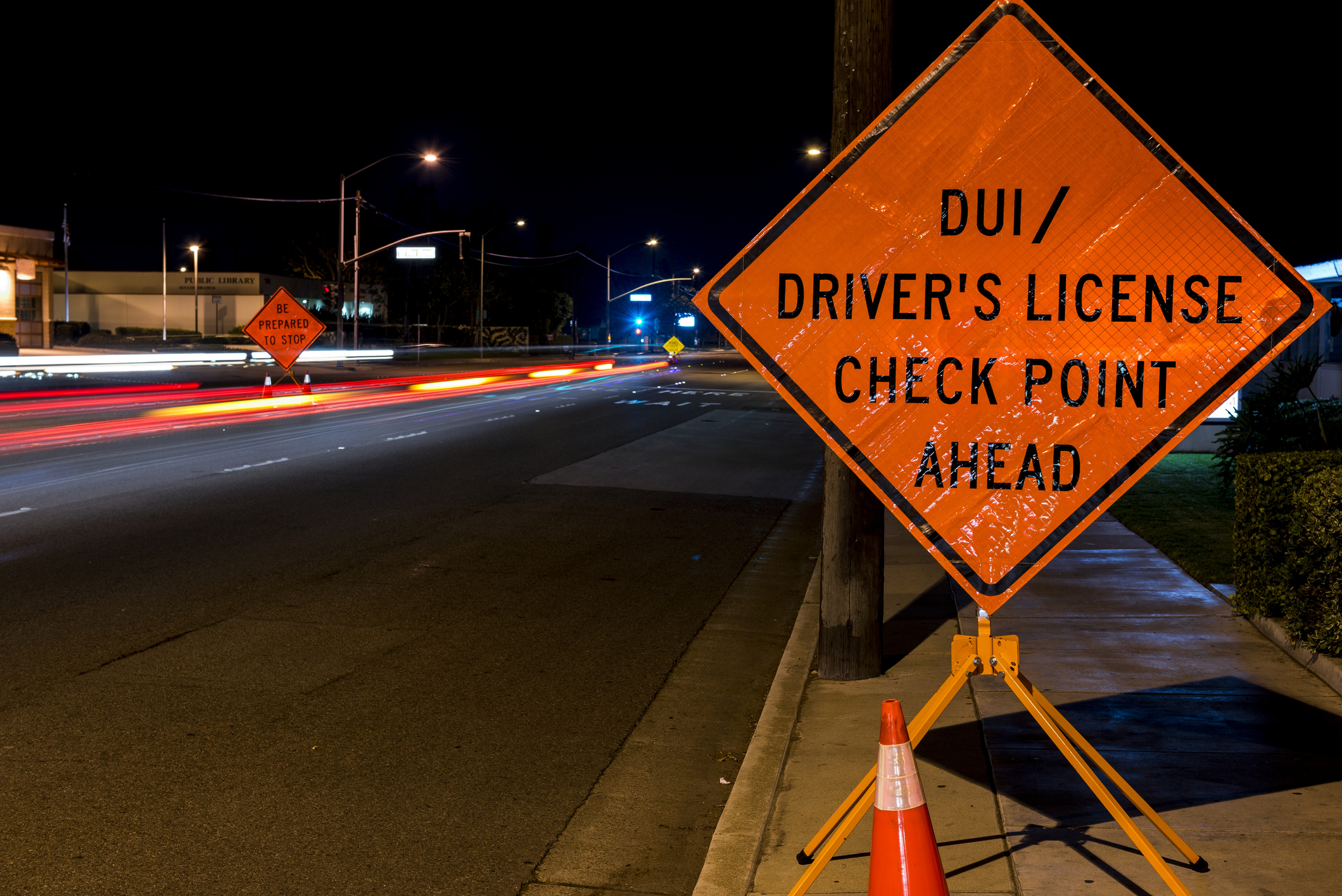
PA Supreme Court: Philadelphia Police May Not Ignore Search Warrant Requirement for DUI Blood Draw Just Because There Has Been an Accident
Zak Goldstein - Philadelphia Criminal Defense Lawyer
The Pennsylvania Supreme Court has decided the case of Commonwealth v. Trahey, finding that the Philadelphia Police Department may not rely on the exigent circumstances exception to the search warrant requirement for a DUI-related blood draw just because there has been a fatal automobile accident. The Court reversed the Superior Court’s holding and ruled that the police must obtain a search warrant where a suspect refuses to consent to a blood draw. The police may not simply claim that they did not have time to do so in every case.
The Facts of Trahey
In Trahey, the defendant was charged with homicide by vehicle while DUI. Prosecutors alleged that on September 4, 2015, the Friday before Labor Day, 911 dispatchers received a call that a motorist had hit a bicyclist with a pickup truck in Philadelphia. The accident was reported at 9:15 pm, but Philadelphia Police officers did not arrive on the scene until 10:01 pm because the department places a low priority on responding to motor vehicle accidents.
When the officers arrived, the bicyclist had already been transported to the hospital, and he died shortly thereafter. Bystanders told the officers that the defendant had been driving the pickup truck. The officers spoke with the driver and smelled an odor of alcohol. They also observed that his speech was slow and steady, his eyes were glassy, and his gait was unsteady. Therefore, they arrested him for driving under the influence.
The officers spent about half an hour at the scene before they left for the Police Detention Unit with the defendant. On the way to the PDU, they were called back to the scene by Accident Investigation Division Officers. One of the AID officers observed that the defendant appeared to be intoxicated and became concerned that more than an hour had already passed since the accident. The officer then sent the defendant to the PDU for a blood test. The officers were concerned about the timing because PA law makes it difficult for prosecutors to pursue DUI cases where the testing does not occur within two hours of the defendant last operating a motor vehicle.
The defendant arrived at the PDU and was questioned by a different AID officer. That officer decided to conduct a blood test instead of a breath test. The officer read the defendant warnings which have since been found to be illegal – specifically, that if the defendant refused to consent, he could face enhanced criminal penalties due to his refusal. After receiving these incorrect warnings, the defendant agreed to the blood test, and a nurse drew his blood at 11:20 pm.
The Motion to Suppress
Prosecutors charged the defendant with DUI, homicide by vehicle while driving under the influence, homicide by vehicle, and involuntary manslaughter. The defendant moved to suppress the results of the blood draw, arguing that the police violated his rights by telling him that if he did not consent, he would face enhanced criminal penalties due to the refusal. In the recent case of Birchfield v. North Dakota, the United States Supreme Court held that states could not criminalize the refusal to submit to a warrantless blood draw because a blood draw is a significant search.
The trial court held a hearing on the motion at which the various officers testified as to what happened. The Commonwealth argued both that the defendant voluntarily consented to the blood draw and that exigent circumstances existed which relieved the police of the duty to get a search warrant should the court find that the defendant did not actually consent.
The trial court rejected the Commonwealth’s argument, finding that the defendant did not voluntarily consent to the blood draw because he was coerced into consenting when the officer incorrectly told him that he would face criminal penalties for the mere act of refusing to consent. Further, the court found that exigent circumstances did not exist because the police could have conducted a breath test or obtained a search warrant and that the Philadelphia Police should create procedures under which they can more efficiently obtain search warrants.
The Commonwealth appealed, and the Superior Court reversed, finding that the evidence should be admissible. The defendant appealed to the Pennsylvania Supreme Court, and the Pennsylvania Supreme Court accepted the case.
The Pennsylvania Supreme Court’s Decision
The Pennsylvania Supreme Court reversed the Superior Court and ordered that the blood results should be suppressed. The Supreme Court relied on a number of recent United States Supreme Court decisions in making its ruling.
First, in Missouri v. McNeely, the United States Supreme Court rejected the government’s argument that the natural dissipation of alcohol in a DUI suspect’s blood always constitutes a per se exigency that obviates the requirement that police obtain a warrant prior to conducting a blood test. The US Supreme Court recognized that technological advances such as cell phones, fax machines, and scanners make it possible for cities and states to set up procedures by which police can quickly obtain a search warrant when necessary. Therefore, a trial court hearing a motion to suppress must look at the specific facts of each case before finding exigent circumstances.
Second, in Birchfield, the US Supreme Court held that states may not make it illegal to refuse a warrantless blood draw. This means that states cannot make it a stand-alone crime to refuse a blood test where the police have not obtained a search warrant. States also may not impose increased penalties for DUI convictions where there was a refusal to consent to a blood draw. States may, however, continue to punish defendants who refuse a blood test or who refuse to consent to a blood draw after the police have obtained a search warrant.
Third, in Mitchell v. Wisconsin, the US Supreme Court held that police may almost always take blood from an unconscious motorist who is suspected of an alcohol-related DUI because of the fact that alcohol dissipates relatively quickly and the suspect cannot be given the chance to consent. Additionally, a breath test is not possible because the suspect is unconscious, and accidents which result in people being unconscious are likely to be serious and require more police resources.
Based on these decisions, the Court ruled that the blood should have been suppressed in this case because the police did not have exigent circumstances for a warrantless blood draw and the defendant had not actually given voluntary consent. The Court found that if the police were worried about alcohol consumption, they could have done a breath test first, evaluated the results, and then decided whether or not to get a warrant for blood. Although exigent circumstances may have existed to do some kind of testing, the police could have quickly done a breath test without any requirement that they get a search warrant. Despite the fact that controlled substances remain in the bloodstream for much longer, they chose to do a blood test instead. If the police wanted to obtain the defendant’s blood, then they were required to either obtain voluntary consent or a search warrant.
Allowing an exception in this case would undermine the US Supreme Court’s decisions and essentially result in a finding that exigent circumstances apply in every single accident case in Philadelphia and that the Philadelphia Police are never required to obtain a search warrant. Therefore, the Supreme Court reinstated the trial court’s ruling which granted the motion to suppress. The Commonwealth will have to proceed in the case without the results of the blood test.
Facing criminal charges in Philadelphia? We can help.
Philadelphia Criminal Defense Lawyers
If you are facing criminal charges or under investigation by the police, we can help. We have successfully defended thousands of clients against criminal charges in courts throughout Pennsylvania and New Jersey. We have successfully obtained full acquittals in cases involving charges such as Conspiracy, Aggravated Assault, Rape, DUI, and Murder. Our award-winning Philadelphia criminal defense lawyers offer a free criminal defense strategy session to any potential client. Call 267-225-2545 to speak with an experienced and understanding defense attorney today.