

Philadelphia Criminal Defense Blog
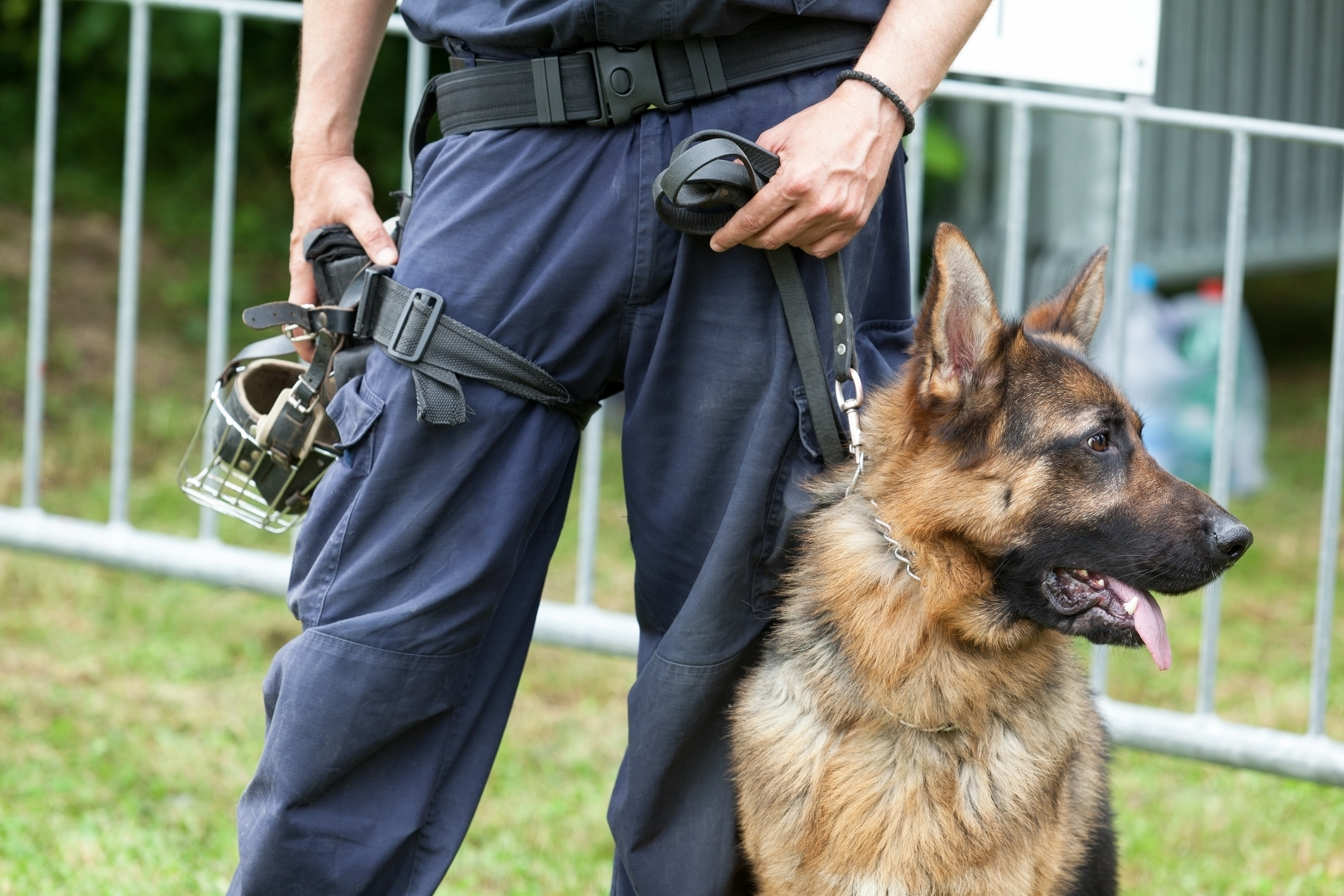
PA Supreme Court: Consent to Search Car Does Not Necessarily Include Consent to K9 Search

Criminal Lawyer Zak Goldstein
The Pennsylvania Supreme Court has decided the case of Commonwealth v. Valdivia, holding that a motorist’s consent to a police search of his car does not automatically include the consent to detain the motorist for 40 minutes and then conduct a canine search. Instead, the scope of the search by the police should have been limited to that for which a reasonable person expected he or she had provided consent.
The facts of Valdivia
In Valdivia, Pennsylvania State Police Troopers were on patrol in a marked police cruiser on Interstate 80 in Centre county, PA. At some point, they drove behind the defendant, who was driving a white minivan with Michigan plates. After two miles, they saw the van change lanes without using a turn signal. They decided to pull the defendant over. The defendant complied and pulled over to the side of the road.
The troopers both approached the vehicle. One of the troopers asked for the defendant’s license, registration, and proof of insurance. The defendant responded that he was about to run out of gas, but he provided the trooper with his Florida driver’s license and a rental agreement for the van. As troopers so often do, the trooper testified that the defendant seemed nervous and that his hands were shaking when he provided the documentation.
The troopers then began asking the defendant about his travel plans. He explained that he was on his way to New Jersey to visit family and provided an elaborate story about how he ended up renting a minivan instead of flying from Florida. From outside of the van, the trooper was able to see two large boxes wrapped in Christmas paper in the back of the van. The trooper found it odd that the gifts had no markings from an airline and that they were not banged up. He also later testified that drug traffickers often wrap up containers of drugs in Christmas paper during the holidays. The trooper also had concerns about the fact that the van had been rented thirty miles away from the airport for a one-way trip. He then ran the defendant’s record and found that he had priors for possession with the intent to deliver.
The troopers contacted a State Police K9 officer who was not currently on duty and asked him to come to the scene. While they waited for him, they told the defendant to get out of the van. They explained that they were going to provide him with a written warning for failing to use his turn signal when changing lanes. After returning his documentation, the trooper asked the defendant if he would answer a few more questions. The defendant said that he needed to get gas, but he would answer a few more questions. The troopers then continued to grill him about his travel plans and the paperwork for the van. The defendant’s story changed a little bit, the troopers became increasingly suspicious, and they then asked for consent to search the van. The defendant gave verbal consent first and then signed a written consent form, two things which you should virtually never do. The troopers had not told the defendant that a K9 officer was on the way.
Because it was cold, the troopers generously asked the defendant if he would like to wait in the back of the patrol car while they searched the minivan. The troopers then waited for the K9 officer; they did not start searching the minivan in the meantime. When the K9 arrived, the troopers removed the Christmas boxes from the minivan and had the K9 sniff them. The K9 “alerted",” suggesting that they were drugs in one of the boxes. The troopers opened the boxes and found lots of marijuana. They seized the marijuana, a mobile smartphone, and a tablet, and they arrested the defendant. Prosecutors charged him with possession of a controlled substance, possession with the intent to deliver, and possession of drug paraphernalia.
The Motion to Suppress - Were there limits to the consent to search?
The defendant filed a motion to suppress the marijuana, arguing that although he had consented to a normal search of the minivan, he had not agreed to wait for 40 minutes and then allow a K9 search. The trial court denied the motion. It found that the defendant voluntarily consented to the search and that it was not the product of police coercion. Further, it found that the defendant consented to the K9 search because he had not placed any limits on the scope of the search when he authorized the troopers to search his car. The court reasoned that because he was engaged in the transportation of drugs, he should have realized that troopers may use a dog for the search. The defendant then proceeded by way of bench trial, was found guilty of all charges, and sentenced to 11.5 to 23 months in jail followed by 30 days of probation.
The defendant appealed to the Superior Court. The Superior Court agreed with the trial court and affirmed the trial court’s decision. The Superior Court found it to be a close case, but ultimately ruled against the defendant. The Superior Court concluded that there is nothing about a K9 search which differentiates it from a human search when it comes to the issue of consent to search. The defendant then filed a Petition for Allowance of Appeal to the Pennsylvania Supreme Court, and the Court accepted the case.
Consent to search does not automatically include consent to a K9 sniff
The Pennsylvania Supreme Court reversed the suppression court’s decision. It found that the consent to search provided by the defendant did not automatically include the consent to wait 40 minutes and then be subjected to a K9 sniff. In Pennsylvania, police typically need a search warrant or probable cause in order to search a motor vehicle. However, one exception to the probable cause requirement is that police may conduct a search without any level of reasonable suspicion or probable cause when the defendant agrees to it. Notably, New Jersey has a different rule in which police must have reasonable suspicion in order to request consent to search.
When is consent to search valid?
Although police need not have any level of suspicion in order to legally conduct a consensual search, there are some limitations with which they must comply even during a consent search. For example, they must have obtained the consent voluntarily. If the police obtained the consent by threatening to shoot the defendant, then that would probably not be voluntary consent. Additionally, the search must be limited to the scope provided by the suspect. This means that if the suspect agrees to a search of one room but not another, police cannot search that other room without obtaining a warrant or unless some other exception applies. When there is some ambiguity to the valid scope of the search, the scope is determined by what would be objectively reasonable. This means the court does not look to what the defendant actually intended or what the officer understood, but instead what a reasonable person would have understood by the exchange between the officer and the person.
Given the scope limitations on consent searches, the issue became whether the defendant should have reasonably expected that police would detain him for nearly an hour and then conduct a K9 search. The Supreme Court ultimately found that he should not have reasonably expected such police behavior. Courts have long held that a K9 search is different from a regular search, and the police did not mention to the defendant that they had a K9 on the way or that he would have to wait for such an extended period of time. The defendant gave two human officers permission to search his car. There was no K9 or K9 handler present at the time, and nothing about the interaction suggested that one was on his or her way. Under these circumstances, a reasonable person would not have anticipated a K9 search of the boxes. Accordingly, the troopers exceeded the scope of the defendant’s consent, and the trial court should have granted the Motion to Suppress.

Goldstein Mehta LLC Criminal Defense Attorneys
FACING CRIMINAL CHARGES? WE CAN HELP.
If you are facing criminal charges or under investigation by the police, we can help. We have successfully defended thousands of clients against criminal charges in courts throughout Pennsylvania and New Jersey. We have successfully obtained full acquittals and dismissals in cases involving charges such as Conspiracy, Possession with the Intent to Deliver, Aggravated Assault, Sexual Assault, and Attempted Murder. Our award-winning Philadelphia criminal defense lawyers offer a free criminal defense strategy session to any potential client. Call 267-225-2545 to speak with an experienced and understanding defense attorney today.

PA Superior Court: Defendant’s Involuntary Absence During Taking of Verdict Requires New Trial

Criminal Defense Lawyer Zak Goldstein
The Pennsylvania Superior Court has decided the case of Commonwealth v. DeCosta, holding that the trial court erred in continuing jury deliberations and taking the jury’s verdict in the defendant’s absence because the absence was not the defendant’s fault. DeCosta re-affirms the fact that criminal defendants in Pennsylvania have a fundamental right to be present for their trials. Although that right may be waived by a defendant, a court obviously may not continue proceedings where the defendant is absent involuntarily.
The Facts of DeCosta
In DeCosta, the defendant was arrested for threatening two strangers with a knife in front of a Pathmark store. One of the strangers drew a gun and warned the defendant to stop, but the defendant ignored the warning. The stranger shot the defendant in the groin as the defendant charged him with the knife, causing serious injury. Despite the significant injuries to the defendant, prosecutors charged the defendant with two counts each of Aggravated Assault, Terroristic Threats, Simple Assault, and Recklessly Endangering Another Person. They also charged him with one count of possessing an instrument of crime for the knife.
The defendant proceeded to trial by way of jury trial. The jury began its deliberations on a Friday. The jury did not reach a verdict that Friday and was scheduled to reconvene on the following Monday. As deliberations were set to resume, the defendant’s attorney informed the judge that the defendant had been hospitalized over the weekend with sepsis. The defense attorney informed the court that the defendant was sedated and on a ventilator and therefore could not attend the trial. The defense attorney provided documentation confirming the defendant’s medical problems and refused the court’s request that he waive his client’s presence for any questions from the jury.
Despite the defense attorney’s refusal to waive his client’s presence, the court decided to proceed in absentia. The court found that no prejudice would result from the defendant’s absence and that defense counsel could address any questions from the jury without his client there. Defense counsel objected and asked either that the judge stay the proceedings or declare a mistrial. The judge refused, and the jury subsequently requested instructions on the definitions of certain criminal charges. The defense attorney again objected to proceeding in absentia, but the court overruled the objection and re-instructed the jury on the definition of the charges. Shortly thereafter, the jury found the defendant not guilty of Aggravated Assault but guilty of possessing an instrument of crime and one count of terroristic threats. Once the defendant recovered from sepsis, the trial judge sentenced him to 4-10 years’ incarceration for these misdemeanor convictions.
The Appeal of the Criminal Case
The defendant appealed his conviction to the Superior Court, arguing that he was entitled to a new trial because the trial judge improperly continued the proceedings without him. He argued that he had both a statutory and constitutional right to be present in court for the jury’s questions and the taking of the verdict. Ultimately, the Superior Court found that the defendant was entitled to a new trial because he did have a statutory right to be present. It noted that Rule 602(A) of the Pennsylvania Rules of Criminal Procedure provide the defendant with the right to be present at every stage of a trial. Specifically, the rule provides:
The defendant shall be present at every stage of the trial including the impaneling of the jury and the return of the verdict, and at the imposition of sentence, except as otherwise provided by this rule. The defendant’s absence without cause at the time scheduled for the start of trial or during trial shall not preclude proceeding with the trial, including the return of the verdict and the imposition of sentence.
Given the clear language of the rule, the court concluded that the defendant had the right to be there for the return of the verdict by the jury unless the defendant had waived that right through his own actions. In the trial court’s opinion, the judge had tried to argue that the defendant waived that right because the defendant had pretended to be in more pain from his shooting injury than he really was, had faked the need for a wheelchair in front of the jury, and had possibly tried to commit suicide because he was found to have pain medication and anxiety medication in his blood when he went to the hospital for the sepsis.
The Superior Court, however, rejected the trial court’s opinion. It found that the trial court overstepped its role and became an advocate for the prosecution instead of a neutral fact finder. The burden of showing that a defendant has voluntarily chosen not to appear for court rests with the Commonwealth, and the Commonwealth introduced no concrete evidence that the defendant had either tried to commit suicide or that he did not really need to go to the hospital. Instead, the trial judge had improperly assumed the role of prosecutor and relied on speculation in finding that the defendant chose not to be present for trial. Therefore, the Superior Court awarded the defendant a new trial.
Notably, the Superior Court found that the defendant was only entitled to the new trial due to the Pennsylvania Rules of Criminal Procedure. The Constitution did not require that he receive a new trial. Although the Due Process Clause of the Constitution requires the defendant’s presence for a trial to proceed, there are exceptions for minor parts of the proceedings where the defendant would not suffer prejudice from not being present. The defendant may not have suffered prejudice from his failure to be there, so the Superior Court relied entirely on the Pennsylvania Rules of Criminal Procedure in reaching its decision. Nonetheless, this is a good decision from the Superior Court which confirms what should be obvious – that a trial court cannot proceed with a trial where the defendant has fallen ill with a life-threatening condition through no fault of his or her own.
Facing criminal charges? We can help.

Goldstein Mehta LLC Criminal Defense Attorneys
If you are facing criminal charges or under investigation by the police, we can help. We have successfully defended thousands of clients against criminal charges in courts throughout Pennsylvania and New Jersey. We have successfully obtained full acquittals in cases involving charges such as Conspiracy, Possession with the Intent to Deliver, Aggravated Assault, and Attempted Murder. Our award-winning Philadelphia criminal defense lawyers offer a free criminal defense strategy session to any potential client. Call 267-225-2545 to speak with an experienced and understanding defense attorney today.

PA Superior Court: Villanova University Campus Safety Officers Can Search Your Room
Criminal Defense Lawyer Zak Goldstein
The Pennsylvania Superior Court has decided the case of Commonwealth v. Yim, holding that the Villanova Public Safety Officers are not state agents for purposes of the Fourth Amendment. This is a significant decision for those who attend private universities which do not have police forces because it means that campus safety officers may be able to search a dorm room without a search warrant.
Commonwealth v. Yim
On February 13, 2016, Villanova University’s Public Safety Officers became engaged in violent confrontations with two resident students and a female visitor who later admitted to ingesting LSD. These three individuals were restrained by the public safety officers until Radnor Police Officers arrived on scene. One of the residents lived at Good Counsel Hall, which is located on Villanova’s campus, with the defendant. It is important to note that although Villanova has now established an actual police force, at the time, its officers were not police. They did not have arrest powers or carry weapons or handcuffs. Further, Villanova is a private university.
As a condition of living at Good Counsel Hall, the defendant had signed a housing contract in which he consented to a search of a dorm room where it has been determined by public safety officers that items or individuals in a particular room pose a possible safety or health risk to the community. Later that day, the Villanova University Director of Public Safety was advised of the events that transpired involving the defendant’s roommate. The administration subsequently ordered a search of the defendant’s room.
Prior to searching the room, the administrators unsuccessfully attempted to contact the defendant by telephone. The Director of Public Safety, along with two Public Safety Officers, unlocked and entered the dorm room. Once inside, they observed contraband and cash strewn throughout the room. They saw a syringe in plain view on top of a desk. The defendant’s passport, cash, LSD “stamps”, marijuana, $8,865.00, and other drug paraphernalia was also found on and in the defendant’s desk.
After the contraband was recovered, the Director of Public Safety called the Villanova University dispatcher and asked him to contact the Radnor Police Department to report the discovery of the drugs and paraphernalia. The Radnor Police arrived on scene, but they remained in the hall outside the room. The police officers never entered the room nor did they participate in the search. After the public safety officers searched the room, they turned over the contraband and other items to the Radnor Police. The Public Safety Officers also provided an investigative report, which included photographs, for future use in University administrative proceedings. The police then obtained an arrest warrant for the defendant. He was eventually arrested and charged with possession of a controlled substance, possession of drug paraphernalia, and possession with the intent to deliver (“PWID”).
The defendant filed a motion to suppress the evidence seized from his person and the dorm room. The trial court denied the motion, ruling that the public safety officers did not need a search warrant to search the dorm room because they were not law enforcement officers and Villanova was not a public university. The trial court found the defendant guilty after a non-jury trial and sentenced him to a term of three to 23 months’ incarceration plus four years probation.
What is the Fourth Amendment?
The Fourth Amendment provides:
The right of the people to be secure in their persons, houses, papers, and effects, against unreasonable searches and seizures, shall not be violated, and no Warrants shall issue, but upon probable cause, supported by Oath or affirmation, and particularly describing the place to be searched, and the persons or things to be seized.
The Fourth Amendment often provides a defense to criminal charges relating to drug possession, illegal gun possession, or the possession of other contraband because it prevents the prosecution from introducing evidence at trial if the evidence was seized illegally. However, one significant limit on the Fourth Amendment is that it does not apply to searches and seizures conducted by other private citizens. It only protects citizens from the government; it does not protect them from private actors. Thus, the Fourth Amendment may be invoked as part of a motion to suppress evidence when the when a government actor like a police officer enters an individual’s home without a search warrant or stops someone without probable cause or reasonable suspicion. In this case, however, the officers who seized the contraband from the dorm room did not work for the government. They were not police officers performing a government function and Villanova is a private school.
Can the Fourth Amendment Apply to Non-State Actors?
In some circumstances, the Fourth Amendment can apply even to non-government employees. For example, the Fourth Amendment’s protections against unreasonable searches and seizures do apply to non-state actors when private individuals act as an instrument or agent of a state. Here, the defendant argued at the motion to suppress that Villanova’s public safety department had assumed a governmental function and essentially acted as the police. Accordingly, the defense argued that the public safety officers should be treated as state actors. Unfortunately, cooperation with the authorities alone does not constitute state action. The mere fact that the police and prosecutors use the results of a private actor’s search does not transform the private action into a state action. Instead, it must be shown that the relationship between the person committing the wrongful acts and the state is such that those acts can be viewed as emanating from the authority of the state. This means that if a college or university forms an actual police department with certified officers who have arrest powers, then the Fourth Amendment should apply to those officers. Likewise, the Fourth Amendment may apply to the public safety department of a public university because the officers would be government employees. Here, however, the officers were not actual police officers or government employees.
Can Campus Safety Officers Search a Dorm Room Without a Warrant?
Ultimately, the Pennsylvania Superior Court affirmed the suppression court’s denial of the defendant’s motion to suppress. The Superior Court found that the University conducted the search on its own terms and in accordance with its own policies aimed at preserving student safety. The public safety department did not act jointly with the police or at the behest of the police in carrying out the search. Additionally, the public safety department had not assumed a governmental function such that it should be subject to the Fourth Amendment because the Radnor Township Police Department still served as the actual police force on university property. The court denied the appeal, and the defendant will not receive a new trial.
Facing Criminal Charges? We Can Help.

Goldstein Mehta LLC
If you are facing criminal charges or under investigation by the police, we can help. We have successfully defended thousands of clients against criminal charges in courts throughout Pennsylvania and New Jersey. We have successfully obtained full acquittals in cases involving charges such as Conspiracy, Possession with the Intent to Deliver, Aggravated Assault, and Attempted Murder. Our award-winning Philadelphia criminal defense lawyers offer a free criminal defense strategy session to any potential client. Call 267-225-2545 to speak with an experienced and understanding defense attorney today.

PA Supreme Court Permits Filing of Second PCRA Where Attorney Filed First Petition Too Late

Philadelphia PCRA Lawyer Zak Goldstein
The Pennsylvania Supreme Court has decided the case of Commonwealth v. Peterson. In Peterson, the Court held that where a Post-Conviction Relief Act (PCRA) Petitioner’s lawyer files the petition late, thereby resulting in the dismissal of the petition for failure to comply with the Act’s procedural requirements, the Petitioner may file a second PCRA Petition even outside of the one-year deadline for filing a PCRA. This is a great decision by the Court. It recognizes that a criminal defendant should not lose the ability to file a PCRA solely because a defense attorney, without telling the defendant, provided the ineffective assistance of counsel in failing to file a PCRA Petition on time.
The Facts of Peterson
In Peterson, the defendant pleaded guilty to two counts of first-degree murder in 1993 and received two consecutive life sentences. In 1995, the General Assembly enacted major amendments to Pennsylvania’s Post-Conviction Relief Act, including an amendment which required that all petitions be filed within one year of the date the judgment of sentence becomes final. The amendments included three exceptions to the one-year deadline. The relevant exception in this case provides: “the facts upon which the claim is predicated were unknown to the petitioner and could not have been ascertained by the exercise of due diligence.”
These amendments gave Peterson the right to file a PCRA by January 16, 1997. Peterson’s family retained a private attorney to file a PCRA. The attorney drafted the PCRA but filed it one day late on January 17, 1997. The petition alleged that Peterson was not competent to plead guilty and therefore his plea was not a knowing, intentional, and voluntary waiver of his constitutional rights because Peterson had suffered a gunshot wound to his head that damaged the frontal lobes of his brain.
The trial court scheduled an evidentiary hearing and gave defense counsel time to obtain an expert to provide an opinion on Peterson’s mental competency at the time of the guilty plea. The court scheduled a hearing on November 5, 1997. The hearing apparently never took place on that date, and the docket does not indicate the reason why did it did not take place. Nothing happened for nearly fifteen years.
In September 2012, Peterson wrote a letter to the clerk of courts asking about the status of his case. The PCRA court then rescheduled the evidentiary hearing. At the hearing, a doctor testified that Peterson suffered brain damage prior to his plea and that he would not have had the ability to comprehend his position as one accused of murder. The doctor further opined that Peterson would not have been able to cooperate with his criminal defense lawyer and participate in his own defense.
Although not relevant to the disposition of the appeal, It is important to note that PCRA litigation often requires the defense to present actual evidence or expert testimony. It is not enough merely to allege in a Petition that a defense attorney should have retained the services of an expert witness. Instead, the defense attorney generally must retain, identify, and usually provide a report for the expert witness prior to filing the PCRA Petition or the defendant will not be entitled to an evidentiary hearing.
The Commonwealth did not hire its own expert. Instead, it called Peterson’s trial attorney and probation officer to testify. They both testified that they interviewed Peterson prior to the plea and he understood what was going on. The PCRA Court found the trial attorney and probation officer more credible and denied the Petition.
The Superior Court Appeal
Peterson appealed the denial of the PCRA Petition to the Superior Court. The Superior Court, acting sua sponte (meaning on its own), recognized that the first PCRA Petition had been filed one day beyond the relevant deadline. Therefore, the Superior Court quashed the appeal without reaching the merits of whether the PCRA Court properly denied the petition.
Peterson then filed a second PCRA Petition, asking the trial court to reinstate his appellate rights nunc pro tunc due to the ineffective assistance of counsel provided by the attorney who filed the first petition late. The trial court granted that second petition. It ruled that Peterson did not know of the deadline, did not know that his attorney had missed the deadline, and that Peterson could not have known these facts until he received the Superior Court’s opinion dismissing the direct appeal. Therefore, the trial court reinstated his appellate rights under the previously-mentioned exception to the one-year deadline.
With his appellate rights reinstated, Peterson again appealed the denial of the petition to the Superior Court. The Commonwealth also appealed, arguing that the trial court should not have reinstated Peterson’s right to appeal. The Superior Court agreed with the Commonwealth and again dismissed the appeal. The Court found that Peterson’s lawyer had not abandoned him but had simply filed a petition late. The Court held that while the PCRA timeliness requirements sometimes require harsh outcomes, the PCRA confers no authority to fashion ad hoc equitable exceptions to the PCRA time-bar.
The Petition for Allowance of Appeal
Peterson filed a Petition for Allowance of Appeal to the Pennsylvania Supreme Court. The Pennsylvania Supreme Court agreed to hear the appeal and ultimately reversed the decision of the Superior Court.
The Pennsylvania Supreme Court recognized that the complete abandonment of a petitioner by counsel has previously qualified petitioners for the after-discovered evidence time bar. At the same time, the failure of a PCRA lawyer to raise the best possible claims has traditionally not provided petitioners with a basis for filling subsequent petitions beyond the one-year deadline. Thus, the Court recognized that there is a difference between a complete deprivation of a petitioner’s rights, in which the petitioner cannot have any issues addressed at all, and an allegation that a PCRA lawyer should have raised certain claims instead of others.
The Court found that this case resulted in a complete deprivation of rights due to the obvious ineffective assistance of counsel in filing the petition late. Therefore, the Court found that Peterson qualified for the after-discovered evidence exception. Peterson was completely deprived of any consideration of his PCRA Petition. His lawyer’s ineffectiveness was a newly discovered fact, and Peterson did not know of this fact and could not have known of this fact through the exercise of due diligence. He filed his second PCRA Petition within sixty days after he learned that the petition had been filed late. Therefore, the Superior Court erred in dismissing the appeal, and Peterson will be entitled to have the appeal heard on the merits.
Facing criminal charges? We can help.

Philadelphia Criminal Defense Attorneys
If you are facing criminal charges, have been arrested, or are considering an appeal, we can help. Our experienced and understanding criminal defense attorneys have successfully defended thousands of clients. We have won cases involving serious charges like Homicide, Robbery, Rape, as well as appeals and PCRA Petitions. Our award-winning Philadelphia criminal defense lawyers offer a free 15-minute criminal defense strategy session. Call 267-225-2545 to speak with a defense attorney today.