

Philadelphia Criminal Defense Blog

Commonwealth Court Limits Government’s Ability to Seize Property under the Forfeiture Provision of the Controlled Substances Act

The Commonwealth Court of Pennsylvania has announced its decision in Commonwealth v. $301,360.00 U.S. Currency and one 2011 Lexus, RX 350, Vin# 2T2BK1BA48C081250. The Court’s decision dramatically restricts the government’s ability to seize, through civil forfeiture, property it claims was used to facilitate violations of the Controlled Substances Act (hereinafter “CSA”).
Commonwealth v. $301,360.00 U.S. Currency and one 2011 Lexus, RX 350, Vin# 2T2BK1BA48C081250
On June 11, 2014, two individuals were driving the Lexus in question on Interstate 80 in Monroe County, Pennsylvania when it was pulled over for tailgating. Interstate 80 is a major highway that runs from California to New Jersey. The Lexus was not owned or registered to either of the two occupants inside the car. Both occupants of the car and its owner were from the state of New York. The car was also registered in New York.
During the stop, the Pennsylvania State Trooper noticed numerous indicators of what he believed to be criminal activity. Specifically, he said that prayer cards, the driver’s tattoos, a strong smell of air fresheners, the vehicle traveling on a known drug route, the occupants’ criminal histories, and their inconsistent stories to the officer caused him to believe that the two individuals were engaged in narcotics trafficking. Because of these suspicions, the Officer requested permission to search the Lexus. The occupants consented to the search.
During the search of the Lexus, the officer recovered $301,360 in vacuum-sealed bags in a hidden compartment. No drugs or paraphernalia were recovered during the search. The police then seized the cash and the Lexus and the driver received a warning for tailgating. A week after the stop, the police performed an ion scan on the cash and the compartment where the money was found. This scan showed trace amounts of cocaine, heroin, THC, and procaine on the cash and trace amounts of heroin and THC in the compartment. However, there was no evidence that this money had ever been circulated in Pennsylvania, a fact that the Commonwealth would later concede.
The Commonwealth then filed a forfeiture petition on the cash and Lexus. Their petition alleged the money and Lexus was used to “facilitate a violation of the Drug Act.” The actual owner of the Lexus filed a response claiming lawful ownership of the cash and Lexus and requested that her property be returned to her.
A non-jury trial was held on April 6, 2016. Prior to the trial, the owner filed a Motion in Limine to preclude any evidence concerning the ion scan because the expert who conducted the ion scan only compared the levels of narcotics to Pennsylvania standards. This is significant because there was no evidence that showed the money had ever been circulated in Pennsylvania. For unknown reasons, the trial court did not decide the Motion in Limine.
At the trial, the Commonwealth called multiple witnesses including the Trooper who stopped the Lexus and Staff Sergeant Marshall who performed the ion tests on the cash and the compartment. The owner of the Lexus did not present any evidence. Following the trial, the court granted the Commonwealth’s petition and found that the Commonwealth established a substantial nexus between the property and criminal activity. Specifically, the trial court found 27 indicators of criminal activity, including the ion scan evidence, in making its determination that the cash and Lexus were used to facilitate a violation of the CSA. The trial court also found that the owner failed to rebut the presumption of forfeiture by proving the innocent owner defense. The owner then filed an appeal.
What is Forfeiture for a Violation of the CSA?
The logic behind Civil Forfeiture for violations of the CSA is to eliminate the economic incentives of drug trafficking. These forfeiture statutes allow the government to take property away when they prove that there is a nexus between the property and a violation of the CSA. The government does not need a criminal conviction to obtain the property. Worse, an acquittal does not prevent the government from seizing one’s property via civil forfeiture.
All sorts of property can be subject to forfeiture including: cars, money, homes, and other property that the government can link to drug trafficking. It is likely one has heard anecdotal stories about people whose homes were seized by the government under these forfeiture statutes because a family member used the home in some nefarious way. Courts are mindful of this and consequently are not in favor of forfeiture. Thus, the courts will strictly construe the forfeiture statutes. Nonetheless, a person who was not engaged in drug trafficking can lose their home because of the actions of a family member or someone else living in their home. If the government files a forfeiture petition against you it is imperative you speak to an attorney immediately because you can lose your property, including your home.
As a preliminary matter, the Pennsylvania General Assembly repealed and replaced the provisions of the Forfeiture Act that were used in this case. Nonetheless, this case will still be relevant in future litigation. The current and relevant forfeiture laws concerning the CSA are codified under 42 Pa. C.S.A. § 5802, § 5803, and § 5805. § 5805 lays out the procedure that the Commonwealth must follow to seize property that is allegedly connected to a violation of the CSA. § 5802 is specifically titled “Controlled Substances Forfeiture,” however § 5803(b)(4) also addresses forfeiture when there is probable cause to believe that the property has been used or is intended to be used in violation of the CSA.
At the trial, the Commonwealth does not have to prove beyond a reasonable doubt that the property in question was used or intended to be used in violation of the CSA. Rather, the standard is the preponderance of the evidence standard which is the lowest standard available. In essence, the Commonwealth must show that it is more likely than not that a nexus exists between the property and the criminal activity.
If the Commonwealth meets its initial burden, the burden then shifts to the claimant to prove that 1) he/she is the owner of the property, 2) the property was acquired lawfully, and 3) the property was not used/or intended to be used unlawfully. The claimant can also allege that they are entitled to the innocent owner defense which requires that the owner lacked either knowledge or consent to the use of the property to facilitate a violation of the CSA.
The Commonwealth Court Demands More Convincing Evidence to Seize One’s Property Under CSA Forfeiture
In Commonwealth v. $301,360.00 U.S. Currency and one 2011 Lexus, RX 350, Vin# 2T2BK1BA48C081250, the Commonwealth Court found that the evidence in the case was not sufficient to form a substantial nexus to a violation of the CSA. First, the Court attacked the ion scan evidence. The Court focused on the fact that the Commonwealth failed to show that the money was ever circulated in Pennsylvania. This is significant because money can have traces of narcotics on it through casual contact. However, the levels of these narcotics vary depending on the geographic area of where the money was circulated. In other words, the levels of narcotics found on currency in Pennsylvania are different than those found in New York.
Pennsylvania courts have made clear that ion scan evidence is irrelevant if it cannot be determined where the money was circulated. Because the Commonwealth could not establish that the money was ever circulated in Pennsylvania and its expert only used casual contact levels for Pennsylvania, and not other states (i.e. New York) the Commonwealth Court held that this evidence was not relevant and thus could not be used to establish whether there was a substantial nexus between the property and violations of the CSA.
Next, the Court focused on the fact that no drugs or drug paraphernalia were recovered in the Lexus and no drug charges were filed against either of the occupants. This omission, the Commonwealth Court stated, makes establishing a nexus to illegal activity “difficult.” Further, the fact that the occupants gave inconsistent stories is not indicative of illegal activity because they were under no obligation to speak to the officer. Additionally, the Commonwealth offered no support as to why tattoos and prayer cards are indicative of criminal activity. Finally, Pennsylvania court precedents hold that a large amount of cash that is bundled and driving on a known drug highway does not establish the requisite nexus for forfeiture. As such, the Commonwealth Court found that the Commonwealth did not meet its burden and reversed the trial court.
Facing Criminal Charges or Forfeiture Proceedings? We Can Help.

Philadelphia Criminal Lawyers Zak Goldstein and Demetra Mehta
If the government is attempting to seize your property using a civil or criminal forfeiture statute, you need an attorney who has experience with this complicated area of law. Our award-winning Philadelphia criminal defense lawyers have successfully fought countless cases at trial and on appeal. We offer a 15-minute criminal defense strategy session to any potential client. Call 267-225-2545 to discuss your case with an experienced and understanding criminal defense attorney today.
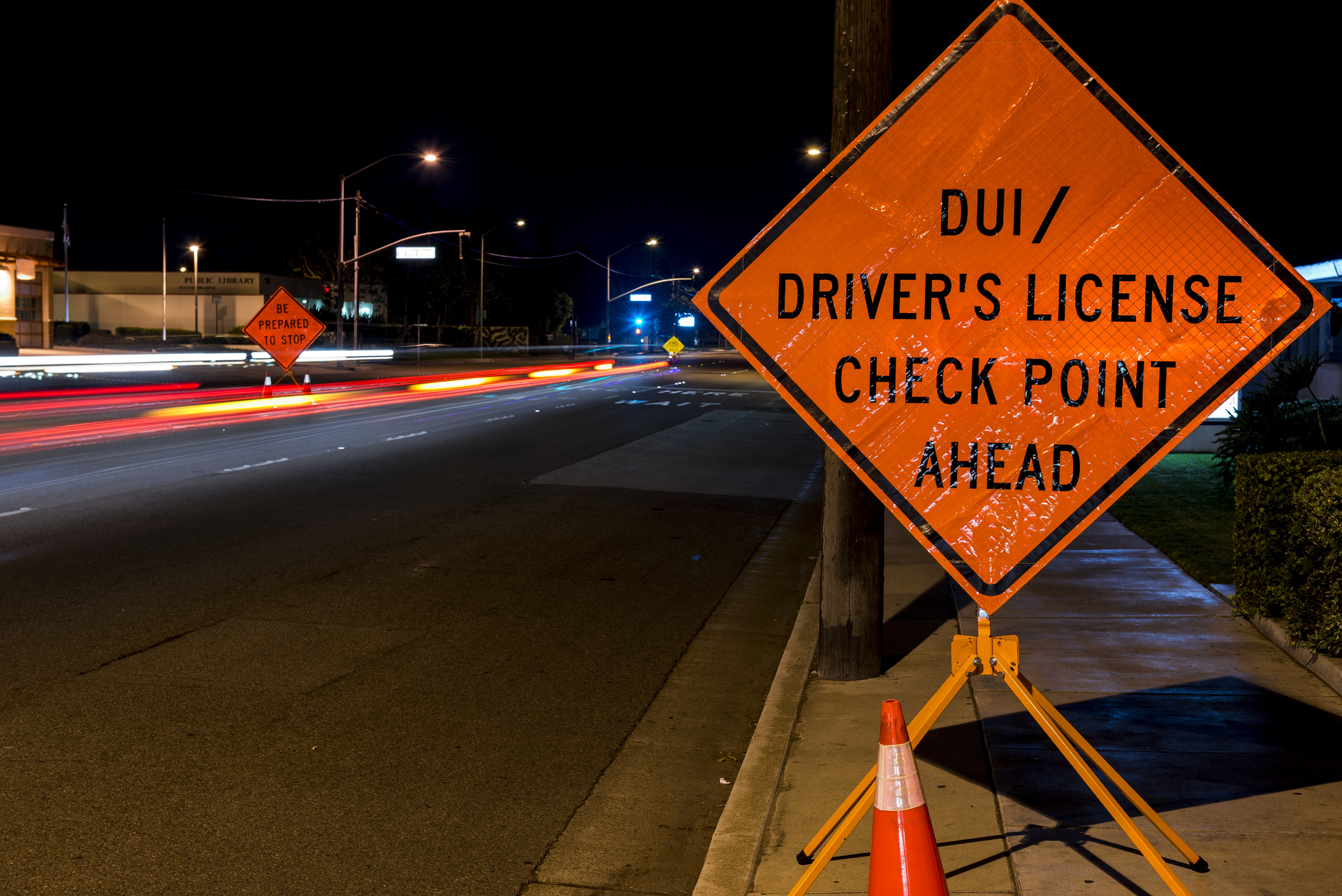
PA Superior Court Finds Police-Created Exigent Circumstances Support Warrantless Blood Draw in Homicide by DUI Case
The Pennsylvania Superior Court has decided the case of Commonwealth v. Trahey. In Trahey, the Court held that because Philadelphia Police were understaffed, failed to respond to the incident in a timely manner, and did not have procedures in place for quickly obtaining a warrant by electronic means, officers were justified in conducting a warrantless blood draw of a suspect who had been arrested on suspicion of Homicide by DUI. The opinion is an absurdity which suggests that because the Philadelphia Police have not taken adequate steps to investigate cases and create procedures for quickly obtaining search warrants even in potential homicide cases, they can ignore the United States Supreme Court's holding in Birchfield that drawing a suspect's blood in a DUI case requires voluntary, uncoerced consent or a search warrant.
Commonwealth v. Trahey

Philadelphia Criminal Defense Lawyer Zak T. Goldstein, Esquire
On September 4, 2015, which was Labor Day weekend, 911 dispatchers received a report that a car had struck a cyclist on the 4900 block of Wynnewood Avenue in Philadelphia. Despite the call about someone being struck, police were not dispatched to the scene until approximately 45 minutes after receiving the call. Officers testified that this was “due to the lower priority of auto accidents on the hierarchy of circumstances in which Philadelphia Police Officers are dispatched to emergency situations.” The 911 call did not mention that this may be a DUI-related crash or that someone had been seriously injured.
Upon arrival, police officers observed a smashed bicycle and a pickup truck that was partially on the sidewalk. The police testified that the truck’s hood and grill were damaged, its windshield was shattered, and there was blood on the street. The officers spoke to a group of bystanders who informed them that the defendant had been driving the truck and the cyclist, who he had hit, had been transported to the hospital. Unfortunately, the cyclist died as a result of this incident.
The defendant told one of the officers that he was the driver of the truck that struck the cyclist. While speaking with the defendant, the officer noticed that the defendant had a strong odor of alcohol on his person, his speech was slow and slurred, his eyes were glassy, and he had an unsteady gait. Based on these observations, the officer believed that the defendant was under the influence of alcohol. The officer arrested the defendant for DUI. It does not appear that any field sobriety tests were performed despite the fact that the officers were on the scene for approximately 45 minutes before they arrested the defendant. They then left the scene to transport the defendant to police headquarters for booking and presumably for a blood test.
While en route to police headquarters, the officers were called back to the scene by the Accident Investigation District (AID). AID is a unit that investigates car accidents and DUI cases. One of the AID officers examined the defendant and also noticed signs of intoxication. The AID officer learned that nearly ninety minutes had already passed since the crash. This is significant because police have two hours to do a blood test or a breathalyzer after they arrest someone on suspicion of DUI. After two hours, the results of the test become significantly less accurate. The rules therefore suggest that a court should not allow prosecutors to use the results of an untimely test. Consequently, one of the AID officers sent the defendant back to the police headquarters for a blood test and/or breathalyzer.
When the defendant arrived at police headquarters, he gave verbal consent to the blood testing, and he signed a 75-439 form which is the written version of these warnings. However, on this form, he did not check the box that consented to blood testing. After all of this, the defendant had blood taken from his arm. It was two hours and five minutes after the accident occurred. The defendant was subsequently charged with homicide by vehicle, homicide by vehicle while driving under the influence, involuntary manslaughter, and DUI. He then filed a pre-trial suppression motion in which he argued that the police subjected him to an unlawful search by taking his blood without a search warrant.
The Motion to Suppress
Several police officers testified at the hearing. They generally testified that officers would not have had sufficient time to seek a warrant for the chemical testing of the defendant’s blood within two hours of the accident. They also testified that a significant amount of time had elapsed before the officers were able to respond to the accident scene and that they did not know this was potentially a DUI related accident. It is important to remember that the 911 call did mention that someone had been struck by an automobile, yet apparently this had no effect on the promptness of the Philadelphia police’s response time to the scene of the accident.
The officers provided a number of different reasons for why they could not get a warrant within the two-hour time frame. This included: it would have taken too long to type up the warrant, drive from the accident to the AID headquarters, communicate with the on-call prosecutor for approval of the affidavit, arrange to meet with an available commissioner to consider the warrant application, travel to arraignment court, wait for a commissioner, have the commissioner review the application, and then return to the police headquarters with the approved request. The officer estimated that the entire process could take anywhere from seventy minutes to three hours.
At the conclusion of the hearing, the trial court granted the defendant’s motion to suppress. The trial court held that the defendant’s oral consent was invalid because of the United States Supreme Court’s decision in Birchfield v. North Dakota (which holds that the government cannot subject you to a penalty by refusing to consent to blood testing). However, the suppression court did not address the exigent circumstances argument posed by the Commonwealth. The Commonwealth then filed a timely interlocutory appeal.
What is the “Exigent Circumstances” Exception to the Warrant Requirement?
Article I, Section 8 of the Pennsylvania Constitution and the Fourth Amendment of the United States Constitution protect individuals from unreasonable searches and seizures. Usually, this means that if the government wants to go into your home or take something from your body (i.e. blood) the government needs a warrant to do so. However, throughout the years, both federal and Pennsylvania case law has evolved to include an “exigent circumstances” exception. Typically, this is limited to circumstances where there is a reasonable belief that evidence will be destroyed unless the police take prompt action. Courts use a totality of the circumstances approach to analyze the facts of a particular case in determining whether there were exigent circumstances.
To give an example of exigent circumstances, let’s say a police officer sees someone engage in a hand-to-hand exchange of drugs for money. The police then approach the defendant, and he runs into a house. The police officer follows him into this house and seizes drugs from his person. At a motion to suppress, the Commonwealth may reasonably be able to argue that there were exigent circumstances because if the police officer had not gone into the house, the defendant would have had time to flush the drugs down the toilet or find some other way to destroy them. Therefore, depending on all of the circumstances, a court could rule that the officer was not required to obtain a search warrant and deny the defendant’s motion to suppress.
The exigent circumstances exception has been applied in DUI cases, as well. This is understandable to some extent because alcohol in a person's blood dissipates relatively quickly. However, exigent circumstances do not automatically apply in DUI cases solely from the fact that alcohol eventually dissipates. The United States Supreme Court addressed this issue in the case of Missouri v. McNeely. The Court held that the natural dissipation of alcohol in a person’s bloodstream is not a per se (automatic) exigency and held that the police are not free from the requirement of obtaining a search warrant to obtain a DUI suspect’s blood. However, McNeely also did not hold that the police must always get a warrant to take a DUI suspect’s blood. The McNeely court acknowledged that obtaining a warrant is not always practical in DUI cases. Therefore, in cases where the police do not get a warrant, courts must analyze the facts of a given case to determine whether it was objectively reasonable for the police to draw blood without a search warrant.
The Pennsylvania Superior Court Holds That Easily Resolved Logistical Challenges Qualify as Exigent Circumstances
In Trahey, the suppression court did not address the issue of exigent circumstances. Nonetheless, instead of remanding the case for the suppression court to consider whether there were exigent circumstances, the Superior Court improperly decided to conduct the analysis itself. Of course, it found that there were exigent circumstances in this case. What is absurd about the Superior Court’s decision is that the exigent circumstances that the Court found in favor of the Commonwealth were entirely created by the Philadelphia Police Department's poor performance in giving the call priority and failure to create electronic or telephonic procedures for obtaining a search warrant. Such procedures for quickly obtaining a search warrant in emergency situations obviously exist in countless jurisdictions both small and large throughout the country, but the Superior Court refused to suggest that a jurisdiction as large as Philadelphia should be expected to implement them.
The Superior Court gave a slew of reasons as to why there were exigent circumstances in this case. One of the reasons was that that the officers did not arrive on scene until 45 minutes after the accident. However, this was because the emergency dispatch in Philadelphia does not prioritize car accidents for police response (apparently even when the 911 call indicates that someone has been hit). Further, when the police arrived on scene, it took an additional 45 minutes for the officers to determine that the defendant may have been under the influence of alcohol or a controlled substance. This determination was not because the officers had the defendant engage in any field sobriety tests. Rather, it took this long based on their observations of the defendant and conversations with him and bystanders. Additionally, the Superior Court noted that on this particular night, the Philadelphia police lacked manpower because only 5 AID officers were assigned to Philadelphia on Labor Day weekend.
As such, all of these exigent circumstances were a consequence of the failures of the Philadelphia Police to be adequately prepared. Thus, arguably, the police created the exigent circumstances in this case. Courts have held that if the police create the exigent circumstances, they are not entitled to sidestep the protections of the Pennsylvania and the United States Constitution. However, the Superior Court’s decision in Trahey does exactly that: it incentivizes the police to not be prepared so that they can later claim exigent circumstances and evade the Constitution's search warrant requirement. Trahey will likely be appealed, and hopefully an en banc panel of the Court or the Pennsylvania Supreme Court will reverse it and require law enforcement to comply with the Pennsylvania and United States Constitutions.
Award-Winning Philadelphia Criminal Defense Attorneys

Philadelphia DUI Defense Attorneys
DUI cases can be complicated. However, there are several ways to beat them. If you are charged with DUI, you need a skilled attorney with the knowledge and expertise to fight your case. Our award-winning Philadelphia criminal defense lawyers have successfully defended countless DUI cases. We offer a 15-minute criminal defense strategy session to any potential client. Call 267-225-2545 to discuss your case with an experienced and understanding criminal defense attorney today.

PA Superior Court: It Is Always Ineffective Assistance of Counsel to Go to Trial Without an Interpreter for a Client Who Doesn’t Speak English

Philadelphia Criminal Defense Lawyer Zak Goldstein
The Pennsylvania Superior Court has just decided the case of Commonwealth v. Diaz. The Court found that it is always ineffective assistance of counsel where a defense attorney fails to object to the court proceeding to trial without an interpreter for a defendant who does not speak English. The Court reversed the decision of the trial court, which had denied the defendant’s Post-Conviction Relief Act Petition, and awarded the defendant a new trial.
In Diaz, Bucks County prosecutors charged the defendant with Rape of a Child, Rape of a Person Less Than 13 Years of Age, Statutory Sexual Assault, Corruption of Minors, Endangering the Welfare of a Child, and Criminal Conspiracy. Prosecutors alleged that the defendant molested his step-daughter for four years. Prosecutors further alleged that the girl’s mother knew of the molestation and cooperated with it.
The defendant retained two private attorneys, and the representation lasted for approximately eight months. During that period, the attorneys appear to have done nothing. One of them met with the defendant for less than an hour, and the other attorney never met with him at all. The defense attorneys apparently assumed that the other attorney was working on the case and handling the trial preparation, but in fact, no one was working on it.
On the day of trial, the attorney who had never met with the defendant finally met with him fifteen minutes before the trial court called the case. That attorney was surprised to realize that his client did not really speak or understand English. The attorney informed the Court that he would need an interpreter, but there was no interpreter available that day. This was likely because the attorneys had not notified the court in advance that an interpreter would be needed. The attorney, likely not wanting to show how unprepared he was, then told the judge that the defendant would only need the interpreter for when he actually testified and that they could start the trial without the interpreter. The trial judge initially said that the court would only proceed through jury selection without the interpreter, but ultimately, the court began receiving testimony that day.
The defendant received the services of an interpreter for the rest of the trial. The jury ultimately convicted him of all charges. When the defendant returned to court for sentencing and a hearing on whether he should be designated a Sexually Violent Predator, the trial court noted that the defendant had an interpreter present because he did not understand the proceedings well enough to participate in them without an interpreter. He received a sentence of 20-40 years in state prison.
The defendant appealed to the Superior Court on the grounds that he had not received the interpreter on the first day of the trial. The Superior Court denied the appeal. It found that because the attorney failed to object to proceeding to trial without an interpreter, the defendant had waived the claim and could not raise it on appeal.
Post-Conviction Relief Act Petition
The defendant next filed a Post-Conviciton Relief Act Petition (“PCRA”). In the PCRA Petition, the defendant raised a number of claims relating to ineffective assistance of counsel. In addition to other errors, the defendant alleged that he received the ineffective assistance of counsel in that his attorneys failed to object when the court began the trial without an interpreter present. The PCRA court conducted an evidentiary hearing and ultimately agreed with the defendant. It reversed his conviction and awarded him a new trial. The Commonwealth appealed.
Appealing the Denial of a PCRA Petition
On appeal, the Superior Court affirmed the PCRA’s court decision awarding the defendant a new trial. There was some dispute as to exactly how much English the defendant could understand, but the Superior Court ultimately found that there was enough evidence on the record for the PCRA court to properly find that the defendant could not speak sufficient English to proceed to trial without an interpreter. Further, the Court noted that it must apply a very deferential standard of review to the appeal of a PCRA. The Court recognized that it may not make its own findings of fact Instead, the Superior Court must defer to the trial court’s findings unless the trial court abused its discretion by making findings with no support in the evidentiary record.
In general, a PCRA Petitioner must show three things in order to win a new trial or sentencing: 1) counsel was ineffective, 2) there was no reasonably strategic basis for counsel’s decision, and 3) the petitioner suffered prejudice as a result of counsel’s ineffective representation. Prejudice is often difficult to show. The defendant must be able to show that had he received effective representation, the outcome may have been different. Thus, even in many cases where a petitioner can show that the attorney did something horribly ineffective, the trial courts and appellate courts will not award a new trial because the courts will find that the defendant would have been convicted anyway.
Presumed Prejudice in PCRA Litigation
There are a handful of situations in which the error is so fundamental that prejudice is presumed and a petitioner does not have to show that the outcome would have been different. In these cases, the petitioner must show only that the attorney was ineffective and that there was no reasonable, strategic basis for the decision or omission. This makes the burden of winning a new trial or sentencing much easier to meet. This is because there are some “circumstances that are so likely to prejudice the accused that the cost of litigating their effect in a parituclar case is unjustified.”
For example, prejudice is presumed when there is an actual or constructive denial of counsel, the state interferes with counsel’s assistance, or counsel had an actual conflict of interest. In addition, prejudice is presumed where trial counsel’s ineffectiveness causes a defendant to be physically absent from his own trial without cause or consent. In Commonwealth v. Tolbert, the Superior Court reversed a conviction where trial counsel admittedly and erroneously told the defendant he did not have to be present for a court date and the court then proceeded through jury selection without the defendant.
The Superior Court relied heavily on the Tolbert case in finding that a defendant who cannot understand the proceedings due a language barrier is essentially not present at his own or her own trial. The defendant’s ability to use an interpreter encompasses numerous fundamental rights. The Court noted that the failure to understand the proceedings may deny him his right to confront witnesses, his right to consult with his attorney, or his right to really be present at his own trial. Accordingly, because the defendant could not understand the first day of proceedings, the defendant was essentially not present for his trial. Therefore, prejudice could be presumed from the defense attorney’s failure to object. The Superior Court reversed the conviction and awarded the defendant a new trial.
This may seem like the obvious answer – that a defendant has the right to an interpreter and to understand what is happening in court, but the impact of awarding a new trial in a case like this is significant. These types of sexual assault trials are lengthy, expensive, and very emotionally difficult for everyone involved. The complainant and other witnesses must testify again, the defendant must face trial and sentencing again, and the odds of winning for the prosecution likely go down as time goes by, memories fade, and witnesses become unavailable. Therefore, the appellate courts will often do anything they can to affirm convictions in these cases. This particular case was decided by a three-judge panel of the Superior Court. Although two judges voted in favor of the defendant receiving a new trial, one of the judges wrote a 46-page dissent arguing that the defendant should have to show actual prejudice under these circumstances. Fortunately, the majority judges were not convinced by the dissent. It is now clear that a court may not proceed to trial without providing a non-English speaking defendant with an interpreter.
Facing Criminal Charges or Appealing a Conviction? Our Philadelphia Criminal Defense Lawyers Can Help.

Philadelphia PCRA Lawyers
If you are facing criminal charges, are under investigation, or are considering an appeal of a criminal conviction, we can help. Our Philadelphia criminal defense lawyers have successfully represented clients in PCRA Petitions and direct appeals to the Superior Court. We offer a free, 15-minute criminal defense strategy session to anyone who is considering appealing a wrongful conviction or filing a Post-Conviction Relief Act Petition. Call 267-225-2545 to speak with one of our award-winning defense attorneys today.

PA Superior Court: Prosecution May Not Introduce Facebook Posts Without Proving Defendant Authored Posts
When can the prosecution use Facebook messages against the defendant?

Criminal Defense Attorney Zak Goldstein
The Pennsylvania Superior Court has just decided the case of Commonwealth v. Mangel. In Mangel, the Superior Court held that the trial court properly denied the Commonwealth’s motion to admit supposedly incriminating Facebook messages against the defendant because the Commonwealth failed to prove that the defendant wrote the messages.
Commonwealth v. Mangel
Mangel involved the assault of a man at a graduation party. Prosecutors charged the defendant with Aggravated Assault, Simple Assault, and Harassment after the complainant told police that several fights ensued as a result of multiple people arriving uninvited at the party. The complainant stated that as he was walking away from the fights, he was struck in the back of the head, knocked to the ground, and repeatedly punched and kicked by the defendant and a co-defendant. The complainant did not know either defendant and had not spoken with them during the party, but he was able to identify them after family members showed him Facebook photos of the defendants. The complainant suffered facial lacerations, broken bones, and lost several of his teeth during the assault.
The Admission of Facebook Evidence
In order to prove the case against Mangel, the prosecution sought to obtain his Facebook records. The prosecution obtained a court order directing Facebook to provide records to them. The Commonwealth then filed a Motion in Limine asking the trial court to permit the introduction of screenshots of certain pages of a Facebook account for a “Tyler Mangel.” The screenshots showed various online and mobile device Facebook messenger messages. The Commonwealth also sought to introduce a photograph from the Facebook account of bloody hands which had been posted by a different individual on the Tyler Mangel page.
The trial court conducted a hearing on the Motion in Limine. At the hearing, an Erie County Detective attempted to authenticate the messages and photos for the Commonwealth. After being qualified as an expert witness in computer forensics, the detective testified that she had been asked to determine the owner of the Tyler Mangel profile page by the prosecution. In order to do so, she searched Facebook for the name Tyler Mangel. She testified that only one result appeared. She then compared that page to the screenshots that the prosecutors had given to her. She determined that both the screenshots and the page that she found bore the name Tyler Mangel, listed the account holder as living in Meadville, PA, and that some of the photographs on both the screenshots and the Facebook page were the same. The about section of the page also provided that the individual attended Meadville High School and that the username associated with the Facebook account was Mangel17.
The detective requested subscriber records from Facebook. Using those records, she determined that when the owner of the account created it, that person provided the name Tyler Mangel and email addresses with the name Mangel in them. The account was also linked to a specific cell phone number. The detective obtained a court order for Verizon records and traced the cell phone number to Stacy Mangel and a specific address in Meadville, PA. The court took judicial notice that this was the same address listed as the address for the defendant in the Criminal Complaint.
The detective concluded that the screenshots the Commonwealth wanted to introduce must have come from that account because both accounts 1) had the same name, 2) listed the account holder as living in Meadville, 3) listed the account holder as having attended the same high school, and 4) displayed photographs of the same individual. The trial court, however, asked the detective if she could provide that opinion to a reasonable degree of computer and scientific certainty that the account belonged to the defendant and whether the detective could testify that no one else accessed and posted things on the account. The detective testified that she could not provide that opinion with any certainty.
In addition to not being certain that no one else could have owned or used the Facebook account, the detective also confirmed that she did not obtain an IP address for the Facebook account. The defense lawyer also searched for the same name on his own phone and found five listings for Tyler Mangel. Finally, the detective did not link the cell phone information which she had obtained to the defendant.
The trial court denied the Commonwealth’s Motion in Limine to admit the Facebook evidence, and the prosecution appealed. The Superior Court affirmed the decision of the trial court. The Court found that the prosecution had simply failed to prove that the account belonged to the defendant, that the defendant had sent the messages in question or posted the pictures, and that the account could not have been used by someone else to do so. The Court also dismissed the Commonwealth's argument that the detective should not have been required to testify to a reasonable degree of certainty, noting that it is well-settled that all expert witnesses must be able to provide their opinions to a reasonable degree of certainty in the relevant field of study.
The Authentication of Facebook Messages in a Criminal Case
The Superior Court noted that there is relatively little case law in Pennsylvania on authenticating Facebook evidence and text messages in criminal cases. In general, Pennsylvania Rule of Evidence 901 provides that authentication is required prior to the admission of evidence. The party that seeks to introduce evidence must show to the court that the evidence is what it purports to be. In some cases, that can be shown through the testimony of a witness with personal knowledge. For example, had a friend testified that they had watched the defendant access the Facebook account, that could have been sufficient to show that it was the defendant’s account. Here, the prosecution had no direct evidence or witnesses with personal knowledge that could link the account to the defendant.
When the party seeking to admit the evidence does not have a witness with personal knowledge, the evidence may be authenticated through circumstantial evidence. Circumstantial evidence involves the appearance, contents, substance, internal patterns, or other distinctive characteristics of the item, taken together with all the circumstances surrounding it.
Here, the circumstantial evidence simply did not prove to a sufficient degree of reliability that the account belonged to the defendant or that the defendant had posted the information which the prosecution sought to introduce. Facebook accounts, like email and messaging accounts, can be accessed from any computer or smart phone with the appropriate user identification and password. The Court noted that social media presents unique challenges because of the great ease with which a social media account may be falsified. A legitimate account may also be accessed by an imposter.
In some cases, there may be sufficient circumstantial evidence with which to authenticate a social media account. Therefore, the Court ruled that social media evidence must be evaluated on a case-by-case basis to determine whether or not there has been an adequate foundational showing both of its relevance and its authenticity. The proponent of the evidence must show either direct or circumstantial evidence that tends to corroborate the identity of the author of the message or post. This could include testimony from the person who sent or received the communication, or contextual clues in the communication tending to reveal the identity of the sender. For example, if a message from the defendant's account arranged a meeting with a witness and then the defendant showed up to the meeting, the circumstantial evidnece would suggest that it was the defendant's account. However, social media can easily be hacked and forged, so the mere fact that an account has a person’s name or photo on it is simply insufficient to show that the account belongs to that person. The party introducing the evidence must be able to show more than that.
Here, the trial court properly prohibited the admission of the evidence because the prosecution showed only that the account appeared to belong to the defendant. The defendant never admitted ownership of it, and the prosecution did not call any witnesses to testify that they had communicated with the defendant using that account. Anyone could have created the account, added photos, and claimed that they went to Meadville High School and were Tyler Mangel. The prosecution also failed to provide date and time stamps to show when the posts were created, and the posts were ambiguous and did not clearly reference the allegations in the case. Accordingly, the Superior Court agreed with the defense attorney that the evidence was not sufficiently relevant and authentic. Therefore, it upheld the trial court’s ruling excluding the Facebook screenshots.
FACING CRIMINAL CHARGES? WE CAN HELP.

Philadelphia Criminal Defense Lawyers Zak Goldstein and Demetra Mehta
If you are facing criminal charges, we can help. Our Philadelphia criminal defense lawyers have successfully defended thousands of cases in state and federal courts throughout Pennsylvania and New Jersey. We offer a complimentary 15-minute criminal defense strategy session to any potential client who is facing criminal charges or who may be under investigation by law enforcement. Call 267-225-2545 to speak with an experienced and understanding defense attorney today.