
Philadelphia Criminal Defense Blog
Anonymous Tip Cannot Provide Reasonable Suspicion for Police Stop
Can the the police stop someone based on an anonymous 911 call?

Criminal Defense Attorney Zak T. Goldstein, Esq.
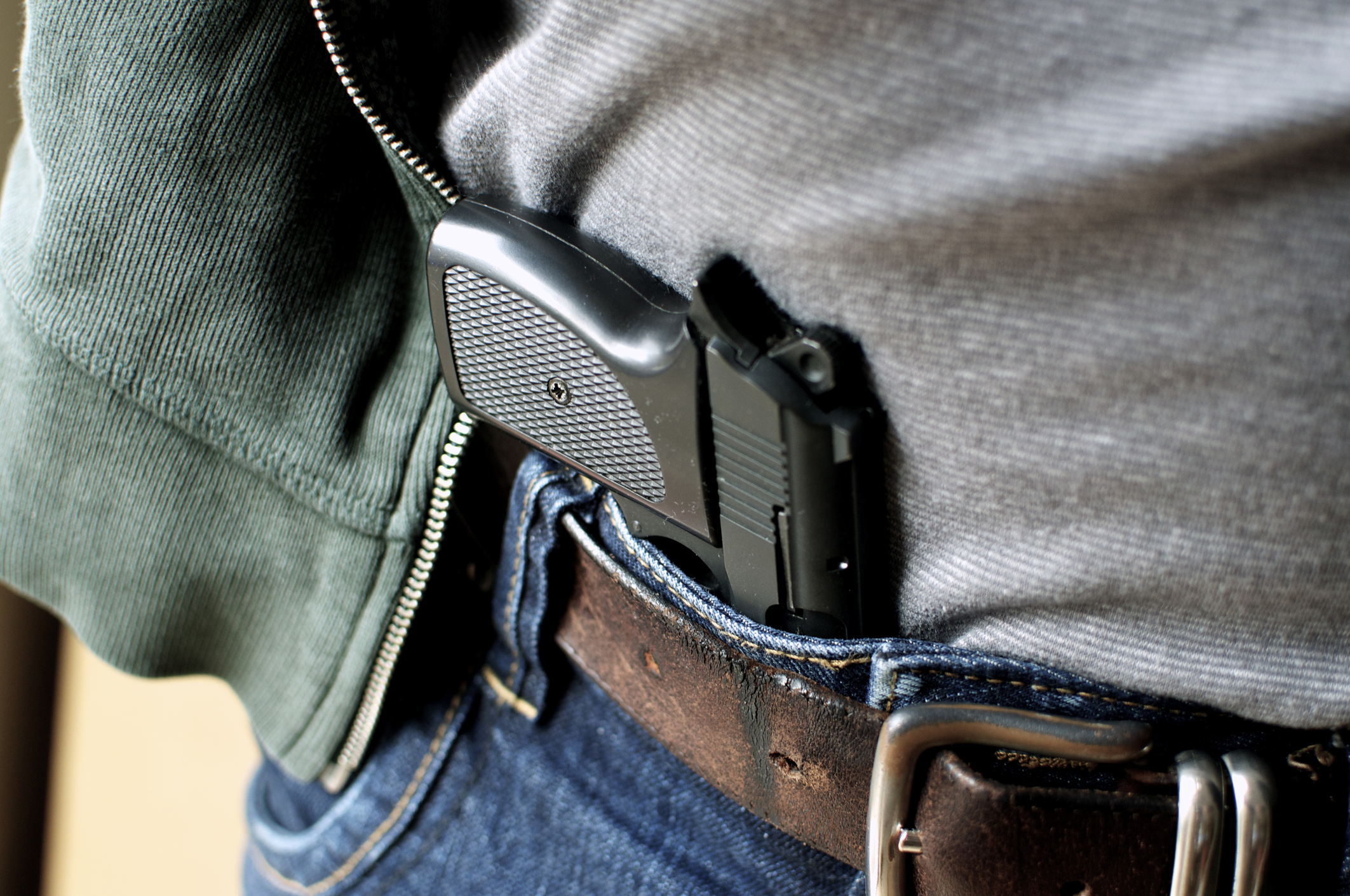
The Pennsylvania Superior Court has just decided the case of Commonwealth v. Mackey, once again holding that an anonymous tip of criminal activity, no matter how serious, does not provide police officers with the reasonable suspicion necessary to stop, arrest, or search a suspect. This is true even when the tip is for a person with a gun on a SEPTA bus. Although this has long been settled law, trial courts routinely attempt to disregard this rule in cases involving guns and drugs.
Commonwealth v. Mackey
In Mackey, Philadelphia Police Officers received an anonymous radio call for a person with a gun on a specific SEPTA bus. The radio call further described the person as “a black male wearing a white T-shirt and a flowered hat.” The officer who received the tip responded immediately, stopped the bus, and boarded the bus. Upon boarding the bus, which contained 50 to 60 passengers, the officer saw the defendant on the bus wearing a pink and green flowered hat and a shirt that was white on the back and black on the front. The officer testified that the hat was extremely distinctive in that it was a bucket hat patterned with pink and green flowers.
As soon as the officer saw the defendant and realized that the defendant matched the description from the anonymous radio call, the officer pulled his gun, pointed it at the defendant, and ordered him to raise his hands. The defendant sat up straight while the other passengers ducked for cover. The officer then handcuffed the defendant and removed him from the bus. He testified that as the defendant was being escorted from the bus, he waddled in a strange way, suggesting that he might have been walking that way to keep a gun from falling out of his loose-fitting pants. Once they were off the bus, the officer frisked the defendant and found a gun. He arrested the defendant and charged him with various gun charges.
Motion to Suppress the Firearm
The defendant filed a motion to suppress, arguing that under well-established case law, the police did not have the right to stop him and frisk him based on a totally anonymous radio call. At the evidentiary hearing for the motion to suppress, the officer was unable to provide any additional information about the radio call relating to who called it in. The officer also could not provide any specific reason for why he believed the call to be trustworthy prior to stopping and searching the defendant.
The trial court denied the motion to suppress. The Commonwealth and the court relied on the fact that the tip contained a great deal of detail and that the defendant waddled in a strange way while exiting the bus. The Commonwealth also stressed that the defendant sat up very straight while everyone else on the bus ducked for cover. The court denied the motion, found the defendant guilty following a bench trial, and sentenced him to 2 to 5 years in state prison followed by three years of probation.
Mackey's Appeal to the Pennsylvania Superior Court
The defendant immediately appealed, and on appeal, the Superior Court reversed the conviction and the denial of the motion to suppress. The Superior Court heavily emphasized the difficulty in these cases. On one hand, police are fully expected to respond to a 911 call for a person with a gun, and the failure to do so could have disastrous consequences. At the same time, an anonymous radio call simply provides the police with no way to determine whether the call is genuine and reliable. If such a call provides the police with the basis for stopping and searching a suspect, then there are few protections for anyone as the police would be able to stop a person based on a prank phone call or even where another police officer has anonymously called 911 in order to provide the basis for the stop.
The Superior Court recognized that a long line of cases, including Commonwealth v. Jackson and Commonwealth v. Hawkins, have repeatedly held that the police may not conduct a stop based on anonymous information. The Commonwealth has repeatedly asked the courts to find a public safety or firearms exception to the warrant requirement in these cases because of the risk created by firearms, and the courts have unanimously rejected such an exception as unconstitutional. This case was no different. Accordingly, the Superior Court found that the officer did not have reasonable suspicion to stop the defendant. Finally, the Court found that the defendant was immediately seized when the officer entered the bus and pointed a gun at him. Because the officer only found the gun and noticed the waddling after stopping the bus, boarding it, and pointing a gun at the defendant, the waddling and strange behavior could not be used to provide reasonable suspicion because it happened after the illegal seizure. Accordingly, the Court reversed the denial of the motion to suppress, vacated the firearms convictions, and remanded the case for a new trial without the suppressed guns.
Cases like Mackey are extremely important because they protect citizens from unconstitutional police searches even in cases involving charges as serious as illegal gun possession charges. They also prevent Pennsylvania citizens from being harassed and searched based on unreliable or even knowingly false information by requiring the police to show some evidence of reliability in the information before acting on it. At the same time, the officer’s hands were not totally tied. The officer likely would have been justified in getting on the bus and asking Mackey if he could ask him a few questions. If Mackey then acted nervously, walked strangely, or the officer observed a gun shaped bulge, the officer then may have been able to conduct the frisk lawfully. Instead, the officer immediately pointed a gun at the defendant without any basis for believing the tip, and this is particularly problematic given the fact that it is legal to carry a gun with a permit in Pennsylvania.
OUR PHILADELPHIA CRIMINAL DEFENSE LAWYERS CAN HELP YOU WITH WEAPONS AND FIREARMS OFFENSES

Philadelphia Criminal Defense Lawyers
If you are charged with the illegal possession of a gun or other weapons offense, you need an experienced criminal defense attorney to evaluate your case, investigate for potential defenses, and provide you with all of the options. We have won countless cases involving firearms and other weapons offenses at the prelminary hearing, motion to suppress, and trial court levels. Call 267-225-2545 now for a complimentary 15-minute criminal defense strategy session.

PA Superior Court: You Should Not Bring Your Computer In For Repair If It Has Child Porn On It

Philadelphia Criminal Defense Lawyer Zak T. Goldstein, Esq.
Can Computer Repair Technicians Search A Computer For Child Porn?
The Pennsylvania Superior Court has decided the case of Commonwealth v. Shaffer. The Court held that police did not violate the Fourth Amendment by searching the defendant’s computer for child pornography where the child pornography was initially discovered by computer repair technicians at a local store. The Court relied on the doctrine of abandonment, finding that the defendant abandoned his reasonable expectation of privacy in the contents of his computer when he gave store employees permission to repair the computer.
Commonwealth v. Shaffer
In Shaffer, the defendant was convicted of possession of child pornography (18 Pa.C.S. Sec. 6312(d)) and Criminal Use of a Community Facility (18 Pa.C.S. Sec. 7512). The defendant’s troubles arose when he brought his computer to a store called CompuGig for repair. The defendant told the store employees that the computer’s internet had stopped working, the computer was displaying a lot of pop-ups, and that he thought it had spyware or a virus on it. He left it there for repair, and technicians eventually concluded that the hard drive was failing. The technicians obtained permission to replace the hard drive, and the defendant also authorized them to copy the contents of the old hard drive to a new drive if possible. During the course of attempting to copy the old drive, the technicians found child pornography on the computer. The technicians then called the police and showed the police what they had found. The police took possession of the computer, obtained a search warrant, and arrested the defendant.
The defendant moved to suppress the contents of the computer, arguing that the police violated his right to privacy in his computer when they looked at the contents of the computer prior to obtaining the search warrant. The trial court denied the motion to suppress, and the defendant was eventually convicted of the charges. The defendant appealed to the Superior Court and asked the Superior Court to review the denial of the motion to suppress.
The Appeal
The Superior Court upheld the trial court’s denial of the motion to suppress and found that the police acted lawfully in viewing the material on the computer. The Superior Court relied heavily on its prior decision in Commonwealth v. Sodomsky and found that the defendant effectively abandoned the computer when he brought it to the store and authorized strangers to work on it. The Court noted that the Fourth Amendment protects people, not places, and what a person knowingly exposes to the public loses its Fourth Amendment protection. Accordingly, when the defendant gave the store employees permission to work on his computer and copy files to a new drive, he lost any expectation of privacy that he would have had in the contents of the computer because he exposed them to the public. The Court further rejected the defendant’s argument that the store employees went beyond the scope of the job, finding that he was specifically told that the employees needed to transfer the data. Thus, the Court concluded that abandonment occurs when a person grants a thirty-party access to his computer’s contents.
The Superior Court applied a very broad version of the abandonment doctrine in this case, finding that the technicians had the right to view all of the files on the computer because the defendant had given them permission to copy the hard drive. However, it is possible that the outcome could differ in a case in which the defendant had expressly limited the portions of a hard drive which the technicians could access. Nonetheless, it is not advisable to bring a computer in for repair if it has evidence of a crime on it.
Award-Winning Philadelphia Criminal Defense Lawyers
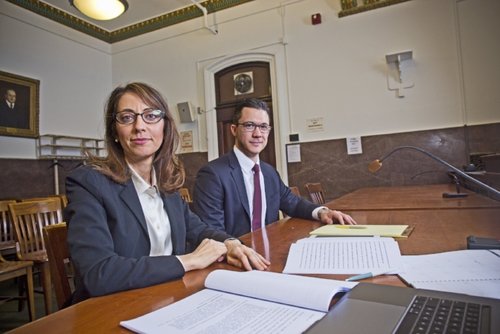
Criminal Defense Attorneys Demetra P. Mehta, Esq. and Zak T. Goldstein, Esq.
If you are facing criminal charges, we can help. Our Philadelphia criminal defense lawyers have successfully defended thousands of clients at the trial level on appeal. We offer a complimentary 15-minute criminal defense strategy session to anyone who is under investigation or facing criminal charges. Call 267-225-2545 to speak with an experienced and understanding defense attorney today.

PA Supreme Court Reverses Murder Convictions Where Prosecution Hid Key Impeachment Evidence

Zak T. Goldstein, Esq. - Philadelphia Criminal Defense Attorney
The Pennsylvania Supreme Court has just announced its decision in Commonwealth v. Johnson, affirming the lower court’s finding that the prosecution committed Brady violations when it withheld several police reports that would have established that its star witness repeatedly engaged in criminal activity and acted on behalf of the police as an informant. This withholding of crucial impeachment evidence by the police and district attorneys in the case violated the defendant’s fundamental right to a fair trial and led to a reversal of his convictions for homicide.
Commonwealth v. Johnson
In Johnson, the defendant was convicted of two counts of first-degree murder and sentenced to death. The Commonwealth alleged that on December 7, 1996, two cousins robbed a woman because they were looking for drugs and money. They did not find either drugs or money, but they did steal a camcorder and a Sony PlayStation. This woman then told her boyfriend that she had been robbed. The woman told her boyfriend that the robbers were wearing green hoodies during the robbery. The boyfriend knew the cousins and recalled that they were wearing green hoodies earlier on the day of the robbery. The boyfriend spoke with Mr. Johnson, the defendant, and another co-defendant. They also went to a local K-Mart and purchased shotgun shells.
The next day, the boyfriend made contact with the cousins. He lured the cousins into a car under the ruse that they would oversee his drug-dealing business while he was out of town. Later that evening, the cousins were found dead on a gravel driveway. During the incident, the defendant was shot in the torso, and he later went to the hospital.
While at the hospital, the defendant gave a statement to the police. The defendant’s version of events was that his role was limited to driving the minivan. The defendant further stated that when the boyfriend was “showing” where the drugs were stashed, the cousins became suspicious and refused to follow him. Subsequently, the boyfriend began shooting and not only shot the cousins, but also shot the defendant. The defendant then went to a restaurant to get help, and that is where he encountered the police. The defendant did not say that he shot or possessed a gun in his statement, and he presumably denied that he knew that the boyfriend planned to shoot or kill the cousins. This statement was introduced against the defendant at his trial. Without additional evidence, however, the statement may not have been enough to convict the defendant of homicide.
At trial, the Commonwealth alleged that the defendant was actually one of the individuals who shot the cousins. Specifically, they alleged that one of the bullets found in one of the victims came from a .38 caliber handgun. The Commonwealth then called a cooperating witness, Mr. Robles, who testified that the defendant owned a .38 caliber handgun and that the defendant confessed to him to taking the gun from the murder scene, wiping it off with his shirt, and then throwing it on the side of the road about a quarter mile from the scene of the crime. Robles’s testimony was crucial because it linked the murder weapon to the defendant
On cross-examination, defense counsel tried to attack Robles’s credibility by suggesting that he was engaged in criminal activities and was an informant for the Reading Police Department. The Assistant District Attorney objected to this line of questioning, but the court allowed defense counsel to inquire into areas of possible bias. Unfortunately, this cross-examination was limited because, as discussed later, the Commonwealth did not provide the defense attorney with existing police reports linking Robles to drug trafficking and other crimes. After both sides rested, the jury found the defendant guilty of first-degree murder and sentenced him to death.
The Defendant's Appeals and PCRAs
What followed after the trial was a very long and complicated factual and procedural history that spanned for almost two decades. Initially, after the sentencing, the defendant’s attorney obtained a letter that Robles sent to the Reading Police while he was incarcerated as a material witness. In that letter, Robles stated that he would “do anything” to get out of jail. The defendant filed an appeal, arguing that the failure to disclose this letter was a violation of Brady v. Maryland. However, the Pennsylvania Supreme Court rejected the argument because the Commonwealth gave the defense lawyer a police report that referenced this letter prior to trial, so the defense already knew about the letter at the time of the trial and was able to cross-examine Robles on the general subject of the letter. Thus, the defendant’s first Post-Conviction Relief Act Petition was denied.
Eventually, the defendant's luck began to change. In a different homicide case in which he was also convicted based on Robles’ testimony, the defendant filed a federal habeas petition. In that case, Robles was again a key witness against the defendant. Again, Robles testified that Johnson had confessed to him. In the federal habeas litigation, the United States District Court for the Eastern District of Pennsylvania ordered the Commonwealth to disclose to the defense team any evidence of a relationship between Robles and the Reading Police Department and/or the Berks County District Attorney’s Office.
In response to this order, the Commonwealth produced five police reports that could have been used to impeach Robles at both trials because they showed that Robles had repeatedly been investigated for serious criminal activity and not arrested or prosecuted. Specifically, these police reports included accusations that Robles robbed individuals, and in exchange for providing testimony about an unsolved murder, he would not be prosecuted. The reports also suggested that Robles engaged in drug trafficking, lied to police about his own crimes, and possessed and fired guns. Despite repeatedly being investigated for these crimes, Robles was never charged criminally.
After obtaining these police reports, the defendant amended his second PCRA petition to allege that the Commonwealth violated Brady by withholding these police reports. The PCRA court found that these documents were relevant and that there was a reasonable probability that the jury’s verdict would have been different had these reports been disclosed to the defense. The Commonwealth then filed this appeal to the Pennsylvania Supreme Court.
What is Brady Material?
In Brady v. Maryland, the United States Supreme Court held that prosecutors must hand over all material that may potentially exonerate a defendant. Where the prosecution fails to do so, the defendant could be entitled to a new trial. Brady violations are typically challenged either on appeal or in Post-Conviction Relief Act proceedings.
In order to establish a Brady violation, a defendant must prove three elements: 1) the evidence was suppressed by the state either willfully or inadvertently; 2) the evidence was favorable to the defendant, either because it was exculpatory or because it could have been used for impeachment; and 3) the evidence was material in that its omission resulted in prejudice to the defendant. The ultimate issue for a Brady claim is whether there is a reasonable probability that the outcome at trial or sentencing would have been different if the Government had turned over the Brady material. A reasonable probability does not mean that it would be more likely than not that a different verdict would be reached, but only that the likelihood of a different result is great enough to undermine confidence in the outcome of the trial.
Police Reports Which Could Be Used To Impeach A Key Witness Are Brady Material
The Pennsylvania Supreme Court, unsurprisingly, found that the withheld police reports were Brady material. In its opinion, the Court found that the police reports “are textbook impeachment evidence” and that “[t]hey suggest that Robles sought to curry favor with the police in the face of ongoing criminal investigations and mounting evidence of his own criminal conduct.” Further, the reports showed that Robles had a financial interest in testifying against Johnson because he himself was involved in drug trafficking and would have gained from eliminating a competitor.
The Court further emphasized how crucial Robles was to the case against the defendant. Robles’s testimony was what connected Mr. Johnson to the murder weapon. Without Robles’s testimony, the Commonwealth may not have been able to prove the necessary intent for a first-degree murder conviction. As such, this material could have been very damaging to the Commonwealth’s case in that it may have convinced a jury that Robles was lying to benefit himself, and thus the Pennsylvania Supreme Court affirmed the PCRA court and granted Mr. Johnson a new trial.
PCRA Petitions

Philadelphia Criminal Defense Lawyers
Pennsylvania’s Post-Conviction Relief Act provides a number of different ways to challenge a wrongful conviction. If you were previously convicted and believe that this occurred either through wrongdoing by the government or that your trial attorney was ineffective, you need an attorney who has the keen attention to details that will make or break your case. Our award-winning Philadelphia criminal defense lawyers have successfully litigated countless PCRA petitions. We offer a 15-minute criminal defense strategy session to any potential client. Call 267-225-2545 to discuss your case with an experienced and understanding criminal defense attorney today.

PA Superior Court Reverses Murder Conviction in Roosevelt Boulevard Drag Racing Case

Zak T. Goldstein, Esq. - Philadelphia Criminal Defense Attorney
The Pennsylvania Superior Court has just decided the case of Commonwealth v. Akhmedov, finding that the Commonwealth failed to prove the charge of third degree murder where the defendant crashed into and killed pedestrians during a drag racing incident on Philadelphia’s Roosevelt Boulevard. The Court’s opinion details the type of evidence necessary for the prosecution to prove a third degree murder charge in a case involving reckless driving, drag racing, or a car accident.
Commonwealth v. Ahkmedov
In Ahkmedov, the defendant was charged with multiple counts of third degree murder, involuntary manslaughter, homicide by vehicle, and recklessly endangering another person. The charges arose out of an incident which occurred on Roosevelt Boulevard. The defendant was driving southbound on the Boulevard, which has a speed limit of 40 miles per hour. At some point, the defendant began racing another driver. At each traffic light, the cars would rev their engines and race to the next light.
Police estimated that the cars traveled at around 70 miles per hour during the race. As the vehicles approached the intersection of the Boulevard and 2nd Street, the defendant began to travel at a minimum speed of 79 miles per hour. Although 79 miles per hour was nearly double the speed limit on that portion of the Boulevard, the evidence also showed that the intersection was not meant for pedestrian crossings. It did not have a crosswalk or signs warning drivers that pedestrians might be present. Unfortunately, Samara Banks and her three children were crossing the Boulevard as the defendant approached. The defendant attempted to swerve around them but was unable to do so. Instead, he struck Ms. Banks and her children, ultimately killing all four of them. The defendant remained at the scene and tried to render aid.
Murder Charges for Drag Racing
Police arrested the defendant and charged him with homicide and the related charges. The defendant proceeded by way of bench trial, and the trial judge convicted the defendant of third degree murder, involuntary manslaughter, homicide by vehicle, and recklessly endangering another person. On appeal, the defendant challenged a number of evidentiary issues as well as whether the evidence was sufficient for a conviction on the third degree murder charges. Specifically, the defendant argued that the evidence failed to show that he acted with the necessary malice required to sustain a conviction for third degree murder because he did not operate his vehicle under circumstances which almost assured that injury or death would ensue.
The Defendant's Appeal
The Superior Court agreed and reversed the conviction for third degree murder. The Court noted that third degree murder occurs when a person commits a killing which is neither intentional nor committed during the perpetration of a felony, but contains the requisite malice. The definition of malice is well established in Pennsylvania, and courts have defined malice as follows:
Malice exists where there is a wickedness of disposition, hardness of heart, cruelty, recklessness of consequences, and a mind regardless of social duty, although a particular person may not be intended to be injured. Where malice is based on a reckless disregard of consequences, it is not sufficient to show mere recklessness; rather, it must be shown the defendant consciously disregarded an unjustified and extremely high risk that his actions might cause death or serious bodily injury. A defendant must display a conscious disregard for almost certain death or injury such that it is tantamount to an actual desire to injure or kill; at the very least, the conduct must be such that one could reasonably anticipate death or serious bodily injury would likely and logically result.
Obviously, there was no real dispute as to whether or not the defendant acted recklessly. Driving twice the speed limit through an intersection as part of a drag race was clearly reckless. However, in order for recklessness to qualify as malice, Pennsylvania courts have required the prosecution to prove “sustained, purposeful recklessness” such that the defendant must have known of and consciously disregarded the risk that death or serious bodily injury was reasonably certain to occur.
Generally, this level of sustained, purposeful recklessness requires factors like a “near miss,” a warning from a bystander or passenger to slow down and a decision to ignore the warning, and evidence that the defendant clearly saw and recognized the dangers. Finally, in almost every case in which the defendant was properly convicted of third degree murder as a result of a car accident, the prosecution was able to show that the defendant was intoxicated.
Insufficient Evidence of Malice
In this case, the Court found that the prosecution did not establish the requisite level of recklessness. The defendant was reckless in driving at excessive speeds, but he did not have a near miss, he was not warned to slow down, and he was not intoxicated. He attempted to avoid hitting the victims but was unable to do so. Further, the pedestrians were crossing the road at an intersection where they should not have been crossing, and they were wearing dark clothes at night. Finally, the defendant stopped and attempted to assist them after he struck them.
Although the defendant had been pulled over for speeding as part of a road rage incident a week before, the prior traffic stop was not close enough in time to satisfy the “near miss” requirement or show that the defendant was aware of the likelihood of injuring a pedestrian at that particular location where the accident occurred. The Court concluded that the defendant’s recklessness satisfied the mens rea elements for the lesser included charges like manslaughter and recklessly endangering another person, but it did not satisfy the heightened mens rea requirement for murder.
Because the third degree murder charge was the most serious charge, the court remanded the case for a new sentencing hearing on the remaining charges. The court did not find that the Commonwealth failed to prove all of the charges; just that they failed to prove the third degree murder beyond a reasonable doubt. Thus, it is clear that murder requires something more than recklessness. Instead, it requires the prosecution to prove malice.
Philadelphia Criminal Defense Lawyers for Homicide Charges

Philadelphia Criminal Defense Lawyers
Our Philadelphia Criminal Defense Lawyers have the expertise necessary to challenge the government each step of the way. We have experience working with expert witnesses, challenging identifications, fighting forensic evidence, and thoroughly investigating cases in order to find exculpatory evidence that the police might have missed. We know the defenses, and we know how to challenge each part of the Commonwealth’s case at the preliminary hearing, through pre-trial motions, and at trial with a judge or a jury. We also have extensive experience in negotiating for better outcomes for our clients, and we have obtained great results even in cases in which the Commonwealth has a great deal of evidence. If you or a loved one are under investigation or facing homicide charges, you need an experienced criminal defense attorney in your corner. Call 267-225-2545 for a free strategy session with one of our top-rated defense lawyers today.