

Philadelphia Criminal Defense Blog

PA Superior Court Reverses Murder Conviction in Roosevelt Boulevard Drag Racing Case

Zak T. Goldstein, Esq. - Philadelphia Criminal Defense Attorney
The Pennsylvania Superior Court has just decided the case of Commonwealth v. Akhmedov, finding that the Commonwealth failed to prove the charge of third degree murder where the defendant crashed into and killed pedestrians during a drag racing incident on Philadelphia’s Roosevelt Boulevard. The Court’s opinion details the type of evidence necessary for the prosecution to prove a third degree murder charge in a case involving reckless driving, drag racing, or a car accident.
Commonwealth v. Ahkmedov
In Ahkmedov, the defendant was charged with multiple counts of third degree murder, involuntary manslaughter, homicide by vehicle, and recklessly endangering another person. The charges arose out of an incident which occurred on Roosevelt Boulevard. The defendant was driving southbound on the Boulevard, which has a speed limit of 40 miles per hour. At some point, the defendant began racing another driver. At each traffic light, the cars would rev their engines and race to the next light.
Police estimated that the cars traveled at around 70 miles per hour during the race. As the vehicles approached the intersection of the Boulevard and 2nd Street, the defendant began to travel at a minimum speed of 79 miles per hour. Although 79 miles per hour was nearly double the speed limit on that portion of the Boulevard, the evidence also showed that the intersection was not meant for pedestrian crossings. It did not have a crosswalk or signs warning drivers that pedestrians might be present. Unfortunately, Samara Banks and her three children were crossing the Boulevard as the defendant approached. The defendant attempted to swerve around them but was unable to do so. Instead, he struck Ms. Banks and her children, ultimately killing all four of them. The defendant remained at the scene and tried to render aid.
Murder Charges for Drag Racing
Police arrested the defendant and charged him with homicide and the related charges. The defendant proceeded by way of bench trial, and the trial judge convicted the defendant of third degree murder, involuntary manslaughter, homicide by vehicle, and recklessly endangering another person. On appeal, the defendant challenged a number of evidentiary issues as well as whether the evidence was sufficient for a conviction on the third degree murder charges. Specifically, the defendant argued that the evidence failed to show that he acted with the necessary malice required to sustain a conviction for third degree murder because he did not operate his vehicle under circumstances which almost assured that injury or death would ensue.
The Defendant's Appeal
The Superior Court agreed and reversed the conviction for third degree murder. The Court noted that third degree murder occurs when a person commits a killing which is neither intentional nor committed during the perpetration of a felony, but contains the requisite malice. The definition of malice is well established in Pennsylvania, and courts have defined malice as follows:
Malice exists where there is a wickedness of disposition, hardness of heart, cruelty, recklessness of consequences, and a mind regardless of social duty, although a particular person may not be intended to be injured. Where malice is based on a reckless disregard of consequences, it is not sufficient to show mere recklessness; rather, it must be shown the defendant consciously disregarded an unjustified and extremely high risk that his actions might cause death or serious bodily injury. A defendant must display a conscious disregard for almost certain death or injury such that it is tantamount to an actual desire to injure or kill; at the very least, the conduct must be such that one could reasonably anticipate death or serious bodily injury would likely and logically result.
Obviously, there was no real dispute as to whether or not the defendant acted recklessly. Driving twice the speed limit through an intersection as part of a drag race was clearly reckless. However, in order for recklessness to qualify as malice, Pennsylvania courts have required the prosecution to prove “sustained, purposeful recklessness” such that the defendant must have known of and consciously disregarded the risk that death or serious bodily injury was reasonably certain to occur.
Generally, this level of sustained, purposeful recklessness requires factors like a “near miss,” a warning from a bystander or passenger to slow down and a decision to ignore the warning, and evidence that the defendant clearly saw and recognized the dangers. Finally, in almost every case in which the defendant was properly convicted of third degree murder as a result of a car accident, the prosecution was able to show that the defendant was intoxicated.
Insufficient Evidence of Malice
In this case, the Court found that the prosecution did not establish the requisite level of recklessness. The defendant was reckless in driving at excessive speeds, but he did not have a near miss, he was not warned to slow down, and he was not intoxicated. He attempted to avoid hitting the victims but was unable to do so. Further, the pedestrians were crossing the road at an intersection where they should not have been crossing, and they were wearing dark clothes at night. Finally, the defendant stopped and attempted to assist them after he struck them.
Although the defendant had been pulled over for speeding as part of a road rage incident a week before, the prior traffic stop was not close enough in time to satisfy the “near miss” requirement or show that the defendant was aware of the likelihood of injuring a pedestrian at that particular location where the accident occurred. The Court concluded that the defendant’s recklessness satisfied the mens rea elements for the lesser included charges like manslaughter and recklessly endangering another person, but it did not satisfy the heightened mens rea requirement for murder.
Because the third degree murder charge was the most serious charge, the court remanded the case for a new sentencing hearing on the remaining charges. The court did not find that the Commonwealth failed to prove all of the charges; just that they failed to prove the third degree murder beyond a reasonable doubt. Thus, it is clear that murder requires something more than recklessness. Instead, it requires the prosecution to prove malice.
Philadelphia Criminal Defense Lawyers for Homicide Charges

Philadelphia Criminal Defense Lawyers
Our Philadelphia Criminal Defense Lawyers have the expertise necessary to challenge the government each step of the way. We have experience working with expert witnesses, challenging identifications, fighting forensic evidence, and thoroughly investigating cases in order to find exculpatory evidence that the police might have missed. We know the defenses, and we know how to challenge each part of the Commonwealth’s case at the preliminary hearing, through pre-trial motions, and at trial with a judge or a jury. We also have extensive experience in negotiating for better outcomes for our clients, and we have obtained great results even in cases in which the Commonwealth has a great deal of evidence. If you or a loved one are under investigation or facing homicide charges, you need an experienced criminal defense attorney in your corner. Call 267-225-2545 for a free strategy session with one of our top-rated defense lawyers today.
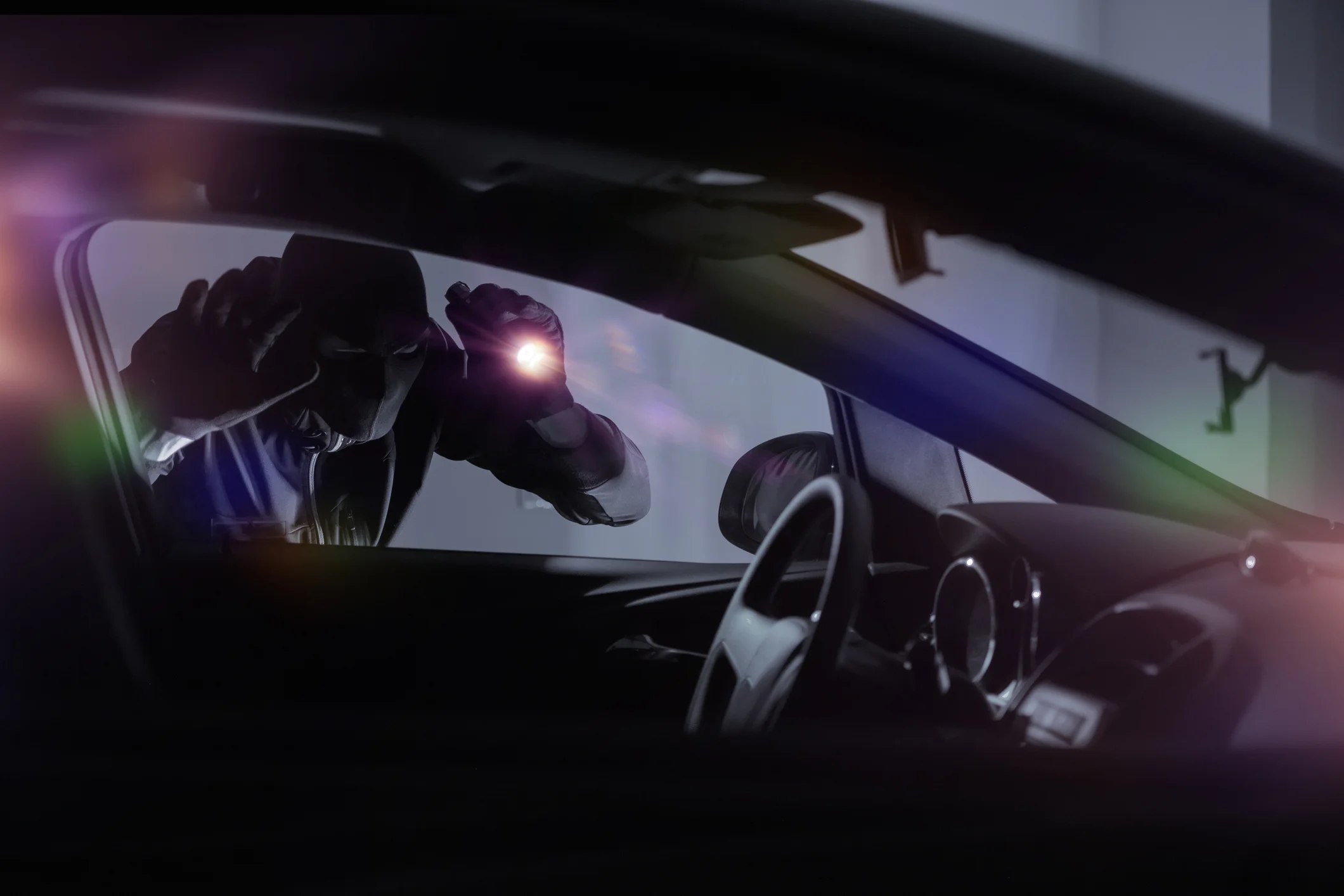
PA Supreme Court: Police May Not Search Car Parked in Driveway Without Warrant
The Pennsylvania Supreme Court has just decided the case of Commonwealth v. Loughnane, holding that the automobile exception to the warrant requirement does not apply to a car parked in a residential driveway.
Can The Police Search My Car Without A Warrant If It's In My Driveway?

Criminal Defense Attorney Demetra Mehta, Esq.
The Pennsylvania Supreme Court has just decided the case of Commonwealth v. Loughnane, holding that the automobile exception to the warrant requirement does not apply to a car parked in a residential driveway. This decision provides a commonsense limitation on the ability of the police to search private property in Pennsylvania and follows a recent trend of the Pennsylvania Supreme Court seeking to increase privacy protections for the Commonwealth's citizens.
Commonwealth v. Loughnane
In Loughnane, the defendant was charged with accidents involving death or serious injury. On July 24, 2012, a large dark-colored truck struck and killed the victim while she was outside of her apartment that she shared with her boyfriend in Wilkes-Barre, Pennsylvania. Her boyfriend witnessed the accident. When the boyfriend reported the accident to the police, he told them that the truck which hit the decedent was a large, dark-colored truck that had a distinctive sound.
A few weeks later, the boyfriend's father drove through a residential neighborhood and saw a truck that matched the description provided by his son parked in a residential driveway. He called his son, and his son came to this residence and identified the truck as the one he saw on July 24. The boyfriend then called the police. Later that day, police detectives went to the house, ran the truck's license plate, and determined that the truck belonged to the defendant. Detectives then unsuccessfully attempted to contact the defendant.
After failing to reach the defendant, police sought guidance from the local prosecutors. Apparently, at some point during the investigation, the lead detective learned that the keys to the truck were inside the automobile. Believing that it was about to rain and potential forensic evidence could be lost, the police decided to take action without obtaining a search warrant. They towed the truck to the Wilkes-Barre police garage. Four days later, they obtained a search warrant for the vehicle. The search did not result in the discovery of any evidence. However, they brought the boyfriend back to the police station to make a second identification of the truck. They also turned the truck on and revved the engine, and the boyfriend confirmed that the engine sounded the same as the engine on the truck that hit the decedent.
The defendant was arrested and charged with Accidents involving death or serious bodily injury (hit and run). The defense filed pre-trial Motions to Suppress. At the Motion to Suppress hearing, the defendant's defense lawyer successfully moved to suppress the boyfriend's police station identification of the vehicle. The suppression court granted the motion because the truck was taken from the defendant's private property and there were no exigent circumstances that justified the warrantless taking of the truck. The Commonwealth then filed an interlocutory appeal. The Superior Court reversed the decision of the trial court and ordered that the Commonwealth be allowed to use the results of the warrantless seizure. In its opinion, the Superior Court inexplicably ruled that a private driveway does not provide any reasonable expectation of privacy becasue it is not part of the curtilage of a home. This ruling was contradicted by dozens of cases in Pennsylvania, the federal courts, and other states. Therefore, the defendant then asked the Pennsylvania Supreme Court to review the Superior Court's decision, and the Supreme Court agreed.
Limits to the Automobile Exception
On appeal, the defendant asked the Pennsylvania Supreme Court to decide whether the automobile exception applies to automobiles parked in driveways of private residences. The defendant argued that the automobile exception does not apply to vehicles in private residential driveways. As a preliminary matter, the Pennsylvania Supreme Court corrected the Superior Court and held that a driveway is constitutionally protected curtilage. This was crucial because in order to have a valid constitutional claim, one must have a reasonable expectation of privacy in the person, place, or thing that the government searched or seized.
The Pennsylvania Supreme Court then addressed whether the automobile exception applies to cars parked in a residential driveway. In making its determination, the Pennsylvania Supreme Court analyzed federal and other state cases that addressed the automobile exception.
In its analysis, the Pennsylvania Supreme Court highlighted the fact that in cases that upheld the automobile exception, a deciding factor was that the automobile was in a public space. This is consistent with the United States Supreme Court’s justification for the automobile exception (the inherent mobility of motor vehicles and that an individual has a reduced expectation of privacy in a vehicle as compared to an individual’s home or office).
However, the Pennsylvania Supreme Court did not end its analysis there. It also reviewed federal circuit court and other states’ decisions that found the automobile exception inapplicable. In those cases, the courts consistently held that the automobile exception did not apply when the car was parked in a residential driveway. The Pennsylvania Supreme Court went on to say that “[because] none of the justifications for the automobile exception apply to vehicles parked in a residential driveway, there is no reason for the exception to apply.” Thus, the Pennsylvania Supreme Court adopted the rationale of these courts and held that the automobile exception does not apply to automobiles that are parked in residential driveways. If the Commonwealth searches or seizes an individual’s car without a warrant, the limited automobile exception applies and there must be both probable cause and exigent circumstances.
Motions to Suppress

Philadelphia Criminal Defense Attorney
Trials can be won and lost with a motion to suppress. If you are facing criminal charges, you need a defense attorney who has the knowledge and expertise to defend your case. Our award-winning Philadelphia criminal defense lawyers have successfully fought countless cases at trial and on appeal. We offer a 15-minute criminal defense strategy session to any potential client. Call 267-225-2545 to discuss your case with an experienced and understanding criminal defense attorney today.

Foregone Conclusion Doctrine Allows Government to Make Criminal Defendant Disclose Computer Password
Can The Police Make You Turn Over Your Computer Password?
Note: this article refers to a Superior Court case which has been overruled by the Pennsylvania Supreme Court. Click here to learn more
The Pennsylvania Superior Court has just decided the case of Commonwealth v. Davis, holding that the trial court properly ordered the defendant in a child pornography possession case to provide police with his computer password. Although the Third Circuit previously allowed prosecutors to obtain a similar order in a federal prosecution, Pennsylvania courts had not yet addressed the issue. Under this decision, prosecutors may now compel a defendant to produce the password to a computer or cell phone if the prosecution can satisfy the “foregone conclusion doctrine.”
In Davis, the defendant was charged with possession of child pornography and related offenses. Officers testified that they were able to download child pornography from the defendant using the eMule peer-to-peer file sharing network. As the officers were downloading the materials, they were able to determine the IP address of the computer that was uploading it. The officers then traced the IP address to the defendant’s internet account and house. They obtained a search warrant and executed the warrant at the defendant’s home. During the search, they seized a desktop computer which was protected by a special encryption software. The officers were unable to access the computer due to the encryption, and the defendant refused to provide them with the password.
The defendant did, however, make a number of inculpatory statements. He confirmed that he lived alone and that the computer was his. He told police he had prior arrests for child pornography, and he told them that he did not understand why it was illegal. He also stated that he liked 10, 11, 12, and 13 year olds, and he told police that the password was sixty-four characters and that he would not turn it over because “We both know what’s on there. It’s only going to hurt me.” The defendant then told the agents that he could not remember the password and that although the drive was encrypted, the agents already knew what was on the hard drive.
After the defendant was charged with two counts of distribution of child pornography and the criminal use of a communication facility, the Commonwealth filed a motion to compel the defendant to produce the password to the computer. The trial court granted the motion, and the defendant filed an interlocutory appeal to the Superior Court. Although a defendant may not ordinarily appeal a ruling on a pre-trial motion, the Superior Court permitted the defendant to appeal in this case under a limited exception to that general rule.
The Foregone Conclusion Doctrine
The Superior Court reached the merits of the appeal and concluded that the trial court properly ordered the defendant to produce the password under the foregone conclusion doctrine. The foregone conclusion doctrine is a limited exception to the general Fifth Amendment protection against self-incrimination. Ordinarily, a court may not compel a defendant to testify or say something that could incriminate him or her. For the Fifth Amendment to apply, however, the communication must be testimonial, incriminating, and compelled. Under the foregone conclusion doctrine, however, the courts have ruled that requiring a defendant to produce a password under certain circumstances is not testimonial because the government already knows that the defendant has the password. Thus, if the prosecution can show that the following three factors are present, a defendant may be compelled to produce a passcode to a phone or computer. The factors are:
The Government has knowledge of the existence of the evidence demanded,
The defendant possessed or controlled the evidence, and
The evidence is authentic.
The Government also must be able to describe with reasonable particularity the documents or evidence it seeks to compel.
Here, the Superior Court found that the foregone conclusion doctrine applied because it would not be testimonial for the defendant to give up the password. The Court found the police testimony showed that based on the investigation and the statements of the defendant, the Commonwealth knew the passcode existed, that it was within the control of the defendant, and that it was authentic. Further, based on the defendant’s incriminating statements, it was very likely that the computer would contain illegal child pornography. Therefore, the Court ruled that the trial court properly ordered the defendant to produce the password.
Fifth Amendment Implications of the Foregone Conclusion Doctrine
Clearly, the foregone conclusion doctrine drastically reduces the protections provided by the Fifth Amendment. By making a relatively limited showing that the defendant probably knows the password and the computer probably has illegal contraband on it, the Commonwealth may now essentially force a defendant to confess in that the act of providing the password further establishes that the defendant owns the computer and its contents.
This case also shows the importance of exercising your Fifth Amendment rights immediately when the police first show up and start asking questions. If the defendant had not admitted ownership of the computer, told police that he knew the password, and implied that police were correct in their assumption that the computer contained child pornography, the government may not have been able to satisfy the requirements of the foregone conclusion doctrine. It is absolutely critical that any suspect in a crime speak with an experienced criminal defense attorney before talking to the police as it is often very difficult for prosecutors to prove these types of cases without a confession.
Award-Winning Philadelphia Criminal Defense Lawyers

Philadelphia Criminal Defense Lawyers
If you are facing criminal charges, we can help. Our Philadelphia criminal defense lawyers have successfully defended thousands of clients at the trial level on appeal. We offer a complimentary 15-minute criminal defense strategy session to anyone who is under investigation or facing criminal charges. Call 267-225-2545 to speak with an experienced and understanding defense attorney today.

PA Courts Adopt Public Servant Exception to Warrant Requirement
The Public Servant Exception to the Warrant Requirement

Zak T. Goldstein, Esq. - Criminal Defense Attorney
The Pennsylvania Supreme Court has just decided the case of Commonwealth v. Livingstone, holding that although Pennsylvania has a community caretaker and public safety exception to the warrant requirement, police officers must be able to provide specific and articulable facts for why a person may be in need of assistance prior to conducting an investigative detention. In other words, police officers may stop a person if they believe the person is in distress or that there is an emergency situation, but the police must be able to provide specific reasons for why they believe an emergency situation exists, they may not conduct a stop as a pretext to investigate criminal activity, and the stop may only as intrusive as the circumstances require.
Commonwealth v. Livingstone
In Livingstone, a Pennsylvania State Trooper in Erie County saw the defendant’s vehicle pulled over on the shoulder of the highway. The engine was running, but the hazard lights were not activated. The Trooper activated his emergency lights, and with his passenger side window down, pulled alongside the stopped vehicle. The Trooper then began to ask the defendant some questions, and he eventually reached the conclusion that she was under the influence of a controlled substance. Accordingly, he arrested the defendant and charged her with DUI.
Motion to Suppress
The defendant subsequently filed a pre-trial motion to suppress the results of the blood test, arguing that she was stopped without reasonable suspicion or probable cause when the Trooper pulled up next to her and activated his emergency lights. The trial court denied the motion and found that after the Trooper saw the vehicle on the side of the interstate, the Trooper had a duty to determine if the defendant was in need of help. The trial court also found that the Trooper engaged only in a “mere encounter,” meaning he did not need reasonable suspicion or probable cause. With the motion to suppress denied, the court found the defendant guilty of DUI and sentenced her to a period of house arrest.
The defendant appealed. After the Superior Court affirmed the trial court’s denial of the motion to suppress, the Pennsylvania Supreme Court granted review. On appeal, the Supreme Court recognized that the case presented two distinct issues: first, was the defendant seized when the Trooper pulled up next to her with his emergency lights on, and second, if the defendant was seized, was the Trooper justified in stopping her.
The Court found that the first issue was relatively simple; the defendant was seized when a marked State Police vehicle pulled up next to her, rolled the window down, and activated its overhead lights. The Court emphasized both that official driver’s license materials provided by PennDOT instruct motorists that they should not leave when a police officer activates his or her emergency lights and that Pennsylvania law makes it a felony to flee from a police officer after the officer signals for the motorist to stop. Because no reasonable person would feel free to leave when a State Police Trooper activates his or her emergency lights, the defendant was seized when the Trooper pulled up next to her and activated the lights.
Second, the Court found that the Trooper did not have the legal authority to make the stop because the Trooper lacked sufficient information to determine that the defendant was in need of assistance. Once a court determines that police have seized someone for purposes of the Fourth Amendment, the prosecution generally must show that the police had either reasonable suspicion or probable cause depending on how extensive the stop was. In order to support a Terry stop (“an investigate detention”), the police must have reasonable suspicion. In order to arrest someone, the police must have probable cause to make an arrest.
Here, the Trooper did not have reasonable suspicion or probable cause at the time of the stop because he had no indication that criminal activity was afoot or that a crime had occurred solely from the fact that the defendant had pulled over. However, the Court recognized a “community caretaking doctrine” or public safety exception. The community caretaking doctrine applies in three circumstances. First, there is an emergency aid exception. Second, there is an automobile impoundment/inventory exception, and third, there is a public safety exception. For any of these exceptions to apply, the officer must be acting out of a motivation to render aid or assistance rather than an attempt to investigate criminal activity.
The Public Safety Exception (Public Servant Exception)
Prior to this case, the Pennsylvania Supreme Court had never specifically addressed the public safety exception. The Court recognized that the police do not exist solely to investigate and prevent criminal activity. Instead, they are also charged with ensuring the safety and welfare of the Commonwealth’s citizens. At the same time, the Fourth Amendment requires that police officers not conduct warrantless searches without reasonable suspicion or probable cause. Therefore, the Court sought to employ a test for when police can conduct a seizure of this nature that would both allow the police to help members of the public and protect the privacy rights guaranteed by the Fourth Amendment.
Can The Police Conduct A Stop If They Think Someone Needs Help?
The Court held that in order for the public servant exception (public safety exception) to apply, the Commonwealth must be able to satisfy three requirements. First, police officers must be able to point to specific, objective, and articulable facts that would suggest to an experienced officer that a citizen is in need of assistance. Further, the Court found that the Trooper in this case could not do so because there were too many reasons why the defendant could have pulled over on the side of the road. The Court noted that the defendant could have needed to look at a map, answer or make a telephone call, send a text message, change an address in a navigation system, clean up a spill, or retrieve something from her purse or the glove compartment. Pulling over to the side of the road to do these types of things should be encouraged.
Second, in order for the exception to apply, the police caretaking action must be independent from the detection, investigation, and acquisition of criminal evidence. This does not mean that an officer must completely ignore the nature of his or her role in law enforcement, but it does mean that the courts must meticulously consider the facts and carefully apply the exception in a manner that mitigates the risk of abuse and ensures that police do not use the exception as a pretext for obtaining evidence without a warrant.
Third, the level of the intrusion must be commensurate with the perceived need for assistance. This requires the suppression court to evaluate the circumstances surrounding the seizure, including but not necessarily limited to, the degree of authority or force displayed, the lengthy of the seizure, and the availability of alternative means of assistance.
Here, the Court found that the Trooper did not have any reason to believe that the defendant needed assistance. He had not received a report that a motorist needed help, he did not observe anything that indicated there was a problem with her vehicle, the weather was fine, and the defendant did not have her hazard lights on. Accordingly, the Court reversed the decision of the trial court and ordered that the blood test and other evidence seized as a result of the illegal stop be suppressed.
CHARGED WITH A CRIME? SPEAK WITH A PHILADELPHIA CRIMINAL DEFENSE LAWYER TODAY

Goldstein Mehta LLC Philadelphia Criminal Defense Lawyers
If you are facing criminal charges or are interested in appealing a conviction, we can help. Our award-winning Philadelphia criminal defense lawyers have successfully resolved countless cases at trial and on appeal. We offer a 15-minute criminal defense strategy session to any potential client. Call 267-225-2545 to discuss your case with an experienced and understanding criminal defense attorney today.