

Philadelphia Criminal Defense Blog

PA Superior Court: Police Need Search Warrant to Collect Real Time Cell Site Location Data

Criminal Defense Lawyer Zak Goldstein
The Pennsylvania Superior Court has decided the case of Commonwealth v. Pacheco, holding that the police are required to obtain a search warrant if they wish to collect an individual’s real-time cell site location information (hereinafter “CSLI”). This is a very significant decision because police are increasingly relying on suspects’ digital footprints when they are building and prosecuting cases in all types of crimes.
Note: The Superior Court subsequently granted re-argument in this case. This means that the decision will be reviewed by additional judges and should not be relied upon until the re-argument process is complete. It could be affirmed, reversed, or modified in some other way.
Commonwealth v. Pacheco
In April 2015, the Montgomery County, PA District Attorney’s office and its Narcotics Enforcement Team uncovered a large alleged criminal conspiracy. The DA’s office learned that a Mexican drug trafficking organization was smuggling heroin into the United States and the defendant, a Norristown resident, was picking up the heroin in Atlanta, Georgia and then transporting it to wholesale buyers in New York City.
On July 23, 2015, Montgomery County prosecutors applied for and obtained orders for a wiretap pursuant to Pennsylvania’s Wiretapping and Electronic Surveillance Control Act (hereinafter “The Wiretap Act”) for the defendant’s cell phone. One month later, on August 28, 2015, Montgomery County prosecutors sought and obtained additional orders under the Wiretap Act to obtain information relating to the defendant’s cell phone number and the numbers for other cell phones believed to be used by him. Pursuant to these orders, prosecutors obtained call detail records for the past thirty days. Additionally, the orders allowed prosecutors to obtain mobile communication tracking information, install and use pen registers, trap and trace devices, and telecommunications identification interception devices for sixty days. On October 15, 2015, the court issued an order extending the surveillance of the defendant’s phone for an additional sixty days.
On December 11, 2015 and January 6, 2016, the Montgomery County DA’s office sought and obtained orders from the Pennsylvania Superior Court to allow them to intercept oral, electronic, and wire communications for the cell phone registered to the defendant, as well as three others believed to be used by him. The detectives also obtained real-time cell site location information (“CSLI”), but did not get a search warrant for this information. Based on the results of these orders, prosecutors and detectives analyzed the information and identified multiple occasions between September 2015 and January 2016 when the defendant traveled to Atlanta and New York as a member of the drug trafficking organization.
On each trip, the defendant obtained a car battery containing three kilograms of heroin in Atlanta, returned briefly to Norristown, and then transported the heroin to New York. The defendant would use his cell phone to facilitate these transactions. Based on their investigation, the detectives also learned that on January 10, 2015, the defendant planned to drive from Georgia back through Norristown with a retrofitted car battery containing three kilograms of heroin. Police assembled a surveillance team along the defendant’s anticipated route and apprehended him in Montgomery County. A search of his vehicle revealed three kilograms of heroin hidden in the car’s battery.
The defendant was subsequently arrested and charged with nine counts of Possession with the Intent to Deliver (“PWID”)., two counts of dealing in unlawful proceeds, and one count of conspiracy to commit PWID and corrupt organizations. The defendant then moved to suppress the call detail records and the evidence that was collected through the telecommunications interception devices. Following a suppression hearing and supplemental briefing, the trial court denied his suppression.
The case then proceeded to a jury trial that began on August 7, 2017. The defendant stipulated that he transported three kilograms of heroin on seven of the nine trips detected by law enforcement. He also admitted that he “did the things that police say [he] did.” However, the defendant raised the defense of duress by claiming that he was coerced by Mexican drug cartels to act as a drug courier and if he did not comply, the cartels threatened that they would kill his family members. At the conclusion of the trial, the jury convicted the defendant of all charges except corrupt organizations. On November 29, 2017, the trial court sentenced him to forty to eighty years, followed by ten years of probation. The defendant then filed post-sentence motions which were denied. He then filed a timely appeal to the Pennsylvania Superior Court.
What is CSLI?
In Carpenter v. United States, the United States Supreme Court explained CSLI as follows:
There are 396 million cell phone service accounts in the United States…Cell phones perform their wide and growing variety of functions by connecting to a set of radio antennas called “cell sites.” Although cell sites are usually mounted on a tower, they can also be found on light posts, flagpoles, church steeples, or the sides of buildings. Cell sites typically have several directional antennas that divide the covered area into sectors.
Cell phones continuously scan their environment looking for the best signal, which generally comes from the closet cell site. Most modern devise, such as smartphones, tap into the wireless network several times a minute whenever their signal is on, even if the owner is not using one of the phone’s features. Each time the phone connects to a cell site, it generates a time-stamped record known as cell-site location information (CSLI). The precision of this information depends on the size of the geographic area covered by the cell site. The greater the concentration of cell sites, the smaller the coverage area. As data usage from cell phones has increased, wireless carries have install more cell sites to handle the traffic….[a]accordingly, modern cell phones generate increasingly vast amounts of increasingly precise CSLI.
Do the Police Need a Search Warrant to Collect CSLI?
Yes. In Carpenter, the United States Supreme Court held that an individual maintains a legitimate expectation of privacy in the historical record of his physical movements as captured through CSLI. The Supreme Court stated that CSLI date contains the “privacies of life” because most people carry their cell phones everywhere they go. It was no consequence that this information is voluntarily provided to cell phone companies. However, Carpenter did not address the issue of “real time CSLI” which was the issue in the defendant’s case.
The Superior Court’s Decision
The Pennsylvania Superior Court granted the defendant’s appeal. The Superior Court found that the detectives needed to obtain a search warrant before they collected the defendant’s real-time CSLI information. Although this was an issue of first impression in the Commonwealth, the Superior Court recognized that many other courts that have addressed this issue have determined that real-time CSLI is subject to the same privacy concerns as historical CSLI. Specifically, the court found that cell phone users have an expectation of privacy in their cell phone location in real time and that society is prepared to recognize that expectation as reasonable. Further, the Superior Court held that the Commonwealth did not comply with the Fourth Amendment when it obtained orders under the Wiretap Act because obtaining an order under the Wiretap Act does not require probable cause. Instead, these Wiretap Act orders are granted so long as the information likely to be obtained is “relevant to an ongoing criminal investigation being conducted by that agency.” Therefore, the Superior Court held that the real-time CSLI evidence seized from the cell phone was the product of a constitutionally defective warrantless search. Thus, the defendant’s sentence was vacated for further proceedings, which could include a new trial.
Facing criminal charges? We can help.

If you are facing criminal charges or under investigation by the police, we can help. We have successfully defended thousands of clients against criminal charges in courts throughout Pennsylvania and New Jersey. We have successfully obtained full acquittals and dismissals in cases involving charges such as Conspiracy, Aggravated Assault, Rape, Possession with the Intent to Deliver, and First Degree Murder. Our award-winning Philadelphia criminal defense lawyers offer a free criminal defense strategy session to any potential client. Call 267-225-2545 to speak with an experienced and understanding defense attorney today.

Not Guilty: Attorney Goldstein Wins Murder Trial
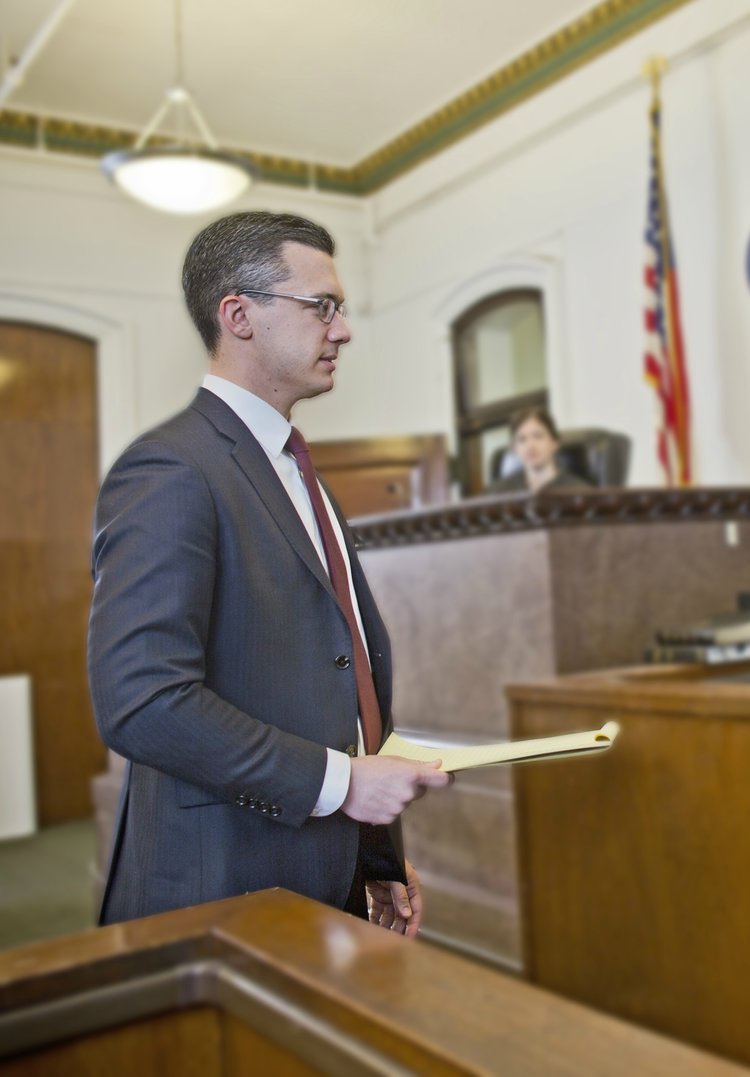
Philadelphia Criminal Defense Lawyer Zak Goldstein
Criminal defense lawyer Zak T. Goldstein, Esquire recently obtained a full acquittal from a Philadelphia jury in the case of Commonwealth v. K.E. for a client charged with Murder and Possession of an Instrument of Crime (“PIC”).
According to the police, K.E. and the decedent worked together at the airport. They became involved in a verbal argument after K.E. was part of a group of co-workers which broke up a physical fight between the decedent and another co-worker in the break room. Prosecutors claimed that the decedent pushed K.E., and K.E. then stabbed him one time in the leg, severing the femoral artery and quickly causing the decedent to bleed to death. The Commonwealth argued that K.E. did not act in self-defense and that he showed consciousness of guilt by allegedly fleeing the scene, hiding the knife, and telling the police that he had stabbed the decedent with keys after being punched. Police arrested K.E. a few minutes from the scene of the incident when K.E. walked over to a patrol officer and told the officer that he was the person they were looking for and that he had been punched and responded by stabbing the decedent with his keys. At that time, K.E. did not know that the decedent had died, and he later gave a statement to detectives in which he claimed self-defense but maintained that he had committed the stabbing with his keys. Three days later, however, an airport employee found a bloody knife near where the stabbing occurred, and police quickly concluded that that knife must have been used in the stabbing. Accordingly, they charged the defendant with Murder and PIC.
Fortunately, K.E. retained Philadelphia criminal defense attorney Zak Goldstein. At the time, the defendant had initially been held on $250,000 bail. However, Attorney Goldstein was quickly able to file a motion for release on house arrest pursuant to Pennsylvania’s Speedy Trial Rule (Rule 600B) and have the defendant released pending trial. This made it much easier to prepare for court and investigate the case.
K.E. decided to proceed by way of jury trial, meaning that a jury panel of twelve Philadelphians would be tasked with deciding whether K.E. committed the stabbing with malice or whether he had acted in self-defense. Because prosecutors charged K.E. with third-degree Murder, they would not have had to show that K.E. had intentionally killed the decedent in order to obtain a conviction. Instead, they needed to show only that K.E. had acted with malice – meaning he had acted recklessly and in conscious disregard of a substantial risk of death or serious bodily injury with an extreme indifference to the value of human life.
Through effective cross-examination of the Commonwealth’s witnesses, Attorney Goldstein was able to show that the defendant had not in any way meant to kill the decedent and had instead acted in self-defense. The evidence ultimately showed that although K.E. had a reputation for being a peaceful, non-violent person who had never been involved in any kind of violence before, the decedent had attempted to fight a supervisor shortly before the incident, had attacked a different co-worker just minutes before the incident, and had then attacked the defendant from behind by knocking him to the ground prior to the defendant stabbing him one time in the leg with a small knife in self-defense.
Attorney Goldstein also presented the testimony of the defendant. He testified that he had been part of breaking up the fight between the decedent and the other co-worker and that he had then been attacked from behind by surprise as he turned to walk away. After he was knocked to the ground, he felt that the decedent was going to continue assaulting him, and he quickly defended himself by stabbing him one time in the leg with a knife. He admitted to and apologized for not being totally honest with the police about the keys, but he adamantly refuted the Commonwealth’s allegations that he had acted out of malice, been the aggressor in the fight, and that he did not need to defend himself with deadly force. Ultimately, many of the witnesses agreed that the decedent had actually been the aggressor, and it was also an extremely unexpected result that the decedent would unfortunately die from one stab wound to the leg with a two inch knife. Attorney Goldstein was also able to get the Medical Examiner who conducted the autopsy to agree that based on the nature of the injury, the decedent could have been moving at the time that he was stabbed, suggesting that he may have been moving towards K.E. to continue assaulting him. Thus, Attorney Goldstein argued both that K.E. had acted in self-defense and that he had not acted with malice because one would not expect a person to die from a relatively small knife wound to the leg.
After deliberating for nearly eight hours, the Philadelphia jury of twelve citizens returned a verdict of Not Guilty to both charges. K.E. was acquitted of Murder and Possessing an Instrument of Crime. This verdict is an example of the law of self-defense in Pennsylvania. If a person is in genuine, reasonable fear of death or serious bodily injury, then they may defend themselves with deadly force. Even if that force results in death to another person, the person has not committed a crime because you have the right to defend yourself.
Facing criminal charges? We can help.

Philadelphia Criminal Defense Attorney Zak Goldstein
If you are facing criminal charges or under investigation by the police, we can help. We have successfully defended thousands of clients against criminal charges in courts throughout Pennsylvania and New Jersey. We have successfully obtained full acquittals in cases involving charges such as Conspiracy, Aggravated Assault, Rape, and Murder. Our award-winning Philadelphia criminal defense lawyers offer a free criminal defense strategy session to any potential client. Call 267-225-2545 to speak with an experienced and understanding defense attorney today.

PA Supreme Court: 4th Amendment Does Not Bar Computer Repair Technicians From Showing Police Your Illegal Files

Criminal Defense Lawyer Zak Goldstein
The Pennsylvania Supreme Court has decided the case of Commonwealth v. Shaffer. The Court held that the Fourth Amendment does not prevent computer repair technicians who find child pornography on a computer brought in for repair from showing that illegal material to the police. The Constitution also does not prohibit the police from looking at what the repair technicians found without a search warrant so long as the police do not attempt to view additional files and portions of the hard drive until they have obtained a search warrant. The Supreme Court reaffirmed its prior holdings that the Fourth Amendment only provides protection against governmental action. However, the Court did hold that individuals maintain privacy interests in their computer files even when they are turned over to a private commercial establishment.
Commonwealth v. Shaffer
The defendant brought his laptop computer to a computer repair shop called CompuGig. In order to obtain repair services, the defendant was required to complete CompuGig’s intake form which asked what problems the customer was experiencing. This form listed several options. The defendant marked the boxes indicating “Spyware/virus” and “Can’t get to Internet.” He also provided his login password and told the employee that his son downloaded some things and now there were a lot of pop-ups and that the internet had stopped working.
After conducting a diagnostic testing, one of CompuGig’s technicians believed that the defendant’s computer had a failing hard drive. The technician called the defendant and asked if he would consent to replacing the hard drive. The defendant consented. The technician also took an image of the hard drive so that he could transfer it to the defendant’s new hard drive. However, the technician was having difficulty transferring the files on the defendant’s old hard drive to his new one. The technician began to manually open the files on the hard drive and copy them. While doing this, the technician uncovered what he believed to be sexually explicit photos of children. It is important to note that the technician was not searching for this material and had never been asked by law enforcement to look for evidence of child pornography. After discovering this contraband, the technician notified his boss, and the store called the police.
Later that afternoon, Officer Maloney of the Cranberry Township Police Department arrived at CompuGig. The store owners advised Officer Maloney that the technicians found explicit images of young girls on the defendant’s laptop and took the officer to the room where the technician had been working on the computer. Officer Maloney then asked to see the images that the technician had found. The technician, using the “exact route taken to find the images” which he had used earlier, showed Officer Maloney the pictures. After viewing these images, Officer Maloney directed the technician to “shut down the file,” and he seized the laptop, external hard drive copy, and power cord.
Detective Irvin of the Cranberry Township Police Department went to the defendant’s home and questioned him. The defendant admitted to having some images on his computer depicting children as young as eight years old in sexually explicit positions. He also identified the folders where these images were stored. Detective Irvin met with the defendant again and obtained a written inculpatory statement regarding the pictures on his computer.
Prosecutors charged the defendant with possession of child pornography and criminal use of a communication facility. The defendant then filed a pretrial omnibus motion to suppress the contraband images discovered on the hard drive of his laptop computer.
Can Police Search Your Computer Without A Warrant If The Store Found the Illegal Images First?
In his Motion to Suppress, the defendant argued that the police illegally searched his computer when Officer Maloney directed the technician to open the defendant’s computer files and display the suspected contraband images and then subsequently seized the laptop and the copy of the external hard drive. Further, he argued that the police conduct constituted a warrantless search of his laptop in violation of his reasonable expectation of privacy, as well as a trespass upon his property in violation of both the Pennsylvania and United States Constitutions. He also argued that his statements that he made to the detective were the fruit of the poisonous tree and should also be suppressed.
In response, the Commonwealth argued that the defendant abandoned his expectation of privacy in the computer files stored on the laptop. Notably, the Commonwealth did not argue the private search doctrine. Instead, the Commonwealth focused primarily on the Pennsylvania Superior Court’s decision in Commonwealth v. Sodomsky. The facts of Sodomsky were very similar to those in the defendant’s case. In Sodomsky, the Superior Court held that the defendant in that case had no reasonable expectation of privacy in his illegal computer files. The Sodomsky Court held that individuals do maintain a privacy interest in some things that are accessible to the public and thus can be constitutionally protected. Therefore, it is a very fact specific inquiry to determine whether a defendant abandoned his privacy interest. In Sodomsky, the Superior Court held that the defendant abandoned his interest because the computer employees informed him that the operability of his computer would be tested and that he did not inquire as to the manner of testing or restrict the employee’s access to the location of the illicit files. They also emphasized that the defendant did not delete the photos from his computer even though he turned it over to the police.
The trial court denied the defendant’s motion to suppress. The trial court held that the defendant abandoned his expectation of privacy when he requested repairs on his computer related to complaints of a virus and an inability to use the Internet and consented to the replacement of his hard drive. The trial court also rejected the defendant’s trespass argument because the technician was engaged in conduct permitted by the defendant when the files were discovered and thus there was no trespass on the defendant’s effects. The defendant then proceeded by way of a bench trial where he was found guilty. He was sentenced to six to twelve months of incarceration, followed by 156 months of probation. The defendant then filed a timely appeal.
The Superior Court’s Decision
The Superior Court affirmed the trial court’s decision. The Superior Court focused primarily on the Sodomsky decision. The defendant filed an appeal to the Pennsylvania Supreme Court and the Court granted his petition for allowance of appeal to determine whether the defendant abandoned his expectation of privacy in in the computer.
What is the Private Search Doctrine?
The Fourth Amendment applies only to the government. Thus, a criminal defendant cannot successfully argue that a private citizen, while acting in a purely private capacity, violated his or her constitutional rights when that person conducted a search and seizure of a defendant’s property. The United States Supreme Court has held that the Fourth Amendment is only implicated “if the authorities use information with respect to which the expectation of privacy has not already been frustrated.” In other words, if a private party searches a defendant’s property, and the government does not exceed the private party’s search, then a defendant cannot claim that their Fourth Amendment rights were violated. Pennsylvania also follows the Private Search Doctrine as discussed in Commonwealth v. Corley.
The Pennsylvania Supreme Court’s Decision
The Pennsylvania Supreme Court affirmed the trial court’s denial of the defendant’s motion to suppress. As a preliminary matter, the Pennsylvania Supreme Court held that defendants maintain privacy interests in their computer files even when turned over to a private company. However, the Pennsylvania Supreme Court held that even though the defendant maintained a privacy interest in the files, because a non-governmental actor discovered them, the Fourth Amendment could not provide relief to him.
The Commonwealth had not not argued the Private Search Doctrine at the motion to suppress, but the Pennsylvania Supreme Court held that it could still apply the doctrine to the defendant’s case. In the defendant’s case, the Court found it of no consequence that Officer Maloney asked the technician to show him the illicit files because the technician had already discovered them. Therefore, the defendant’s privacy interest in them had already been compromised. As such, he was not entitled to relief, and consequently the defendant will not get a new trial.
Facing criminal charges? We can help.

Philadelphia Criminal Defense Attorneys Demetra Mehta and Zak Goldstein
If you are facing criminal charges or under investigation by the police, we can help. We have successfully defended thousands of clients against criminal charges in courts throughout Pennsylvania and New Jersey. We have successfully obtained full acquittals in cases involving charges such as Conspiracy, Aggravated Assault, Rape, and Murder. Our award-winning Philadelphia criminal defense lawyers offer a free criminal defense strategy session to any potential client. Call 267-225-2545 to speak with an experienced and understanding defense attorney today.

Not Guilty – Attorney Goldstein Wins Acquittal in Possession with the Intent to Deliver Case

Philadelphia Criminal Defense Attorney Zak Goldstein
Philadelphia criminal defense lawyer Zak T. Goldstein, Esquire recently won a full acquittal in the case of Commonwealth v. D.V. following a bench trial in the Philadelphia Court of Common Pleas. The case involved charges of Possession with the Intent to Deliver and Knowing and Intentional Possession of a controlled substance.
In D.V., police officers alleged that they set up a narcotics surveillance in the Kensington area. Two veteran narcotics officers parked their car at an area known for a high level of drug sales and began watching the corner. Shortly thereafter, they claimed to have seen the defendant standing at the intersection right near their car. The defendant then allegedly engaged in three hand to hand transactions with alleged buyers in which the officers claimed that they saw the defendant accept money from the individuals, cross the street to what appeared to be a stash location, retrieve small objects consistent with drug packaging, and then provide those objects to the alleged buyers.
All three alleged buyers left the area shortly after the hand-to-hands and were promptly stopped by backup officers and found to be in possession of various controlled substances like heroin, crack, and marijuana. After arresting the buyers, the officers attempted to arrest D.V.. They claimed, however, that as they pulled up, D.V. took off running. They chased him and caught him after he fell. When they arrested him, he apparently had matching drugs and a large amount of money on him. They also recovered additional drugs from the stash location.

D.V. retained Attorney Goldstein for trial and elected to have the judge decide the case instead of a jury. Although the officer’s testimony, if believed, certainly would have been enough evidence to convict D.V. due to the number of alleged transactions and the presence of matching drugs on the buyers and seller, Attorney Goldstein was able to destroy the officer’s credibility on cross-examination.
First, Attorney Goldstein highlighted that the claimed locations of the arrests of the buyers made absolutely no sense because they were all allegedly arrested within eyesight of the corner where the defendant was supposedly selling drugs. Thus, if the defendant had really been out there selling drugs, he would have seen the buyers get arrested and been able to leave before engaging in more sales.
Second, Attorney Goldstein highlighted discrepancies between the officer’s testimony at the preliminary hearing and at trial. At the preliminary hearing, the officer testified that he had not been able to see the defendant actually reach into the stash location because it was behind a building, but he knew that it was used as a stash from prior arrests. At trial, he claimed that he could actually see into the location and see the defendant pick up objects.
Third, Attorney Goldstein highlighted the fact that D.V. sustained severe injuries to his face and teeth when arrested. Although the police claimed that these injuries occurred as the result of a fall, it was clear from photos taken shortly taken after the incident that it was unlikely that D.V. was injured from falling. Further, the officers’ explanations for the injuries were inconsistent and contradictory on cross examination.
Finally, Attorney Goldstein introduced evidence that one of the backup officers involved in the case had recently been arrested by the Pennsylvania State Police and that other officers had previously been suspended for police brutality allegations.
After the judge viewed the injury photos, heard the cross-examination, and saw that the police story just did not add up, the judge concluded that she had reasonable doubt and found D.V. not guilty of all charges.
Facing criminal charges? We can help.

Demetra Mehta and Zak Goldstein - Philadelphia Criminal Defense Attorneys
If you are facing criminal charges or under investigation by the police, we can help. We have successfully defended thousands of clients against criminal charges in state and federal courts throughout Pennsylvania and New Jersey. We have successfully obtained full acquittals and dismissals in cases involving charges such as Conspiracy, Aggravated Assault, Rape, and First-Degree Murder. Our award-winning Philadelphia criminal defense lawyers offer a free criminal defense strategy session to any potential client. Call 267-225-2545 to speak with an experienced and understanding defense attorney today.