

Philadelphia Criminal Defense Blog

Attorney Goldstein Obtains Not Guilty Verdict in Indecent Assault Jury Trial

Philadelphia Criminal Defense Lawyer Zak Goldstein
Philadelphia criminal defense lawyer Zak T. Goldstein obtained a full acquittal in a jury trial in the case of Commonwealth v. S.R. In S.R., the defendant was charged with one count of Indecent Assault for allegedly groping his friend while his friend was sleeping. The complainant, who was staying at his friend’s apartment for a few days in between leases, alleged that he awoke in the middle of the night to find S.R. with his hand in his pants. The complainant immediately confronted S.R., and S.R. allegedly admitted to having done the same thing two nights prior. S.R. promptly called the police and told the police what had happened. Police arrested S.R. and charged him with Indecent Assault as a misdemeanor of the second degree.
S.R. was initially convicted of the charge during a bench trial by a Municipal Court judge when represented by a different lawyer. However, because all defendants charged with a crime punishable by one year or more are entitled to have a jury trial, S.R. was able to appeal to the Philadelphia Court of Common Pleas for a trial de novo. In a trial de novo, the Municipal Court verdict is set aside and the defendant is able to have an entirely new trial with a jury instead of a judge. S.R. exercised his right to a jury trial and was defended at trial by Attorney Goldstein.
Attorney Goldstein obtained a full acquittal following a two-day jury trial. Although the complainant testified similarly to his testimony at the Municipal Court trial, Attorney Goldstein was able to use his cross-examination skills to highlight a number of inconsistencies and problems with the complainant’s testimony and argue that the complainant was not telling the truth. For example, there were significant inconsistencies in the details of the alleged sexual assault between the complainant’s statement to police and his testimony at prior hearings. Further, instead of simply allowing the police to conduct their investigation and prosecutors to proceed with the case against S.R., the complainant continued to contact S.R. hundreds, if not thousands, of times while the charges were pending. Our investigators obtained phone records showing that even after calling the police, the complainant called S.R. hundreds of times in the year after the alleged assault and also sent S.R. hundreds of obscene, homophobic, and threatening text messages and voice mails. Further, Attorney Goldstein was able to introduce evidence that S.R. had good character and an excellent reputation in the community for being a peaceful, law-abiding citizen.
Using these inconsistencies, homophobic texts, and S.R.’s excellent reputation, Attorney Goldstein was able to convince the jury to reject the complainant’s testimony as false. Attorney Goldstein argued that there was simply more going on because the complainant’s reaction and ongoing harassment campaign, which continued for more than a year, was totally disproportionate to what was alleged. Thus, the jury likely concluded that the complainant must initially been interested in a relationship with the defendant but then had a change of heart. The jury quickly acquitted S.R. of all charges, and S.R. will be able to have his record expunged. The verdict is a huge win for S.R. because although Indecent Assault is a misdemeanor charge which may not carry jail time, it is a life-changing offense because it requires 15 years of mandatory Megan’s Law registration. S.R. will not have to register as a sex offender because of this acquittal.
Facing criminal charges? We can help.

Criminal Defense Lawyers - Philadelphia
If you are facing criminal charges or under investigation by the police, we can help. We have successfully defended thousands of clients against criminal charges in courts throughout Pennsylvania and New Jersey. We have obtained full acquittals and dismissals in cases involving charges such as Conspiracy, Aggravated Assault, Forgery, Access Device Fraud, Rape, and Attempted Murder. Our award-winning Philadelphia criminal defense lawyers offer a free criminal defense strategy session to any potential client. Call 267-225-2545 to speak with an experienced and understanding defense attorney today.

PA Superior Court Lowers Bar for Forgery Convictions

Zak T. Goldstein, Esq. - Philadelphia Criminal Defense Attorney
The Pennsylvania Superior Court has decided the case of Commonwealth v. Green, affirming the defendant’s conviction for forgery where the evidence showed that the defendant cashed a check that he knew should not have been made out to him. This decision is problematic for future forgery defendants as it could make it easier for prosecutors to prove that a given defendant had the knowledge necessary to be convicted of forgery.
The Facts of Commonwealth v. Green
In August 2015, St. Moritz Labor Services, a temporary staffing agency, discovered 18 checks drawn on its account that had not been issued in accordance with company procedures. These checks were fraudulent duplicates of lawfully issued checks. The payees were not known to St. Moritz. Further, the amounts on the checks were much higher than St. Moritz standard payroll checks. One of these checks was made payable to the defendant. The defendant never worked for St. Moritz and had no affiliation with that entity. On August 3, 2015, the defendant cashed a St. Moritz check at a local K-Mart.
St. Moritz reported the checks to the police, and the police began an investigation. During the course of their investigation, Officer Green of the Whitehall Police Department contacted the defendant and asked to speak with him regarding a cashed check. According to Officer Green, the defendant stated “[I] only did it once.” After he was given his Miranda rights, the defendant stated that he cashed the check to pay off fines. The defendant stated that he received the check in the mail and he did not know where the check came from or who sent the check. The defendant confirmed that he never worked for St. Moritz and admitted that he did not have any reason to receive a check from that company.
Police arrested the defendant and charged him with forgery, access device fraud, and bad checks. At the preliminary hearing, a magistrate judge dismissed the access device fraud and bad check charges. The defendant proceeded by way of bench trial, and the judge found him guilty and sentenced him to two years’ reporting probation and restitution. The defendant then filed a timely appeal. On appeal, a divided Superior Court panel reversed the judgment of sentence. Thereafter, the Commonwealth sought en banc review, which the Superior Court granted. On appeal, the defendant challenged whether the evidence was sufficient to satisfy the mens rea element of the forgery charge.
What is Forgery?
18 Pa. C.S.A. § 4101 provides for the crime of forgery. A person is guilty of forgery if, with the intent to defraud or injure anyone, the actor either: 1) alters a writing without his authority; 2) makes, completes, executes…issues or transfers a writing so that it purports to be the act of another who did not authorize the act; or 3) utters any writing that he knows to be forged.
As a practical matter, forgery is a difficult crime for the Commonwealth to prove. The Commonwealth typically needs multiple witnesses to prove their case, which often makes it difficult for the Commonwealth to get ready for a preliminary hearing or trial. Because prosecutors may not use hearsay evidence at a trial, they often have significant problems in proving forgery cases. For example, prosecutors generally need to present the testimony of the witness or witnesses who saw a defendant use the allegedly forged instrument, the officer who arrested him or her, the detective or bank investigator who investigated the case, and a custodian of records from the organization that owns the checking account in question. Getting all of these witnesses to appear at the same time can be difficult, and the failure to do so often results in the dismissal of cases.
Additionally, proving the mens rea for forgery is also difficult for the Commonwealth. Forgery is not a strict liability crime. In other words, just because one possesses a forged check does not mean that one is guilty of forgery. As such, trial courts are supposed to heavily scrutinize a defendant’s actions to see if they are guilty of this offense and whether there is any evidence that the defendant actually forged the document or had reason to know that the document was in fact forged. One of the seminal cases on this issue (and one that was analogized in the instant case) was Commonwealth v. Gibson. In Gibson, the Pennsylvania Superior Court held that the defendant in that case did not commit the crime of forgery even though he possessed a forged check. The reason was because, in Gibson, the circumstances did not show that he was trying to commit a fraud or any other type of wrongdoing. After presenting the forged check, the defendant in Gibson presented his identification when asked for it, did not attempt to flee when asked for said identification, and otherwise did not engage in any suspicious behavior when he attempted to cash said check. Because of the lack of suspicious or criminal behavior, the Pennsylvania Superior Court held that the Commonwealth failed to prove that the defendant knew that the check was forged. Without the requisite level of knowledge, a defendant cannot be convicted of forgery.
A Divided Pennsylvania Superior Court Affirms the Defendant’s Conviction
In this case, a divided en banc panel of the Pennsylvania Superior Court affirmed the defendant’s conviction for forgery. In the split decision, the Pennsylvania Superior Court held that, unlike the defendant in Commonwealth v. Gibson, the defendant possessed the requisite mens rea to commit the crime of forgery. Specifically, the majority opinion focused on the defendant’s statement to the police that “he only did it once.” According to the Court, this statement and the defendant’s admission that he had no affiliation with St. Moritz or any reason to receive a check from them established that he had the necessary mens rea to justify a forgery conviction.
Facing criminal charges? We can help.

Philadelphia Criminal Defense Attorneys
If you are facing criminal charges or under investigation by the police, we can help. We have successfully defended thousands of clients against criminal charges in courts throughout Pennsylvania and New Jersey. We have obtained full acquittals and dismissals in cases involving charges such as Conspiracy, Aggravated Assault, Forgery, Access Device Fraud, Rape, and Attempted Murder. Our award-winning Philadelphia criminal defense lawyers offer a free criminal defense strategy session to any potential client. Call 267-225-2545 to speak with an experienced and understanding defense attorney today.

PA Superior Court: Pulling Over to the Side of Road Is Not Suspicious

The Pennsylvania Superior Court has decided the case of Commonwealth v. Hampton, holding that police illegally stopped the defendant by physically blocking in his car after the officer saw the defendant do nothing more than pull over to the side of the road. In Hampton, the Court rejected the idea that an officer can stop someone under the community caretaking exception to the warrant requirement just because they pulled over to the side of the road.
The Facts of Commonwealth v. Hampton
In Hampton, a Montgomery County, PA police officer was on patrol in a marked vehicle at approximately 3:22 am. The officer saw a vehicle drive by her, turn, and then pull over into a field on a property belonging to a church. The driver, who was later identified as the defendant, stopped his car in the grass in front of the church’s office building. The officer pulled behind the car, but she did not activate her lights or sirens. She did, however, park her car in such a way that the car blocked the defendant’s ability to drive back onto the road. The defendant and his passenger eventually got out of their vehicle, and after an interaction with the officer, the officer ended up arresting the defendant for Driving Under the Influence.
The Motion to Suppress
After prosecutors charged the defendant with DUI, the defense lawyer filed a motion to suppress all of the evidence. The defendant argued that the officer stopped the defendant by physically blocking his car with her car without reasonable suspicion or probable cause. At the hearing on the motion to suppress, the officer admitted that she had “stopped” the defendant and that her car physically blocked his. She also admitted that she had not seen any evidence of ongoing criminal activity or motor vehicle code violations. However, she testified that she pulled in behind the defendant because she was concerned that he could be having some kind of medical emergency or car trouble. She also had not activated her lights or sirens. The trial court denied the motion to suppress. Because this was the defendant’s third DUI offense, the court sentenced the defendant to 1 – 5 years’ state incarceration.
The Superior Court Appeal
The defendant appealed the denial of the motion to suppress to the Pennsylvania Superior Court. The Superior Court ultimately overturned the conviction and found that the trial court should have granted the motion.
First, the Superior Court concluded that although the officer did not activate her lights or sirens or specifically tell the defendant to stop, the officer had stopped the defendant by physically blocking the movement of his car. Because the officer had conducted a stop for Fourth Amendment purposes, the officer was required to have reasonable suspicion, probable cause, or some other exception to the warrant requirement.
Second, the Superior Court concluded that the officer did not have reasonable suspicion or probable cause to stop the defendant because the officer candidly testified at the motion to suppress hearing that she did not see any criminal activity of any kind.
Third, the Superior Court rejected the trial court’s conclusion that the stop was justified by the community caretaking exception. Under the community caretaking exception, police may conduct a warrantless search or seizure under limited circumstances such as to render emergency aid when such aid is reasonably necessary. In order for the exception to apply, the officer’s actions must be motivated by a desire to render aid or assistance rather than the investigation of criminal activity. Additionally, the officer must be able to point to specific, objective, and articulable facts that would reasonably suggest to an experienced officer that a citizen is in need of assistance. Thus, the officer must have reasonably believed that an actual emergency was ongoing.
Here, the Superior Court rejected the application of the community caretaking exception because the defendant did nothing more than pull over to the side of the road. Such behavior is encouraged and perfectly consistent with innocent activity. A motorist may pull over the road to answer the phone, rest for a moment, check a map, or for any number of other legitimate reasons. Therefore, the community caretaking exception did not apply. Accordingly, the Court reversed the defendant’s conviction and remanded the case to the trial court with instructions to grant the motion to suppress.
This is a good case for Fourth Amendment rights because the Superior Court recognized the obvious fact that when a police officer in a marked car blocks someone’s ability to drive away, the officer has stopped that person for Fourth Amendment purposes. In many cases, courts attempt to characterize contact between police and defendants as a “mere encounter” which does not require any level of suspicion. Here, the Court recognized that any reasonable person in the defendant’s position would not have felt free to leave and therefore a stop had occurred.
Facing criminal charges? We can help.

Goldstein Mehta LLC Criminal Defense Lawyers
If you are facing criminal charges or under investigation by the police, we can help. We have successfully defended thousands of clients against criminal charges in state and federal courts throughout Pennsylvania and New Jersey. We have obtained full acquittals and dismissals in cases involving charges such as Conspiracy, Aggravated Assault, DUI, Rape, and Attempted Murder. Our award-winning Philadelphia criminal defense lawyers offer a free criminal defense strategy session to any potential client. Call 267-225-2545 to speak with an experienced and understanding defense attorney today.

PA Supreme Court Continues Trend of Making It Harder to Withdraw Guilty Plea

Criminal Defense Lawyer Zak Goldstein
The Pennsylvania Supreme Court has decided the case of Commonwealth v. Norton. This decision reaffirms the Court’s holding in the previous case of Commonwealth v. Carrasquillo that a bare assertion of innocence may not be enough to justify withdrawing even a pre-sentence guilty plea. This is true even where there are undisputed issues with the complainant’s credibility. This decision is significant because it will make it harder for a defendant to withdraw a guilty plea once it has been accepted by the court.
Commonwealth v. Norton
In December 2012, a criminal complaint was filed against the defendant charging him with five counts of indecent assault and one count of corruption of minors. According to the complaint and the accompanying affidavit of probable cause, on at least five occasions from September 2008 through April 2012, the defendant sexually assaulted his paramour’s granddaughter. The complainant was four years old when this abuse began.
On February 27, 2013, a preliminary hearing occurred where the complainant and a Corporal from the Pennsylvania State Police testified. Following the hearing, the magisterial district justice dismissed three counts of indecent assault, but the judge held the defendant for court on the remaining charges. Once the case reached the Court of Common Pleas, the defendant filed an omnibus pretrial motion in which he sought an order to preclude the Commonwealth from presenting evidence at trial that the defendant allegedly abused his now-adult daughter when she was a child in the late 1980s and early 1990s. Specifically, the Commonwealth sought to introduce a 1996 statement signed by the defendant in which he admitted to sexually abusing his daughter.
The trial court held a hearing on the defendant’s pretrial motion at which his daughter testified regarding the abuse the defendant allegedly perpetrated on her. The trial court denied the defendant’s motion and held that this evidence was admissible as a relevant prior bad act under Pennsylvania Rule of Evidence 404(b). The court then scheduled the defendant for trial.
When the trial date arrived, however, the defense and the Commonwealth informed the trial court that they had reached a plea agreement. Specifically, the defendant agreed to plead no contest to one count each of indecent assault and corruption of a minor charge in exchange for an aggregate term of imprisonment of two to six years. The defendant’s attorney conducted a plea colloquy which was supplemented by questioning by the district attorney regarding the fact that the defendant’s plea would require him to be assessed for purposes of determining whether he should be classified as a sexually violent predator. The parties also submitted to the court the defendant’s written plea colloquy. The trial court accepted the plea agreement and his sentencing was scheduled for May 7, 2015.
On March 23, 2015, the defendant filed a motion to withdraw his plea. In that motion, the defendant asserted his innocence and proclaimed that he could not live with himself for taking a plea under the circumstances. The trial court then held a hearing concerning this motion to withdraw the guilty plea. At that hearing, the defendant reiterated that he wanted to withdraw his plea because he was innocent of the crimes to which he pleaded no contest and he could not live with himself for entering this plea.
Pennsylvania Law on Withdrawing Guilty Pleas
At the time of this hearing, the prevailing law in Pennsylvania required a trial court to grant a pre-sentence motion to withdraw a plea when the withdrawal of the plea was based on nothing more than a defendant’s bare assertion of innocence. However, this issue of whether a defendant could withdraw his plea based solely on a defendant’s assertion of innocence was before the Pennsylvania Supreme Court in Commonwealth v. Carrasquillo. Nonetheless, because Carrasquillo had not been decided yet, the trial court granted the defendant’s motion and allowed him to withdraw his plea, with the caveat that the law could change.
On June 5, 2015, the Pennsylvania Supreme Court held in Carrasquillo that a defendant does not have an absolute right to withdraw a guilty plea. Instead, a trial court has discretion in determining whether a withdrawal request should be granted. The Pennsylvania Supreme Court held that this request should be administered liberally in favor of the accused and that any demonstration by a defendant of a fair-and-just reason will suffice to support a grant of a motion, unless withdrawal would cause substantial prejudice to the Commonwealth. The Pennsylvania Supreme Court further opined that a defendant’s claim of innocence must be at least plausible to demonstrate, in and of itself, a fair and just reason for pre-sentence withdrawal of a plea. In other words, the proper inquiry on consideration of such a withdrawal motion is whether the accused has made some colorable demonstration, under the circumstances, such that permitting withdrawal of the plea would promote fairness and justice.
After the Pennsylvania Supreme Court issued this opinion, the Commonwealth filed a motion to reconsider the trial court’s order to withdraw the defendant’s plea. On June 25, 2015, the trial court heard arguments on the Commonwealth’s motion for reconsideration. For its part, the Commonwealth questioned the plausibility and sincerity of the defendant’s innocence and suggested that the defendant was seeking to delay the prosecution and the consequences that awaited him. The Commonwealth argued that the evidence against him was strong and thus his assertion of innocence was implausible and that fairness and justice did not require the court to allow him to withdraw his plea.
In response, the defense argued that the defendant had always maintained his innocence. This was shown by him entering a no-contest plea that did not equate to an admission of guilt. Further, defense counsel also argued that the defendant refused to participate in the assessment to determine whether he was a sexually violent predator because he maintained his innocence. Finally, the defense argued that they intended to attack the Commonwealth’s evidence at trial by attacking the granddaughter’s credibility because she answered “I don’t remember” at least 15 times during the preliminary hearing.
On June 26, 2015, the trial court issued an order granting the Commonwealth’s motion for reconsideration and denying the defendant’s motion to withdraw his plea. The trial court stated that the defendant “did not make a colorable demonstration for withdrawal of his plea of no contest that would promote fairness and justice.” The trial court also stated that in his motion the defendant only asserted that he was innocent and could not live with himself for taking a plea to offenses of which he was innocent. The defendant then filed a motion for reconsideration which was denied. The defendant was subsequently sentenced to the previously agreed upon terms. He then filed a timely appeal.
The Defendant’s Appeal to the Superior Court
On appeal, the defendant argued that the trial court abused its discretion by denying his pre-sentence motion to withdraw his no contest plea. The defendant argued that he maintained his innocence throughout the trial court proceedings. Additionally, he argued that he offered a viable defense to the charges to which he pleaded, namely, he could challenge the sufficiency of the Commonwealth’s evidence by undermining the credibility of the Commonwealth’s witnesses, particularly that of the granddaughter.
In response, the Commonwealth insisted that the trial court properly denied the defendant’s motion to withdraw his guilty plea. The Commonwealth argued that the defendant merely asserted his innocence without making a specific colorable demonstration that the withdrawal of that plea would promote fairness and justice. In response to the defendant’s proclaimed trial strategy, the Commonwealth argued that any defense predicated on attacking the granddaughter’s credibility should have been readily apparent to the defense and his counsel following the preliminary hearing. Yet, despite these inconsistencies, the defendant chose to plead no contest.
The Superior Court denied the defendant’s appeal. The Superior Court found that the trial court did not abuse its discretion in denying his motion to withdraw his plea. In support of its conclusion, the Superior Court stated that the defendant had nearly two years between his arrest and his plea to examine and weigh the evidence in this case in deciding whether to assert his innocence or a viable defense to the charges at trial. The defendant then filed a petition for allowance of appeal to the Pennsylvania Supreme Court which was granted.
What is the Standard for Withdrawing a Guilty Plea?
As discussed above, asserting one’s innocence is no longer sufficient to withdraw a guilty plea or a plea of no contest because of the Pennsylvania Supreme Court’s decision in Commonwealth v. Carrasquillo. Rather, the Pennsylvania Supreme Court ordered that in addition to a defendant’s claim of innocence, this claim must be at least plausibly demonstrate, in and of itself, a fair and just reason for pre-sentence withdrawal of a plea. Despite these new restrictions, the “policy of liberality” remains in effect in favor of withdrawing the guilty plea. However, Carrasquill did give trial courts the discretion to assess the plausibility of claims of innocence.
Pennsylvania Supreme Court Upholds Lower Court’s Decisions Denying Defendant’s Motion to Withdraw His Guilty Plea
The Pennsylvania Supreme Court denied the defendant’s appeal. In its decision, the Pennsylvania Supreme Court stated that the defendant’s appeal was merely just him asserting his innocence. What is troubling is that the Pennsylvania Supreme Court characterized the credibility issues of the complainant as the defendant wanting to merely “test the Commonwealth’s evidence at trial.” The Pennsylvania Supreme Court seems to tacitly acknowledge that there were credibility issues with the complainant, yet it held that this was not sufficient to withdraw a guilty plea. Consequently, the defendant will not get a new trial and will be forced to serve his negotiated sentence.
Facing criminal charges? We can help.
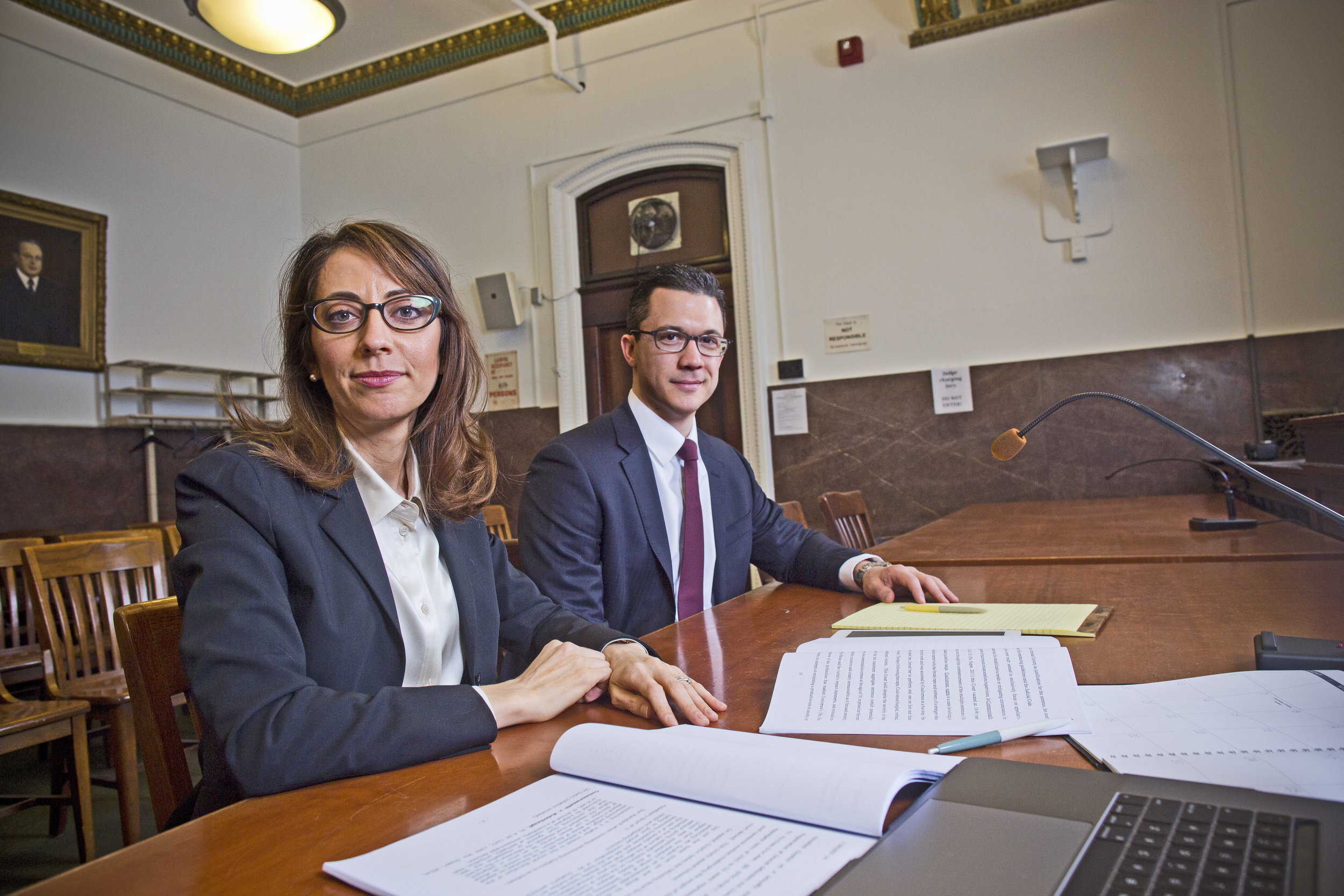
Goldstein Mehta LLC Criminal Defense
If you are facing criminal charges or under investigation by the police, we can help. We have successfully defended thousands of clients against criminal charges in courts throughout Pennsylvania and New Jersey. We have successfully obtained full acquittals and dismissals in cases involving charges such as Conspiracy, Aggravated Assault, Rape, and Attempted Murder. Our award-winning Philadelphia criminal defense lawyers offer a free criminal defense strategy session to any potential client. Call 267-225-2545 to speak with an experienced and understanding defense attorney today.