

Philadelphia Criminal Defense Blog

NOT GUILTY: Attorney Goldstein Obtains Full Acquittal in Jury Trial for Client Charged with “Second Strike” Gunpoint Robbery
Commonwealth v. R.R.

Criminal Defense Attorney Zak Goldstein
The Philadelphia criminal defense lawyers of Goldstein Mehta LLC continue to obtain outstanding results in the courtroom. Recently, a Philadelphia jury acquitted Attorney Goldstein’s client of all charges in a gunpoint Robbery case following a two-day trial.
The Evidence
Prosecutors charged R.R. with Conspiracy, Robbery, Theft, Receiving Stolen Property, and various Violations of the Uniform Firearms Act. Prosecutors alleged that R.R. and another gentleman followed the complainants home from a Burger King at around 2 in the morning and blocked the complainants from parking. The complainants claimed that the robbers eventually let them park, and they then got out of the car. The robbers got out also, and one of the robbers pulled a gun and pointed it at the complainants. The driver of the SUV, who was alleged to be R.R., then went through the male complainant’s pocket and the car. The person stole $700, a cell phone, and some of his paperwork. The robbers then got back into their SUV and drove off.
Police took statements from the complainants, and the complainants claimed that they remembered the numbers on the license plate of the SUV in which the robbers fled the scene. The complainants gave those numbers to the police along with the make and model of the SUV, and police then ran the plate numbers through the computer. They determined that R.R. had been stopped in a similar SUV with the same four numbers on the plate approximately two hours before the Robbery. Police detectives put R.R. in a photo array and showed that photo array to the complainants a few days later. The female complainant identified R.R. in the photo array as the driver of the SUV, but the male complainant could not identify anyone. Based on the identification of the one complainant, detectives arrested R.R. and charged him with gunpoint Robbery as a felony of the first degree.
The Defense
R.R. quickly retained Attorney Goldstein to defend him. Mr. Goldstein moved for a pre-trial lineup at the preliminary hearing, and the Philadelphia Municipal Court judge granted the motion for the lineup. Both complainants were required to appear for the lineup. Again, the female complainant identified R.R. at the lineup as the driver, and the male complainant was not able to make an identification. However, when the preliminary hearing occurred, the female complainant admitted that she had been drinking heavily prior to the robbery. The male complainant was also again unable to identify R.R. as having anything to do with the Robbery. Nonetheless, the Municipal Court judge found that the female complainant’s shaky identification was sufficient to force R.R. to stand trial.
R.R. decided to have a jury trial, and Attorney Goldstein was successfully able to use cross examination to show that the complainants had simply picked out the wrong guy. First, Attorney Goldstein highlighted the fact that the female complainant was initially only 90% sure that the defendant was the right person, she had been drinking heavily all night, and she had not provided the license plate number to the police officer who first responded to the scene. Attorney Goldstein also highlighted the significant discrepancies in the description she gave of the driver of the vehicle and what R.R. looked like at the time.
Second, Attorney Goldstein cross examined the male complainant on the fact that he had never previously been able to identify R.R. as being involved in the Robbery. For the first time ever, however, the male complainant claimed that R.R. was the driver of the SUV despite never identifying him at the preliminary hearing, photo array, or pre-trial lineup. Attorney Goldstein was able to impeach him with his prior statements to show that he did not really know what the person who robbed him looked like.
Finally, Attorney Goldstein highlighted the poor job that the detective had done in preparing the photo array in that every other photo in the photo array was of a person who weighed significantly more or less than the defendant. Attorney Goldstein closed on a misidentification theory; the complainants believed they had picked the right guy, but they had made a mistake, and R.R. looked totally different from the person that they described to the police on the night of the Robbery. The fact that R.R. was stopped in a similar vehicle a few hours before simply did not prove that he was the robber.
After hearing all of the evidence, the jury deliberated for approximately two hours before acquitting R.R. of all charges. Although the complainants claimed that they were 100% sure that R.R. was the driver of the vehicle and that they would never forget his face, R.R. was found Not Guilty of all charges and quickly released from custody. Due to a prior record, R.R. would have been facing 10-20 years in jail or more if he had been convicted in this case.
Facing Criminal Charges? We Can Help.

Criminal Defense Lawyers Zak Goldstein and Demetra Mehta
If you are under investigation or facing criminal charges, we can help. We are experienced and understanding Philadelphia criminal defense attorneys with proven track records of successfully defending clients in and out of the courtroom. Our defense lawyers are not afraid to take a case to trial in front of a judge or jury, and we have successfully helped thousands of people navigate the pitfalls of the criminal justice system. We offer a free 15-minute criminal defense strategy session. Call 267-225-2545 to speak with an award-winning criminal defense lawyer today.
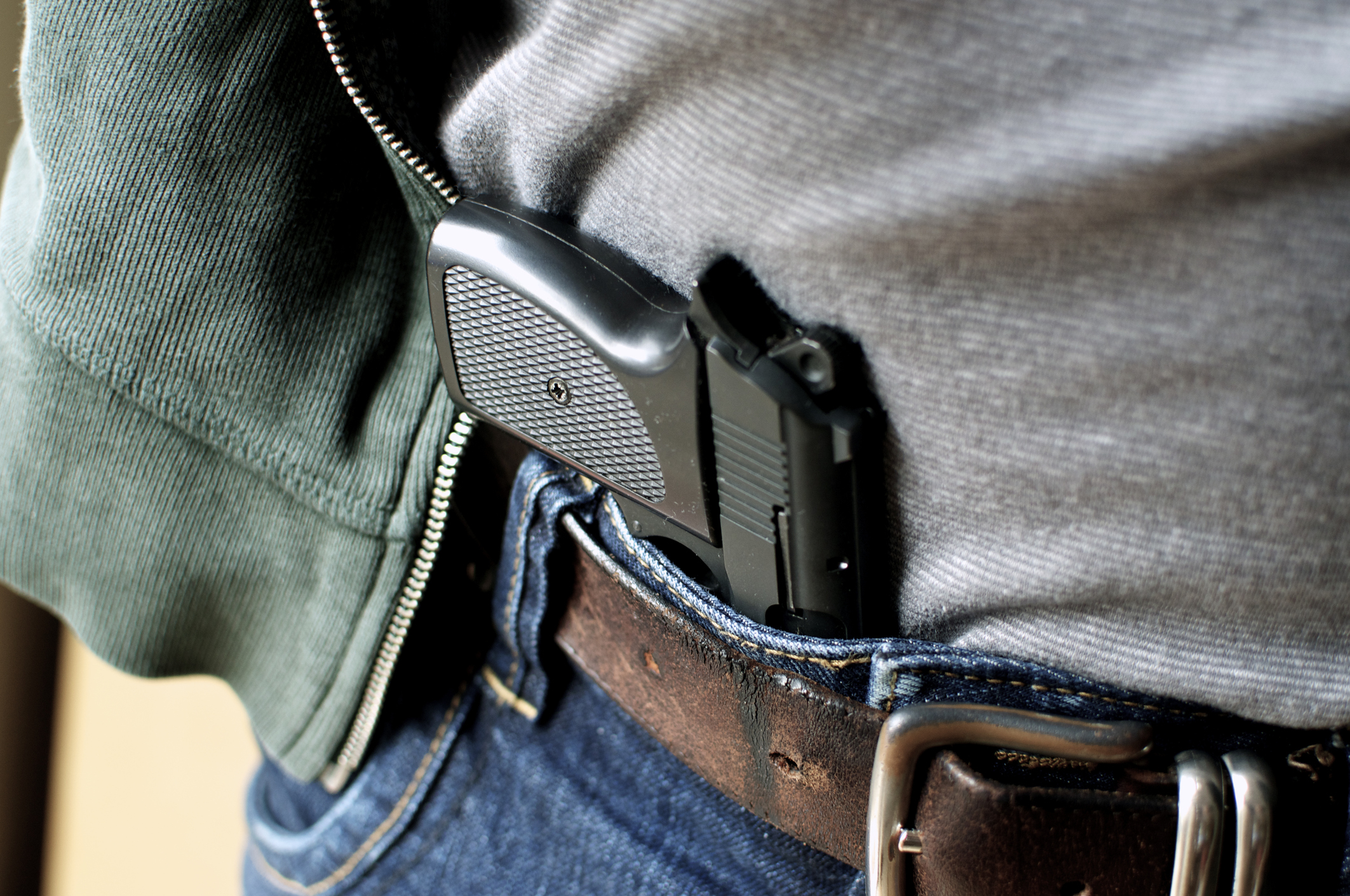
PA Superior Court: Trial Court Must Bifurcate Felon in Possession of Firearm Charges from Other Criminal Charges
The Pennsylvania Superior Court has announced its decision in Commonwealth v. Brown, holding that when the Commonwealth prosecutes 18 Pa. C.S.A. § 6105 (Persons Not to Possess a Firearms) (hereinafter § 6105), along with other charges, the trial court must sever the § 6105 charge from the other offenses and hear those other offenses first when the defendant’s prior conviction is only relevant for purposes of § 6105.

Criminal Defense Attorney Zak Goldstein
The Pennsylvania Superior Court has announced its decision in Commonwealth v. Brown, holding that when the Commonwealth prosecutes 18 Pa. C.S.A. § 6105 (Persons Not to Possess a Firearms) (hereinafter § 6105), along with other charges, the trial court must sever the § 6105 charge from the other offenses and hear those other offenses first when the defendant’s prior conviction is only relevant for purposes of § 6105. This is a significant decision because it prohibits the Commonwealth from circumventing PA Rule of Evidence 404. Rule 404 prohibits the Commonwealth from telling the jury that the defendant has a criminal record, barring certain exceptions which do not apply in the typical gun case.
The Facts of Commonwealth v. Brown
On March 26, 2015, a paratransit driver in Westmoreland County was at work. He was in the process of picking up patients and transporting them to various medical facilities. While working, he had a leather jacket with him, and in one of the pockets, he had a loaded gun. The jacket was draped over the driver’s seat in a way that made it accessible to the backseat passengers. The driver picked up the defendant and transported him to Latrobe Hospital. There were other occupants in the vehicle with the defendant. While driving, he felt a tug on his jacket. Although he was concerned about the gun, the paratransit driver decided he would not check on his gun until he transported the other occupants to their destinations. When the driver dropped the defendant off, he noticed that his gun was missing. He then called the police. Police went to the defendant’s house, frisked him, and searched the house, but they did not find the gun. The defendant told the police that he did not have it.
Police eventually determined that the defendant’s nephew had the gun. When they questioned the nephew, he led the police to the gun and explained that the defendant gave it to him along with $50 for storing it. Police arrested the defendant and charged him with Theft, Receiving Stolen Property, § 6105, and Firearms Not to be Carried Without a License (VUFA 6106). Appellant had previous convictions for aggravated assault and robbery. These prior convictions made it illegal for him to possess a firearm.
Pre-Trial Motions
Prior to trial, the defense attorney filed a Motion for a Bifurcated Trial for the § 6105 charge. The defense attorney argued that it would be prejudicial for the jury to hear that his client had the prior convictions. The trial judge agreed to bifurcate, however, seeking to aid the Commonwealth in its prosecution, the judge allowed the prosecution to proceed with the case as it saw fit. In other words, the trial court did not require that the Commonwealth present evidence of the § 6105 offense and relevant, unfairly prejudicial convictions after it presented evidence of the other alleged crimes like theft and receiving stolen property. Unsurprisingly, the Commonwealth chose to proceed with the § 6105 case first, and then that same jury heard evidence relating to the other charges. Consequently, the jury knew of the defendant’s prior criminal history before it heard the evidence for the other charges. The jury convicted the defendant and found him guilty of all four charges. The trial court sentenced him to three and a half to eight years of incarceration. Appellant appealed, and on appeal, he raised several issues. First, he attacked the sufficiency of the evidence. However, the main issue for purposes of the appeal was whether he was unfairly prejudiced when the trial court allowed the Commonwealth to proceed with the § 6105 charge before the other charges.
Can the Prosecution Introduce Evidence of a Prior Criminal Record in a Criminal Trial?
Generally, no. The rules of evidence often prohibit this because of the fact that juries are extremely likely to convict when they hear that a defendant has a prior criminal record. Rule 404 (a)(1) prohibits the use of evidence of a person’s character to show that on a particular occasion that this person acted in accordance with that character or trait. 404(b)(1) prevents the introduction of a crime in order to show that individual committed this particular crime. What these two subsections seek to prevent is the Commonwealth introducing evidence that a defendant, at some point in his or her life, did something morally wrong or committed some crime to show that he or she committed the crime that they are currently charged with. Obviously, this is a significant rule. If a jury were to hear that the person on trial had previously been convicted of a crime, then the jury is much more likely to convict. There are certain exceptions to this rule. For example, the Commonwealth can file what is referred to as a “Prior Acts Motion” to introduce prior crimes committed by a defendant to show a common scheme, motive, knowledge, lack of mistake, or intent. For example, if the defendant has been charged with burglary in which he or she wore a unique mask, the Commonwealth could probably introduce evidence of prior Burglary cases in which the defendant wore the same mask to show the identity of the defendant. These 404(b) exceptions typically do not apply in a routine gun case, and the Commonwealth did not file the required motion to admit prior bad acts evidence in advance.
However, the Commonwealth may also introduce evidence of a prior crime when it is an element of the crime charged (i.e. § 6105). However, courts have consistently held that the introduction of the underlying conviction that makes the defendant ineligible to possess a firearm should be severed from the other parts of the case. The reason is obvious: as stated above, hearing that the defendant has a prior conviction will unfairly prejudice the jury.
In Philadelphia, the common practice is that the Commonwealth and the defendant agree to have the judge decide whether the defendant has an underlying conviction that makes him or her ineligible to possess a firearm. Typically, there will be a stipulation because it is usually very clear whether or not the person is eligible to possess a firearm. Thus, the jury will not be privy to this information when deciding whether the Commonwealth met its burden for the other elements of § 6105 and the other, if applicable, charges against the defendant. Alternatively, the parties may agree to stipulate to an acquittal or conviction on the 6105 charge that matches the jury’s decision on the other charges. However, each jurisdiction has its own quirks, so you need an attorney who is familiar with the particular jurisdiction and its customs and practices to represent you if you are charged with § 6105.
Superior Court Finds Commonwealth Must Bifurcate at Trial and Introduce Evidence for § 6105 After it Proves Other Charges
Although the Superior Court held that the trial court was correct in severing the § 6105 charge from the other charges, it stated that allowing the Commonwealth to choose the order in which to introduce evidence was “an exercise in futility.” The reason is obvious: allowing the Commonwealth to proceed with the § 6105 charge first clearly prejudiced the jury because the jurors became aware of the defendant’s prior convictions for robbery and aggravated assault. This, in essence, allowed the Commonwealth to circumvent the prohibitions outlined in Rule 404(b). The Superior Court saw through this and found that the defendant was clearly prejudiced and ordered that he receive a new trial.
Call the Award Winning Law Office of Goldstein Mehta LLC if You Are Charged With Illegally Possessing a Firearm

Philadelphia Criminal Defense Lawyers
Gun crimes are very serious, and you need a skilled defense attorney if you are charged with illegally possessing a firearm. Our award-winning Philadelphia criminal defense lawyers have successfully fought countless cases at trial and on appeal. We offer a 15-minute criminal defense strategy session to any potential client. Call 267-225-2545 to discuss your case with an experienced and understanding criminal defense attorney today.

PA Supreme Court: Defendants Sentenced to Fines or No Further Penalty May Claim Ineffective Assistance of Counsel in Post-Sentence Motions

Criminal Defense Lawyer Zak T. Goldstein, Esq.
The Pennsylvania Supreme Court has just decided the case of Commonwealth v. Delgros. In Delgros, the Court created a new equitable exception which permits a defendant who is convicted of a crime and sentenced only to a fine or to no further penalty to claim ineffective assistance of counsel in a post-sentence motion. Under prior case law interpreting Pennsylvania’s Post-Conviction Relief Act, a defendant who was not incarcerated or serving a sentence of probation or parole could not file a PCRA Petition and claim ineffective assistance of counsel in seeking a new trial or sentencing because the PCRA requires that a defendant be serving a sentence.
Commonwealth v. Delgros
Delgros involved the theft of construction materials. The defendant hired the complainant to install a double-wide mobile home on his property. The complainant purchased materials for the project and left some of the materials on the defendant’s property for a period of time, intending to pick them up later. When the complainant returned to pick them up, the materials were gone. The defendant denied knowing what had happened to them. The complainant reported the theft to the police, and the police questioned the defendant. The defendant told the police that he did not know what happened to the materials. He permitted police to search the premises, but the police did not find anything.
Several months later, the defendant and his father hid the materials in the woods. Five to seven years later, the defendant and his father used the materials to build a porch on the defendant’s house. Police subsequently received a report that the defendant had the materials on his porch, and the defendant’s father eventually confessed to the police that the defendant had told him from where the materials came. Police then went to the house armed with a search warrant and saw the stolen materials.
Receiving Stolen Property Charges
Police arrested the defendant and charged him with Receiving Stolen Property as a felony of the third degree. A jury convicted the defendant, and the trial court sentenced him to pay restitution of $2,800 and a fine of $15,000. The court did not sentence him to any jail time or probation. The defendant filed post-sentence motions, claiming that he had received ineffective assistance of counsel from his trial lawyer because his trial lawyer had not properly challenged the gradation of the Receiving Stolen Property charge. He alleged that his trial lawyer should have been able to prove that the value of the materials was less than $2,000. The $2,000 amount is significant because Receiving Stolen Property or Theft of less than $2,000 is a misdemeanor instead of a felony.
Jurisdiction for a PCRA Petition
The trial court denied the post-sentence motions, finding that the defendant could not raise a claim of ineffective assistance of counsel in a post-sentence motion or in a direct appeal. That was the rule prior to this case. Instead, existing Pennsylvania Supreme Court decisions required that ineffective assistance of counsel claims be raised in a Post-Conviction Relief Act Petition after direct appeals have already been litigated. The defendant appealed, and the Superior Court affirmed the result.
Petition for Allowance of Appeal
After the Superior Court affirmed, the defendant filed a Petition for Allowance of Appeal to the Pennsylvania Supreme Court. The Pennsylvania Supreme Court accepted the appeal and reversed the trial court’s denial of the Post-Sentence Motions without a hearing. The Court recognized that on its face, the Post-Conviction Relief Act requires that a Petitioner be serving a sentence in order to file a Petition and claim ineffective assistance of counsel. Thus, someone who is not sentenced to incarceration or probation cannot file a PCRA based on the language in the statute.
However, the Court noted that previous decisions have created two exceptions to this general rule: First, a defendant may file ineffective assistance claims in post-sentence motions and on direct appeal where the claim of ineffectiveness is apparent from the record and meritorious to the extent that immediate consideration best serves the interests of justice. Second, a defendant may show good cause and knowingly and expressly waive his entitlement to seek subsequent PCRA review from his conviction and sentence.
The Court Creates a New Exception
The defendant argued that the trial court should have entertained his arguments under both exceptions or found that the denial of the opportunity to litigate ineffective assistance issue would violate his Sixth Amendment right to competent representation at trial, thereby depriving him of due process. Ultimately, the Pennsylvania Supreme Court agreed.
The Court recognized that the deferral of ineffective assistance of counsel claims is preferable in most cases, but it recognized the fundamental unfairness of a system in which a defendant could be convicted of a felony due to the incompetent performance of his or her lawyer and then not have the opportunity to challenge the conviction based on that incompetent performance. Therefore, the Court recognized a new exception. Under this case, in order to ensure that criminal defendants are afforded an opportunity to challenge trial counsel’s stewardship, the Court adopted a new exception requiring trial courts to address claims challenging the defense attorney’s performance where the defendant is statutorily precluded from obtaining subsequent PCRA review due to not being sentenced to incarceration or probation.
This exception will provide many defendants with the opportunity to challenge unfair convictions. Previously, defendants convicted of most summaries, many misdemeanors, and even some felonies, would not have been able to ever claim ineffective assistance of counsel because the sentence, if any, would be finished by the time the defendant would have the opportunity to file a PCRA Petition. Now, a defendant who will not be able to file a PCRA Petition may raise those claims in post-sentence motions and request an evidentiary hearing if there is a need to make a record. This decision ensures some degree of basic fairness and that a Court cannot sentence a defendant to no further penalty on a felony charge just to prevent a defendant from appealing based on ineffective assistance of counsel.
Facing Criminal Charges or Considering an Appeal? We Can Help.

Philadelphia Criminal Defense Lawyers
If you are facing criminal charges or deciding whether to appeal a conviction or sentencing, we can help. We have successfully defended thousands of clients in jurisdictions throughout Pennsylvania and New Jersey. We can also provide advice on the merits of pursuing an appeal or post-conviction relief act petition. We offer a free 15-minute criminal defense strategy session to each potential client. Call 267-225-2545 to speak with an experienced and understanding criminal defense attorney today.

The Use of Fingerprints in Pennsylvania Criminal Cases
Fingerprinting in Pennsylvania Criminal Cases

Philadelphia Criminal Lawyer Zak Goldstein
Law enforcement officers frequently attempt to solve criminal cases through the use of fingerprints in Pennsylvania. This guide explains when the police may take your fingerprints, whether you may ever have those fingerprints destroyed, and some of the problems inherent in fingerprint examination. It also discusses the recent case of Commonwealth v. Presher, in which the Superior Court held that the a court may not order a defendant to submit to fingerprinting after the defendant has been found not guilty at trial. The effect of the court's holding will be limited due to the relatively rare circumstances present in this case, but the Superior Court issued strong language in rejecting the idea that the trial court could continue to exercise jurisdiction over a defendant who has been acquitted.
Will the police take my fingerprints if I get arrested in Pennsylvania?
The answer to this question is yes, with some exceptions. In Pennsylvania, the law requires a defendant who has been charged with a felony, misdemeanor, or certain summaries to undergo fingerprinting after being arrested. In most cases, you will be fingerprinted when you are taken to the police district upon arrest. In some cases, if you are not arrested and the case was initiated by a summons, the summons will command you to go to the police station to be fingerprinted. The summons will typically instruct you to have this done prior to the preliminary hearing; if not, then the magisterial district justice will usually order that it be done. Additionally, if someone filed a private criminal complaint against you, then you will be fingerprinted if you are convicted. Accordingly, the only time you do not have to worry about being fingerprinted is if you are arrested for a summary offense that does not have a recidivist misdemeanor clause in its statute and the case is not proceeded by a summons.
What happens if I refuse to be fingerprinted?
The failure to comply with this order could eventually result in the revocation of bail if a case is pending or a finding of contempt of court. In some cases, however, the police and prosecutors do not realize that the defendant has not been fingerprinted, and the case may fall through the cracks without the defendant getting fingerprinted.
Can the police make me give my fingerprints if I have not been charged with a crime?
There are ways for the police to get your fingerprints if they are still investigating the case and have not charged you with a crime. For example, the police could ask you for your consent. If you give consent, then the police can take your fingerprints without a warrant or an arrest. If you refuse to consent to fingerprinting and the police have not arrested you, then they could ask a judge to sign a search warrant ordering you to provide your fingerprints. In that case, the police would be able to get your fingerprints prior to making an arrest. If you refuse to provide them, then you could be held in contempt of court and arrested. Additionally, the police could use trickery to obtain your fingerprints. For example, if they remove an item from the trash that has your fingerprints on them, they would most likely be allowed to use any viable prints lifted from the item.
Can I have my fingerprints destroyed if I win my case?
Unless you were fingerprinted as a juvenile, the answer to this question is no. Once you are arrested as an adult, the government will have your fingerprints for the rest of your life. This is true even if you win your case and obtain an expungement of your criminal record because the District Attorney is permitted to retain their case file in order to determine eligibility for diversionary programs in the future. Typically, once you are arrested, your fingerprints will be entered into the Integrated Automated Fingerprint Identification System, which is commonly referred to as AFIS. This is a system that holds thousands of fingerprints. As discussed later, this can be a real problem because fingerprint "science" is not perfect, and you could be arrested if a lab technician later subjectively determines that your fingerprints "matched" prints that were found at a crime scene.
How do the police analyze fingerprints?
Police frequently attempt to lift fingerprints in order to solve robbery, burglary, and other theft cases where there are no eyewitnesses. For example, let’s say that someone commits a burglary at a residence and leaves fingerprints on a glass door. A crime scene investigator will arrive and and “lift” the print from the door. This requires a lot of care because a print can easily be smudged or altered. Assuming the technician does not botch the lifting of the print, the police will then run the print through the AFIS system. At this point, the system will generate 20 fingerprints for a lab technician. It is important to note that lab technicians are not required to have a degree in forensic science. In fact, in Philadelphia, a technician does not even need to be a college graduate and need only have a high school diploma. Further, in Philadelphia, the unit that is responsible for analyzing fingerprints is not accredited.
After AFIS generates the potential matches, the technician will review the prints and see if he or she can find a “match.” In determining whether there is a match, the technician will look for several features of the print. Typically, there are about 150 characteristics of a fingerprint. However, there only needs to be between 10-12 similarities for a technician to say that someone’s prints match those taken from a crime scene. Further, in Philadelphia, these technicians will not analyze all 20 prints. Instead, they will just analyze a print until they find one that they believe is a match. After the technician believes they found a “match,” they will then dispose of the remaining prints.
In determining whether there is a match or not, the technician does not use a computer system to review the matches. Rather, the technician will use a magnifying glass or some other object to enhance his or her vision and make a determination using their eyes to see if there is a match. This may go without saying, but this is clearly subjective and not actual science. The use of the term "match" implies that computers are processing this data, but in reality, fingerprint "matches" are based solely on the subjective personal opinion of the examiner.
Is fingerprint science perfect?
Of course not. As discussed above, fingerprint examination is not really science. It is no surprise that mistakes happen, and these mistakes are not limited to the Philadelphia Police. In 2004, terrorists attacked trains in Madrid, Spain. This was a horrific event where 192 people were killed and thousands were injured. The United States government assisted the Spanish government in trying to track down who was responsible for these attacks. Specifically, the FBI was sent to help solve this case.
During the investigation, the authorities located a fingerprint on a bag that contained one of the detonating devices and were able to lift the print. Based on their review of the print, the FBI concluded that it belonged to a Brandon Mayfield, a U.S. citizen who had been an FBI person of interest for quite some time. Consequently, Mr. Mayfield’s home was wiretapped and he eventually was arrested. However, Brandon Mayfield was not responsible for these acts. Investigators later concluded that that particular fingerprint belonged to a Ouhnane Daoud, an Algerian national. Eventually, the charges were dropped, and the United States government settled a lawsuit with Mr. Mayfield. Mr. Mayfield’s case shows how unreliable fingerprint analysis can be.
Commonwealth v. Presher
In Mr. Presher’s case, the Superior Court did not get into the factual history of the case in great detail. However, what we do know is that he was charged with theft and receipt of stolen property. Additionally, Mr. Presher’s case was proceeded by a summons which means that he was subjected to the pre-conviction fingerprinting requirements. However, for some unknown reason, Mr. Presher was never fingerprinted.
Mr. Presher then proceeded to have his case tried by a jury where he was acquitted of all charges. Despite this, the Commonwealth still asked that Mr. Presher be fingerprinted. The trial court granted the Commonwealth’s motion. Mr. Presher then filed a motion for reconsideration, however that was denied. He then filed a timely appeal.
Can a court make me give my fingerprints if I was acquitted?
If you have already been fingerprinted, then the answer is unfortunately that your fingerprints will remain in the system. If you managed to make it to trial, however, then you cannot be ordered to submit to fingerprinting after an acquittal. The Superior Court recently addressed this issue in the case of Commonwealth v. Presher. In Presher, the court held that a defendant who has been acquitted cannot be required to submit to fingerprinting.
In making its decision, the Superior Court focused largely on the language used in 18 Pa.C.S. § 9112 (b)(2). The statute reads:
Where defendants named in police complaints are proceeded against by summons, or for offenses under section 3929 (relating to retail theft), the court of proper jurisdiction shall order the defendant to submit within five days of such order for fingerprinting by the municipal police of the jurisdiction in which the offense allegedly was committed or, in the absence of a police department, the State Police. Fingerprints so obtained shall, within 48 hours, be forwarded to the central repository in a manner and in such form as may be provided by the central repository.
The Superior Court's rationale stemmed from the fact that § 9112(b)(2) uses the word “defendant.” It does not use the word person, which is different from § 9101(a) which uses the word “person.” This is significant because for Mr. Presher, his case was initiated by a summons and thus fell under § 9101(b)(2).
After Mr. Presher was acquitted of his charges, the Superior Court held that he was no longer a “defendant.” Therefore, he was not subject to the fingerprinting requirements of § 9101(b)(2), and thus the trial court was incorrect in ordering him to provide his fingerprints to the Commonwealth. The Superior Court reasoned that if they ordered Mr. Presher to provide his fingerprints this would amount to a post-acquittal punishment.
Experienced and Understanding Philadelphia Criminal Defense Attorneys

If you are charged with a crime and the police are using fingerprint evidence against you, you need a skilled attorney with the knowledge and expertise to fight your case. Our award-winning Philadelphia criminal defense lawyers have successfully litigated countless cases where the Commonwealth used fingerprint evidence against our clients. We offer a 15-minute criminal defense strategy session to any potential client. Call 267-225-2545 to discuss your case with an experienced and understanding criminal defense attorney today.