

Philadelphia Criminal Defense Blog

Attorney Goldstein Wins New Trial in Murder Case Due to Improper Ruling on Calling Character Witnesses

Philadelphia Criminal Defense Lawyer Zak T. Goldstein, Esquire
Philadelphia Criminal Defense Attorney Zak T. Goldstein, Esquire of Goldstein Mehta LLC recently won a new trial for a client convicted of third-degree murder and aggravated assault in Commonwealth v. V.G. In a decision issued on July 16, 2025, the Pennsylvania Superior Court agreed that the trial court violated the client’s constitutional right to present a defense when it prohibited him from calling character witnesses at his retrial for a 2017 shooting in Lehigh County. The Superior Court vacated the judgment of sentence and remanded the case for a new trial, finding that the error was not harmless because the defendant’s credibility was central to the defense and character evidence could have created a reasonable doubt for the jury.
The Evidence in V.G.
The case arose out of a New Year’s Eve party held on December 31, 2017, at a private residence in Allentown. The Commonwealth alleged that the defendant attended the party after receiving an invitation through social media. At some point after midnight, another attendee, the decedent, who was heavily intoxicated, announced to his friend that he was going to take someone’s phone. He then grabbed the defendant’s phone for no reason. The two did not know each other, and the defendant ultimately shot the decedent twice. According to the defendant’s prior testimony from a previous trial which was also overturned, he acted in self-defense after the much larger decedent took his phone, cursed at him, threatened him, and tried to punch him. The defendant then shot a second individual, the decedent’s friend, who the defendant claimed was approaching in a threatening manner with one hand concealed around his waistband as the decedent assaulted him. The surviving complainant was struck three times but survived.
The defendant was eventually charged with the first-degree murder of the decedent and attempted murder on the surviving complainant. At a first trial, he was convicted of first-degree murder and other charges. That conviction was reversed on appeal after the trial court refused to instruct the jury on voluntary manslaughter based on imperfect self-defense. The Superior Court remanded the case for a second trial, which took place in 2023.
The Trial Court’s Ruling on Character Witnesses
Prior to the second trial, the defense indicated that it planned to call character witnesses who would have testified that the defendant, who had no criminal record at the time of the shooting, had a reputation in the community for being a peaceful and non-violent person. These traits were directly relevant to the homicide and aggravated assault charges because Pennsylvania law has long recognized that character evidence may be enough by itself to raise a reasonable doubt and require an acquittal.
The trial judge, however, refused to allow the defense to present character evidence. The trial court relied on a case called Commonwealth v. Kim, which is a diminished capacity case, and concluded that because the defendant admitted to the shootings, character evidence was irrelevant—even though the defendant’s defense at trial was that he acted in self-defense and, at most, committed voluntary manslaughter. Despite defense counsel’s repeated efforts to clarify that the defense was not one of diminished capacity, the trial court barred all character testimony.
PA Superior Court: The Defense Should Have Been Allowed to Call Character Witnesses
The defendant appealed, and Attorney Goldstein successfully convinced the Superior Court to reverse the conviction on appeal. Attorney Goldstein argued that the trial court erred in precluding the character evidence and that the error was not harmless. The Superior Court agreed. The panel held that the trial court misapplied Commonwealth v. Kim and improperly excluded the defendant’s peaceful character evidence. The Court emphasized that:
[The defendant] did not argue a diminished capacity defense. Rather, he argued that he acted in self-defense, committed at most voluntary manslaughter, and did not act with the mens rea necessary for attempted murder, murder, or aggravated assault. Therefore, Kim is inapplicable to the present case.
The Court reaffirmed that defendants are permitted to offer evidence of a reputation for peacefulness in violent crime cases and that such evidence is “substantive” and “may, in and of itself, create a reasonable doubt.” Because the defendant’s credibility was essential to the outcome of the trial—he testified to acting in self-defense while the complainant claimed the shooting was unjustified—the exclusion of this evidence could not be deemed harmless.
The Court concluded:
The character witnesses would have strengthened the defendant’s credibility, and the jury may have been more likely to credit his theory that he acted in self-defense.
The Superior Court vacated the judgment of sentence and remanded the case for a new trial at which the defendant will be able to call character witnesses.
The Importance of Character Evidence in Criminal Trials
This case highlights the critical role that character evidence can play in a Pennsylvania criminal trial. In cases involving violent crimes such as homicide and aggravated assault, the law allows defendants to introduce testimony from community members attesting to the defendant’s reputation for being peaceful, non-violent, or law-abiding. This evidence can be powerful when credibility is at issue, especially in self-defense cases where the only witnesses are the defendant and the alleged victim(s) or complainants.
The Court’s decision reinforces the principle that even when a defendant concedes involvement in a physical confrontation, they are still entitled to present a full defense, including character testimony, when disputing malice, intent, or justification. It also highlights the important of making a good record for appeal. Trial counsel did not leave any doubt that the defendant both intended to call character witnesses and had character witnesses available to testify both at a pre-trial hearing and at trial, thereby making sure that the appellate court could not find the claim undeveloped or waived for appeal.
Facing criminal charges or appealing a criminal case in Pennsylvania?

Goldstein Mehta LLC Defense Attorneys
If you are facing criminal charges or under investigation by the police, we can help. We have successfully defended thousands of clients against criminal charges in courts throughout Pennsylvania and New Jersey. We have successfully obtained full acquittals and dismissals in cases involving charges such as Conspiracy, Aggravated Assault, Rape, Violations of the Uniform Firearms Act, and First-Degree Murder. We have also won criminal appeals and PCRAs in state and federal court, including the successful direct appeal of a first-degree murder conviction and the exoneration of a client who spent 33 years in prison for a murder he did not commit. Our award-winning Philadelphia criminal defense lawyers offer a free criminal defense strategy session to any potential client. Call 267-225-2545 to speak with an experienced and understanding defense attorney today.

Attorney Goldstein Wins Reversal of Dismissal of PCRA Petition on Prosecutorial Misconduct Claim

Criminal Defense Attorney Zak Goldstein
Philadelphia criminal defense attorney Zak T. Goldstein, Esquire, recently won the Superior Court appeal of the denial of a PCRA petition. In the case of Commonwealth v. S.D., the Superior Court reversed the denial of a PCRA petition and remanded the new case for an evidentiary hearing on whether trial counsel was ineffective in failing to object to improper arguments from the prosecutor during opening statements closing arguments.
S.D. was charged with burglary and related charges for an alleged home invasion burglary. During both opening statements and closing arguments, the prosecutor repeatedly urged the jury to imagine themselves in the victims’ shoes and think about how scary the incident must have been for them. S.D.’s trial attorney failed to object to this argument.
Pennsylvania appellate courts have long held that prosecutors may not make argument designed specifically to inflame the passions of the jury or designed solely to get the jury to convict based on sympathy for the victim. Prosecutors have lots of leeway in terms of being allowed to use oratorical flourish and in making argument, but there are limits. Indeed, courts have repeatedly held that urging jurors to imagine themselves as the victims of a crime is improper.
After S.D.’s appeals were unsuccessful, S.D. retained Attorney Goldstein to file a Post-Conviction Relief Act Petition (PCRA). Attorney Goldstein filed the petition, alleging that trial counsel provided the ineffective assistance of counsel in failing to object to the prosecutor’s improper argument. The trial court denied the petition, but the Superior Court reversed the denial of the petition on appeal. The Superior Court recognized that the case law generally prohibits prosecutors from making arguments similar to those at issue in this case. The Court therefore remanded the case for an evidentiary hearing on whether trial counsel had a strategic basis for failing to object. If the court finds that trial counsel did not have a good reason for failing to object, then S.D. may receive a new trial.
Facing criminal charges or appealing a criminal case in state or federal court in Pennsylvania? We can help.

Philadelphia Criminal Defense Lawyer Zak T. Goldstein, Esquire
If you are facing criminal charges or under investigation by the police, we can help. We have successfully defended thousands of clients against criminal charges in courts throughout Pennsylvania and New Jersey. We have successfully obtained full acquittals in cases involving charges such as Conspiracy, Aggravated Assault, Rape, and Murder. We have also won criminal appeals and PCRAs in state and federal court, including the exoneration of a client who spent 33 years in prison for a murder he did not commit. Our award-winning Philadelphia criminal defense lawyers offer a free criminal defense strategy session to any potential client. Call 267-225-2545 to speak with an experienced and understanding defense attorney today.
Attorney Goldstein Wins Motion to Suppress Firearm

Philadelphia Criminal Defense Lawyer Zak T. Goldstein, Esquire
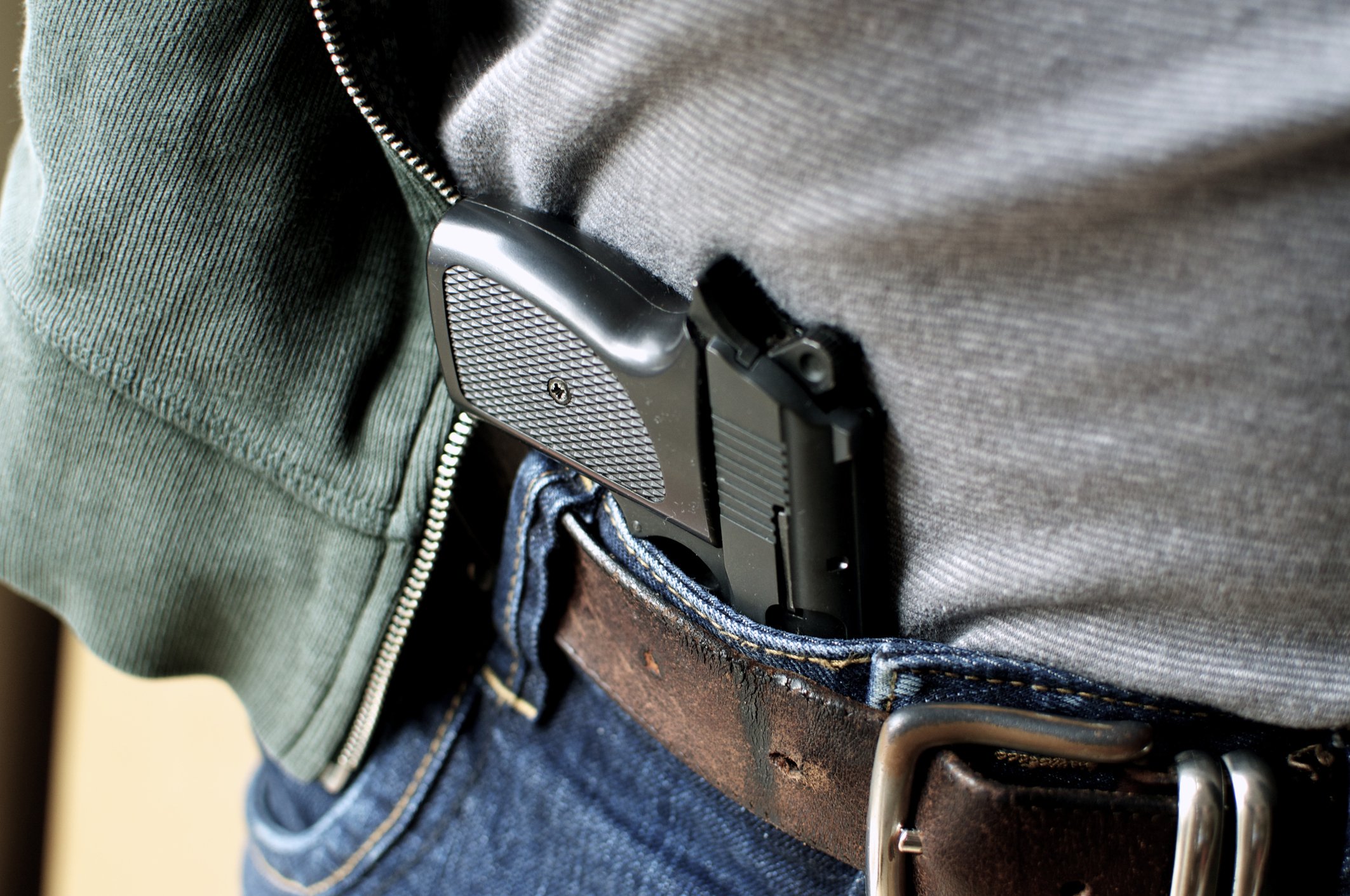
Philadelphia criminal defense lawyer Zak T. Goldstein, Esquire, recently won a motion to suppress a firearm in the case of Commonwealth v. J.C. In J.C., the client was charged with carrying a firearm on the streets of Philadelphia (VUFA § 6108), possession of a concealed firearm without a license (VUFA § 6106), possession of a controlled substance (K&I), and possession of a firearm by a prohibited person (VUFA § 6105). Prosecutors claimed that J.C. had a firearm in the glovebox of his car and marijuana in a bag sitting on the back seat of the vehicle.
Attorney Goldstein filed a motion to suppress the physical evidence in the Philadelphia Court of Common Pleas, arguing that the police improperly searched J.G.’s car without first obtaining a search warrant. Although they later obtained a search warrant before actually removing the gun from the vehicle, the police had already seen the gun due to the initial search before they obtained the warrant.
At a hearing on the motion, the Commonwealth called one of the arresting officers to testify as to the circumstances of the stop and search. The officer testified that they attempted to pull J.C. over for window tint. He initially pulled over right away, but then he started driving again for about half of a block. The police then pulled behind him again and waited for backup. As they were sitting and waiting for backup, they observed J.C. moving around the car in a furtive manner as if he were reaching for something, attempting to conceal something, or about to take off. They also believed that he was going to flee based on the way he was looking around.
Accordingly, once backup arrived, the police surrounded the car. J.C. repeatedly asked why they had stopped him and why they were trying to search the car. He provided them with his driver’s license, and he insisted that he had the registration and insurance paperwork on his phone. The police began to pull him out of the car, and he did not immediately go with them, so they then tased him. Once they tased him, they put him in handcuffs, arrested him, and took him to the hospital for medical treatment. After he was out of the car and had been tased, the officer looked in the glove box and saw a gun. The police then held the vehicle until detectives arrived and obtained a search warrant. At that point, they recovered the gun and the marijuana. J.C. had a criminal record which prohibited him from carrying a firearm, and he also did not have a license to carry.
Attorney Goldstein moved to suppress the evidence, arguing that the initial warrantless search of the vehicle was unconstitutional under the Pennsylvania Constitution and tainted the search warrant which the police obtained later. Attorney Goldstein also argued that the police did not have exigent circumstances for the search that would justify failing to get the warrant first.
Through cross-examination and body camera footage, Attorney Goldstein established that the police had not seen J.C. do anything other than drive a car that may have had window tint, he pulled over on command, he moved the car only about half a block before pulling over again, he told them that he had moved not to flee but because he was blocking traffic, and that they could not see in the car to see if he was actually doing anything while they were waiting for backup. Additionally, J.C. did not attempt to flee, he did not drive away, the police did not see any contraband in the vehicle, and he gave them his driver’s license. Accordingly, there was no actual reason to believe he was armed and dangerous. Further, once J.C. was out of the car and had been tased and arrested, the police were obviously not going to let him get back in the car. Instead, they had to take him to the hospital. Accordingly, under the recent case of Commonwealth v. Camacho, any exigent circumstances which might have justified a “frisk” of the vehicle and checking the glove box for a weapon had dissipated.
In general, the police must obtain a search warrant prior to searching a car. There are some exceptions, however. For example, the police may conduct a “frisk” of the passenger compartment of a vehicle for weapons when they have conducted a legal stop and they have reasonable suspicion to believe that the suspect is engaged in criminal activity and armed and dangerous. The frisk cannot be a search for evidence; instead, it is a search for weapons for officer safety purposes during the stop. Nervousness alone does not justify the frisk of a car, but nervousness along with furtive movements or other strange behavior may sometimes justify a frisk.
In this case, however, any need to conduct the frisk before obtaining a warrant ended when J.C. was removed from the car, tased, handcuffed, and arrested. At that point, even if he had initially posed some sort of threat to the officers’ safety, the threat had ended, and there was nothing preventing the officers from simply waiting until detectives could obtain a warrant. The trial judge agreed and granted the motion to suppress. The Commonwealth then withdrew the charges.
Facing criminal charges or appealing a criminal case in Pennsylvania?
Goldstein Mehta LLC Criminal Defense Lawyers
If you are facing criminal charges or under investigation by the police, we can help. We have successfully defended thousands of clients against criminal charges in courts throughout Pennsylvania and New Jersey. We have successfully obtained full acquittals and dismissals in cases involving charges such as Conspiracy, Aggravated Assault, Rape, Violations of the Uniform Firearms Act, and First-Degree Murder. We have also won criminal appeals and PCRAs in state and federal court, including the successful direct appeal of a first-degree murder conviction and the exoneration of a client who spent 33 years in prison for a murder he did not commit. Our award-winning Philadelphia criminal defense lawyers offer a free criminal defense strategy session to any potential client. Call 267-225-2545 to speak with an experienced and understanding defense attorney today.
Speedy Trial Motion Granted in Sexual Assault Case

Philadelphia Criminal Defense Attorney Zak T. Goldstein, Esquire
Philadelphia criminal defense lawyer Zak T. Goldstein, Esquire recently won a speedy trial motion to dismiss all charges in a sexual assault case. In Commonwealth v. VK, the client was charged with rape, involuntary deviate sexual intercourse and related charges after the complainant reported that the client had assaulted her years earlier. The complainant did not disclose the alleged abuse for about a decade.
The complainant made a police report, and a detective then obtained an arrest warrant and put the arrest warrant in the system. The detective then did essentially nothing to arrest the client. By then, he had moved to another state. The client was eventually arrested by police in the other state during a random encounter more than two years later and extradited to Philadelphia. Upon his arrival in Philadelphia, he retained Attorney Goldstein. Attorney Goldstein successfully argued for a reasonable bail at preliminary arraignment.
The charges were held for court at the preliminary hearing. Once the case reached the Court of Common Pleas and motions could be filed, Attorney Goldstein immediately filed a motion to dismiss pursuant to Rule 600(a) of the rules of criminal procedure. In the motion, Attorney Goldstein argued that the charges should be dismissed because the Commonwealth failed to bring the client to trial within 365 days as required by the rule.
Under the rules, the one year deadline for bringing a defendant to trial begins to run on the date on which the complaint is filed. Accordingly, the time during which a defendant has charges filed against them and a complaint pending counts for purposes of the rule unless the Commonwealth exercises due diligence in attempting to locate the defendant but is unable to do so. For example, if a defendant is being held in custody in another state and the other state refuses to extradite the defendant despite the Commonwealth’s attempts to obtain extradition, then the time might not count. Or, if the police conduct records checks and attempt to locate the defendant but are unable to do so despite giving it a good effort, then the time may not count.
Here, the detective who filed the charges testified at a hearing on the motion that he made a couple of phone calls to phone numbers he could not remember when he first filed the charges. He did not call authorities in the other state, he did not have anyone check the addresses in those states, he did not check social media, and he did not ask federal marshals to look for the defendant. Accordingly, Attorney Goldstein argued that the police and prosecutors had failed to exercise due diligence for more than a year from the filing of the complaint.
Ultimately, the Philadelphia Court of Common Pleas judge agreed. The trial judge dismissed all of the charges, and the record can now be expunged. The appellate courts have increasingly enforced the speedy trial rules in Pennsylvania over the last few years. Filing criminal charges against someone is a serious thing, and the Commonwealth is not allowed to just leave cases sitting for years without taking real steps to move the cases forward. Here, the police did nothing to locate and extradite the client despite knowing where he was. This led to pending charges sitting against the client for years. That is exactly what Rule 600 prohibits. Accordingly, the judge dismissed the case.
What is Rule 600?
Rule 600 is Pennsylvania’s speedy trial rule. It applies to felony cases in Philadelphia. Municipal Court misdemeanor cases have a different rule (Rule 1013). Under Rule 600(a), the Commonwealth generally must bring the defendant to trial within 365 days of the filing of the complaint. There are lots of exceptions - defense continuances, continuances due to the court’s schedule, and continuances where the Commonwealth acted with due diligence but could not move forward due to circumstances outside of their control all may not count words the 365 days. But in general, if the case is delayed because the Commonwealth is not ready to proceed without a very good excuse, the time counts against the Commonwealth. Obtaining dismissal under the rule requires filing a written motion in the Court of Common Pleas.
Under Rule 600(b), a defendant in custody because they cannot afford bail may only be held for 180 days before they should be released on nominal bail (usually with house arrest). Again, there are exceptions for defense continuances, but they are more limited. Additionally, the Commonwealth usually responds to a 600(b) speedy trial bail motion by moving to revoke the defendant’s bail. In that case, the trial judge will have to make a determination as to whether the defendant is such a flight risk or danger to the community that bail should be revoked. In less serious cases, the defendant will almost always be released. In more serious cases such as shootings and rapes, this becomes a bigger issue.
The Pennsylvania Supreme Court has repeatedly instructed the trial courts to follow the rule and enforce it more reliably over the last few years, and courts have begun to do so. Here, the trial court followed the rule and dismissed the charges.
Facing criminal charges or appealing a criminal case in Pennsylvania?

Philadelphia Criminal Lawyer Zak T. Goldstein, Esquire
If you are facing criminal charges or under investigation by the police, we can help. We have successfully defended thousands of clients against criminal charges in courts throughout Pennsylvania and New Jersey. We have successfully obtained full acquittals and dismissals in cases involving charges such as Conspiracy, Aggravated Assault, Rape, Violations of the Uniform Firearms Act, and First-Degree Murder. We have also won criminal appeals and PCRAs in state and federal court, including the successful direct appeal of a first-degree murder conviction and the exoneration of a client who spent 33 years in prison for a murder he did not commit. Our award-winning Philadelphia criminal defense lawyers offer a free criminal defense strategy session to any potential client. Call 267-225-2545 to speak with an experienced and understanding defense attorney today.