

Philadelphia Criminal Defense Blog

Superior Court Reverses Denial of PCRA Relief for Attorney Goldstein’s Client in Internet Contraband Case

Philadelphia Criminal Defense Attorney Zak T. Goldstein, Esquire
Philadelphia criminal defense attorney Zak T. Goldstein, Esquire, recently won a significant victory for his client, M.D., in the Pennsylvania Superior Court. In a detailed, 18-page opinion issued in July 2025, the Superior Court reversed the PCRA court’s order dismissing M.D.’s Post Conviction Relief Act petition and remanded the case for further proceedings. The Court found that the PCRA court erred in concluding that trial counsel was effective despite trial counsel’s decision to repeatedly tell the jury that the client had asked to speak with a lawyer and declined to give a statement to the police when the police executed a search warrant at his house.
The client had been convicted following a second jury trial of possession and dissemination of child pornography and sentenced to five to ten years in state prison. His first trial ended in a mistrial after the first jury could not reach a unanimous verdict. The Superior Court denied his direct appeal, and the client filed a PCRA petition. The PCRA court appointed a different lawyer, who amended the petition, and the PCRA court denied that petition. The client then hired Attorney Goldstein for the appeal from the denial of the first PCRA petition.
On appeal, Attorney Zak Goldstein raised layered claims of ineffective assistance of counsel—arguing both that the client’s trial counsel mishandled crucial aspects of the defense and that PCRA counsel failed to raise those issues in the first petition. For example, PCRA counsel failed to argue that the trial attorney was ineffective for introducing evidence of her own client’s post-Miranda silence.
The Superior Court agreed and remanded the case for an evidentiary hearing before the trial judge, who also presided over the PCRA proceedings. The judge heard from the attorneys who represented the client at the second trial that ended in a conviction as well as the first PCRA lawyer and again denied the petition. Attorney Goldstein filed an appeal, and the Superior Court reversed yet again.
This time, the Superior Court held that trial counsel acted unreasonably and to her client’s detriment by repeatedly referencing the client’s post-Miranda silence during trial. Although trial counsel claimed that this was a strategic decision designed to convey innocence, the Superior Court found the strategy lacked a reasonable basis and was more likely to cause the jury to infer guilt. As the Court noted, “most laymen view an assertion of the Fifth Amendment privilege as a badge of guilt,” especially when invoked during the execution of a search warrant for devices suspected of containing illicit content.
The Court further found that this improper strategy created a reasonable probability of a different outcome at trial, thereby undermining confidence in the verdict. As a result, the Court concluded that the client had satisfied all three prongs of the Strickland test for ineffective assistance and that the PCRA court erred in rejecting his claim. The Superior Court therefore vacated the order denying the PCRA petition and remanded for further proceedings.
Facing criminal charges or appealing a criminal case in Pennsylvania?

Goldstein Mehta LLC Criminal Defense
If you are facing criminal charges or under investigation by the police, we can help. We have successfully defended thousands of clients against criminal charges in courts throughout Pennsylvania and New Jersey. We have successfully obtained full acquittals and dismissals in cases involving charges such as Conspiracy, Aggravated Assault, Rape, Violations of the Uniform Firearms Act, and First-Degree Murder. We have also won criminal appeals and PCRAs in state and federal court, including the successful direct appeal of a first-degree murder conviction and the exoneration of a client who spent 33 years in prison for a murder he did not commit. Our award-winning Philadelphia criminal defense lawyers offer a free criminal defense strategy session to any potential client, and we frequently spot issues and defenses that other lawyers miss. Call 267-225-2545 to speak with an experienced and understanding defense attorney today.

PA Supreme Court: Vehicle Registration Alone Does Not Defeat Reasonable Expectation of Privacy

Philadelphia Criminal Defense Lawyer Zak T. Goldstein, Esquire
The Pennsylvania Supreme Court has decided the case of Commonwealth v. Anderson, holding that a driver may have a reasonable expectation of privacy even where they are pulled over driving a car belonging to someone else. The mere fact that the car is registered to or belongs to another person does not mean that the Commonwealth automatically wins a motion to suppress for lack of a reasonable expectation of privacy. Instead, the Commonwealth would have to introduce additional evidence to show that the driver did not have a reasonable expectation of privacy in the vehicle in under to win on this basis.
The Facts of the Case
The case arose after the defendant was stopped by Chester police in Delaware County, PA for several Vehicle Code violations. During the stop, officers discovered a firearm in the vehicle’s center console and marijuana in the passenger area. The defendant was ultimately charged with various offenses including carrying a firearm without a license (VUFA § 6106). He moved to suppress the evidence, arguing that the police violated his constitutional rights when they stopped him and searched the car.
The Commonwealth argued that because the car was registered to the defendant’s aunt rather than the defendant, he lacked a reasonable expectation of privacy in it and thus could not challenge the search. The trial court agreed, as did the Superior Court, holding that registration to another person alone was enough to shift the burden to the defendant to prove he had lawful possession or permission to drive the car. The defendant appealed to the Pennsylvania Supreme Court, and the Supreme Court granted review.
The Supreme Court Appeal
The Pennsylvania Supreme Court disagreed. Writing for a unanimous Court, Justice Dougherty clarified that under Commonwealth v. Enimpah, the Commonwealth bears the initial burden to produce evidence that negates a reasonable expectation of privacy before a defendant must respond. The Court found that the mere fact a vehicle is registered to someone else does not, without more, establish that the driver lacked a reasonable expectation of privacy. Lawful possession and control—regardless of registration—can give rise to protected privacy interests under both the Fourth Amendment and Article I, Section 8 of the Pennsylvania Constitution.
The Court emphasized that there are many plausible and lawful scenarios under which a person may be driving a vehicle registered to someone else. Therefore, registration alone is insufficient to meet the Commonwealth’s burden of production in terms of disproving reasonable expectation of privacy. The Court declined to address whether other facts in the case might satisfy the burden under a totality of the circumstances analysis and remanded the case for further proceedings.
This ruling strengthens protections for drivers in Pennsylvania, reinforcing that the Commonwealth must do more than cite vehicle registration records to justify a warrantless search. Defendants charged with possessory offenses retain automatic standing to challenge searches and seizures, and they are not required to affirmatively prove privacy interests unless and until the Commonwealth meets its initial evidentiary burden of disproving the reasonable expectation of privacy.
Facing criminal charges or appealing a criminal case in Pennsylvania?

Goldstein Mehta LLC Criminal Defense Lawyers
If you are facing criminal charges or under investigation by the police, we can help. We have successfully defended thousands of clients against criminal charges in courts throughout Pennsylvania and New Jersey. We have successfully obtained full acquittals and dismissals in cases involving charges such as Conspiracy, Aggravated Assault, Rape, Violations of the Uniform Firearms Act, and First-Degree Murder. We have also won criminal appeals and PCRAs in state and federal court, including the successful direct appeal of a first-degree murder conviction and the exoneration of a client who spent 33 years in prison for a murder he did not commit. Our award-winning Philadelphia criminal defense lawyers offer a free criminal defense strategy session to any potential client. Call 267-225-2545 to speak with an experienced and understanding defense attorney today.
Pennsylvania Superior Court Vacates Philadelphia Gun Conviction for VUFA § 6108 on Second Amendment Grounds

Philadelphia Criminal Defense Lawyer Zak T. Goldstein, Esquire
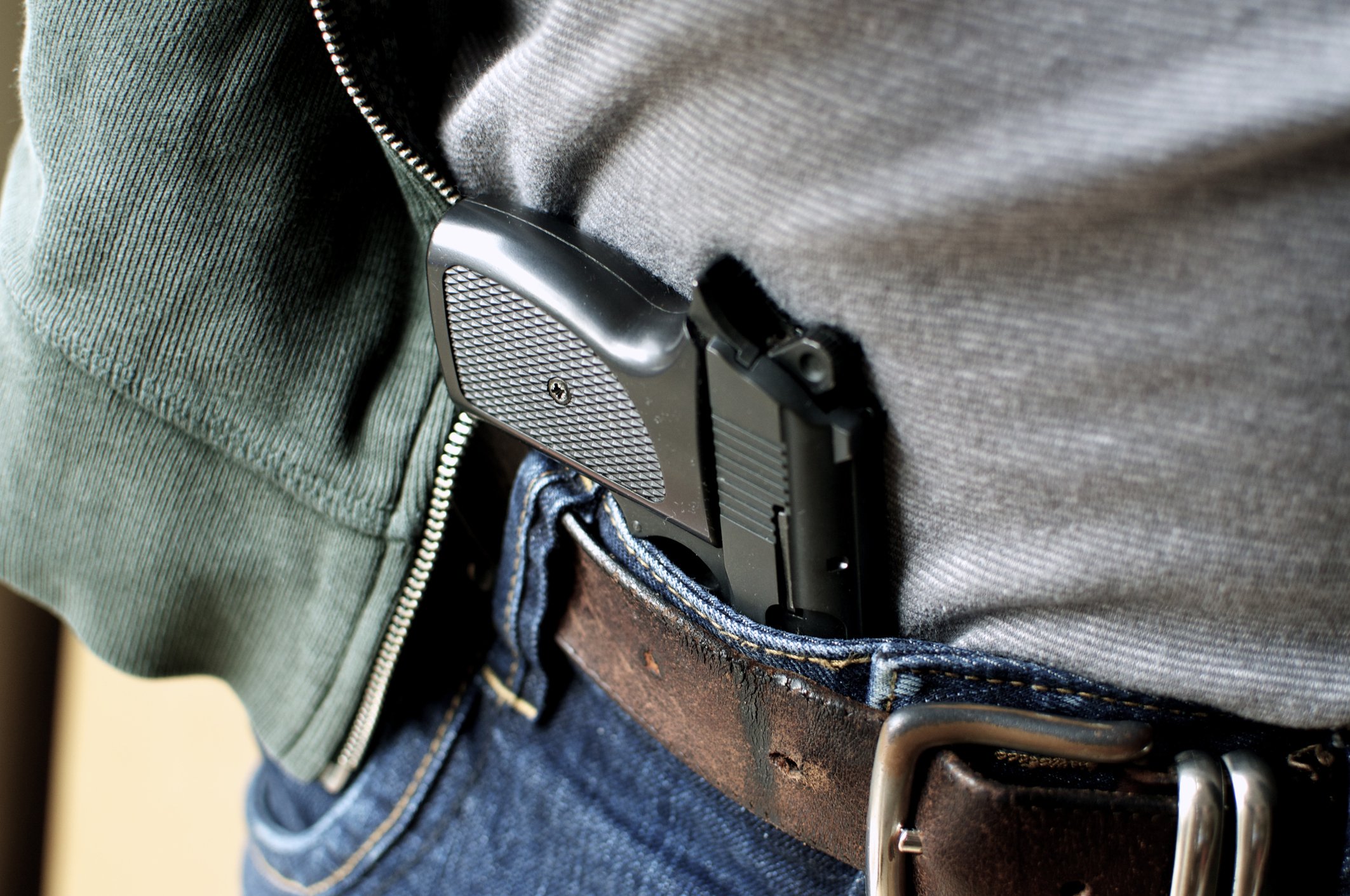
In a major Second Amendment decision for citizens of Philadelphia, the Pennsylvania Superior Court has declared 18 Pa.C.S. § 6108 unconstitutional as applied to the open carry of firearms in Philadelphia. § 6108 makes it illegal to even open carry a firearm on the streets of Philadelphia without a license, whereas open carry is generally legal in the rest of the state. In Commonwealth v. Sumpter, the Superior Court vacated the defendant’s conviction for carrying a firearm on the streets of Philadelphia, holding that the statute was unconstitutional as applied to the defendant in that it prevented him from open carrying.
The Facts of Sumpter
The defendant was arrested after police observed the handle of a firearm visibly protruding from his waistband while he was walking in Philadelphia. He admitted to the police that he carried the weapon for self-defense due to gun violence in the area. A charge under § 6106 (concealed carry without a license) was dismissed at the preliminary hearing because the police could see the gun, but he was convicted under § 6108, which makes it illegal to carry a firearm openly on public streets in Philadelphia without a license.
Philadelphia is the only “city of the first class” in Pennsylvania, and § 6108 applies only in a city of the first class (meaning Philadelphia). In the rest of the Commonwealth, unlicensed open carry is generally legal for adults 18 and over. Because Pennsylvania law requires individuals to be at least 21 to apply for a carry license, § 6108 effectively bans open carry for 18-to-20-year-olds in Philadelphia, but it does not have the same effect in the rest of the state.
The Superior Court’s Holding: § 6108 Fails Strict Scrutiny
Writing for the majority, Judge Stabile held that § 6108 violates the Equal Protection Clause as applied to individuals exercising their Second Amendment rights in Philadelphia. The Court explained that under District of Columbia v. Heller, McDonald v. City of Chicago, and New York State Rifle & Pistol Ass’n v. Bruen, the right to carry firearms in public for self-defense is a fundamental constitutional right. Because the law burdens a fundamental right, it must satisfy strict scrutiny.
The Commonwealth argued that the law was justified by Philadelphia’s high crime rate and the need for prosecutors to have additional enforcement tools. The Superior Court rejected that rationale, holding that such generalized concerns do not justify discriminatory geographic restrictions on constitutional rights. The government failed to show that § 6108 was narrowly tailored to serve a compelling interest.
The End of Scarborough
The Court’s opinion expressly abrogates its earlier decision in Commonwealth v. Scarborough, 89 A.3d 679 (Pa. Super. 2014), which upheld § 6108 under rational basis review. At the time, Scarborough treated the right to carry firearms outside the home as a non-fundamental right. After Bruen and Rahimi, that position is no longer tenable. The Court clarified that because Sumpter involves a fundamental right, strict scrutiny must apply.
No Ruling on Broader Licensing Requirements
The Court limited its holding to the as-applied challenge brought by the defendant in this case. The Court did not decide whether a statewide licensing requirement for open carry would be constitutional. The Court also did not address broader challenges to Pennsylvania’s licensing regime under § 6109. Additionally, the Court declined to address arguments brought based on the potentially broader protections of the Pennsylvania Constitution, relying solely on federal equal protection principles. Accordingly, the Court vacated this defendant’s conviction, but it is hard to predict what effect the case may have for other individuals.
Key Takeaways for Gun Charges in Philadelphia
§ 6108 is unconstitutional as applied to individuals who are prohibited from openly carrying firearms in Philadelphia but who could legally do so elsewhere in Pennsylvania.
The right to bear arms in public is a fundamental constitutional right, and laws that burden it are subject to strict scrutiny.
The decision overrules prior precedent that upheld Philadelphia-specific restrictions under a lower standard of review.
Prosecutors may not be able to rely on VUFA § 6108 to prosecute open carry cases where that conduct would be lawful in other parts of the state.
This case will likely be cited by the defense in numerous challenges to gun prosecutions (VUFA cases), but the exact effect remains unclear. The Philadelphia Police Department will likely continue to arrest people both for carrying concealed firearms without licenses as well as for open carry as the Superior Court did not specifically find the statute facially unconstitutional. Instead, the Court only vacated this one specific conviction. Therefore, it is still risky to carry a firearm (openly or concealed) without a license in Pennsylvania, but if you are arrested for a firearms offense, there may be constitutional challenges which could defeat the prosecution.
Facing criminal charges or appealing a criminal case in Pennsylvania?

Goldstein Mehta LLC Defense Attorneys
If you are facing criminal charges or under investigation by the police, we can help. We have successfully defended thousands of clients against criminal charges in courts throughout Pennsylvania and New Jersey. We have successfully obtained full acquittals and dismissals in cases involving charges such as Conspiracy, Aggravated Assault, Rape, Violations of the Uniform Firearms Act, and First-Degree Murder. We have also won criminal appeals and PCRAs in state and federal court, including the successful direct appeal of a first-degree murder conviction and the exoneration of a client who spent 33 years in prison for a murder he did not commit. Our award-winning Philadelphia criminal defense lawyers offer a free criminal defense strategy session to any potential client. Call 267-225-2545 to speak with an experienced and understanding defense attorney today.

PA Superior Court: Trial Court Erred in Quashing Charges From Online Sting Operation Run by Private Citizen Based on Factual Impossibility

Philadelphia Criminal Defense Lawyer Zak T. Goldstein, Esquire
In Commonwealth v. Aguilar, 2025 PA Super 118, the Pennsylvania Superior Court reversed the order of the Monroe County Court of Common Pleas dismissing criminal charges against a defendant who had been caught in an online sex sting operation run by a private citizen. The Superior Court held that the trial court erred in granting the defendant’s motion to suppress because a motion to suppress was not even the correct type of motion for a defendant to bring. The Court also ruled that even if the trial court properly construe the motion as a motion to quash, the trial court erred in granting it based on factual impossibility as factual impossibility is not a defense in Pennsylvania.
Background
The defendant was targeted by a group called LC Predator Catchers. Posing as a 15-year-old boy on dating apps, a private citizen allegedly engaged in explicit conversations with the defendant. According to the affidavit of probable cause, the defendant sent sexual messages and photos, offered to be “fuck friends,” and invited the fake minor to his home. The private citizen allegedly showed up at the defendant’s house, confronted him, and then notified the Pocono Mountain Regional Police Department. Police later conducted a Mirandized interview, during which the defendant allegedly acknowledged the sexual intent of his messages.
Prosecutors charged the defendant with:
Criminal Attempt – Corruption of Minors (both as a misdemeanor and felony under 18 Pa.C.S. § 6301(a)(1)),
Criminal Use of a Communication Facility (18 Pa.C.S. § 7512(a)).
Suppression and Trial Court Proceedings
The defendant filed a pretrial “motion to suppress,” arguing that all charges should be dismissed because his communications were with an adult civilian rather than an actual minor or police officer. He relied on the text of 18 Pa.C.S. § 6318 (the Unlawful Contact with a Minor statute), which explicitly requires the involvement of a real or undercover minor. Although the defendant was not actually charged under that statute for that reason, the trial court accepted his argument and reasoned that it was factually impossible for the defendant to have committed the charged offenses.
The trial court then sua sponte treated the suppression motion as a motion to quash and dismissed the criminal information in its entirety based on this impossibility argument. In its opinion, the trial court also concluded on its own that the Commonwealth failed to present a prima case at the preliminary hearing that the defendant committed a crime. The Commonwealth appealed.
The Superior Court’s Ruling
The Pennsylvania Superior Court reversed after concluding that the trial court made a number of mistakes.
Suppression Inapplicable: Because the communications were with a private citizen, not law enforcement, there was no Fourth Amendment or Pennsylvania constitutional violation. Thus, suppression was not a proper remedy.
Improper Sua Sponte Quashal: The defendant never filed a motion to quash. Under Pennsylvania law, quashal must be specifically requested in an omnibus pretrial motion, and sua sponte dismissal is generally improper. The Court emphasized that a suppression motion cannot be repurposed into a dispositive ruling on legal guilt.
Factual Impossibility Is Not a Defense: The Superior Court reaffirmed that under Pennsylvania law, factual impossibility is not a defense to an attempt charge. So long as the defendant believed he was communicating with a minor and took a substantial step toward completing the offense, he could be charged with attempt—even if the "minor" turned out to be an adult vigilante.
No Minor Required Under Charged Statutes: The Superior Court rejected the defendant’s argument that a minor or police officer was required to establish a violation of the statutes at issue. The Corruption of Minors statute, unlike § 6318, does not require the involvement of a real or fictitious minor. Likewise, the offense of Criminal Use of a Communication Facility requires only that the facility be used to facilitate a felony or attempted felony.
Prima Facie Case Was Established: The court found that the Commonwealth had produced sufficient evidence to support each element of the offenses charged. Chat logs, photographs, the defendant’s confession, and the arrangement to meet in person all constituted a prima facie case. Because no preliminary hearing had yet been held, the trial court’s ruling on evidentiary sufficiency was premature. Therefore, the Court reversed.
Conclusion
The Superior Court reinstated all charges and remanded the case for further proceedings. It emphasized that the charges did not require the involvement of an actual or undercover minor and that the trial court overstepped its role by misapplying both suppression doctrine and the law of attempt. Accordingly, the Court effectively held that private-citizen stings—though controversial—can lead to viable prosecutions in Pennsylvania.
Facing criminal charges or appealing a criminal case in Pennsylvania?

Goldstein Mehta LLC Criminal Defense Attorneys
If you are facing criminal charges or under investigation by the police, we can help. We have successfully defended thousands of clients against criminal charges in courts throughout Pennsylvania and New Jersey. We have successfully obtained full acquittals and dismissals in cases involving charges such as Conspiracy, Aggravated Assault, Rape, Violations of the Uniform Firearms Act, and First-Degree Murder. We have also won criminal appeals and PCRAs in state and federal court, including the successful direct appeal of a first-degree murder conviction and the exoneration of a client who spent 33 years in prison for a murder he did not commit. Our award-winning Philadelphia criminal defense lawyers offer a free criminal defense strategy session to any potential client. Call 267-225-2545 to speak with an experienced and understanding defense attorney today.