

Philadelphia Criminal Defense Blog

PA Superior Court: Commonwealth May Not Show Photos of Now-Adult Sexual Assault Complainant as Child

Criminal Defense Lawyer Zak T. Goldstein, Esquire
The Superior Court has decided the case of Commonwealth v. Vucich, holding that the trial court erred when it permitted the Commonwealth to introduce photographs of the now-twenty-year-old complainant as a ten-year old child. In other words, the court found that there was no relevance to how the complainant would have appeared at the time of the alleged sexual assault.
The Facts of Vucich
In Vucich, the defendant was charged with rape of a child, involuntary deviate sexual intercourse, unlawful contact with a minor, corruption of minors, and indecent assault. The Commonwealth alleged that the defendant repeatedly molested his then ten-year-old step-son after he married the complainant’s mother and moved into the home. The complainant did not disclose the abuse until ten years later. He eventually told his therapist, and then subsequently told his mother. The defendant was found guilty of all charges except rape of a child and sentenced to 10-20 years of incarceration.
The Superior Court Appeal
Following his conviction, the defendant appealed to the Pennsylvania Superior Court. The defendant raised a number of issues. However, the most interesting issue that he raised was whether the trial court had improperly allowed the Commonwealth to introduce photos of what the complainant looked like when he was ten years old.
The defendant argued that the photographs were irrelevant and therefore inadmissible. Relevant evidence is evidence that logically tends to establish a material fact in the case, tends to make a fact at issue more or less probable, or supports a reasonable inference or presumption regarding a material fact. The defendant argued on appeal that the photos were not relevant because the complainant’s appearance at the time of the alleged abuse did not establish any material fact. What he looked like was not the question. Instead, the only issue was whether the abuse had occurred, and therefore showing the jury what the complainant looked like as a child served only to prejudice the jury against the defendant.
The trial court, however, concluded that the photographs were admissible to help the jury picture the complainant as a child so that the jury could better evaluate his testimony. Likewise, the Commonwealth advanced this argument again in defending the appeal.
The Superior Court, however, rejected the argument. It noted that in homicide cases, photographs of the decedent which were taken while the decedent was still alive are typically inadmissible unless there is something about the decedent’s appearance which makes the photograph relevant. Without some specific connection between the allegations and a decedent’s appearance in a photograph, the introduction of such a photograph may be reversible error because the only purpose of such evidence is to engender sympathy in the jury and prejudice the jury against a homicide defendant. Thus, in most cases, simply showing photographs of a victim or decent is prohibited and could lead to reversal.
Here, the Superior Court recognized that this was a novel issue; no Pennsylvania court had previously addressed the issue of whether a now-adult complainant’s photos as a child could be introduced in a sexual assault case. The Superior Court ultimately concluded that the rule should be the same in these types of cases as it is in homicide cases. The evidence is admissible because it is simply not probative of whether a defendant committed the crimes charged. Therefore, the court agreed with the defendant that the trial court should have sustained the defense attorney’s objections.
What is harmless error?
Nonetheless, the Court did not reverse the defendant’s conviction because it found that the admission of the photographs amounted to harmless error. Harmless error is the idea that an erroneous ruling by a trial court on an evidentiary issue does not necessarily require the reversal of a conviction where 1) the error did not prejudice the defendant or the prejudice was de minimis; 2) the erroneously admitted evidence was merely cumulative of other unrelated evidence which was substantially similar to the erroneously admitted evidence, or 3) the properly admitted and uncontradicted evidence of guilt was so overwhelming and the prejudicial effect of the error was so insignificant by comparison that the error could not have contributed to the verdict.
Here, the Court found that the prejudice was de minimis and that the error was harmless beyond a reasonable doubt. The Court concluded that the use of the photographs was brief and limited. Although they should not have been introduced, they did not contribute to the verdict. Therefore, the Court upheld the conviction.
Facing criminal charges? We can help.

Goldstein Mehta LLC Criminal Defense Attorneys
If you are facing criminal charges, we can help. Our experienced and understanding Philadelphia criminal defense attorneys have successfully defended thousands of clients in state and federal courts throughout Pennsylvania and New Jersey. We have obtained successful results in trials, appeals, and post-conviction relief act litigation in cases involving charges of homicide, rape, possession with the intent to deliver, and other serious crimes. We offer a free criminal defense strategy session to each potential client. Call 267-225-2545 to speak with an award-winning criminal defense lawyer today.

PA Supreme Court: Prosecutor May Call Defendant Dangerous, Cold-Blooded Killer During Closing Argument

Criminal Defense Lawyer - Zak T. Goldstein, Esq.
The Pennsylvania Supreme Court has decided the case of Commonwealth v. Clancy, clarifying what type of rhetoric prosecutors may use during closing arguments. This decision arguably provides prosecutors with more leeway to use prejudicial, inflammatory euphemisms and to categorize the defendant in a negative way during closing.
The Facts of Commonwealth v. Clancy
In Clancy, the defendant was charged with shooting and killing the decedent in Aliquippa, Pennsylvania following a physical altercation. After the physical altercation, the defendant allegedly pulled a gun and fired multiple shots at the decedent. The decedent was hit three times in the back and died. After the shooting, the defendant had a polite conversation with an individual in a convenience store who had nothing to do with the incident. The defendant then fled to Pittsburgh and evaded arrests for a few months. He eventually turned himself in.
Prosecutors charged the defendant with first degree murder and carrying a firearm without a license. At trial, the defense’s strategy was to argue that his actions did not amount to first-degree murder because he “had been moved by passion as a result of the fight with [complainant]." The defendant testified at his trial and stated that “[his] anger took over [him].” He further testified that he neither aimed the gun at the complainant or intended to shoot him. This type of argument, if believed by the jury, could have led to a conviction for third degree murder or some form of manslaughter. Although manslaughter and third degree murder still typically carry significant jail time, that can be a "win" in a murder case because a conviction for first degree murder requires to judge to impose a mandatory sentence of life without parole.
The Commonwealth presented several witnesses to the fight. Additionally, prosecutors showed a video that partially depicted some of the events at issue. Finally, during closing argument, the prosecutor referred to Defendant as “a dangerous man” and a “cold-blooded killer.” Defense counsel did not object to this characterization.
At the conclusion of the trial, the jury found the defendant guilty of all charges. The judge sentenced the defendant to life imprisonment without the possibility of parole as required for a conviction for first-degree murder. The defendant then filed several post-sentence motions, which were denied. He appealed to the Superior Court, and the Superior Court affirmed the conviction on direct appeal.
Following the conclusion of the direct appeal proceedings, the defendant then filed a Post-Conviction Relief Act “PCRA” petition. In his petition, he claimed that his trial counsel was ineffective in failing to object during closing arguments when the prosecutor referred to the defendant as a “dangerous man” and a “cold-blooded killer.” The petition further alleged that the prosecutor’s statements amounted to an impermissible expression of personal belief and that these statements inflamed the jury. Accordingly, the petition sought a new trial at which the Commonwealth would be barred from making such inflammatory arguments.
In response to the filing of the Petition, the PCRA court conducted an evidentiary hearing. At the hearing, the trial attorney was called to testify. He testified that he did not believe that the prosecutor’s arguments were objectionable and that he thought it was strategic not to object. The PCRA court denied the defendant’s PCRA Petition, and he filed an appeal of the PCRA court's ruling to the Superior Court.
What is Ineffective Assistance of Counsel?
Pennsylvania's Post-Conviction Relief Act allows for a defendant to obtain a new trial if his or her trial attorney was constitutionally ineffective. In order to succeed on an ineffective assistance of counsel claim, the defendant has to plead and prove, by a preponderance of the evidence, that the ineffectiveness of his or her trial lawyer “so undermined the truth-determining process that no reliable adjudication of guilt or innocence could have taken place.” More specifically, a defendant must show that 1) the underlying legal claim was of arguable merit; 2) counsel had no reasonable strategic basis for his action or inaction; and 3) the petitioner was prejudiced—that is, but for counsel’s deficient stewardship, there is a reasonable likelihood the outcome of the proceedings would have been different. If the defendant fails to prove any of these elements, then he or she will not be successful in PCRA litigation.
What May Prosecutors Say During Closing Argument?
A prosecutor has significant leeway in what he or she can say during closing argument, but there are limits. When a prosecutor goes beyond the limits, then a new trial may be granted by the trial court, on appeal, or in PCRA litigation. The most obvious restriction is that a prosecutor may not argue evidence that is not in the record. For example, assuming that a motion to suppress was granted because the police engaged in illegal conduct, the prosecutor could not make reference to the evidence that was suppressed.
However, more relevant for the instant case, a prosecutor is also limited in how they characterize the defendant and the evidence in the case. This is because appellate courts have recognized that the jury may attach special importance to the arguments of the prosecutor by virtue of the office the prosecutor holds. For example, a prosecutor may not state his or her personal belief in the guilt of the defendant. They also may not use many epithets. Here, the Pennsylvania Supreme Court emphasized that a prosecutor may not employ direct or indirect personal assertions of guilt.
What is the “Unavoidable Prejudice Test?”
However, the Court also acknowledged that judges must look at the entire circumstances of the trial before determining whether a prosecutor’s comment(s) should warrant a new trial. This is referred to as the “unavoidable prejudice test.” This test was articulated Commonwealth v. Stoltzfus. The test is:
Where the language of the district attorney is intemperate, uncalled for and improper, a new trial is not necessarily required. The language must be such that its unavoidable effect would be to prejudice the jury, forming in their minds fixed bias and hostility toward the defendant, so that they could not weigh the evidence and render a true verdict. The effect of such remarks depends upon the atmosphere of the trial, and the proper action to be taken is within the discretion of the trial court.
The Stoltzfus court held that there must be a consideration of what happened during the trial before determining whether a prosecutor’s comments are grounds for a new trial. In Stoltzfus, the Court reasoned that because defense counsel had attacked the credibility of the Commonwealth witnesses, it was not reversible error when the prosecutor attacked the credibility of the defendant and his testimony. By contrast, in Commonwealth v. M. Johnson, the Pennsylvania Supreme Court granted the defendant a new trial when the prosecutor, in his closing argument, stated that defendant was guilty by association, because of his relationship with some of the witnesses, even though the record did not support that assertion. Nonetheless, the Court recognized that prior holdings on this issue were not entirely clear and decided to clarify the rule governing what prosecutors may say during closing.
The Court's Ruling
In Clancy, the Pennsylvania Supreme Court clarified what constitutes permissible argument from a prosecutor. To determine whether the statement from the prosecutor is legally sound, the court must evaluate the substance of the challenged remark and its effect upon the jury. This is a two-prong analysis. The substance prong requires the court to examine the challenged remark in the context of the issues presented at trial. In other words, there must be some evidentiary support or an assertion by the defense that justifies the Commonwealth’s statement. If the statement does not have evidentiary support or was not made in response to the defense's arguments or questions, then the court must consider whether the intemperate statement had an impermissible effect on the jury.
Here, the Pennsylvania Supreme Court found that the prosecutor’s statements had a reasonable evidentiary foundation. The defendant shot at the complainant several times and struck him three times in the back. Further, immediately after the shooting he had a “polite” conversation with an unrelated individual and went to a convenience store. Further, because the defense argued that he had acted in the heat of the moment, the prosecutor was allowed to argue that the defendant was “dangerous” and that he acted in “cold-blood” to rebut the defense’s theory of the case. Because the Court held that there was evidentiary support for these statements, it did not consider the effect of these statements on the jury. Accordingly, because these statements were permissible, the trial attorney was not ineffective for failing to object to these statements during the prosecutor’s closing argument, thereby resulting in the denial of the PCRA Petition.
Facing criminal charges? We can help.

Zak Goldstein and Demetra Mehta - Philadelphia Criminal Lawyers
If you are facing criminal charges or under investigation by the police, we can help. We have successfully defended thousands of clients against criminal charges in courts throughout Pennsylvania and New Jersey. We have successfully obtained full acquittals in cases involving charges such as Conspiracy, Aggravated Assault, and Attempted Murder. We have also successfully represented clients in direct appeals to the Superior Court and in Post-Conviction Relief Act litigation. Our award-winning Philadelphia criminal defense lawyers offer a free criminal defense strategy session to any potential client. Call 267-225-2545 to speak with an experienced and understanding defense attorney today.

PA Supreme Court Rejects First Amendment Challenge to Witness Intimidation Conviction Based on Rap Lyrics

The Pennsylvania Supreme Court has decided the case of Commonwealth v. Knox, holding that rap lyrics can support convictions for witness intimidation and terroristic threats even where there is no evidence that the defendants actually sent the video of the rap to the complainants. The court rejected the idea that the First Amendment right to free speech shielded the authors of the lyrics from criminal liability because the song communicated a true threat to the complainants.
The Facts of Commonwealth v. Knox
In April 2012, a Pittsburgh police officer initiated a routine traffic stop of a vehicle driven by the defendant. While the officer was questioning the defendant, the co-defendant got into the driver’s seat and then sped away and crashed the vehicle. The police caught up, searched the vehicle, and recovered fifteen bags of heroin, money, and a stolen firearm on the driver’s-side floor of the car. When they arrested the defendant, he gave the police a fake name. A detective eventually arrived on scene, recognized the defendant, and provided the arresting officers with his real name. Based on these facts, the defendant and his co-defendant were subsequently charged with several offenses, including weapons charges.
While the charges were pending, the defendants wrote and recorded a song titled “F—k the Police,” which was put on video with still photos of the defendants displayed in a montage. In the photos, the two looked into the camera and motioned as if firing weapons. The video was uploaded to YouTube and also publicized on Facebook. Prosecutors did not establish who uploaded the video to the internet.
The song’s lyrics expressed hatred towards the Pittsburgh police. The lyrics of “F—k the Police” contain descriptions of killing police informants and police officers. The song specifically mentioned the officers involved in the defendant's case and that the defendants knew when those officers’ shifts end. It suggested that the officers may be attacked in their homes. Further, the lyrics also contained a reference to an individual who previously murdered three Pittsburgh police officers.
The Pittsburgh police discovered this song and then arrested and charged the defendant with terroristic threats and witness intimidation. At the trial, one of the officers testified about the “street slang” for some of the lyrics mentioned in the song. Examples include “cop killa” as a type of bullet that can pierce armored vests; “strapped nasty” means carrying multiple weapons; and “busting heavy” means to shoot many rounds.
One of the officers involved in the defendant's first case testified at trial. He testified that when he heard the song he was “shocked” and it made him “nervous.” He further stated that it was one of the reasons why he left the Pittsburgh police force. A detective involved in the defendant's first case also testified and said he found the song to be very upsetting and that it made him concerned for his safety.
At the conclusion of the trial, it was clear that the song was the sole basis on which the Commonwealth sought convictions for witness intimidation and terroristic threats. The defendant argued that the song was protected speech and that any conviction would violate his First Amendment rights. The trial court rejected the argument and found him guilty of witness intimidation and terroristic threats. He then filed a timely appeal. The Superior Court affirmed the conviction, and the Pennsylvania Supreme Court granted allocatur and heard the appeal.
What is the First Amendment?
The First Amendment to the United States Constitution provides:
“Congress shall make no law respecting an establishment of religion, or prohibiting the free exercise thereof; or abridging the freedom of speech, or of the press; or the right of the people peaceably to assemble, and to petition the government for a redress of grievances. ”
First Amendment protections apply broadly to different types of expression including art, poetry, film, and music. The bedrock principle of the First Amendment is that the government may not prohibit the expression of an idea simply because society finds the idea itself offensive or disagreeable.
However, not all speech is protected. In Schenck v. United States, Oliver Wendell Holmes was famously quoted as saying that the First Amendment does not protect against someone falsely shouting “fire” in a theater and causing a panic. Further, threats of violence fall outside the First Amendment’s protective scope. In response to threats of violence, the United States Supreme Court adopted the “true-threat doctrine.”
What is the “True-Threat Doctrine?”
The “true-threat doctrine” originated from the United States Supreme Court case Watts v. United States. In that case, the defendant was convicted of a federal statute making it a crime to threaten the President. In Watts, the defendant stated that, in essence, he would not report to the draft and “if they ever make me carry a rifle the first man I want to get in my sights is L.B.J.” Though the Supreme Court upheld the statute as constitutional, the Court went on to say that the defendant’s conviction could only be upheld if his words conveyed an actual threat, as opposed to political hyperbole. In Watts, the Court held that, given the circumstances in Watts (it was uttered during a political debate, the audience reacted with laughter, and that it was a conditional threat) that the statement was merely just an expression of political dissent and not a true threat.
In subsequent years, courts across the country have struggled to define the “true-threat doctrine.” Some jurisdictions utilize an objective standard, while other jurisdictions put great emphasis on the speaker’s subjective intent when making a statement. In Knox, the Pennsylvania Supreme Court held that there should be an inquiry into the speaker’s mental state and thus evidentiary weight should be given to contextual circumstances of the utterance.
Pennsylvania Supreme Court Affirms Defendant's Conviction
In its decision, the Pennsylvania Supreme Court affirmed the defendant's convictions for terroristic threats and witness intimidation. Specifically, the justices did not find persuasive the argument that the defendant's song was an “artistic expression of frustration.” The Court rejected the First Amendment argument because of the fact that some of the officers involved in his first case were mentioned by name and the lyrics described in graphic terms how he intended to kill them.
To the Pennsylvania Supreme Court, “the lyrics are both threatening and highly personalized to the victims.” Its conclusion is further bolstered by the fact that the song references the officers’ shifts. Additionally, because the lyrics were directly related to the defendant's first case (i.e. the one officer confiscating cash from Appellant to which he says that said officer “knockin’ my riches”) was further support that the defendant's song was personalized to the officers. The Pennsylvania Supreme Court also did not find persuasive the fact that the song was not directly sent to the officers. The fact that the song was published on YouTube and Facebook, despite no direct evidence that the defendant posted it on these mediums so that the police would see it, was sufficient to convict the defendant of these crimes.
Facing Criminal Charges? We Can Help.
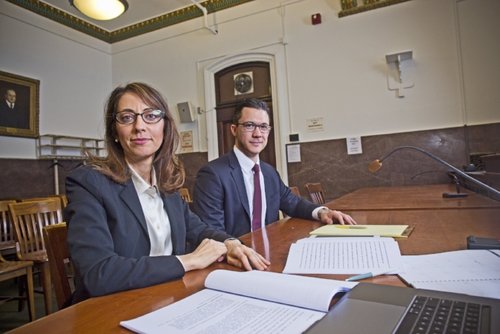
Criminal Defense Attorneys
If you are facing criminal charges or under investigation by the police, we can help. We have successfully defended thousands of clients against criminal charges in courts throughout Pennsylvania and New Jersey. We have successfully obtained full acquittals in cases involving charges such as Conspiracy, Aggravated Assault, and Attempted Murder. Our award-winning Philadelphia criminal defense lawyers offer a free criminal defense strategy session to any potential client. Call 267-225-2545 to speak with an experienced and understanding defense attorney today.

NJ Supreme Court: Most Expert Testimony Concerning “Child Sexual Abuse Accommodation Syndrome” Is Inadmissible

Philadelphia Criminal Defense Lawyer Zak Goldstein
The Supreme Court of New Jersey has decided the case of State v. J.L.G., holding that the prosecution cannot introduce expert testimony regarding “Child Sexual Abuse Accommodation Syndrome” (CSAAS) in general and its component behaviors, with the exception of delayed disclosure, at trial. Specifically, the Court found that this evidence, other than delayed disclosure, does not have a sufficiently reliable basis in science to be the subject of expert testimony. This is a truly significant decision that will no doubt affect countless child sex cases.
State v. J.L.G.
In J.L.G., the defendant was charged with first-degree aggravated sexual assault, third-degree aggravated sexual criminal sexual contact, second-degree endangering the welfare of a child, and third-degree witness tampering. The complainant in the case was the defendant’s stepdaughter. The complainant testified that the defendant abused her on a daily basis for approximately eighteen months. At one point, the defendant pointed a gun at her and threatened to hurt her, her mother, and her brother if she told anyone about the abuse. Further, the complainant did not tell anyone because she was embarrassed about the abuse.
On one occasion, a friend of the complainant’s mother visited her residence and found the defendant lying on top of the complainant with an erection. The complainant’s mother became aware of this incident and threatened to kill the defendant. However, the complainant, fearful that her mother would do something that would result in her getting arrested, denied any sexual activity was occurring. Eventually, the complainant did tell her mother about the abuse. The complainant then made a statement to the prosecutor’s office and, under the guidance of the detectives, the complainant called defendant. In these conversations, which were recorded, the defendant offered to give the complainant money if she would withdraw the allegations. The complainant also had an audio recording of the last time the defendant abused her which the Court described as “graphic.”
Police arrested the defendant and charged him with the previously mentioned crimes. At trial, the State presented evidence through various witnesses and the recorded phone conversations and interaction with the defendant. Additionally, the State also presented expert testimony. Specifically, the State called a clinical psychologist who testified about CSAAS. The defendant had filed a pre-trial motion to exclude this testimony, but the motion was denied. At the conclusion of the trial, the jury convicted the defendant on all charges. The defendant then filed a timely appeal.
What is CSAAS?
Dr. Roland Summit is credited for creating CSAAS. In 1983, he published an article which he described the syndrome as “a common denominator of the most frequently observed” behaviors of child sexual abuse victims. In essence, CSAAS testimony is used to explain how a sexually abused child behaves and why a child may not immediately report abuse. According to Dr. Summit, there are several frequently observed behaviors of child abuse victims. These “components” form CSAAS and are: secrecy, helplessness, entrapment and accommodation, delayed, conflicted, and unconvincing disclosure, and retraction. If a child were to exhibit these behaviors, according to Dr. Summit, CSAAS can be used to support the theory that the child was abused.
Notably, neither the American Psychiatric Association nor the American Psychological Association has recognized CSAAS. Further, this syndrome does not appear in the Diagnostic and Statistical Manual of Mental Disorders (DSM-5), which is the authoritative list of mental disorders. CSAAS has been undermined by a number of scientific studies. Despite this, in 1993, the New Jersey Supreme Court in State v. J.Q., 130 N.J. 554 (1993) held that CSAAS had “sufficiently reliable scientific basis” to be presented to a jury. The Court opined that its introduction allowed juries to understand “traits found in children who have been abused” and thus allowed expert testimony of CSAAS to be introduced in criminal trials.
What is Expert Testimony?
To put it simply, expert testimony is testimony about a subject that is beyond the range of knowledge of the average person. Expert testimony is used in a variety of cases. To give an example, experts are frequently called to testify in drug cases. Typically, the Commonwealth would not need an expert if a defendant was charged with Possession with the Intent to Deliver and the facts demonstrated that a defendant exchanged drugs for money. However, an expert may be needed if a defendant was not seen engaging in a hand-to-hand transaction, but instead was arrested with a significant amount of narcotics on his person. The average person might not know that particular amount of drugs is enough to establish that the defendant possessed those drugs with the intent to sell them and thus the Commonwealth may need an expert to prove its case.
In New Jersey, Rule 702 of the Rules of Evidence governs the admission of expert testimony. In order to introduce expert testimony they must establish: 1) the subject matter of the testimony must be “beyond the ken of the average juror”; 2) the field of inquiry “must be at a state of the art such that an expert’s testimony could be sufficiently reliable;” and 3) “the witness must have sufficient expertise to offer the” testimony. However, this is not the end of the analysis. The trial court then must make a determination as to whether the science underlying the proposed expert testimony has “gained general acceptance in the particular field in which it belongs.” This is known as the Frye standard.
The Frye standard does not require a universal acceptance by the scientific community. Nonetheless, the proponent must show that there is general acceptance of the what the expert is going to testify to. The proponent can do this numerous ways: they can introduce judicial opinions, scientific or legal articles, and expert testimony to establish that the science is generally accepted. Notably, Pennsylvania also uses the Frye standard, whereas federal courts use a different test.
New Jersey Supreme Court Dramatically Restricts Expert Testimony Concerning CSAAS in Criminal Cases
In State v. J.L.G., the Supreme Court of New Jersey dramatically restricted the introduction of CSAAS testimony in criminal trials. First, the Court reiterated that expert testimony can only be introduced when the evidence is beyond the understanding of the average juror. In the instant case, the complainant gave what the court described as “straightforward reasons” as to why the she did not immediately report the defendant’s abuse. Specifically, she did not report because she was embarrassed, the defendant had threatened her if she reported, and she was worried that her mother would incur criminal charges if she were to disclose said abuse. Therefore, CSAAS testimony was not necessary to show why there was a delayed report. The Court went on to say that if the child cannot offer a rational explanation as to why there was a delayed report, then the prosecution can introduce expert testimony to help understand the witness’s behavior. However, this was not applicable in the instant case and thus the trial court erred in allowing CSAAS testimony in the first place.
The Court did not end its analysis there. The Court also addressed whether CSAAS testimony satisfies the Frye standard. To make this determination, the Court conducted a lengthy analysis of CSAAS and studied its origins and subsequent critiques by other experts. The Court found that there is a lack of data supporting CSAAS. The Court further highlighted that it is not in the Diagnostic and Statistical Manual of Mental Disorders and that it has not been accepted by the American Psychiatric Association and other notable associations. Further, there is limited scientific and empirical support for the majority of the individual components of CSAAS. As such, the Court found that with the exception of delayed reporting (because there is consistent and long-standing support in scientific literature to support that most child victims of sexual abuse do not immediately report their abuse), there is not enough scientific support to allow experts to testify to the other components of CSAAS.
In the instant case, this was a hollow victory for the defendant. Despite the Court agreeing with the defendant that this evidence should not have been introduced at trial, the Court found that this was a harmless error because the evidence against the defendant was so overwhelming. As such, the defendant will not get a new trial and will serve the majority of his 23 year prison term.
Facing Criminal Charges? We Can Help.

Goldstein Mehta LLC Criminal Defense Attorneys
If you are facing criminal charges or under investigation by the police, we can help. We have successfully defended thousands of clients against criminal charges in courts throughout Pennsylvania and New Jersey. We have successfully obtained full acquittals in cases involving charges such as Conspiracy, Aggravated Assault, and Attempted Murder. Our award-winning Philadelphia criminal defense lawyers offer a free criminal defense strategy session to any potential client. Call 267-225-2545 to speak with an experienced and understanding defense attorney today.