

Philadelphia Criminal Defense Blog

Withdrawing a Guilty Plea in Pennsylvania
I pleaded guilty, and I think it was a mistake. Can I withdraw a guilty plea?
Yes, in some cases it is possible to withdraw a guilty plea and go to trial. However, there are strict time limits for when motions to withdraw guilty pleas must be filed, and the motions are often difficult to win. If you recently pleaded guilty and feel that you may have made a mistake, you should contact one of our defense attorneys at 267-225-2545 immediately to discuss the merits of withdrawing your plea and the likelihood of success. If you wait too long, you could waive the right to challenge your plea forever.
How do I withdraw a guilty plea?
There are three ways that a guilty plea could be withdrawn. First, if the sentencing has not yet occurred, then the defendant may file a written pre-sentence motion to withdraw the guilty plea. Second, if the sentencing has already occurred, then the defendant has ten days from the date of sentencing to file a post-sentence motion asking the court to permit the defendant to withdraw the guilty plea. Finally, in rare cases, it may be possible to ask the judge for a new trial even after a guilty plea by filing a Post-Conviction Relief Act Petition. A PCRA Petition must be filed within one year from when the sentence became final. A sentence becomes final on the day of sentencing unless there is an appeal. Post-sentence motions and PCRA Petitions challenging guilty pleas are difficult to win.
Does the judge have to let me withdraw the plea?

Demetra Mehta, Esq. - Criminal Appeals Attorney
The judge is never required to allow a defendant to withdraw a plea. Instead, the judge must evaluate the allegations in the written motion and determine whether the interests of justice require that the defendant be allowed to withdraw a plea and proceed to trial. The exact standard which a judge will apply depends on the procedural posture of the case. Pre-sentence guilty pleas are typically easier to undo than a post-sentence guilty plea.
As a general rule, pre-sentence guilty pleas are the easiest to undo and motions to withdraw them are often granted. However, the right to withdraw a plea pre-sentencing is not absolute. in Commonweatlh v. Carrasquillo, the Pennsylvania Supreme Court re-affirmed that the trial court is imbued with the discretion to deny a defendant permission to withdraw a guilty plea, whether that request is tendered before or after sentencing. The Supreme Court suggested that a pre-sentence motion should typically be granted, but it reiterated that there is no absolute right to withdraw a guilty plea. Instead, trial courts have discretion in determining whether a withdrawal request will be granted; such discretion is to be administered liberally in favor of the accused; and any demonstration by a defendant of a fair-and-just reason will suffice to support a grant, unless withdrawal would work substantial prejudice to the Commonwealth.
Prior to Carrasquillo, a defendant was entitled to pre-sentence withdrawal of a guilty plea simply upon a bare assertion of innocence. Now, a defendant may be required to demonstrate that the claim of innocence is plausible in order for it to be a fair and just reason for withdrawal of a plea. Thus, in the recent Superior Court case of Commonwealth v. Baez, the Pennsylvania Superior Court upheld the trial court's denial of a pre-sentence motion to withdraw a guilty plea where the defendant had picked a jury, heard from a number of witnesses, and then decided to plead guilty to various sexual offenses pursuant to negotiations with the prosecution. The Baez court concluded that the Commonwealth would suffer prejudice because child witnesses had already been required to testify and that the defendant had not provided a plausible claim of innocence.

Zak T. Goldstein, Esq. - Philadelphia Criminal Appeals Lawyer
Pre-sentence motions are no longer guaranteed, but they are often granted. Post-sentence motions, however, are much more difficult to win. Nonetheless, they may still be granted in some cases. Post-sentence motions for withdrawal are subject to higher scrutiny because courts strive to discourage entry of guilty pleas as sentence-testing devices. Instead, a defendant must demonstrate that manifest injustice would result if the court were to deny his post-sentence motion to withdraw a guilty plea. This is a harder claim to prove, and it will typically require more than simply asserting the defendant's innocence. Instead, the defense would likely be required to show a compelling case for innocence or that some new evidence or witnesses have come forward since the plea. The post-sentence motion to withdraw a guilty plea must be filed within ten days of the sentence.
Finally, in rare cases, it may be possible to attack a conviction through the Post-Conviction Relief Act Petition by filing a PCRA Petition within one year of sentencing or the conclusion of direct appeals, whichever is later. If the defendant can show that the plea was the result of ineffectiveness of counsel, that after-discovered, exculpatory evidence would have changed the defendant's mind about pleading guilty, or some change in constitutional law that would have provided a defense, it may be possible to challenge a guilty plea by filing a PCRA. Again, the time limits are strict, and if motions are not filed on time, then the right to attack the conviction could be lost forever.
What happens if I am allowed to withdraw the guilty plea?
If the judge grants the motion to withdraw the plea, then your case will proceed as if the plea was never entered. This means that the parties are free to continue plea negotiations in the hopes of reaching a better deal. The parties may also litigate motions like pre-trial motions to suppress and then proceed to trial. Most importantly, the fact that the defendant pleaded guilty at one point during the case and was permitted to withdraw the plea is not admissible against the defendant at trial. The Rules of Evidence specifically prohibit introducing evidence relating to plea negotiations and in-court plea proceedings. This means that the fact that there was at one point a guilty plea cannot be used against the defendant to show guilt.
Philadelphia Criminal Defense Lawyers for Post-Sentence Motions, Criminal Appeals, and Post-Conviction Relief Act Petitions

Goldstein Mehta LLC - Philadelphia Criminal Defense Attorneys
If you recently pleaded guilty and believe that you made a mistake, we may be able to help. We have successfully helped clients reverse convictions and pleas through the use of post-sentence motions, appeals, and Post-Conviction Relief Act Petitions. It is important to remember that strict deadlines apply when attempting to undo a guilty plea. We offer a free criminal defense strategy session with one of our experienced and understanding defense attorneys to every potential client. Call 267-225-2545 to speak with an award-winning Philadelphia Criminal Defense Lawyer today.
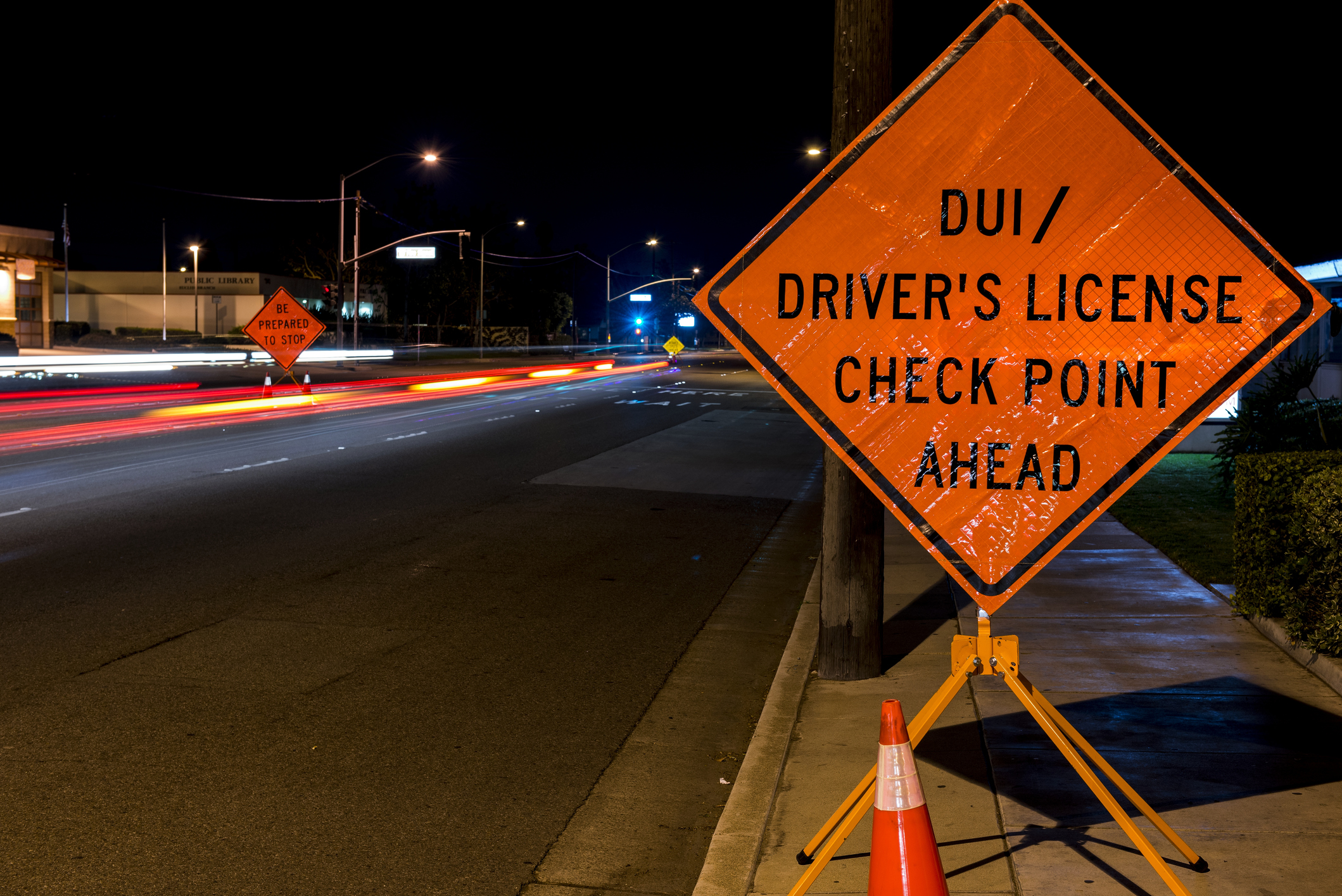
PA Superior Court: Summary Traffic Offenses May Be Charged Separately From Serious Offenses in Philadelphia
For many years, it was the routine practice of the Philadelphia Police Department to charge summary traffic offenses and more serious charges like DUI or possessory offenses separately. For example, if police pulled a car over for speeding and ultimately found a gun in the car or ended up charging the driver with DUI, then the Commonwealth would bring the summary speeding charge in Philadelphia Traffic Court and the more serious gun charge or DUI charge in either the Municipal Court or the Court of Common Pleas. Thus, a defendant who wished to challenge the traffic citation would be required to attend twice as many court dates and hire a defense attorney twice.
This practice arguably violates Pennsylvania's compulsory joinder statute. Pennsylvania has a compulsory joinder statute which is codified at 18 Pa C.S. § 110. At its most basic level, a compulsory joinder statute requires the prosecution to bring charges which arise out of the same incident together in a single prosecution. This spares the defendant the additional time, expense, and stress of defending against two separate cases, and in this sense, compulsory joinder is very similar and related to the idea of Double Jeopardy – that a defendant may not be prosecuted for the same crime twice. Pennsylvania appellate courts had repeatedly ruled that under a prior version of Section 110 (the joinder statute), summary offenses were just different and did not count because the Court of Common Pleas held jurisdiction over misdemeanors and felonies and the Magisterial District Courts had jurisdiction over summaries. Therefore, the prosecution and police could bring summary traffic prosecutions in traffic court and misdemeanor and felony prosecutions in the Municipal Court and Court of Common Pleas.
In 2002, the Pennsylvania Legislature amended the statute to change language requiring compulsory joinder where the offenses occurred within courts of the same jurisdiction to offenses which occurred within the same judicial district. This language arguably has a dramatic impact. Instead of summaries being different due to the differing jurisdictions of the courts, the question became whether the offense occurred in the same judicial district. This issue became even more important approximately ten years later when the Philadelphia Traffic Court became enmeshed in scandal and was abolished. After the court was abolished, its functions were merged into the Philadelphia Municipal Court – Traffic Division. Thus, any argument that summary offenses were not within the same judicial district or that the Municipal Court did not have jurisdiction became extremely weak, and defense lawyers began to successfully move for cases to be dismissed due to the fact that summary traffic cases arising out of the same stop had already been resolved.
In the vast majority of cases, the traffic ticket would be resolved much faster than the criminal case. The traffic court hearings were scheduled more quickly, and if a defendant failed to appear for court, the defendant would be found guilty in absentia. Further, many defendants pay their traffic tickets online, by phone, or through the mail rather than going to court to fight them. This meant that a traffic court case could be disposed of within a month or two, and the defense could then move to dismiss the criminal case as violating the compulsory joinder rule. Once prosecutions realized they had a potential problem, Philadelphia Police quickly changed their procedures and stopped issuing traffic tickets in cases where they also intended to charge the defendant with a more serious crime. However, many existing cases were successfully dismissed because the traffic tickets had already been resolved.
Although this issue is not as prevalent today because a large number of the cases in which this happened have already been resolved, the Superior Court has just held that the unique rules establishing the Philadelphia Municipal Court – Traffic Division trump the compulsory joinder rule and allow the traffic citations to be issued separately from the criminal charges.
On August 30, 2017, the Pennsylvania Superior Court issued its decision in Commonwealth v. Perfetto. The Superior Court overturned the trial court’s decision granting Mr. Perfetto’s Motion to Dismiss. Although this decision is limited to Philadelphia, it could potentially affect a large number of defendants who are charged with Driving Under The Influence (“DUI.”)
Commonwealth v. Perfetto
In July 2014, Mr. Perfetto was arrested in Philadelphia and charged with three counts of “DUI.” Mr. Perfetto was also charged with the summary offense of driving without lights as required, a traffic citation. Although traffic citations are not considered very serious, they are still summary offenses, and all summary offenses are crimes under Pennsylvania law. In September 2014, Mr. Perfetto was found guilty of the traffic citation by the Philadelphia Municipal Court – Traffic Division. In June 2015, Mr. Perfetto filed a motion to dismiss in his DUI case, arguing that § 110 barred the prosecution. The trial court agreed with Mr. Perfetto and dismissed the DUI case. The court granted the motion because Mr. Perfetto’s case satisfied the four requirements of § 110. Shortly thereafter, the Commonwealth filed an appeal, arguing that Mr. Perfetto’s subsequent DUI prosecution was not barred by § 110.
What is Double Jeopardy and § 110?
Double Jeopardy is mentioned in both the United States Constitution (5th Amendment) and the Pennsylvania Constitution (Article 1, Section 10). Double Jeopardy is the rule that the same government cannot put you on trial for the same charges twice. For example, let’s say a defendant is accused of punching a complainant in the face and is charged with Simple Assault and Recklessly Endangering Another Person (REAP). If the defendant was acquitted of these charges, the same government could not put that defendant on trial again for those charges because Double Jeopardy would forbid it. This rule does not always apply against other levels of government. For example, a federal prosecution will prevent the Commonwealth of Pennsylvania from bringing a subsequent prosecution, but a Pennsylvania prosecution will not prevent the United States from bringing a federal prosecution.
The idea of compulsory joinder is similar and arises out of many of the same concerns of Double Jeopardy. As previously explained, Section 110 provides Pennsylvania’s compulsory joinder rule. § 110 is similar to the Double Jeopardy clauses of the Pennsylvania and U.S. Constitutions, but more nuanced. § 110 is the codification of the rule announced in the Pennsylvania Supreme Court decision of Commonwealth v. Campana, 304 A.2d 432 Pa. 1973). In Campana, the Court held that ‘the Double Jeopardy Clause requires a prosecutor to bring, in a single proceeding, all known charges against a defendant arising from a single criminal episode.” Id. at 374. This is known as compulsory joinder. Using the same example above, let’s say that in addition to punching the complaining witness, the defendant also told said this person that he was going to kill him (arguably a Terroristic Threat), however the government only charged him with Simple Assault and REAP. Assuming this defendant is acquitted again, the defendant could not subsequently be tried for the crime of Terroristic Threats. The reason is because the “terroristic threat” came from the same criminal episode as the assault. Again, this would only prevent Pennsylvania from bringing a second prosecution; the federal government may still be able to bring federal charges.
In order to be successful when bringing a § 110 motion to dismiss, the defense must show four things: 1) the former prosecution resulted in an acquittal or conviction; 2) the current prosecution was based on the same criminal conduct or arose from the same criminal episode; 3) the prosecutor in the subsequent trial was aware of the charges before the first trial; and 4) all the charges are within the same judicial district as the former prosecution. The key issue in Mr. Perfetto’s case was the fourth prong of this analysis because it was the fourth prong that changed in the 2002 amendment to the compulsory joinder rule.
The Pennsylvania Superior Court Holds that Philadelphia’s Traffic Division of Municipal Court is a Separate Judicial District
In overturning the trial court’s decision, the Pennsylvania Superior Court made a very technical finding. First, the Court looked to 42 Pa C.S.A. § 1302, a statute which addresses traffic courts. In analyzing the statute, the Court held that when a traffic offense is resolved in a jurisdiction with a traffic court, there is no violation of § 110 if the more serious criminal charges are filed separately. In other words, if a jurisdiction does not have a traffic court, then § 110 would apply if a defendant resolved the traffic offense prior to their criminal offense, but the same is not true when the jurisdiction has a traffic court.
Unfortunately, Philadelphia is different than other jurisdictions in Pennsylvania because its traffic court is specifically mentioned in § 1302. In 2013, Philadelphia’s traffic court merged with Philadelphia’s Municipal Court. This created two divisions: the General Division and the Traffic Division. Therefore, the Municipal Court has jurisdiction over both traffic and criminal offenses. Thus, prior to Perfetto, defense attorneys would argue that because Philadelphia does not have a separate traffic court, §110 applied for traffic offenses.
The Superior Court has now rejected this argument at least as it applies to Philadelphia courts. The Superior Court noted that the Pennsylvania Supreme Court has the power to create rules for the general practice and procedure of the Courts. With this in mind, the Superior Court focused on a May 2014 comment to Pennsylvania Rule of Criminal Procedure 1001(D) which addresses Philadelphia Municipal Court. The comment stated:
This rule, which defines “Municipal Court case,” is intended to ensure that the Municipal Court will take dispositive action, including trial and verdict when appropriate, in any criminal case that does not involve a felony, excluding summary cases under the Vehicle Code. The latter are under the jurisdiction of the Municipal Court Traffic Division, the successor of the Philadelphia Traffic Court.
Pa.R.Crim.P. 1001(D), cmt.
As such, the Superior Court held that the Supreme Court’s intent was for the traffic division of the Municipal Court to exclusively hear the traffic offenses. Thus, the Superior Court held that, in essence, Philadelphia’s Municipal Court traffic division is analogous to a jurisdiction with its own separate traffic court. Consequently, the Superior Court held that § 110 does not bar subsequent prosecution of a criminal offense when there has been a prior disposition of a traffic offense in Philadelphia. The Superior Court reversed the ruling of the trial court, and Mr. Perfetto’s case was remanded back to the Philadelphia Municipal Court for trial.
DUI Cases
At this point, the impact of Perfetto is relatively limited. For a number of years, unpublished opinions of the Pennsylvania Superior Court reached the opposite conclusion, so a large number of cases have already been dismissed and cannot be reinstated. For those cases which were on appeal and awaiting the decision in Perfetto, the defendants will now face prosecution once again. However, the Philadelphia Police Department stopped issuing separate traffic citations a number of years ago due to this rule, so the decision is not likely to substantially affect newly charged defendants. Certainly, Perfetto will likely be appealed to the Pennsylvania Supreme Court, and the issue may not be resolved.
Philadelphia Criminal Defense Lawyers

Philadelphia Criminal Defense Attorneys
As always, DUI cases can be very technical and there are a number of ways to beat them. If you are charged with DUI, you need an attorney who has the knowledge and expertise to fight your case. Our award-winning Philadelphia criminal defense lawyers have successfully fought countless cases at trial and on appeal. We offer a 15-minute criminal defense strategy session to any potential client. Call 267-225-2545 to discuss your case with an experienced and understanding criminal defense attorney today.

PA Superior Court Permits Appeal of Motion to Suppress Despite Guilty Plea

Criminal Defense Attorney Zak T. Goldstein, Esquire
The Pennsylvania Superior Court has just decided the case of Commonwealth v. Singleton, permitting the defendant to appeal the trial court’s denial of a motion to suppress despite the fact that the defendant pleaded guilty. Singleton could have a dramatic impact on plea negotiations throughout the Commonwealth as it suggests that a defendant may be able to litigate a motion to suppress and reserve the right to appeal the denial of the motion to suppress as part of a negotiated plea. Before Singleton, it was not totally clear whether the Superior Court would reach the merits of an appeal in a case in which the defendant attempted to plead guilty as part of a “conditional guilty plea.”
Types of Guilty Pleas
In general, there are two types of guilty pleas – negotiated guilty pleas and “open” or non-negotiated guilty pleas. In the case of a negotiated guilty plea, the defense and the prosecution reach an agreement as to what charges the defendant will plead guilty and what sentence the judge should impose. For example, if the defendant is charged with felony Robbery but the Commonwealth has a shaky case, the prosecutor may offer a misdemeanor Simple Assault charge and probation in exchange for the guilty plea. The defendant avoids the risk of a felony conviction and jail time, and the prosecution obtains a conviction and restitution for the complainant. Thus, both sides may be happy with the result. When the defendant pleads guilty pursuant to a negotiated guilty plea, the judge may not reject the sentence and impose his or her preferred sentence. Instead, if the judge finds that the negotiated plea is either too harsh or too lenient, the judge must permit the defendant to withdraw the plea and go to trial if the defendant wishes to do so. Alternatively, the defendant may proceed to sentencing and allow the judge to decide on the sentence, which is often going to be worse than what was negotiated.
In the case of an open guilty plea, the defendant pleads guilty to the charges without any kind of negotiations. In many cases, the Commonwealth’s plea offer is simply unreasonable and should be rejected. At the same time, the defendant may not have a viable defense to the charges. The judge, who is tasked with resolving the backload of cases in the criminal justice system, may be willing to sentence the defendant to something significantly less than the sentence requested by the prosecution. Unfortunately, losing a trial is far more likely to result in a jail sentence than pleading guilty. Therefore, the defendant who is unlikely to win his or her case may be better served by pleading guilty and focusing on convincing the judge to impose a lighter sentence than the sentence sought by the Commonwealth. In an open guilty plea, both sides may make recommendations, present witnesses and evidence, and argue to the judge for the recommended sentence. The judge will then decide on the sentence. Open pleas are increasingly common due to the elimination of most of Pennsylvania’s mandatory minimum sentence laws.
Conditional Guilty Pleas in Pennsylvania
Following Singleton, there may be a third type of guilty plea called a conditional guilty plea. Conditional pleas are extremely common in New Jersey, but it has not been totally settled whether they are allowed in Pennsylvania. In a conditional guilty plea, a defendant who has lost a pre-trial motion such as a motion to suppress evidence may plead guilty pursuant to negotiations for an agreed upon sentence. As part of the negotiations, the Commonwealth may agree that the defendant can appeal the denial of the motion to suppress. In the case of a normal negotiated or open guilty plea, the defendant retains very few rights on appeal and cannot appeal the denial of a pre-trial motion. A conditional guilty plea allows the defendant to retain the right to appeal specified issues and still enjoy the certainty of the negotiations. Thus, the defendant does not have to risk receiving a greater sentence as a punishment for going to trial solely to preserve appellate rights.
Commonwealth v. Singleton
In Singleton, the defendant was arrested and charged with Possession with the Intent to Deliver. The defendant filed a motion to suppress. At the motions hearing, Philadelphia police officers testified that they were on patrol near a major train terminal which was a known location for drug sales. There had also recently been a number of robberies in the area. Officers testified that they saw the defendant wearing a hoodie which appeared to have a heavy object in the pocket. The officers were concerned that the object could be a weapon, so they approached the defendant, who had sat down on a ledge. As the officers approached, the defendant looked at them, took a black bag out of his sweatshirt, and placed it behind him. The officers continued to believe that the bag could contain a weapon.
Police asked the defendant about the bag, and the defendant did not answer. One of the officers testified that he was able to see through the side of bag and that it contained jars of red syrup, which the officer recognized as codeine syrup. The officers arrested the defendant for PWID and found both heroin and marijuana during a search incident to arrest. The trial court denied the motion to suppress, finding that the initial encounter with the defendant was only a mere encounter. The trial court further found that the officers observed drugs in plain view, which gave them the necessary probable cause to arrest the defendant and search him. Because police never officially stopped or searched the defendant prior to viewing the drugs, the court denied the motion. After the trial court denied the motion, the defendant entered into a conditional guilty plea with the prosecution. The plea provided for a sentence of 11.5 to 23 months of incarceration to be followed by five years of probation, and the plea agreement specifically provided that the defendant could appeal the denial of the Motion to Suppress.
On appeal, the Superior Court upheld the trial court’s order denying the Motion to Suppress. However, the case is notable for the fact that the Superior Court agreed to reach the merits of the issue despite the fact that the defendant had pleaded guilty. Normally, the guilty plea makes it impossible to challenge the denial of the Motion to Suppress on appeal. Here, the Superior Court ruled that because the plea agreement reserved the right to appeal and the Commonwealth did not object in its brief, the Court could reach the merits of the appeal.
If this trend is upheld, Singleton creates less risk and more certainty for both sides as the defendant can accept a pre-trial offer for reduced charges or less jail time while still retaining the ability to challenge a wrongfully denied motion to suppress in the Superior Court. The Commonwealth, meanwhile, saves the time and expense of going to trial in a case in which the real defense was a pre-trial motion and not whether or not the defendant committed the crime. In many drug and gun cases, the real issue will be whether the police conducted a legal search and not whether the defendant possessed the contraband in question. Without the ability to enter into a conditional guilty plea, the defendant who has lost a strong motion to suppress has to choose between going to trial and potentially receiving a worse sentence and pleading guilty and waiving the right to appeal. Now, the defendant may not have to make that unfair choice.
Call For A Free Strategy Session With An Award-Winning Philadelphia Criminal Defense Attorney

Goldstein Mehta LLC Criminal Defense Lawyers
As always, if you are facing criminal charges, we can help. Our award-winning Philadelphia criminal defense lawyers have won countless pre-trial motions, bench trials, and jury trials, and we have also successfully resolved many cases through negotiations which resulted in excellent outcomes for our clients. We offer a 15-minute criminal defense strategy session to any potential client, so call 267-225-2545 to speak with one of our experienced and understanding defense attorneys today.

PA Superior Court: Defendant Must Be Permitted To Rebut Commonwealth's 404(b) Prior Bad Acts Evidence
The Pennsylvania Superior Court has just decided the case of Commonwealth v. Yocolano, holding that the defendant's conviction must be reversed because the trial court improperly prevented the defendant from rebutting the Commonwealth's 404(b) Prior Bad Acts evidence. Under the Pennsylvania Rules of Evidence, prosecutors may file a motion asking the trial court to allow them to introduce evidence of "prior bad acts" or crimes committed by a defendant. This type of evidence can be extremely prejudicial to the defendant, and the Superior Court has now ruled that the defense must be permitted to call witnesses to rebut this highly prejudicial testimony when such witnesses are available.
Commonwealth v. Yocolano
In Yocolano, the defendant was charged with Aggravated Assault and various sexual assault charges against his paramour, who is referred to in the opinion as A.A. The testimony established that Mr. Yocolano and A.A. were in an on-again, off-again romantic relationship dating back to 2010 and had a child together. Throughout their relationship, there were multiple alleged instances of domestic violence. The police were called on several occasions. For example, in 2010, the police responded to a call that Mr. Yocolano had an altercation with A.A. where he chased her and caused damage to A.A.’s father’s house. In 2012, the police were called on several occasions including: an incident where police were called after Mr. Yocolano threatened A.A. with a machete; an argument between A.A. and Mr. Yocolano; A.A. calling the police on Mr. Yocolano after expressing suicidal thoughts after an argument between the two; A.A. filing a police report against Mr. Yocolano after he threatened and choked her; and Mr. Yocolano punching A.A. in the head and threatening to kill her and her family. In October of 2012, A.A. obtained a Protection from Abuse “PFA” against Mr. Yocolano. This incident led to the charges in question, and Mr. Yocolano was subsequently arrested.
Both before and during the trial, the Commonwealth filed multiple 404(b) motions in Mr. Yocolano’s case. Specifically, the Commonwealth sought to introduce evidence from the 2010 incident and three incidents from 2012. The prosecutors also sought to introduce two PFA’s against Mr. Yocolano filed by women other than A.A. on the fourth day of trial, and the trial court permitted the prosecution to introduce all of the prior bad acts evidence.
What is a 404(b) Prior Bad Acts Motion?
In most cases, a prosecutor may only use evidence against a defendant relating to the crimes alleged in the complaint. This means that prosecutors cannot simply tell a judge or jury that the defendant is a criminal or has a criminal record. A 404(b) Motion, commonly referred to as a “Prior Bad Acts Motion,” allows the Commonwealth to introduce prior acts against a defendant in the present criminal case against him under certain limited circumstances. A 404(b) motion cannot be used to prove a person’s character (i.e. that because a defendant did something bad once in their life, they are a bad person and thus did this crime), but rather it can be used to show motive, opportunity, intent, absence of mistake, knowledge, lack of accident, preparation, and plan. In domestic violence cases, 404(b) motions are common, and appellate courts have held that in some cases, they may be used to show “the continual nature of abuse and to show the defendant’s motive, malice, intent and ill-will toward the victim.” Commonwealth v. Ivy, 146 A.3d 241, 251 (Pa. Super. Ct. 2016). Accordingly, prosecutors routinely argue that prior convictions or allegations of violence between the defendant and the complainant provided the defendant with the motive for the criminal behavior alleged in the current case or would show that the injuries could not have been caused as the result of an accident.
Defending Against 404(b) Motions
Obviously, prosecutors gain a tremendous advantage when they are permitted to inform a judge or jury of a defendant's prior record. The judge or jury become much less likely to be sympathetic and far more likely to believe that if the defendant committed a crime before, he or she must have committed a crime again. However, it is possible in many cases to successfully oppose these motions or limit the damage. In some cases, it may be possible to show a lack of similarity between the conduct or that the prejudicial effect would substantially outweigh any probative value. It also may be possible to successfully argue that the prior conviction does not establish any of the requirements which the Commonwealth must show. In other cases, it may be possible to call eyewitness from the other incidents to show that the other allegations are also false. Therefore, if you are charged with a crime and a prosecutor is seeking to introduce prior bad acts against you, it is imperative that you have a skilled attorney who can litigate a motion to prevent these prior bad acts from being introduced into trial or attempt to limit the damage by thoroughly investigating the allegations. In Mr. Yocolano’s case, his attorney was unsuccessful in opposing the three incidents from 2012, the incident from 2010, and the prior PFA’s which were filed by other women.
Although the defense could not keep this highly prejudicial evidence out, the defense had thoroughly investigated the case and located a number of witnesses which were ready to rebut the prior bad act allegations. During the trial, the defense attempted to introduce evidence that would rebut the 2010 incident. However, the trial court precluded the defense from introducing evidence to rebut the claim, holding that it was “collateral.” Specifically, the trial court only allowed the defendant to introduce evidence that would rebut the allegations from December 6, 2012 (the day on which the crimes for which he was on trial allegedly took place) and was not allowed to introduce any evidence that would rebut the “prior bad acts” that the trial court had found admissible. Given all of this prejudicial testimony from other incidents, the defendant was ultimately convicted and sentenced to 18-36 years of incarceration.
Yocolano appealed, and the Superior Court reversed the conviction. The Court found that the trial court abused its discretion in preventing Mr. Yocolano from introducing evidence that would rebut these claims. The Superior Court cited an important Pennsylvania Supreme Court case called Commonwealth v. Ballard which held that “where the evidence proposed goes to the impeachment of the testimony of his opponent’s witness, it is admissible as a matter of right.” The Superior Court properly recognized that Mr. Yocolano should have been allowed to “test the veracity of A.A.’s version of events.”
Protection from Abuse Orders and Rule 404(b)
The Superior Court also held that the trial court abused its discretion when it permitted the two PFA’s from different women to be introduced. Rule 404(b)(3) states that a prosecutor must provide “reasonable notice” if they seek to introduce these prior bad acts. Reasonable notice typically means that the prosecution must inform the defense in writing and in advance of the intent to introduce prior bad acts evidence. There are exceptions which allow the prosecution to introduce prior bad acts during trial where the prosecution can show good cause for the failure to provide prior notice.
Unfortunately, it is not uncommon for prosecutors to provide the defense with previously undisclosed evidence on the day of trial. Most judges will either permit the defendant to continue the case or preclude the last-minute evidence from being introduced. However, in this case, the Commonwealth provided the unrelated Protection from Abuse Orders against Mr. Yocolono on the fourth day of trial. The Commonwealth stated that the reason for the late discovery was because the prosecutor had just looked in the computer system mid-trial and happened to find the records.
The Superior Court rejected the Commonwealth's argument that this constituted good cause. The Court held that the Commonwealth’s excuse did “not qualify as a valid legal excuse.” Further, the Superior Court was skeptical that these third-party PFA’s would have met the substantive requirements of 404(b). In Mr. Yocolono’s case, the trial court failed to analyze the facts of the two other PFA’s and identify “a close factual nexus sufficient to demonstrative the connective relevance of the third-party PFAs to the crimes in question.” Based on all of these errors, the Superior Court ordered that the sentence be vacated and that the defendant receive a new trial.
Facing Criminal Charges? We Can Help

Philadelphia Criminal Defense Lawyers Demetra Mehta, Esq. and Zak T. Goldstein, Esq.
Domestic violence and other assault cases are often more complicated than they would seem. In cases where the prosecution seeks to introduce prior bad acts evidence, the defense must thoroughly investigate the case and strongly oppose these 404(b) motions both on the law and on the facts. If you are facing criminal charges, you need an attorney who has the knowledge and expertise to defend your case. Our award-winning Philadelphia criminal defense lawyers have successfully fought countless cases at trial and on appeal. We offer a 15-minute criminal defense strategy session to any potential client. Call 267-225-2545 to discuss your case with an experienced and understanding criminal defense attorney today.