

Philadelphia Criminal Defense Blog

Federal Sentencing Update: United States Sentencing Commission Proposes Limiting Use of Acquitted Conduct at Sentencing
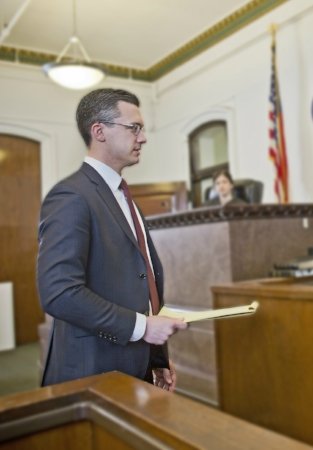
Criminal Defense Lawyer Zak T. Goldstein, Esquire
The United States Sentencing Commission recently proposed a major change to federal sentencing law, indicating that it may bar the use of acquitted conduct at sentencing where defendants have been acquitted of some charges but convicted of others. This would represent a major change in federal sentencing law. Currently, federal judges may sentence criminal defendants based on conduct for which the jury acquitted them. This is an incredibly unfair practice as it means that a defendant may go to trial on two charges, get acquitted by the jury of the more serious charge when the jury finds that the government could not prove the offense beyond a reasonable doubt, and then still be sentenced as if they had been convicted of the more serious charge.
Acquitted conduct is an offense for which the defendant was not convicted. For example, in many cases, defendant could be charged with guns and drugs at the same time. The penalties for federal drug offenses can be draconian on their own, but the presence or use of a firearm during the commission of the drug offense can result in mandatory minimums and federal sentencing guidelines that are exponentially higher. Federal judges take the guidelines incredibly seriously, so the guideline calculation is extremely important. Currently, there is nothing preventing federal judges from treating a defendant who has been convicted of a drug offense but acquitted of the firearm offense the same at sentencing as if the defendant had been convicted of both offenses. This can lead to a drastically longer sentence even though the jury partially acquitted. Federal judges also may often consider conduct for which the defendant was never charged.
Similar sentencing issues can arise in white collar cases, as well. For example, where a jury acquits a defendant of some counts related to a fraud scheme but convicts on others, the judge can currently sentence based on dollar amounts involved in the counts for which the defendant was acquitted. Because the loss amount involved is often the most important factor in the federal sentencing guideline calculation, this can have a significant impact on the resulting sentence.
Numerous defendants have attempted to challenge this practice as violating the Constitution in the United States Supreme Court, but the Supreme Court has rejected those challenges. The Supreme Court concluded in United States v. Watts that “a jury's verdict of acquittal does not prevent the sentencing court from considering conduct underlying the acquitted charge.” Some of the recently confirmed justices have previously signaled that they may reconsider that ruling, but so far, the Court has not accepted any petitions for certiorari on the issue.
The Sentencing Commission, however, could avoid the need for court action should it approve the proposed change. The proposed change would preclude courts from being able to consider acquitted conduct at sentenicng. The Sentencing Commission was created by Congress for the purpose of establishing the rules by which the guidelines are calculated. Ultimately, the guidelines produce a recommended sentencing range for the judge to consider when imposing sentencing. Until recently, the guideline range was actually mandatory and a judge could not sentence below the guidelines under most circumstances. The guidelines are no longer mandatory, but they are still extremely important.
The downside of the change being approved by the Sentencing Commission rather than the Court is that the change would almost certainly not be retroactive. However, this is an important change that strengthens the presumption of innocence and holds the government to its burden of proving a defendant guilty beyond a reasonable doubt. Criminal defendants should not be sentenced for things that the jury found that they did not do.
This change would only affect federal sentencing proceedings. It would not alter the current practice in the Pennsylvania state courts. The Pennsylvania state courts also use sentencing guidelines, but the guidelines are not quite as important as they are in federal court. The state courts are far more likely to depart from them. Further, it is relatively rare for courts to consider acquitted conduct or conduct for which a defendant was not charged in a state court sentencing proceeding. It is not necessarily prohibited at all times, but state court judges almost always agree that they should not hold alleged offenses for which a defendant was acquitted against them.
Facing criminal charges? We can help.
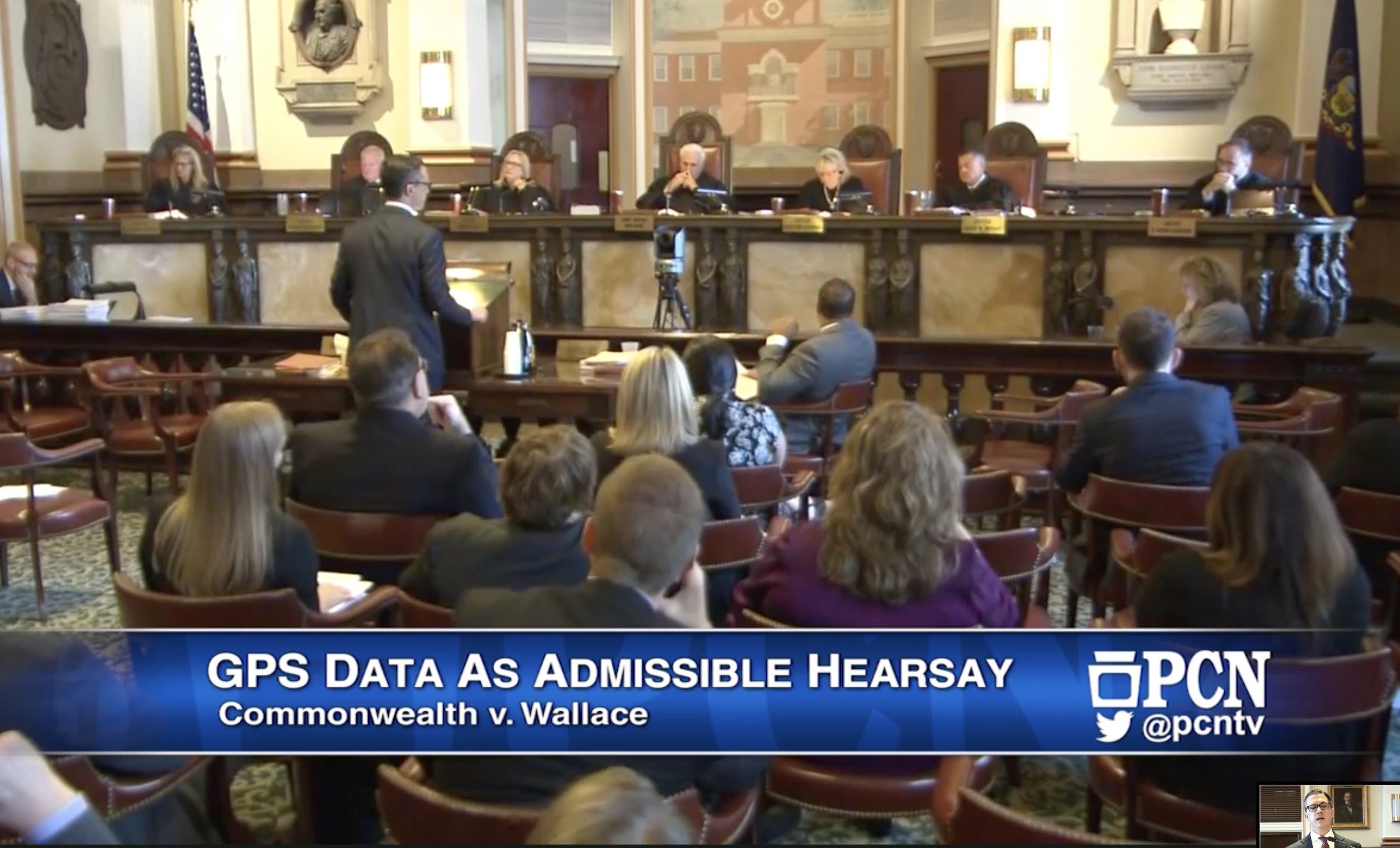
Federal Criminal Defense Lawyer Zak T. Goldstein, Esquire, at oral argument
If you are facing criminal charges or under investigation by the police, we can help. We have successfully defended thousands of clients against criminal charges in courts throughout Pennsylvania and New Jersey. We have successfully obtained full acquittals in cases involving charges such as Conspiracy, Aggravated Assault, Rape, and Murder. We have also won criminal appeals and PCRAs in state and federal court. Our award-winning Philadelphia criminal defense lawyers offer a free criminal defense strategy session to any potential client. Call 267-225-2545 to speak with an experienced and understanding defense attorney today.

Attorney Goldstein Wins Motion to Suppress Firearm

Philadelphia Criminal Defense Lawyer Zak T. Goldstein, Esquire
Philadelphia criminal defense lawyer Zak T. Goldstein, Esquire, recently won a motion to suppress a firearm in the case of Commonwealth v. M.K. In M.K., the defendant was arrested and charged with possession of a firearm by a prohibited person (VUFA § 6105), possession of a concealed firearm without a license (VUFA § 6106), and carrying a firearm on the streets of Philadelphia (VUFA § 6108). Officers claimed that they received a radio call for a shooting in North Philadelphia. While surveying the area, the officers saw a white Chevy Malibu stopped at a stop sign. The officers claimed that it was unusual that the car waited for them to go first though the intersection because the Malibu had arrived at the intersection before them. They therefore started following the vehicle.
While following the vehicle, the officers ran the plate. When the plate did not come back as registered in the NCIC database, the officers stopped the car. They also claimed that they stopped the car because the license plate had a tinted plastic cover on it. When they got up to the car, they began questioning M.K. about whether he had ever been arrested before. As they were questioning him, they received more flash information that a silver Chevy sedan may have been involved in the shooting. Deciding that white and silver could be close enough, the officers decided to detain M.K. After a brief struggle, they removed M.K. from the car, handcuffed him, and placed him in the back of the patrol car. They then found a gun sticking out from underneath the driver’s seat. The officers formally arrested him, and the Philadelphia District Attorney’s Office charged him with the various firearms offenses.
M.K. retained Attorney Goldstein after his prior attorney was unable to have the charges dismissed at the preliminary hearing. Attorney Goldstein reviewed the discovery and the police body camera and immediately filed a motion to suppress. The trial judge in the Philadelphia Court of Common Pleas held a hearing on the motion to suppress. At the motion, Attorney Goldstein argued that police had stopped the car without reasonable suspicion or probable cause because the car was properly registered and the license plate cover was not actually tinted. He also argued that the police had illegally extended the stop by asking M.K. questions that had nothing to do with the purpose of the stop. That purpose was supposedly to investigate the license plate issues.
Through cross-examination, Attorney Goldstein confirmed that the police stopped the car only because of the allegedly tinted license plate cover. He also showed that the officer had not mentioned that the license plate was not producing any results in NCIC in any of the police paperwork. He then argued that the gun should be suppressed because the police had no legitimate reasonable suspicion for stopping the car. On cross examination, the officer confirmed that the car was in fact properly registered and that the system does not always produce results for recently purchased vehicles. Attorney Goldstein also introduced photographs which showed that although the license plate had a plastic cover on it, the plate number was still easily readable.
The Commonwealth argued that any cover at all on a license plate was illegal at the time of the stop, but the after reviewing the motor vehicle code, the trial judge agreed that not only did the plate have to be tinted, it also had to be difficult to read it from a reasonable distance. Here, the photos obtained by Attorney Goldstein showed that the plate was readable, and it was clear that the car was in fact properly registered. Therefore, there was no legitimate reasonable suspicion or probable cause that would support the stop of the car. It also did not help the Commonwealth that the officers had stopped a white car and arrested the driver when the radio call was for a silver sedan. The Common Pleas judge agreed with the defense, finding that the police did not have a basis to make the the stop. As the stop was illegal, anything that was recovered as a result of that illegal stop must be suppressed, leaving the Commonwealth with no evidence to pursue the charges. The Court therefore suppressed all of the evidence against M.K.
It is important to note, however, that this stop took place before a recent change in the law. Under the current motor vehicle code, any tint on a license plate may be the basis for a car stop and a citation. The exact meaning of tint is up for debate in terms of whether any type of covering automatically counts as tint, but the legislature has made it easier for the police to pull a motorist over in a situation like this. Fortunately, Attorney Goldstein recognized that the law had changed and that the Court would have to apply the law that was in effect at the time of the stop. Therefore, the court granted the motion to suppress.
Facing criminal charges? We can help.

Philadelphia Criminal Defense Attorney Zak T. Goldstein, Esquire
If you are facing criminal charges or under investigation by the police, we can help. We have successfully defended thousands of clients against criminal charges in courts throughout Pennsylvania and New Jersey. We have successfully obtained full acquittals in cases involving charges such as Conspiracy, Aggravated Assault, Rape, and Murder. We have also won criminal appeals in state and federal court. Our award-winning Philadelphia criminal defense lawyers offer a free criminal defense strategy session to any potential client. Call 267-225-2545 to speak with an experienced and understanding defense attorney today.

PA Supreme Court: Multiple Third-Degree Murder Convictions at the Same Time Require Life Without Parole

Criminal Defense Lawyer Zak T. Goldstein, Esquire
The Pennsylvania Supreme Court has decided the case of Commonwealth v. Coleman, holding that a criminal defendant who kills three people during the same incident and is then convicted of third degree murder for each killing is subject to the mandatory life without parole sentencing enhancement that applies for multiple convictions for third degree murder. Many statutes that impose enhanced sentences for subsequent offenses require that the offenses take place at different times, but the Supreme Court has held that killing more than one person and then getting convicted of life without parole requires a mandatory life sentence pursuant to 42 Pa. C.S. § 9715(a).
The facts of Commonwealth v. Coleman
Police observed the defendant make an illegal left turn in a white Hyundai. They approached the vehicle when it stopped at a gas station. The defendant did not have a driver’s license, and when additional officers arrived as backup, the defendant fled in the vehicle. This led to a high-speed chase. The defendant eventually crashed the Hyundai into two vehicles at an intersection. The force of the impact caused the vehicle to explode into flames, killing all three occupants of one of the vehicles instantly. Prosecutors charged the defendant with three counts of murder.
At trial, the defendant was convicted of three counts murder in the third degree, amongst other charges. Before sentencing the Commonwealth filed a notice of intent to proceed under Section 9715(a) of the Sentencing Code. The trial court declined to apply the sentencing enhancement and instead imposed consecutive terms of 20 to 40 years of incarceration for each of the defendant’s third-degree murder convictions. The defendant was ultimately sentenced to an aggregate term of 70 to 140 years of incarceration.
The Appeal
The Commonwealth appealed, arguing that the statute requires life imprisonment even where a defendant commits multiple counts of third degree murder at the same time but did not have any prior convictions for murder.
Section 9715 of the Sentencing Code, entitled “Life imprisonment for homicide,” provides:
(a) Mandatory life imprisonment.--Notwithstanding the provisions of section 9712 (relating to sentences for offenses committed with firearms), 9713 (relating to sentences for offenses committed on public transportation) or 9714 (relating to sentences for second and subsequent offenses), any person convicted of murder of the third degree in this Commonwealth who has previously been convicted at any time of murder or voluntary manslaughter in this Commonwealth or of the same or substantially equivalent crime in any other jurisdiction shall be sentenced to life imprisonment, notwithstanding any other provision of this title or other statute to the contrary.
The trial court wrote an opinion in which it argued thatSection 9715(a) was a recidivist sentencing statute and that the defendant was not a recidivist because, while he had been convicted of three counts of criminal homicide, he had never “previously” committed criminal homicide.
Both parties appealed to the Superior Court. The Superior Court ruled in favor of the Commonwealth. The Court found that the defendant should have been sentenced to life without parole. The Superior Court concluded that the defendant’s third-degree murder conviction at Count 1 of the Criminal Information constituted a prior conviction for purposes of applying Section 9715(a) when sentencing him for his convictions of third-degree murder at Counts 2 and 3 of the Criminal Information. The Superior Court therefore remanded the case for the trial court to sentence the defendant to life without parole.
The defendant filed a petition for allowance of appeal to the Supreme Court, and the Pennsylvania Supreme Court agreed to review the case. The Pennsylvania Supreme Court granted discretionary review to resolve the following issue:
Should the mandatory sentencing provision of 9715(a) apply to a case where the offenses and the deaths were simultaneous?
The Defendant argued that Section 9715 of the Sentencing Code should not be construed to apply to a case such as this one, where a single course of conduct caused multiple, instantaneous, simultaneous deaths and the convictions at issue were, at most, minutes apart. The term “previous” in the code is meant to refer to a prior conviction outside the current matter. The Commonwealth focused on principles of statutory construction and Section 9715(a)’s use of the phrase “previously been convicted at any time.” They further argued that the phrase should be interpreted literally, meaning that there is no previous conviction too remote, nor too recent, to be exempt from the rule.
Unfortunately, the Supreme Court decided with the Commonwealth. The Court ruled that § 9715 of the applies under these circumstances. § 9715(a) provides that any person convicted of third-degree murder in this Commonwealth who has previously been convicted at any time of murder must receive an enhanced sentence. The statute does not define any of the terms in this operative phrase. Giving the most pertinent terms their plain and ordinary meaning, the term “at any time,” the General Assembly made clear that there is no limitation relative to a person’s previous conviction that would preclude application of the sentencing enhancement insofar as it concerns § 9715(a). Thus, § to Section 9715(a), so long as a person convicted of third-degree murder has previously been convicted of murder at any point in time, the sentencing enhancement applies to that person.
The Supreme Court, therefore, affirmed the Superior Court’s ruling to vacate defendant’s judgment of sentence and remand for resentencing in accordance with § 9715.
Facing criminal charges? We can help.
If you are facing criminal charges or under investigation by the police, we can help. We have successfully defended thousands of clients against criminal charges in courts throughout Pennsylvania and New Jersey. We have successfully obtained full acquittals in cases involving charges such as Conspiracy, Aggravated Assault, Rape, and Murder. We have also won criminal appeals and PCRAs in state and federal court. Our award-winning Philadelphia criminal defense lawyers offer a free criminal defense strategy session to any potential client. Call 267-225-2545 to speak with an experienced and understanding defense attorney today.

Third Circuit: Loss in Fraud Cases Means Actual Loss, Not Intended Loss

Zak T. Goldstein, Esquire - Criminal Defense Lawyer
The United States Court of Appeals for the Third Circuit, which is the federal appellate court for Pennsylvania and New Jersey, has found that the loss amount in a fraud case must be calculated based on the actual loss inflicted on the victim. Despite suggestions in the commentary to the sentencing guidelines, loss means actual loss - not the intended, hypothetical loss that a defendant may have attempted to cause. This will drastically reduce the guideline range for sentencing purposes for many federal criminal defendants.
In this case, a jury convicted Banks of wire fraud, and the District Court sentenced him to 104 months’ incarceration and three years’ supervised release. On appeal, Banks argued multiple issues, but the issue of significance was whether the District Court erred in applying the loss enhancement, USSG §2B1.1, to the fraud guideline in the United States Sentencing Guidelines because there was no “actual loss.”
The Third Circuit concluded that the loss enhancement in the Guideline’s application notes impermissibly expands the word “loss” to include both intended loss and actual loss. Thus, the District Court erred when it applied the loss enhancement because Banks’s crimes caused no actual loss.
The facts of United States v. Banks
In January 2016, a federal grand jury indicted Frederick Banks for wire fraud, aggravated identity theft, and false statements. The wire fraud charges related to interlocking schemes carried out by Banks to fraudulently gain the money and property of others in relation to the FOREX.COM international exchange system by submitting phony registration information for himself and then using those registrations to execute bogus trades that would drop money into bank accounts that he had set up.
How do you calculate loss in federal fraud cases?
Banks was eventually convicted. He proceeded to sentencing. Before issuing a sentence in a federal case, the district judge must always carefully calculate the applicable sentencing guidelines. In fraud and theft cases, the guidelines are based very heavily on the amount of loss in question. Thus, stealing a small amount can lead to a recommended sentence of federal supervised release or a short jail sentence, while stealing a large amount can lead to a recommendation of an incredibly long amount of prison time. The issue becomes complicated because the definition of loss is not so clear. In this case, the issue was whether loss means the amount that the victims actually lost or instead included the amount that Banks tried to steal.
In computing a sentencing range, Banks’s offense level under the United States Sentencing Guidelines, as calculated by the district judge, included a special offense characteristic for the attempted loss Banks intended to inflict on Gain Capital. The attempted loss, based on fraudulent deposits, was $324,000. Therefore, the base offense level was increased by 12 levels because the attempted loss was greater than $250,000 but less than $550,000. USSG §2B1.1(b)(1)(G) (As a general rule, loss is the greater of actual loss or intended loss, pursuant to Application Note 3 to the sentencing guidelines).
The 12-level increase raised Banks’s adjusted offense level from 7 to 19. During sentencing, the District Court explained that the Sentencing Guidelines defined loss to not only include the actual loss, but to also include the intended loss. And the application notes indicate that the intended loss counts for purposes of calculating the loss amount even if it’s determined to be improbable or impossible that such a loss could have occurred. In this case, the victim suffered $0 in actual losses. The district court, however, used the intended loss amount, which was much higher than $0.
Recently, however, the Courts of Appeals have begun to question whether the application notes, which are essentially comments to the sentencing guidelines, are binding, or whether the court should be limited to using the guideline itself.
The district court used the intended loss figure, and the defendant appealed. On appeal, the Third Circuit reversed and remanded for a new sentencing, finding that loss means actual less. The Court of Appeals relied on Kisor v. Wilkie and Auer v. Robbins in interpreting the Guidelines. Under Kisor, a court must exhaust all the “traditional tools” of construction and consider the “text, structure, history, and purpose of a regulation.” Only then does a court apply Auer, which requires courts to defer to the Sentencing Commission’s commentary for a Guideline unless that interpretation is plainly erroneous or inconsistent with the Guideline.
The Court used a “plain text” analysis to see if there was ambiguity in the way the section was written. The Guideline does not mention “actual” versus “intended” loss; that distinction appears only in the commentary. That absence alone indicates that the Guideline does not include intended loss because there is nothing ambiguous about the term loss. Thus, the ordinary meaning of “loss” in the context of § 2B1.1 is “actual loss.
The Court also reviewed other sources for their definition of loss citing Webster’s New International Dictionary and the 1988 edition of Webster’s Ninth New Collegiate Dictionary. Both of which had matching definitions of “loss.” Next the Court reviewed sister jurisdictions on their conclusions and cited the Sixth Circuit which concluded the definition to be actual loss.
Because the commentary expanded the definition of “loss” by explaining that generally “loss is the greater of actual loss or intended loss,” the Court determined the commentary should have no weight. In other words, the commentary conflicted with the plain language of the guideline itself and so could not be applied.
Ultimately, the Third Circuit Court of Appeals held that “loss” in the context of U.S.S.G. § 2B1.1 is not ambiguous. Therefore, the Court vacated the judgment of sentence and remanded the case. The district court must re-sentence Banks without the additional levels for intended loss.
Facing criminal charges? We can help.
Goldstein Mehta LLC Criminal Defense Lawyer Zak Goldstein
If you are facing criminal charges or under investigation by the police, we can help. We have successfully defended thousands of clients against criminal charges in courts throughout Pennsylvania and New Jersey. We have successfully obtained full acquittals in cases involving charges such as Conspiracy, Aggravated Assault, Rape, and Murder. We have also won criminal appeals and PCRAs in state and federal court. Our award-winning Philadelphia criminal defense lawyers offer a free criminal defense strategy session to any potential client. Call 267-225-2545 to speak with an experienced and understanding defense attorney today.