
Philadelphia Criminal Defense Blog

COVID-19 Update: Chester County Courts to Re-Open for Non Jury Trials
The Chester County Court of Common Pleas has announced that the court plans to re-open in June for non-jury trials. This means that the courts in Chester County will likely begin handling preliminary hearings, pre-trial conferences, plea hearings, sentencing hearings, and possibly even bench trials. The courts have not yet, however, announced plans to resume jury trials due to the ongoing COVID-19 pandemic and difficulties in social distancing both during jury selection and the criminal trial itself.
Philadelphia criminal courts have not yet announced solid plans as to when normal operations will resume, but the courts have begun making preparations to resume some non-emergency hearings in early June. It is likely that jury trials will be delayed for the time being in Philadelphia, as well, but the courts are making some progress in re-opening.
Read Chester County’s Order

Title IX Update: US Dept of Education Releases New Guidelines for Campus Sexual Assault Allegations

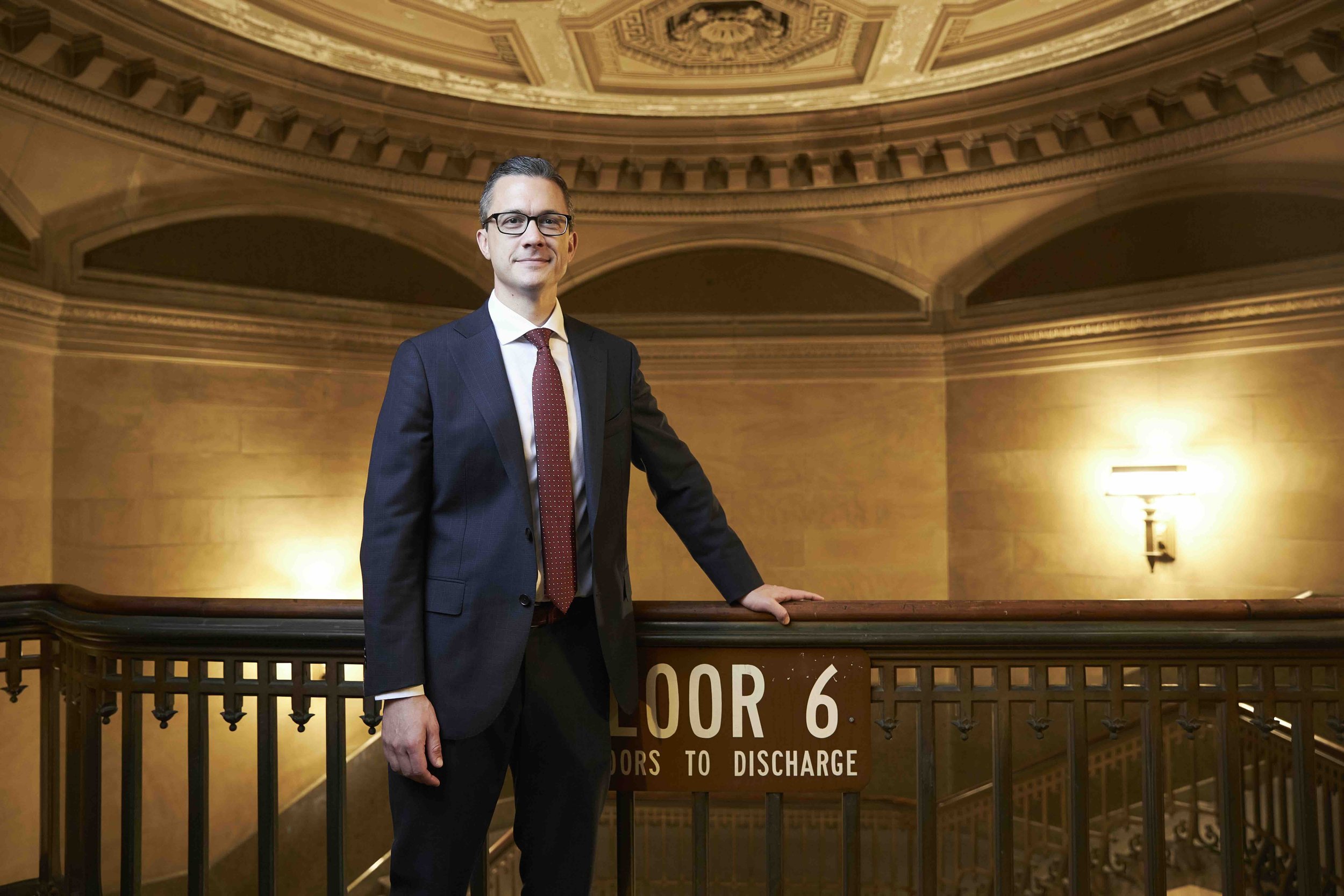
Defense Attorney Zak Goldstein
The United States Department of Education has released new guidelines on how colleges and universities are to handle sexual assault allegations on college campuses. Secretary of Education Betsy Devos said that these new regulations will allow colleges and universities to “combat sexual misconduct without abandoning our core values of fairness, presumption of innocence, and due process.”
For the better part of the decade, individuals who were accused of sexual assault had scant protections. Specifically, there were reports that colleges and universities felt obligated to side with the accusers based on Obama Administration guidelines that were issued in 2011 and 2014. Those guidelines threatened severe repercussions (i.e. losing federal funding) if they did not ramp up their investigations. They also led to many schools starting investigations based on a belief that they should believe the complainant instead of applying a presumption of innocence. Now, although the new regulations are not perfect, accused students should find themselves with more rights and protections when confronted with potentially false allegations of sexual assault and harassment.
What is Title IX and How Does it Relate to Sexual Assault Allegations?
Title IX is a federal civil rights law signed by President Richard Nixon in 1972 as part of a larger Education bill. At its core, Title IX prohibits discrimination on the basis of sex in educational institutions when those institutions receive federal aid. Title IX also makes schools responsible for taking steps to prevent sex-based harassment, including sexual harassment, and for responding quickly and effectively to harassment when it occurs.
What Are the New Changes to Title IX Investigation Procedures?
The new regulations provide a number of increased protections to students who have been accused of sexual misconduct or sexual harassment.
First, and perhaps most importantly, the guidelines require that a school apply a presumption of innocence. Previously, schools were permitted to start from a position of assuming that a complaint must be true. Under the new rules, the school must require some evidence in order to find an accused student responsible and impose sanctions.
Second, the regulations modify the recommended burden of proof which schools should apply in deciding whether or not the accused has committed a violation. Under the previous regulations, schools were encouraged to apply a “preponderance of the evidence standard.” Under a preponderance of the evidence standard, the school would find against the accused if the fact-finder found that it was 51% or more likely that the accused committed a violation. The new guidelines allow schools to require “clear and convincing evidence,” which is a higher standard than 51%. This is the standard used in many family court proceedings such as child custody cases. It is, however, still a lesser burden than requiring proof beyond a reasonable doubt as is usually required in a criminal case. Schools may also continue to use the preponderance of the evidence standard. But if they do so, they must still apply that lower standard to accusations made against their own employees.
Third, the new rules require that the accused receive a live hearing in front of the decision maker. The previous regulations encouraged the use of the single investigator model. Under the single investigator model, a school that had received a complaint would then retain an investigator to resolve the complaint. This would often be an outside attorney or retired law enforcement officer who had been retained by the school specifically to resolve these issues. That investigator would review the complaint, speak with the complainant and the accused, interview potential witnesses, review any other evidence provided by the parties such as text messages or medical reports, and then make findings of fact as to whether or not the sexual harassment or assault had occurred. Depending on the school, the investigator may also recommend the punishment for an offense, but at some schools, a board of faculty members would decide on punishment without hearing from the accused student directly.
The new rules eliminate this procedure. No matter what standard of proof a school decides to apply, the accused student is now entitled to an in-person hearing in front of the person or people that will make the decisions as to guilt or innocence and the penalty in the case of a finding of guilt. This is a significant change as it ensures some level of due process. Instead of simply giving a statement to an investigator and being found guilty, the accused student may now present a defense to the people making the decisions.
Fourth, the rules also provide that the accused shall have the opportunity to cross-examine the complainant. This generally does not mean that the individual student gets to ask questions of the complainant himself or herself. Instead, the accused’s faculty counselor or attorney may ask the questions or submit the questions to the fact-finder for them to ask the questions. Further, the parties may appear remotely by video. Cross-examination allows the accused student the opportunity to challenge the complainant’s story and demonstrate potential credibility problems or motive to fabricate. This is an extremely important change because sexual assault cases often hinge on how credible the alleged victim is.
Fifth, colleges and universities will now only be responsible for investigating cases that occurred within their programs or their activities. For example, a school would not be liable for an alleged assault that occurred in an apartment that is not affiliated with the school.
Finally, schools may not impose any sanctions on an accused student until the case has been adjudicated. A school may still, however, impose temporary restraining orders prohibiting contact between the parties. A school may also remove a student from campus if there is a finding that the student is an immediate, dangerous risk to safety.
These regulations become effective on August 15, 2020. Accordingly, they will be in place by the time students return to campus for the fall semester. There is no doubt that there will be some growing pains with these regulations, and it is likely that there will be legal challenges to them as well. The regulations also do not necessarily prevent schools from continuing to enforce rules which are worse for the accused than those suggested by the guidelines. However, they remove much of the pressure on schools to enforce rules which give the accused no opportunity to defend themselves. Therefore, this is an important step in providing accused students with a fair opportunity to present a defense. Contrary to some negative reporting in the press, the guidelines do not suggest that schools should not take complaints seriously or believe the accused. They simply add some level of due process to the proceedings so that accused students have a chance to defend themselves and obtain a fair result.
How Can a Title IX Defense Attorney Help if You Are Accused of Sexual Misconduct on Campus?
The processes currently in place prior to the new regulations gave very little thought to the rights of the accused. However, many schools may begin to change their policies in order to implement the new guidelines, and each school’s disciplinary processes will likely be somewhat different. For that reason, anyone accused of sexual misconduct should not attempt to go it alone. Nor should they allow any kind of embarrassment they may feel to silence them.
Given the potential consequences, which can include expulsion from school without a refund and a permanent notation on the students transcript, someone accused of this sort of sexual misconduct must reach out to an attorney as quickly as possible. An attorney who has previously represented other students at one of these hearings can best guide the accused in how to defend themselves. The first days following an accusation are among the most important and if you have been informed you are under investigation, there are certain steps that must happen as quickly as possible. An experienced defense attorney may be able to help you with the following things:
Preparing to give a statement to the school’s Title IX Investigator
Reviewing and editing written submissions which may be required as part of the investigation
Conducting a thorough investigation into the allegations, including locating third-party witnesses and obtaining witness statements
Obtaining and preserving digital and social media evidence such as text messages, Facebook posts
Providing advice on how to avoid criminal charges while responding to the allegations
Helping you to understand the school’s procedures for the investigation and potential appeals and making sure that you understand all of your rights
Presenting a defense at a hearing and conducting cross-examination as schools begin to provide enhanced protections
Facing Criminal Charges or a Campus Investigation? We Can Help.

Goldstein Mehta LLC Criminal Defense Lawyers
If you are facing criminal charges or are under investigation by the police or campus authorities, we can help. We have successfully defended thousands of clients against criminal charges in courts throughout Pennsylvania and New Jersey. We have successfully obtained full acquittals in cases involving charges such as Conspiracy, Aggravated Assault, Rape, and Murder. We also have extensive experience defending clients against allegations of sexual misconduct in Title IX investigations. Our award-winning Philadelphia criminal defense lawyers offer a free criminal defense strategy session to any potential client. Call 267-225-2545 to speak with an experienced and understanding defense attorney today.

United States Supreme Court Reverses NJ “Bridgegate” Fraud Convictions

Philadelphia Criminal Defense Attorneys
The United States Supreme Court has decided the case of Kelly v. United States, reversing the defendants’ convictions for conspiracy, wire fraud, and federal program fraud. This was an extremely high profile case just a few years back in which New Jersey officials associated with then-Governor of New Jersey Chris Christie were accused of creating traffic jams on the George Washington Bridge in order to punish a local mayor who had refused to endorse Christie’s re-election campaign. The decision, while likely alarming to anyone who is against public corruption and the misuse of state resources to punish political opponents, continues a trend of narrowing the federal wire fraud statute’s applicability as a tool to prosecute state and local governmental corruption.
In Kelly, the defendants were Bridget Anne Kelly, the Governor’s deputy chief of staff, David Wildstein, a Port Authority Official, and Port Authority Deputy Executive Director William Baroni. David Wildstein cooperated with federal prosecutors and pleaded guilty, meaning his conviction will likely stand, while Kelly and Wildstein went to trial and were found guilty by a jury.
The basic scheme was that Governor Christie sought to obtain endorsements from both republican and democratic officials throughout the State of New Jersey for his re-election campaign. After the mayor of Fort Lee declined to endorse the governor, his staff conspired to retaliate against the mayor by causing traffic problems at the George Washington Bridge’s toll plaza by closing the lanes which were normally reserved for the residents of Fort Lee. The scheme was disguised as a “traffic study,” but the evidence overwhelmingly showed that it was meant to punish Fort Lee.
The defendants used Port Authority staff to close the lanes, and they had to pay an additional toll collector overtime so that that toll collector would be able to cover for the main toll collector when that person went on break. The scheme resulted in massive traffic jams for days, causing people to struggle to get to work and ambulances to have trouble picking up heart attack victims.
When the scheme came to light, the defendants were indicted by a federal grand jury in the District of New Jersey and charged with conspiracy, wire fraud, and federal program fraud. Wildstein cut a deal with the government and cooperated against the other two, who were convicted. They appealed to the Third Circuit, which affirmed the convictions. The United States Supreme Court then agreed to review the case.
The Supreme Court reversed the conviction, finding that fraud had not actually occurred because the defendants had taken no steps to convert government money or property for their own purposes.
What is federal wire fraud?
The federal wire fraud statute makes it a crime to effect (with the use of the wires) “any scheme or artifice to defraud, or for obtaining money or property by means of false or fraudulent pretenses, representations, or promises.” 18 U.S.C. Section 1343.
What is federal program fraud?
The federal program fraud bars obtaining by fraud the property (including money) of a federally funded program or entity.
What is conspiracy?
Conspiracy is an agreement between two or more people to commit a crime. It generally requires that two people agree that they are going to commit a crime and then that at least one of the two takes a substantial step (an overt act) towards the commission of that crime. Once that happens, a criminal defendant may be guilty of conspiracy as well as the underlying offense.
Here, the conspiracy charges were dependent on proper convictions for fraud, and both fraud charges required that the defendants actually gain some sort of money or property from the scheme. As the scheme did not encompass any attempt to gain money, the Court’s analysis hinged on whether they had actually attempted or successfully obtained property.
The Supreme Court’s Ruling
The Court reversed the convictions. It noted that the fraud statutes are limited in scope to the protection of property rights and do not authorize federal prosecutors to set standards of disclosure and good government for local and state officials. The government had made two arguments as to how the defendants had actually stolen property. First, the government argued that closing the lanes themselves involved actually taking control of the property of those lanes. Second, the government argued that the cost of paying the traffic engineers who reviewed the “study” and the backup toll collectors involved depriving the Port Authority of money.
The Court rejected both arguments. First, it found that the realignment of the access lanes was an exercise of regulatory power and that a scheme to alter a regulatory choice generally is not a taking of the government’s property, particularly where the move is temporary. Second, it found that while the costs in paying for the “study” and the toll collectors could qualify as property, in order to be relevant for purposes of wire fraud, they must be the object of the fraud. That means it must have been the actual goal of the conspiracy to steal that time and money. But those costs were merely incidental to the regulatory decision. Therefore, they were not the object of the conspiracy, and the defendants had not conspired to steal or stolen any property or money. Accordingly, the Court reversed the conviction.
Although this decision is unique in that it involved such a high-profile political situation, it will likely have lasting effects on the ability of federal prosecutors to file criminal charges based on state and local criminal corruption. The Court did not dispute that the evidence showed that the defendants had unethically used their positions to punish political rivals. The Court simply found that they had not stolen anything to do so. This decision, however, drastically limits the reach of the wire fraud and federal programs fraud statutes because it prevents federal prosecutors from filling charges to address local political corruption where the corruption does not actually involve bribery or theft. This leaves the prosecution of political corruption to state and local officials, who may not have the independence necessary to bring charges. It also leaves it to the voters, who may demand the resignation of corrupt political officials. However, federal prosecutors probably already have enough power, so anything that reins them in is usually a good thing.
Do you need a criminal lawyer in Philadelphia? We can help.
Philadelphia Criminal Lawyers
If you are facing criminal charges or under investigation by the police, we can help. We have successfully defended thousands of clients against criminal charges in courts throughout Pennsylvania and New Jersey. We have successfully obtained full acquittals in cases involving charges such as Conspiracy, Aggravated Assault, Rape, DUI, and Murder. Our award-winning Philadelphia criminal defense lawyers offer a free criminal defense strategy session to any potential client. Call 267-225-2545 to speak with an experienced and understanding defense attorney today.

Update: Philadelphia Criminal Courts to Remain Closed Until June 1 Due to COVID-19 Pandemic

Philadelphia Criminal Defense Lawyer Zak Goldstein
The Philadelphia Court of Common Pleas has announced that criminal courts will remain mostly closed until at least June 1. The courts originally shut down in the middle of March and had hoped to re-open by May 4, but the shutdown has now been extended. Under the court’s most recent shut down order, some functions remain available, but the courts are not currently conducting waiver or jury trials or preliminary hearings in any criminal cases. Some cases have been resolved through negotiated guilty pleas by video, but the majority of cases are being postponed until next month. Despite the shutdown, it is still possible to file and receive rulings on certain emergency petitions for defendants who are in custody. Emergency motions which are still being processed may include:
Parole Petitions for Inmates in County Custody
Bail Motions (Motions to Reduce Bail)
Motions to Lift Probation and Parole Detainers
Nebbia Motions
Bench Warrant Hearings
Additionally, the Philadelphia Police Department has announced that it will resume making arrests for a number of property and theft crimes such as burglary, retail theft, and auto theft. Defendants who are arrested on new charges will be processed and go through preliminary arraignment to have bail set on any new charges.
Criminal Defense Lawyers in Philadelphia
Our Philadelphia criminal defense lawyers are still working remotely and can help you with criminal charges. If you or your loved one have been arrested, is under investigation by the police, or may be eligible for a motion to be released from custody, call 267-225-2545 to speak with an award-winning defense attorney today.