

Philadelphia Criminal Defense Blog

PA Superior Court: Villanova University Campus Safety Officers Can Search Your Room
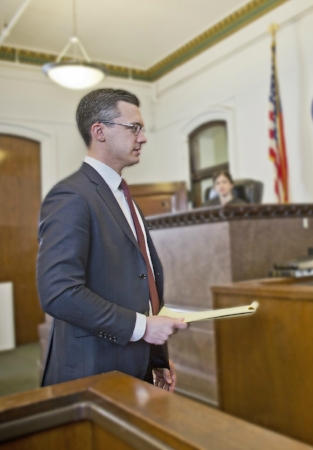
Criminal Defense Lawyer Zak Goldstein
The Pennsylvania Superior Court has decided the case of Commonwealth v. Yim, holding that the Villanova Public Safety Officers are not state agents for purposes of the Fourth Amendment. This is a significant decision for those who attend private universities which do not have police forces because it means that campus safety officers may be able to search a dorm room without a search warrant.
Commonwealth v. Yim
On February 13, 2016, Villanova University’s Public Safety Officers became engaged in violent confrontations with two resident students and a female visitor who later admitted to ingesting LSD. These three individuals were restrained by the public safety officers until Radnor Police Officers arrived on scene. One of the residents lived at Good Counsel Hall, which is located on Villanova’s campus, with the defendant. It is important to note that although Villanova has now established an actual police force, at the time, its officers were not police. They did not have arrest powers or carry weapons or handcuffs. Further, Villanova is a private university.
As a condition of living at Good Counsel Hall, the defendant had signed a housing contract in which he consented to a search of a dorm room where it has been determined by public safety officers that items or individuals in a particular room pose a possible safety or health risk to the community. Later that day, the Villanova University Director of Public Safety was advised of the events that transpired involving the defendant’s roommate. The administration subsequently ordered a search of the defendant’s room.
Prior to searching the room, the administrators unsuccessfully attempted to contact the defendant by telephone. The Director of Public Safety, along with two Public Safety Officers, unlocked and entered the dorm room. Once inside, they observed contraband and cash strewn throughout the room. They saw a syringe in plain view on top of a desk. The defendant’s passport, cash, LSD “stamps”, marijuana, $8,865.00, and other drug paraphernalia was also found on and in the defendant’s desk.
After the contraband was recovered, the Director of Public Safety called the Villanova University dispatcher and asked him to contact the Radnor Police Department to report the discovery of the drugs and paraphernalia. The Radnor Police arrived on scene, but they remained in the hall outside the room. The police officers never entered the room nor did they participate in the search. After the public safety officers searched the room, they turned over the contraband and other items to the Radnor Police. The Public Safety Officers also provided an investigative report, which included photographs, for future use in University administrative proceedings. The police then obtained an arrest warrant for the defendant. He was eventually arrested and charged with possession of a controlled substance, possession of drug paraphernalia, and possession with the intent to deliver (“PWID”).
The defendant filed a motion to suppress the evidence seized from his person and the dorm room. The trial court denied the motion, ruling that the public safety officers did not need a search warrant to search the dorm room because they were not law enforcement officers and Villanova was not a public university. The trial court found the defendant guilty after a non-jury trial and sentenced him to a term of three to 23 months’ incarceration plus four years probation.
What is the Fourth Amendment?
The Fourth Amendment provides:
The right of the people to be secure in their persons, houses, papers, and effects, against unreasonable searches and seizures, shall not be violated, and no Warrants shall issue, but upon probable cause, supported by Oath or affirmation, and particularly describing the place to be searched, and the persons or things to be seized.
The Fourth Amendment often provides a defense to criminal charges relating to drug possession, illegal gun possession, or the possession of other contraband because it prevents the prosecution from introducing evidence at trial if the evidence was seized illegally. However, one significant limit on the Fourth Amendment is that it does not apply to searches and seizures conducted by other private citizens. It only protects citizens from the government; it does not protect them from private actors. Thus, the Fourth Amendment may be invoked as part of a motion to suppress evidence when the when a government actor like a police officer enters an individual’s home without a search warrant or stops someone without probable cause or reasonable suspicion. In this case, however, the officers who seized the contraband from the dorm room did not work for the government. They were not police officers performing a government function and Villanova is a private school.
Can the Fourth Amendment Apply to Non-State Actors?
In some circumstances, the Fourth Amendment can apply even to non-government employees. For example, the Fourth Amendment’s protections against unreasonable searches and seizures do apply to non-state actors when private individuals act as an instrument or agent of a state. Here, the defendant argued at the motion to suppress that Villanova’s public safety department had assumed a governmental function and essentially acted as the police. Accordingly, the defense argued that the public safety officers should be treated as state actors. Unfortunately, cooperation with the authorities alone does not constitute state action. The mere fact that the police and prosecutors use the results of a private actor’s search does not transform the private action into a state action. Instead, it must be shown that the relationship between the person committing the wrongful acts and the state is such that those acts can be viewed as emanating from the authority of the state. This means that if a college or university forms an actual police department with certified officers who have arrest powers, then the Fourth Amendment should apply to those officers. Likewise, the Fourth Amendment may apply to the public safety department of a public university because the officers would be government employees. Here, however, the officers were not actual police officers or government employees.
Can Campus Safety Officers Search a Dorm Room Without a Warrant?
Ultimately, the Pennsylvania Superior Court affirmed the suppression court’s denial of the defendant’s motion to suppress. The Superior Court found that the University conducted the search on its own terms and in accordance with its own policies aimed at preserving student safety. The public safety department did not act jointly with the police or at the behest of the police in carrying out the search. Additionally, the public safety department had not assumed a governmental function such that it should be subject to the Fourth Amendment because the Radnor Township Police Department still served as the actual police force on university property. The court denied the appeal, and the defendant will not receive a new trial.
Facing Criminal Charges? We Can Help.

Goldstein Mehta LLC
If you are facing criminal charges or under investigation by the police, we can help. We have successfully defended thousands of clients against criminal charges in courts throughout Pennsylvania and New Jersey. We have successfully obtained full acquittals in cases involving charges such as Conspiracy, Possession with the Intent to Deliver, Aggravated Assault, and Attempted Murder. Our award-winning Philadelphia criminal defense lawyers offer a free criminal defense strategy session to any potential client. Call 267-225-2545 to speak with an experienced and understanding defense attorney today.

Indicting Grand Juries in Philadelphia State Court

Criminal Defense Attorney Zak T. Goldstein, Esq.
If you get arrested for a felony charge in Philadelphia, you will usually go through preliminary arraignment within 12-24 hours and then receive a court date for a preliminary hearing. A preliminary hearing is a short hearing at which some of the Commonwealth’s main witnesses in the case will testify subject to cross-examination, and a Philadelphia Municipal Court Judge will then rule whether the Commonwealth has presented sufficient evidence to show that a crime occurred and that the defendant probably committed it. Recently, however, the Pennsylvania Supreme Court amended the Pennsylvania Rules of Criminal Procedure to give prosecutors the ability to dispense with the requirement of presenting live testimony at a preliminary hearing. Instead, prosecutors in cases in which there is a risk of witness intimidation may try to proceed by indicting grand jury. Indicting grand juries are usually used in cases involving violent crimes such as Attempted Murder, Aggravated Assault, and Witness Intimidation. In Philadelphia, they are often used to prosecute non-fatal shootings.
What is an Indicting Grand Jury?
The indicting grand jury process is a secretive process which allows the prosecution to avoid presenting its witnesses in open court at a preliminary hearing where they would be subject to cross-examination. Instead, Rule 556 of the Rules of Criminal Procedure provides that a Court of Common Pleas may proceed by using an indicting grand jury in cases in which witness intimidation has occurred, is occurring, or is likely to occur.
Instead of presenting its case at a preliminary hearing following the defendant’s arrest, the prosecution may file a motion to move forward by way of indicting grand jury. The motion must allege facts asserting that witness intimidation has occurred, is occurring, or is likely to occur. The defense does not get an opportunity to contest the allegations in the motion. Instead the president judge or a designee of the president judge for the judicial district reviews the motion ex parte (meaning without the defense present) and decides whether or not the Commonwealth has met its burden of alleging some risk of witness intimidation.
If the judge rules that the Commonwealth has met that low burden, then the court will cancel the preliminary hearing and schedule the case for a hearing in the Court of Common Pleas. The Commonwealth will then have 21 days to present its case to the grand jury for indictment unless the defendant waives his or her right to an indictment by grand jury or the Commonwealth chooses not to proceed. If the Commonwealth chooses not to proceed, then the defendant should receive a preliminary hearing in front of a Court of Common Pleas Judge.
In Pennsylvania, an indicting grand jury is made up of 23 legally qualified jurors and between 7 and 15 alternates. The supervising judge examines the grand jurors to determine whether or not they can be fair when hearing cases, but the defense has no ability to challenge grand jurors for cause as the defense would in a criminal trial prior to an indictment. Fifteen members of the grand jury constitute a quorum, and an affirmative vote of twelve members of the grand jury will be enough to indict a defendant on felony charges.
Once the grand jury has been selected, the Commonwealth may present its case to the grand jury. This means that the Commonwealth may call some of the witnesses or victims in the case and often the assigned police detective to testify. The grand jurors hear that testimony and then decide whether or not they should indict the defendant. This testimony is recorded and eventually turned over to the defense, but there is no defense attorney in the room to make evidentiary objections, cross-examine witnesses, or make argument to a judge or the grand jurors that the evidence does not support the charges.
What happens if I get indicted?
If the grand jury votes to indict the defendant, then the Commonwealth notifies the defense and the supervising judge at a status hearing in the Court of Common Pleas. The judge will then schedule the case for a scheduling conference before the judge who will hear the trial. That judge will then set two court dates – a first date on which the Commonwealth must turn over discovery, and a second date for trial which will be sixty days after the discovery date. In many cases, the trial date may not be for eight months or more, so a defendant could be incarcerated due to a high bail or a probation detainer for up to six months or more without any access to the discovery or without even knowing the specific allegations against him or her. A defendant who has a preliminary hearing has the opportunity to move for dismissal of the charges just a few weeks after arrest, but a defendant who is indicted may not be able to challenge the charges for months or even years. Grand jury cases, however, are supposed to receive priority on the trial date, meaning that they should go forward even if other cases on the judge’s docket are older or more serious.
Will I still get a preliminary hearing?
No, if the Commonwealth chooses to proceed by way of indicting grand jury, then you will not receive a preliminary hearing even if you are facing felony charges. Instead, the Commonwealth will conduct the secret grand jury hearing. If the grand jury chooses to indict, then you will be indicted without ever having had an opportunity to challenge the evidence against you in open court. You do, however, retain the right to file pre-trial motions to dismiss/quash the charges just as you would if a preliminary hearing occurred.
In a limited number of cases, the Commonwealth may file the motion to proceed by way of indicting grand jury and later change its mind and schedule the case for a preliminary hearing. In that situation, you would have a preliminary hearing before a Court of Common Pleas judge instead of with a Municipal Court judge. This is a significant disadvantage for the defense because this procedure prevents the defendant from litigating a Motion to Quash. When the defendant is erroneously held for court at a preliminary hearing by a Municipal Court judge, the defendant may file a Motion to Quash (also called a Petition for Writ of Habeas Corpus in the suburban counties) and ask a higher-ranking Common Pleas Judge to review the charges. A defendant who has been held for court by a Common Pleas judge, however, cannot really litigate a Motion to Quash because a Common Pleas judge has already ruled on whether the Commonwealth presented a prima facie case. A Common Pleas judge cannot overrule the first judge’s decision because they have the same level of authority.
What is the difference between an Indicting Grand Jury and a Preliminary Hearing?
A Philadelphia preliminary hearing takes place in open court and proceeds in a similar manner to a criminal trial. The prosecution calls a number of witnesses to testify as to what happened in order to try to establish a prima facie case of each criminal charge, and the defendant’s lawyer then has the opportunity to cross-examine those witnesses. The defense may also present evidence after the Commonwealth has rested. Once both sides have rested, the lawyers may make argument to the Municipal Court judge on why certain charges should be dismissed or the gradation of charges should be reduced. The judge will then decide whether to hold the defendant for court on the felony charges, remand the case to Municipal Court for trial on misdemeanor charges, or dismiss the case altogether. The defense may also make a bail motion or a motion for a lineup at a preliminary hearing.
The indicting grand jury process, however, is secretive and provides the defendant with few rights. The defendant is typically arrested, held on a high bail due to the allegations of witness intimidation, and not provided with any opportunity to challenge the case until shortly before trial or at trial. The witnesses may testify to the grand jury, but they are not subject to cross-examination, and the defense may not present evidence to the grand jury. The rules of evidence are often enforced to some extent at a preliminary hearing, meaning that a hearing cannot proceed entirely on hearsay, but the defense is not present to make evidentiary objections at a grand jury hearing. The defense lawyer also may not argue to the grand jury that the Commonwealth has failed to prove a prima facie case of the charges. Therefore, the Commonwealth can usually get the grand jury to indict on whatever charges it wants.
Can I still file a Motion to Quash the charges?
Yes, despite the significant disadvantages to a defendant who has been charged by way of indicting grand jury, there are still opportunities to challenge the charges prior to trial. For example, a defendant may still file a motion to quash the charges and argue to the Common Pleas judge that the prosecution failed to meet its burden of establishing that a crime occurred and that the defendant probably committed it. The defense may also file motions challenging the jurisdiction of the grand jury, asserting an expiration of the statute of limitations, or an objection to a grand juror’s qualifications. The defense may also file any other pre-trial motions such as a motion to suppress evidence which was illegally seized or motions in limine.
Facing criminal charges? We can help.



Criminal Defense Attorneys
Although a defendant who has been charged by way of grand jury in Philadelphia is at a disadvantage due to the lack of a preliminary hearing, there are still often ways to challenge the case through pre-trial motions. Additionally, the defendant is still entitled to a trial before a judge or jury at which the Commonwealth must prove the charges beyond a reasonable doubt. If you are facing criminal charges or under investigation, we can help. Our experienced and understanding Philadelphia criminal defense lawyers offer a free 15-minute criminal defense strategy session to any potential client. Call 267-225-2545 to speak with an award-winning defense attorney today.

PA Supreme Court Permits Filing of Second PCRA Where Attorney Filed First Petition Too Late

Philadelphia PCRA Lawyer Zak Goldstein
The Pennsylvania Supreme Court has decided the case of Commonwealth v. Peterson. In Peterson, the Court held that where a Post-Conviction Relief Act (PCRA) Petitioner’s lawyer files the petition late, thereby resulting in the dismissal of the petition for failure to comply with the Act’s procedural requirements, the Petitioner may file a second PCRA Petition even outside of the one-year deadline for filing a PCRA. This is a great decision by the Court. It recognizes that a criminal defendant should not lose the ability to file a PCRA solely because a defense attorney, without telling the defendant, provided the ineffective assistance of counsel in failing to file a PCRA Petition on time.
The Facts of Peterson
In Peterson, the defendant pleaded guilty to two counts of first-degree murder in 1993 and received two consecutive life sentences. In 1995, the General Assembly enacted major amendments to Pennsylvania’s Post-Conviction Relief Act, including an amendment which required that all petitions be filed within one year of the date the judgment of sentence becomes final. The amendments included three exceptions to the one-year deadline. The relevant exception in this case provides: “the facts upon which the claim is predicated were unknown to the petitioner and could not have been ascertained by the exercise of due diligence.”
These amendments gave Peterson the right to file a PCRA by January 16, 1997. Peterson’s family retained a private attorney to file a PCRA. The attorney drafted the PCRA but filed it one day late on January 17, 1997. The petition alleged that Peterson was not competent to plead guilty and therefore his plea was not a knowing, intentional, and voluntary waiver of his constitutional rights because Peterson had suffered a gunshot wound to his head that damaged the frontal lobes of his brain.
The trial court scheduled an evidentiary hearing and gave defense counsel time to obtain an expert to provide an opinion on Peterson’s mental competency at the time of the guilty plea. The court scheduled a hearing on November 5, 1997. The hearing apparently never took place on that date, and the docket does not indicate the reason why did it did not take place. Nothing happened for nearly fifteen years.
In September 2012, Peterson wrote a letter to the clerk of courts asking about the status of his case. The PCRA court then rescheduled the evidentiary hearing. At the hearing, a doctor testified that Peterson suffered brain damage prior to his plea and that he would not have had the ability to comprehend his position as one accused of murder. The doctor further opined that Peterson would not have been able to cooperate with his criminal defense lawyer and participate in his own defense.
Although not relevant to the disposition of the appeal, It is important to note that PCRA litigation often requires the defense to present actual evidence or expert testimony. It is not enough merely to allege in a Petition that a defense attorney should have retained the services of an expert witness. Instead, the defense attorney generally must retain, identify, and usually provide a report for the expert witness prior to filing the PCRA Petition or the defendant will not be entitled to an evidentiary hearing.
The Commonwealth did not hire its own expert. Instead, it called Peterson’s trial attorney and probation officer to testify. They both testified that they interviewed Peterson prior to the plea and he understood what was going on. The PCRA Court found the trial attorney and probation officer more credible and denied the Petition.
The Superior Court Appeal
Peterson appealed the denial of the PCRA Petition to the Superior Court. The Superior Court, acting sua sponte (meaning on its own), recognized that the first PCRA Petition had been filed one day beyond the relevant deadline. Therefore, the Superior Court quashed the appeal without reaching the merits of whether the PCRA Court properly denied the petition.
Peterson then filed a second PCRA Petition, asking the trial court to reinstate his appellate rights nunc pro tunc due to the ineffective assistance of counsel provided by the attorney who filed the first petition late. The trial court granted that second petition. It ruled that Peterson did not know of the deadline, did not know that his attorney had missed the deadline, and that Peterson could not have known these facts until he received the Superior Court’s opinion dismissing the direct appeal. Therefore, the trial court reinstated his appellate rights under the previously-mentioned exception to the one-year deadline.
With his appellate rights reinstated, Peterson again appealed the denial of the petition to the Superior Court. The Commonwealth also appealed, arguing that the trial court should not have reinstated Peterson’s right to appeal. The Superior Court agreed with the Commonwealth and again dismissed the appeal. The Court found that Peterson’s lawyer had not abandoned him but had simply filed a petition late. The Court held that while the PCRA timeliness requirements sometimes require harsh outcomes, the PCRA confers no authority to fashion ad hoc equitable exceptions to the PCRA time-bar.
The Petition for Allowance of Appeal
Peterson filed a Petition for Allowance of Appeal to the Pennsylvania Supreme Court. The Pennsylvania Supreme Court agreed to hear the appeal and ultimately reversed the decision of the Superior Court.
The Pennsylvania Supreme Court recognized that the complete abandonment of a petitioner by counsel has previously qualified petitioners for the after-discovered evidence time bar. At the same time, the failure of a PCRA lawyer to raise the best possible claims has traditionally not provided petitioners with a basis for filling subsequent petitions beyond the one-year deadline. Thus, the Court recognized that there is a difference between a complete deprivation of a petitioner’s rights, in which the petitioner cannot have any issues addressed at all, and an allegation that a PCRA lawyer should have raised certain claims instead of others.
The Court found that this case resulted in a complete deprivation of rights due to the obvious ineffective assistance of counsel in filing the petition late. Therefore, the Court found that Peterson qualified for the after-discovered evidence exception. Peterson was completely deprived of any consideration of his PCRA Petition. His lawyer’s ineffectiveness was a newly discovered fact, and Peterson did not know of this fact and could not have known of this fact through the exercise of due diligence. He filed his second PCRA Petition within sixty days after he learned that the petition had been filed late. Therefore, the Superior Court erred in dismissing the appeal, and Peterson will be entitled to have the appeal heard on the merits.
Facing criminal charges? We can help.

Philadelphia Criminal Defense Attorneys
If you are facing criminal charges, have been arrested, or are considering an appeal, we can help. Our experienced and understanding criminal defense attorneys have successfully defended thousands of clients. We have won cases involving serious charges like Homicide, Robbery, Rape, as well as appeals and PCRA Petitions. Our award-winning Philadelphia criminal defense lawyers offer a free 15-minute criminal defense strategy session. Call 267-225-2545 to speak with a defense attorney today.

Criminal Defense Attorney Demetra Mehta Quoted on Cosby Case by Associated Press
The Associated Press recently posted an article on the upcoming sentencing in the case of Commonwealth v. William Cosby. Philadelphia Criminal Defense Lawyer Demetra Mehta was quoted in the article for an analysis of Pennsylvania’s contested Sexually Violent Predator law and the impact of that law on the sentencing proceedings.
“Defense lawyers say the state’s latest sex-reporting law, despite several revisions, remains unconstitutional.
“It’s the modern-day version of a scarlet letter,” said lawyer Demetra Mehta, a former Philadelphia public defender, “which I think is sort of an interesting philosophical issue at this time with the #MeToo movement, but also criminal justice reform.”
. . . .
“This is going to probably be a very important case for sex-offender law when it’s up on appeal,” Mehta said. “It’s an area of law that is just sort of unsettled right now. . There’s a lot up on appeal, but there’s not a lot decided.””

Criminal Defense Lawyer Demetra Mehta
Click here to read the article.