

Philadelphia Criminal Defense Blog

NOT GUILTY: Criminal Defense Attorney Zak Goldstein Wins Attempted Murder Jury Trial in Philadelphia
Recent Case Results

Philadelphia Criminal Defense Lawyer Zak T. Goldstein, Esq.
In the past month, Philadelphia criminal defense lawyers Zak T. Goldstein, Esq. and Demetra Mehta, Esq. have continued to win outstanding results in the court room. This week, in the case of Commonwealth v. L.W., Attorney Goldstein obtained a full acquittal for L.W. in a case involving Attempted Murder charges. After deliberating for only five hours, the Philadelphia jury of twelve citizens returned an acquittal for L.W. on all charges.
L.W. was charged with Attempted Murder, Aggravated Assault, and illegal possession of a firearm for allegedly shooting the complainant in the head at a block party in Southwest Philadelphia. Prosecutors alleged that L.W. shot the complainant, but the bullet did not penetrate his skull. The complainant jumped up, ran to a nearby police car, and was transported to the hospital. The complainant consistently denied that the defendant had shot him, but shortly after the complainant arrived at the hospital, the complainant’s family members began to tell police that two of them had witnessed the incident. Two of his family members told detectives that they were standing with the complainant at the party when the defendant got mad, pulled a gun, and shot the complainant in the head. A third family member also testified that despite denying it to the police, the complainant told her that the defendant was the shooter. Finally, police detectives testified that when they attempted to arrest the defendant a few days later, he fled from a traffic stop and evaded arrest. They also tried to insist that the complainant was uncooperative and that they believed he was lying to them.
On paper, the case looked extremely difficult for L.W.. The Commonwealth claimed that two eyewitnesses implicated the defendant in the shooting and that a third witness would prove the complainant lied to police about not knowing who shot him. But once the jury was empaneled and the witnesses were under oath and subject to Attorney Goldstein’s withering cross examination, it became clear to the jury that the witnesses were lying. Attorney Goldstein got the witnesses to admit that they fabricated their original statements and had not in fact seen the shooting. The Commonwealth argued that the witnesses were recanting due to the no snitch culture in Philadelphia, but throughout the trial, Attorney Goldstein’s excellent presentation and grasp of the facts demonstrated to the jury that they were just untrustworthy witnesses.
After the Commonwealth saw the credibility of its witnesses destroyed by Attorney Goldstein, prosecutors tried to tip the scales by having multiple police detectives testify to their belief that the defendant was the shooter. Undeterred, Attorney Goldstein was able to highlight to the jury that the detectives based their entire case on hearsay from unreliable witnesses and failed to do any additional investigation. After Attorney Goldstein showed the jury that the Commonwealth had no physical evidence, biased and untrustworthy witnesses with a vendetta against his client, and that they had uncovered no evidence of any motive whatsoever, the jury fully acquitted L.W. of Attempted Murder, Aggravated Assault, and the related gun charges.
Commonwealth v. Z.S. – PCRA Results in Immediate Parole Eligibility for Man Originally Facing Illegal 30-Year-Sentence
We previously wrote about a PCRA Petition which successfully obtained a new Violation of Probation sentencing for client Z.S. Z.S. initially pleaded guilty to Possession with the Intent to Deliver (“PWID”) of a small amount of heroin. Pursuant to the initial guilty plea, Z.S. was sentenced to a short county sentence followed by probation. Z.S. violated the probation when he was convicted of a robbery, and he was sentenced to 7.5 – 20 years for the robbery. When Z.S. appeared for his violation of probation sentencing, the probation judge gave him an unfair sentence of 15-30 years in state prison consecutive to the initial 7.5 – 20 years. In most circumstances, judges have almost unlimited discretion in imposing a new sentence for a violation of probation. However, judges may not consider illegal factors when imposing a sentence.
In this case, the sentencing judge stated on the record that he found the defendant’s expression of remorse to be hollow because the defendant had refused to participate in the violation of probation sentencing by video. Instead, the defendant insisted on being present for this critical hearing. All defendants have a constitutional right to be present in court for sentencing hearings. Therefore, our defense attorneys were able to argue in a Post-Conviction Relief Act Petition that the judge violated Z.S.’s rights by explicitly punishing Z.S. for refusing to participate in the hearing by video and wanting to be present.
After the original VOP judge retired, a new judge was assigned to hear the PCRA Petition. The PCRA judge agreed with our attorneys and vacated the sentence. However, at the new sentencing hearing, the judge had the same authority to impose any type of sentence he saw fit. The judge could have re-sentenced the defendant to the same 15-30 year sentence or reduced the sentence to something substantially less. Due to the persuasive arguments of counsel and the compelling testimony from the defendant and his family members, the judge instead imposed a sentence of 3.5 – 7 years, which the defendant has already served. Accordingly, the defendant will become immediately eligible for parole instead of having to serve another 10 years before reaching parole eligibility.
Commonwealth v. R.P. – Burglary Charges Dismissed at Preliminary Hearing Due to Excessive Hearsay
We have written about the recent updates in Pennsylvania law surrounding the use of hearsay at preliminary hearings. Until recently, the rules have traditionally been that some hearsay is permitted, but preliminary hearings cannot be based entirely on hearsay evidence. In general, ownership and non-permission testimony, which is an element of any theft crime, can typically be shown through the use of hearsay. This allows the Commonwealth to proceed with a preliminary hearing based only on the testimony of a police officer in many theft cases. For example, where a defendant was pulled over in a stolen car, the police officer can testify to pulling the defendant over, and the Commonwealth can then introduce either hearsay testimony through a detective or an ownership and non-permission form (“ONP form”) identifying the owner of the vehicle and stating that the defendant did not have permission to drive the vehicle.
In recent cases, the Superior Court has adopted a permissive attitude towards hearsay and allowed cases to proceed to the Court of Common Pleas based on hearsay alone. The Supreme Court has not yet intervened, dismissing the appeal in Commonwealth v. Ricker as improvidently granted. However, the Supreme Court did recently decide to review this issue again in the case of Commonwealth v. McClelland. The Court has not yet ruled in that case. Nonetheless, many judges and magistrates, particularly in Philadelphia, will not allow the Commonwealth to proceed at a preliminary hearing with only hearsay testimony.
In this case, R.P. was charged with Burglary and related theft charges after police pulled him over as he exited a property that was being renovated. The officer stopped R.P. and his passenger, and the officer testified that he was able to see copper piping in the back of the car that R.P. was driving. The officer testified that R.P. told him that he had been scrapping and that the property from which R.P. exited was often the target of burglary attempts and that it was not well secured. The Commonwealth then introduced an ownership and non permission form stating that R.P. did not have permission to enter the property.
On cross-examination, Attorney Goldstein successfully showed that the officer did not know whether the copper piping actually came from inside the property. The officer had not inspected the premises to see if he could determine from where the pipe had been cut. Further, because the property had been repeatedly burglarized, including earlier that day, the damage to the back door could not be linked to R.P. Accordingly, with no evidence that the piping actually came from that property or that R.P. had actually entered the property, the Philadelphia Municipal Court judge dismissed all of the charges at the end of the preliminary hearing. The judge found that the evidence was insufficient and that any indication on the ONP form that R.P. had entered the property was excessive hearsay. This was particularly because the ONP form was not properly signed by the witness.
Facing Criminal Charges? We Can Help.
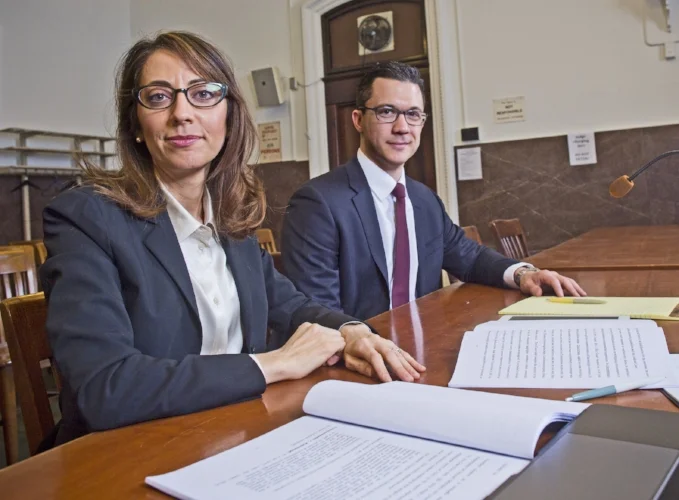
Goldstein Mehta LLC Criminal Defense Attorneys
The Philadelphia criminal defense lawyers of Goldstein Mehta LLC will fight for your rights at trial or on appeal. Our attorneys have successfully defended thousands of cases in Philadelphia and the surrounding counties, and we can help with all types of state and federal charges in Pennsylvania and New Jersey. We offer a free criminal defense strategy session to any potential client. Call 267-225-2545 to speak with an experienced and understanding criminal defense attorney today.

Hearsay Is Not Ordinarily Admissible at a Violation of Probation Hearing
Commonwealth v. Godson - Is Hearsay Admissible During a Probation Violation Hearing?

Criminal Defense Lawyer Zak T. Goldstein, Esq.
The Pennsylvania Superior Court has decided the case of Commonwealth v. Godson, reaffirming prior holdings in which the courts have held that hearsay is not ordinarily admissible at a violation of probation hearing. In Godson, which is an unpublished opinion, the Court recognized the general rule in Pennsylvania that in order for hearsay to be admissible at a violation of probation or Gagnon II hearing, the Commonwealth must show "good cause."
In Godson, the defendant originally entered a guilty plea to charges of Aggravated Assault by Prisoner. He received a sentence of 6-23 months of incarceration followed by two years of reporting probation. The defendant quickly violated that probation in a number of different ways, including by failing to participate in court-ordered mental health treatment. In response, the probation officer moved to revoke his probation, and the trial court held a violation of probation hearing.
At the hearing, the court heard from a staff member from the mental health facility at which the defendant had sporadically obtained treatment. The staff member testified that he learned from other staff members that the defendant had been disruptive and attempted to escape from the facility. The defendant broke a window as part of his attempted escape. Although the staff member who testified at the hearing had no personal knowledge of the broken window or attempted escape, the trial judge revoked the defendant's probation, re-sentenced him, and ordered that the defendant pay restitution for the cost of the fixing the broken window.
The Appeal of the Violation of Probation Sentence
The defendant appealed, and the Superior Court reversed the restitution order. The Superior Court noted that it is well-settled that the Confrontation Clause of the Pennsylvania Constitution prohibits the use of hearsay testimony against a defendant at a probation hearing without a finding by the trial court of good cause. Here, the parties agreed that the trial judge failed to make any finding with respect to whether there was good cause for allowing the staff member who had no personal knowledge to testify about the broken window and the cost of replacing it. Accordingly, the Superior Court reversed the trial court's order and remanded it for further proceedings.
The Rule Against Hearsay at a Probation Hearing
The rule against hearsay at a probation revocation hearing is extremely important. Prosecutors and probation officers in Philadelphia often attempt to introduce hearsay at Gagnon II hearings as it is much simpler and easier for them than actually requiring live witnesses to appear. This is particularly true in cases where defendants are under supervision for convictions relating to domestic violence. In domestic violence cases, it is not uncommon for the problems which led to the defendant's criminal charges to continue even after he or she has been put on probation. In some cases, the complainant from the original case will call the probation officer and make new accusations, and the probation officer will then bring those accusations to the judge without asking the complainant to appear for the hearing. It is fundamentally unfair for a defendant to face a probation violation without having the opportunity to cross-examine the accuser. Therefore, this rule protects the rights of the defendant to challenge the accusations against him or her in open court and makes sure that the judge does not have to make a ruling based entirely on hearsay.
Probation Violation? We Can Help.

Goldstein Mehta LLC Probation Lawyers
If you are facing criminal charges or a potential violation of probation, we can help. We are award-winning Philadelphia criminal defense lawyers with the experience, skill, and expertise necessary to fight for you and protect your rights. We have successfully defended thousands of clients against criminal charges and in dealing with probation violations and probation detainers. Call 267-225-2545 to speak with an experienced and understanding defense attorney today.

The Collective Knowledge Doctrine in PA
Commonwealth v. Yong

Philadelphia Criminal Defense Lawyer Zak Goldstein
The Pennsylvania Supreme Court has just decided the case of Commonwealth v. Yong, holding that an investigating officer’s knowledge of facts sufficient to establish probable cause may be imputed to a second officer who arrests the suspect when the officers are working as a team. This is true even when the arresting officer has no individual knowledge of the facts giving rise to probable cause.
In Yong, Philadelphia Police Officers conducted a narcotics investigation targeting the 2300 block of North Fairhill Street in Philadelphia. Police Officer Joseph McCook (the "eyes" of the operation) and his partner conducted surveillance on September 21, 22nd, and 23rd of 2011. While conducting the surveillance, they observed Yong make a number of exchanges of United States currency for small objects which they believed to be drug transactions in which Yong was the seller. Based on the alleged drug activity observed during the three-day surveillance, Officer McCook obtained a search warrant for a property that was involved in these transactions. The officers returned to execute the search warrant later in the day on the 23rd. The warrant team included Police Officer Gerald Gibson. Officer Gibson had not been present for any of the surveillance and had no knowledge of Yong or Yong’s alleged involvement in any drug sales.
Relying on the search warrant, police entered the house located at 3202 North Fairhill Street. Officer McCook, who had witnessed the alleged drug sales, was towards the rear of the group. When the officers entered the house, Yong was standing in the living room. Officer Gibson, who had never seen Yong before, grabbed Yong, patted him down, and found a .38 caliber revolver in Yong’s waistband. The search of the property also led to the recovery of drug paraphernalia, including new and unused packaging.
Possession with the Intent to Deliver and Gun Charges
The Commonwealth charged Yong with Possession with the Intent to Deliver, Criminal Conspiracy, and various gun charges including firearms not to be carried without a license and persons not to possess a firearm. Yong’s defense attorney moved to suppress the firearm, arguing that Officer McCook’s probable cause could not be imputed to Officer Gibson because Officer Gibson was not part of the prior narcotics surveillances. This was important because Pennsylvania appellate courts have long held that even where officers have a search warrant for a home, the officers need specific probable cause or reasonable suspicion to search the occupants of the home unless the occupants are identified or described in the search warrant. Because Officer Gibson did not know anything about Yong and Yong was not identified as a person to be searched by the search warrant, the defense argued that Officer Gibson had violated Yong’s rights by patting him down without reasonable suspicion or probable cause. The defense argument relied on the fact that Officer McCook had not specifically directed Officer Gibson to search or arrest Yong because Pennsylvania courts have also held that an officer who does not have probable cause may conduct a search or make an arrest when specifically directed to do so by an officer who does have probable cause.
The Criminal Appeal
The trial court denied the motion to suppress. The trial court found that Officer McCook’s knowledge and probable cause could be imputed to Officer Gibson, and the Pennsylvania Supreme Court ultimately agreed. The Court recognized the bad incentives that the decision could create for police officers in that it encourages officers who are working together to take a chance and conduct a search or make an arrest and hope that one of the other officers will later turn out to have reasonable suspicion or probable cause. The Court attempted to limit this incentive and its holding by limiting the application of the decision to the narrow facts of this case.
What is the Collective Knowledge Doctrine?
The Court held that the officer who does not have reasonable suspicion or probable cause may conduct the search or seizure only where that officer is specifically working as part of the same team and is near the officer who made the original observations. The Court rationalized its holding by suggesting that Yong’s arrest was inevitable. Officer McCook had observed Yong engaged in drug sales, so even if Officer Gibson had not arrested Yong, Officer McCook would have arrested Yong once he got into the house and saw him. This is an extension of the existing inevitable discovery doctrine. However, the Court was clear that it is not sufficient for officers to be part of the same police force or to be independently investigating the same criminal conduct. The officers must actually be working together and nearby, and one of the officers must have the requisite level of suspicion. In that limited situation, an officer does not violate a suspect’s rights by conducting a search or arrest. Although this opinion does create bad incentives for police officers to gamble on a potentially illegal search, it is relatively limited as it probably does not represent a substantial expansion of the inevitable discovery doctrine.
Facing Drug or Gun Charges? We Can Help
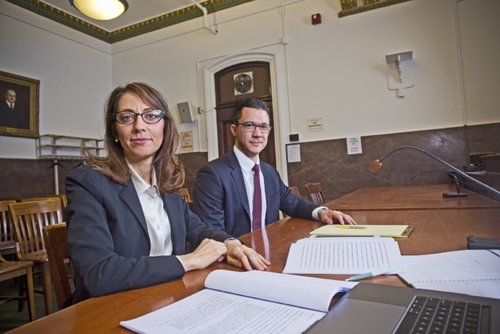
Philadelphia Criminal Lawyers
The Philadelphia criminal defense lawyers of Goldstein Mehta LLC will fight for your rights at trial or on appeal. Our attorneys have successfully defended thousands of cases in Philadelphia and the surrounding counties, and we can help with all types of state and federal charges in Pennsylvania and New Jersey. We offer a free 15-minute criminal defense strategy session. Call 267-225-2545 to speak with a top-rated defense attorney today.

PA Superior Court: Trial Court May Hear from Variety of Witnesses in Deciding Whether Child Complainant May Testify Via Closed Circuit TV
Commonwealth v. Tyrrell

Criminal Defense Lawyer Zak Goldstein
The Pennsylvania Superior Court has decided the case of Commonwealth v. Tyrrell, rejecting the defendant’s challenge to his convictions for Rape of a Child and related charges. In this appeal, the Superior Court rejected the defendant’s arguments that 1) the trial court improperly permitted the complainant to testify via closed circuit television and 2) the trial court should have excluded the testimony of the minor complainant because the testimony was tainted.
The Criminal Charges
In Tyrrell, the defendant was charged with rape of a child, rape of a child resulting in serious bodily injury, indecent assault, unlawful contact with a minor, and corruption of minors for molesting S.B., his then 8-year-old daughter. The offenses allegedly occurred on April 2, 2014, and the defendant gave a statement confessing to the crimes on August 24, 2014. The defendant filed a motion to suppress his confession, opposed the Commonwealth’s motion to introduce the testimony of the complainant via closed circuit television, and also challenged the admissibility of the complainant’s testimony by arguing that the testimony had been tainted through the suggestions of others. The trial court rejected all three arguments, and the defendant was convicted. The court sentenced him to 50-100 years of incarceration followed by ten years of probation, and he appealed.
Pennsylvania's Tender Years Act – When May A Child Witness Testify Via Closed Circuit Television?
On appeal, the Superior Court also rejected the arguments. With respect to the closed circuit television issue, the defendant argued that the complainant should have been required to testify in open court in front of the jury. However, the Pennsylvania legislature has enacted a “Tender Years Act” which permits children who are 12 years old or younger to testify via closed circuit television under certain circumstances. When the prosecution moves that a child witness be permitted to testify via closed circuit television, the court must hold a hearing to determine, based on the evidence presented to it, whether requiring the child to testify in an open forum in the presence and full view of the jury and defendant will result in the child victim or child witness suffering serious emotional distress that would substantially impair the child victim or material witness’s ability to reasonably communicate.
The statute further provides: “in making this determination, the court may do all of the following:
1) Observe and question the child victim or child material witness, either inside or outside the courtroom.
2) Hear testimony of a parent or custodian or any other person, such as a person who has dealt with the child victim or child material witness in a medical or therapeutic setting.”
The statute makes it clear that the court must hold a hearing and either hear from the child or from a witness who can testify as to the emotional state of the child. If the court is satisfied that the child cannot testify without suffering from substantial emotional distress which will impair the child’s ability to communicate, then the court may permit the child to testify in a different room. Only the attorneys for the parties, the judge, the court reporter, an advocate for the child, and persons necessary to operate the recording equipment may be present in the room in which the child testifies. The defendant, the jury, the public, and any other court staff may not be present in the room.
Here, the defendant challenged the trial court’s determination that the complainant could testify via closed circuit television. In a pre-trial hearing, the Commonwealth presented the testimony of a licensed professional counselor. The counselor testified that in her expert opinion, she believed it would be traumatic for the complainant to testify in open court in front of her father and others. She believed that it would be traumatic because of how hard it was for the complainant to disclose the sexual assault and because many children still feel loyalty to their parents even after they report having been sexually assaulted.
The Commonwealth also presented the testimony of a caseworker for the county’s Children and Youth Services (called DHS in Philadelphia). The caseworker testified that the complainant suffered because the allegations against the defendant broke up her family. She had been placed in foster care, and she had been diagnosed with anxiety, depression, and PTSD. She had also told the caseworker how scared she was and that she was dreading the court date. The caseworker felt that the complainant was not ready to stand in a public courtroom and testify.
Based on this testimony, the trial court granted the Commonwealth’s motion to permit the child to testify from a different location, and the Superior Court approved of the trial court’s decision. The Superior Court reasoned that there is no specific requirement as to who or what kind of witness must testify in order to make the showing necessary under the Tender Years Act. The Tender Years Act does not require a current counselor, a medical doctor, or even a parent to testify in making the necessary showing. Instead, the plain language of the Act permits the Court to evaluate the child witness for itself and for the Court to hear from any adult witness who has the relevant knowledge of the effect that testifying would have on the child. The child does not necessarily have to testify, and the child’s current counselor or doctor does not have to testify. The Superior Court therefore held that the trial court properly permitted the complainant to testify via closed circuit television.
Tainted Testimony Is Not Admissible in Child Abuse Cases
The Superior Court also rejected the argument that the complainant’s testimony should have been excluded due to taint. In every case, witnesses must be competent to testify. Competency requires:
the ability to communicate,
the mental capacity to observe the occurrence itself and the capability of remembering what it is that the witness is called to testify about, and
3) a consciousness of the duty to tell the truth.
In prior decisions, PA appellate courts have recognized that child witnesses are particularly susceptible to the world of make-believe and of suggestions, and taint has been described as “the implantation of false memories or distortion of actual memories through improper and suggestive interview techniques.” Therefore, where there is evidence that the testimony of a child witness has been tainted, it may be possible to exclude the testimony of the witness because the witness does not have the capability of remembering what it is the witness is called to testify about.
A defendant may move prior to trial to exclude the testimony of a tainted witness. When the defendant makes such a motion, the defendant bears the burden of producing evidence of taint and the burden of proving that the witness was tainted by clear and convincing evidence. This means that a defendant must be able to show that the witness’s testimony stems from repetitive, suggestive, or coercive interview techniques either on the part of an interested party such as the other parent or on the part of investigators.
Here, the Superior Court rejected the defendant’s argument that the testimony of the complainant had been tainted. The first disclosure of the sexual assault took place in the victim’s journal which she later provided to a counselor. She also did not initially disclose the sexual assault to investigators during the forensic interviews. The court found that the defendant failed to show that anyone had suggested to the complainant that she make the allegations or that any of the questioning was inappropriate. The witnesses testified that they did not use leading questions or in any way coerce the witness into making the allegations, and both the trial court and Superior Court accepted that testimony. In this case, the Court found that the record simply did not support the defendant’s arguments that the complainant should have been required to testify in open court or that the complainant’s testimony was tainted by the investigators.
Challenging Tainted Testimony and Tender Years Act Motions in Sexual Assault Cases
Although the defendant did not win in this particular case, the Superior Court’s opinion explores two significant issues which often arise in sexual assault cases involving children. First, it is important to fight against any attempts on the part of the Commonwealth to take shortcuts and protect its witnesses from open cross-examination. The Confrontation clauses of the Pennsylvania and United States Constitutions give criminal defendants the right to confront the witnesses against them. These clauses have been interpreted as providing defendants the right to have their attorneys cross-examine adverse witnesses in open court with the idea that cross-examination is the best method for determining whether or not witnesses are telling the truth. When the Commonwealth can shield its witnesses from appearing in open court, it makes it easier for the witnesses to fabricate stories because it is easier to lie when you do not have to face the person that you are lying about. Therefore, it is important to challenge the Commonwealth’s motions in these types of cases and fight for open cross-examination. Second, it is critically important that the defense attorney fully investigate these cases and be extremely familiar with the discovery and contents of the forensic interviews that prosecutors typically rely upon. If it can be shown through the Commonwealth’s evidence or through the testimony of defense witnesses that the complainant has been coached and had his or her testimony tainted through the suggestions or coercion of others, then it may be possible to have the testimony excluded.
Award-Winning Philadelphia Criminal Defense Lawyers

If you are facing criminal charges, we can help. The Philadelphia criminal defense lawyers of Goldstein Mehta LLC have successfully defended thousands of clients. We are experienced and understanding defense attorneys who will use our skill, expertise, and knowledge of the law to fight for you. We offer a free 15-minute criminal defense strategy session to any potential client. Call 267-225-2545 to speak with a defense lawyer today.