

Philadelphia Criminal Defense Blog

Oops. The police lost the video. What now?
When lost evidence is not materially exculpatory but is instead potentially useful, the defendant must show that the police acted in bad faith in failing to secure or destroying the evidence.
What Happens When The Police Lose the Evidence?

Criminal Defense Lawyer Zak Goldstein
Many burglars are not caught at the scene of the crime. Although sometimes the police may interrupt a burglary in progress and catch the burglar inside the property, it is probably more common for the property owner to arrive home or to work and see the obvious signs that the place has been burglarized – items are missing, windows are smashed, and the place is a mess. That person will call the police, and if the police conduct an investigation, they may make an arrest and charge someone with burglary based on some combination of eyewitness testimony from a bystander or neighbor, video surveillance, forensic evidence like DNA or fingerprints, and possession of the proceeds of the crime.
When the police bring burglary charges later based on some of the above evidence, there are several ways that they could end up arresting the wrong person and charging him or her with this serious felony. For example, the eyewitness testimony could turn out to be faulty; although they may seem certain, the witness may not have had such a great view. Or they may be trying to get back at someone who has wronged them. The fingerprint evidence could be misleading; the fingerprints could have been there for some other reason, or the subjective fingerprint analysis of the lab may be incorrect.
Assuming the video is clear enough to really make out a person’s face, then video surveillance seems like a pretty safe bet. If the video shows the defendant committing the burglary clear as day, then it is likely going to be a tough case for us. That's why most people would probably agree that if the police or the owner of the store have a video of the burglary, they should have to preserve the video so that the defendant can see it when deciding whether to plead guilty or take the case to trial and so that the judge or jury can see that it was actually the defendant who committed the burglary.
Unfortunately, the Superior Court disagrees about what happens when evidence is lost. In Commonwealth v. Williams, No. 526 WDA 2016 (Pa. Super. Ct. 2016), the appellate Court ruled that the trial court erred in precluding a police officer from testifying as to what he saw on a surveillance video that was later accidentally destroyed by the store-owner. In Williams, the prosecution charged the defendant with burglarizing a pizza shop. Although no one was present at the time, store video cameras allegedly caught the defendant committing the burglary. When the store owner showed the video to one of the responding police officers, the officer apparently recognized the defendant on the video and obtained a warrant for his arrest. The officer also instructed the store owner to take steps to make a copy of the video for the police.
By the time the preliminary hearing arrived, the video was lost. The store owner testified that he had accidently destroyed all of the video while attempting to make a copy of it. Nonetheless, the officer was permitted to testify that he saw the defendant on the video at the preliminary hearing, and the defendant was held for court. As the case approached trial, the defense filed a motion to suppress the contents of the video and to preclude the officer from describing the missing video at trial. The trial court conducted a hearing. Despite concluding that the destruction of the video was indeed an accident, the trial court issued an order precluding the officer from testifying that it was the defendant on the video of the burglary. The Commonwealth, without any evidence other than the video it had lost, opted to take an appeal to the Superior Court.
Two Standards for the Destruction of Evidence (Spoliation of Evidence in a Criminal Case)
The Superior Court reversed. The Superior Court recognized that under existing case law, there are two different frameworks for analyzing whether a witness may testify about a description of lost, destroyed or missing evidence at trial. When there is some reason to believe that the evidence is exculpatory, meaning it would show the defendant’s innocence, then the Commonwealth simply may not reference the missing evidence. The defendant does not have to show that the prosecution or police acted in bad faith in failing to secure the evidence.
Alternatively, when the evidence is not materially exculpatory but is instead “potentially useful,” the defendant must show that the police actually acted in bad faith in failing to secure or destroying the video. This is an extremely difficult, if not impossible, standard to meet. The police officers will almost always be able to produce some reasonable, harmless reason for why the evidence was accidentally destroyed. The defense will have very little ability to counteract that. Further, the destroyed evidence is often going to end up in this second category of “potentially useful.” It is difficult for the defendant to prove or even allege that the video would have been materially exculpatory because the defense has never seen it!
Because the Williams defendant alleged only that the video may have been “potentially useful,” the Superior Court reversed the trial court’s order suppressing the officer’s testimony and remanded the case for further proceedings (presumably in which the officer may testify that he saw the defendant, clear as day, commit a burglary). This leaves the defendant with very little ability to challenge the officer’s testimony. After all, how can the defendant accuse the officer of lying or making a mistake when the defense has not seen the video. Unfortunately, while this decision may seem shocking, this case mostly represents a continuation of what the law has traditionally been in Pennsylvania in regards to destruction of evidence.
Protecting the Record for Appeal
Barring a quick and successful appeal, there are two key takeaways from this case: the first is that if you are facing criminal charges, you need a criminal lawyer who knows the law well enough to litigate these motions as more than just an appeal to the sense of fairness of the trial judge. I suspect that even the Superior Court judges who decided this opinion would agree that this is not really fair as we think about it in a non-legal sense. But it is the law that certain standards must be met in order to justify an order suppressing evidence. Therefore, you need a criminal lawyer who will work to establish a record that will either show that the video would have in fact been materially exculpatory or that the police showed bad faith in failing to preserve it. I have not seen the record in this case, and the lawyers here certainly may have tried to do that and simply been unable to do so for reasons beyond their control. Nonetheless, it is critical that you hire a lawyer who knows and will research the law, the appropriate standards and burdens of proof, and who is truly invested in your case.
If You Are Under Investigation or Have Been Charged, Do Not Delay
Second, Williams illustrates the importance of hiring a criminal defense lawyer immediately when you are facing criminal charges. Even if you are innocent and the police have arrested the wrong person, you cannot just sit back and assume that the store will have video surveillance footage that will exonerate you. Many times, the cameras in the store are not real or do not actually work. In other instances, the store owner or police will destroy the footage through negligence, recklessness, or in rare instances, even intentionally. In Philadelphia court, it is common for cases to be dismissed where the Commonwealth or its witnesses lose evidence even by accident. But the Superior Court does not always uphold these rulings on appeal. That is why you need a criminal lawyer who can start finding exculpatory evidence for you instead of one who will just argue that the Commonwealth’s evidence is not enough.
Goldstein Mehta LLC: Philadelphia Criminal Defense Lawyers for Burglary Charges and Other Serious Felonies

Goldstein Mehta LLC Criminal Defense Lawyers
If you are facing criminal charges, you need one of our Philadelphia criminal defense lawyers to take your case seriously and conduct a serious investigation. If there is the possibility of finding video from other cameras on the block or that look out from neighboring stores, we have investigators who can get out there immediately and start looking. If there is the possibility of finding witnesses who the police did not have the time to speak with or interest in interviewing, we can get out there and find them. You need a criminal defense lawyer who has the resources to get someone out there to start investigating your case to find the evidence that will show that you didn’t do it. If you are facing criminal charges in Pennsylvania or New Jersey, the Philadelphia criminal defense lawyers of Goldstein Mehta LLC can help. Call 267-225-2545 for a complimentary 15-minute criminal defense strategy session.

ARD and Other Pre-Trial Diversionary Programs That Can Help You Keep a Clean Record
I have never been arrested before. Can I keep this case off my record?

We often represent clients who are charged with Driving Under the Influence ("DUI"), misdemeanors, or other less serious felonies who may not necessarily be facing jail time but are extremely concerned about keeping their record clean for work, licensing, immigration, or educational purposes. In many cases, if you have never been arrested before or have not been arrested for a long time, our criminal defense attorneys can help you in applying to pre-trial diversionary programs which will allow you to avoid a conviction and even have the record of the arrest expunged and destroyed.
We are most successful in keeping obtaining entry into a pre-trial diversionary program for clients who have never been arrested before. In some cases, we are even able to obtain entry into a diversionary program even when the client has been arrested before if the arrests are relatively old. Two of the most common pre-trial diversionary programs which can be used to avoid a conviction are ARD and AMP, and we are frequently successful in obtaining ARD or AMP for our clients.
What is ARD? (The Accelerated Rehabilitative Disposition Program)
ARD is probably the most common diversionary program in Pennsylvania state court because it exists in each county in Pennsylvania. ARD is a pre-trial diversionary program which allows a defendant with no prior criminal record (or an extremely old, minor arrest or juvenile matter) to pay a fine, complete community service, serve a relatively short period of unsupervised probation, and then have all of the charges from the case dismissed and expunged. In DUI cases, the ARD program may include a short driver’s license suspension. Depending on the level of the DUI, the license suspension will be for a month or two instead of the one-year year license suspension which is commonly seen even for a first DUI conviction.
ARD is typically offered only in misdemeanor cases. However, we have been able to obtain ARD for felony defendants with particularly deserving circumstances. ARD can be expensive, but when offered, it does provide a guarantee that if the defendant completes the conditions, then the case and criminal record will go away and the charges will be expunged. ARD is almost never offered for violent crimes, but it is commonly offered for low-level theft offenses and Driving Under the Influence. Because ARD results in dismissal of the charges and expungement, we typically recommend that clients who are eligible for ARD accept the program. However, each case is different, and in rare cases, it may be advisable to fight the charges.
The Accelerated Misdemeanor Program ("AMP")
A second common pre-trial diversionary program which exists only in Philadelphia is the Accelerated Misdemeanor Program ("AMP"). The Accelerated Misdemeanor Program also typically allows the defedant to avoid any period of probation or jail time, and in many cases, it allows for the dismissal and expungement of charges without a conviction. Depending on the defendant's criminal record, there are two levels of AMP to which the defendant may be admitted - AMP I and AMP II.
AMP I requires the defendant to pay a fine, complete community service, and remain arrest-free for approximately two months. If the defendant is able to complete those conditions, then the charges will be dismissed and the defendant may file for an expungement. The expungement is not automatic and requires an additional filing fee and hearing, but once the expungement is granted, the records will be destroyed and the case will be removed from the defendant's record.
AMP II, which may be offered to defendant's with lengthier criminal records, may result in a conviction or participation in a program called Section 17. In many cases, we are able to obtain Section 17 or Section 18 dispositions for defendants who have prior arrests or convictions but are admitted into AMP II. The conditions of Section 17 and Section 18 vary depending on the case, but in general, both require the defendant to plead no contest, complete a period of probation, pay a fine, and possibly complete various other conditions such as job training or drug treatment. If the defendant is successful, then the charges can be dismissed and expunged. If the defendant is not successful, then the judge may find the defendant guilty of the charges and sentence the defendant to either probation or jail time. In cases where the defendant already has a lengthy criminal record, we may be able to obtain an AMP II offer which requires a guilty plea and conviction but will not result in an actual probationary or jail sentence if the defendant is able to complete the conditions.
Other Diversionary Programs
In addition to ARD and AMP, there are other diversionary programs both in Philadelphia and the surrounding counties. Many of the counties have specialized DUI treatment courts, drug treatment courts, Intermediate Punishment, Veteran's Courts, and Mental Health courts. The programs vary from county to county and depending on the case.
Fighting the Case
Finally, when the client is not eligible for ARD or other pre-trial diversionary programs, we have been extremely successful in defending misdemeanor charges both at trial in the Philadelphia Municipal Court or through pre-trial motions such as Motions to Suppress or Speedy Trial motions. If we are able to beat the case at trial or through the use of a pre-trial motion, we are typically able to move for an expungement once the case has been dismissed or we have obtained an acquittal. Additionally, summary convictions can often be expunged after five years, and some misdemeanor convictions can be partially expunged pursuant to a new limited access order law after ten years.

Whether you are a first-time offender or have been arrested before, if you are facing criminal charges, you need the advice and representation of one of our skilled criminal defense attorneys immediately. We have helped countless clients avoid conviction and permanent records both at trial, through the use of pre-trial motions, and through applications to pre-trial diversionary programs. Call 267-225-2545 for a free 15-minute criminal defense strategy session with one of our Philadelphia criminal lawyers.

Is a slap an assault? Maybe not.
Philadelphia Criminal Defense Lawyer Zak T. Goldstein, Esquire
There has been a lot of recent media attention on an altercation in which a 16-year-old girl slapped a Philadelphia police officer. Although the video of the incident has gone viral, the video itself does not appear to show the "slap" to the face allegedly delivered to the police officer by the female juvenile. Recently, the head of the Philadelphia Fraternal Order of Police called for the female to be charged with assault and blasted the District Attorney for declining to bring charges despite the girl's admission that she did, indeed, slap the officer. Putting the politics of the issue aside, this incident illustrates some of the defenses to both Aggravated Assault on an officer and Simple Assault charges in Pennsylvania.
Should you slap a police officer? Absolutely not. Is the encounter described by the paper an "assault" as defined by the Aggravated Assault and Simple Assault criminal statutes? Probably not.
Let me preface this article with some advice: don't put your hands on a police officer. It will almost never work out well for you. More often than not, it will result in second degree felony Aggravated Assault charges. If the police are conducting an illegal search, or roughing you up, or arresting you for no reason, you are far better off grinning and bearing it and contacting a civil rights attorney afterwards. The immediate situation will not improve by fighting back (unless in the rare situation that your life is at risk) and you will face a complicated and serious legal situation after the incident. You will also likely end up in custody or the hospital, which will make it more difficult to obtain evidence of the illegality that you can use in court.
With that said, let us turn to the question at hand. Is the head of the Philadelphia Fraternal Order of Police correct that the District Attorney should bring "assault" charges against the 16 year old? If we are going by the legal definitions of Aggravated Assault and Simple Assault, then the District Attorney has probably made the correct decision in declining to bring charges. Barring something unusual about the slap, one open-handed slap which does not cause any injury is unlikely to qualify as any type of "assault" under Pennsylvania law.
Pennsylvania Aggravated Assault Law
Under Pennsylvania law, an Aggravated Assault as a first degree felony requires that the defendant cause or attempt to cause serious bodily injury to the complainant. Serious bodily injury is "bodily injury which creates a substantial risk of death or which causes serious, permanent disfigurement, or protracted loss or impairment of the function of any bodily member or organ." In order words, it's a stabbing, or something like a gunshot wound. At a minimum, it's probably a broken bone or a large number of stitches. Unless there is something really unusual about the slap, it is not going to cause serious bodily injury, and it should not lead to felony one Aggravated Assault charges.
Misdemeanor Simple Assault
A misdemeanor Simple Assault requires that the defendant only cause bodily injury. Bodily injury is a much lower standard, but it is still probably more than a slap. Bodily injury requires "impairment of physical condition or substantial pain." Therefore, punching or kicking someone in the face or stomach where the person does not receive serious bodily injury but is put in substantial pain would count as a Simple Assault, but not an Aggravated Assault.
An ordinary Simple Assault quickly becomes more serious when a police officer is the victim. That is because a Simple Assault on a police officer, for the most part, can be charged Aggravated Assault as a felony of the second degree. There are some differences between the statutes in that Simple Assault can be proven where the defendant acted only recklessly instead of knowingly and intentionally, but there is quite a bit of overlap. If you punch a police officer in the stomach or elbow him or her in the face and cause bruising, swelling, or lasting redness, that may very well be properly charged as Aggravated Assault as a second degree felony instead of merely a misdemeanor Simple Assault.
The problem with charging assault in the circumstances referenced above is that a slap to the face from a 16-year-old female to an adult is unlikely to result in any kind of substantial pain or physical impairment. Certainly, depending on the slap, it could. This is especially true if the 16-year-old is particularly strong or much larger than the victim. But in most cases, one slap delivered with an open palm is going to result in some sort of minor physical discomfort and maybe a little bit of redness. A slap is more often thought of as a sign of disrespect than a genuine attempt to cause injury, and so it likely will not meet the standard of causing or attempting to cause bodily injury as required by the Simple Assault and F2 Aggravated Assault on law enforcement statutes. Obviously, each case is different, and criminal cases are heavily fact-based. But slapping someone is not automatically an assault under Pennsylvania law.
a slap could be criminal Harassment
Although a slap may not always constitute an assault under the criminal statutes, there are other charges that could be brought. A slap does, most likely, qualify as harassment. A person commits the crime of harassment when, with intent to harass, annoy or alarm another, the person: strikes, shoves, kicks or otherwise subjects the other person to physical contact, or attempts or threatens to do the same.
Likewise, the officer could bring a civil suit for the torts of assault and battery as those torts have different elements from the criminal statutes. It is also conceivable that the juvenile could have been charged with disorderly conduct. Of course, this analysis depends on the witnesses agreeing that it was a slap. In many cases, any contact with a police officer could be exaggerated when the report is created, which could trigger the Simple Assault and potentially Aggravated Assault statutes.
My advice: Don't hit, slap, punch, kick, or run from a police officer. Instead of fighting back and getting yourself in trouble, the best remedy is to take legal action if the officer has violated your rights. At the same time, a slap, while it may be harassment or disorderly conduct, is not automatically a criminal assault under Pennsylvania law regardless of whether it involves a police officer or civilian victim.
FACING CHARGES? CALL A PHILADELPHIA ASSAULT LAWYER TODAY

There are often defenses to criminal charges because criminal statutes are complicated. They have very specific definitions, and they are often interpreted in appellate court cases which explain those definitions. Many terms in criminal law do not have the same meaning as they do in general conversation. If you are facing criminal charges or charges for Aggravated Assault or Simple Assault, it is critical that you retain the services of our experienced criminal defense lawyers. We successfully handle Aggravated Assault and Simple Assault cases. Call 267-225-2545 now for a free 15-minute criminal defense strategy session.

Pennsylvania Motion to Suppress Update: Illegally Seized Drugs May Not Be Introduced at Violation of Probation Hearing
NEW DEFENSES TO PROBATION VIOLATIONS IN PENNSYLVANIA

The Pennsylvania Supreme Court has dramatically re-interpreted search and seizure law for people who are serving sentences of probation or parole. In Commonwealth v. Arter, the Court ruled that “illegally-obtained evidence which is suppressed during criminal proceedings should likewise be suppressed during parole and probation revocation proceedings pursuant to Article I, Section 8 of the Pennsylvania Constitution.”
In plain English, this means that if a defendant who is already on probation or parole wins a motion to suppress the evidence in a new case, the evidence cannot then be used against the defendant to establish a violation of probation in the case for which the defendant was on probation. This holding represents a significant change in Pennsylvania law and an important expansion of privacy rights for probationers and parolees.
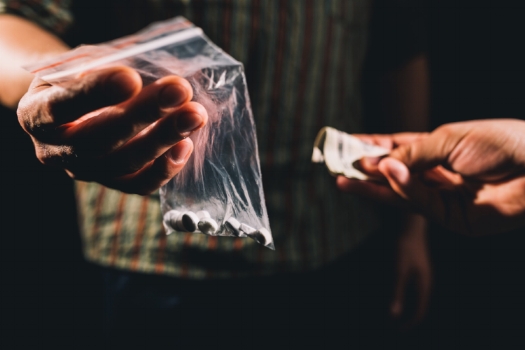
Arter involved a case in which the defendant had just been released from prison on charges of illegally carrying a gun and receiving stolen property. Ten days after his release, his parole agent and a police officer were on patrol together in an area known for frequent drug activity. The parole agent saw Mr. Arter hanging out in the area and asked the police officer to stop the car. The parole agent then walked over to Mr. Arter and searched him without permission despite not seeing Mr. Arter actually engaged in any kind of suspicious or criminal activity. The agent recovered crack cocaine and other paraphernalia and arrested Mr. Arter.
Mr. Arter was then charged with a new case of possession with the intent to deliver. He moved to suppress the crack cocaine and other items in the new case. The trial court agreed with Mr. Arter's defense attorneys that Mr. Arter had been stopped and searched by the parole agent without reasonable suspicion, and the court therefore granted the motion to suppress, thereby effectively terminating the new case.
Undeterred, the Commonwealth moved to introduce the illegally seized evidence against Mr. Arter in a subsequent violation of probation hearing. Mr. Arter's attorneys again objected to the admission of the evidence due to the unconstitutional search and seizure, but the probation court followed then-existing law and permitted the introduction of the evidence. The court revoked Mr. Arter's probation and sentenced him to prison. Mr. Arter then appealed, and the Supreme Court eventually reversed. The Supreme Court ruled that because the probation officer obtained the evidence in an unconstitutional search, the evidence could not be used against Mr. Arter at trial or in the violation of probation hearing.
illegal probation searches now have consequences
Arter represents a significant change in Pennsylvania law search and seizure. Previously, illegally seized evidence could be used against a defendant who was on probation to establish a violation of that probation. For example, if you were on probation and the police illegally searched your house without a warrant and found a gun, the prosecution could use the gun as evidence of a violation of probation even if you won a motion to suppress on the new gun charges. Now, if the court in the new case grants a motion to suppress, the prosecution cannot use the suppressed evidence in the old probation case. This re-interpretation of the Pennsylvania Constitution, which does not apply in the federal system, precludes the Commonwealth from getting two bites of the apple because the Commonwealth can no longer prosecute someone in a new case, lose a motion to suppress, and then continue to seek punishment in an existing probation case.
DAISY KATES HEARINGS AND OTHER ISSUES
In addition to expanding the privacy rights of the accused and holding police and probation officers accountable for illegal searches, the Pennsylvania Supreme Court’s decision in Arter also raises a number of interesting questions. For example, under Pennsylvania caselaw which existed before this new decision, the Commonwealth could use the evidence in a new case to move to have a probationer found in violation of probation before the new case had been resolved. The defendant could not argue against the constitutionality of the search as a defense to the violation of probation charge. This type of hearing is commonly referred to as a Daisy Kates hearing.
Given the new decision, it is now debatable whether the Commonwealth may continue to move for these hearings. Even if the Commonwealth may move under Daisy Kates, it may be possible for the criminal defense lawyer to ask the probation judge to suppress the illegally obtained evidence in the violation of probation hearing instead of in the new case. If the probation judge finds that the evidence was in fact obtained as the result of an illegal search, it is doubtful that the Commonwealth would be able to continue prosecuting the new case. Therefore, Commonwealth v. Arter both protects the rights of Pennsylvania citizens to be free of illegal searches regardless of whether they are on probation or parole and raises a number of important issues which will likely be litigated in the coming month and years.
our probation lawyers can help

Zak T. Goldstein, Esq - Philadelphia Probation Lawyer
Despite the new decision, different standards probably still apply to the legality of probation and parole searches. In general, probation officers need only reasonable suspicion to search a probationer or parolee instead of the higher standard of probable cause and a search warrant. But even if you are on probation or parole, you still have rights. Arter re-establishes that law enforcement must follow the law when conducting a search. If you or someone you know are facing drug or gun charges, you need the advice of a criminal lawyer immediately. Critical exculpatory evidence and witnesses could be lost due to delay, and there may very well be defenses ranging from a motion to suppress due to an illegal search to a lack of evidence of constructive or actual possession. Contact the probation lawyers of Goldstein Mehta LLC at 267-225-2545 for a complimentary 15-minute criminal defense strategy session.