Philadelphia Criminal Defense Blog

Birchfield v. North Dakota - States May Not Punish DUI Blood Test Refusals
In Birchfield v. North Dakota, the Supreme Court held that it is unconstitutional to criminally penalize a motorist for refusing to submit to a DUI blood test when the police have not obtained a search warrant for the motorist's blood.
DUI Defense Update - Birchfield v. North Dakota

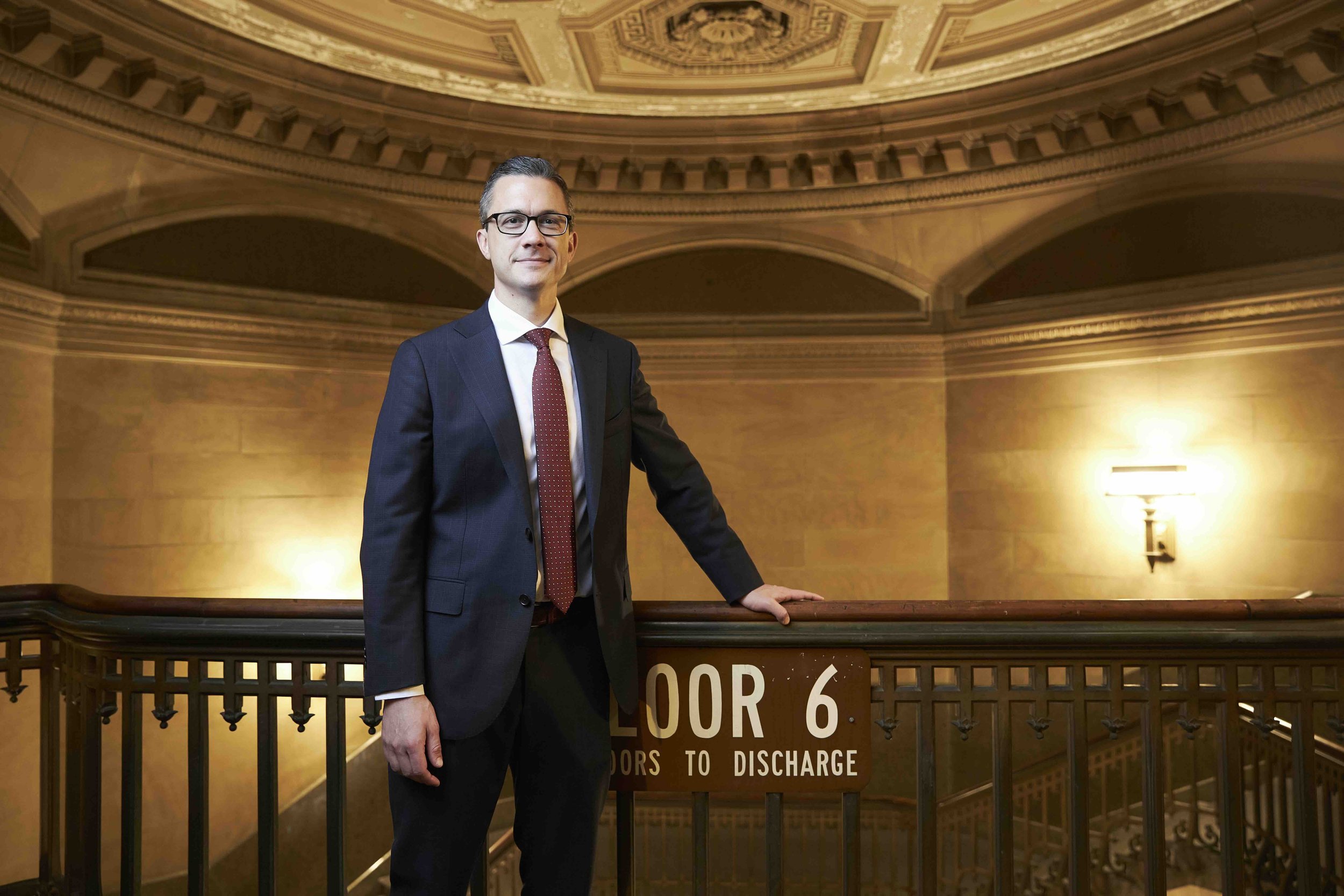
DUI Defense Attorney Zak Goldstein
The United States Supreme Court recently issued a critical opinion which has already had a dramatic effect on Driving Under the Influence ("DUI/DWI") litigation in Pennsylvania and many other states. In Birchfield v. North Dakota, the Supreme Court held that it is unconstitutional to criminally penalize a motorist for refusing to submit to a DUI blood test when the police have not obtained a search warrant for the motorist's blood. This holding is a major development in Pennsylvania because the DUI statute, 75 Pa.C.S. 3802, provided enhanced criminal penalties for a motorist who refused the blood draw and was later found guilty of DUI. Now, unless the police obtain a warrant, a motorist cannot be punished with additional jail time or other additional criminal penalties for refusing the blood draw. The prosecutor may be able to comment on the refusal at trial, but the motorist cannot receive additional jail time or a higher gradation on a conviction.
New Defenses in Drug DUI Cases and Blood Test DUI Cases
The holding is also critically important for many defendants who have already been arrested for DUI and either refused the blood test or had their blood drawn without a warrant. Birchfield is particularly important because the Court also recognized that where the arresting officers improperly inform a defendant that the failure to submit to a blood draw will result in criminal penalties, the trial court may be required to exclude the results of the blood test as the product of unconstitutional coercion.
The Impact on DUI Charges in Philadelphia
This holding is particularly relevant in Philadelphia and much of Pennsylvania. In Philadelphia, DUI blood draws are supervised by the Accident Investigation Division of the Philadelphia Police Department. Prior to each blood draw, the AID Division would read what are known as the O'Connell warnings to the defendant. The O'Connell warnings historically included a statement to the defendant that refusal to submit to a blood test, even where the police had not obtained a warrant, would result in increased criminal penalties should the defendant be convicted of DUI at trial. Likewise, the State Police read a very similar form when they supervised DUI-related blood testing. The warnings may now be constitutionally defective and could require a court to exclude the results of the blood draw obtained pursuant to these coercive warnings.
Contact a Philadelphia DUI Defense Attorney Today

Philadelphia DUI Lawyers
If you have been arrested for DUI, it is absolutely critical that you consult with experienced defense counsel. As I have explained in previous posts, there are often defenses available which only an experienced criminal lawyer will recognize. Prosecutors are handling these cases differently in different jurisdictions, and many state trial courts have not yet ruled on how Birchfield changes the rules in Pennsylvania. If you have been charged with DUI and the Police conducted a blood draw or asked you to submit to a blood draw, you need an experienced criminal lawyer to evaluate your case, recognize the potential defenses, and make the right legal arguments on your behalf. Call 267-225-2545 today for a free, honest consultation.

Types of Narcotics Offenses and Potential Defenses
Our talented attorneys have won motions to suppress the evidence and prevailed in even the toughest cases at preliminary hearing and trial.
Narcotics Offenses
TYPES OF DRUG CHARGES IN PENNSYLVANIA
If you have been arrested on narcotics charges, you need an experienced criminal defense attorney immediately. We handle all types of narcotics cases - Simple Possession ("K&I), Possession with the Intent to Deliver ("PWID"), Criminal Use of a Communications Facility ("CUCF"), Possession of a Small Amount of Marijuana ("SAM"), cases involving confidential informants or sales to undercover narcotics officers, and more. Our talented attorneys have won motions to suppress the evidence and prevailed in even the toughest cases at preliminary hearing and trial.
If you are caught with drugs, there are a number of potential charges you could face. First and foremost, you could be charged with Possession with the Intent to Deliver. In Pennsylvania, PWID is a felony regardless of the type of a substance sold. PWID requires the prosecutor to show not only that you had actual or constructive possession of a controlled substance, but also that you either sold or intended to sell the controlled substance to someone. Second, if the police did not observe drug sales, you could be charged with Simple Possession or Knowing and Intentional Possession, which requires the Commonwealth to show that you were in possession of a controlled substance. Third, if a cell phone was involved in a drug transaction, you could be charged with Criminal Use of a Communications Facility.
DEFENSES TO DRUG CHARGES
It is critical that you speak with an experienced attorney as quickly as possible because there are a number of potential defenses to these charges. Our Philadelphia criminal trial lawyers have won numerous motions to suppress where the police conducted a search or made an arrest without reasonable suspicion or probable cause. If the police violated your rights, it may be possible to have the evidence suppressed and the charges dismissed. In PWID cases, we also work with the best expert witnesses in narcotics distribution to show the prosecutor, judge, or jury that drugs were not possessed with the intent to deliver. Through prompt and thorough investigation of a case, we may also be able to show that the narcotics belonged to someone else by finding witnesses or surveillance footage, or we may be able to show that the police just plain got the wrong guy. We have also been able to successfully negotiate for clients to participate in pre-trial diversionary programs which do not result in permanent convictions or other serious consequences.
CONSEQUENCES FOR DRUG CONVICTIONS
Even misdemeanor narcotics charges are serious. Many cases carry significant jail time, and there can be countless life-changing collateral consequences to a conviction ranging from the loss of driving privileges to the loss of professional licenses, student financial aid, and employment. If you are charged with selling or possessing illegal drugs, you need an experienced lawyer who can investigate and evaluate your case, determine if your rights have been violated, and provide you with all of the options and a strong defense. You should not assume that you have to plead guilty just because the police found drugs on or near you. The Commonwealth has to prove that the search was legal and that the drugs were yours, and we have the experience to challenge them every step of the way.
CALL A PHILADELPHIA DRUG LAWYER TODAY
If you or a loved one has been charged with a narcotics offense in Pennsylvania or New Jersey, call 267-225-2545 now for a free, confidential, and honest consultation.

U.S. Judge Becomes First to Exclude Evidence Obtained via Controversial "Stingray" Device
First Federal Judge Excludes Evidence Obtained via Controversial Stingray Device.
In a groundbreaking opinion out of the Southern District of New York, a federal judge has excluded narcotics evidence obtained when DEA agents used a controversial "stingray" device to locate a suspect's apartment. A cell-site simulator— sometimes referred to as a “StingRay,” “Hailstorm,” or “TriggerFish”—is a device that locates cell phones by mimicking the service provider’s cell tower and forcing cell phones to transmit “pings” to the simulator. The device then calculates the strength of the “pings” until the target phone is pinpointed.
In United States v. Lambis, Drug Enforcement Administration agents used the stingray device to track Lambis' cell phone to a specific apartment. When they arrived at the apartment, they obtained Landis' consent to search the apartment, and they promptly found narcotics in the apartment. Lambis moved to suppress the evidence, arguing that the narcotics should be excluded at trial because the DEA agents had violated the Fourth Amendment by failing to obtain a warrant to track his cell phone using the stingray device. The District Court agreed, finding that "the use of a cell-site simulator constitutes a Fourth Amendment search within the contemplation of Kyllo. Absent a search warrant, the Government may not turn a citizen’s cell phone into a tracking device."
This is an excellent ruling for anyone who carries a cell phone as it requires the Government to obtain a warrant prior to surreptitiously tracking its citizens using these devices. It also highlights the importance of hiring effective criminal defense counsel when faced with criminal charges as many lawyers who do not focus on criminal defense are unlikely to know about these devices or what to do when a client has been tracked by one.
Attorney Goldstein Selected to National Trial Lawyers Top 40 Under 40
The National Trial Lawyers is pleased to announce that Zak Goldstein has been selected for inclusion into its Top 40 Under 40 Trial Lawyers, an honor given to only a select group of lawyers for their superior skills and qualifications in the field.
The National Trial Lawyers Announces Zak Goldstein as One of Its Top 40 Under 40 Trial Lawyers in Pennsylvania
For Immediate Release
The National Trial Lawyers is pleased to announce that Zak Goldstein has been selected for inclusion into its Top 40 Under 40 Trial Lawyers, an honor given to only a select group of lawyers for their superior skills and qualifications in the field. Membership in this exclusive organization is by invitation only, and is limited to the top 40 attorneys under the age of 40 in each state or region who have demonstrated excellence and have achieved outstanding results in their careers in either civil plaintiff or criminal defense law.
The National Trial Lawyers is a professional organization comprised of the premier trial lawyers from across the country who has demonstrated exceptional qualifications in their area of the law, specifically criminal defense or civil plaintiff law. The National Trial Lawyers provides accreditation to these distinguished attorneys, and also aims to provide essential legal news, information, and continuing education to trial lawyers across the United States.
With the selection of Zak Goldstein by The National Trial Lawyers: Top 40 Under 40, Goldstein has shown that he exemplifies superior qualifications, leadership skills, and trial results as a trial lawyer. The selection process for this elite honor is based on a multi-phase process which includes peer nominations combined with third party research. As The National Trial Lawyers: Top 40 Under 40 is an essential source of networking and information for trial attorneys throughout the nation, the final result of the selection process is a credible and comprehensive list of the most outstanding trial lawyers chosen to represent their state or region.
Contact: Caroline Tidmore CTidmore@TheNTL.org 334-944-2525
To learn more about The National Trial Lawyers, please visit: http://thenationaltriallawyers.org/.