

Philadelphia Criminal Defense Blog

PA Supreme Court: Vehicle Registration Alone Does Not Defeat Reasonable Expectation of Privacy

Philadelphia Criminal Defense Lawyer Zak T. Goldstein, Esquire
The Pennsylvania Supreme Court has decided the case of Commonwealth v. Anderson, holding that a driver may have a reasonable expectation of privacy even where they are pulled over driving a car belonging to someone else. The mere fact that the car is registered to or belongs to another person does not mean that the Commonwealth automatically wins a motion to suppress for lack of a reasonable expectation of privacy. Instead, the Commonwealth would have to introduce additional evidence to show that the driver did not have a reasonable expectation of privacy in the vehicle in under to win on this basis.
The Facts of the Case
The case arose after the defendant was stopped by Chester police in Delaware County, PA for several Vehicle Code violations. During the stop, officers discovered a firearm in the vehicle’s center console and marijuana in the passenger area. The defendant was ultimately charged with various offenses including carrying a firearm without a license (VUFA § 6106). He moved to suppress the evidence, arguing that the police violated his constitutional rights when they stopped him and searched the car.
The Commonwealth argued that because the car was registered to the defendant’s aunt rather than the defendant, he lacked a reasonable expectation of privacy in it and thus could not challenge the search. The trial court agreed, as did the Superior Court, holding that registration to another person alone was enough to shift the burden to the defendant to prove he had lawful possession or permission to drive the car. The defendant appealed to the Pennsylvania Supreme Court, and the Supreme Court granted review.
The Supreme Court Appeal
The Pennsylvania Supreme Court disagreed. Writing for a unanimous Court, Justice Dougherty clarified that under Commonwealth v. Enimpah, the Commonwealth bears the initial burden to produce evidence that negates a reasonable expectation of privacy before a defendant must respond. The Court found that the mere fact a vehicle is registered to someone else does not, without more, establish that the driver lacked a reasonable expectation of privacy. Lawful possession and control—regardless of registration—can give rise to protected privacy interests under both the Fourth Amendment and Article I, Section 8 of the Pennsylvania Constitution.
The Court emphasized that there are many plausible and lawful scenarios under which a person may be driving a vehicle registered to someone else. Therefore, registration alone is insufficient to meet the Commonwealth’s burden of production in terms of disproving reasonable expectation of privacy. The Court declined to address whether other facts in the case might satisfy the burden under a totality of the circumstances analysis and remanded the case for further proceedings.
This ruling strengthens protections for drivers in Pennsylvania, reinforcing that the Commonwealth must do more than cite vehicle registration records to justify a warrantless search. Defendants charged with possessory offenses retain automatic standing to challenge searches and seizures, and they are not required to affirmatively prove privacy interests unless and until the Commonwealth meets its initial evidentiary burden of disproving the reasonable expectation of privacy.
Facing criminal charges or appealing a criminal case in Pennsylvania?

Goldstein Mehta LLC Criminal Defense Lawyers
If you are facing criminal charges or under investigation by the police, we can help. We have successfully defended thousands of clients against criminal charges in courts throughout Pennsylvania and New Jersey. We have successfully obtained full acquittals and dismissals in cases involving charges such as Conspiracy, Aggravated Assault, Rape, Violations of the Uniform Firearms Act, and First-Degree Murder. We have also won criminal appeals and PCRAs in state and federal court, including the successful direct appeal of a first-degree murder conviction and the exoneration of a client who spent 33 years in prison for a murder he did not commit. Our award-winning Philadelphia criminal defense lawyers offer a free criminal defense strategy session to any potential client. Call 267-225-2545 to speak with an experienced and understanding defense attorney today.
Pennsylvania Superior Court Vacates Philadelphia Gun Conviction for VUFA § 6108 on Second Amendment Grounds

Philadelphia Criminal Defense Lawyer Zak T. Goldstein, Esquire
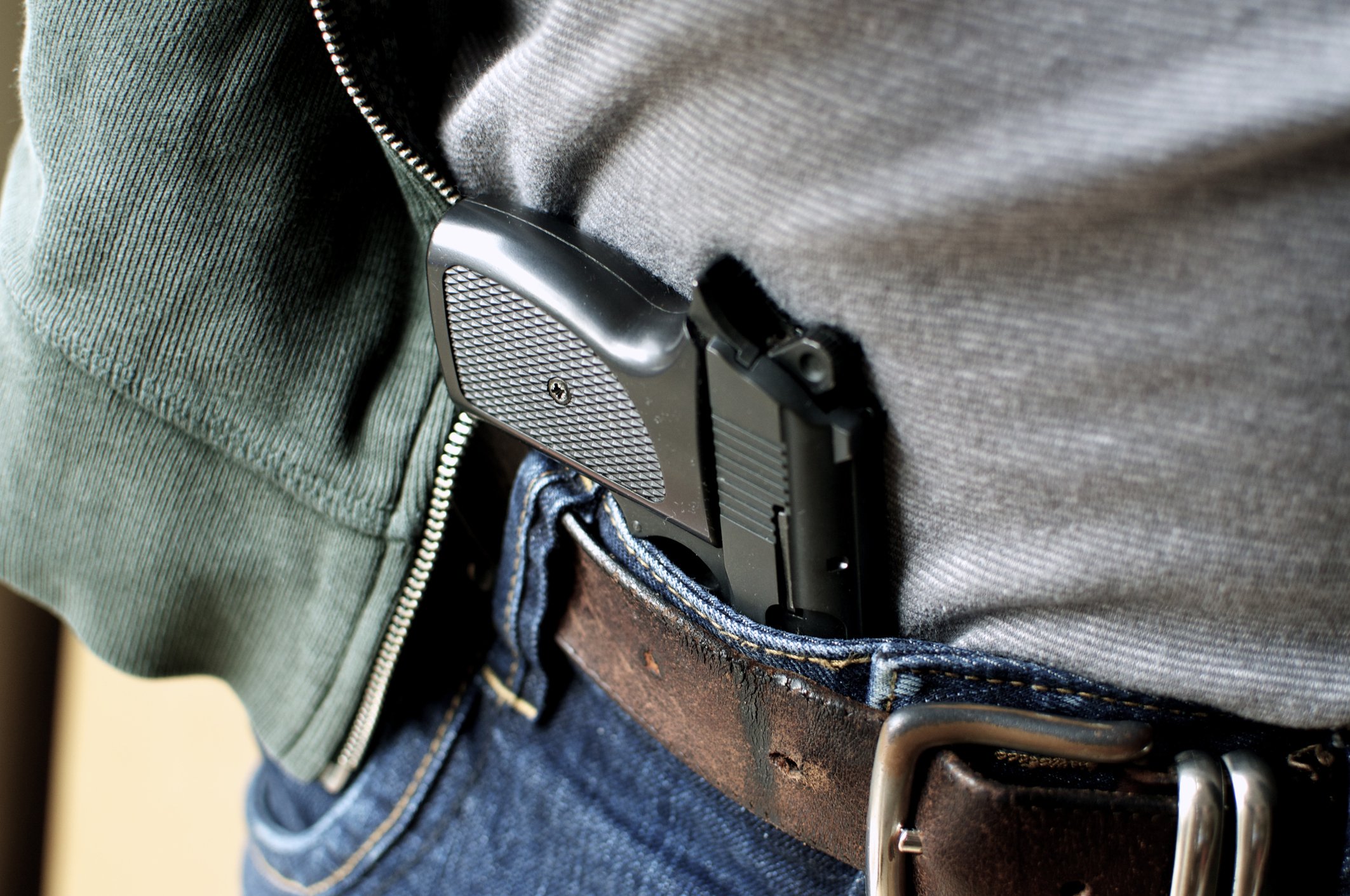
In a major Second Amendment decision for citizens of Philadelphia, the Pennsylvania Superior Court has declared 18 Pa.C.S. § 6108 unconstitutional as applied to the open carry of firearms in Philadelphia. § 6108 makes it illegal to even open carry a firearm on the streets of Philadelphia without a license, whereas open carry is generally legal in the rest of the state. In Commonwealth v. Sumpter, the Superior Court vacated the defendant’s conviction for carrying a firearm on the streets of Philadelphia, holding that the statute was unconstitutional as applied to the defendant in that it prevented him from open carrying.
The Facts of Sumpter
The defendant was arrested after police observed the handle of a firearm visibly protruding from his waistband while he was walking in Philadelphia. He admitted to the police that he carried the weapon for self-defense due to gun violence in the area. A charge under § 6106 (concealed carry without a license) was dismissed at the preliminary hearing because the police could see the gun, but he was convicted under § 6108, which makes it illegal to carry a firearm openly on public streets in Philadelphia without a license.
Philadelphia is the only “city of the first class” in Pennsylvania, and § 6108 applies only in a city of the first class (meaning Philadelphia). In the rest of the Commonwealth, unlicensed open carry is generally legal for adults 18 and over. Because Pennsylvania law requires individuals to be at least 21 to apply for a carry license, § 6108 effectively bans open carry for 18-to-20-year-olds in Philadelphia, but it does not have the same effect in the rest of the state.
The Superior Court’s Holding: § 6108 Fails Strict Scrutiny
Writing for the majority, Judge Stabile held that § 6108 violates the Equal Protection Clause as applied to individuals exercising their Second Amendment rights in Philadelphia. The Court explained that under District of Columbia v. Heller, McDonald v. City of Chicago, and New York State Rifle & Pistol Ass’n v. Bruen, the right to carry firearms in public for self-defense is a fundamental constitutional right. Because the law burdens a fundamental right, it must satisfy strict scrutiny.
The Commonwealth argued that the law was justified by Philadelphia’s high crime rate and the need for prosecutors to have additional enforcement tools. The Superior Court rejected that rationale, holding that such generalized concerns do not justify discriminatory geographic restrictions on constitutional rights. The government failed to show that § 6108 was narrowly tailored to serve a compelling interest.
The End of Scarborough
The Court’s opinion expressly abrogates its earlier decision in Commonwealth v. Scarborough, 89 A.3d 679 (Pa. Super. 2014), which upheld § 6108 under rational basis review. At the time, Scarborough treated the right to carry firearms outside the home as a non-fundamental right. After Bruen and Rahimi, that position is no longer tenable. The Court clarified that because Sumpter involves a fundamental right, strict scrutiny must apply.
No Ruling on Broader Licensing Requirements
The Court limited its holding to the as-applied challenge brought by the defendant in this case. The Court did not decide whether a statewide licensing requirement for open carry would be constitutional. The Court also did not address broader challenges to Pennsylvania’s licensing regime under § 6109. Additionally, the Court declined to address arguments brought based on the potentially broader protections of the Pennsylvania Constitution, relying solely on federal equal protection principles. Accordingly, the Court vacated this defendant’s conviction, but it is hard to predict what effect the case may have for other individuals.
Key Takeaways for Gun Charges in Philadelphia
§ 6108 is unconstitutional as applied to individuals who are prohibited from openly carrying firearms in Philadelphia but who could legally do so elsewhere in Pennsylvania.
The right to bear arms in public is a fundamental constitutional right, and laws that burden it are subject to strict scrutiny.
The decision overrules prior precedent that upheld Philadelphia-specific restrictions under a lower standard of review.
Prosecutors may not be able to rely on VUFA § 6108 to prosecute open carry cases where that conduct would be lawful in other parts of the state.
This case will likely be cited by the defense in numerous challenges to gun prosecutions (VUFA cases), but the exact effect remains unclear. The Philadelphia Police Department will likely continue to arrest people both for carrying concealed firearms without licenses as well as for open carry as the Superior Court did not specifically find the statute facially unconstitutional. Instead, the Court only vacated this one specific conviction. Therefore, it is still risky to carry a firearm (openly or concealed) without a license in Pennsylvania, but if you are arrested for a firearms offense, there may be constitutional challenges which could defeat the prosecution.
Facing criminal charges or appealing a criminal case in Pennsylvania?

Goldstein Mehta LLC Defense Attorneys
If you are facing criminal charges or under investigation by the police, we can help. We have successfully defended thousands of clients against criminal charges in courts throughout Pennsylvania and New Jersey. We have successfully obtained full acquittals and dismissals in cases involving charges such as Conspiracy, Aggravated Assault, Rape, Violations of the Uniform Firearms Act, and First-Degree Murder. We have also won criminal appeals and PCRAs in state and federal court, including the successful direct appeal of a first-degree murder conviction and the exoneration of a client who spent 33 years in prison for a murder he did not commit. Our award-winning Philadelphia criminal defense lawyers offer a free criminal defense strategy session to any potential client. Call 267-225-2545 to speak with an experienced and understanding defense attorney today.

Can I Beat a VUFA § 6106 Charge If I Didn’t Know About the Gun?

Philadelphia Criminal Defense Lawyer Zak T. Goldstein, Esquire
Many people are arrested and charged with carrying a concealed firearm without a license (VUFA § 6106) even when the gun wasn’t actually on them. It may have been found in a car, a bag, or a house that actually belonged to someone else. In these cases, the prosecution proceeds based on the idea of constructive possession. But constructive possession can be confusing. Naturally, many clients ask:
“If the gun wasn’t mine, and I didn’t even know it was there, how can they charge me?”
The answer lies in a concept called constructive possession, and beating a VUFA 6106 charge in this situation often depends on whether the Commonwealth can prove that you knew about the gun and intended to control it.
1. What Is 18 Pa.C.S. § 6106?
Section 6106 makes it a crime to carry a concealed firearm without a valid license outside your home or place of business. If you actually have the gun on your person, and you don’t have a license, that’s a clear-cut 6106 violation. But many cases involve constructive possession, meaning the gun was not on the defendant directly. The statute also makes it a crime to have a gun in a car without a license. But again, if someone else left a gun in the car and you didn’t know about it, how were you supposed to avoid getting charged?
2. What Is Constructive Possession?
Constructive possession means that you didn’t physically have the gun on you, but you had:
- Knowledge that it was there, and
- The intent and ability to control it
It is not enough to just know about it or be near it. You have to known about it AND have the intent and power to control the gun. Constructive possession really means that the gun is basically yours - even if you don’t permanently or legally own it.
3. So How Do You Beat a Constructive Possession Case?
The key defense is lack of knowledge and control. Your lawyer’s goal is often to show reasonable doubt that you even knew the gun was there, let alone that you intended to possess it.
Potential defense strategies we may use could include:
- Shared access: The gun was in a car or home shared by multiple people, so it did not belong to the defendant.
- No fingerprints or DNA: There is no objective, forensic evidence tying you to the weapon.
- No incriminating statements: You didn’t admit to ownership or control. In fact, you may have expressed surprise that it was there and been very cooperative with the officer. For example, why would someone consent to a search if they knew the police were going to find an illegal gun?
- Bad stop or search: Your rights were violated during the stop, and we attorney can file a motion to suppress and ask the judge to exclude the evidence.
4. The Commonwealth Has the Burden of Proof
The DA must prove every element of the offense beyond a reasonable doubt. This means they must prove that you knowingly possessed the gun. If you never touched the weapon, never claimed it, and there’s no forensic or circumstantial evidence linking you to it, a judge or jury may find the case too weak to convict if the gun could have been possessed by someone else.
5. Real-Life Examples Where Constructive Possession Fails
Pennsylvania courts have repeatedly held that mere proximity to a gun is not enough. Examples of defense wins include:
- A gun under the seat in a car with multiple occupants
- A firearm found in a house where the defendant was merely present
- A bag with a gun placed near the defendant but with no evidence of ownership
Each of these scenarios presents an opportunity to argue that the Commonwealth failed to meet its burden.
6. Don’t Assume You Have to Plead Guilty
Just because you’re charged with a VUFA § 6106 violation doesn’t mean the case is open-and-shut. The law gives you the benefit of the doubt, and your lawyer’s job is to hold the Commonwealth to its burden of proving every element of the offense beyond a reasonable doubt.
Facing criminal charges or appealing a criminal case in Pennsylvania?

Goldstein Mehta LLC Criminal Defense Lawyers
If you are facing criminal charges or under investigation by the police, we can help. We have successfully defended thousands of clients against criminal charges in courts throughout Pennsylvania and New Jersey. We have successfully obtained full acquittals and dismissals in cases involving charges such as Conspiracy, Aggravated Assault, Rape, Violations of the Uniform Firearms Act, and First-Degree Murder. We have also won criminal appeals and PCRAs in state and federal court, including the successful direct appeal of a first-degree murder conviction and the exoneration of a client who spent 33 years in prison for a murder he did not commit. Our award-winning Philadelphia criminal defense lawyers offer a free criminal defense strategy session to any potential client. Call 267-225-2545 to speak with an experienced and understanding defense attorney today.

Can I Get a Gun Charge Expunged in Pennsylvania?

Philadelphia Criminal Defense Lawyer Zak T. Goldstein, Esquire
If you were arrested for a gun charge in Philadelphia or anywhere in Pennsylvania, one of your first concerns may be: “Can I get this off my record?” Whether you’re worried about a background check for a job, a professional license, or future firearm rights, understanding expungement laws is critical. The ability to get the case expunged once it’s over may be an important factor for you in deciding how you want to try to resolve the case.
Here’s what you need to know about expunging a gun arrest or conviction in Pennsylvania:
1. Expungement After a Dismissal or Acquittal
If your gun charge was dismissed, withdrawn, or you were found not guilty at trial by a judge or a jury, you are likely eligible for expungement under 18 Pa.C.S. § 9122. In general, a criminal defendant has an absolute right to the expungement of a case that ended in an acquittal in Pennsylvania. In most cases, it is also possible to have a case expunged if the case was withdrawn or dismissed. The Philadelphia District Attorney’s Office typically does not contest the expungement of a dismissed gun charge. If they do contest it, then the court would hold a hearing on whether the expungement should be granted, but most dismissed and withdrawn cases can be expunged.
2. Expungement After ARD (Pre-Trial Diversion)
In some rare gun cases—usually where the defendant has no prior record and the case does not involve violence—the DA may offer ARD in order to resolve the case. Successful completion of the ARD program will lead to the expungement of the charges as ARD does not result in a conviction. ARD requires the defendant to serve a period of probation and may involve some other conditions, but at the end of the case, the charges will be be dismissed and expunged.
Learn more about the ARD program in Philadelphia.
3. Convictions for Gun Charges Cannot Be Expunged
Pennsylvania does not allow for the expungement of criminal convictions for gun charges (or any other criminal charge) unless you were convicted of a summary offense or you obtain a Governor’s pardon. Convictions generally cannot be expunged. However, it may be possible to obtain a partial expungement if you were only convicted of some of the charges. For example, if you were charged with VUFA § 6106 (carrying a concealed firearm without a license, which is usually a felony) and VUFA § 6108 (carrying a firearm on the streets of Philadelphia, which is a misdemeanor), but you were only convicted of the misdemeanor, you may qualify to have the felony “redacted” or expunged. This could make your record better as the court would order the destruction of any reference to the fact that you were originally charged with a felony.
4. A Pardon May Be the Only Option After a Conviction
For convicted individuals, a pardon may be the only route to eventual expungement of the charges. Pardons are difficult to obtain and rarely granted, but if you were convinced of the charges in your case and the charges were were not summary offenses, then a pardon would be the only way to remove the charges from your record.
5. You May Still Be Eligible to Seal Some Non-Gun Offenses
Other non-violent misdemeanors might be sealable under the Clean Slate Law. Gun charges typically cannot be sealed, but other misdemeanor offenses (and even some low level felonies) may qualify for a limited access order. A limited access order is not quite as good as an expungement, but it does decrease the odds that your record will show up on a background check.
Don’t Guess—Get Legal Advice Before You File
Expungement is a powerful tool, but it’s not available in every case. If you’re unsure whether your gun charge qualifies—or if you want help getting it off your record—call us today. We’ll review your case for free and help you take the right steps.
Facing criminal charges or appealing a criminal case in Pennsylvania?

Goldstein Mehta LLC Criminal Defense Lawyers
If you are facing criminal charges or under investigation by the police, we can help. We have successfully defended thousands of clients against criminal charges in courts throughout Pennsylvania and New Jersey. We have successfully obtained full acquittals and dismissals in cases involving charges such as Conspiracy, Aggravated Assault, Rape, Violations of the Uniform Firearms Act, and First-Degree Murder. We have also won criminal appeals and PCRAs in state and federal court, including the successful direct appeal of a first-degree murder conviction and the exoneration of a client who spent 33 years in prison for a murder he did not commit. Our award-winning Philadelphia criminal defense lawyers offer a free criminal defense strategy session to any potential client. Call 267-225-2545 to speak with an experienced and understanding defense attorney today.