

Philadelphia Criminal Defense Blog

Criminal Defense Attorney Zak Goldstein Wins Motion to Suppress Drugs in Possession with the Intent to Deliver Case
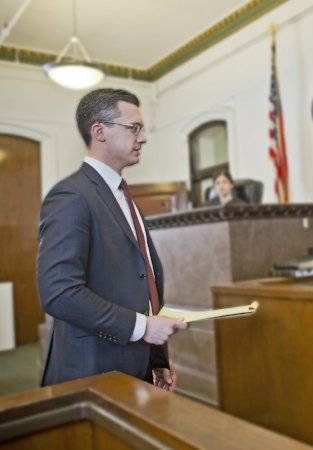
Criminal Defense Lawyer Zak T. Goldstein, Esquire
Criminal defense lawyer Zak T. Goldstein, Esquire, recently won a motion to suppress a significant quantity of fentanyl, heroin, and pills in a case in the Philadelphia Court of Common Pleas. In Commonwealth v. B.R., police alleged that they responded to a 911 call for a report of a person screaming. When they arrived on the scene, they did not see a disturbance or hear anyone screaming, but they did observe the defendant’s car double parked in the middle of the road with the engine running. The defendant approached the police, and the police asked him if he knew to whom the car belonged. The defendant responded that it was his car.
The police walked over to the vehicle, and they claimed that they were able to smell marijuana coming from the car. They ran the defendant’s identification and determined that the defendant had a bench warrant from missing court in another case. They therefore placed him under arrest and put him in the back of the patrol car. They also claimed that while they were arresting him, he began cursing at them and saying things about guns and knives being in the car. The police asked if they could search the car, and the defendant purportedly told them that they could search it. The officers then performed a “consent search” and recovered a significant quantity of heroin, fentanyl, and oxycodone pills. The police charged B.R. with Possession with the Intent to Deliver (“PWID”) and related charges.
B.R. retained Attorney Goldstein for his case, and after reviewing the matter, Attorney Goldstein immediately filed a motion to suppress the drugs that were recovered from the car. Attorney Goldstein alleged that the drugs were illegally recovered by the police because the police failed to obtain a search warrant for the car, the consent obtained from B.R. was invalid, and the police had failed to give B.R. his Miranda warnings prior to interrogating him.
The Philadelphia Court of Common Pleas held a hearing on the motion to suppress at which the officers testified to many of the above allegations. The Commonwealth based its arguments as to the legality of the search on the officers’ claims that B.R. had in fact consented to a search of the vehicle, leading to the recovery of the drugs. Under the Pennsylvania and United States Constitution, however, the Commonwealth bears the burden of establishing that a suspect has voluntarily, knowingly, and intelligent consented to a search before the police may conduct such a search. As the police did not obtain a search warrant and there was no real claim that this search was performed out of a concern for officer safety, the Commonwealth attempted to show that B.R. had consented.
The trial court rejected the Commonwealth’s argument. First, following Attorney Goldstein’s cross-examination of the officer, the court found that the officer’s testimony was not credible because it did not make any sense that the defendant would consent to a search of his car when the car contained a large amount of drugs. The officer also struggled to recall details regarding the search or exactly what the defendant had supposedly said when giving consent. Second, the court found that the defendant did not voluntarily give consent to the search. Under Pennsylvania law, the consent to a search must be the product of an essentially free and unconstrained choice. It may not be the result of duress or coercion, express or implied, or a will overborne. A court must look at the totality of the circumstances in determining whether consent was freely given. Here, the police had arrested the defendant, failed to give him Miranda warnings, failed to tell him that he had the right to refuse the search, and failed to comply with their own directives which required them to consult with a supervisor and have the defendant sign a consent to search form prior to conducting the search of the vehicle.

Goldstein Mehta LLC Criminal Defense Lawyers
Accordingly, the court found the officers’ testimony not credible and that the defendant had not actually consented. The court granted Attorney Goldstein’s motion to suppress, and the Commonwealth was forced to withdraw the charges. On paper, this case looked difficult – the car smelled like marijuana, the defendant had an arrest warrant, the police recovered a lot of drugs, and the defendant had supposedly consented to the search, thereby eliminating the need for a search warrant. Through cross-examination and the use of the case law on consent searches, which is often helpful to the defense, Attorney Goldstein was able to convince the trial court that the police had violated B.R.’s constitutional rights and win the case.
Facing criminal charges? We can help.
If you are facing criminal charges or under investigation by the police, we can help. We have successfully defended thousands of clients against criminal charges in courts throughout Pennsylvania and New Jersey. We have successfully obtained full acquittals in cases involving charges such as Conspiracy, Aggravated Assault, Rape, and Murder. Our award-winning Philadelphia criminal defense lawyers offer a free criminal defense strategy session to any potential client. Call 267-225-2545 to speak with an experienced and understanding defense attorney today.

PA Superior Court: No Search Warrant Required to Obtain Pharmacy Records of Pseudoephedrine Purchases

Criminal Defense Lawyer Zak T. Goldstein, Esquire
The Pennsylvania Superior Court has decided the case of Commonwealth v. McFarland, holding that information obtained from the NPLEX is not federally protected health information. Therefore, police do not need to require a search warrant to obtain records from that system. The NPLEX is a system that is used by pharmacies to track over-the-counter Pseudoephedrine purchases.
Commonwealth v. McFarland
An officer entered an Altoona, PA residence in order to attempt to serve a search warrant on two occupants of the residence on March 5, 2018. The defendant was found in the residence with the two other occupants. The officer observed a glass smoking pipe that he deemed likely to be used for smoking methamphetamines, in addition to empty blister packets, batteries, and a soda bottle with a white crystal substance inside. The other officers conducted a protective sweep of the house for any other individuals and noted other items they deemed consistent with manufacturing methamphetamines via the one-pot method.
Notably, methamphetamine can be manufactured using a two-liter bottle, known as the one-pot method. Pseudoephedrine is a primary ingredient to manufacture methamphetamine via this method. It can be purchased at pharmacies or retail stores in blister packets. The medication containing pseudoephedrine is intended to treat allergies and cold symptoms.
The officers notified the Pennsylvania State Police Clandestine Lab, and officers from that organization went to the house and concluded that the residence contained a methamphetamine production lab.
The officers then searched the National Precursor Log Exchange (NPLEX), which is a database that contains information provided by buyers of pseudoephedrine such as their name, address, and date of birth, in addition to the date, time, brand, and amount of pseudoephedrine purchased. This system also limits the amount of pseudoephedrine purchased by a person within a specified period of time.
The NPLEX log showed that the defendant had attempted to purchase Wal-Phed on November 26, 2017, but he was blocked because he had exceeded the 9-gram limit within 30 days. On January 4, 2018, the defendant was blocked from purchasing a 10-count box of pseudoephedrine. On January 28, 2018, the defendant was blocked from making a purchase of a 10-count box of pseudoephedrine. On February 5, 2018, the defendant successfully purchased a 20-count box of pseudoephedrine. On February 19, 2018, the defendant successfully purchased a 20-count box of pseudoephedrine. On March 2, 2018, the defendant successfully purchased a 10-count box of pseudoephedrine. Between January 2017 and March 2, 2018 of the NPLEX log, the defendant had made 28 successful purchases and attempted 17 blocked purchases of pseudoephedrine in Altoona.
A preliminary hearing was held for the defendant on May 23, 2018. After this hearing, the defendant filed an omnibus pretrial motion seeking suppression of the NPLEX log because the officer obtained the log without securing a search warrant or court order first. The motion also sought dismissal of all charges, arguing that the Commonwealth had not found evidence that the defendant was aware of the drug manufacturing operation.
The suppression hearing was held on May 24, 2019 and after this hearing, the court ordered both parties to file memoranda of law, specifically addressing a prior opinion in the case of Commonwealth v. Babcock. Babcock set the precedent in a nearby county that police could obtain NPLEX logs without obtaining a search warrant, though the defendant argued that Babcock was contrary to other existing precedents. The trial court denied the defendant’s motion, and the case proceeded to trial in February 2020. The defendant was found guilty of manufacturing a controlled substance and conspiracy and not guilty of the rest of the charges.
On July 13, 2020, the defendant filed a post-sentence motion, arguing that the verdicts were against the weight of the evidence and that the jury’s verdicts were not sufficiently supported by evidence, as well as arguing that the trial court should have suppressed the NPLEX logs. The post-sentence motion hearing was conducted on September 21, 2020. The Commonwealth’s post-sentence motion, in which the prosecution argued that the trial court had erred in failing to sentence the defendant to the statutory mandatory minimum sentence, was granted, while the defendant’s motion was denied.
The defendant filed an appeal to the Pennsylvania Superior Court. On appeal, he argued that the trail court erred in denying the motion to suppress because the police should have been required to obtain a search warrant in order to get the pharmacy purchase information.
The Pennsylvania Superior Court’s Decision
The defendant argued that there was a reasonable expectation of privacy in the health information that the police obtained without a warrant under the Health Insurance Portability and Accountability Act (HIPAA), which protects information that was obtained in the NPLEX logs.
The Superior Court agreed with the trial court’s decision that the NPLEX logs were not protected information. The NPLEX is a real-time stop-sale system which is intended to be used by law enforcement agencies in addition to pharmacies and other businesses to track sales of ephedrine and pseudoephedrine to ensure individuals do not go over the purchase limit. Data such as the name and address of the purchaser, the name and quantity of the product purchased, the date and time of the purchase, and the purchaser’s identification and signature are allowed to be viewed by law enforcement, according to federal law.
HIPAA is intended to regulate the use and disclosure of health information, which is defined as past, present, or future health or conditions of an individual, in addition to the provision of health care to an individual and any past, present, or future payment for health care to an individual. NPLEX logs do not fall under this definition, and instead would be classified as retail purchase information. NPLEX demonstrates the time and date of purchase, as well as freely given identification of a purchaser.
The Superior Court also reviewed Babcock and agreed with the Commonwealth’s arguments. The Superior Court concluded that the defendant had no protected privacy interest regarding the NPLEX logs, so the Fourth Amendment did not apply, and police did not have to obtain a search warrant.
The defendant also argued that there was insufficient evidence to convict him of manufacturing a controlled substance and conspiracy beyond a reasonable doubt. The Superior Court deemed this claim waived because the defendant did not specify in his statement of errors which elements the Commonwealth failed to prove.
The defendant further argued that his presence at the residence where drug manufacturing occurred was not sufficient to convict him of conspiracy. The Superior Court determined that his extensive, 3.5-year purchase and attempted purchase history of pseudoephedrine, many coinciding with purchases and attempted purchases of the other defendants in the case, established a conspiracy. Additionally, the defendant’s close proximity to the drug manufacturing paraphernalia on March 5, 2018 did not help his case, either. Finally, the defendant was found with $3500 in cash on his person, which the testifying officer explained was consistent with drug trafficking.
The defendant also argued that the trial court should not have denied his claim that the jury’s verdicts were against the weight of the evidence presented, claiming the majority of evidence was based solely on the NPLEX logs. According to relevant case precedent, the jury was free to believe some, all, or none of the evidence presented. The defendant must also establish that the evidence that supported his conviction was vague and uncertain in order to succeed on a weight challenge. The Superior Court determined that there was no abuse of the court’s discretion in rejecting the defendant’s weight claim. As a result, the sentence was affirmed, and the defendant’s appeal was denied.
Facing criminal charges? We can help.
Goldstein Mehta LLC Criminal Defense Lawyers
If you are facing criminal charges or under investigation by the police, we can help. We have successfully defended thousands of clients against criminal charges in courts throughout Pennsylvania and New Jersey. We have successfully obtained full acquittals in cases involving charges such as Conspiracy, Aggravated Assault, Rape, and Murder. Our award-winning Philadelphia criminal defense lawyers offer a free criminal defense strategy session to any potential client. Call 267-225-2545 to speak with an experienced and understanding defense attorney today.
Read the Superior Court’s Opinion
PA Superior Court: Stop Illegal Even Though Defendant in High Crime Area and Sweating in 86 Degree Weather

Zak T. Goldstein, Esquire - Criminal Defense Lawyer
The Pennsylvania Superior Court has decided the case of Commonwealth v. Anderson, holding that the defendant was illegally stopped by the police because they did not have reasonable suspicion to stop him. The police did not have reasonable suspicion to detain him solely because he was in a high crime area and sweating in very hot weather. This conclusion seems obvious, but a panel of the Superior Court had initially overruled the trial court’s order granting a motion to suppress. Fortunately, an en banc panel of the Superior Court granted re-argument and reconsidered.
Commonwealth v. Anderson
A Harrisburg, PA police officer was driving an unmarked vehicle with four other uniformed and armed police officers through a fried chicken store’s parking lot that was known to the officers as a high crime, high drug area. One of the officers observed the defendant on the ground next to a pick up truck. He appeared to be crawling on the ground, but he was not doing anything illegal. The officers approached the defendant and noticed that he was sweating a lot. Of course, it was 86 degrees outside with 67% humidity. The officers asked the defendant if he was okay. He responded that he had dropped something on the ground. The police then left him alone for a little bit.
The defendant entered the fried chicken restaurant. After he went inside, the officers noticed that the driver’s side window of the truck was down. They believed that to be uncommon in this section of the city. They also noticed that the truck was not parked within the lines of the parking space, leading to speculation that the driver could have been intoxicated. The officers continued to watch the defendant while he was inside the restaurant. They noticed that he did not order food, but he did purchase a soda. He also appeared to be pacing while inside.
The defendant exited the restaurant. He looked at the officers and then began to walk in the other direction. The officers approached the defendant again and asked to speak with him. One of the officers asked for ID, and the defendant provided his identification card. With the identification still in his possession, the officer then specifically asked the defendant if he was on parole and if there was anything illegal on his person. The defendant responded that he was on parole but that he did not have anything on his person. Notably, the officers did not document that the defendant was profusely sweating nor exhibiting signs of being under the influence during this second encounter with the defendant.
Apparently unsatisfied with the defendant’s answers, one of the officers asked for permission to search the defendant. The defendant gave verbal consent to search him. The officer searched the defendant’s pockets and found nothing of significance. He then swept over the defendant’s groin region and felt a hard and distinct bulge and, according to the officer, “it was immediately apparent to me that he had a substantial amount of crack cocaine down the front of his pants.” The officer would later testify that “before [the crack] was recovered, I remember specifically saying to my partner, he has an ounce of crack down his pants. And sure enough, we removed 28.3 grams of crack cocaine.” At this point, the officers decided to place the defendant under arrest. The defendant attempted to flee, but he was tackled a few feet away and was subsequently arrested and charged with various drug offenses.
The defendant filed a motion to suppress. Specifically, the defendant argued that the officers lacked both reasonable suspicion and probable cause when the first stopped him. Additionally, the defendant argued that his consent to the officers’ search was not knowingly, voluntarily, or intelligently made. At the motion to suppress hearing, the officers testified to the above facts. Additionally, the defendant testified and stated that one of the officers had patted him down before he even went into the restaurant. Also, he said that after he left the restaurant, the officers patted him down again and rubbed and grabbed his testicles and penis. He also disputed that he ran because he said the officers had a K-9 unit on scene during these interactions.
At the conclusion of the hearing, the suppression court granted the defendant’s motion to suppress. The suppression court found the testifying officer to be credible, but the court found that the officers had exceeded the scope of consent that the defendant had granted to him. Specifically, the court said that “there was nothing in the verbal exchange between the officer and the defendant as to what the officer was looking for, or where the officer intended to search” and thus a reasonable person would not have expected the officer to search his groin area. Additionally, the suppression court found that the second interaction with the police began as a mere encounter and then escalated into an investigative detention and that the officers lacked reasonable articulable suspicion that would have justified that stop. The Commonwealth then filed a timely appeal.
The Pennsylvania Superior Court’s First Decision
In its first decision, the Pennsylvania Superior Court reversed the trial court and remanded the matter for further proceedings. In this initial non-precedential decision, the majority concluded that both interactions involving the defendant and the police were mere encounters. The majority held that the defendant’s consent was not the product of an illegal detention and that the officers had not exceeded the scope of the defendant’s consent.
The dissent agreed with the trial court and opined that the encounter had escalated from a mere encounter to an investigative detention. The defendant then filed an application for re-argument en banc, arguing that the majority erred in concluding that the police were not performing an investigative detention and that the officers exceed the scope of his consent. The Superior Court granted the defendant’s request and withdrew the three-judge panel decision issued in this matter.
The Pennsylvania Superior Court’s Decision
The Pennsylvania Superior Court affirmed the suppression court’s order. Regarding the first interaction with the defendant, no one disputed that the initial contact with the officers was a mere encounter. Therefore, the Superior Court analyzed the second encounter to determine whether or not a reasonable person would have felt free to leave. Based on its review of the record, the Superior Court found that the interactions between the defendant and the officers was not a mere encounter. The Court reached this conclusion because the officers asked him if he had identification on him and whether he had anything illegal on his person and therefore a reasonable person would not have felt free to leave in this situation. Further, the Superior Court held that officers did not have reasonable articulable suspicion to stop the defendant in the first place. The en banc panel of the Superior Court found that the evidence that was presented at the suppression hearing showed that the officers had “nothing more than a ‘hunch’ that something was amiss.” The fact that the defendant was present in a high crime area, near a truck (that had windows down) that was not parked properly, and that the fact that the defendant was sweating in 86 degree weather was not sufficient to establish the requisite reasonable suspicion necessary to justify an investigative detention. Further, because the defendant was illegally stopped in the first place, his consent to search was invalidated. It was almost important that police had possession of his identification. Therefore, the suppression order stands, and the Commonwealth will not be able to use the evidence that was suppressed in its trial against the defendant.
Read the Opinion
Facing Criminal Charges? We Can Help.

Goldstein Mehta LLC Criminal Defense Lawyers
If you are facing criminal charges or under investigation by the police, we can help. We have successfully defended thousands of clients against criminal charges in courts throughout Pennsylvania and New Jersey. We have successfully obtained full acquittals in cases involving charges such as Conspiracy, Aggravated Assault, Rape, and Murder. Our award-winning Philadelphia criminal defense lawyers offer a free criminal defense strategy session to any potential client. Call 267-225-2545 to speak with an experienced and understanding defense attorney today.

PA Superior Court: Police Generally May Not Search Car Incident to Arrest Without Search Warrant

Criminal Defense Lawyer Zak T. Goldstein, Esquire
The Pennsylvania Superior Court has decided the case of Commonwealth v. Lutz, holding that the police generally may not search a car incident to the driver’s arrest without first obtaining a search warrant. This is an important holding because it provides substantial protections for Pennsylvania citizens that are not provided by federal law. Further, the court also suggested that police may not be able to go into a car to retrieve contraband under the plain view doctrine without first obtaining a warrant, as well.
The Facts of Lutz
In Lutz, the defendant was arrested for DUI as well as possession of marijuana and possession of drug paraphernalia. The defendant moved to suppress the evidence which the police had recovered from her vehicle, namely the marijuana as well as a marijuana pipe.
The trial court held a hearing on the motion to suppress. At the hearing, Sergeant Nunemacher of the Lansford Police Department testified that he responded to a report of a suspicious vehicle parked at the foot of a private community on a water authority road. Police regularly patrolled this area because it was known for drug activity and as an area where people dump garbage. When he arrived, he found the defendant’s vehicle parked in a rocky area. He heard loud music coming from the car.
The defendant exited the vehicle and approached the officer. The officer quickly concluded that the defendant was under the influence of alcohol and called for backup. He asked the defendant to participate in field sobriety tests as well as to take a breathalyzer, but she did not really comply. He ultimately arrested her for DUI.
The officer then checked on the defendant’s vehicle. The defendant had left her keys in the ignition, and the car was still running. When the officer looked into the car, he saw a marijuana pipe sitting on the driver’s seat. He went into the car to turn off the car and retrieve the pipe. The defendant told the officers that they might find some marijuana in the car, so the officers then searched the rest of the car and unsurprisingly found marijuana.
The trial court denied the motion to suppress. The court found that police were not required to obtain a search warrant because the pipe was contraband which was in plain view and because they were allowed to search the car incident to the defendant’s arrest. The defendant appealed.
The Pennsylvania Superior Court Appeal
The Superior Court reversed the trial court’s ruling on appeal. The Superior Court found that with respect to the pipe, the officers had not violated the requirement that they obtain a search warrant prior to searching a vehicle because the officers found the pipe pursuant to the plain view exception to the warrant requirement.
Under Commonwealth v. Alexander, police generally must obtain a search warrant prior to searching a vehicle. There are exceptions, however, for exigent circumstances. In this case, there were no exigent circumstances that would allow a frisk of the vehicle, but the plain view exception applied.
The plain view exception allows police to conduct a warrantless search and seizure if four elements are met. First, the police must not have violated the Fourth Amendment in arriving at the location from which the item could be viewed. Second, the item must be in plain view. Third, the incriminating character of the item must be immediately apparently. Fourth, the police must have a lawful right of access to the item itself.
Here, the Court found that all four requirements were met with respect to the pipe. The police were on public property and able to see the pipe without going into the car. The pipe was plainly visible without opening the door or moving anything, and based on the officers’ experience, the pipe was clearly for use with marijuana instead of tobacco.
The fourth requirement, however, was a little bit more complicated. Police did not have a search warrant, so they could not really enter the defendant’s car. The Superior Court, however, found exigent circumstances from the fact that the defendant had been arrested and police needed to go into the car to turn the car off and retrieve the keys because the defendant had left the car running. Once they were in the car for the purpose of turning it off and getting the keys, the police were then allowed to retrieve the pipe without getting a warrant. They had a lawful right of access to the item from the exigent circumstances of needing to turn off the car.
This would have been a more difficult question had the car not been running. The Court’s opinion implies that in that case, the police would likely need to get a warrant prior to retrieving the pipe even if they could tell that it was contraband before they entered the car. This is an important issue which has not totally been resolved by the Pennsylvania courts as officers often claim to have seen contraband in plain view during traffic stops. Here, the Court relied on the exigency of needing to turn the car off to support the warrantless entry into the car, suggesting that if the car had been off, police would have needed to get a warrant prior to retrieving the pipe.
With respect to the rest of the search of the car for the items that were not in plain view, the police action was very clearly unconstitutional. As previously mentioned, in Commonwealth v. Alexander, the Pennsylvania Supreme Court found that police generally need to get a search warrant prior to searching a vehicle. As a general rule, there is a search incident to arrest exception which allows police to search a person who has been arrested for drugs or contraband as well as to inventory their belongings. The Court here held that that exception does not extend to a person’s vehicle once the person has been arrested, removed from the vehicle, and placed in handcuffs. At that point, there is no basis for believing that the person could retrieve a weapon and destroy evidence, so the exception does not apply. Therefore, the trial court should have granted the motion to suppress with respect to the marijuana in the car. The Court reversed the conviction and remanded the matter for a new trial without the illegally seized drugs.
Read the Superior Court’s Opinion
Facing criminal charges? We can help.

Philadelphia Criminal Defense Lawyers
If you are facing criminal charges or under investigation by the police, we can help. We have successfully defended thousands of clients against criminal charges in courts throughout Pennsylvania and New Jersey. We have successfully obtained full acquittals in cases involving charges such as Conspiracy, Aggravated Assault, Rape, and Murder. Our award-winning Philadelphia criminal defense lawyers offer a free criminal defense strategy session to any potential client. Call 267-225-2545 to speak with an experienced and understanding defense attorney today.