

Philadelphia Criminal Defense Blog
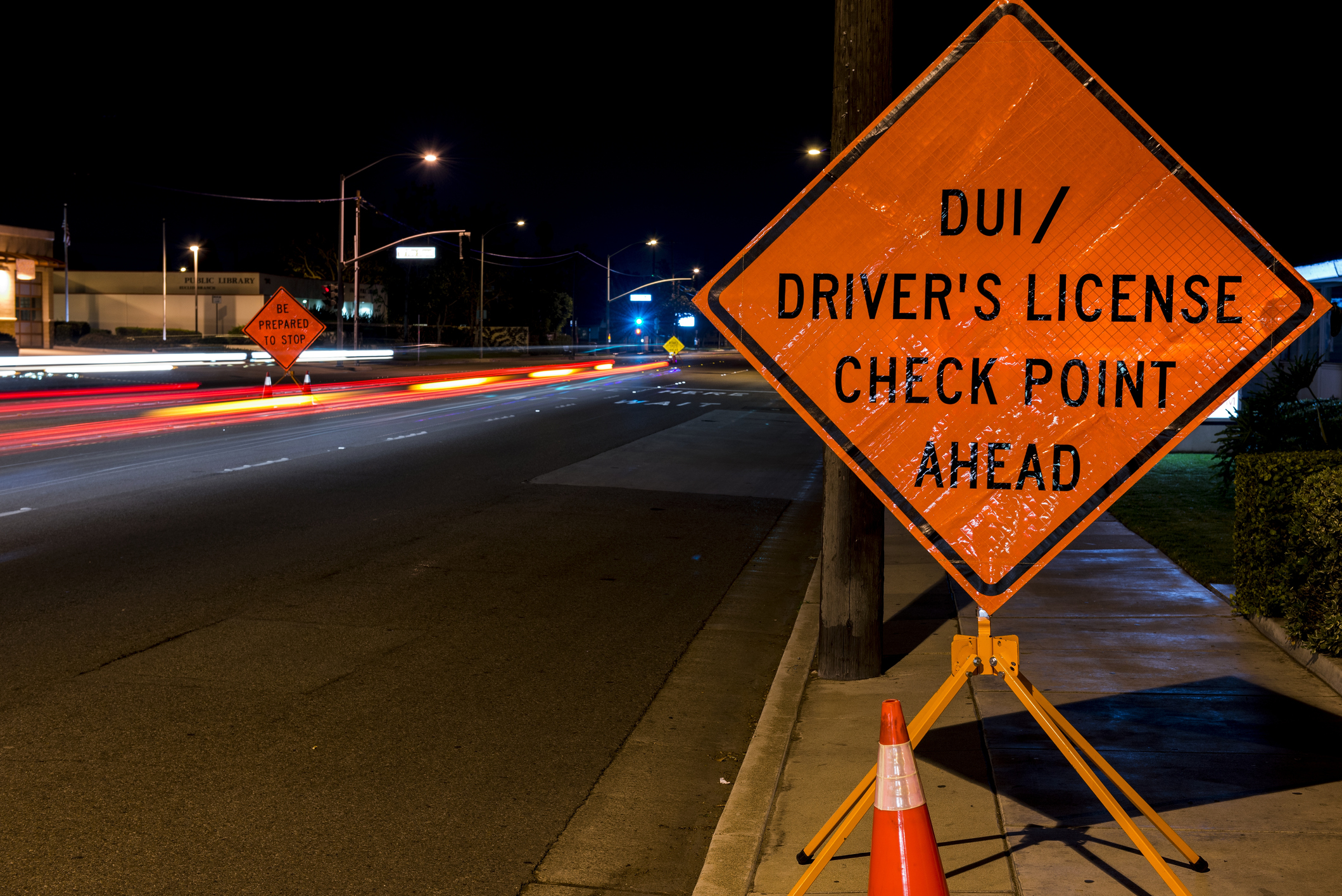
PA Superior Court Approves Current Philadelphia Police DUI Checkpoint Procedures
The Pennsylvania Superior Court has decided the case of Commonwealth v. Mercado, holding that Philadelphia Police conducted a constitutional DUI checkpoint despite the fact that the officer who planned the checkpoint selected the location of the checkpoint without any data indicating how many DUIs have occurred at the location of the checkpoint.

Criminal Defense Lawyer Zak T. Goldstein, Esq.
The Pennsylvania Superior Court has decided the case of Commonwealth v. Mercado, holding that Philadelphia Police conducted a constitutional DUI checkpoint despite the fact that the officer who planned the checkpoint selected the location of the checkpoint without any data indicating how many DUIs have occurred at the location of the checkpoint. This is an extremely bad case for privacy rights which allows police to basically establish motor vehicle checkpoints at will without any prior research. The decision also conflicts with the court’s longstanding precedent in cases like Commonwealth v. Blee and Commonwealth v. Garibay.
The Facts of Mercado
In Mercado, the Philadelphia police stopped the defendant at a DUI checkpoint on the 300 block of East Allegheny Ave in Philadelphia, PA. The officers noticed that the defendant had bloodshot, glassy eyes, and they smelled the odor of burnt marijuana coming from his vehicle and breath. The defendant subsequently admitted to smoking marijuana. He submitted to a “field sobriety test” and presumably failed, and the police then took him into custody on suspicion of DUI. They then transported him to the Police Detention Unit for a blood test.
Prosecutors later charged the defendant with DUI in the Philadelphia Municipal Court. The defendant filed a pre-trial motion to suppress the results of the stop, including the blood test results, arguing that the police did not have sufficient data regarding prior incidences of DUI at 300 East Kensington Ave. to establish a constitutional checkpoint at that location.
At the motions hearing, the Commonwealth called the Philadelphia Police Lieutenant who ran the checkpoint to testify. The lieutenant testified that to determine the location of the checkpoint in question, he tabulated all DUI-related incidents in Philadelphia over the previous two years and broke those figures down by DUI-related incidents per police district. He found that the 25th police district, which is 2.3 square miles, had the most DUIs in the city during that period.
He did not have any data specific to the location of the checkpoint. However, he testified that he selected that location because it is one of the only locations in the district which would be large enough and safe enough to conduct a checkpoint involving eighteen police officers, two police cruisers, and one large processing center the size of a fire truck. He also testified that the 300 block of East Allegheny Ave is a main vein of travel within the 25th district.
The Motion to Suppress and Appeal
The Philadelphia Municipal Court granted the motion to suppress, finding that existing case law required the officer to have data specific to the location of the checkpoint in order to avoid a constitutional violation. The Commonwealth appealed to the Court of Common Pleas, and the motions court judge in the Court of Common Pleas affirmed the order granting the motion to suppress. The Commonwealth then appealed to the Pennsylvania Superior Court.
The Pennsylvania Superior Court reversed the decision of the Municipal Court and ruled that the motion to suppress should not have been granted. The Court noted that DUI checkpoints are governed by the “Tarbert/Blouse” guidelines. Pursuant to those guidelines, the Commonwealth must be able to show that the checkpoint satisfied five requirements in order to be constitutional.
Those requirements are:
vehicle stops must be brief and must not entail a physical search;
there must be sufficient warning of the existence of the checkpoint;
the decision to conduct a checkpoint, as well as the decisions as to time and place for the checkpoint, must be subject to prior administrative approval;
the choice of time and place for the checkpoint must be based on local experience as to where and when intoxicated drivers are likely to be traveling; and
the decision as to which vehicles to stop at the checkpoint must be established by administratively pre-fixed, objective standards, and must not be left to the unfettered discretion of the officers at the scene.
Further, substantial compliance with the guidelines is all that is require in order to minimize the intrusiveness of a roadblock seizure to a constitutionally acceptable level.
The Court’s Opinion
The Court found that Philadelphia Police substantially complied with these rules. The officer testified that he selected the route based on statistical data demonstrating that the district in question accounted for the highest rate of DUI arrests in the city, and that Allegheny Avenue was the main avenue of East-West travel in the district. He also considered traffic volume and safety factors when selecting the location of the checkpoint. The Court rejected the defendant’s argument that the police should have had some kind of data relating specifically to Allegheny Avenue. Instead, the Court reasoned that the relatively high rate of DUIs in that district coupled with the safety considerations considered by the lieutenant made the selection of that location constitutional.
Unfortunately, this decision amounts to carte blanche for the police to establish a checkpoint anytime and anywhere. Previous decisions such as Commonwealth v. Blee and Commonwealth v. Garibay required actual numbers as to how many DUIs occurred on the street selected for the checkpoint. This opinion lets the police simply establish a checkpoint in any district where they can testify that the district has a large number of DUIs and on any road that could be characterized as a busy road. The opinion simply ignores the prior case law, and hopefully it will be appealed to the Pennsylvania Supreme Court. Hopefully, this opinion may be limited to the 25th District as that is the only district where police would be able to claim that the district has the highest number of DUIs. In other districts, police may still be required to have more information before establishing a checkpoint. Each DUI case involving a checkpoint should still be carefully evaluated for a potential “checkpoint motion” as well as a motion to suppress based on other grounds such as an illegal arrest or the failure to provide Miranda warnings.
Facing criminal charges? We can help.
If you are facing criminal charges or under investigation by the police, we can help. We have successfully defended thousands of clients against criminal charges in courts throughout Pennsylvania and New Jersey. We have obtained full acquittals and dismissals in cases involving charges such as Conspiracy, Aggravated Assault, Forgery, Access Device Fraud, Rape, and Attempted Murder. Our award-winning Philadelphia criminal defense lawyers offer a free criminal defense strategy session to any potential client. Call 267-225-2545 to speak with an experienced and understanding defense attorney today.

PA Superior Court Lowers Bar for Forgery Convictions

Zak T. Goldstein, Esq. - Philadelphia Criminal Defense Attorney
The Pennsylvania Superior Court has decided the case of Commonwealth v. Green, affirming the defendant’s conviction for forgery where the evidence showed that the defendant cashed a check that he knew should not have been made out to him. This decision is problematic for future forgery defendants as it could make it easier for prosecutors to prove that a given defendant had the knowledge necessary to be convicted of forgery.
The Facts of Commonwealth v. Green
In August 2015, St. Moritz Labor Services, a temporary staffing agency, discovered 18 checks drawn on its account that had not been issued in accordance with company procedures. These checks were fraudulent duplicates of lawfully issued checks. The payees were not known to St. Moritz. Further, the amounts on the checks were much higher than St. Moritz standard payroll checks. One of these checks was made payable to the defendant. The defendant never worked for St. Moritz and had no affiliation with that entity. On August 3, 2015, the defendant cashed a St. Moritz check at a local K-Mart.
St. Moritz reported the checks to the police, and the police began an investigation. During the course of their investigation, Officer Green of the Whitehall Police Department contacted the defendant and asked to speak with him regarding a cashed check. According to Officer Green, the defendant stated “[I] only did it once.” After he was given his Miranda rights, the defendant stated that he cashed the check to pay off fines. The defendant stated that he received the check in the mail and he did not know where the check came from or who sent the check. The defendant confirmed that he never worked for St. Moritz and admitted that he did not have any reason to receive a check from that company.
Police arrested the defendant and charged him with forgery, access device fraud, and bad checks. At the preliminary hearing, a magistrate judge dismissed the access device fraud and bad check charges. The defendant proceeded by way of bench trial, and the judge found him guilty and sentenced him to two years’ reporting probation and restitution. The defendant then filed a timely appeal. On appeal, a divided Superior Court panel reversed the judgment of sentence. Thereafter, the Commonwealth sought en banc review, which the Superior Court granted. On appeal, the defendant challenged whether the evidence was sufficient to satisfy the mens rea element of the forgery charge.
What is Forgery?
18 Pa. C.S.A. § 4101 provides for the crime of forgery. A person is guilty of forgery if, with the intent to defraud or injure anyone, the actor either: 1) alters a writing without his authority; 2) makes, completes, executes…issues or transfers a writing so that it purports to be the act of another who did not authorize the act; or 3) utters any writing that he knows to be forged.
As a practical matter, forgery is a difficult crime for the Commonwealth to prove. The Commonwealth typically needs multiple witnesses to prove their case, which often makes it difficult for the Commonwealth to get ready for a preliminary hearing or trial. Because prosecutors may not use hearsay evidence at a trial, they often have significant problems in proving forgery cases. For example, prosecutors generally need to present the testimony of the witness or witnesses who saw a defendant use the allegedly forged instrument, the officer who arrested him or her, the detective or bank investigator who investigated the case, and a custodian of records from the organization that owns the checking account in question. Getting all of these witnesses to appear at the same time can be difficult, and the failure to do so often results in the dismissal of cases.
Additionally, proving the mens rea for forgery is also difficult for the Commonwealth. Forgery is not a strict liability crime. In other words, just because one possesses a forged check does not mean that one is guilty of forgery. As such, trial courts are supposed to heavily scrutinize a defendant’s actions to see if they are guilty of this offense and whether there is any evidence that the defendant actually forged the document or had reason to know that the document was in fact forged. One of the seminal cases on this issue (and one that was analogized in the instant case) was Commonwealth v. Gibson. In Gibson, the Pennsylvania Superior Court held that the defendant in that case did not commit the crime of forgery even though he possessed a forged check. The reason was because, in Gibson, the circumstances did not show that he was trying to commit a fraud or any other type of wrongdoing. After presenting the forged check, the defendant in Gibson presented his identification when asked for it, did not attempt to flee when asked for said identification, and otherwise did not engage in any suspicious behavior when he attempted to cash said check. Because of the lack of suspicious or criminal behavior, the Pennsylvania Superior Court held that the Commonwealth failed to prove that the defendant knew that the check was forged. Without the requisite level of knowledge, a defendant cannot be convicted of forgery.
A Divided Pennsylvania Superior Court Affirms the Defendant’s Conviction
In this case, a divided en banc panel of the Pennsylvania Superior Court affirmed the defendant’s conviction for forgery. In the split decision, the Pennsylvania Superior Court held that, unlike the defendant in Commonwealth v. Gibson, the defendant possessed the requisite mens rea to commit the crime of forgery. Specifically, the majority opinion focused on the defendant’s statement to the police that “he only did it once.” According to the Court, this statement and the defendant’s admission that he had no affiliation with St. Moritz or any reason to receive a check from them established that he had the necessary mens rea to justify a forgery conviction.
Facing criminal charges? We can help.

Philadelphia Criminal Defense Attorneys
If you are facing criminal charges or under investigation by the police, we can help. We have successfully defended thousands of clients against criminal charges in courts throughout Pennsylvania and New Jersey. We have obtained full acquittals and dismissals in cases involving charges such as Conspiracy, Aggravated Assault, Forgery, Access Device Fraud, Rape, and Attempted Murder. Our award-winning Philadelphia criminal defense lawyers offer a free criminal defense strategy session to any potential client. Call 267-225-2545 to speak with an experienced and understanding defense attorney today.

PA Superior Court: Pulling Over to the Side of Road Is Not Suspicious

The Pennsylvania Superior Court has decided the case of Commonwealth v. Hampton, holding that police illegally stopped the defendant by physically blocking in his car after the officer saw the defendant do nothing more than pull over to the side of the road. In Hampton, the Court rejected the idea that an officer can stop someone under the community caretaking exception to the warrant requirement just because they pulled over to the side of the road.
The Facts of Commonwealth v. Hampton
In Hampton, a Montgomery County, PA police officer was on patrol in a marked vehicle at approximately 3:22 am. The officer saw a vehicle drive by her, turn, and then pull over into a field on a property belonging to a church. The driver, who was later identified as the defendant, stopped his car in the grass in front of the church’s office building. The officer pulled behind the car, but she did not activate her lights or sirens. She did, however, park her car in such a way that the car blocked the defendant’s ability to drive back onto the road. The defendant and his passenger eventually got out of their vehicle, and after an interaction with the officer, the officer ended up arresting the defendant for Driving Under the Influence.
The Motion to Suppress
After prosecutors charged the defendant with DUI, the defense lawyer filed a motion to suppress all of the evidence. The defendant argued that the officer stopped the defendant by physically blocking his car with her car without reasonable suspicion or probable cause. At the hearing on the motion to suppress, the officer admitted that she had “stopped” the defendant and that her car physically blocked his. She also admitted that she had not seen any evidence of ongoing criminal activity or motor vehicle code violations. However, she testified that she pulled in behind the defendant because she was concerned that he could be having some kind of medical emergency or car trouble. She also had not activated her lights or sirens. The trial court denied the motion to suppress. Because this was the defendant’s third DUI offense, the court sentenced the defendant to 1 – 5 years’ state incarceration.
The Superior Court Appeal
The defendant appealed the denial of the motion to suppress to the Pennsylvania Superior Court. The Superior Court ultimately overturned the conviction and found that the trial court should have granted the motion.
First, the Superior Court concluded that although the officer did not activate her lights or sirens or specifically tell the defendant to stop, the officer had stopped the defendant by physically blocking the movement of his car. Because the officer had conducted a stop for Fourth Amendment purposes, the officer was required to have reasonable suspicion, probable cause, or some other exception to the warrant requirement.
Second, the Superior Court concluded that the officer did not have reasonable suspicion or probable cause to stop the defendant because the officer candidly testified at the motion to suppress hearing that she did not see any criminal activity of any kind.
Third, the Superior Court rejected the trial court’s conclusion that the stop was justified by the community caretaking exception. Under the community caretaking exception, police may conduct a warrantless search or seizure under limited circumstances such as to render emergency aid when such aid is reasonably necessary. In order for the exception to apply, the officer’s actions must be motivated by a desire to render aid or assistance rather than the investigation of criminal activity. Additionally, the officer must be able to point to specific, objective, and articulable facts that would reasonably suggest to an experienced officer that a citizen is in need of assistance. Thus, the officer must have reasonably believed that an actual emergency was ongoing.
Here, the Superior Court rejected the application of the community caretaking exception because the defendant did nothing more than pull over to the side of the road. Such behavior is encouraged and perfectly consistent with innocent activity. A motorist may pull over the road to answer the phone, rest for a moment, check a map, or for any number of other legitimate reasons. Therefore, the community caretaking exception did not apply. Accordingly, the Court reversed the defendant’s conviction and remanded the case to the trial court with instructions to grant the motion to suppress.
This is a good case for Fourth Amendment rights because the Superior Court recognized the obvious fact that when a police officer in a marked car blocks someone’s ability to drive away, the officer has stopped that person for Fourth Amendment purposes. In many cases, courts attempt to characterize contact between police and defendants as a “mere encounter” which does not require any level of suspicion. Here, the Court recognized that any reasonable person in the defendant’s position would not have felt free to leave and therefore a stop had occurred.
Facing criminal charges? We can help.

Goldstein Mehta LLC Criminal Defense Lawyers
If you are facing criminal charges or under investigation by the police, we can help. We have successfully defended thousands of clients against criminal charges in state and federal courts throughout Pennsylvania and New Jersey. We have obtained full acquittals and dismissals in cases involving charges such as Conspiracy, Aggravated Assault, DUI, Rape, and Attempted Murder. Our award-winning Philadelphia criminal defense lawyers offer a free criminal defense strategy session to any potential client. Call 267-225-2545 to speak with an experienced and understanding defense attorney today.

PA Superior Court: A really specific anonymous tip might be enough for a stop.

Criminal Lawyer Zak Goldstein
The Pennsylvania Superior Court has decided the case of Commonwealth v. Price, holding that a very specific anonymous tip might provide the reasonable suspicion necessary for police to conduct a Terry stop. This case is a disastrous decision for civil liberties and Fourth Amendment rights which defies common sense and ignores decades of Pennsylvania Supreme Court and Superior Court precedent.
The Facts of Price
In Price, the defendant was charged with various firearms offenses including possession of a firearm by a prohibited person, firearms not to be carried without a license, and possession of a firearm in the City of Philadelphia. Price filed a motion to suppress the gun, and the trial court conducted a hearing on the motion.
At the motion to suppress hearing, the Commonwealth presented the testimony of a Philadelphia Police Officer. The officer testified that he was on routine patrol with his partner when he received a radio call to respond to the 5100 block of Willows Ave. The officer testified that he had been on the force for seven years, and he knew that the 5100 block of Willows Ave is an area where violent crime is prevalent. He testified that the radio call provided the information that a black male, wearing a white t-shirt and gray shorts, was driving a silver Lexus with a license plate reading GWL8569, and was carrying a firearm. The officer had also learned that the radio call was the result of a call to 911.
The officers drove to 51st and Willows Avenue within a minute of receiving the broadcast and found a silver Lexus stopped at a stop sign. The officers were able to see that the driver was a black male who was wearing a white t-shirt, and they saw that the license plate read GWL8568, meaning it differed only by one digit from the number provided to 911. The officers activated their lights and sirens and stopped the vehicle. The Lexus pulled over, and the officers approached the vehicle. They could then see that the defendant was wearing gray shorts in addition to the white t-shirt. The officers opened the door and asked the defendant to step out. He did, and as he got out, the officer could see that he had a large bulge in the stomach area of his waistband. The officers searched the defendant and found a gun in his waistband.
As the officers were recovering the gun, a woman approached them. She told police that she was the person who had called 911 and that they had arrested the right guy. She asked the officers if they had recovered the gun. The officers noted that at first, this woman was standing outside of the defendant’s view and seemed to be nervous. She later told them that she had called 911 because she saw the defendant with the gun and bullets. She told the officers that she saw the defendant put bullets in the trunk. Police asked the defendant if there was anything else in the car, and he confirmed that there were bullets in the trunk.
The trial court denied the motion to suppress. The defense argued that at the time of the stop, police were relying on an entirely anonymous radio call and had no way to verify whether the call, no matter how specific, contained accurate and reliable information. Decades of Pennsylvania case law, including Commonwealth v. Jackson and Commonwealth v. Hawkins, have held that anonymous tips do not provide police with any level of reasonable suspicion or probable cause to make a stop unless the police are able to corroborate that information prior to the stop. Nonetheless, relying on a recent United States Supreme Court case, the trial court found that police had reasonable suspicion to stop the defendant based on the 911 call. The court reasoned, possibly without supporting evidence, that the 911 call center in Philadelphia has caller ID and can track who made the call, thereby ensuring that calls to 911 are not actually anonymous. Because people know that they may be tracked when calling 911, the court reasoned, they have an incentive not to call in with fake accusations. Therefore, the court denied the motion to suppress, and the defendant was eventually convicted of all of the gun charges.
The Superior Court Appeal
The defendant appealed to the Pennsylvania Superior Court. Breaking with decades of precedent, the Superior Court affirmed the trial court’s reasoning. It also inexplicably concluded that because the 911 call center has caller ID, people would never call in incorrect information to 911 in order to harass someone else. Obviously, this reasoning is absurd and completely ignores the fact that most school-age children possess the technological prowess to use a “burner” phone or mask their true phone number or caller ID with an app. It also erroneously assumes that everyone knows (and cares) that their cell phone number could be tracked by 911 if they make a call. Accordingly, the court affirmed the trial court’s denial of the motion to suppress.
It is highly likely that this opinion will be appealed further. It is also important to note that the opinion relies entirely on federal law as the defendant in this case did not advance the argument that the Pennsylvania Constitution provides greater protections against stops based on anonymous tips than the United States Constitution. Whether such arguments will work in the future remains an open question. Finally, the tip in this case was extremely specific down to the make and model of the car, the defendant’s clothing, and the license plate of the vehicle. Nonetheless, this case substantially expands the power of the police to make stops based on anonymous radio calls. Such a power is extremely problematic because of the ease with which any citizen may mask his or her identity and call in an anonymous and false complaint against someone else to harass them. Normally, police are required to show that information was at least relatively trustworthy prior to acting on it. This opinion eliminates that requirement.
FACING CRIMINAL CHARGES? WE CAN HELP.

Goldstein Mehta LLC Criminal Defense
If you are facing criminal charges or under investigation by the police, we can help. We have successfully defended thousands of clients against criminal charges in courts throughout Pennsylvania and New Jersey. We have successfully obtained full acquittals in cases involving charges such as Conspiracy, Aggravated Assault, VUFA, Rape, and Attempted Murder. Our award-winning Philadelphia criminal defense lawyers offer a free criminal defense strategy session to any potential client. Call 267-225-2545 to speak with an experienced and understanding defense attorney today.