

Philadelphia Criminal Defense Blog

The Use of Fingerprints in Pennsylvania Criminal Cases
Fingerprinting in Pennsylvania Criminal Cases

Philadelphia Criminal Lawyer Zak Goldstein
Law enforcement officers frequently attempt to solve criminal cases through the use of fingerprints in Pennsylvania. This guide explains when the police may take your fingerprints, whether you may ever have those fingerprints destroyed, and some of the problems inherent in fingerprint examination. It also discusses the recent case of Commonwealth v. Presher, in which the Superior Court held that the a court may not order a defendant to submit to fingerprinting after the defendant has been found not guilty at trial. The effect of the court's holding will be limited due to the relatively rare circumstances present in this case, but the Superior Court issued strong language in rejecting the idea that the trial court could continue to exercise jurisdiction over a defendant who has been acquitted.
Will the police take my fingerprints if I get arrested in Pennsylvania?
The answer to this question is yes, with some exceptions. In Pennsylvania, the law requires a defendant who has been charged with a felony, misdemeanor, or certain summaries to undergo fingerprinting after being arrested. In most cases, you will be fingerprinted when you are taken to the police district upon arrest. In some cases, if you are not arrested and the case was initiated by a summons, the summons will command you to go to the police station to be fingerprinted. The summons will typically instruct you to have this done prior to the preliminary hearing; if not, then the magisterial district justice will usually order that it be done. Additionally, if someone filed a private criminal complaint against you, then you will be fingerprinted if you are convicted. Accordingly, the only time you do not have to worry about being fingerprinted is if you are arrested for a summary offense that does not have a recidivist misdemeanor clause in its statute and the case is not proceeded by a summons.
What happens if I refuse to be fingerprinted?
The failure to comply with this order could eventually result in the revocation of bail if a case is pending or a finding of contempt of court. In some cases, however, the police and prosecutors do not realize that the defendant has not been fingerprinted, and the case may fall through the cracks without the defendant getting fingerprinted.
Can the police make me give my fingerprints if I have not been charged with a crime?
There are ways for the police to get your fingerprints if they are still investigating the case and have not charged you with a crime. For example, the police could ask you for your consent. If you give consent, then the police can take your fingerprints without a warrant or an arrest. If you refuse to consent to fingerprinting and the police have not arrested you, then they could ask a judge to sign a search warrant ordering you to provide your fingerprints. In that case, the police would be able to get your fingerprints prior to making an arrest. If you refuse to provide them, then you could be held in contempt of court and arrested. Additionally, the police could use trickery to obtain your fingerprints. For example, if they remove an item from the trash that has your fingerprints on them, they would most likely be allowed to use any viable prints lifted from the item.
Can I have my fingerprints destroyed if I win my case?
Unless you were fingerprinted as a juvenile, the answer to this question is no. Once you are arrested as an adult, the government will have your fingerprints for the rest of your life. This is true even if you win your case and obtain an expungement of your criminal record because the District Attorney is permitted to retain their case file in order to determine eligibility for diversionary programs in the future. Typically, once you are arrested, your fingerprints will be entered into the Integrated Automated Fingerprint Identification System, which is commonly referred to as AFIS. This is a system that holds thousands of fingerprints. As discussed later, this can be a real problem because fingerprint "science" is not perfect, and you could be arrested if a lab technician later subjectively determines that your fingerprints "matched" prints that were found at a crime scene.
How do the police analyze fingerprints?
Police frequently attempt to lift fingerprints in order to solve robbery, burglary, and other theft cases where there are no eyewitnesses. For example, let’s say that someone commits a burglary at a residence and leaves fingerprints on a glass door. A crime scene investigator will arrive and and “lift” the print from the door. This requires a lot of care because a print can easily be smudged or altered. Assuming the technician does not botch the lifting of the print, the police will then run the print through the AFIS system. At this point, the system will generate 20 fingerprints for a lab technician. It is important to note that lab technicians are not required to have a degree in forensic science. In fact, in Philadelphia, a technician does not even need to be a college graduate and need only have a high school diploma. Further, in Philadelphia, the unit that is responsible for analyzing fingerprints is not accredited.
After AFIS generates the potential matches, the technician will review the prints and see if he or she can find a “match.” In determining whether there is a match, the technician will look for several features of the print. Typically, there are about 150 characteristics of a fingerprint. However, there only needs to be between 10-12 similarities for a technician to say that someone’s prints match those taken from a crime scene. Further, in Philadelphia, these technicians will not analyze all 20 prints. Instead, they will just analyze a print until they find one that they believe is a match. After the technician believes they found a “match,” they will then dispose of the remaining prints.
In determining whether there is a match or not, the technician does not use a computer system to review the matches. Rather, the technician will use a magnifying glass or some other object to enhance his or her vision and make a determination using their eyes to see if there is a match. This may go without saying, but this is clearly subjective and not actual science. The use of the term "match" implies that computers are processing this data, but in reality, fingerprint "matches" are based solely on the subjective personal opinion of the examiner.
Is fingerprint science perfect?
Of course not. As discussed above, fingerprint examination is not really science. It is no surprise that mistakes happen, and these mistakes are not limited to the Philadelphia Police. In 2004, terrorists attacked trains in Madrid, Spain. This was a horrific event where 192 people were killed and thousands were injured. The United States government assisted the Spanish government in trying to track down who was responsible for these attacks. Specifically, the FBI was sent to help solve this case.
During the investigation, the authorities located a fingerprint on a bag that contained one of the detonating devices and were able to lift the print. Based on their review of the print, the FBI concluded that it belonged to a Brandon Mayfield, a U.S. citizen who had been an FBI person of interest for quite some time. Consequently, Mr. Mayfield’s home was wiretapped and he eventually was arrested. However, Brandon Mayfield was not responsible for these acts. Investigators later concluded that that particular fingerprint belonged to a Ouhnane Daoud, an Algerian national. Eventually, the charges were dropped, and the United States government settled a lawsuit with Mr. Mayfield. Mr. Mayfield’s case shows how unreliable fingerprint analysis can be.
Commonwealth v. Presher
In Mr. Presher’s case, the Superior Court did not get into the factual history of the case in great detail. However, what we do know is that he was charged with theft and receipt of stolen property. Additionally, Mr. Presher’s case was proceeded by a summons which means that he was subjected to the pre-conviction fingerprinting requirements. However, for some unknown reason, Mr. Presher was never fingerprinted.
Mr. Presher then proceeded to have his case tried by a jury where he was acquitted of all charges. Despite this, the Commonwealth still asked that Mr. Presher be fingerprinted. The trial court granted the Commonwealth’s motion. Mr. Presher then filed a motion for reconsideration, however that was denied. He then filed a timely appeal.
Can a court make me give my fingerprints if I was acquitted?
If you have already been fingerprinted, then the answer is unfortunately that your fingerprints will remain in the system. If you managed to make it to trial, however, then you cannot be ordered to submit to fingerprinting after an acquittal. The Superior Court recently addressed this issue in the case of Commonwealth v. Presher. In Presher, the court held that a defendant who has been acquitted cannot be required to submit to fingerprinting.
In making its decision, the Superior Court focused largely on the language used in 18 Pa.C.S. § 9112 (b)(2). The statute reads:
Where defendants named in police complaints are proceeded against by summons, or for offenses under section 3929 (relating to retail theft), the court of proper jurisdiction shall order the defendant to submit within five days of such order for fingerprinting by the municipal police of the jurisdiction in which the offense allegedly was committed or, in the absence of a police department, the State Police. Fingerprints so obtained shall, within 48 hours, be forwarded to the central repository in a manner and in such form as may be provided by the central repository.
The Superior Court's rationale stemmed from the fact that § 9112(b)(2) uses the word “defendant.” It does not use the word person, which is different from § 9101(a) which uses the word “person.” This is significant because for Mr. Presher, his case was initiated by a summons and thus fell under § 9101(b)(2).
After Mr. Presher was acquitted of his charges, the Superior Court held that he was no longer a “defendant.” Therefore, he was not subject to the fingerprinting requirements of § 9101(b)(2), and thus the trial court was incorrect in ordering him to provide his fingerprints to the Commonwealth. The Superior Court reasoned that if they ordered Mr. Presher to provide his fingerprints this would amount to a post-acquittal punishment.
Experienced and Understanding Philadelphia Criminal Defense Attorneys

If you are charged with a crime and the police are using fingerprint evidence against you, you need a skilled attorney with the knowledge and expertise to fight your case. Our award-winning Philadelphia criminal defense lawyers have successfully litigated countless cases where the Commonwealth used fingerprint evidence against our clients. We offer a 15-minute criminal defense strategy session to any potential client. Call 267-225-2545 to discuss your case with an experienced and understanding criminal defense attorney today.

PA Superior Court Decides Automatic Gunshot Detector May Contribute to Finding of Reasonable Suspicion

Philadelphia Criminal Lawyer Zak Goldstein
The Pennsylvania Superior Court just announced its decision in Commonwealth v. Raglin, holding that “Shot Spotter” gunshot detection technology coupled with additional factors may provide sufficient reasonable suspicion for police to make a Terry stop. The Superior Court made its decision without any evidence as to whether this Shot Spotter system is reliable or not, including whether a gun was even fired on the day in question. This decision could have significant consequences for individuals who live in urban locations where city officials are more likely to employ this unproven technology.
Commonwealth v. Raglin
On February 27, 2015, a police officer in Pittsburgh, Pennsylvania was working at his desk when he received a notification from Shot Spotter that a gunshot occurred in “zone 5.” Shot Spotter is a system of censors that is supposedly sensitive enough to distinguish between gun shots and fireworks. Additionally, the police claim Shot Spotter is accurate enough to pinpoint the location of the shot within 25 yards, although the Commonwealth did not present any conclusive evidence to this effect at the motions hearing in this case.
After receiving the gunshot detection notification, the operator dispatched multiple police officers to the location. Pittsburgh Police Sergeant Baker was one of the first officers on scene. When he arrived, he observed two black males in the street who were close to the location of the shot. One of these males was the defendant. When these two individuals saw the officer, they both separated and left the area in separate automobiles. Sergeant Baker followed both vehicles for a period of time, but eventually lost track of the vehicle not operated by the defendant. The vehicle operated by the defendant was observed making several turns and eventually pulled over on Thomas Boulevard.
The Superior Court then offers conflicting accounts of what happened next, but supposedly just as Sergeant Baker activated his lights, the defendant got out of his car. Immediately after this, the defendant began to walk towards Sergeant Baker. Sergeant Baker ordered the defendant to place his hands on the trunk where he conducted a pat-down search. Another officer arrived shortly thereafter and noticed a handgun on the center console of the defendant’s vehicle in plain view. Narcotics were also recovered, although it is unclear from where they were recovered. The defendant then admitted that he had an active arrest warrant and a gun and “was trying to get away.” At this point, the defendant was officially placed under arrest.
Prosecutors charged the defendant with various offenses including: Possession with the Intent to Deliver, Knowing and Intentional Possession of a Controlled Substance, Receiving Stolen Property, and various Violations of the Uniform Firearms Act (including persons not to possess a firearm and carrying a firearm without a license), and driving with a suspended license. The defendant filed a motion to suppress the gun and drugs, arguing that the police lacked the reasonable suspicion or probable cause necessary to stop his vehicle and detain him.
The trial court denied the defendant’s motion to suppress and subsequently found him guilty of all charges in a waiver trial. The court sentenced the defendant to 4-8 years incarceration, followed by a one year of probation. He appealed to the Superior Court, again arguing that police simply did not have the reasonable suspicion necessary for the stop.
What Is the Difference Between Reasonable Suspicion and Probable Cause?
As discussed above, the defendant filed a motion to suppress the physical evidence in his case. Typically, a motion to suppress is a motion that asks a court to exclude evidence against a defendant because it was obtained when police did something illegal such as making a stop without “probable cause” or “reasonable suspicion.” Probable cause and reasonable suspicion are similar, but distinct legal concepts. Probable cause is mentioned in both the United States Constitution (the Fourth Amendment) and the Pennsylvania Constitution (Article I, Section 8). In order for the government to arrest you, there must be probable cause that you committed a crime. The Pennsylvania Supreme Court has defined probable cause as “the facts and circumstances which are within the knowledge of the officer at the time of the arrest, and of which he has reasonably trustworthy information, are sufficient to warrant a man of reasonable caution in the belief that the suspect has committed or is committing a crime.”
Reasonable suspicion is a different and lesser standard. Unlike probable cause, reasonable suspicion is not mentioned in either the U.S. or Pennsylvania constitutions. Despite its absence, courts have allowed police officers and other government officials to stop people on reasonable suspicion after the United States Supreme Court’s landmark decision in Terry v. Ohio. Reasonable suspicion is not as rigorous of a standard as probable cause. A person cannot be arrested or have their home searched based on reasonable suspicion. However, police may detain an individual for an investigatory detention based on reasonable suspicion. The Pennsylvania Supreme Court defines reasonable suspicion as “a less stringent standard than probable cause and depends on the information possessed by the police and its degree of reliability in the totality of the circumstances.” A police officer must be able to point to specific and articulable facts leading him to suspect that criminality is afoot. The issue in the defendant’s case is whether the police had reasonable suspicion to stop him in the first place.
Does a Shot Spotter Provide Reasonable Suspicion or Probable Cause?
The defendant’s case is unique in that he did not become a person of interest until the police received a shot-spotter notification that a gun had been fired. When the police first saw the defendant, he was not committing any crimes or visibly carrying a gun. They merely saw him outside and, allegedly, within 25 yards of where a shot had occurred. Pennsylvania law is very clear that being in a high-crime area, does not qualify as reasonable suspicion to stop someone. This obviously makes sense because if this were the law, the police could stop anyone simply because they lived in a bad neighborhood. However, if someone runs from the police in a high crime area, that is often sufficiently suspicious for the police to stop that person.
In the defendant’s case, he was in a high crime area, but he did not run. The Pennsylvania Superior Court has held that walking away from the police after seeing them in a high crime area is not sufficient for the police to stop a person on the basis of reasonable suspicion. In the defendant’s case, he did leave the area after he saw Sergeant Baker. However, once Sergeant Baker initiated a stop, the defendant complied and proceeded to walk towards Sergeant Baker. The defendant also followed his order by placing his hands on his trunk.
What is most significant about the Superior Court’s opinion is what was not in the record. Specifically, there was nothing in the Superior Court’s decision about how reliable this Shot-Spotter technology is. In fact, the Superior Court wrote in its opinion that it was “not prudent” to consider the reliability of this program. Further, there was nothing on record that the police recovered a bullet casing, despite the Shot-Spotter stating that a gun had just been discharged. The Commonwealth did not introduce any evidence as to whether police even looked for a shell casing or tested the defendant for gunshot residue.
The Pennsylvania Superior Court Finds That the Officer Had Reasonable Suspicion
Despite the above-stated omissions, the Superior Court held that Sergeant Baker had reasonable suspicion to stop defendant. The Superior Court provided four reasons why Sergeant Baker had reasonable suspicion to stop defendant. First, the Shot Spotter itself provides some level of suspicion even though there was nothing in the record to indicate how accurate the technology is; second, the defendant was close to the area where a shot occurred; third, the defendant’s strange act of jumping out of his vehicle just as Sergeant Baker activated his lights; and finally because this all occurred in a high crime area.
Ultimately, it appears that the Superior Court put a heavy emphasis on the Shot-Spotter technology. In one of their footnotes, they described Shot Spotter as providing “strong evidence that a crime has likely occurred,” yet they stated that they did not find it “prudent” to know how accurate this technology is. It will be interesting to see if the defendant appeals this decision to the Pennsylvania Supreme Court. Currently, “Shot-Spotter” is in use in Philadelphia, but that could change, and it is in heavy use in Camden, NJ.
Motions to Suppress

Goldstein Mehta LLC Criminal Defense Attorneys
Criminal cases can be won and lost with a motion to suppress. If you are facing criminal charges, you need an attorney who has the knowledge and expertise to litigate these motions, even when the law has yet to be determined. Our award-winning Philadelphia criminal defense lawyers have successfully fought countless cases at trial and on appeal. We offer a 15-minute criminal defense strategy session to any potential client. Call 267-225-2545 to discuss your case with an experienced and understanding criminal defense attorney today.

Hearsay Is Not Ordinarily Admissible at a Violation of Probation Hearing
Commonwealth v. Godson - Is Hearsay Admissible During a Probation Violation Hearing?

Criminal Defense Lawyer Zak T. Goldstein, Esq.
The Pennsylvania Superior Court has decided the case of Commonwealth v. Godson, reaffirming prior holdings in which the courts have held that hearsay is not ordinarily admissible at a violation of probation hearing. In Godson, which is an unpublished opinion, the Court recognized the general rule in Pennsylvania that in order for hearsay to be admissible at a violation of probation or Gagnon II hearing, the Commonwealth must show "good cause."
In Godson, the defendant originally entered a guilty plea to charges of Aggravated Assault by Prisoner. He received a sentence of 6-23 months of incarceration followed by two years of reporting probation. The defendant quickly violated that probation in a number of different ways, including by failing to participate in court-ordered mental health treatment. In response, the probation officer moved to revoke his probation, and the trial court held a violation of probation hearing.
At the hearing, the court heard from a staff member from the mental health facility at which the defendant had sporadically obtained treatment. The staff member testified that he learned from other staff members that the defendant had been disruptive and attempted to escape from the facility. The defendant broke a window as part of his attempted escape. Although the staff member who testified at the hearing had no personal knowledge of the broken window or attempted escape, the trial judge revoked the defendant's probation, re-sentenced him, and ordered that the defendant pay restitution for the cost of the fixing the broken window.
The Appeal of the Violation of Probation Sentence
The defendant appealed, and the Superior Court reversed the restitution order. The Superior Court noted that it is well-settled that the Confrontation Clause of the Pennsylvania Constitution prohibits the use of hearsay testimony against a defendant at a probation hearing without a finding by the trial court of good cause. Here, the parties agreed that the trial judge failed to make any finding with respect to whether there was good cause for allowing the staff member who had no personal knowledge to testify about the broken window and the cost of replacing it. Accordingly, the Superior Court reversed the trial court's order and remanded it for further proceedings.
The Rule Against Hearsay at a Probation Hearing
The rule against hearsay at a probation revocation hearing is extremely important. Prosecutors and probation officers in Philadelphia often attempt to introduce hearsay at Gagnon II hearings as it is much simpler and easier for them than actually requiring live witnesses to appear. This is particularly true in cases where defendants are under supervision for convictions relating to domestic violence. In domestic violence cases, it is not uncommon for the problems which led to the defendant's criminal charges to continue even after he or she has been put on probation. In some cases, the complainant from the original case will call the probation officer and make new accusations, and the probation officer will then bring those accusations to the judge without asking the complainant to appear for the hearing. It is fundamentally unfair for a defendant to face a probation violation without having the opportunity to cross-examine the accuser. Therefore, this rule protects the rights of the defendant to challenge the accusations against him or her in open court and makes sure that the judge does not have to make a ruling based entirely on hearsay.
Probation Violation? We Can Help.

Goldstein Mehta LLC Probation Lawyers
If you are facing criminal charges or a potential violation of probation, we can help. We are award-winning Philadelphia criminal defense lawyers with the experience, skill, and expertise necessary to fight for you and protect your rights. We have successfully defended thousands of clients against criminal charges and in dealing with probation violations and probation detainers. Call 267-225-2545 to speak with an experienced and understanding defense attorney today.

The Collective Knowledge Doctrine in PA
Commonwealth v. Yong

Philadelphia Criminal Defense Lawyer Zak Goldstein
The Pennsylvania Supreme Court has just decided the case of Commonwealth v. Yong, holding that an investigating officer’s knowledge of facts sufficient to establish probable cause may be imputed to a second officer who arrests the suspect when the officers are working as a team. This is true even when the arresting officer has no individual knowledge of the facts giving rise to probable cause.
In Yong, Philadelphia Police Officers conducted a narcotics investigation targeting the 2300 block of North Fairhill Street in Philadelphia. Police Officer Joseph McCook (the "eyes" of the operation) and his partner conducted surveillance on September 21, 22nd, and 23rd of 2011. While conducting the surveillance, they observed Yong make a number of exchanges of United States currency for small objects which they believed to be drug transactions in which Yong was the seller. Based on the alleged drug activity observed during the three-day surveillance, Officer McCook obtained a search warrant for a property that was involved in these transactions. The officers returned to execute the search warrant later in the day on the 23rd. The warrant team included Police Officer Gerald Gibson. Officer Gibson had not been present for any of the surveillance and had no knowledge of Yong or Yong’s alleged involvement in any drug sales.
Relying on the search warrant, police entered the house located at 3202 North Fairhill Street. Officer McCook, who had witnessed the alleged drug sales, was towards the rear of the group. When the officers entered the house, Yong was standing in the living room. Officer Gibson, who had never seen Yong before, grabbed Yong, patted him down, and found a .38 caliber revolver in Yong’s waistband. The search of the property also led to the recovery of drug paraphernalia, including new and unused packaging.
Possession with the Intent to Deliver and Gun Charges
The Commonwealth charged Yong with Possession with the Intent to Deliver, Criminal Conspiracy, and various gun charges including firearms not to be carried without a license and persons not to possess a firearm. Yong’s defense attorney moved to suppress the firearm, arguing that Officer McCook’s probable cause could not be imputed to Officer Gibson because Officer Gibson was not part of the prior narcotics surveillances. This was important because Pennsylvania appellate courts have long held that even where officers have a search warrant for a home, the officers need specific probable cause or reasonable suspicion to search the occupants of the home unless the occupants are identified or described in the search warrant. Because Officer Gibson did not know anything about Yong and Yong was not identified as a person to be searched by the search warrant, the defense argued that Officer Gibson had violated Yong’s rights by patting him down without reasonable suspicion or probable cause. The defense argument relied on the fact that Officer McCook had not specifically directed Officer Gibson to search or arrest Yong because Pennsylvania courts have also held that an officer who does not have probable cause may conduct a search or make an arrest when specifically directed to do so by an officer who does have probable cause.
The Criminal Appeal
The trial court denied the motion to suppress. The trial court found that Officer McCook’s knowledge and probable cause could be imputed to Officer Gibson, and the Pennsylvania Supreme Court ultimately agreed. The Court recognized the bad incentives that the decision could create for police officers in that it encourages officers who are working together to take a chance and conduct a search or make an arrest and hope that one of the other officers will later turn out to have reasonable suspicion or probable cause. The Court attempted to limit this incentive and its holding by limiting the application of the decision to the narrow facts of this case.
What is the Collective Knowledge Doctrine?
The Court held that the officer who does not have reasonable suspicion or probable cause may conduct the search or seizure only where that officer is specifically working as part of the same team and is near the officer who made the original observations. The Court rationalized its holding by suggesting that Yong’s arrest was inevitable. Officer McCook had observed Yong engaged in drug sales, so even if Officer Gibson had not arrested Yong, Officer McCook would have arrested Yong once he got into the house and saw him. This is an extension of the existing inevitable discovery doctrine. However, the Court was clear that it is not sufficient for officers to be part of the same police force or to be independently investigating the same criminal conduct. The officers must actually be working together and nearby, and one of the officers must have the requisite level of suspicion. In that limited situation, an officer does not violate a suspect’s rights by conducting a search or arrest. Although this opinion does create bad incentives for police officers to gamble on a potentially illegal search, it is relatively limited as it probably does not represent a substantial expansion of the inevitable discovery doctrine.
Facing Drug or Gun Charges? We Can Help
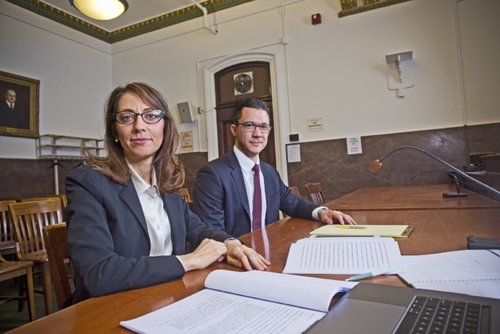
Philadelphia Criminal Lawyers
The Philadelphia criminal defense lawyers of Goldstein Mehta LLC will fight for your rights at trial or on appeal. Our attorneys have successfully defended thousands of cases in Philadelphia and the surrounding counties, and we can help with all types of state and federal charges in Pennsylvania and New Jersey. We offer a free 15-minute criminal defense strategy session. Call 267-225-2545 to speak with a top-rated defense attorney today.