

Philadelphia Criminal Defense Blog

PA Supreme Court: Adult May Be Prosecuted for Decades Old Crime Committed While Juvenile
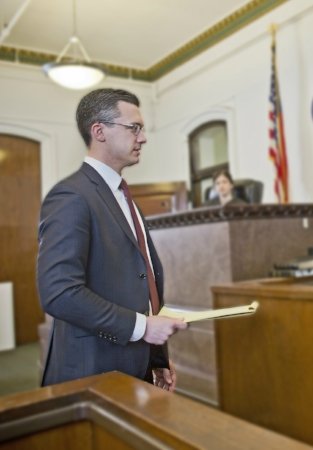
Zak T. Goldstein, Esquire - Criminal Defense Lawyer
The Pennsylvania Supreme Court has decided the case of Commonwealth v. Armolt, holding that an adult defendant may be prosecuted in adult court for a crime he committed twenty years earlier as a juvenile. This case illustrates a serious problem with the criminal justice system. Had the defendant been prosecuted in juvenile court twenty years earlier, he likely would have received probation and some kind of treatment program. But because prosecutors did not file charges until twenty years later, he received a permanent, adult record, and the judge sentenced him to state prison. Nonetheless, the Supreme Court upheld this procedure and concluded that only the legislature could address the issue.
The Facts of Armolt
In Armolt, the defendant was convicted of sexually assaulting his step-sister while he was a minor. He, his brothers, and his mother moved in with the complainant and her father when he was a minor in the 1980s. According to the complainant, he and his brothers began sexually assaulting her while she was between the ages of seven and sixteen. She reported the abuse to the State Police at some point in 1996, but the police did not file charges, and she remained in the home. She did not alert any other authorities for another three decades.
In 2016, the complainant called the State Police to discuss a dispute with the defendant and his brothers over the inheritance of property from her father, who had recently died. This conversation led to her disclosing the abuse to a state trooper. The state trooper conducted an investigation, interviewed a number of witnesses, and recommended that prosecutors file charges. The Commonwealth eventually filed charges in 2018. Accordingly, the police arrested the defendant in 2018 and charged him as an adult with rape, involuntary deviate sexual intercourse, aggravated indecent assault, and indecent assault for crimes he committed thirty years earlier when he was a minor.
The trial court denied various pre-trial motions. The defendant proceeded by way of jury trial, and the jury found him guilty. The trial court sentenced him to 4 - 8 years’ incarceration in state prison.
The Appeal
The defendant appealed, arguing that he should not have been prosecuted as an adult because he committed the crimes when he was a juvenile. Specifically, in the trial court and on direct appeal to the Superior Court, he argued only that the juvenile court had jurisdiction because he committed the crimes as a minor. The Superior Court affirmed, and the defendant sought review in the Pennsylvania Supreme Court. The Supreme Court agreed to review the issue and granted his petition for allowance of appeal.
The Supreme Court, however, also affirmed. It found that the defendant was properly tried in adult court under the applicable statutes and that although his constitutional claims were interesting, he had waived those claims on appeal by failing to raise them in the trial court and Superior Court.
With respect to the statutory claim, the Supreme Court found that Pennsylvania law clearly directs that an adult who is prosecuted for crimes committed while a juvenile should be prosecuted as an adult in the Court of Common Pleas. The Court noted that the Juvenile Act conveyed limited jurisdiction to juvenile courts, the scope of which applies “exclusively to . . . [p]roceedings in which a child is alleged to be delinquent or dependent.” 42 Pa.C.S. §6303(a)(1) (emphasis added). The Act explicitly defines a “child” as an individual who “is under the age of 18 years” or “is under the age of 21 years who committed an act of delinquency before reaching the age of 18 years.” Id. § 6302.10
Thus, the Act plainly extends juvenile jurisdiction to offenders who committed an offense while under the age of eighteen only if they are prosecuted before turning twenty-one. Because the Court found no ambiguity in this definition, it found itself bound to abide by the letter of the statute. See 1 Pa.C.S. §1921(b). Further, the statutes provide that the juvenile court loses jurisdiction when a defendant turns 21. Accordingly, if the defendant’s argument were correct, then he could not be prosecuted at all because the juvenile court would not have jurisdiction, either.
The Court rejected the defendant’s other arguments. It found that he failed to present any evidence that the Commonwealth acted in bad faith by waiting to charge him, and that although he had raised a number of interesting constitutional challenges in the Supreme Court, he had failed to raise these challenges in the lower courts. Therefore, the Court found that he waived those claims by failing to raise them earlier.
The Court therefore denied the appeal. It did recommend that the legislature consider whether the system is really fair to adults who are prosecuted for crimes committed decades earlier when they were minors, but it found no real dispute that the statutory language directs such a result. The Court did suggest that it may be willing to consider a properly preserved challenge as to whether an adult defendant may be sentenced to prison for crimes committed as a juvenile, but it found that this case was not the right case for deciding that issue.
Facing criminal charges? We can help.
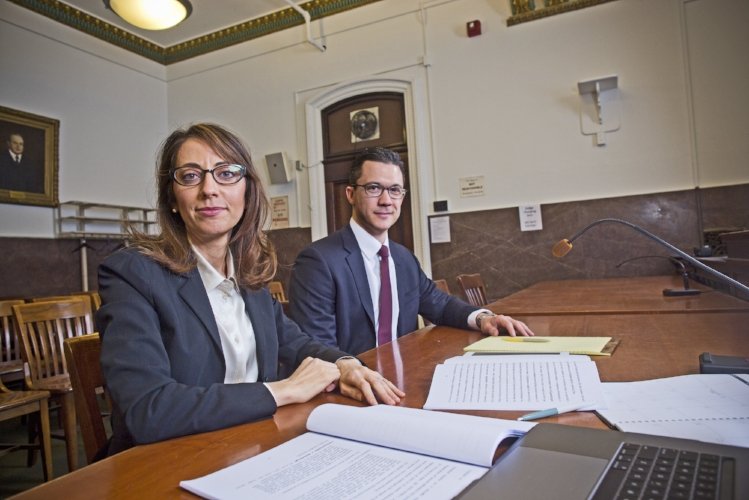
Goldstein Mehta LLC Criminal Defense Lawyers
If you are facing criminal charges or under investigation by the police, we can help. We have successfully defended thousands of clients against criminal charges in courts throughout Pennsylvania and New Jersey. We have successfully obtained full acquittals in cases involving charges such as Conspiracy, Aggravated Assault, Rape, VUFA, and Murder. We have also won criminal appeals and PCRAs in state and federal court. Our award-winning Philadelphia criminal defense lawyers offer a free criminal defense strategy session to any potential client. Call 267-225-2545 to speak with an experienced and understanding defense attorney today.

Attorney Clemens Wins Motion to Suppress Firearm

Philadelphia Criminal Defense Attorney Thomas C. Clemens, Esquire
Philadelphia criminal defense lawyer Thomas C. Clemens, Esquire, recently won a motion to suppress in a firearms case. In Commonwealth v. Y.P., the Philadelphia Police arrested Y.P. after finding a firearm secreted in his car. Prosecutors filed VUFA (violation of the uniform firearms act) charges such as carrying a concealed firearm without a license (VUFA § 6106), felon in possession of a firearm (VUFA § 6105), and carrying a firearm on the streets of Philadelphia (VUFA § 6108). Accordingly, Y.P. was facing up to 32 years in jail if a judge or jury convicted him of the charges.
The police officers claimed that they stopped Y.P. in North Philadelphia after he blew through a stop sign in his car. The arresting officer claimed that during the stop, he could see Y.P. begin to move around in the car in a nervous manner as if he was trying to place something away from his body. The officer removed Y.P. from the car and placed him in the patrol car. The officer then “frisked” the passenger compartment of the car for weapons and found a gun. The police arrested Y.P., and prosecutors charged him with the aforementioned weapons offenses.
Y.P. retained Attorney Clemens, and Attorney Clemens promptly filed a motion to suppress the gun. The Philadelphia Court of Common pleas held an evidentiary hearing on the motion to suppress. At the hearing, Attorney Clemens used the officer’s body camera footage to show that the window tint on the vehicle was actually too dark for the officer to have seen anything going on in the car during the stop. The officer even noted in the video that he could not see into the car, meaning he could not have seen Y.P. moving around or acting nervously. Therefore, Attorney Clemens argued that the officer had not actually seen any nervousness or furtive movements, making the “frisk” of the vehicle really a search for evidence based on a mere hunch rather than a legitimate frisk of the vehicle for officer safety. The police had not obtained a search warrant, so they would have been allowed to search the car only if exigent circumstances such as a need to ensure officer safety existed.
The trial judge agreed that the police could not actually see into the car and granted the motion. This left the prosecution with no choice but to dismiss the charges. Y.P. will be eligible for a full expungement.
Facing criminal charges? We can help.
Goldstein Mehta LLC Criminal Defense Lawyers
If you are facing criminal charges or under investigation by the police, we can help. We have successfully defended thousands of clients against criminal charges in courts throughout Pennsylvania and New Jersey. We have successfully obtained full acquittals in cases involving charges such as Conspiracy, Aggravated Assault, Rape, VUFA, and Murder. We have also won criminal appeals and PCRAs in state and federal court. Our award-winning Philadelphia criminal defense lawyers offer a free criminal defense strategy session to any potential client. Call 267-225-2545 to speak with an experienced and understanding defense attorney today.

PA Superior Court: COVID Speedy Trial Rule Suspensions Are Absolute Even if the Prosecutors Took Two Years Off
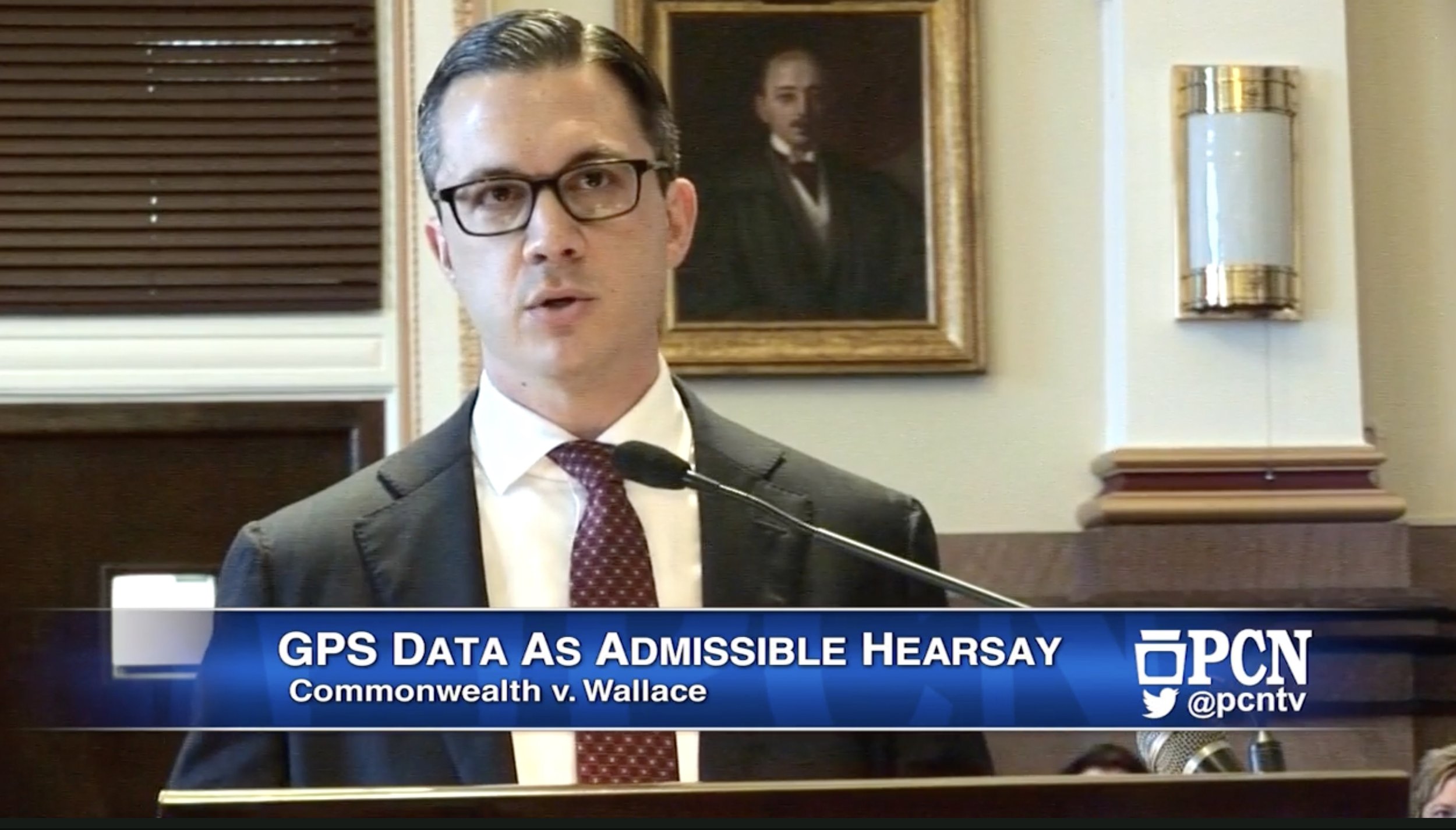
Criminal Defense Lawyer Zak T. Goldstein, Esquire
The Pennsylvania Superior Court has decided the case of Commonwealth v. Malone, holding that the COVID-related suspensions of Pennsylvania’s speedy trial rules are absolute no matter how little the Commonwealth did to try to move a case forward during the suspension.
In Malone, the Philadelphia Court of Common Pleas dismissed the defendant’s aggravated assault and possession with the intent to deliver case due to a violation of Rule 600. The court found that the Commonwealth failed to bring the defendant to trial for nearly two years and that the Commonwealth had failed to act with due diligence during that period. The Philadelphia courts suspended Rule 600 from March 2020 to October 1, 2021 due to COVID, but the trial court ruled that the Commonwealth would be entitled to the benefit of the suspension only if the Commonwealth had acted with due diligence during the relevant time periods. Because it had not, the time still counted, and the court dismissed the charges.
What is Rule 600?
Rule 600 is a state court speedy trial rule which requires the Commonwealth tho bring a defendant to trial within 365 days from the filing of the criminal complaint. Unfortunately, Rule 600 in general has a lot of exceptions. Time not attributable to the negligence of the prosecution generally often does not count. For example, continuance requests from the defense, the unavailability of a judge to hear the case, or even a police officer’s failure to appear for a good reason may result in the time between two court dates being excluded from the 365 day limit. In other words, time between hearings that is not really the prosecution’s fault does not count so long as the prosecution acted with reasonable due diligence in attempting to move the case forward to trial.
In March 2020, the Pennsylvania Supreme Court suspended Rule 600 as courts throughout the state shut down due to COVID. The Supreme Court lifted its suspension shortly thereafter, but it gave president judges for each county the authority to extend the suspension locally. Some counties, like York, began operating normally almost immediately. Others, like Philadelphia and Montgomery County, did not resume normal operations for nearly two years and are still struggling with COVID-related backlogs. Accordingly, Philadelphia’s president judge left the suspension in effect until October 1, 2021.
The Superior Court’s Ruling
The issue in this case, therefore, was whether the general rule that the Commonwealth must act with due diligence in order for the time between court dates to not count trumps the speedy trial rule suspension or whether the suspension of the rule was absolute. In this case, the Superior Court ruled that the suspension was absolute and the Commonwealth had absolutely no obligation to do any work on its cases during the nearly two year period that Philadelphia suspended the operation of Rule 600. Therefore, the Superior Court reversed the decision of the trial judge and reinstated the charges. It seems reasonable to expect the prosecution to have monitored its cases and worked to get them ready during the shut downs, but the Superior Court has ruled that they had no obligation to do so.
The defendant will now again face trial in the Court of Common Pleas. Given that the case is now more than three years old, the Commonwealth will likely struggle to prosecute the defendant, but further litigation will follow.
Facing criminal charges? We can help.
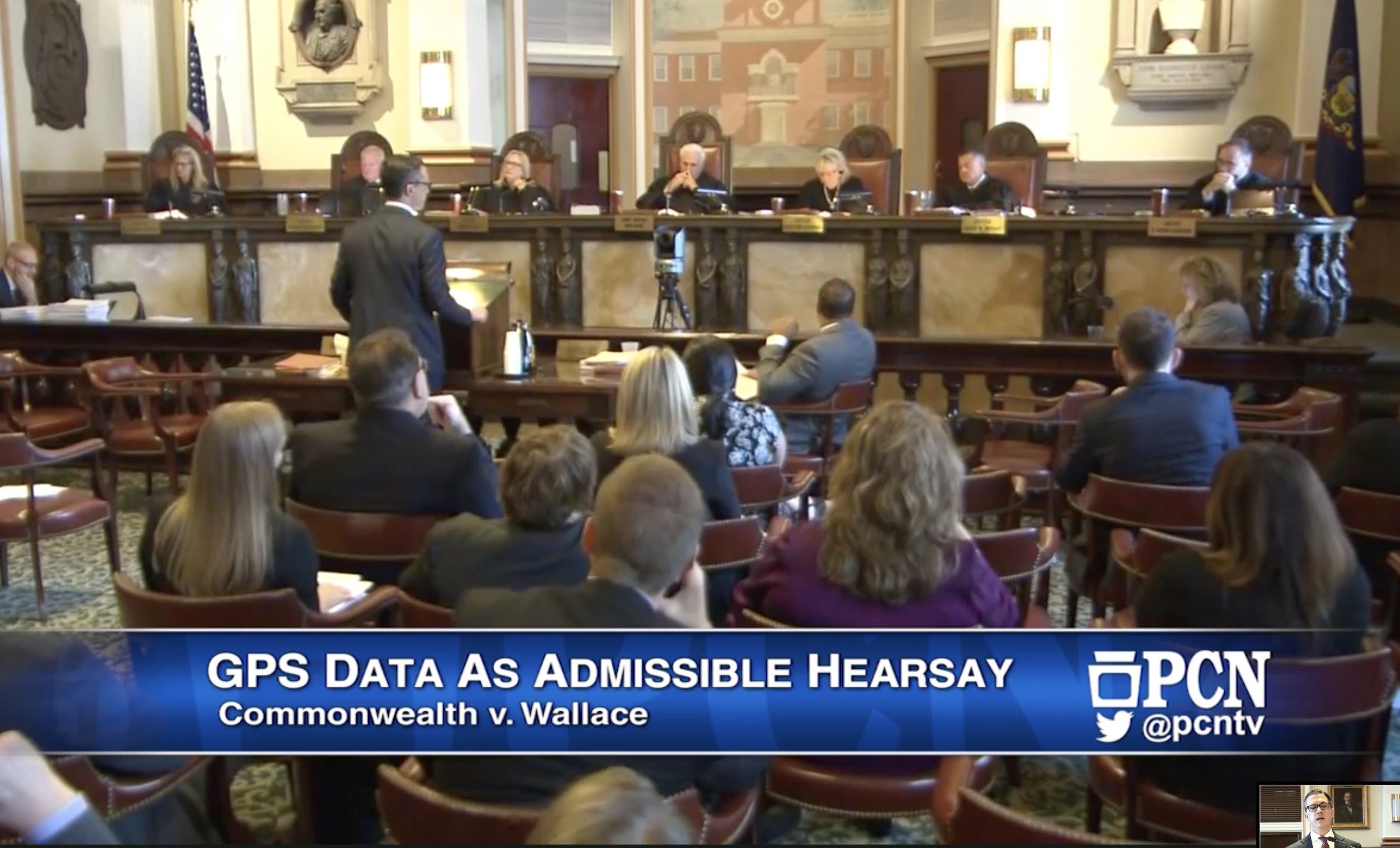
Criminal defense attorney Zak T. Goldstein, Esquire arguing before the PA Supreme Court
If you are facing criminal charges or under investigation by the police, we can help. We have successfully defended thousands of clients against criminal charges in courts throughout Pennsylvania and New Jersey. We have successfully obtained full acquittals in cases involving charges such as Conspiracy, Aggravated Assault, Rape, and Murder. We have also won criminal appeals and PCRAs in state and federal court. Our award-winning Philadelphia criminal defense lawyers offer a free criminal defense strategy session to any potential client. Call 267-225-2545 to speak with an experienced and understanding defense attorney today.

Not Guilty: Jury Acquits Attorney Goldstein’s Client of Indecent Assault
Philadelphia Criminal Defense Lawyer Zak T. Goldstein, Esquire
Philadelphia criminal defense attorney Zak T. Goldstein, Esquire, recently obtained a full acquittal for a client charged with multiple counts of indecent assault. In Commonwealth v. L.B., police arrested and charged L.B. with indecent assault as a felony of the third degree and indecent exposure for one complainant as well as indecent assault as a misdemeanor of the second degree for a second complainant. L.B. worked as a massage therapist, and two women accused him of touching them inappropriately during massages.
The first complainant was a regular patient of the client’s. She claimed that L.B. sexually assaulted her during one of the massages by touching her inappropriately and masturbating in front of her. L.B. denied the accusation to the police, and the police initially declined to file charges.
That decision changed, however, when a second complainant made similar allegations against L.B. She claimed that she also went to see him for a massage. During the massage, he began to touch her inappropriately. Specifically, she alleged that he touched too far up her legs and eventually touched the outside of her vagina. She then left, and later that night, she sent L.B. a text message accusing him of assaulting her.
Once the second complainant made her allegations, the police arrested L.B. Prosecutors charged him with indecent assault as a felony of the third degree for allegedly putting his fingers in the first complainant’s vagina and indecent assault as a misdemeanor for touching the outside of the second complainant’s vagina.
Sexual assault cases involving more than one complainant are extremely difficult to defend. Although the jury should consider each allegation separately, it becomes very difficult for jurors to properly evaluate the evidence when more than one person makes an allegation. Judges routinely permit the Commonwealth to try these cases together even though it makes it very difficult to receive a fair trial, and in this case, the defense’s motion to sever the cases was denied.
Fortunately, L.B. retained Attorney Goldstein for trial. L.B. proceeded by way of jury trial, and Attorney Goldstein successfully argued to the jury that the complainants had fabricated the assaults. Attorney Goldstein’s cross-examination established that the first complainant had continued trying to make appointments for massages at the same spa after the alleged assault, failed to tell anyone for about a month, failed to warn other people she knew went there for massages that they should not go there anymore, and that she had hired a lawyer and sued the spa before she even went to the police.
Similarly, cross-examination revealed that the second complainant had also hired the same lawyer and sued the spa, failed to tell the police for a few weeks, and made allegations that were not even necessarily an indecent assault. Additionally, she had given L.B. a large tip for the massage.
Given the financial motive, inconsistencies, and strange behavior, the complainants’ stories were difficult to believe. There was also no other evidence, but sexual assault cases can be very difficult to defend. There is usually no other evidence that something happened other than the complainant’s testimony. Therefore, Pennsylvania law allows the prosecution to bring charges and for a jury to convict without any other evidence if the jury believes the testimony beyond a reasonable doubt. Further, prosecutors and judges will repeatedly instruct the jury throughout the trial that they do not have to have any other evidence other than oral testimony in order to convict. Many jurors also have trouble believing that someone could lie about something so serious.
In this case, however, Attorney Goldstein’s cross-examination revealed that the stories just were not credible. The jury deliberated for a few hours and then acquitted L.B. of all charges. Had he been convicted, he would have been facing a state prison sentence and Megan’s Law registration. Now, he has the right to have all of the charges expunged.
If you are facing allegations of sexual misconduct or sexual assault, it is extremely important that you retain counsel with experience defending against these types of allegations. There are often critical motions which need to be filed and important investigations that need to be conducted in order to obtain exculpatory evidence. Most importantly, successful cross-examination of the witnesses in these cases requires a great deal of experience, sensitivity, and skill. Fortunately, L.B. retained Attorney Goldstein, and Attorney Goldstein was able to obtain a full acquittal.
Facing criminal charges? We can help.

Goldstein Mehta LLC Criminal Defense Lawyers
If you are facing criminal charges or under investigation by the police, we can help. We have successfully defended thousands of clients against criminal charges in courts throughout Pennsylvania and New Jersey. We have successfully obtained full acquittals in cases involving charges such as Conspiracy, Aggravated Assault, Rape, and Murder. We have also won criminal appeals and PCRAs in state and federal court. Our award-winning Philadelphia criminal defense lawyers offer a free criminal defense strategy session to any potential client. Call 267-225-2545 to speak with an experienced and understanding defense attorney today.