

Philadelphia Criminal Defense Blog

Third Circuit Applies Good Faith Exception to FBI Reliance on Jurisdictionally Defective Search Warrant in Child Porn Malware Case

Philadelphia Criminal Defense Lawyer Zak T. Goldstein, Esq.
The Third Circuit has just decided the case of United States v. Werdene. In Werdene, the Third Circuit held that Federal Bureau of Investigation agents acted in good faith on a jurisdictionally defective search warrant which authorized them to install malware/tracking software on users outside of the district in which the warrant was issued as part of an investigation into child pornography. The facts of the case are notable because in this case, the Government seized a child pornography server and continued to operate it, thereby distributing child pornography as part of its attempt to identify the users of the server. Nonetheless, because agents believed they had obtained a valid search warrant, the Third Circuit held that the lower court properly declined to suppress the resulting evidence.
United States v. Werdene
The Werdene case began with an FBI investigation into a website called Playpen. Playpen was a forum on the dark web that was used to distribute child porn. Specifically, Playpen was on the Tor network. Users were able to conceal their actual IP addresses while accessing the network, making it difficult for law enforcement to track the users of the website even if law enforcement seized the site itself. Under normal circumstances, when law enforcement seizes a website, officers can obtain logs of the IP addresses which have accessed the site. They can then trace those IP addresses back to specific internet accounts and obtain search warrants for those users’ homes or businesses. The Tor network prevents the server that the user accesses from recording the user’s actual IP address, thereby making it difficult, if not impossible, for law enforcement to obtain a list of IP addresses that accessed the site even after they seize the server itself.
In 2014, the FBI learned that Playpen was actually being hosted on a computer in North Carolina. The FBI quickly arrested the owner of the site and also obtained a warrant to seize the server. The FBI then moved the server to a government facility in the Eastern District of Virginia and obtained a wiretap order to monitor the communications on the server. The FBI continued to operate the Playpen website and distribute child pornography in the hopes of developing a method to circumvent Tor and identify the users of the website.
In order to get around Tor's privacy protections, the FBI created a form of malware that would provide it with a user’s IP address when the user accessed the site. The FBI changed Playpen’s code so that when a user accessed the website, the user would automatically download software which would search the computer for its IP address and other identifying information and transmit that information to the FBI.
Prior to deploying this software, the FBI obtained a search warrant from a magistrate judge in the Eastern District of Virginia permitting it to deploy the malware on the computers that accessed the website. The order authorized the FBI to install the code on computers “wherever located.” Thus, this one warrant issued by a single Magistrate Judge in Virginia authorized the FBI to search computers across the world, most of which were located outside of that judicial district in Virginia.
The data from the malware eventually revealed that the defendant in the case had accessed the site and downloaded child pornography. The FBI obtained a search warrant for his home from a magistrate judge in the Eastern District of Pennsylvania, seized his computers, and found incriminating materials. Accordingly, federal prosecutors charged him with possession of child pornography in violation of 18 U.S.C. Sec. 2252(a)(4)(B).
Motion to Suppress
Werdene moved to suppress the evidence, arguing that FBI agents relied on an improperly issued search warrant because the warrant failed to comply with the jurisdictional requirements of then Rule 41(b) of the Federal Rules of Criminal Procedure. Rule 41(b) has since been amended to avoid the issues raised by this case. At the time, it gave a magistrate judge the power to “issue a warrant to search for and seize a person or property located within the district.” It also contained four exceptions, none of which authorized a magistrate judge to issue a search warrant for property outside of the judge’s district. Accordingly, the Third Circuit found that the search warrant was invalid because the magistrate judge did not have the authority under the rules to issue it. The court further concluded that the warrant was void ab initio, meaning it would be the same as if the Government had no warrant at all.
The Good Faith Exception to the Exclusionary Rule
Nonetheless, the Third Circuit refused to suppress the evidence. Instead, it found that the agents acted in good faith when they relied on the defective search warrant. The purpose of the exclusionary rule, which requires the suppression of some illegally seized evidence, is to deter illegal police conduct. Where suppression of the evidence would have no deterrent effect because police acted in good faith, federal courts will refuse to suppress the evidence.
Notably, Pennsylvania courts have repeatedly rejected this good faith exception and held that the Pennsylvania Constitution, unlike the United States Constitution, requires the suppression of illegally seized evidence even where the police acted in good faith. Here, the court found that the FBI believed they had a valid search warrant. Therefore, there would be no deterrent effect to be gained suppressing the evidence. The error was committed by the judge, not by the FBI. Accordingly, the court found that the good faith exception applied and refused to reverse the trial court’s decision.
Facing Criminal Charges? We Can Help.

If you are facing criminal charges, we can help. Our Philadelphia criminal defense lawyers have successfully defended thousands of cases in state and federal courts throughout Pennsylvania and New Jersey. We offer a complimentary 15-minute criminal defense strategy session to any potential client who is facing criminal charges or who may be under investigation by law enforcement. Call 267-225-2545 to speak with an experienced and understanding defense attorney today.

Pre-trial Release in New Jersey
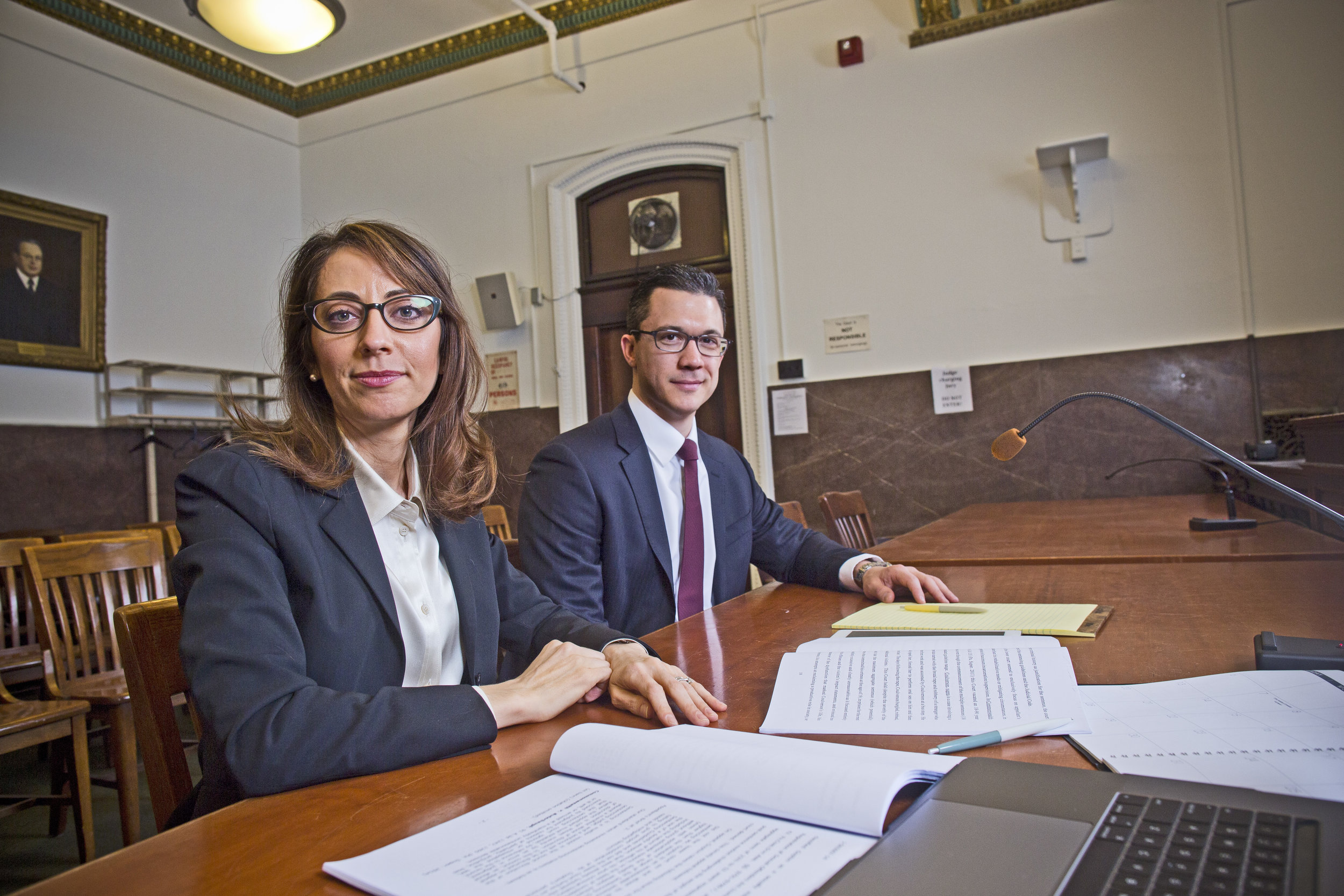
Goldstein Mehta LLC Criminal Defense Lawyers
If you are facing criminal charges in New Jersey, we can help. The first step anytime you are facing charges or believe you may be under investigation is to speak with an experienced criminal defense attorney about your options. We regularly defend clients who are charged with a wide variety of offenses in New Jersey, including in counties such as Camden, Somerset, Hunterdon, Ocean, Cape May, and Atlantic County. We offer a free 15-minute criminal defense strategy session to any potential client who is under investigation or who is facing criminal charges. Call 267-225-2545 to speak with an experienced and understanding defense attorney today.
How does bail work in New Jersey?
New Jersey recently implemented a bail system which is very different from the systems in place in most of the rest of the country in that New Jersey no longer relies on cash bail. New Jersey's system closely mirrors the systems in use in Washington, D.C. and the federal courts. However, the system is probably more favorable to defendants in that the majority of criminal defendants are released pending trial.
The first step in the criminal justice system in any state is typically the bail determination. In other words, the first hearing is to determine whether the defendant will be released pending trial or detained. In Pennsylvania, courts still rely on cash bail in determining whether or not a defendant should be released pending trial. This means that a magistrate sets the bail amount at a preliminary arraignment, and if the defendant can pay that bail (usually 10% of the set amount), then the defendant will be released pending trial and will not spend any time in jail unless convicted.
A cash bail system is inherently unfair because it allows wealthier defendants to be released pending trial in even the most serious cases short of homicide while poorer defendants could languish in jail for years until their trial date. Because they are stuck in jail pending trial dates, which often get delayed, those defendants face a tremendous incentive to take a plea deal in order to get out of jail. Although Philadelphia’s new District Attorney has made promises to end cash bail, this has not happened yet.
Changes to New Jersey’s Bail System
New Jersey’s new bail system, although not perfect, resolves many of those problems. In January 2017, New Jersey switched to an entirely new system that almost completely does away with cash bail. According to a recent Philly.com article, only 44 New Jersey defendants were required to pay bail in exchange for release in 2017. Instead, when a defendant is arrested in New Jersey, it is generally presumed for most offenses that the defendant will be released. If the prosecution looks at the offense and the defendant’s background and believes either that the defendant is a risk to the community, likely to try to intimidate witnesses, or unlikely to appear for court, then the prosecution may file a motion for pre-trial detention.
The first court date in New Jersey is typically the first appearance. Most defendants will receive a summons to appear for the first appearance, and it is generally expected that the prosecution will file a motion for pre-trial detention prior to the first appearance. If the prosecution does not file the motion for pre-trial detention, then the defendant will be released pending trial and will remain free unless the circumstances change. A change in circumstances could include the defendant picking up new criminal charges or failing to appear for court. Barring that, the defendant will usually remain free pending trial.
What offenses could result in pre-trial detention in New Jersey?
The prosecution may only file a motion for pre-trial detention in cases involving indictable offenses or in disorderly persons offenses involving domestic violence. If you are charged with a disorderly persons offense that does not involve domestic violence, then you should not ordinarily be detained pending trial.
When will the detention hearing occur?
If the prosecution files a motion for pre-trial detention, then the Superior Court judge assigned to the case or to pre-trial detention hearings must hold a hearing on the motion within three days of the filing of the motion. The prosecution or defense counsel may request a continuance of the hearing, but unless one of the parties shows good cause, the continuance may not exceed five business days if made by the defense. If made by the prosecution, the continuance of the pre-trial detention hearing may not exceed three business days. The court has the authority to detain the defendant until the hearing, which is why the rule limits the length of these continuances absent a showing of good cause.
What happens at a pre-trial detention hearing in New Jersey?
The pre-trial detention hearing looks relatively similar to a bail hearing under the previous law. The defendant has the right to an attorney, meaning he or she may retain an attorney and have that attorney present. If the defendant cannot afford an attorney, then the court must appoint an attorney for the defendant. The defense has the right to present witnesses and evidence and cross-examine the prosecution’s witnesses, and the defendant always has the right to be present at the hearing. In order to have a defendant held pending trial, the prosecution must show two things:
First, the prosecution must show that there is probable cause to believe that the defendant has committed the crime charged. If the defendant has not been indicted yet, then the prosecution must present evidence to the court to establish probable cause. This would often involve presenting police reports or testimony from the lead detective in the case to the court. If the defendant has already been indicted by a grand jury, then probable cause exists and the prosecution does not again have to show probable cause.
Second, the prosecution must show that the defendant is a flight risk, likely to obstruct justice, or a danger to the community. The prosecution must make this showing at a clear and convincing evidence standard. For a limited number of offenses, there is a presumption that the defendant is a flight risk and danger to the community. These are offenses like murder, rape, and other offenses which are punishable with a life sentence in prison. For most offenses, however, there is a presumption that the defendant should be released. If there is a presumption that the defendant should be detained due to the nature of the offense charged, then the defendant must present evidence in order to rebut the presumption assuming that the prosecution establishes probable cause. If the presumption is that the defendant should be released, then the prosecutor must present evidence that the defendant should be held pending trial.
New Jersey’s new law created a new office of Statewide Pretrial Services which is charged with creating risk assessment reports for each defendant who is charged with an offense for which they could be detained. The Pretrial Services office will gather information about the defendant and prepare a report for the court along with a recommendation as to whether the defendant should be released. When making its detention decision, the trial court is directed to consider the following factors:
a. The nature and circumstances of the offense charged;
b. The weight of the evidence against the eligible defendant, except that the court may consider the admissibility of any evidence sought to be excluded;
c. The history and characteristics of the eligible defendant, including:
(1)the eligible defendant's character, physical and mental condition, family ties, employment, financial resources, length of residence in the community, community ties, past conduct, history relating to drug or alcohol abuse, criminal history, and record concerning appearance at court proceedings; and
(2)whether, at the time of the current offense or arrest, the eligible defendant was on probation, parole, or on other release pending trial, sentencing, appeal, or completion of sentence for an offense under federal law, or the law of this or any other state;
d. The nature and seriousness of the danger to any other person or the community that would be posed by the eligible defendant's release, if applicable;
e. The nature and seriousness of the risk of obstructing or attempting to obstruct the criminal justice process that would be posed by the eligible defendant's release, if applicable; and
f. The release recommendation of the pretrial services program obtained using a risk assessment instrument under section 11 of P.L.2014, c.31 (C.2A:162-25).
The recommendation of the Pretrial Services report is extremely important to the court. However, if either side disagrees with the recommendation, that attorney for that party may present evidence and argument as to why the recommendation is wrong.
Because there is a presumption that most defendants be released, the result of this new system has been that most defendants are being released pending trial.
What conditions could the court impose on my release?
New Jersey provides for different levels of supervision upon release which could include checking in regularly with a pre-trial officer by phone or in person or even house arrest with electronic monitoring. However, even in very serious cases, many defendants who would have been detained on exorbitant bail under the old system are now released pending trial. This means that they may continue working, going to school, and will have much easier access to their attorney and a greater ability to prepare for trial.
Can I appeal a pre-trial detention decision? Can the prosecutor appeal?
Both the defense and the prosecution may appeal a pre-trial detention decision to New Jersey’s appellate court. Either side may appeal to the appellate court by filing a notice of appeal within 48 hours of the trial court’s decision to either detain or release the defendant. Additionally, either side may file a motion to re-open the trial court’s decision with the trial judge if new circumstances or information comes to light.
Facing Criminal Charges in New Jersey? We can help.

Criminal Lawyer Zak Goldstein
Our Philadelphia criminal defense lawyers regularly defend clients in the criminal courts throughout New Jersey. We have successfully defended thousands of clients in state and federal courts throughout Pennsylvania and New Jersey. If you are facing criminal charges or under investigation for a crime, we offer a free 15-minute criminal defense strategy session. Call 267-225-2545 to speak with an experienced and understanding criminal defense attorney today.


New Jersey’s Pre-trial Detention Rule
Rule 3:4A. Pretrial Detention
(a) Timing of Motion. A prosecutor may file a motion at any time seeking the pretrial detention of a defendant for whom a complaint-warrant or warrant on indictment is issued for an initial charge involving an indictable offense, or a disorderly persons offense involving domestic violence, as provided in N.J.S.A. 2A:162-15 et seq. A defendant who is the subject of a warrant on indictment is an eligible defendant pursuant to N.J.S.A. 2A:162-15 et seq.
(b) Hearing on Motion.
(1) A pretrial detention hearing shall be held before a Superior Court judge no later than the defendant’s first appearance unless the defendant or the prosecutor seeks a continuance or the prosecutor files a motion at or after the defendant’s first appearance. If the prosecutor files a motion at or subsequent to the defendant’s first appearance the pretrial detention hearing shall be held within three working days of the date of the prosecutor’s motion unless the defendant or prosecutor seek a continuance. Except for good cause, a continuance on motion of the defendant may not exceed five days, not including any intermediate Saturday, Sunday or holiday. Except for good cause, a continuance on motion of the prosecutor may not exceed three days, not including any intervening Saturday, Sunday or holiday. The Superior Court judge in making the pretrial detention decision may take into account information as set forth in N.J.S.A. 2A:162-20.
(2) The defendant shall have a right to be represented by counsel and, if indigent, to have counsel appointed if he or she cannot afford counsel. The defendant shall be provided discovery pursuant to Rule 3:4-2(c)(1)(B). The defendant shall be afforded the right to testify, to present witnesses, to cross-examine witnesses who appear at the hearing and to present information by proffer or otherwise. Testimony of the defendant given during the hearing shall not be admissible on the issue of guilt in any other judicial proceeding, but the testimony shall be admissible in proceedings related to the defendant’s subsequent failure to appear, proceedings related to any subsequent offenses committed during the defendant’s release, proceedings related to the defendant’s subsequent violation of any conditions of release, any subsequent perjury proceedings, and for the purpose of impeachment in any subsequent proceedings. The defendant shall have the right to be present at the hearing. The rules governing admissibility of evidence in criminal trials shall not apply to the presentation and consideration of information at the hearing. The return of an indictment shall establish probable cause to believe that the defendant committed any offense alleged therein. Where there is no indictment at the point of the detention hearing, the prosecutor shall establish probable cause that the defendant committed the predicate offense.
(3) A hearing may be reopened at any time before trial if the court finds that information exists that was not known by the prosecutor or defendant at the time of
the hearing and that information has a material bearing on the issue of whether there are conditions of release that will reasonably assure the defendant’s appearance in court when required, the protection of the safety of any other person or the community, or that the defendant will not obstruct or attempt to obstruct the criminal justice process.
(4) Presumption of detention. When a motion for pretrial detention is filed pursuant to paragraph (a), there shall be a rebuttable presumption that the defendant shall be detained pending trial because no amount of monetary bail, non-monetary condition or combination of monetary bail and conditions would reasonably assure the defendant’s appearance in court when required, the protection of the safety of any other person or the community, and that the defendant will not obstruct or attempt to obstruct the criminal justice process, if the court finds probable cause that the defendant: (i) committed murder pursuant to N.J.S.A. 2C:11-3; or (ii) committed any crime for which the defendant would be subject to an ordinary or extended term of life imprisonment.
(5) Presumption of release. Except when a presumption of detention is required pursuant to paragraph (b)(4), when a motion for pretrial detention is filed pursuant to paragraph (a), there shall be a rebuttable presumption that some amount of monetary bail, non-monetary conditions of pretrial release or combination of monetary bail and conditions would reasonably assure the defendant’s appearance in court when required, the protection of the safety of any other person or the community, and that the defendant will not obstruct or attempt to obstruct the criminal justice process.
The standard of proof for the rebuttal of the presumption of pretrial release shall be by clear and convincing evidence. The court may consider as prima facie evidence sufficient to overcome the presumption of release a recommendation by the Pretrial Services Program established pursuant to N.J.S.A. 2A:162-25 that the defendant’s release is not recommended (i.e., a determination that “release not recommended or if released, maximum conditions”). Although such recommendation by the Pretrial Services Program may constitute sufficient evidence upon which the court may order pretrial detention, nothing herein shall preclude the court from considering other relevant information presented by the prosecutor or the defendant in determining whether no amount of monetary bail, non-monetary bail conditions of pretrial release or combination of monetary bail and conditions would reasonably assure the defendant’s appearance in court when required, the protection of the safety of any other person or the community, and that the defendant will not obstruct the criminal justice process.
(c) Pretrial Detention Order. If the court determines that pretrial detention is necessary it shall issue an order containing written findings of fact and a written statement of reasons for the detention. That order shall also direct that the defendant be afforded reasonable opportunity for private consultation with counsel.
(d) Temporary Release Order. The court may issue an order temporarily releasing the defendant, subject to conditions, to the extent that the court determines the release is necessary for the preparation of a defendant’s defense or for another compelling reason.
(e) Interlocutory Order from Appellate Division. Nothing in this Rule shall be deemed to preclude the State’s right to seek an interlocutory order from the Appellate Division within 48 hours.

PA Superior Court Finds Birchfield Not Retroactive in PCRA Litigation

Criminal Lawyer Zak Goldstein
The Pennsylvania Superior Court has just decided the case of Commonwealth v. Olson, holding that the new rule relating to DUI blood testing cases announced by the United States Supreme Court in Birchfield v. North Dakota may not be raised to challenge a DUI conviction in collateral litigation. This means that defendants who have been convicted of DUI based on evidence obtained via a now-illegal warrantless, coercive blood draw may not challenge their convictions by filing a Post-Conviction Relief Act Petition in Pennsylvania state court.
Commonwealth v. Olson
In Olson, the defendant pleaded guilty to one count of Driving Under the Influence in September 8, 2015. Because the defendant had numerous prior convictions for DUI, he was sentenced to 18 months to 5 years in state prison. He did not file an appeal to the Superior Court.
Instead, on August 17, 2016, he filed a Post-Conviction Relief Act Petition challenging the legality of his sentence. The defendant argued two issues: first, that the mandatory minimum sentence that he received for his criminal conviction was rendered unconstitutional by the Birchfield decision. Second, he argued that Birchfield created a new substantive rule which courts must apply retroactively where the defendant timely files a PCRA Petition.
What is Birchfield?
By way of background, Birchfield was an extremely important, recent United States Supreme Court decision in which the Court held that states may not impose criminal penalties on DUI suspects who refuse to consent to blood testing if the police have not obtained a warrant. This had the effect of radically changing Pennsylvania’s DUI laws because Pennsylvania had statutes on the books which imposed additional penalties on a DUI defendant in cases where the prosecution could prove that the defendant both was driving under the influence and that the defendant refused blood testing. Accordingly, Pennsylvania appellate courts have now found many sections of Pennsylvania’s DUI statute unconstitutional. Birchfield was decided between when the defendant in this case was sentenced and when the defendant filed the PCRA Petition, meaning the defendant sought to apply Birchfield to his case even though his case was already over by the time Birchfield was decided.
PCRA Petitions
PCRA Petitions are initially filed in the trial court in which the defendant was convicted. If a trial court denies a PCRA Petition, the court’s decision can be appealed to the Superior Court. Here, the defendant filed his PCRA Petition in the trial court, and the trial court dismissed the petition, finding that the Petition was not timely filed and that the rule in Birchfield did not apply retroactively to cases which were no longer on direct appeal. The defendant appealed, and the Superior Court affirmed the decision of the trial court.
Is Birchfield Retroactive?
The Superior Court found that Birchfield does not apply retroactively to closed cases. It cited previous case law for the proposition that “a new rule of law does not automatically render final, pre-existing sentences illegal.” Instead, an old rule applies in PCRA litigation, also known as collateral review, if 1) the rule is substantive or 2) the rule is a ‘watershed rule of criminal procedure’ implicating the fundamental fairness and accuracy of the criminal proceeding. Substantive rules decriminalize conduct or prohibit punishment against a class of persons. Rules that regulate only the manner of determining the defendant’s culpability are procedural.
The Court first found that the rule in Birchfield requiring a warrant before criminal penalties for refusing a blood draw could be imposed is procedural. The court reasoned that it does not alter the range of conduct or the class of persons punished by the law – DUI is still a crime, and blood tests are still permissible. Instead, it regulates only the manner of determining the degree of a defendant’s culpability.
Accordingly, as the law stands now, Birchfield challenges cannot be raised by filing a Post-Conviction Relief Act Petition. However, additional appellate litigation may take place, and the Pennsylvania Supreme Court or United States Supreme Court could review this decision and reach a different conclusion. It is important to note that Birchfield continues to apply in pending DUI cases. States may not punish defendants who refuse to submit to warrantless blood tests for refusing to submit to the test.
Facing Criminal Charges? We Can Help

Philadelphia Criminal Defense Attorneys
If you are facing criminal charges, we can help. Our Philadelphia criminal defense lawyers and DUI defense attorneys have successfully defended thousands of cases. We offer a complimentary 15-minute criminal defense strategy session to every potential client who is facing criminal charges or who may be under investigation by law enforcement. Call 267-225-2545 to speak with an experienced and understanding defense attorney today.

Expert Witnesses in Illegal Drug Distribution Cases

Philadelphia Criminal Defense Lawyer Zak Goldstein
Possession with the Intent to Deliver of a controlled substance is a serious charge in Pennsylvania and New Jersey. It is always graded as a felony (even when the controlled substance in question is marijuana), and although Pennsylvania no longer has mandatory minimum sentences for drug offenses, the sentencing guidelines often call for jail time upon conviction depending on the defendant’s criminal record and the weight of the drugs involved. Fortunately, there are often defenses to Possession with the Intent to Deliver charges.
Types of Drug Distribution Cases in Philadelphia
There are typically two common types of Possession with the Intent to Deliver cases in Philadelphia court. In perhaps the most common type, detectives with one of the city’s specialized narcotics units will set up a surveillance operation or use confidential informants in order to try to catch people in the act of buying and selling drugs. In the second type, the police will make a pedestrian stop or traffic stop and find that the person stopped has drugs or drug paraphernalia in their pockets or in the car. If the person stopped appears to have a lot of drugs, a substantial amount of money without a good explanation, or paraphernalia which suggests that the drugs are going to be packaged for sale, the prosecution will typically charge Possession with the Intent to Deliver (“PWID”) and use a police expert witness to try to convince the court that the defendant was planning on selling the drugs.
Expert Witnesses in Drug Cases
In Philadelphia court, the prosecution’s expert is virtually never an independent, unbiased witness. Instead, the prosecution’s expert is almost always a salaried, on-duty police officer who testifies only for the government in drug cases as their full-time job. Despite the obvious bias in favor of the Commonwealth, most judges will accept police officer expert testimony in these cases as to whether the drugs would have been intended for sale. The officer will often testify to a handful of generic reasons why the defendant must have been planning on selling the drugs. Some of the reasons could include the presence of money as they will testify that dealers often have large quantities of cash, that the drugs were divided into multiple packets that could be easily sold, or that the defendant also possessed scales or cutting instruments which could be used to divide up a larger quantity of drugs into smaller quantities for distribution.
Challenging Police Expert Testimony in Drug Possession Cases
It is critically important to fight back against this biased testimony when defending against drug delivery charges. This police “expert” testimony can be refuted in a number of ways. First, in most drug cases where the police did not observe the actual sale of narcotics, our criminal defense attorneys can have the discovery and case file reviewed by an independent expert on drug packaging, distribution, and sale. The expert will review the file for whether the drugs and paraphernalia could also be consistent with personal use. This could include providing drug treatment records or employment documentation to the expert so that the expert can see that the defendant has the legitimate financial means to purchase a larger quantity of drugs and a history of drug use. In many cases, if there is an explanation for why the defendant had a significant quantity of money, it could go a long way towards dispelling allegations that the money came from drug activity. If the expert can opine that the circumstances of the drug possession were also consistent with personal use, then we can retain the expert to testify at trial before a judge and jury and rebut the testimony of the Government’s police officers. This could have the effect of reducing the felony charge, which often carries jail time, to a misdemeanor charge which could carry only probation or no further penalty depending on the controlled substance. Second, our defense lawyers can also challenge the prosecution’s expert witnesses through cross examination. We have successfully defended hundreds of these drug possession cases involving prosecution expert witnesses, and our attorneys are highly experienced in cross examining the Commonwealth’s police experts.
When Is Expert Testimony Permitted in a Pennsylvania Criminal Case?
Pennsylvania Rule of Evidence 702 permits both the prosecution and the defense to introduce expert testimony under certain circumstances. The rule provides that:
A witness who is qualified as an expert by knowledge, skill, experience, training, or education may testify in the form of an opinion or otherwise if:
(a) the expert’s scientific, technical, or other specialized knowledge is beyond that possessed by the average layperson;
(b) the expert’s scientific, technical, or other specialized knowledge will help the trier of fact to understand the evidence or to determine a fact in issue; and
(c) the expert’s methodology is generally accepted in the relevant field.
The rule is very broad and permits a wide variety of expert testimony in criminal cases, and it is well-settled that both the prosecution and defense may present expert testimony in drug cases. There are, however, some limits to the types of expert opinion that a court will allow. Typically, an expert may not testify that the defendant in question specifically intended or did not intend to distribute the drugs that he or she possessed. However, the expert may opine that the circumstances are consistent with personal use or consistent with the intent to deliver because this testimony is helpful for a judge or jury to understand all of the circumstances and make the ultimate decision as to whether the prosecution has met its burden to prove Possession with the Intent to Deliver beyond a reasonable doubt. Likewise, in cases involving observed drug sales, the police may not provide their opinion that what they observed was actually the sale of drugs. Instead, they may only describe what they saw and allow the judge or jury to decide whether those observations were drug sales.
Philadelphia Criminal Lawyers for Drug Possession Charges in PA and NJ

Criminal Defense Lawyers Zak Goldstein and Demetra Mehta
If you are charged with Possession with the Intent to Deliver or drug trafficking based on the quantity of the drugs involved or other paraphernalia that the police claim to have recovered, it is important to retain an experienced criminal defense attorney who will explore all possible defenses. Defenses to drug charges often include motions to suppress, constructive possession, and challenging the Commonwealth’s assertion that the defendant intended to sell the drugs. If you are facing criminal charges, call 267-225-2545 to speak with an experienced and understanding defense attorney today.