

Philadelphia Criminal Defense Blog

Despite Partial Decriminalization, Marijuana Possession Provides Philadelphia Police Authority to Arrest and Search
Observing or Smelling Marijuana Often Gives Police Probable Cause to Search
As a general rule, both state and federal prosecutors may not use illegally obtained evidence against a defendant in a criminal trial. There are exceptions, but if the police search a defendant illegally and recover drugs, guns, or other contraband, the evidence may not be used in court. The defense may move to exclude the illegally seized evidence by filing a motion to suppress. Once the defendant moves to suppress the evidence, the court will hold an evidentiary hearing, and the Commonwealth must show that that the police obtained the evidence pursuant to a lawful search and seizure. In a recent case from the Superior Court, Commonwealth v. Edward Young, the Superior Court held that the trial court erred in suppressing a gun and marijuana because Philadelphia police officers were free to conduct a full search of the defendant after the defendant admitted that he had marijuana on him.
Commonwealth v. Young
In Young, plain clothes officers were patrolling what they described as a high crime area in Philadelphia. They observed the defendant standing outside of a corner store. When officers returned an hour later, they saw that the defendant was still standing in front of the store despite the fact that it was raining. The three officers got out of their unmarked car and approached the defendant. They identified themselves as police officers and asked him what he was doing. He told them he was waiting for a bus, and one of the officers then asked the defendant if he had anything on him which could harm the officers. The defendant responded that he did not have anything that could harm the officers, but he did have “two bags of weed.”
After the defendant admitted to possessing marijuana, the officers went into the defendant’s pockets and found both a gun and a small amount of marijuana. The defendant moved to suppress the gun and marijuana, and the trial court granted the motion to suppress. The court found that the police had conducted an investigatory detention (“Terry stop”) which required them to have probable cause. Although it was a little fishy that the defendant would stand outside in the rain and claim to be waiting for the bus for over an hour, it did not actually establish that the defendant was engaged in criminal activity. Therefore, the trial court found that the police had conducted an illegal stop when three officers identified themselves as police and demanded to know if the defendant had any weapons on him. Accordingly, the trial court suppressed the evidence.
The Commonwealth appealed the trial court’s ruling to the Superior Court, and the Superior Court reversed. The Superior Court noted that there are three different legal standards which govern encounters between pedestrians and police officers. The court held that because police had only asked two questions of the defendant, they had simply engaged in a mere encounter which did not require them to have reasonable suspicion prior to interacting with the defendant. Further, once the defendant voluntarily admitted to having marijuana, the police had full probable cause to conduct a search of the defendant and recover the gun.
LEGAL STANDARDS FOR POLICE ENCOUNTERS
The Superior Court explained that under the Pennsylvania and United States constitutions, there are three legal standards which govern interactions between the police and pedestrians. First, police may always engage in a mere encounter with a person on the street. This means that even if they have not seen someone do anything illegal, police officers may approach a person, ask them some questions, and attempt to have a conversation with the person. The police may do that even if they suspect the person is engaged in criminal activity without any solid basis for that belief. If the subject of the mere encounter volunteers something incriminating or hands over contraband, then that evidence may be used in court. Here, the Superior Court rejected the trial court's reasoning that the fact that there were three officers involved and that they immediately asked about weapons converted the interaction into something more than a mere encounter.
Second, police may conduct a Terry stop and frisk when they have reasonable suspicion. Police officers have reasonable suspicion when they can state specific, articulable facts which lead them to believe that criminal activity may be ongoing. Reasonable suspicion is a fairly low standard, but it requires a showing that the police had more than just a hunch that the suspect was involved in a crime. If police have reasonable suspicion, then they may conduct a stop of a person in which that person is not free to leave or disengage from the interaction. In some cases, the police may also conduct a frisk of the suspect. However, in order to properly conduct a frisk, the police must have not only reasonable suspicion of criminal activity, but also reasonable suspicion that the person is armed and dangerous. Even then, the frisk is limited to a pat down of the person’s outer clothing. The officers may pat the suspect down and feel for weapons, but they may not go into the person’s pockets or manipulate or squeeze any bulges. Further, a Terry stop must be limited and brief or it could escalate into the equivalent of an arrest.
An arrest or its equivalent requires the police to have probable cause. A stop becomes an arrest or its equivalent when a reasonable person would believe that they were under arrest. Important factors in evaluating whether a stop was the equivalent of an arrest may include whether police use handcuffs, provide Miranda warnings, point their guns at the person, transport the person in the patrol car or require them to go to the police station, and the number of officers involved in the encounter. If a police encounter rises to the level of an arrest, then the police must have probable cause that the defendant committed a crime. Probable cause requires a showing that it was more likely than not that the defendant committed a crime. If the police have probable cause, then they may fully arrest the defendant. They may also conduct a search incident to arrest, meaning they may conduct a full search of the defendant.
In Young, the Superior Court held that the police had not exceeded the scope of a mere encounter when they simply approached the defendant, asked him what he was doing, and asked if he had any weapons on him. The police are always free to walk up to someone and ask the person some questions. Then, once the defendant admitted to having marijuana on him, the police were free to conduct a full search of the defendant because they had probable cause to make an arrest. Once they had probable cause to make an arrest, they were legally authorized to conduct a full search incident to arrest. Therefore, the police did not do anything illegal in finding the gun. The police did not surround the defendant or indicate that they were going to search him; thus, they did not do anything that made the interaction into something more than a mere encounter.
MARIJUANA STILL PROVIDES PROBABLE CAUSE TO ARREST AND SEARCH
It is important to note that police still had probable cause to arrest and search the defendant despite Philadelphia’s recent city ordinances providing police with the authority to issue citations for marijuana possession instead of making arrests. Although the police do not arrest most people who are caught with 30 grams of marijuana or less, possession of even a small amount of marijuana remains a crime under both state and federal law. Therefore, the police still have the discretion to make an arrest, which gives them the authority to conduct a full search of someone who admits to possessing marijuana.
Award-Winning Philadelphia Criminal Defense Attorneys
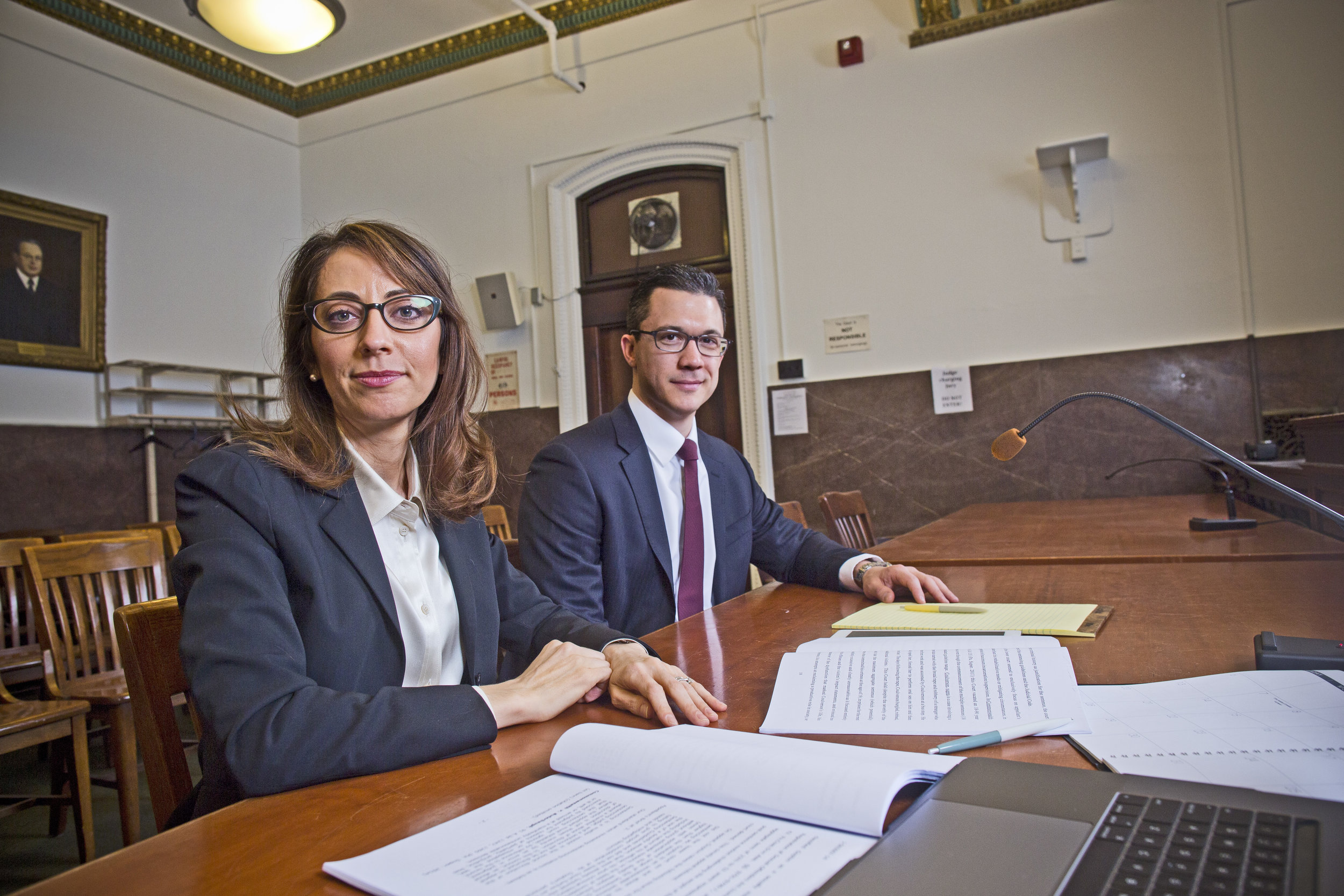
Philadelphia Marijuana Lawyers
If you are facing criminal charges for drugs, guns, or other contraband, our Philadelphia criminal defense lawyers can help. We have won countless motions to suppress in the Philadelphia Municipal Court, Court of Common Pleas, and in the surrounding counties. Call 267-225-2545 for a free criminal defense strategy session.

PA Superior Court: Insufficient Evidence of Escape Where Police Arrested Defendant, Took Him to Hospital, Removed Handcuffs, and Left
Pennsylvania Case Law Update - Escape Charges Require Evidence of "Official Detention"
The Pennsylvania Superior Court has just reaffirmed that a conviction for escape cannot be upheld under Pennsylvania law without evidence that the defendant was subject to official detention at the time that the defendant walked out. In Commonwealth v. Treece, the court found that a defendant could not have committed the crime of escape where he was arrested, taken to the hospital, and then left uncuffed and unguarded at the hospital for over an hour before walking out and returning to work.
THE ESCAPE ALLEGATIONS
Defendant Treece violated a Protection From Abuse order. He was taken to the police station, and while there, he indicated to the arresting officers that he felt sick. The police called paramedics, and paramedics took Treece to the hospital. During transport, Treece was cuffed to the gurney. However, once he was admitted to the hospital, it became clear that Treece was going to be there for a while. The police removed the handcuffs and left. Shockingly, Treece quickly recovered from his illness and walked out of the hospital. Police later arrested Treece and charged him with escape for leaving the hospital. The jury convicted him, and he was sentenced to 11.5 – 23 months of incarceration in the county jail.
APPEAL TO THE SUPERIOR COURT
Treece appealed his conviction for escape to the Superior Court, arguing that the Commonwealth introduced insufficient evidence at trial to sustain a conviction because he was no longer in official detention as required by the escape statute once the police officers uncuffed him and left. As the Superior Court noted, the crime of escape occurs when someone “unlawfully removes himself from official detention or fails to return to official detention following temporary leave granted for a specific purpose or limited period.” The escape statute further defines official detention as:
arrest, detention in any facility for custody of persons under charge or conviction of crime or alleged or found to be delinquent, detention for extradition or deportation, or any other detention for law enforcement purposes; but the phrase does not include supervision of probation or parole, or constraint incidental to release on bail.
The Superior Court quickly noted that once police took Treece to the hospital, he was no longer in a facility for custody of persons. Because police removed the handcuffs and left, he was also no longer in police custody. Therefore, the only remaining issue was whether he was subject to “any other detention for law enforcement purposes.” A person is subject to detention for law enforcement purposes when a reasonable person, considering the totality of the circumstances, would not believe themselves free to leave. This is the same as the standard for whether an encounter with the police rises to the level of a Terry stop.
INSUFFICIENT EVIDENCE OF OFFICIAL DETENTION
Here, the Superior Court concluded that Treece was not subject to detention for law enforcement purposes. The police had removed the handcuffs and left over an hour before he left the hospital. Further, it is not uncommon in the suburban counties for a defendant to be arrested, given paperwork, and released prior to preliminary arraignment. The court also noted that when hospital employees called the police and told them what had happened, the police did not immediately obtain a warrant or take any other action to retrieve Treece. Likewise, none of the police officers told Treece he could not leave the hospital.
Therefore, the Court found that a reasonable person in Treece’s position would have believed that he was free to leave. Of course, Treece was in official detention while handcuffed and guarded by the police officers. But once they left and did not return for more than an hour, the official detention ended, and Treece could not commit the crime of escape. Accordingly, the Superior Court reversed Treece’s conviction for escape due to the Commonwealth’s failure to introduce sufficient evidence at trial that Treece was subject to an “official detention.”

Our Philadelphia Criminal Defense Lawyers Can Help You Fight Escape Charges
Treece illustrates that criminal statutes are more complicated than they may seem. In many cases, criminal statutes define ordinary, common terms such as escape or official detention in specific ways which may vary from their normal usage. Under Pennsylvania law, escape has a very specific detention which requires a showing of official detention. Although prosecutors and many people likely had a gut feeling that Treece had done something wrong by leaving, every criminal statute requires the government to prove specific statutory elements in order to obtain a conviction. Therefore, it is absolutely critical that you retain an experienced criminal defense lawyer if you are facing criminal charges. There may very well be defenses of which you are unaware. If you are facing charges in Pennsylvania or New Jersey, call 267-225-2545 for a free criminal defense strategy session with one of our Philadelphia criminal defense lawyers.

What is Possessing an Instrument of a Crime?
We just updated our section on misdemeanor crimes in Pennsylvania and the Philadelphia Municipal Court to include a discussion of Possessing Instruments of Crime charges. Possessing Instruments of Crime is a particularly common charge in the Philadelphia Municipal Court. Prosecutors often bring this charge whenever the defendant possesses some type of object during the commission of a crime. However, there may be defenses to a PIC charge. Click here to learn more.

CASE RESULTS – Successful Post-Conviction Relief Act Petition Vacates 30 Year Prison Sentence
Successful Results in PCRA, Aggravated Assault, Burglary, and Theft Cases
Philadelphia Criminal Defense Lawyers Zak T. Goldstein and Demetra Mehta continue to find success in the courtroom. In the last month, our criminal lawyers have obtained successful results in PCRA Petitions and cases involving assault, burglary, drug, and theft charges. If you are facing criminal charges, call 267-225-2545 for a free criminal defense strategy session with one of our defense lawyers.
Commonwealth v. ZS – Attorney Goldstein recently obtained a new sentencing hearing for a defendant who had been sentenced to 15-30 years in jail for a direct violation of probation. The defendant was on probation for selling drugs when he was arrested and ultimately convicted of robbery. After receiving a sentence of up to 20 years for the robbery case, the probation judge sentenced the defendant to 15-30 years consecutive to the sentence for the robbery charges. This led to an overall sentence which could have kept the defendant in jail for up to 50 years despite his young age at the time of the conviction for the direct violation.
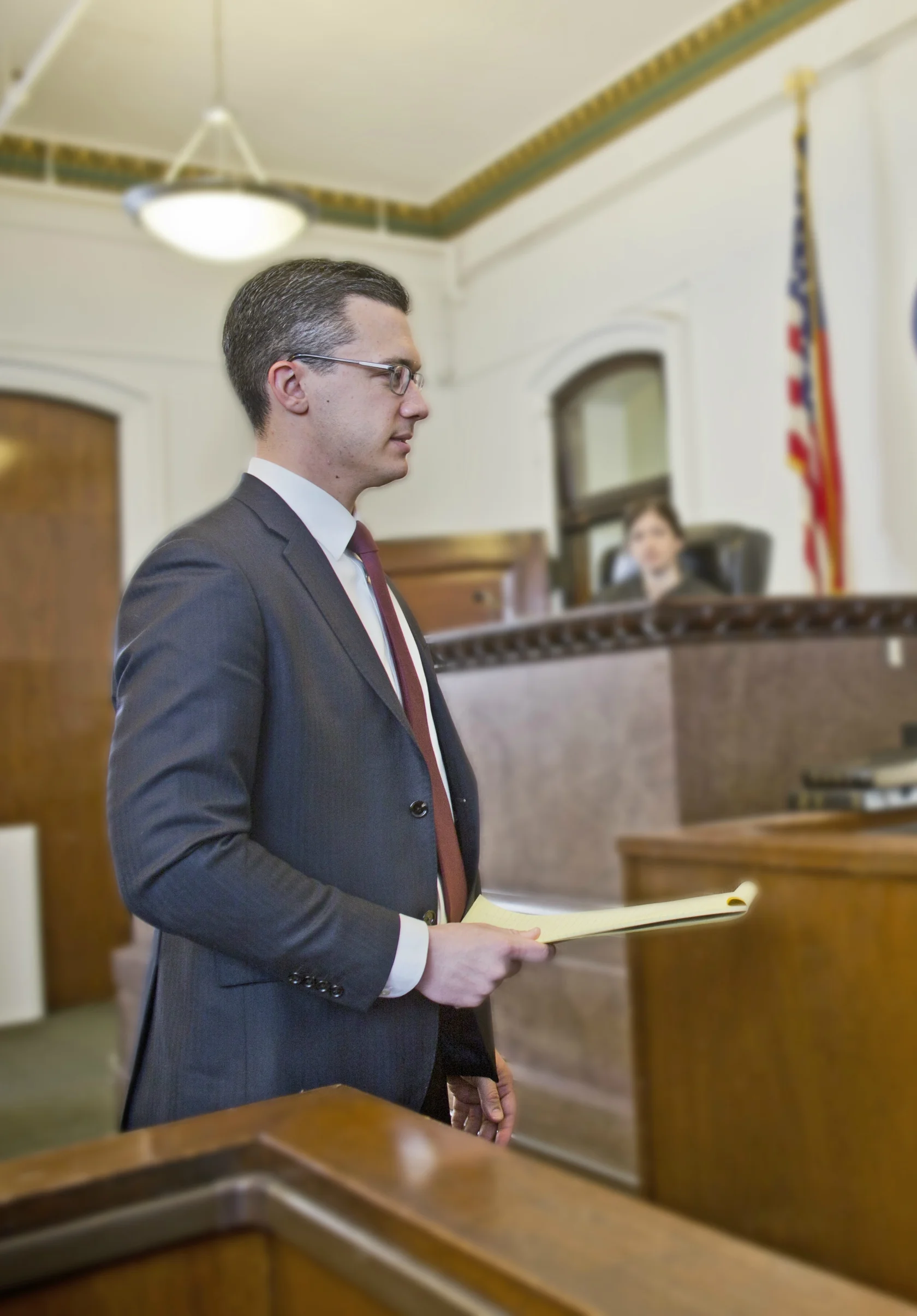
Philadelphia PCRA Lawyer Zak T. Goldstein, Esq.
After reviewing the transcripts from the violation of probation hearing, Attorney Goldstein quickly recognized that significant legal errors had occurred during the probation sentencing to which the original lawyer should have objected. Mr. Goldstein filed a Post-Conviction Relief Act Petition amending the defendant’s initial pro se filings and arguing that the defendant should receive a new probation violation sentencing because defense counsel had been ineffective at the original hearing. Criminal defendants have a constitutional right to the effective assistance of counsel under both the Pennsylvania and United States constitutions, and an ineffective performance by counsel at the trial, appeal, or probation levels can lead to a new trial, appeal, sentencing, or probation hearing. In this case, defense counsel at the original violation hearing failed to object when the probation judge found on the record that the defendant’s expressions of remorse were hollow solely because the defendant refused to waive his right to an in-person probation violation hearing and allow the hearing to be conducted by video from the state prison. Further, defense counsel failed to file a motion to reconsider the sentence or appeal the excessive sentence. Attorney Goldstein argued that defendants have a constitutional right to be present for important hearings in their cases, and courts may not legally punish defendants for exercising those rights. Further, when courts rely on illegal sentencing factors such as the decision to exercise a constitutional right, the defendant is entitled to a new sentencing hearing.
The Commonwealth filed a Motion to Dismiss the PCRA Petition, arguing both that the Petition was untimely because Petitioner did not formally title his pro se petition as a PCRA Petition and that original counsel was not required to object or litigate the issues on appeal in order to be effective. The Court agreed with Attorney Goldstein, denied the prosecution’s Motion to Dismiss, and granted the PCRA Petition. The court ordered that the defendant receive a new sentencing hearing which, due to the passage of time since the original sentence, will occur in front of a different judge from the one who placed the defendant on probation. Although the outcome of the new sentencing is far from guaranteed, the defense will have the opportunity to argue for something less than the original 15-30 year consecutive sentence.
Commonwealth v. JB – JB was charged with a domestic violence Aggravated Assault for choking his girlfriend. Aggravated Assault is one of the most serious felonies that a defendant can face in Pennsylvania, and if JB had been convicted of Aggravated Assault, he would have almost certainly been facing jail time. Our attorneys were able to negotiate a plea to Simple Assault as a misdemeanor of the second degree for one year of probation. JB will not become a felon as a result of this case, and he is no longer facing a significant jail sentence.
Commonwealth v. RD – Burglary and Assault Charges dismissed at preliminary hearing.
Commonwealth v. DM – Our attorneys obtained entry into a diversionary program for a client who was charged with underage drinking. If the client completes a class and pays a small fine, the arrest will be expunged and the client will not lose their driver’s license.
Commonwealth v. DB – The client was charged with Aggravated Assault and DUI for nearly running over an acquaintance. Aggravated Assault is a serious felony which often results in jail time. Despite the fact that much of the incident was captured on surveillance video, our attorneys were able to negotiate a deal for simple assault and DUI with no jail time. Instead of facing jail time and a felony conviction, the defendant will spend five days on house arrest and six months on probation and be able to apply for an ignition interlock driver’s license when the new interlock law goes into effect in August.
Commonwealth v. BR – Our attorneys negotiated a fully mitigated sentence of 1.5 – 3 years in jail for a defendant who had pleaded guilty to committing the F1 Robbery and F1 Aggravated Assault of an off duty police officer while on probation.
Commonwealth v. JR – Attorney Goldstein obtained a probationary sentence with drug treatment for a defendant who entered into an open guilty plea to selling drugs while police watched. Although the Pennsylvania sentencing guidelines called for a state prison sentence, Attorney Goldstein convinced the sentencing judge that the defendant should be given a chance at treatment and job training instead of jail time.
Commonwealth v. JB – Obtained a dismissal of Unauthorized Use of Automobile charges prior to trial.
Commonwealth v. WB – Obtained a dismissal of F2 Aggravated Assault charges prior to trial.
Commonwealth v. TR – Defendant was charged with burglary. Attorney Goldstein obtained a dismissal of the burglary charges at the preliminary hearing.
Commonwealth v. IR –The defendant was charged with Theft by Unlawful Taking and Receiving Stolen Property as felonies of the third degree after police arrested him and alleged that he had been the passenger in a stolen car. Attorney Goldstein obtained a full dismissal of the charges following the preliminary hearing. Attorney Goldstein argued that the defendant had not been identified as the driver of the vehicle or done anything else incriminating like running or making any inculpatory statements. Likewise, there was nothing about the car which would indicate to anyone inside of it that it had been stolen. Accordingly, the evidence was insufficient to show that the client knew or should have known that the car was stolen or that the client was the one who stole or ever possessed the car.