

Philadelphia Criminal Defense Blog
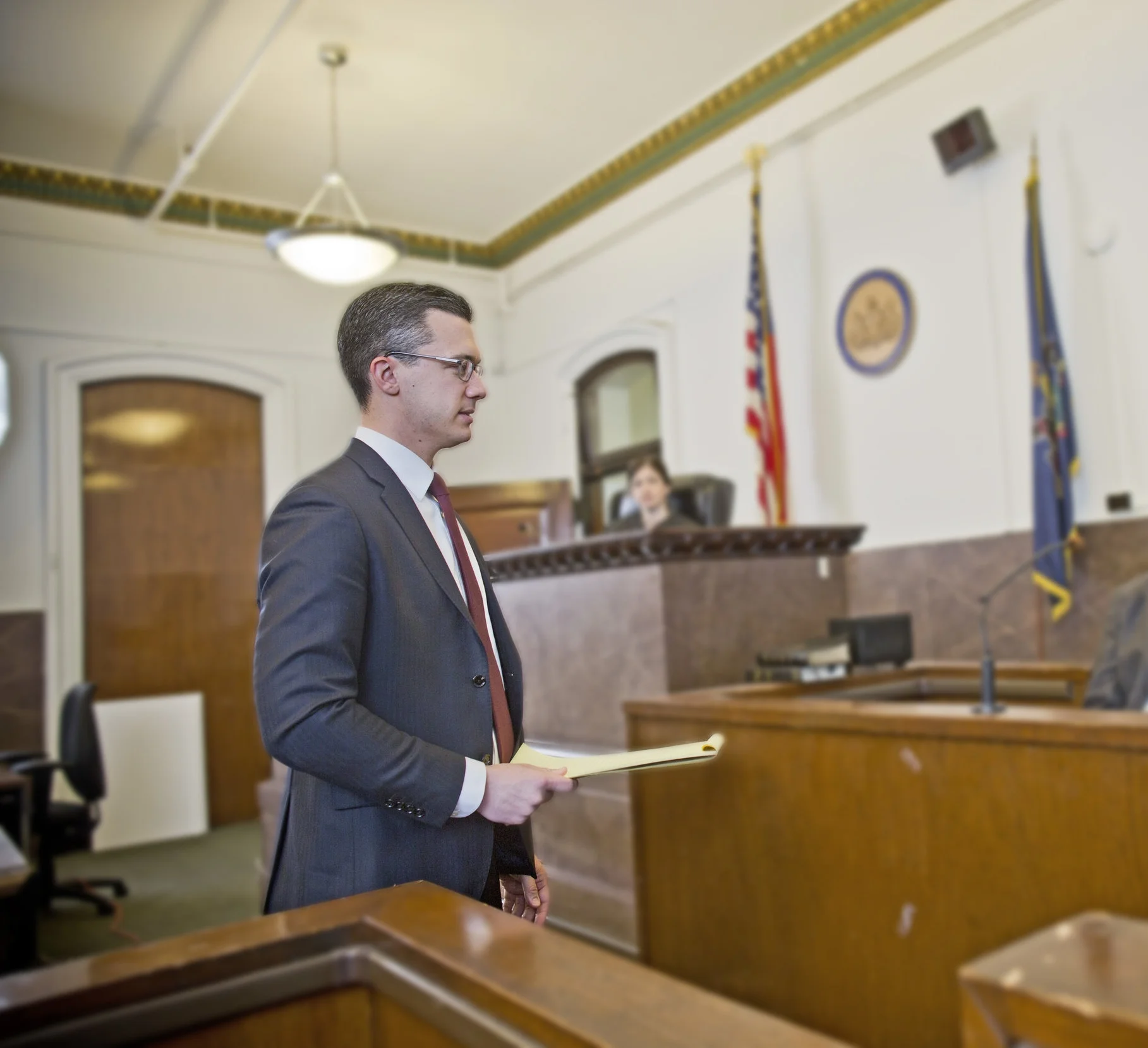
Novel Arguments Lead to Dismissal of Felony Theft Charge
The Philadelphia criminal defense lawyers of Goldstein Mehta LLC continue to obtain successful results in the courtroom. In Commonwealth v. D., attorney Zak Goldstein recently obtained the dismissal of all charges against the defendant in a case of felony theft and receiving stolen property. Attorney Goldstein obtained this result by filing pre-trial motions to ensure that the Commonwealth could not lower its burden of proof below the standard of beyond a reasonable doubt and arguing that the Commonwealth had already improperly used a civil statute in a criminal case at the preliminary hearing.
Theft of Money in a Joint Bank Account
Client D., a licensed professional with no prior record, was charged in state court with Theft by Unlawful Taking and Receiving Stolen Property as felonies of the third degree for withdrawing money from a bank account which was held jointly with her ex-husband. D. and the complainant had been married for nearly twenty years, and at some point during the marriage, the complainant opened a bank account which was used as the family account throughout the marriage. Both spouses deposited their paychecks into the account, and at some point prior to the divorce, the complainant officially added D.’s name to the account. D.’s name was placed on the checks, her money would be regularly deposited into the account, and she used the account just as the complainant did.
Ultimately, D. and the complainant got divorced. They sold the marital home, and half of the proceeds were deposited in the account. After the sale and the deposit, the parties executed a property settlement agreement and got divorced. The property settlement agreement did not specify what would happen to money held in joint bank accounts, but it did state that money held in individual accounts would belong to the individual on the account. The complainant continued to use the account as his own, but he did not take D.’s name off of the account itself, instruct her to stop using it, or try to close the account. He did remove D.’s name from the checks that he used, and D. did not use the account for approximately two years.
Approximately two years after the divorce, the Commonwealth charged D. with theft and receiving stolen property for allegedly withdrawing funds from the account. The complainant filed a report with the local police department, and when the Detective investigated, D. allegedly told the detective that her name was on the account, she had taken the money, and she had the right to do so. Despite the fact that her name was still on the account, the Detective ultimately charged D. with felony Theft by Unlawful Taking and Receiving Stolen Property.
The Multiple Party Account Statute
Fortunately, D. retained Attorney Zak Goldstein of Goldstein Mehta LLC. At the preliminary hearing, the Commonwealth convinced the Magisterial District Justice to hold the case for court and send the case to trial in the Court of Common Pleas. The Commonwealth argued that the complainant was the one who had deposited the money in the account, and the money that was withdrawn was the complainant’s share of the proceeds from the house sale. The Commonwealth further argued that in finding that the money belonged to the complainant, the Magisterial District Justice should rely on Pennsylvania’s joint checking account statute (“The Multiple Party Account Statute”). The statute, which is codified at 20 Pa.C.S. § 6303, states that “A joint account belongs, during the lifetime of all parties, to the parties in proportion to the net contributions by each to the sum on deposit, unless there is clear and convincing evidence of a different intent.” The Commonwealth could not point to an appellate case in which the statute had been used in a Pennsylvania criminal prosecution, but the Magisterial District Justice allowed the case to proceed.
Petition for Writ of Habeas Corpus
Immediately after the preliminary hearing, Attorney Goldstein filed a Petition for Writ of Habeas Corpus, commonly called a Motion to Quash in Philadelphia, asking the Court of Common Pleas judge to reverse the decision of the Magisterial District Justice and dismiss the charges because the Commonwealth failed to show that the defendant had committed a crime. Attorney Goldstein’s Petition first argued that the Commonwealth failed to show that the money actually belonged to the complainant because the settlement agreement did not address joint bank accounts, the complainant did not remove the defendant from the account, and the settlement agreement was reached after the money had already been placed in the account.
Second, Attorney Goldstein argued that the preliminary hearing evidence was insufficient because the Theft and Receiving Stolen Property statutes require that the defendant have acted with guilty knowledge. In other words, the defendant must know that the money belonged to someone else. Given that D. allegedly withdrew the money in person at the bank using her own identification and freely told the Detective that she did it because it was her money, there was no evidence presented at the preliminary hearing that D. had the necessary guilty knowledge.
Finally, Attorney Goldstein argued a novel issue of first impression: namely, whether the Joint Checking Account statute could constitutionally be applied in a criminal prosecution. The Pennsylvania and Federal Constitutions both require that any defendant be convicted beyond a reasonable doubt and that the Commonwealth bears the burden of proving the defendant’s guilty beyond a reasonable doubt. Because the Joint Checking Account statute creates a presumption that the money deposited in a joint checking account belongs to the person who deposited it and shifts the burden to the defendant to prove otherwise by clear and convincing evidence, it unconstitutionally shifts the burden of proof from the prosecution to the defendant and lowers the standard of proof from beyond a reasonable doubt to clear and convincing evidence.
Following the filing of the motion to dismiss, the Commonwealth made an excellent offer to the defendant which would have resulted in the dismissal of charges in exchange for restitution and paying the money back. Despite the guarantee that the charges would be dismissed, D. rejected the offer and relied upon Attorney Goldstein to win the case and prove her innocence.
The Court heard oral argument from the Commonwealth and defense and took some additional testimony at a hearing on the motion. Ultimately, the Court of Common Pleas thoroughly rejected the Commonwealth’s arguments and dismissed the entire case against D. The Court concluded that the Commonwealth had failed to show that the money belonged to the complainant at the preliminary hearing, and therefore the Magisterial District Justice erred in holding the case for court. Due to Attorney Goldstein’s creative and persuasive arguments, D. will now be eligible for an expungement of the arrest and no longer faces the risk of jail time and a conviction on career-destroying felony Theft and Receiving Stolen Property charges. Although it had the option to do so, the Commonwealth did not appeal.
How Our Theft Lawyers Can Help in Complex Criminal Cases
If you are facing criminal charges, the Philadelphia criminal defense attorneys of Goldstein Mehta LLC will fight for you. Our defense lawyers thrive in situations in which the stakes are the highest, and we excel in developing the strongest possible defenses for our clients. We do not blink just because the Commonwealth makes a good offer, and we will fight to prove your innocence both in comprehensive, written briefs and in argument in the court room. Properly representing the defendant in a criminal case often involves far more than just claiming that the defendant didn't do it. In many cases, there are strong legal defenses to the charges and it is not necessary to contest the prosecution's version of the facts. Our criminal defense lawyers will thoroughly evaluate your case, present you with all of your options, and advise you about which may be the most likely to work for you. We can help with all types of criminal charges in Pennsylvania and New Jersey. Call 267-225-2545 for a free 15-minute criminal defense strategy session.

Zak T. Goldstein, Esq. - Theft Lawyer in Philadelphia

The police want to ask me some questions. Should I talk to the police?
“No person shall be held to answer for a capital, or otherwise infamous crime, unless on a presentment or indictment of a Grand Jury, except in cases arising in the land or naval forces, or in the Militia, when in actual service in time of War or public danger; nor shall any person be subject for the same offence to be twice put in jeopardy of life or limb; nor shall be compelled in any criminal case to be a witness against himself, nor be deprived of life, liberty, or property, without due process of law; nor shall private property be taken for public use, without just compensation.”

Do I have to talk to the police?
One of the most common questions I receive as a criminal defense lawyer is whether or not you should talk to the police. Almost every day I get a phone call from someone who just found out that the police are looking for them or want to ask them questions, and they want to know what to do. Many people think they either have to go give a statement or that they will help themselves by giving a statement. That is almost always the wrong answer. I have defended thousands of cases, and I can probably count on one hand the number of times that a client has helped themselves by giving a statement.
When I get this question, my advice is almost always the same: if the police are looking for you or want to talk to you, you should consult with an experienced criminal defense attorney before you talk to the officer. Only a criminal defense lawyer can evaluate your circumstances and help you avoid doing something to make the situation worse. The consequences of a criminal arrest and conviction can be life-changing. Given the overwhelming power of the government and almost unlimited resources of the police and prosecutor, there is very little room for error when dealing with a potential criminal prosecution. I have represented countless clients who would not have even been arrested had they not made an incriminating statement under the belief that it would help their situation. Many people think that they will be able to talk themselves out of trouble or that the police officer will understand. That is almost never the case. Therefore, I always advise anyone who asks that they should talk to a criminal defense lawyer first.

Why are the police looking for me?
If you are a potential suspect in a crime, there are generally two reasons why the police may be looking for you and would come to your house or call you on the phone. First, it is possible that the officer has already obtained a warrant for your arrest. Second, the officer may still be investigating the case and would like to interview you in order to obtain potentially incriminating evidence. It does not matter in which case you find yourself. If the police want to talk to you, you need to speak with a criminal defense lawyer before you agree to an interview with a police officer. This is true even if you believe that you have not done anything illegal.
In the first situation, if the police have a warrant for your arrest, they may come to your house or call your family members in order to find you and execute the arrest warrant. If they are having trouble finding you or you are not home when they come out to the house, the officers often may not reveal that they have already obtained a warrant for fear that you will take off or attempt to destroy evidence before they can find you. In many cases, you or your family will simply be told that they want you to come down to the station to answer some questions and clear things up. However, this does not mean that they have not already obtained an arrest warrant. For this reason, you should always consult with an attorney before agreeing to give any kind of statement. An attorney will often be able to verify that the police have obtained a warrant and arrange for you to turn yourself in so that there are no dangerous incidents with the police. Most importantly, once the police know that you have retained an attorney for that particular matter, they cannot question you and attempt to elicit incriminating statements. In many cases, an unhelpful statement is the difference between going to jail and avoiding prosecution altogether.
Should I talk to the police without a lawyer?
For this reason, if the police have a warrant or are looking for you, you should not make any statements because those statements will be used against you in court. Instead, you should contact an attorney who can verify that a warrant exists and make arrangements for you to turn yourself in. In addition to making sure that the police do not attempt to interrogate you, there are other significant benefits to retaining counsel and turning yourself in.
Do I need a lawyer for preliminary arraignment?
When you retain a criminal lawyer and turn yourself in, the magistrate is likely to set bail at a lower amount a the preliminary arraignment because the fact that you retained counsel and voluntarily turned yourself in shows that you are not a flight risk and are prepared to answer to the charges. On the other hand, if you fail to turn yourself in, the prosecutor may argue that you are a flight risk and seek higher bail. At trial, the prosecutor may ask for a flight instruction in which the judge will tell the jury that flight could be construed by the members of the jury as consciousness of guilt. Therefore, if you believe that you are under investigation or learn that the police have obtained a warrant, you should always retain an attorney before turning yourself in or giving any kind of statement.
The second situation occurs when the police are still in the investigatory stage of the case. They may view you as a suspect, but they may feel that they do not yet have enough evidence to bring formal criminal charges. Given the fact that there are thousands of state and federal criminal statutes and the fact that many people who face criminal prosecution are actually innocent, it is entirely possible for you to be a suspect in a crime and fully believe that you have not done anything wrong. Given the number of criminal statutes, it is easily possible to violate a criminal law without even knowing that the law existed. Even in cases where you believe you have not committed a crime, it is best to consult with an attorney first in order to avoid any misunderstandings or saying anything that could implicate you in the crime.
Do I need an attorney if I have not been charged yet?
If the investigation is still ongoing, it is possible that the police could view you as a suspect when you are only a witness, and an attorney may be able to take proactive steps to clear up any misunderstandings before it is too late and the police file charges. Likewise, you may not know what information the police already have, and you could say something incriminating due to faulty memory, embarrassment, or by contradicting other solid evidence that they have by accident. Even if you tell the complete truth, it is entirely possible for the officer to make an error in typing up the statement or misunderstand what is said, and that error could be used against you at a later date. Criminal investigations and charges are extremely serious, and the stakes are too high to simply give a statement without the advice of counsel.
The most important thing to remember is that if the police have enough evidence to charge you, you are never going to talk yourself out of it. The most you can say is that you did not do it, and they are not likely to believe you. If they do not have enough evidence to charge you, then you do not want to help them collect that evidence by giving an incriminating statement. If you have indisputable proof of an alibi, then your attorney can turn that over without you having to make a statement. Further, if the police really want to talk to you, a criminal defense lawyer may be able to help you obtain something valuable in exchange such as immunity for cooperation or a reduced charge or sentence in exchange for the statement. An attorney will be able to get a promise in writing and it will be binding, whereas promises the police make to you are not necessarily enforceable in court. Likewise, your attorney may be able to arrange for an off-the-record proffer session in which the statement cannot be used against you as substantive in court unless you later testify to something different at trial.
Due to recent decisions of the United States Supreme Court, simply remaining silent is not always the best way to protect your rights. You should always assert that you would like to speak with an attorney before being questioned. It is always best to consult with a criminal defense attorney so that you can protect your constitutional rights before having any interaction with law enforcement. It is easy to accidentally waive important rights, and once they are waived, it is not always possible to undo the damage.
A PHILADELPHIA DEFENSE LAWYER CAN HELP

If the police are looking for you or you may be the subject of a criminal investigation, you need to speak with one of our criminal defense lawyers. We can help advise you on whether it makes sense to give a statement or whether you should assert your Fifth Amendment rights. In most cases, you will be better off remaining silent. In every case, you should invoke your right to remain silent until you have spoken with one of our criminal defense attorneys. Call 267-225-2545 today for a complimentary 15-minute criminal defense strategy session.
CONTACT A CRIMINAL DEFENSE ATTORNEY IN PHILADELPHIA TODAY
Zak Goldstein Recognized Among Top 10 Criminal Defense Attorneys under 40 in Pennsylvania
Philadelphia Criminal Defense Lawyer Zak T. Goldstein has just been recognized by the National Academy of Criminal Defense Attorneys as one of the top 10 criminal defense attorneys under 40 in the state of Pennsylvania. We greatly appreciate the recognition and will continue to fight hard for our clients' rights every day in and out of the courtroom. Learn more about the ranking system here.

How does bail work? What is a Preliminary Arraignment?
I just got arrested. How does bail work?
Most criminal cases begin with an arrest. Occasionally, in the suburban counties, they may begin with a summons to appear before the Magisterial District Justice. The first court hearing in a criminal case is called the preliminary arraignment. The preliminary arraignment is a hearing in which the magistrate or bail commissioner informs the defendant of the charges and sets bail.
Preliminary Arraignment
Following an arrest, the police will process the defendant and schedule the preliminary arraignment at which bail will be set. The amount of time between arrest and preliminary arraignment can vary depending on the location of the arrest. In Philadelphia, it typically takes between 12-24 hours before the defendant will be brought before the bail commissioner by video for preliminary arraignment. In the suburban counties, the police will typically take the defendant to preliminary arraignment before a Magisterial District Justice much more quickly if the District Justice’s office is open. If the office is closed, the defendant could have to wait at the county prison until the next business day.
The Affidavit of Probable Cause
The preliminary arraignment is the first court hearing in a criminal case. At the preliminary arraignment, the magistrate will inform the defendant of the charges against him or her, determine if the defendant needs a public defender or intends to retain a private lawyer, set bail, and schedule the case for a preliminary hearing. The court will also usually provide private defense counsel or the public defender with a copy of the Affidavit of Probable Cause. The Affidavit of Probable Cause usually contains a summary of the case against the defendant. If the accused turned themselves in after learning of an arrest warrant, it is often possible for the accused to retain a criminal defense attorney and have the lawyer present for the preliminary arraignment to argue for lower or unsecured bail.
Pennsylvania Uses a Cash Bail System
For the accused, the most important part of this hearing is usually the setting of bail. Pennsylvania operates on a cash bail system. The idea behind cash bail is that if the defendant or the defendant’s family must post some sort of collateral in exchange for release, it makes it more likely that the defendant will return to court to face the charges. Unfortunately, this has the practical effect of ensuring that the ability to obtain pre-trial release depends primarily on how wealthy the defendant is. Wealthy defendants may be able to make bail on extremely serious charges, while poor or indigent defendants may spend months or years in jail awaiting trial on low-level drug charges because they cannot post bail.
When the magistrate sets bail, the magistrate will typically evaluate the seriousness of the offense charged and the likelihood that the defendant will show up for court. Serious charges, especially charges involving firearms and violent crimes, are more likely to result in a higher bail. Likewise, a defendant with a history of failing to appear for court or with a number of serious criminal convictions is more likely to receive a higher bail.
How A Philadelphia Criminal Defense Attorney Can Help
It is extremely important that you speak with an attorney before you turn yourself in. The presence of a criminal defense lawyer at the preliminary arraignment can often result in much lower bail because the defense attorney is likely to have more information about the defendant’s background which could help in convincing the magistrate to set a low bail amount. Further, the fact that the defendant has retained an attorney may suggest to the court that the defendant does not intend to flee the jurisdiction. Instead, the defendant has retained a defense lawyer and is prepared to defend against the charges.
How much of the bail do I have to pay to get out?
In most cases, the defendant must post 10% of the bail amount and a small administrative fee in order to be released. Due to recent changes in the law, bail bondsmen are now allowed to operate in Philadelphia. However, they are required to post high collateral amounts with the courts, and so only a handful of bail bondsmen have begun operating in the city. Most of the time, the defendant’s friends or family pay 10% of the bail amount directly to the court in exchange for the defendant’s release. A bail bondsman operates by taking less than 10% in exchange for posting the bail bond, but the bail bondsman does not return the money at the end of the case. If the defendant cannot make bail or has any open warrants or probation detainers, then the defendant will remain in custody at the county prison until the case is over or the bail is reduced and the defendant is able to pay. Our criminal defense lawyers regularly handle motions to reduce bail and are often able to have the initial bail substantially reduced upon review by a higher ranking judge.
Will I get the bail money back?
In Philadelphia, the surety will receive most of the money back thirty days from the date on which the case is finished. When the case is over, the surety (the person who posted the bail) will receive at least 70% of the posted money back. The city will keep 30% of the amount paid or $1,500, whichever amount is less. This means that the city will not keep more than $1,500 even if the bail was very high. In the suburban counties, it is more common to use a bail bondsman, and each bail bondsman may charge a different rate. The counties also vary in the percentage of bail that they keep in cases in which the defendant posts bail directly to the court without the use of a bail bondsman. Once bail has been paid, the defendant will be released pending trial with a subpoena to appear for the next court date, which will typically be a preliminary hearing.
What if I cannot make bail? WHAT IS A BAIL MOTION?
If you cannot make the bail set by the magistrate at preliminary arraignment, then it may be possible to have the bail reduced by filing a bail motion. Each preliminary hearing listing provides an opportunity to make a bail motion asking the magistrate or Municipal Court judge to reduce the defendant's bail. If the magistrate or Municipal Court judge refuse to reduce bail, it may be possible to file a written bail motion in the Court of Common Pleas and have the bail decision reviewed by a higher ranking judge. Additionally, once the defendant has been held for six months without a trial, the Rules of Criminal Procedure provide that bail should be reduced to nominal bail, meaning the defendant ordinarily should be released. There are, of course, exceptions to this rule, and in some cases, the judge may impose a house arrest condition. Additionally, if the delay in bringing the defendant to trial is due to defense continuance requests, then the time will not count towards the six month limit.
We Can Help With Bail Hearings, BAIL MOTIONS, and Preliminary Arraignments

The initial bail hearing is one of the most important hearings in any criminal case. If bail is set at an amount that the defendant cannot afford, then the defendant will be remanded to custody pending the resolution of charges. Defendants who are in custody while awaiting trial are at a significant disadvantage because it is more difficult to meet with attorneys, locate witnesses, and prepare for trial. Likewise, the defendant could lose his or her job while in prison. Therefore, if you learn that you are wanted for criminal charges or receive a summons from a detective, it is critical that you retain a criminal defense lawyer prior to turning yourself in and having bail set. Call 267-225-2545 to speak with one of our Philadelphia criminal lawyers today.