

Philadelphia Criminal Defense Blog
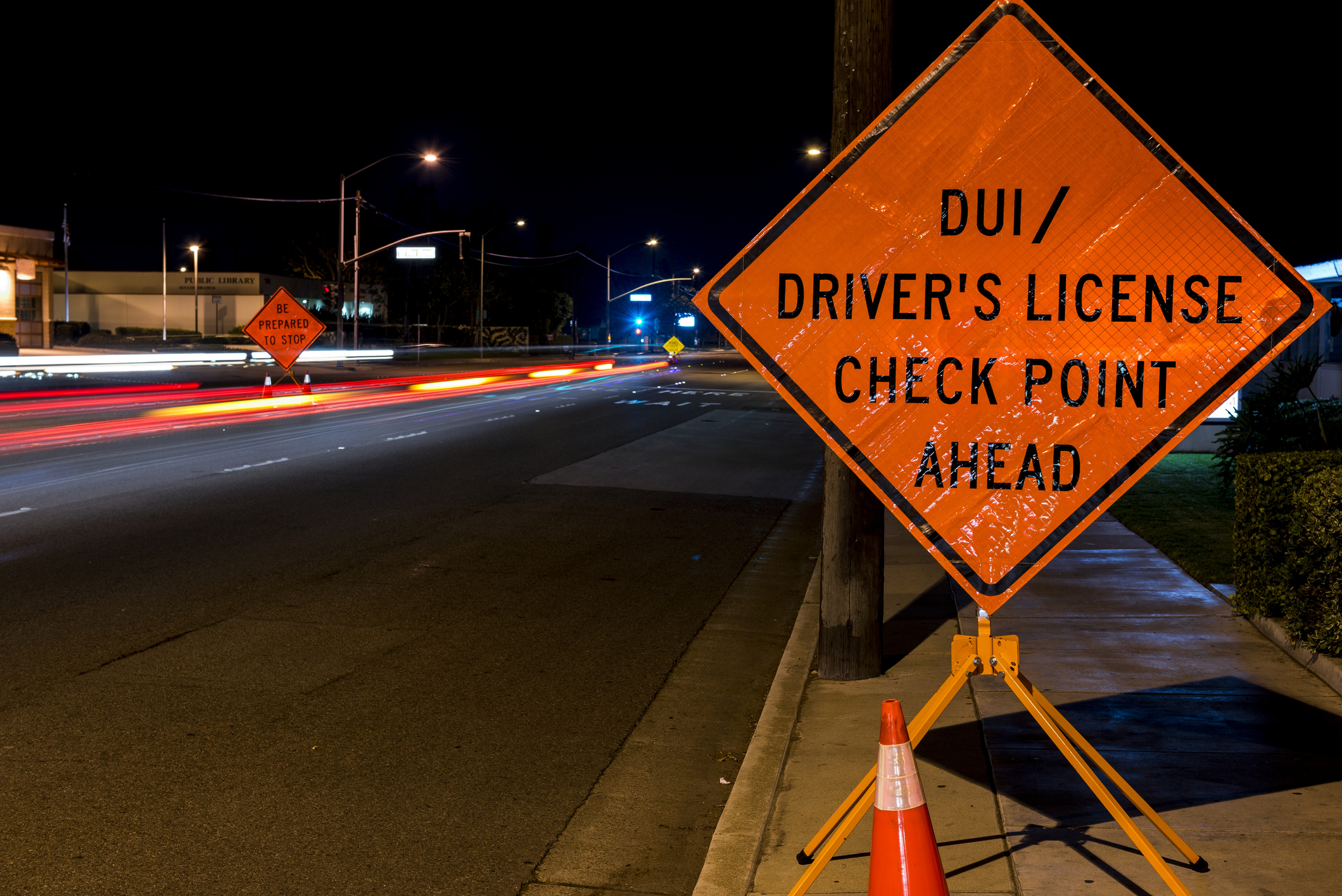
PA Supreme Court: Philadelphia Police May Not Ignore Search Warrant Requirement for DUI Blood Draw Just Because There Has Been an Accident

Zak Goldstein - Philadelphia Criminal Defense Lawyer
The Pennsylvania Supreme Court has decided the case of Commonwealth v. Trahey, finding that the Philadelphia Police Department may not rely on the exigent circumstances exception to the search warrant requirement for a DUI-related blood draw just because there has been a fatal automobile accident. The Court reversed the Superior Court’s holding and ruled that the police must obtain a search warrant where a suspect refuses to consent to a blood draw. The police may not simply claim that they did not have time to do so in every case.
The Facts of Trahey
In Trahey, the defendant was charged with homicide by vehicle while DUI. Prosecutors alleged that on September 4, 2015, the Friday before Labor Day, 911 dispatchers received a call that a motorist had hit a bicyclist with a pickup truck in Philadelphia. The accident was reported at 9:15 pm, but Philadelphia Police officers did not arrive on the scene until 10:01 pm because the department places a low priority on responding to motor vehicle accidents.
When the officers arrived, the bicyclist had already been transported to the hospital, and he died shortly thereafter. Bystanders told the officers that the defendant had been driving the pickup truck. The officers spoke with the driver and smelled an odor of alcohol. They also observed that his speech was slow and steady, his eyes were glassy, and his gait was unsteady. Therefore, they arrested him for driving under the influence.
The officers spent about half an hour at the scene before they left for the Police Detention Unit with the defendant. On the way to the PDU, they were called back to the scene by Accident Investigation Division Officers. One of the AID officers observed that the defendant appeared to be intoxicated and became concerned that more than an hour had already passed since the accident. The officer then sent the defendant to the PDU for a blood test. The officers were concerned about the timing because PA law makes it difficult for prosecutors to pursue DUI cases where the testing does not occur within two hours of the defendant last operating a motor vehicle.
The defendant arrived at the PDU and was questioned by a different AID officer. That officer decided to conduct a blood test instead of a breath test. The officer read the defendant warnings which have since been found to be illegal – specifically, that if the defendant refused to consent, he could face enhanced criminal penalties due to his refusal. After receiving these incorrect warnings, the defendant agreed to the blood test, and a nurse drew his blood at 11:20 pm.
The Motion to Suppress
Prosecutors charged the defendant with DUI, homicide by vehicle while driving under the influence, homicide by vehicle, and involuntary manslaughter. The defendant moved to suppress the results of the blood draw, arguing that the police violated his rights by telling him that if he did not consent, he would face enhanced criminal penalties due to the refusal. In the recent case of Birchfield v. North Dakota, the United States Supreme Court held that states could not criminalize the refusal to submit to a warrantless blood draw because a blood draw is a significant search.
The trial court held a hearing on the motion at which the various officers testified as to what happened. The Commonwealth argued both that the defendant voluntarily consented to the blood draw and that exigent circumstances existed which relieved the police of the duty to get a search warrant should the court find that the defendant did not actually consent.
The trial court rejected the Commonwealth’s argument, finding that the defendant did not voluntarily consent to the blood draw because he was coerced into consenting when the officer incorrectly told him that he would face criminal penalties for the mere act of refusing to consent. Further, the court found that exigent circumstances did not exist because the police could have conducted a breath test or obtained a search warrant and that the Philadelphia Police should create procedures under which they can more efficiently obtain search warrants.
The Commonwealth appealed, and the Superior Court reversed, finding that the evidence should be admissible. The defendant appealed to the Pennsylvania Supreme Court, and the Pennsylvania Supreme Court accepted the case.
The Pennsylvania Supreme Court’s Decision
The Pennsylvania Supreme Court reversed the Superior Court and ordered that the blood results should be suppressed. The Supreme Court relied on a number of recent United States Supreme Court decisions in making its ruling.
First, in Missouri v. McNeely, the United States Supreme Court rejected the government’s argument that the natural dissipation of alcohol in a DUI suspect’s blood always constitutes a per se exigency that obviates the requirement that police obtain a warrant prior to conducting a blood test. The US Supreme Court recognized that technological advances such as cell phones, fax machines, and scanners make it possible for cities and states to set up procedures by which police can quickly obtain a search warrant when necessary. Therefore, a trial court hearing a motion to suppress must look at the specific facts of each case before finding exigent circumstances.
Second, in Birchfield, the US Supreme Court held that states may not make it illegal to refuse a warrantless blood draw. This means that states cannot make it a stand-alone crime to refuse a blood test where the police have not obtained a search warrant. States also may not impose increased penalties for DUI convictions where there was a refusal to consent to a blood draw. States may, however, continue to punish defendants who refuse a blood test or who refuse to consent to a blood draw after the police have obtained a search warrant.
Third, in Mitchell v. Wisconsin, the US Supreme Court held that police may almost always take blood from an unconscious motorist who is suspected of an alcohol-related DUI because of the fact that alcohol dissipates relatively quickly and the suspect cannot be given the chance to consent. Additionally, a breath test is not possible because the suspect is unconscious, and accidents which result in people being unconscious are likely to be serious and require more police resources.
Based on these decisions, the Court ruled that the blood should have been suppressed in this case because the police did not have exigent circumstances for a warrantless blood draw and the defendant had not actually given voluntary consent. The Court found that if the police were worried about alcohol consumption, they could have done a breath test first, evaluated the results, and then decided whether or not to get a warrant for blood. Although exigent circumstances may have existed to do some kind of testing, the police could have quickly done a breath test without any requirement that they get a search warrant. Despite the fact that controlled substances remain in the bloodstream for much longer, they chose to do a blood test instead. If the police wanted to obtain the defendant’s blood, then they were required to either obtain voluntary consent or a search warrant.
Allowing an exception in this case would undermine the US Supreme Court’s decisions and essentially result in a finding that exigent circumstances apply in every single accident case in Philadelphia and that the Philadelphia Police are never required to obtain a search warrant. Therefore, the Supreme Court reinstated the trial court’s ruling which granted the motion to suppress. The Commonwealth will have to proceed in the case without the results of the blood test.
Facing criminal charges in Philadelphia? We can help.

Philadelphia Criminal Defense Lawyers
If you are facing criminal charges or under investigation by the police, we can help. We have successfully defended thousands of clients against criminal charges in courts throughout Pennsylvania and New Jersey. We have successfully obtained full acquittals in cases involving charges such as Conspiracy, Aggravated Assault, Rape, DUI, and Murder. Our award-winning Philadelphia criminal defense lawyers offer a free criminal defense strategy session to any potential client. Call 267-225-2545 to speak with an experienced and understanding defense attorney today.

PA Superior Court: Ordering Driver to Roll Window Down Is A Stop
Philadelphia Criminal Lawyer Zak Goldstein
Can the police make you roll down your car windows?
For years, Pennsylvania appellate courts have had some difficulty in defining the point at which a person is seized by police for Fourth Amendment purposes, finding in some cases that even where police clearly restrict a person’s movement, they may not be stopped. More recently, however, the Supreme and Superior Courts of Pennsylvania have issued a number of important cases which reflect the obvious fact that when the police tell you what to do, you are not free to leave. The Superior Court has now decided the case of Commonwealth v. Powell, holding that when police officers surround a legally parked vehicle and order the driver to roll down his window, the interaction is an investigatory detention (a stop) and not a mere encounter. This is important because in order to win a motion to suppress, a defendant has to show not only that the police acted without reasonable suspicion or probable cause, but also that they actually seized the defendant in some way. Police are free to walk up to any person and initiate a conversation without any level of suspicion. But once they start issuing commands, the situation changes dramatically and police are required to have reasonable suspicion or probable cause.
Commonwealth v. Powell
On April 27, 2018, an Edinboro, PA Police Officer was on duty in an unmarked police car along with a sheriff’s deputy. Both men were in uniform. At approximately 11:37 PM, the officer noticed a truck parked in the small public parking lot of the Lakeside Commons shopping mall. There were no stores open at the time. The truck’s engine was running, and the truck was legally parked. The officer testified that he normally patrols the lot, and in the past he has observed criminal activity in the lot such as drinking, drugs, and lewdness.
The officer testified that he pulled his vehicle directly behind the passenger side of the truck and he did not activate his lights. The officer and the deputy exited their vehicle and approached the defendant’s driver side and passenger side windows respectively. Prior to approaching the vehicle, the officer had not received any complaints about the defendant’s vehicle, nor had he observed any bad driving or suspicious behavior. When the officer and the deputy walked up to the defendant’s windows, the windows were closed. The officer observed the defendant in the truck eating food from Taco Bell, and the officer knew that there was a taco bell nearby.
The officer then ordered the defendant to roll his window down and observed the defendant with glassy eyes and a strong smell of alcohol coming from his person. The officer then asked the defendant for identification. Shortly after this request, the officer asked that the defendant perform sobriety tests. The defendant failed these tests and he was subsequently arrested for DUI.
The defendant then filed a motion to suppress all evidence that was obtained after his illegal detention. At his motion to suppress, the above stated facts were presented, and the trial court agreed that the defendant was illegally detained and consequently granted his motion. Specifically, the court found that no reasonable person would have believed that he was free to leave the encounter with the police. The Commonwealth then filed a timely interlocutory appeal. On appeal, the Commonwealth argued that the interaction between the defendant and the officers was just a mere encounter and thus he was not illegally seized.
What is a Mere Encounter?
When a defendant argues a motion to suppress, the Commonwealth will frequently suggest that the motion should be denied because the interaction between the defendant and the police was just a “mere encounter.” Mere encounters are considered to be routine interactions between citizens and police. They do not require any level of suspicion and do not involve any official compulsion by the police. Additionally, a mere encounter is considered consensual, and thus a citizen is allowed to terminate this interaction whenever he or she so chooses. It is important to note that just because an officer asks for identification, it does not necessarily escalate a mere encounter into an investigatory detention. The crucial factor in determining whether the mere encounter has evolved into an investigatory stop (or an arrest) is whether the individual would have reasonably felt free to terminate the interaction between himself and the police. In other words, if a reasonable person would not have felt free to end the encounter, then it is not a mere encounter. The reason this significant is because the police need reasonable articulable suspicion that a defendant is engaged in criminal activity before they can stop them for an investigatory detention.
As such, when a defense attorney litigates a motion to suppress, they are often trying to elicit facts to suggest that a reasonable person would not have felt free to leave. Often times this involves soliciting facts such as: the placement of the officers, what they were wearing, whether their weapons were visible, how many officers were involved, the tone of questioning, whether they touched the defendant, whether he was in handcuffs, etc. At the conclusion of the hearing, the defense attorney will then argue that based on the facts of the particular case this was not a mere encounter, bur rather an investigatory detention and therefore the police needed reasonable suspicion to stop him in the first place.
The Superior Court’s Decision
The Superior Court affirmed the trial court’s order granting the defendant’s motion to suppress. In its opinion, the trial court found several factors that escalated the interaction from a mere encounter to an investigatory detention. Specifically, the Superior Court found that the officers positioning themselves on both sides of the defendant’s vehicle and ordering him to roll his window down showed that this was not a mere encounter. Because the defendant was legally parked and not doing anything illegal, the officers lacked reasonable suspicion to stop him. Therefore, the Commonwealth will not able to use any of the evidence it obtained after illegally stopping the defendant in his trial, and the DUI charges should be dismissed.
Facing Criminal Charges? We Can Help.
If you are facing criminal charges or under investigation by the police, we can help. We have successfully defended thousands of clients against criminal charges in courts throughout Pennsylvania and New Jersey. We have successfully obtained full acquittals in cases involving charges such as Conspiracy, Aggravated Assault, Rape, and Murder. Our award-winning Philadelphia criminal defense lawyers offer a free criminal defense strategy session to any potential client. Call 267-225-2545 to speak with an experienced and understanding defense attorney today.
Read the Superior Court’s Opinion

If Police Get a Search Warrant, You Have to Submit to a Blood Draw

Philadelphia Criminal Defense Lawyer
The Superior Court has decided the case of Commonwealth v. Palchanes, holding that the trial court properly convicted the defendant of obstructing the administration of law or other governmental function. In this case, police obtained a valid search warrant for the defendant’s blood due to a suspected case of DUI, the defendant refused to submit to the blood draw, and the police then charged him with a violation of 18 Pa.C.S. Section 5101. This case makes it clear that the failure to comply with a valid search warrant can be punished criminally.
The Facts of Palchanes
The defendant was pulled over by Hellertown Police for speeding. The investigating officer ultimately concluded that the defendant was likely under the influence of alcohol. The officer placed him under arrest and transported him to the county’s DUI processing center. The defendant refused to submit to a warrantless blood draw, so the officers applied for and obtained a search warrant for the defendant’s blood. Even after officers presented the defendant with the search warrant, the defendant continued to resist the blood draw. Prosecutors eventually filed charges against the defendant for obstructing the administration of law or other governmental function and tampering with evidence. The Commonwealth subsequently withdrew the tampering charge. A jury found the defendant guilty of obstruction and not guilty of DUI, and the defendant appealed.
The Superior Court Appeal
The defendant appealed to the Pennsylvania Superior Court. On appeal, he argued only that the evidence was insufficient to support his conviction for obstruction. Per the crimes code:
A person commits a misdemeanor of the second degree if he intentionally obstructs, impairs or perverts the administration of law or other governmental function by force, violence, physical interference or obstacle, breach of official duty, or any other unlawful act, except that this section does not apply to flight by a person charged with crime, refusal to submit to arrest, failure to perform a legal duty other than an official duty, or any other means of avoiding compliance with law without affirmative interference with governmental functions.
Thus, the crime has two elements: 1) an intent to obstruct the administration of law, and 2) an act of affirmative interference with governmental functions. Affirmative interference does not necessarily mean physical contact with an officer. Further, police are not obligated to inform you that you are going to be arrested or charged with a crime for failure to submit to a blood test or comply with a lawful order. Therefore, the Superior Court upheld the conviction in this case, finding that the defendant acted criminally in refusing to comply with the warrant.
Do I have to submit to a blood test if I have been arrested for DUI?
Based on this case, the answer is that it depends. If the police have not obtained a search warrant, then you do not have to submit to a blood test, and the failure to cooperate with the police in this regard cannot be used to subject you to criminal penalties or enhanced penalties for refusal upon conviction for DUI. It can, however, potentially be used as evidence against you as evidence of the consciousness of guilt in a DUI trial. If the police have obtained a search warrant, however, the Superior Court has now held you are legally required to comply with that search warrant and submit to the blood test.
Facing criminal charges? We can help.

Criminal Defense Lawyers
If you are under investigation or facing criminal charges, we can help. Our award-winning Philadelphia criminal defense lawyers have successfully defended thousands of clients who were facing charges including DUI, Murder, Aggravated Assault, Possession with the Intent to Deliver, and Violations of the Uniform Firearms Code. We offer a free 15-minute criminal defense strategy session. Call 267-225-2545 to speak with an award-winning defense attorney today.

Update: 10-year "look back" for DUI Runs from Prior DUI
Criminal Defense Lawyer
When will my prior DUI count for my sentence in my new case?
The Pennsylvania Supreme Court has decided the case of Commonwealth v. Mock, holding that the ten-year look back period for DUI offenses begins at the time of the conviction for the previous DUI, not when the defendant committed the prior DUI. This case is significant because in Pennsylvania, if you are convicted of a driving under the influence you could be subject to a mandatory minimum sentence. The mandatory minimum depends on whether you have any prior convictions for DWI, and a prior conviction can make the potential mandatory minimum significantly worse. Therefore, this case can make the potential exposure for a DUI worse for some defendants.
Commonwealth v. Mock
On June 3, 2006, the defendant was arrested for DUI. He was subsequently convicted of that DUI on March 27, 2007. Approximately ten years after he was arrested for his prior DUI, the defendant was arrested again for another DUI. Specifically, on July 10, 2016, at approximately 1:00 A.M., an officer with the Mifflin County Police Department stopped the defendant after observing him cross the fog and center lines several times while driving on the highway. The officer then arrested him and the defendant subsequently consented to a blood test which revealed a blood alcohol content of .21%. He was then charged with DUI-highest rate of alcohol.
Because of his prior conviction, the Commonwealth deemed the instant offense a second offense and graded it as a misdemeanor of the first degree. This is significant because it subjected the defendant to increased penalties. Before proceeding to trial, the defendant filed a motion to quash the information, arguing that the Commonwealth improperly characterized the new charge as a second offense. The defendant argued that § 3806(b) negates his 2006 conviction’s applicability because that DUI occurred in in June 2006, which was more than ten years from the date of his current offense.
The trial court rejected the defendant’s argument. The court’s logic was that because the defendant was not convicted of his prior offense until March 2007, his current DUI fell within the 10-year look back period of § 3806. In other words, it did not matter that he was arrested for his DUI in June of 2016; all that mattered was that he was convicted of the new offense in 2017. The defendant then proceeded to a stipulated bench trial and was convicted of DUI-highest rate of alcohol, as a second offense. The trial court sentenced the defendant to the mandatory minimum sentence of 90 days to five years imprisonment, as well as fines, costs, and related penalties. The defendant then filed a timely appeal to the Pennsylvania Superior Court.
The Defendant’s Appeal to the Superior Court
On appeal, the defendant argued that the Commonwealth improperly characterized the new offense as a second offense which subjected the defendant to enhanced grading and sentencing penalties. The Superior Court, in a divided opinion, denied the defendant’s appeal. The majority stated that it had analyzed the plain language of the statute and determined that “any conviction, regardless of timing, counts as a ‘prior offense.’” The majority therefore agreed with the trial court’s conclusion that the defendant’s DUI was properly graded as a second offense because his earlier conviction took place within ten years of his commission of the present offense. The defendant then filed a petition for allowance of appeal with the Pennsylvania Supreme Court. The Pennsylvania Supreme Court agreed to hear his case to resolve the question of, for purposes of § 3806, whether the court should use the date of the defendant’s conviction or the date of when the DUI occurred.
Why Does It Matter When I Was Convicted of My Previous DUI or When I Committed It?
The reason it matters is because of § 3806. § 3806 holds that if someone has a prior DUI conviction within ten years of their current DUI, then they are subjected to increased penalties. This is significant because in Pennsylvania, if you are convicted of a DUI you will be subjected to a mandatory minimum. The mandatory minimums differ depending on the particular DUI that you were convicted of. For example, let’s assume you are found guilty of § 3802 (D)(2) (driving while under the influence of a controlled substance. This is your first DWI so you will be subjected to the mandatory minimum of three days incarceration. However, if this was your second DWI, then you will be forced to serve 90 days incarceration. This is also a mandatory minimum sentence, and therefore the judge does not have discretion to lower the sentence. As one can see, the timing of one’s prior DUI can have profound consequences for an individual.
The Pennsylvania Supreme Court’s Decision
The Pennsylvania Supreme Court denied the defendant’s appeal. In making its decision, the Pennsylvania Supreme Court was generally dismissive of the defendant’s argument. The Court analyzed the language of the § 3806 and found that it was clear that the ten-year look back period runs from the occurrence date of the present offense to the conviction date of the earlier offense. The Court concluded that this language is “unambiguous.” Further, the Court stated that if the Court were to adopt his interpretation of the statute it would produce “an absurd result” and that his reading of the statute was “merely a means to a preferred end.” As such, the Court found that the defendant was properly sentenced as a second-time offender. Consequently, the defendant will not get any relief and he will be forced to serve his sentence.
Facing Criminal Charges? We Can Help.

Goldstein Mehta LLC Criminal Defense Lawyers
If you are facing criminal charges or under investigation by the police, we can help. We have successfully defended thousands of clients against criminal charges in courts throughout Pennsylvania and New Jersey. We have successfully obtained full acquittals in cases involving charges such as Conspiracy, DUI, Aggravated Assault, Rape, and Murder. Our award-winning Philadelphia criminal defense lawyers offer a free criminal defense strategy session to any potential client. Call 267-225-2545 to speak with an experienced and understanding defense attorney today.