

Philadelphia Criminal Defense Blog

Attorney Goldstein Wins Dismissal of DUI Case Due to Racist Police Facebook Posts

Philadelphia Criminal Defense Lawyer Zak T. Goldstein, Esquire
Philadelphia criminal defense attorney Zak T. Goldstein, Esquire recently won the case of Commonwealth v. R.J.when the Commonwealth agreed to withdraw the case due to the racist Facebook posts posted on social media by the arresting officer. In R.J., police established a DUI checkpoint on a Saturday night. R.J. was stopped at the checkpoint and ordered out of the car when the police determined that they smelled an odor of alcohol coming from the vehicle. They then performed field sobriety tests, which they claimed he failed, and placed him under arrest. Officers then detained R.J. in a holding pen for about an hour prior to administering a breathalyzer. The breathalyzer showed that R.J. had a BAC well above the legal limit, so police formally arrested him and charged him with DUI.
Attorney Goldstein filed a motion to suppress in the Municipal Court, and the motion was originally successful. Attorney Goldstein argued both that police had failed to follow the requirements of the Pennsylvania Constitution in determining the location of the checkpoint and that the Commonwealth failed to meet its burden at the motion because police did not call the officer who actually arrested R.J. to testify. Instead, they called his partner who was standing nearby when the arresting officer ordered R.J. out of the car. Thus, Attorney Goldstein argued that the officer that actually testified was basing his information about the arrest and odor of alcohol entirely on hearsay, and therefore the Commonwealth failed to prove at the evidentiary hearing on the motion that police actually had probable cause or reasonable suspicion to detain R.J..
The Municipal Court found that the checkpoint was constitutional but agreed that the Commonwealth was required to call the actual arresting officer to testify. Therefore, the Court granted the motion. The Commonwealth, however, appealed the granting of the suppression motion to the Court of Common Pleas. The Common Pleas judge found that the two officers were working together, and therefore the collective knowledge doctrine applied. The Court of Common Pleas reasoned that the partner was entitled to rely on the observations of the original arresting officer and that the Commonwealth had met its burden. Therefore, the Common Pleas judge reversed the granting of the motion and remanded the case for trial.
Attorney Goldstein and R.J. made the decision to continue fighting the case even after the Common Pleas Court reversed the suppression motion. Attorney Goldstein still planned to challenge whether police had properly observed R.J. for the twenty-minutes required by PennDOT regulations prior to conducting R.J.’s breath test. However, shortly before trial, the Commonwealth turned over records showing that the arresting officer, who they had not called to testify at trial, had posted dozens of extremely racist and anti-muslim messages on Facebook. The Commonwealth turned this over right before trial, so Attorney Goldstein moved for the court to dismiss the charges based on the fact that the Commonwealth had violated its discovery obligations under the Rules of Criminal Procedure and under the Pennsylvania Constitution. Essentially, the police had known about the messages for months, and therefore they constituted Brady material that should have been turned over prior to the motion to suppress. After Attorney Goldstein moved to dismiss the case due to the Brady violation and discovery violation, or in the alternative, re-open the motion to suppress for a new hearing at which the arresting officer would have to testify and be confronted with the horrific posts, the trial judge asked the Commonwealth to consider withdrawing the charges, and they eventually did. All charges against R.J. were dismissed and he will be eligible to have the arrest expunged.
Facing criminal charges? We can help.
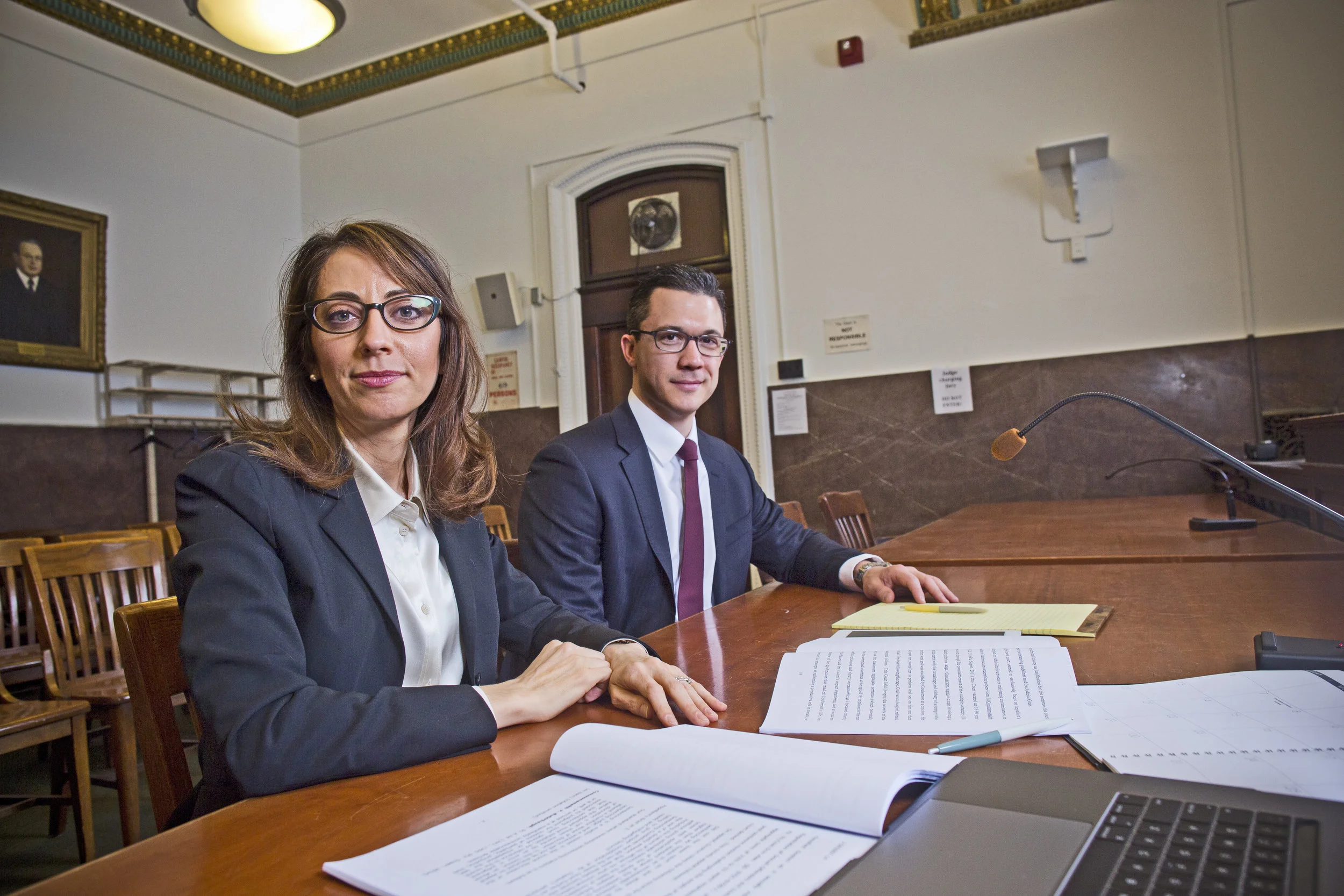
Philadelphia Criminal Defense Lawyers Demetra Mehta and Zak Goldstein
If you are facing criminal charges or under investigation by the police, we can help. We have successfully defended thousands of clients against criminal charges in courts throughout Pennsylvania and New Jersey. We have successfully obtained full acquittals in cases involving charges such as Conspiracy, Aggravated Assault, Rape, and Murder. Our award-winning Philadelphia criminal defense lawyers offer a free criminal defense strategy session to any potential client. Call 267-225-2545to speak with an experienced and understanding defense attorney today.






PA Superior Court: DUI Defendant May Call Expert Witness to Attack Validity of Field Sobriety Tests
Philadelphia Criminal Defense Lawyer Zak Goldstein
The Pennsylvania Superior Court has decided the case of Commonwealth v. Taylor. In Taylor, the Superior Court reversed the defendant’s conviction for DUI because the trial court improperly prohibited the defendant’s expert witness from testifying that field sobriety tests have not been scientifically validated for use in detecting impairment due to drugs. This is an important decision for defendants who are facing DUI charges and who may not have submitted to a blood test because it may allow the defendant to use expert testimony to attack the validity of field sobriety tests.
Commonwealth v. Taylor
The defendant was driving her car in York County, Pennsylvania with her 18-month-old child secured in the back seat.. She was driving twenty miles above the speed limit, and when a traffic light in front of her turned red, the defendant abruptly braked and nearly rear-ended a stopped vehicle in front of her. A few seconds after the light turned green, the defendant rapidly accelerated her car over a nearby curb and crashed into a utility pole located about 100 feet from the road.
A motorist who saw the accident pulled over next to the defendant’s car and offered to help her. The defendant got out of her car and told the motorist that she was not injured. Thankfully, her child was also unharmed. While speaking with the motorist, the defendant attempted to shut her car door, but the motorist stopped it from shutting because it could have hit the child’s outstretched arm.
A local police officer arrived at the scene of the accident a few minutes later. He observed the defendant having blood shot eyes and slurred speech, but he did not smell alcohol on her. Per the officer, the defendant also appeared to be confused and very tired. The officer then had the defendant perform two standard field sobriety tests. He had her walk in a straight line and and then do a test involving walking and turning 180 degrees. According to the officer, the defendant performed poorly on the tests. She allegedly had trouble balancing herself and following directions. The defendant’s body swayed during the tests, and she used her arms to keep steady. She also started the tests before being told to do so.
The officer arrested the defendant on suspicion of DUI and Endangering the Welfare of a Child (“EWOC”). While in custody, she admitted to taking Adderall and Xanax, but she could not provide the amounts taken or how long before the accident she had taken the medications. She denied having any injuries or medical conditions that could have affected her ability to operate a motor vehicle. At trial, the Commonwealth did not allege that the defendant was impaired by alcohol. Further, the Commonwealth did not introduce the results of any blood testing into evidence. Instead, the Commonwealth relied primarily on the arresting officer’s testimony regarding the defendant’s car accident and how she performed on the field sobriety tests. The officer testified at length regarding his expertise in administering those tests. Other than describing the scene of the accident, almost all of the officer’s testimony was focused on how poorly the defendant performed on the tests. He further testified that the defendant’s performance indicated impairment due to drug use.
The defense attributed the defendant’s performance to a possible head injury from the accident. Additionally, the defendant attempted to rebut the officer’s testimony with the opinion of its own expert witness, a medical toxicologist and physician. The doctor planned to testify that there was no scientific basis to rely on field sobriety tests to detect drug impairment because they have only been validated to reveal intoxication from alcohol. The trial court qualified the doctor as an expert in toxicology and on the scientific basis for field sobriety tests.
The doctor testified that he reviewed the defendant’s medical history and confirmed that she had been prescribed Xanax and Adderall. He also testified that after using the medication for 30 days, the medications should have little to no side effects. The defendant had been prescribed the medication for over 30 days prior to the accident, but there was no evidence regarding what dosages she took. However, when the doctor attempted to testify about field sobriety tests, the Commonwealth objected and the court sustained the objection. As such, the doctor could not testify about the utility of field sobriety’s tests in detecting drug impairment. At the conclusion of the trial, the jury found the defendant guilty of DUI and EWOC. The defendant then filed post-sentence motions which were denied. The defendant then filed a timely appeal.
What is Expert Testimony?
Rule 702 of the Pennsylvania Rules of Evidence governs expert testimony. Expert testimony is not relevant in every case. In other words, you cannot call an expert to claim that a witness is lying. It is only admissible when an expert has an opinion on a subject which requires knowledge, information, or skill beyond what is possessed by the ordinary juror. In criminal cases, expert witnesses are most often used in cases that involve some form of medicine or science. They are common in DUI cases and many motor vehicle cases.
In determining whether to qualify someone as an expert, courts are supposed to employ a liberal standard when determining if a witness qualifies as an expert in a particular field of study. The witness does not need to possess all of the knowledge in a given field, but the witness must possess more knowledge than is otherwise within the ordinary range of training, knowledge, intelligence or experience. Further, a witness does not need formal education to qualify as an expert, although it certainly helps. This case focused on whether a witness can testify as an expert witness without having practical, hands-on experience in the field. In this case, the trial court prohibited the doctor from testifying that the tests had not been validated for detecting drug usage because the doctor was not a police officer and had never performed the tests on someone himself.
The Superior Court’s Decision
The Superior Court held that it was reversible error for the trial court to preclude the doctor’s testimony concerning field sobriety tests. As a preliminary matter, the Superior Court held that the doctor was qualified as an expert in this particular field and that the Commonwealth did not dispute any of these qualifications. Additionally, the Superior Court found that the testimony would have gone to the heart of the issues in the defendant’s trial.
The Commonwealth was trying to prove that the defendant was impaired due to drug use, and prosecutors did not have any blood test results. They sought to prove intoxication by using the testimony of the officer and his observations of the defendant. They specifically sought to base a potential conviction on his observations of the defendant when she performed the field sobriety tests. If the doctor’s testimony had been admitted, it could have rebutted the officer’s conclusion that the defendant was impaired by drugs. As a result of the judge’s preclusion of the doctor’s testimony, the officer’s opinion on the defendant’s drug impairment went unchallenged. Therefore, this error in excluding the expert testimony resulted in significant prejudice to the defendant, and she will receive a new trial.
Facing criminal charges? We can help.

Philadelphia Criminal Defense Lawyers Demetra Mehta and Zak Goldstein
If you are facing criminal charges or are under investigation by the police, we can help. We have successfully defended thousands of clients against criminal charges in courts throughout Pennsylvania and New Jersey. We have won cases involving charges such as Conspiracy, DUI, Aggravated Assault, Rape, Possession with the Intent to Deliver, and Homicide. Our award-winning Philadelphia criminal defense lawyers offer a free criminal defense strategy session to any potential client. Call 267-225-2545 to speak with an experienced and understanding defense attorney today.

PA Supreme Court: Philly Prosecutors Can't Try You Separately For DUI and Related Traffic Violations

Philadelphia DUI Defense Attorney Zak Goldstein
The Pennsylvania Supreme Court has decided the case of Commonwealth v. Perfetto, holding that Philadelphia prosecutors may not file more serious misdemeanor or felony charges against a defendant who has already been tried in traffic court for summary offenses arising from the same incident. This means that if you were arrested by the police, charged with DUI, and also received traffic tickets like a ticket for reckless driving and the traffic case has been resolved, you cannot be prosecuted for the DUI. This happens frequently in Philadelphia because traffic court cases go to trial much more quickly than criminal trials. Although this may seem like a loophole to some, it is actually a question of fundamental fairness as prosecutors simply should not be allowed to charge a defendant in multiple different courts for the same conduct. Doing so requires the defendant to take off multiple days from work, pay more in attorney’s fees, and potentially receive separate sentences for the same incident. This is an extremely significant decision because it could result in the dismissal of numerous cases.
The facts of Commonwealth v. Perfetto
On July 3, 2014, the defendant was operating a motor vehicle in Philadelphia. The police stopped him and issued him a citation because he was driving without his lights on as required by 75 Pa. C.S.A. § 4302. The officer then determined that the defendant was also driving under the influence of a controlled substance. In addition to issuing the traffic tickets, they subsequently arrested him and charged him with DUI. In Philadelphia, when someone is issued a traffic citation and charged with a more serious criminal offense at the same time, the cases are not usually joined together. Instead, defendants have traditionally had to resolve the traffic citations in traffic court and the criminal case in the Philadelphia Municipal Court.
Prior to the resolution of the criminal charges, the defendant was found guilty, in absentia, on the summary traffic offense in the traffic court. The traffic court is a division of the Philadelphia Municipal Court. After his conviction, the defendant had a preliminary hearing for his DUI charges and he was held for court on all charges. In Philadelphia, if a defendant is charged with a felony, he will have a preliminary hearing in Municipal Court. If the court determines there is enough evidence for a case to go to trial, then the defendant will be held for court, and the case will be transferred to the Court of Common Pleas.
Motion to Dismiss Under Rule 110
At his trial, the defendant filed a motion to dismiss the DUI charge against him because he had already been found guilty of the traffic offense. His defense attorney argued that 18 Pa. C.S.A. § 110 ( “Rule 110”) prohibits subsequent prosecutions that arise from the same criminal episode when the defendant has previously been convicted in the same court. Thus, he argued that because the defendant was found guilty in Municipal Court - Traffic Division for his traffic offense, and his traffic offense was part of the same incident as his alleged DUI, the Municipal Court - Criminal Division should dismiss the DUI case.
The trial court heard oral arguments on the defendant’s motion. The Commonwealth argued that Rule 110 should not apply because summary traffic offenses must be tried in the traffic division of the Philadelphia Municipal Court. Further, because the traffic division lacked the jurisdiction to hear the DUI charge, the two charges could not be tried at the same time. In other words, the Commonwealth argued that for all intents and purposes, the traffic division is a separate court and thus Rule 110 did not apply to the defendant’s case and his motion should be denied. At the conclusion of the arguments, the trial court agreed with the defendant and dismissed the DUI charges against him.
The Commonwealth’s Appeal to the Superior Court
The Commonwealth filed a notice of appeal to the Pennsylvania Superior Court. On appeal, a divided en banc panel of the Pennsylvania Superior Court reversed the trial court’s decision. The Superior Court engaged in a complex and convoluted jurisdictional analysis of Philadelphia’s Municipal Court and held that defendants who are charged with a traffic offense in Philadelphia must have the traffic offenses tried in the traffic division of the Municipal Court, regardless of whether the defendant is also charged with non-traffic offenses. Thus, according to the Superior Court, Rule 110 did not apply when a defendant was previously convicted or acquitted of a traffic offense. The defendant filed a petition for allowance of appeal to the Pennsylvania Supreme Court, and the Pennsylvania Supreme Court accepted the appeal.
What is Rule 110?
Rule 110 is the codified version of the Pennsylvania Supreme Court’s decision in Commonwealth v. Campana. The Campana Court held that the Double Jeopardy clause requires the Commonwealth to bring all known charges arising from a single criminal episode against a defendant in one proceeding. The Pennsylvania legislature wrote this into law in Rule 110.
How do you win a Rule 110 motion?
In order to win a Rule 110 motion and obtain the dismissal of charges based on the existence of a prior prosecution, the defendant must be able to show four things. The defense must show:
First, the former prosecution resulted in an acquittal or a conviction.
Second, the current prosecution was based on the same criminal conduct or arose from the same criminal episode as the former prosecution.
Third, the prosecution was aware of all the charges when the former prosecution commenced.
Finally, all of the charges were within the same jurisdictional district.
If all of these requirements are met then the Commonwealth is prohibited from prosecuting the defendant.
The Commonwealth Cannot Prosecute You Twice If You’ve Already Been Convicted of Summary Offenses From The Same incident
In a divided opinion, the Pennsylvania Supreme Court overturned the Superior Court’s decision. The majority opinion found that this was a straightforward case of statutory interpretation and that the language of Rule 110 is clear and unambiguous. The Court found that all four elements of Rule 110 were met. Specifically, the defendant was found guilty for driving without lights, his DUI case arose out of the same episode as his driving without lights conviction, the prosecutor was aware of this conviction, and finally, his traffic conviction occurred in the same judicial district as his DUI case. Because all of the elements of Rule 110 were met, the Commonwealth was barred from prosecuting the defendant’s DUI case due to the prior traffic case.
Additionally, the majority opinion found that there was no rule that prohibited the Commonwealth from prosecuting the defendant’s traffic offense with his DUI charge. The Commonwealth’s argument that traffic cases must be prosecuted in the traffic division of Municipal Court was not accurate because the Commonwealth had the option of trying the defendant for the summary traffic citations in the criminal case. The majority opinion also reiterated that a summary offense can trigger Double Jeopardy protections, even though the consequences are usually less severe than those of a misdemeanor or a felony. Finally, the majority opinion acknowledged that this will cause problems for the Philadelphia District Attorney’s Office, but nonetheless the Commonwealth is still precluded from prosecuting the defendant’s case due to Rule 110 and the Double Jeopardy Clause of the Pennsylvania Constitution. .
Facing criminal charges? We can help.

Criminal Defense Lawyers Zak Goldstein and Demetra Mehta
If you are facing criminal charges or under investigation by the police, we can help. We have successfully defended thousands of clients against criminal charges in courts throughout Pennsylvania and New Jersey. We have successfully obtained full acquittals and other successful results in cases involving charges such as Conspiracy, Aggravated Assault, Rape, DUI, and Murder. Our award-winning Philadelphia criminal defense lawyers offer a free criminal defense strategy session to any potential client. Call 267-225-2545 to speak with an experienced and understanding defense attorney today.

PA Supreme Court: Concerns About Officer Safety Do Not Justify Suspicionless Seizure of Motorist
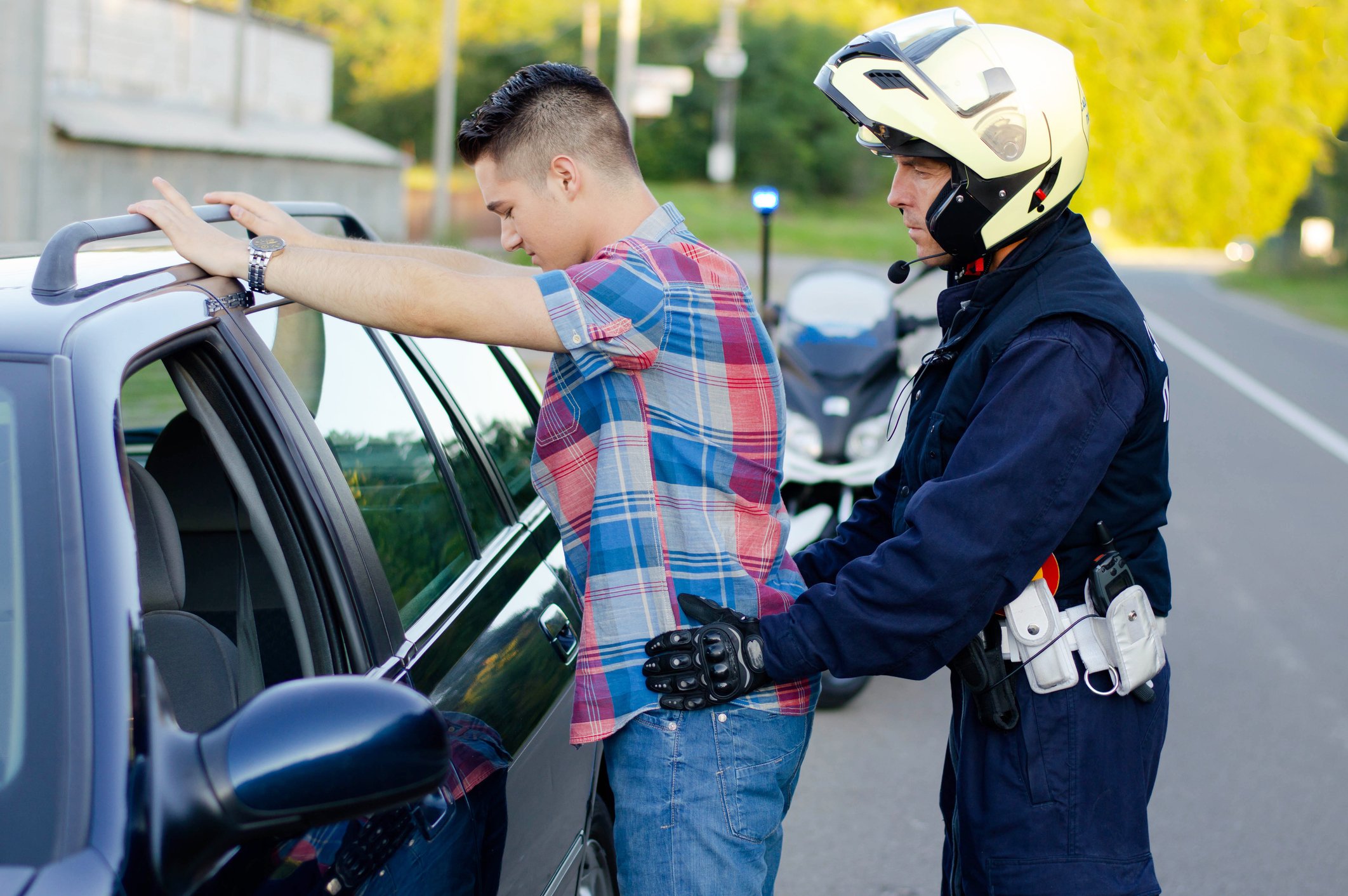
In the recent case of Commonwealth v. Adams, the Pennsylvania Supreme Court reiterated once again that police cannot conduct a stop without reasonable suspicion, and a stop occurs when a reasonable person would not feel free to leave due to some action taken by the officer.

Philadelphia Criminal Defense Lawyer Zak T. Goldstein, Esq.
It should go without saying that the police cannot stop, search, and interrogate people without a warrant or some prior observation of potential ongoing criminal activity. Nonetheless, trial and appellate courts throughout the state state of Pennsylvania often attempt to justify coercive police detentions which occurred without reasonable suspicion or probable cause by finding that the police did not actually “stop” the defendant for Fourth Amendment purposes.
If the court can find that the police conducted a mere encounter and had to take some common sense steps to ensure officer safety, the court may try to justify a decision denying a motion to suppress. Unfortunately, many of these opinions ignore the fact that when a police officer approaches a person and begins asking questions or issuing commands, that person would never reasonably feel free to terminate the encounter and leave without following the orders of the officer.
In the recent case of Commonwealth v. Adams, the Pennsylvania Supreme Court reiterated once again that police cannot conduct a stop without reasonable suspicion, and a stop occurs when a reasonable person would not feel free to leave due to some action taken by the officer. Further, there is no reasonable suspicion for a Terry stop when the suspect has done nothing more than park his or her car in a commercial parking lot late at night despite the fact that it may be a little bit unusual to park there. Instead, police must have specific, articulable facts from which they can conclude that criminal activity may be afoot, and those facts must be based on more than mere speculation. Only then may police conduct a stop and potentially take actions related to officer safety such as frisking the defendant or limiting the defendant’s freedom of movement in some way.
Commonwealth v. Adams
In the case of Commonwealth v. Adams, a Pleasant Hills, PA police officer was on routine patrol at around 3 am. He observed a white Dodge Dart enter a parking lot that served two closed businesses - a hobby store and a pizza shop. The car drove behind the buildings. The officer waited to see if the car came back and left the lot, but it did not. The officer then drove behind the parking lot to locate the vehicle because he wanted to “simply check why a car drove behind two dark, closed businesses” at 3 am. He testified at a motion to suppress hearing that he recognized the potential for drug activity or an attempted burglary.
After driving behind the buildings, the officer saw the car parked behind the pizza shop. The car was off. There were no “no parking signs” behind the building, but there were also no marked parking spaces. The officer did not believe that this area would generally be used as public parking. Instead, he believed that it could be an area for deliveries and employee parking.
Despite having seen nothing more than a car parking in a parking lot early in the morning, the officer pulled his marked police cruiser behind the car. He did not activate his lights or sirens, but he did call for backup. Prior to backup arriving, he exited his police car and walked up to the parked vehicle. He shined his flashlight into the vehicle as he approached. When he reached the driver’s side door, he knocked on the window. The defendant, who was seated in the driver’s seat, opened the car door. The officer physically closed the car door himself, preventing the defendant from getting out of the car. He instructed the defendant to lower the window, and the defendant explained that he could not do so because he did not have the keys to the car. The officer, however, could see the keys on the floor in the back of the car. The officer then remained outside of the car until backup arrived, which was approximately a minute later.
Once backup arrived, the officer opened the defendant’s door and began to speak with him. The defendant told him that he owned the pizza shop and had just come from inside. Obviously, this was not true. The officer smelled alcohol on the defendant’s breath and asked the defendant to perform field sobriety tests. The defendant complied and “failed.” From there, things deteriorated until the defendant was eventually formally arrested and charged with DUI.
The Motion to Suppress
Following the filing of DUI charges against him, the defendant filed a motion to suppress. He argued that the police officer violated his Fourth Amendment rights by stopping him without reasonable suspicion or probable cause. The trial court heard the motion to suppress and denied it, finding that the interaction between the defendant and the officer was only a mere encounter which did not require any level of suspicion. The court found that the officer was justified in preventing the defendant from opening the door by concerns about officer safety because the officer was alone, it was late at night, and the defendant was physically bigger than the officer. With the motion to suppress denied, the court found the defendant guilty at a bench trial of DUI and sentenced him to six months of probation.
The defendant appealed to the Pennsylvania Superior Court, and the Superior Court affirmed the denial of the motion to suppress. The Court agreed with the trial court, essentially finding that the police officer conducted only a mere encounter with the defendant and that even if it was a Terry stop, the officer had reasonable suspicion based on the defendant’s behavior and statements. The defendant filed a Petition for Allowance of Appeal to the Pennsylvania Supreme Court, and the Supreme Court agreed to accept the case.
What is a Petition for Allowance of Appeal?
The Pennsylvania Supreme Court does not hear most cases. When a defendant is convicted and wishes to appeal, the defendant’s appeal is generally to the Pennsylvania Superior Court. The Superior Court is required to consider all timely-filed appeals and address issues which were not waived in the trial court. If the Superior Court denies the appeal, then the defendant may then file a Petition for Allowance of Appeal to the Pennsylvania Supreme Court. Unlike Superior Court, the Supreme Court does not have to hear every case. Instead, the court chooses a limited number of cases in which it feels that there is an important or novel issue of law in question or where it believes the Superior Court has made a significant error. Thus, when a defendant loses in the Superior Court, the defendant may file a Petition for Allowance of Appeal to the Pennsylvania Supreme Court asking that court to review the ruling of the Superior Court. Most of these Petitions are denied, but in this case, the Pennsylvania Supreme Court agreed to accept the appeal.
The Court’s Ruling
The Pennsylvania Supreme Court found that both the trial court and Superior Court erred in finding that the police officer did not “stop” the defendant for Fourth Amendment purposes and that the officer had reasonable suspicion to conduct a stop. First, the Court explained the standards for the three types of encounters between police officers and members of the public. The lowest level of interaction is a mere encounter. A mere encounter does not require a warrant or any level of suspicion, and police may simply walk up to any person and try to talk to them. The police may not do anything to restrict the person’s freedom of movement or require compliance during a mere encounter, but nothing stops an officer from trying to talk to someone.
The second level of interaction is an investigative detention or Terry stop. This type of encounter is something less than an arrest, but it allows police to investigate potential criminal activity. A Terry stop occurs when the police do something to indicate that the person would not be free to leave. For example, telling someone to stop, frisking them, or restricting their freedom of movement could result in a Terry stop. A Terry stop must be relatively brief or it could turn into a full blown arrest and require probable cause. During a Terry stop, police may sometimes take precautions to ensure their own safety such as frisking a suspect or requiring the suspect to remain in his or her vehicle. However, police may not engage in a Terry stop or take these safety precautions unless they have reasonable suspicion for the stop. The reasonable suspicion standard requires police to show that they have specific, articulable facts which would indicate to a reasonable officer that criminal activity is afoot.
The most restrictive level of interaction is a custodial detention. A custodial detention is the functional equivalent of an arrest and must be supported by probable cause. A custodial detention also constitutes a seizure. A police encounter is more likely to be considered a custodial detention if it is prolonged, takes place at the police station, involves handcuffs, or if the police tell the suspect that he or she is under arrest.
In this case, the Pennsylvania Supreme Court ruled that the lower courts made a mistake in finding that the interaction between the officer and the defendant was only a mere encounter. Instead, the Court concluded that the defendant would not have felt free to leave, and in fact could not leave, when the officer parked behind him, exited his car, shined his flash light into the defendant’s car, and physically closed the defendant’s door when the defendant attempted to get out of the car. Thus, in addition to not feeling free to leave, the defendant physically could not leave because the officer prevented him from doing so.
Because the Court concluded that the officer conducted an investigative detention by seizing the defendant and preventing him from exiting the car, the subsequent observations of the officer would be admissible as evidence at trial only if the officer had reasonable suspicion to conclude that the defendant was engaged in criminal activity prior to the officer’s decision to shut the defendant’s car door. The Court concluded that there was no reasonable suspicion because the officer had seen the defendant do nothing more than park in a public parking lot. While it was slightly unusual that the defendant chose to park in an empty lot behind two buildings at 3 am, it was not necessarily criminal. There was no evidence in the record that the parking lot was closed to members of the public at that time, and so the officer was not justified in believing that the defendant was going to commit a crime such as engage in a drug transaction or commit a burglary. Therefore, the Court ruled that the lower courts should have granted the motion to suppress.
This decision is particularly important because the Court stressed the fact that not every police action can be justified by merely reciting the magic words “officer safety.” If the officer had reasonable suspicion for the stop, then the officer might have been justified in physically closing the door and restricting the defendant to his car. But the officer safety issue only comes into play after it has been determined that police have reasonable suspicion. Concerns about officer safety do not transform an otherwise illegal stop into a legal one. Thus, whether police may frisk a defendant or take other steps out of concerns for officer safety is a two-part test. First, the police must actually have reasonable suspicion. Second, they must reasonably believe that some action like a frisk or closing the car door is necessary for safety reasons. If they cannot satisfy both parts of this test, then the subsequently-obtained evidence should be suppressed as fruit of the poisonous tree. This is a great opinion for privacy rights because it establishes that police cannot just stop and detain people on a whim or a mere hunch. They must be able to point to actual evidence of criminal activity, and simply reciting the phrase officer safety does not transform a constitutional violation into a legitimate stop.
Facing Criminal Charges? We Can Help.

Criminal Defense Lawyers Zak Goldstein and Demetra Mehta
If you are facing criminal charges or under investigation by the police, we can help. We have successfully defended thousands of clients against criminal charges in courts throughout Pennsylvania and New Jersey. In just the past few months, we have won motions to suppress in cases involving drug possession, gun possession, and Driving Under the Influence (“DUI”). We have also successfully obtained full acquittals, dismissals, and other successful results in cases involving charges such as Conspiracy, Possession with the Intent to Deliver, Aggravated Assault, Rape, and Homicide. Our award-winning Philadelphia criminal defense lawyers offer a free criminal defense strategy session to any potential client. Call 267-225-2545 to speak with an experienced and understanding defense attorney today.