

Philadelphia Criminal Defense Blog

PA Superior Court: A Brief Public Restraint Supports Felony False Imprisonment of a Minor, and a Holdout Juror Can Be Removed for “Refusing to Deliberate”

Criminal Defense Lawyer Zak T. Goldstein, Esquire
The Pennsylvania Superior Court has decided the case of Commonwealth v. Evans, 2026 PA Super 96, affirming a conviction for false imprisonment of a minor despite alarmingly little evidence. A jury in Montgomery County found that a 45-year-old man approached a 14-year-old girl at the Willow Grove Mall, took hold of her arm, and walked her against her will for about 36 seconds before she pulled free and ran. The Court held that the evidence was sufficient even though the restraint was short, happened in a crowded mall, and did not involve the girl screaming or struggling. The Court also upheld the trial court’s decision, after the jury deadlocked, to remove a juror who said she would no longer discuss the case and to replace her with an alternate. The new jury convicted. Judge Kunselman dissented.
The case establishes that a short detention of just a few seconds can potentially support a felony false imprisonment conviction (and Megan’s Law registration requirement) even when the complainant does resist in any way, and it gives a trial court room to remove a deadlocked juror who refuses to keep deliberating. Because the panel divided, this is the kind of published decision that will hopefully draw a successful request for reargument or a petition for allowance of appeal.
The Facts of the Case
On the evening of July 12, 2023, the 14-year-old complainant was shopping with three friends at the Willow Grove Mall in Montgomery County. She got upset with one of her friends, left the group, and rode a down escalator toward a first-floor jewelry store, listening to music and looking at her phone. At the bottom of the escalator, a 45-year-old man who had ridden down ahead of her waited for her, offered his arm, and told her to walk with him.
She testified that she did not go with him willingly. She said he grabbed her wrist, tucked it inside his arm, and “pressed down” so she could not pull away, and that he walked her away from the jewelry store she had wanted to visit. Asked why she did not just turn toward the store, she answered, “because I couldn’t get away from him, and that’s where he was walking.” He told her his name was Alex and that he was 25. She told him she was 13, a year younger than her real age, to make clear she was a child. She was frightened, and she started secretly recording him on her phone through Snapchat.
She testified that his grip was tight enough that she could not free herself, and that each time she pulled away he took hold again. After he loosened his grip, she pulled free and told him she was 13. She said he then asked “if he was too old for [her]” and kept trying to get her to take his arm again. She stepped back, yelled, and walked away, then ran, as a passing woman asked whether she needed help. The whole thing lasted about 36 seconds and moved her toward a corner of the mall near an exit that, the Court noted, led to the man’s parked car. She reported the encounter to mall security and then to the Abington Police, who arrested the man and charged him with false imprisonment of a minor and two counts of harassment.
The Ex Parte Questioning and Removal of a Juror
The case was tried in April 2024. The jury deliberated, came back to rewatch the videos and photographs to fix when the man took the girl’s arm, and later asked the court to explain what it means to “interfere substantially” with someone’s liberty. Early in the afternoon, the jury reported that it could not reach a unanimous verdict.
The court gave a Spencer charge, also called a dynamite charge, which tells a deadlocked jury to keep trying to reach a verdict with an open mind but without surrendering firmly held convictions. The jury went back to deliberate and then sent a note: “We are unable to reach a verdict. One juror respectfully but forcefully no longer wishes to discuss the aspects of this case.”
The court’s first reaction was understandably to declare a mistrial. The prosecutor disagreed, arguing that a juror who was refusing to deliberate should be struck for cause and replaced, because “[i]f they’re not deliberating, they’re not doing their job.” Defense counsel asked for a mistrial, arguing that the juror’s refusal to keep talking reflected her conscientious view of the evidence.
The judge then interviewed the juror, Juror No. 8, in the robing room, on the record but without counsel or the defendant present. The exchange was brief. After the juror said she felt like she was “in the principal’s office,” the court confirmed that she was the juror described in the note and that she no longer wished to discuss the case. The court discharged her and replaced her with an alternate, explaining that she was not a juror who simply would not change her mind: “She’s not sticking to her position. She’s refusing to deliberate anymore.” The new jury watched the video again and returned a guilty verdict the same day. The court later sentenced the man to three and one-half to ten years in prison and ordered him to register as a Tier I sex offender for fifteen years.
Removing a Juror Who Refuses to Deliberate
On appeal, the defense argued that the trial court should not have removed Juror No. 8 because the short colloquy never established whether she was refusing to deliberate or had deliberated and reached a firm conclusion she would not give up. The Superior Court rejected the argument and affirmed.
The Court applied the rule that the decision to discharge a juror rests in the sound discretion of the trial judge, who may substitute an alternate when the facts show that a juror can no longer perform the role. The trial judge, the Court observed, was in a unique position to evaluate Juror No. 8 in person. The jury had the case for about four hours, the court had instructed the jurors more than once to keep an open mind and consult with one another, and on that record the Court concluded that the judge could treat the juror’s refusal to discuss the case as a refusal to deliberate rather than a genuine deadlock requiring a mistrial.
The Court drew a line between two situations. A juror who deliberates and then holds to a minority view cannot be removed for that. A juror who will not keep deliberating can be. The two can look the same from the outside, and the short interview here did not explore why Juror No. 8 would not continue, which is the question that separates them. The court had also been ready to declare a mistrial before it placed her on the removable side of the line. Judge Kunselman dissented.
The Ex Parte Interview Issue Was Not Preserved
The defense also argued that questioning Juror No. 8 without counsel present violated the right to have counsel at a critical stage of trial. The Court did not reach the merits. It held the claim waived because counsel had not objected on that ground in the trial court and had instead pressed for a mistrial. The point for trial lawyers is important. An objection has to be specific and on the record when the issue comes up no matter how significant the issue.
“Substantial” Interference With Liberty
On sufficiency, the defense argued that the evidence did not show a substantial interference with the girl’s liberty, pointing to video that, in its view, showed her walking calmly at the man’s side rather than a child in distress. Viewing the evidence in the light most favorable to the Commonwealth, the Superior Court disagreed.
Drawing on earlier decisions, the Court explained that false imprisonment of a minor reaches restraints less serious than those required for kidnapping or unlawful restraint, and that the word “substantially” has its ordinary meaning, covering interference with liberty in an ample or considerable manner. The Court held that the girl’s passive reaction did not defeat the charge. It relied on her testimony that she was in “shock,” wrote that the jury could read her demeanor on the video as bewilderment rather than calm, and found nothing in the statute that excludes victims who “silently retreat inward in response to adults’ commandeering and restraints instead of lashing out in defiance.” The Court also held that the short length of the restraint did not take it out of the reach of the statute, citing decisions that found a substantial interference in a one-minute confinement of a child and in a brief grab of a 13-year-old, and distinguishing the kind of short, good-faith detention, such as a store owner questioning a suspected shoplifter, that may belong in civil court.
The Court rejected a related challenge to the jury instruction that defined “substantially.” It held that the charge tracked an earlier Superior Court decision and that, read as a whole, it created no real risk of confusion or prejudice even though it referred in passing to kidnapping and unlawful restraint without defining those crimes.
The Takeaway
The practical point is a serious one for anyone charged with this offense. A restraint that lasts only seconds, in a public place, can possibly support a felony conviction when the complainant is a child, and the complainant’s own account of her state of mind can carry the “substantial interference” element even where the video looks ambiguous. A conviction also requires fifteen years of sex-offender registration even though false imprisonment is not itself a sex crime and the Commonwealth does not have to prove a sexual motive. Reading “substantially” this broadly makes the line between the crime and a brief, lawful encounter harder to draw, and the registration consequence is severe.
The juror ruling may be an even bigger problem. After Evans, a trial court faced with a deadlock can potentially question a reported holdout and, if it finds she has stopped deliberating, replace her with an alternate instead of declaring a mistrial. That is a significant power, and the panel did not agree on it. Trial counsel unquestionably should have objected to the court doing that without counsel there. Until the Supreme Court takes up the question, counsel should make a complete record any time a court considers removing a juror during deliberations and should be ready to ask for a mistrial on the record rather than a substitution.
Facing criminal charges or appealing a criminal case in Pennsylvania?
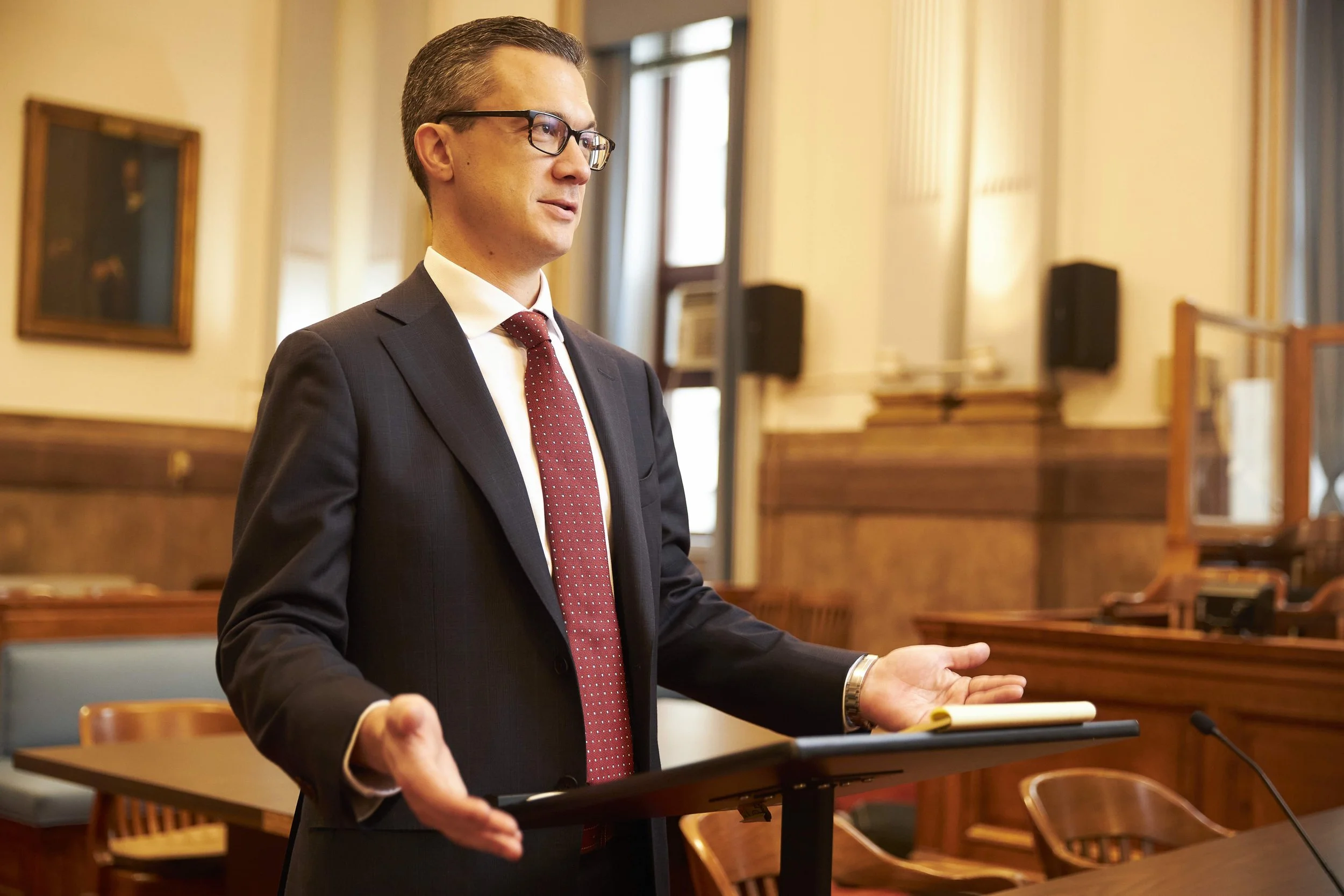
Philadelphia Criminal Lawyer Zak Goldstein
If you are facing criminal charges or under investigation by the police, we can help. We have successfully defended thousands of clients against criminal charges in courts throughout Pennsylvania and New Jersey. We have successfully obtained full acquittals and dismissals in cases involving charges such as Conspiracy, Aggravated Assault, Rape, Violations of the Uniform Firearms Act, and First-Degree Murder. We have also won criminal appeals and PCRAs in state and federal court, including the successful direct appeal of a first-degree murder conviction and the exoneration of a client who spent 33 years in prison for a murder he did not commit. Our award-winning Philadelphia criminal defense lawyers offer a free criminal defense strategy session to any potential client. Call 267-225-2545 to speak with an experienced and understanding defense attorney today.

Third Circuit: COVID-Era Courtroom Closure and Marshals Blocking the Defendants’ Mothers’ Entry Violated the Sixth Amendment, but Convictions Affirmed Anyway

Criminal Defense Lawyer Zak T. Goldstein, Esquire
The United States Court of Appeals for the Third Circuit has decided United States v. Girard and United States v. Harry, Nos. 24-2097 & 24-2148 (3d Cir. May 26, 2026), holding that the District Court violated the defendants’ Sixth Amendment right to a public trial twice during a federal racketeering trial in the U.S. Virgin Islands. On the first day of trial, the court required every spectator to watch from an overflow room rather than in the courtroom. On several later days, federal marshals stationed at the courtroom door kept the defendants’ mothers from coming in, even though there were seats available.
Despite finding two constitutional violations, the Court affirmed the convictions. The defendants had not thoroughly objected at the time (although their lawyers repeatedly expressed concerns), so the Court reviewed the issue for plain error. Under that more demanding standard, the Court concluded that a retrial was not warranted because the trial as a whole still had what it called the “publicity, neutrality, and professionalism” the Sixth Amendment is meant to protect.
The Facts
The defendant was the head of a violent drug-trafficking enterprise in the U.S. Virgin Islands. The co-defendant served as the enterprise’s armorer. A jury convicted the defendant of 22 counts of drug, firearm, racketeering, and other charges, and convicted the co-defendant of seven counts of racketeering and firearms charges.
The trial took place in March 2022, the day after the Chief Judge of the District Court of the Virgin Islands issued an order incrementally reinstating in-person proceedings that had been suspended during the COVID-19 pandemic. Because of ongoing concerns about the virus, the District Court restricted who could be inside the courtroom. The jury sat in the jury box, and the court set up an overflow room with an audiovisual feed for anyone who could not watch from inside the courtroom.
After the jury was selected, but before opening arguments, the defendant’s lawyer asked what arrangements had been made for the public, and asked that at least the defendant’s family be allowed in “to comply with the Constitution.” The trial judge initially refused, then agreed to allow some spectators in beginning the next day. For all of day one, however, every spectator, including the defendants’ mothers, was directed to the overflow room.
Things did not improve on the days that followed. The co-defendant’s lawyer reported the next morning that the co-defendant’s mother was still not in the courtroom. Several days later, defense counsel pointed to a newspaper article reporting that the overflow room had not opened until around 10:00 a.m. on one of the trial days. The judge called that an “inadvertent error.” A day after that, the co-defendant’s lawyer told the judge that federal marshals had again prevented the co-defendant’s mother from entering the courtroom that morning, and the judge said he would “deal with that.”
After the verdicts, both defendants moved for a new trial. The District Court held an evidentiary hearing and credited the testimony of the defendant’s mother, who said that for most of the trial, federal marshals had told her and the co-defendant’s mother to watch from the overflow room without ever explaining why. The District Court nevertheless denied the motions, finding that seats had been available in the courtroom on a first-come basis and that any technical problems with the audiovisual feed had been brief.
The Sixth Amendment Right to a Public Trial
The Sixth Amendment guarantees criminal defendants the right to a public trial. The Supreme Court has long recognized that this right is rooted in centuries of Anglo-American practice and that trials are presumptively “open to all who care to observe.” Richmond Newspapers, Inc. v. Virginia, 448 U.S. 555, 564 (1980) (plurality opinion). The right is not absolute, but courts can only close the courtroom in rare circumstances. Under Waller v. Georgia, 467 U.S. 39 (1984), a trial court has to identify an overriding interest that justifies closure, consider less restrictive alternatives, and make a record explaining its decision.
Excluding specific spectators, rather than closing the courtroom entirely, requires a less demanding showing, what the Third Circuit described as a “substantial reason.” But the trial court still has to consider alternatives and put its reasoning on the record. That requirement traces back to two older Third Circuit cases, U.S. ex rel. Laws v. Yeager, 448 F.2d 74 (3d Cir. 1971), and United States v. Kobli, 172 F.2d 919 (3d Cir. 1949).
The Court Finds Two Sixth Amendment Violations
Applying that framework, the Third Circuit identified two violations.
The first was the day-one closure of the courtroom. By directing every interested spectator to the overflow room, the District Court had effectively closed the courtroom, and it never explained why a less restrictive option, such as letting in a smaller, socially distanced audience, would not work. The Government argued that the closure was “trivial” because spectators could still watch through the audiovisual feed. The Third Circuit disagreed. One of the purposes of the public trial right is to keep judges, jurors, and lawyers conscious of the seriousness of what they are doing, and the physical presence of spectators serves that purpose more meaningfully than remote viewing. The closure also covered opening arguments and the start of evidence, which the Court considered substantial.
The Court did agree that protecting trial participants from COVID-19 can qualify as an overriding interest that justifies some courtroom restrictions, joining the Second, Ninth, and Tenth Circuits on that point. But because the trial court allowed in-person spectators with social distancing on every later day, the record gave no reason why day one had to be different.
The second violation came after the District Court reopened the courtroom. The Third Circuit found that, despite the formal reopening, federal marshals continued to turn away the defendants’ mothers for several days, even when seats were available. The Court rejected the District Court’s finding that seats had been available on a first-come basis as inconsistent with its own credibility determination favoring the defendant’s mother. And it held that the trial judge’s lack of personal awareness of the marshals’ exclusions did not cure the problem. Joining the First, Second, and Seventh Circuits, the Third Circuit held that exclusions by courtroom staff can violate the public trial right even when the judge does not know about them.
Why the Convictions Were Affirmed
The convictions still stood. Neither defendant had made a clear, contemporaneous objection to the closures, which meant the Court could only reverse on plain error. Under United States v. Olano, 507 U.S. 725, 732 (1993), a defendant who fails to object must show that there was an error, that the error was plain, that it affected substantial rights, and that it seriously affected the fairness, integrity, or public reputation of the proceedings.
The Court held that the first three requirements were either satisfied or could be assumed, but it declined to find that the errors affected the integrity of the proceedings. Drawing on its 2020 decision in United States v. Williams, 974 F.3d 320 (3d Cir. 2020), the Court explained that the trial as a whole retained the “publicity, neutrality, and professionalism” the public trial right protects. The public could observe the trial at all times, either inside the courtroom or through the audiovisual feed. The day-one closure was a good faith COVID measure rather than an attempt at secrecy. The trial judge fixed the marshals’ misconduct as soon as he learned about it. And the trial itself had run for three weeks, involved nearly 50 witnesses, and concluded more than four years before the appeal was decided. A retrial under those circumstances, the Court said, would be a “windfall inimical to the interests of justice.”
The Court also rejected the co-defendant’s separate due process and compulsory process claims. There was no evidence in the record of any off-the-record meeting between the trial judge and Harry’s codefendant witnesses, who had invoked the Fifth Amendment through their own counsel. The Court declined to require question-by-question invocation of the privilege where Harry had never disputed the witnesses’ entitlement to invoke it.
The Takeaway
Although the convictions were affirmed, Girard is an important decision on the public trial right. It confirms that even in the middle of a public health emergency, a federal trial court cannot simply close the courtroom without first considering less drastic ways to protect everyone. A blanket order sending every spectator to an overflow room, with no explanation of why a socially distanced audience would not work, is not enough.
It also makes clear that the Sixth Amendment reaches into how courtrooms are actually staffed. When a marshal or other court officer turns a family member away at the door, that exclusion counts, even if the trial judge has no idea it is happening. The Third Circuit has now joined the majority of circuits that treat those exclusions as part of the public trial inquiry.
At the same time, Girard is another illustration of how difficult it is to win on appeal when an objection was not made at trial. Even where the Court of Appeals agrees that a constitutional violation occurred, plain error review allows it to leave the conviction in place if the trial as a whole appears fair. That is one of the reasons that having an experienced criminal trial lawyer in the courtroom matters so much. Issues that are not raised at the right moment can be very hard to fix later.
Facing Criminal Charges? We Can Help.

Goldstein Mehta LLC Criminal Defense
If you or a loved one are facing criminal charges, serving a state or federal sentence, or considering a direct appeal, post-conviction petition, or federal habeas petition, we can help. We have successfully defended thousands of clients against criminal charges in courts throughout Pennsylvania and New Jersey, and we have won criminal appeals and PCRAs in state and federal court, including the successful direct appeal of a first-degree murder conviction and the exoneration of a client who spent 33 years in prison for a murder he did not commit. Our award-winning Philadelphia criminal defense lawyers offer a free criminal defense strategy session to any potential client. Call 267-225-2545 to speak with an experienced and understanding defense attorney today.

PA Supreme Court: Trial Courts May Reject a Nolle Prosse Motion Under the “Valid and Reasonable” Standard
Criminal Defense Lawyer Zak T. Goldstein, Esquire
The Pennsylvania Supreme Court has decided Commonwealth v. Harrison, holding that a trial court still gets the final say on whether a district attorney may abandon a case by entering a nolle prosequi or nolle prosse. The Court reaffirmed the old Reinhart test: the Commonwealth’s reason for dropping the case must be valid and reasonable, and refused to extend the much more deferential In re Ajaj standard, which only applies to a DA’s decision to disapprove a private criminal complaint at the front end of a case.
The Facts
In May 2018, the complainant walked into a Santander Bank in York and tried to withdraw money without ID. His mother later told police he had just been released from the hospital and seemed delusional. The complainant refused to leave, and the bank called 911.
The defendant, who was a police officer, responded. After the complainant would not leave, the defendant tried twice to Tase him without success. A second officer arrived, and the two of them wrestled the complainant to the ground, handcuffed him, and walked him out to the patrol car. When the complainant would not bend down to get into the back seat, the defendant said he was going to drive-stun the complainant in the thigh. Instead of drawing his Taser, he drew his Glock, put it against the complainant’s thigh, and pulled the trigger. The complainant yelled, “Dude why’d you shoot me?” He spent 17 days in the hospital.
The state police charged the defendant with one count of negligent simple assault, a second-degree misdemeanor. The magistrate held the case for court.
The DA Tries to Drop the Case — Twice
The York County DA never tried the case. Instead, it filed two motions to nolle prosequi or suspend/dismiss the charges.
The first motion argued that prosecution was no longer in the interests of justice. The defendant had a 16-year career, was remorseful, his department had been disbanded, and he had agreed to speak to police cadets about avoiding this kind of mistake. The DA said continued prosecution would be punishment for punishment’s sake. The trial court denied the motion. The complainant, the actual victim, testified that no one from the DA’s office had ever spoken to him and that he had learned about the motion from the newspaper.
The second motion took a different angle. A bank customer named Harry Harrington, who had witnessed the shooting, had died in March 2019. The DA now claimed Harrington was the only independent witness and that without him the Commonwealth could not meet its burden of proof. The trial court called the motion “quite lame.” Harrington had died before the DA filed the first motion, in which the DA did not even mention his death. There were other witnesses, including the bank cleaner, who had no connection to either the police or the victim and who had already testified at the preliminary hearing that she saw the defendant shoot the complainant.
The Superior Court affirmed. The DA appealed to the Supreme Court.
The Supreme Court’s Decision
Chief Justice Todd wrote for the majority, joined by Justices Donohue, Wecht, and Brobson. Justices Dougherty and Mundy concurred in part and dissented in part. Justice McCaffery did not participate.
The Court refused to give the DA the deference it wanted. Ajaj holds that a court may overturn a DA’s rejection of a private criminal complaint only for bad faith, fraud, or unconstitutionality. The DA argued the same narrow standard should apply when it wants to drop a case it already filed. The Court said no. Once the DA brings charges, gets a magistrate to hold them for court, and pulls the judiciary into the case, the trial court is not a rubber stamp. It can, and must, independently evaluate whether the DA’s reason for walking away is valid and reasonable.
The Court traced the rule back to an 1850 statute that has always required the trial court’s written approval before a DA can enter a nolle prosequi. That requirement now lives in the Judicial Code and in Pa.R.Crim.P. 585. The Court reaffirmed Reinhart: the trial court accepts the DA’s factual claims if they are supported by a preponderance of the evidence, and then makes its own legal judgment on whether the reason is good enough.
Applying that test, the Court agreed with the trial court that the DA’s second reason, Harrington’s death, was neither valid nor reasonable. Other witnesses could establish what happened, there was video from inside the bank, and the DA had not bothered to mention Harrington’s death in its first motion more than a year after he died.
Why It Matters
This decision keeps the trial court in the picture. A DA cannot get a case held for court and then unilaterally walk away because the office has changed its mind, especially when the victim opposes the dismissal. The reason has to hold up to actual scrutiny.
It is also a useful boundary on Ajaj, which Commonwealth offices have been trying to stretch into other contexts. Harrison confines it to the front end of a case — the decision to charge in the first place — and leaves Reinhart in charge of everything that comes after.
The case cuts both ways for the defense. A defendant who has negotiated a quiet nolle prosse cannot count on the trial court rubber-stamping it. But a defendant whose case the DA is trying to drop in a way that hurts the defense, for example, dropping then refiling, or dropping to avoid an unfavorable ruling, has real ammunition to insist that the court take an independent look at the reason.
Facing Criminal Charges? We Can Help.

Goldstein Mehta LLC Criminal Defense
If you or a loved one are facing criminal charges, serving a state sentence in Pennsylvania, or exploring a direct appeal or PCRA petition, we can help. We have successfully defended thousands of clients against criminal charges in courts throughout Pennsylvania and New Jersey, and we have won criminal appeals and PCRAs in state and federal court — including the successful direct appeal of a first-degree murder conviction and the exoneration of a client who spent 33 years in prison for a murder he did not commit. Our award-winning Philadelphia criminal defense lawyers offer a free criminal defense strategy session to any potential client. Call 267-225-2545 to speak with an experienced and understanding defense attorney today.

PCRA Court Grants New Trial for Attorney Goldstein’s Client in Internet Contraband Case Following Successful Appeal
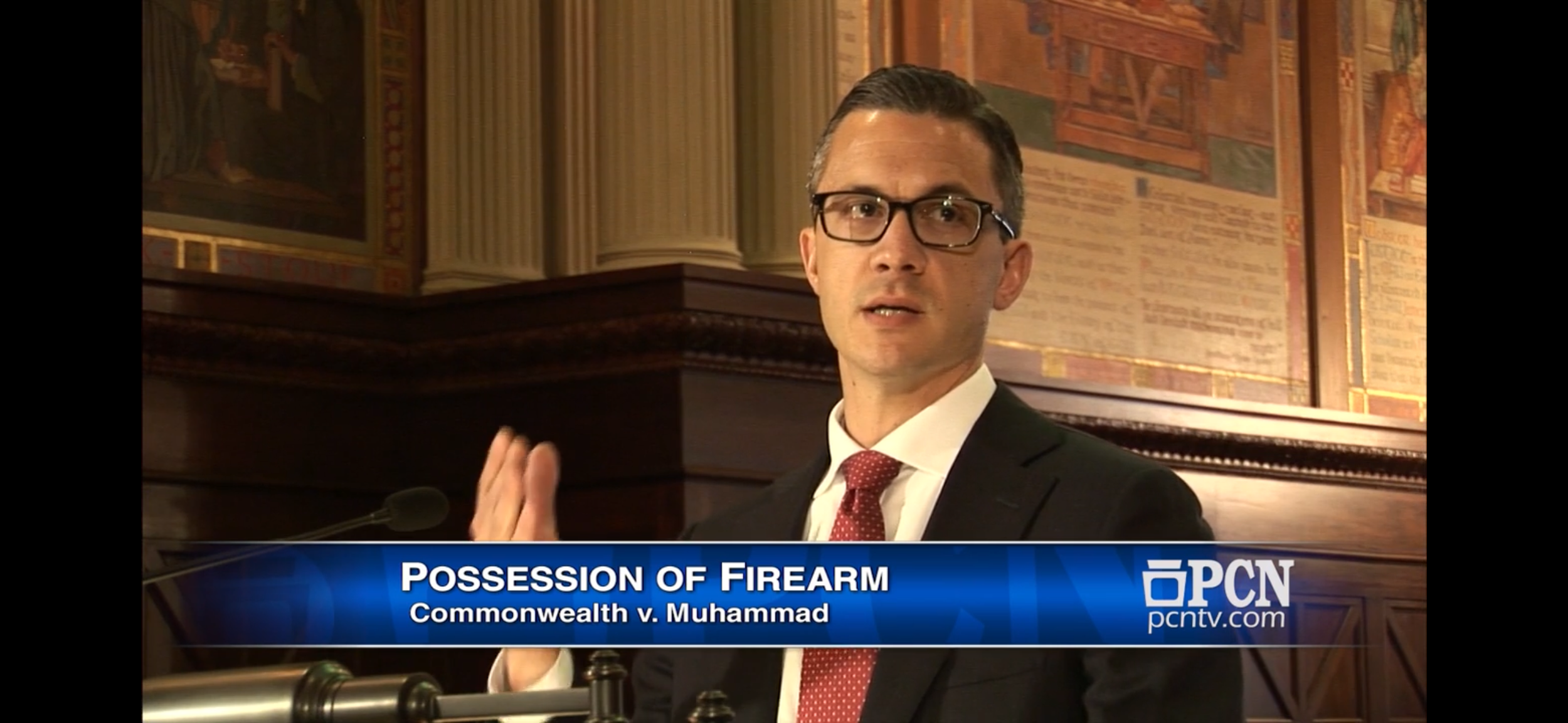
Zak T. Goldstein, Esquire - Criminal Defense Lawyer
Philadelphia criminal defense attorney Zak T. Goldstein, Esquire, has secured a new trial for his client, M.D., in a long-running child pornography case in the Philadelphia Court of Common Pleas. Following the Pennsylvania Superior Court’s July 2025 decision reversing the denial of M.D.’s Post Conviction Relief Act petition and remanding the matter, the PCRA court entered an order on April 10, 2026 granting PCRA relief and awarding M.D. a new trial. The PCRA court also granted bail pending any further appeals, meaning that after years of incarceration on the underlying conviction, M.D. will be released from custody while the case proceeds.
The Commonwealth filed a notice of appeal from the order granting PCRA relief on April 22, 2026, and the PCRA court issued a supplemental opinion on April 27, 2026 explaining its decision.
Background
M.D. was convicted at a second jury trial of dissemination of child pornography, fifteen counts of possession of child pornography, and one count of criminal use of a communication facility. His first trial had ended in a mistrial because the jury could not reach a unanimous verdict. The trial court sentenced him to an aggregate term of five to ten years’ incarceration, followed by seven years of reporting probation. The Superior Court affirmed the judgment of sentence on direct appeal, and the Supreme Court of Pennsylvania denied allowance of appeal.
M.D. then filed a timely PCRA petition raising claims of ineffective assistance of trial and appellate counsel. The PCRA court appointed new counsel, who amended the petition, and the PCRA court ultimately dismissed it. M.D. then retained Attorney Goldstein for the appeal from the denial of his first PCRA petition.
On the first appeal, Attorney Goldstein raised layered claims of ineffective assistance — arguing both that trial counsel mishandled key aspects of the defense and that initial PCRA counsel failed to raise those issues in the amended PCRA petition. In particular, PCRA counsel had not argued that trial counsel was ineffective for repeatedly informing the jury that, when the police executed a search warrant at his home and read him Miranda warnings, M.D. declined to give a statement, refused to sign the Miranda waiver, and asked to speak with a lawyer.
The Superior Court initially remanded the case for an evidentiary hearing on the layered claims of ineffectiveness. On remand, the PCRA court heard testimony from trial counsel and from prior PCRA counsel and again denied the petition. Attorney Goldstein appealed a second time.
The Superior Court’s July 2025 Decision
In a non-precedential decision filed July 28, 2025, the Superior Court reversed in part and remanded. The Court held that M.D. had established all three prongs of the ineffective assistance test as to trial counsel’s repeated references to his pre-arrest, post-Miranda silence.
The Court explained that trial counsel’s injection of M.D.’s silence into the case was not “circumspect” or limited to its context. Instead, trial counsel referenced M.D.’s silence in her opening statement and twice elicited testimony about it on cross-examination of officers. Although trial counsel testified that her strategy was to portray M.D.’s silence as the conduct of an innocent person who understood the court system and reasonably wanted to consult a lawyer, the Superior Court rejected that strategy as unreasonable. The Court reasoned that omitting any mention of his silence offered a substantially greater chance of success, and that “most laymen view an assertion of the Fifth Amendment privilege as a badge of guilt,” citing Commonwealth v. Turner, 454 A.2d 537, 539 (Pa. 1982).
On prejudice, the Superior Court found a reasonable probability that the jury inferred guilt from M.D.’s invocation of his right to remain silent while police executed a search warrant for devices suspected of containing child pornography. The Court concluded that confidence in the verdict was undermined and remanded for the PCRA court to determine whether M.D. had also satisfied the prongs of ineffectiveness as to initial PCRA counsel for failing to raise the issue.
The Commonwealth then filed a petition for allowance of appeal in the Pennsylvania Supreme Court. The Supreme Court denied that petition on February 6, 2026, leaving the Superior Court’s decision intact.
The PCRA Court Grants a New Trial on Remand
On remand, the PCRA court was tasked with deciding whether initial PCRA counsel had been ineffective for failing to raise trial counsel’s improper references to M.D.’s silence in the amended PCRA petition. In a supplemental opinion filed April 27, 2026, the PCRA court explained that, in light of the Superior Court’s holding that the underlying claim against trial counsel was meritorious, it was constrained to find that initial PCRA counsel was ineffective as well.
The PCRA court reasoned that because the Superior Court had already determined that trial counsel had no reasonable basis for her strategy and that M.D. was prejudiced as a result, initial PCRA counsel likewise had no reasonable basis for omitting that claim from the amended petition, and M.D. had necessarily satisfied the prejudice prong of his layered claim. The PCRA court therefore granted PCRA relief and ordered a new trial.
Equally important for M.D. and his family, the PCRA court also granted bail pending any further appeals. As a result, M.D. is set to be released from state prison while the Commonwealth’s appeal proceeds, rather than continuing to serve a sentence that has now been vacated.
Why This Result Matters
This case illustrates several important points about Pennsylvania post-conviction practice. First, layered claims of ineffective assistance — those that allege both that trial counsel was ineffective and that prior PCRA counsel was ineffective for failing to raise the underlying claim — can succeed even after a PCRA petition has already been litigated and denied. A petitioner who is represented by new counsel on appeal from the denial of a first PCRA petition may be able to preserve and litigate claims that earlier counsel overlooked.
Second, the case underscores how dangerous it can be for defense counsel to introduce evidence of a client’s post-Miranda silence, even when counsel believes the silence supports an innocence narrative. Pennsylvania courts have long recognized that references to an accused’s exercise of the right to remain silent may jeopardize the presumption of innocence. Commonwealth v. Molina, 33 A.3d 51 (Pa. Super. 2011) (en banc), aff’d, 104 A.3d 430 (Pa. 2014); Commonwealth v. Turner, 454 A.2d 537 (Pa. 1982). As the Superior Court emphasized here, lay jurors are more likely to view an invocation of the Fifth Amendment as a badge of guilt than as a sign of innocence.
Finally, the bail order is a meaningful and often overlooked aspect of post-conviction litigation. When a PCRA court grants a new trial, the conviction and sentence are vacated. Once those have been vacated, the trial court has discretion to set bail pending any appeal by the Commonwealth. Continued incarceration is not automatic, and in many cases it is appropriate for the client to be released while the appellate process plays out. This is important given that a Commonwealth appeal from an order granting a new trial can take years.
Facing Criminal Charges or Appealing a Criminal Case in Pennsylvania?
Goldstein Mehta LLC Criminal Defense
If you are facing criminal charges, under investigation, or considering an appeal or PCRA petition, our firm can help. Goldstein Mehta LLC has successfully defended thousands of clients against criminal charges in courts throughout Pennsylvania and New Jersey, including in cases involving Conspiracy, Aggravated Assault, Rape, Violations of the Uniform Firearms Act, and First-Degree Murder. We have also won criminal appeals and PCRAs in state and federal court, including the successful direct appeal of a first-degree murder conviction and the exoneration of a client who spent 33 years in prison for a murder he did not commit. Our award-winning Philadelphia criminal defense lawyers offer a free criminal defense strategy session to any potential client, and we frequently spot issues and defenses that other lawyers miss. Call 267-225-2545 to speak with an experienced and understanding defense attorney today.